[wpml_language_selector_widget]
[searchwp_form id="1"]

Latest News

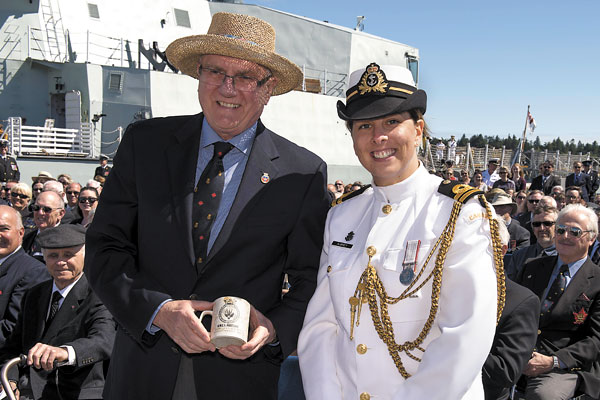
Vice Admiral (Retired) Gary Garnett was presented a long lost cup from his former command

Retired Admiral’s lost mug dredged from harbour after nearly 30 years

[caption id="attachment_13370" align="alignnone" width="300"] Vice Admiral (Retired) Gary Garnett was presented a long lost cup from his former command, HMCS Kootney by Lieutenant (N) Malorie Aubrey, Aide-de-Camp to the Commander Maritime Forces Pacific/ Joint Task Force (Pacific) during the recent Change of Command Ceremony on July 22. Photo by LS Ogle Henry, MARPAC Imaging Services[/caption]Sonya Chwyl, MARPAC PA Office ~If you’ve spent time at Canadian Forces Base Esquimalt in the last two months, you may have noticed dredging underway in the harbour by A and B Jetties.It’s all part of the Esquimalt Harbour Remediation Project, which aims to remove contaminated sediment from the area and improve the harbour for sailors and marine life alike.But it’s not just sediment that has been brought to the surface – so far, hundreds of man-made artifacts have been recovered including lighters, keys, dishware and identification cards from as far back as 1955.While most of the items can’t be traced back to their origins, at least one has found its way back to its owner.At the recent Maritime Forces Pacific Change of Command ceremony, Rear-Admiral Couturier presented Vice-Admiral (Retired) Gary Garnett with a coffee mug that belonged to him almost 30 years ago.VAdm (Ret’d) Garnett’s name, along with the name of his squadron and ship, is still visible on the worn plastic coffee mug that was pulled from the harbour.From August 1986 to July 1988 VAdm (Ret’d) Garnett was Commander of the Second Canadian Destroyer Squadron. He says that’s when the mug must have found its way overboard.“It was somewhat worse for the wear, like myself,” said VAdm (Ret’d) Garnett, who is recovering from recent surgery.And while VAdm (Ret’d) Garnett may not have plans to use the souvenir to hold coffee anytime soon, he says it will find a good home in his office amongst...
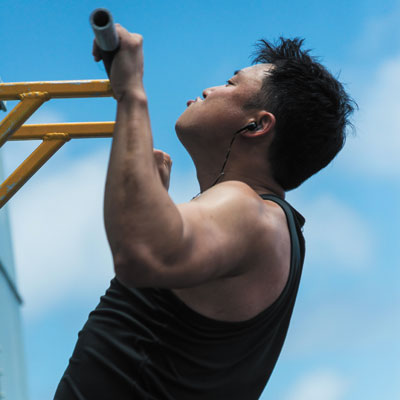
Lt(N) Ji-Hwan Park gets his sweat on while at sea en route to Pearl Harbor

Fitness challenge keeps crew in shape during deployment

[caption id="attachment_13327" align="alignnone" width="300"] Lt(N) Ji-Hwan Park gets his sweat on while at sea en route to Pearl Harbor, Oahu.[/caption]SLt Samantha Bayne, HMCS Calgary ~While participating in RIMPAC 2016, HMCS Calgary is challenging its crew to their fourth consecutive fitness challenge.The challenge aims to improve the general health and fitness of participants by having them measure and track their fitness activity.Each activity, such as running, weight-lifting or playing sports, is assigned point values and participants are attempting to do enough activities within the challenge window to meet the fitness challenge goal of 335 points (the same number as the Calgary’s hull).Earning points by working out is only one aspect of the challenge. By forgoing desserts and smoking, participants can net a higher number of daily points.Additionally, while the ship is in port, sailors can earn more points by making healthier lifestyle choices, such as not consuming alcohol.The challenge was first initiated on Calgary in 2015 by the ship’s fitness coordinator Sergeant Steven Lewington.“The aim of the fitness challenge is to allow the ship’s company to set attainable fitness goals, which in turn entices sailors of all fitness levels to work out. It also helps the crew deal with the stresses of sailing and increases work productivity,” said Sgt Lewington.The number of participants grows with each challenge, amassing to over 300 challengers over the past year. PT classes at the gym were arranged twice a week during the fitness challenge while the ship was alongside in home port. The crew were given more points to join these classes, which encouraged the crew to participate with their shipmates and build team cohesion.Some members are doing it to challenge themselves or each other, but all are striving towards improving their general fitness and aim to lead healthier lifestyles.While the ship was alongside in...

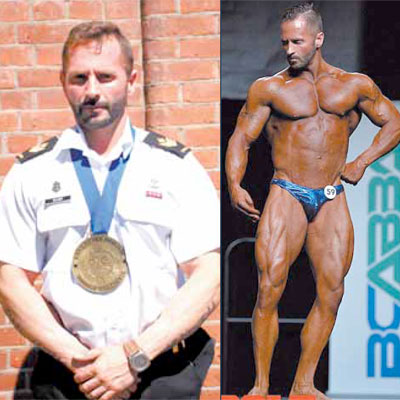
PO2 Chris O’Leary is the winner of the B.C. Amateur Body Building Association Championships held on July 9. In the photos above he shows off his medal and award-winning physique.

Sailor wins bodybuilding championship

[caption id="attachment_13323" align="alignnone" width="300"] PO2 Chris O’Leary is the winner of the B.C. Amateur Body Building Association Championships held on July 9. In the photos above he shows off his medal and award-winning physique.[/caption]Rachel Lallouz, Staff Writer ~Dressed only in a royal blue bikini, Petty Officer Second Class Chris O’Leary wowed the judges with his elegant posing routine, deeply tanned body, and well-defined muscles in the July 9 B.C. Amateur Body Building Association Championships.Judges assessed his tan colour, condition, how crisp his poses were, how symmetrical he is, the flow of his routine, and his confidence.After the judges tallied their scores, the sailor was awarded first place in the welterweight division, earning him an extraordinarily large medal to add to his collection.He has won seven provincial championship titles in four different provinces since he began competitive bodybuilding in his early twenties, starting in 1999.“My competitive nature comes out when I’m on stage,” he says. “I want to showcase my physique the best I can and put on an entertaining show for the audience.  I absolutely love it. It makes the 12 to 16 weeks of hell worth it for just those three minutes of glory.”He refers to the human body as a clay sculpture, which, with a little persistence and discipline, can be pushed to new levels of achievement by adding a bit more muscle to those areas that require more balance.“You identify your weaknesses and try to improve them through training to transform any weaknesses to strengths,” he says. “The main goal is to improve the physique so that you can be the best version of yourself you envision, and can be.”Weightlifting has been a part of his life since his teen years. It wasn’t until he caught the bodybuilding fervour that his physique began to take shape, and...

Photo by: Kathryn Mussallem

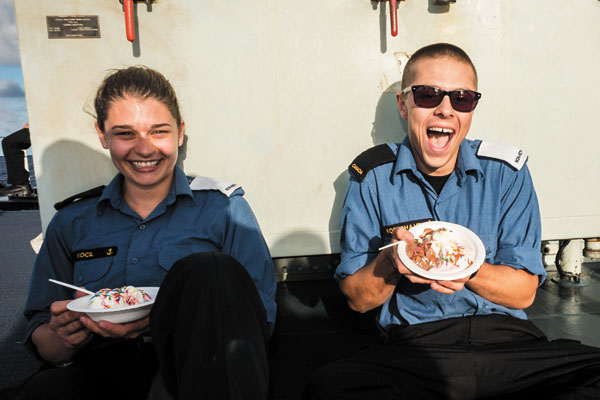
Calgary sailors enjoy sundaes on Sunday

[caption id="attachment_13318" align="alignnone" width="385"] Photo by: Kathryn Mussallem[/caption]Lt(N) J. Ryan Edgar, HMCS Calgary ~Vanilla, strawberry and chocolate ice cream with a choice of toppings; this is the morale-boosting dessert sailors of HMCS Calgary can look forward to after Sunday suppers while at sea during Exercise Rim of the Pacific (RIMPAC) 2016 in Hawaii.Sundaes on Sunday is a naval tradition that even the saltiest Chief remembers chowing down on from when they first joined.Its origins are unknown but for many sailors on deployment it is used as a marker to help orient them to the day of the week. It is also a way to take time to socialize with fellow crew members and reflect on the hard work, challenges and achievements of the past weeks and those to come.A sundae on a Sunday evening at sea is relied upon by all sailors as a time of camaraderie and cheer.

Cadets get sweaty and soaked at Galiano

[caption id="attachment_13309" align="alignnone" width="385"] Cadets on the Boatswain Mate Course gather together in the Flood Room for a group photo.[/caption]S/SLt Nathan Wong, HMCS QuadraThirty-eight Boatswain Mate Course Cadets from HMCS Quadra Cadet Training Centre participated in a firefighting and flooding introduction at Damage Control Training Facility (DCTF) Galiano, part of CFB Esquimalt, on July 21.The purpose of the training was to familiarize the cadets with basic damage control techniques, so they can respond to critical situations as a crew on board a ship.“We were filled with excitement to be there, and to work with our division.  We got so much closer as a team while learning new skills,” says course cadet Tyler Reynolds, 17.In the firefighting portion, cadets learned about the basic sciences of a fire, and the different classes of fires. They had the op­portunity to watch a demonstration of the various types of extinguishers, and took turns extinguishing a fire.Cadets were also placed in a burn room (a mock-up sleeping quarter on a naval vessel), and then the instructors turned on the fire, which spread rapidly around the room. In the burn room, cadets practiced using thermal imaging cameras, which can easily detect casualties and hot spots in complete darkness.“With the fire training, we really needed to exercise our communication skills to work together,” says Reynolds.Afterwards, cadets learned various fire hose handling techniques, and had fun in a Fire Hose Olympics, which involved knocking down pieces of wood and filling a bucket with the fire hose.In the flood portion, cadets learned how to prevent water from entering the ship. The goal is to reduce the rate of water flowing into the ship so it is manageable by the ship’s pumping systems. Cadets were shown ways to plug holes, reinforce broken doors and hatches, and practiced stopping a leak in a high pressure pipe.Then cadets were placed in a flood tank, which is a full mock-up room on board a ship, complete with holes and damaged bulkhead where water...

HMCS Brandon sailor wins national title

[caption id="attachment_13303" align="alignnone" width="235"] SLt Emily Wood on the bike portion of the CAF National Triathlon. Photo by Michel Hurtubise[/caption]Peter Mallett, Lookout Staff ~SLt Emily Wood claimed her second national sports title in less than a year after the sailor from HMCS Brandon captured first place at the CAF National Triathlon Championships.The July 8 event, co-hosted by the municipalities of Ottawa and Gatineau, Que., brought together over 100 military triathletes from across the country.SLt Wood finished with a top time of 2:23.42 for females competing in the Olympic Distance category, a gruelling race course that includes a 1.5 kilometre swim, 40 km cycling course and 10 km run.SLt Wood, 25, who works as a bridge watchkeeper, was also a midfielder for the MARPAC’s women’s soccer team that captured the CAF national title at camp Borden in September 2015.If that wasn’t enough for the family trophy case, she also collected four gold medals at the CAF Swimming Nationals at Markham, Ont., in April 2016.She says the latest victory came as a surprise because she had not raced in a triathlon for the past seven years since quitting the sport after high school, and had not done very much training for the race.“It was pretty exciting when I found out I had won and was happy to see I still had something in me since I had been out of it for so long,” said SLt Wood. “I used to do triathlons all the time but I have been taking a break because of school and work commitments, and also because it is hard to train for a triathlon while you are at sea. I didn’t know I had won until the results were posted later that day because the weather was so miserable and everyone had left the race site.”SLt Wood and the other nine competitors from the base were forced to contend with heavy rain and severe thunderstorms while competing in this year’s event. According to team manager and triathlete...

MARPAC marchers win Nijmegen award

[caption id="attachment_13298" align="alignnone" width="300"] Members of MARPAC’s marching team complete the last five kilometres of their journey during the Victory Parade on Annastaadt Street on day four of the 2016 International Four Days Marches Nijmegen. Photos submitted by Lt(N) Marianne Knai.[/caption]Peter Mallett, Staff Writer ~Sore feet aside, the Maritime Forces Pacific (MARPAC) Nijmegen marching team are elated to have won the prestigious Woodhouse Trophy at this year’s Four Days International Marches Nijmegen, July 19 to 22.The trophy is awarded to the top Canadian military contingent at the march who best represents the spirit of Nijmegen, and has the most positive impact on the Canadian contingent.While it is an honour to win the award, office in charge of the contingent, Lt(N) Marianne Knai says the real victory is the camaraderie among all Canadian Armed Forces personnel that kept them united and crossing the finish line each day.“We didn’t compete for the trophy, but instead our focus was working together with all of the teams to achieve 100 per cent completion for the entire Canadian contingent,” she says. “We also marched to remember the fallen and to connect with the locals who appreciate our presence.”The 11-member team representing MARPAC participated in the 100th version of the march through the Dutch countryside. They covered over 40 kilometres a day in hot and humid conditions alongside approximately 50,000 other participants.“The performance of the team was excellent and I could not be more proud,” says Lt(N) Knai. “We dealt with extreme weather conditions with temperatures of 35 Celcius or above for three of the four days, and torrential rain on day four. We suffered heat exhaustion and other physical fatigue but managed to pull through and fulfill the Commander’s intent of 100 per cent completion.”From the outset of their training Lt(N) Knai was quick to quash any talk of competing for the Woodhouse Trophy.Instead she wanted her team “fully focussed” on representing the Canadian Armed Forces, and the overall historical significance of the event. She...

Yellowknife embarks Norwegian sailors and their mine-hunting technology HUGIN

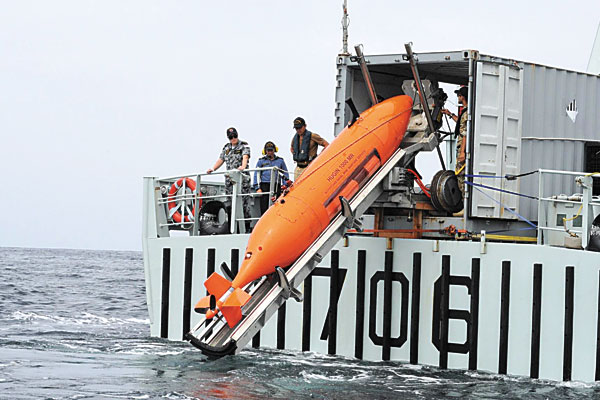
SLt Michael Van Vlaenderen and MS André Bienvenu, HMCS Yellowknife ~When HMCS Yellowknife arrived in San Diego for Rim of the Pacific 2016 (RIMPAC), the ship’s crew welcomed four members of the Royal Norwegian Navy and embarked their Autonomous Underwater Vehicle (AUV), also known as the HUGIN.Developed over the last 15 years by Kongsberg Maritime and the Norwegian Defence Research Establishment, the HUGIN 1000 conducts autonomous, semi-autonomous and supervised mine hunting operations and can operate in waters as deep as 3,000 metres.Embarking the HUGIN and its equipment involved configuring Yellowknife, a Maritime Coastal Defence Vessel, in such a way that had never been done before, including fitting two additional containers to the back of the ship. This meant that any response from the ship’s company to commonly practiced emergency procedures, such as a man overboard or fire and flood control, had to be adjusted to fit the new layout.“The ship’s engineering department carefully analyzed the impact the new payload would have on the ship’s stability, requiring them to make adjustments to the ship’s ballast,” said Chief Petty Officer Second Class Evan Mills, Chief Engineer. “Other considerations for the integration of the HUGIN system included running cabling and antennae to the bridge to ensure proper integration of HUGIN’s command and control systems.”The HUGIN is launched off the stern of the ship, directly out of its container using a hydraulic launch and recovery system. Once in the water, the HUGIN begins travelling on its pre-programmed course. Within a few minutes, it dives below the surface, conducting a survey of the ocean floor with its high-resolution sonar, or identifying previously found objects with its onboard optical imaging system.“While underwater, HUGIN finds its way using a state-of-the-art aided inertial navigation system, and relays its position to the ship using an underwater acoustic modem deployed...

Royal Canadian Navy Halifax-class frigate HMCS Vancouver departs Joint Base Pearl Harbor-Hickam for Rim of the Pacific 2016. Photo by Mass Communication Specialist First Class Shannon Chambers

RIMPAC 2016: HMCS Vancouver trains for incoming threats

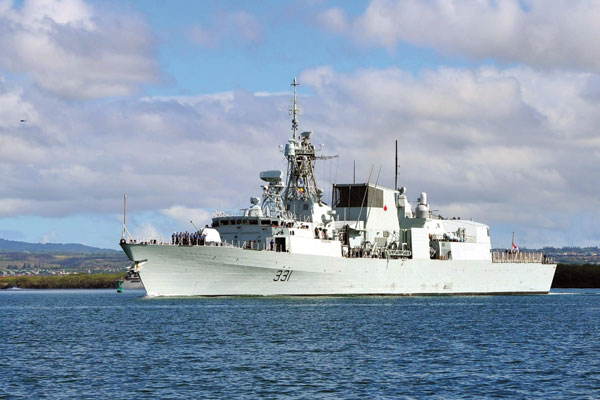
[caption id="attachment_13240" align="alignnone" width="300"] Royal Canadian Navy Halifax-class frigate HMCS Vancouver departs Joint Base Pearl Harbor-Hickam for Rim of the Pacific 2016. Photo by Mass Communication Specialist First Class Shannon Chambers, U.S. Navy[/caption]DND ~Her Majesty’s Canadian Ship (HMCS) Vancouver recently joined Her Majesty’s Australian Ship (HMAS) Warramunga and United States Ship (USS) Howard for a live anti-ship missile defence (ASMD) system test in Hawaiian waters, as part of Rim of the Pacific (RIMPAC) 2016.For Vancouver, the aim of the exercise was two-fold: to technically assess the operational effectiveness and suitability of Halifax-class ships in anti-air warfare and ASMD roles; and to tactically assess the application of knowledge and skills of the combat team in Vancouver in realistic operational ASMD. This shoot was the culmination of training reaching back to May of this year.Lieutenant (Navy) John Claymore, Vancouver’s Above Water Warfare Officer, is responsible for the ship’s sensors division – the team of sailors responsible for surface and air warfare. This includes directing surface and air engagements using Harpoon and Evolved Sea Sparrow Missiles (ESSM), Bofor 57mm cannon, Phalanx Close-In Weapon System, MASS and RAMSES weapons systems, and the detection of ESSM/communications signals via sophisticated electronic means.For Lt(N) Claymore, the ESSM was the final weapon he had yet to fire while employed as a Sensor Weapons Controller, an achievement accomplished by few in the Royal Canadian Navy.“RIMPAC really is the perfect venue for us to trial and evaluate the employment of our weapons and command and control systems, and also to assess our ability to respond to threats such as anti-ship missiles,” says Lt(N) Claymore. “Ultimately, nothing can replace the experience of firing real munitions – and being successful on a live-fire exercise like this gives a huge boost in morale to the entire crew.”Vancouver conducted a successful engagement against a...

Books for children of first responders looking for youth art created at PSP camps

Rachel Lallouz, Staff Writer ~Youth attending Personnel Support Programs’ (PSP) Fun Seekers Day Camps this summer have the opportunity to create art for a special picture book, “A Pollen Fairy Named Squirt.”The book is authored by Fay Maddison, CEO and President of the Natasha’s Woods Foundation.The book is one of four written by Maddison, and supported by her foundation. It embodies a fantastical and magical main character with the ability  to overcome everyday life challenges that children of first responder families may face. These challenges include having a loved one suffer from Post-Traumatic Stress Disorder (PTSD), or amputation, or the death of a loved one in service.This particular book features a tiny pollen fairy that gets moved or “posted” frequently.Like her books, Maddison’s foundation aims to raise awareness of and unconditional support for the mental wellness of children in both first responder and military families. The charity focuses on harnessing the power of story-telling and the arts to generate resources required to provide programs and support services for children affected by their parents’ service.During PSP’s Fun Seekers Summer Camps Ryan Anderson, Manager for Community Recreation at CFB Esquimalt, says children will read “A Pollen Fairy Named Squirt” and then be asked to draw a picture interpreting the story.The pictures will be submitted to the Foundation for possible inclusion in the book.Original art selected will best depict the storyline, explains Maddison, and the work of multiple young artists will be included in the book.“Sales of this children and youth illustrated picture book series will always give back to children and youth services programs,” says Maddison, who notes that the books will create a legacy by children, for children.In partnership with PSP, the Natasha’s Wood Foundation will also provide funds for grants that PSP Recreation departments can apply for to organize and...

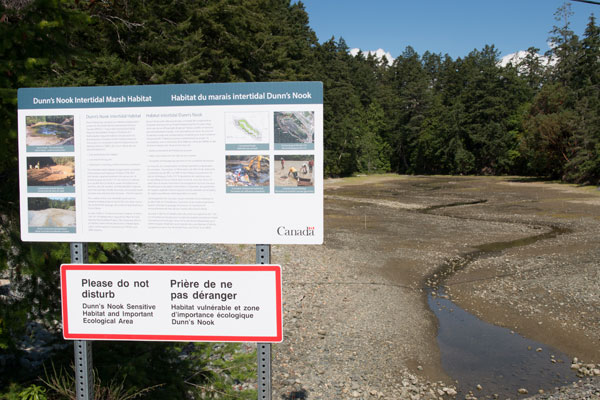
Image of Dunn’s Nook Fish Habitat project

Dunn’s Nook fish habitat compensation project launched

[caption id="attachment_13232" align="alignnone" width="300"] Image of Dunn’s Nook Fish Habitat project, taken at F Jetty, CFB Esquimalt. Photo by LS Ogle Henry, MARPAC Imaging Services[/caption]Lorraine Crinkley, FSE ~Public Works Government Services Canada (PWGSC) and Formation Safety and Environment (FSE) were onsite July 18 at Colwood for the unveiling of the Dunn’s Nook Fish Habitat Compensation Project.The project created intertidal marsh habitat at Dunn’s Nook located adjacent to F jetty in Colwood.As part of the PWGSC’s Esquimalt Graving Dock Waterlot Remediation Project, the Dunn’s Nook habitat was created to offset impacts caused by project activities.As part of the agreement, PWGSC cleaned up a contaminated site within Dunn’s Nook, improved the local habitat, and will transfer any surplus habitat credits to DND for application on future marine capital projects. Dunn’s Nook had been impacted by human activity since the mid 1900s when Wilfert Road and the culverts beneath it were constructed. This original development restricted tidal flow and passage of fish and other marine life into the marsh, and caused standing water to remain during low tide events. This resulted in anoxic, low quality fish habitat that had the potential for stranding and killing fish.Intertidal marsh area in Esquimalt harbour is a rare feature, and successful re-establishment of this habitat would be a substantial contribution to local biodiversity. Salt marshes are one of the most productive ecosystems on earth; they act as nurseries for plant and animal species, provide food and habitat for birds and other wildlife, slow shoreline erosion, absorb excess nutrients, and help to protect coastal areas from flooding.The Dunn’s Nook Fish Habitat Compensation Project began with the completion of several site assessments including a tidal flow assessment, chemical analysis of soils, and archaeological assessment to ensure the protection of nearby archaeological site DcRu-137.Once the assessments were completed, 930m3 of...

Lt(N) Brian Broom

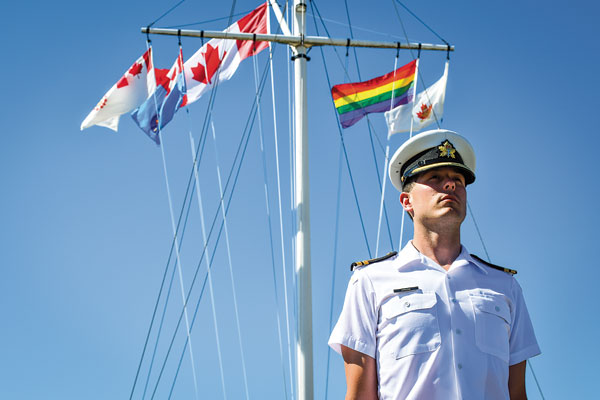
Cadets embrace Rainbow Flag

[caption id="attachment_13227" align="alignnone" width="300"] Lt(N) Brian Broom[/caption]Rachel Lallouz, Staff Writer ~In recognition of Lesbian, Bisexual, Gay, Transgender and Queer Pride Month, the iconic Rainbow Flag was flown for the first time during the opening summer parade at HMCS Quadra Cadet Training Centre.More than 800 cadets and staff were in attendance as the colourful flag waved in the wind overhead.Lieutenant (Navy) Brian Broom, a B.C. Course Officer for Drill and Ceremonial, organized the Rainbow Flag’s presence to ensure all cadets on course felt welcomed and respected.“As an officer in the cadet organization’s administrative and training service, I wanted to be the voice for cadets that may not necessarily feel safe or who may struggle with identifying themselves,” he said. “I wanted to show silent communication to everyone that we are a youth program of equality, and we were able to show this to everyone by raising the Rainbow Flag.”Lt(N) Broom, who identifies as a member of the LBGTQ community, says his experience as a young army cadet in Ontario was fraught with harassment. He was made fun of routinely for his identity.“My experience happened years ago, but to see the Rainbow Flag going up now shows the forward thinking our youth programs are based upon,” he says.To have the flag raised, Lt(N) Broom consulted with his command staff; he then drew up a memorandum that was sent to the Commanding Officer of the Regional Cadet Support Unit. His suggestion was given the green light without hesitation.As the cadet band played on, and just shortly after the Canadian Flag was raised, the Rainbow Flag was hoisted up by a cadet  as the first division of cadets marched by for the summer.“I was standing just off of the parade square, watching it be raised up,” says Lt(N) Broom. “It was a very personal...

Captain Kevin Naismith with his children Halsey

Canada Company Scholarship Fund expands

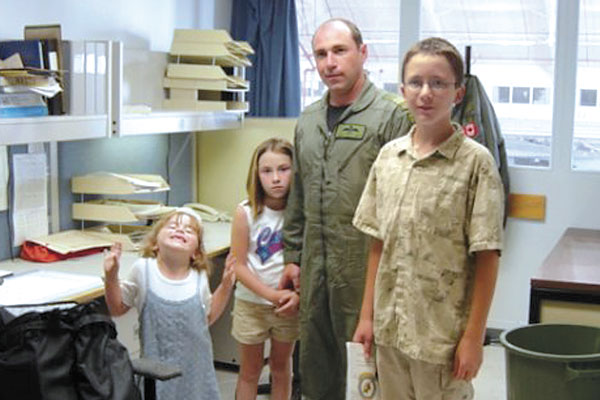
[caption id="attachment_13224" align="alignnone" width="300"] Captain Kevin Naismith with his children Halsey, Arina, and Adam.[/caption]Rachel Lallouz, Staff Writer ~Canada Company, an organization that provides outreach between Canada’s Armed Forces (CAF) members and the corporate world, announced June 24 an enhancement of their Scholarship Fund at their annual scholarship awards ceremony in Toronto.The scholarship fund exists to provide financial assistance towards the post-secondary education of eligible children of Canadian soldiers who have been killed while serving in domestic or international operations of the Canadian Armed Forces and Reserves any time since Jan. 1, 2002.For the purpose of this Scholarship Fund, “killed while serving” shall include Canadian soldiers, who, while still serving in the military and having served in an active role in a domestic or international operation of the Canadian Armed Forces and Reserves any time since 2002, or who took their own lives where the suicides have been determined by a Board of Inquiry to be death by suicide attributable through military service.Eligible candidates who enroll or continue their enrolment in full-time post-secondary academic studies may be awarded annual scholarships of up to $4,000 per academic year and may be available for a maximum of four years.An initial contribution of $100,000 from the Canada Company Board of Directors to the fund has since been matched by TD, Scotiabank, RBC and BMO. This spurred an additional $10,000 donation from The Globe & Mail bringing the total additional funding to $510,000.“It is important to Canada Company that we support the men and women in uniform, and their families,” says Angela Mondou, President of Canada Company.Belinda Naismith and her family are one of over a hundred families who have been supported by the fund. Her eldest son Adam was one of the first recipients of the scholarship fund when it was founded in 2008.Adam...

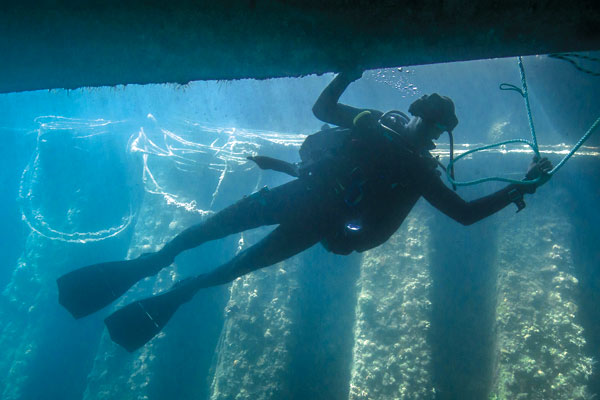
A diver selected to survey USS Arizona swims slowly alongside the decaying ship. Photos courtesy LS Joe Falletta

Navy divers survey historic wreck

[caption id="attachment_13221" align="alignnone" width="300"] A diver selected to survey USS Arizona swims slowly alongside the decaying ship. Photo courtesy LS Joe Falletta[/caption]Rachel Lallouz, Staff Writer ~Three Clearance Divers had a rare opportunity to dive an American historical site.Leading Seaman Joe Falletta, LS Raphael Marcouiller and LS Benoit Leonard from Fleet Diving Unit Pacific, and Master Corporal Nathan Rommens, Combat Diver from CFB Gagetown, were among the first non-Americans to complete a diving survey of USS Arizona, a ship bombed and sunk in Pearl Harbor by the Japanese in 1941.“The ship is a war memorial, and isn’t open to the public because it is an actual gravesite with 900 American sailors still trapped inside of it,” says LS Falletta.He and a group of 10 divers from Australia, South Korea, New Zealand, and the Netherlands were selected to attend the dive, led by an American National Parks representative diver.They are now among the less than 100 people who have ever seen the ship from beneath the surface.Before donning their Compressed Air Breathing Apparatuses, the group was taken to the Arizona Memorial in Pearl Harbor, a large white shrine situated in the middle of the harbor, to pay their respects and more fully understand the story of USS Arizona, located in the water almost directly beneath the memorial.The group dove about eight metres into the green waters, working with about 10 to 15 feet of visibility to view the ship, which stands upright on the ocean floor.“I felt shock and awe that I was even down there, because this dive had been scheduled and cancelled at the last minute at previous RIMPACs due to the sheer magnitude of the dive,” says LS Falletta. “So to be honest, up until I had my tanks on, there was still a part of me that thought...

From the left: Rear-Admiral Gilles Couturier

Change of Leadership for Maritime Forces Pacific

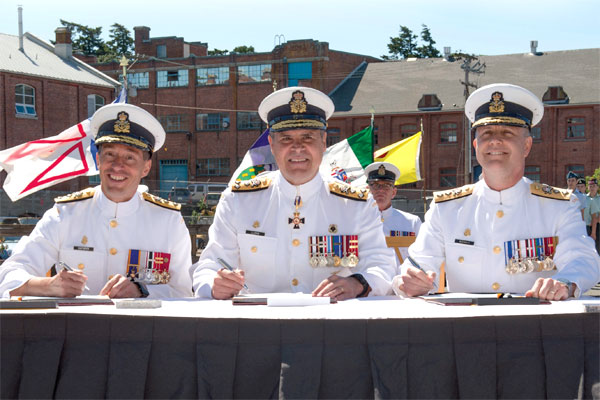
[caption id="attachment_13217" align="alignnone" width="300"] From the left: Rear-Admiral Gilles Couturier, Vice-Admiral Ron Lloyd, and Rear-Admiral Art McDonald sign Change of Command Certificates. Photo by Leading Seaman David Gariépy[/caption]Rachel Lallouz, Staff Writer ~A crowd of military personnel and invited guests took their seats at A Jetty on Friday morning, July 22, to witness the change of command between Cape Breton native Rear-Admiral Art McDonald and Rear-Admiral Gilles Couturier.Following an inspection of the Guard of Honour, the two Admirals signed the certificates officially changing command of Maritime Forces Pacific and Joint Task Force (Pacific) to RAdm McDonald. Overseeing the event was Vice Admiral Ron Lloyd, the new Commander of the Royal Canadian Navy (RCN).“I look forward to the privilege of working with the integrated military and civilian team here as we continue to ensure that we deliver operational excellence – at home and abroad, both today and tomorrow,” said RAdm McDonald in his formal address.Prior to assuming the Maritime Forces Pacific command, then-Commodore McDonald served as Director General of Naval Force Development from 2013 to 2016, overseeing planning and conducting one of the largest peacetime renewals in RCN history.In his address, RAdm McDonald highlighted the important milestones solidified by previous the commander, RAdm Couturier, including listening to, and working with Canada’s First Nations, and noting the previous commander’s respect for diversity and ability to tackle conduct issues head-on.He closed his speech by sharing his feelings of dedication to the future of the RCN.“You need to know that I am committed to helping you continue the great work of RAdm Couturier in the watch ahead, and that I wish to remain focused on the ships – yes, our warships for sure, but in addition to warships, I’m talking about relationships, mentorships, and ownership,” RAdm McDonald said. “These words will serve as the lead...

Detail of the statue unveiled to commemorate Company Sergeant-Major Francis Pegahmagabow’s contribution to the Canadian Armed Forces.

Statue of First Nations WWI Hero unveiled

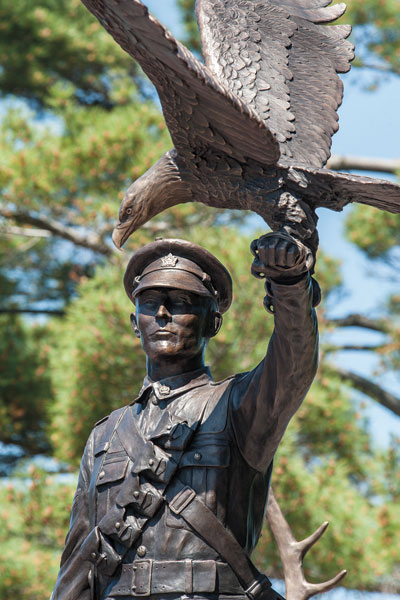
[caption id="attachment_13169" align="alignnone" width="200"] Detail of the statue unveiled to commemorate Company Sergeant-Major Francis Pegahmagabow’s contribution to the Canadian Armed Forces. Photo by MCpl Precious Carandang[/caption] Capt Jonathan Link, 4th Canadian Division Public Affairs ~One hundred years after earning his first of three medals in the Great War, a life-sized bronze statue of Company Sergeant-Major (CSM) Francis Pegahmagabow was un-veiled at a ceremony in Parry Sound, Ontario, on June 21st, 2016, National Aboriginal Day.The event, attended by Lieutenant-General Marquis Hainse, Commander of the Canadian Army, representatives of the Government, First Nations, the Canadian Military as well as other dignitaries, honoured the incredible life of CSM Pegahmagabow both on and off the battlefields of France and Flanders.“Company Sergeant-Major (CSM) Francis Pegahmagabow is one among many indigenous people who chose to proudly serve their country. I was delighted to attend the unveiling and recognize such an important military and historical figure,” said LGen Hainse in a prepared statement for National Aboriginal Day.The monument was commissioned by the Ontario Native Education Counselling Association, which raised half of the $169,000 needed to realize it. The remaining half was provided by the Department of Canadian Heritage.Standing approximately three metres or 10 feet tall, the monument depicts CSM Pegahmagabow in his wartime uniform with an eagle above and a caribou at his side. The eagle represents the connection to the Creator while the caribou represents the Pegahmagabow family clan.“He stands for something more than just who he was,” said Tyler Fauvelle the Sudbury-based sculptor of the statue, noting CSM Pegahmagabow’s life as a warrior in peace and war. “His fight, both here for Native rights and on the Western Front, resonates with all Canadians.”It is difficult to overstate CSM Pegahmagabow’s accomplishments. When war broke out in 1914, Pegahmagabow, then a 24-year-old orphaned member of the Wasauksing...

CPO1 Mikaela MacMullin

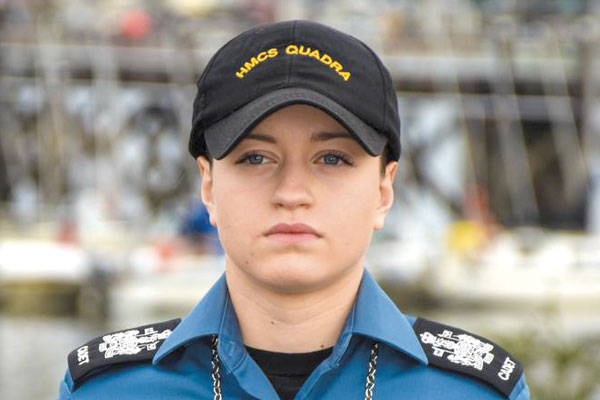
Cadet takes on role of Coxswain at HMCS Quadra

[caption id="attachment_13166" align="alignnone" width="300"] CPO1 Mikaela MacMullin, HMCS Quadra. Photo by Rachel Lallouz, Lookout[/caption]Rachel Lallouz, Staff Writer ~Eighteen-year-old Chief Petty Officer First Class Mikaela MacMullin will have more responsibility than most teenagers this summer as the newly-appointed Coxswain of HMCS Quadra, Cadet Training Centre, based in Comox.From June 29 until August 22, CPO1 MacMullin will oversee eight chiefs assisting her to manage 158 staff cadets and 855 course cadets being trained at HMCS Quadra in courses spanning rifle drill, marching and sailing.“Finding out I’d be Coxswain was a great blessing and amazing opportunity for me,” says CPO1 MacMullin, who was notified just prior to the beginning of summer. “I really enjoy watching the younger cadets grow and I love seeing them learn new skills, and then teach other cadets the new skills they’ve just learned.”Six years ago, CPO1 MacMullin joined Cadets in Edmonton, Alberta, when she was in Grade 7. She explains that she enjoyed learning how to march on her first night, and kept going back.“Since then, I’ve been attending HMCS Quadra every summer, where I trained as a Drill and Ceremonial Instructor and then eventually worked my way up to Senior Petty Officer for a drill course,” she says. “Last year I was Chief of Land Operations.”She says it was her early years in the Cadet Training Program where she learned the leadership skills so crucial to her current role: leading divisions and parades, learning how to teach activities and grow the skills of others and learning how to be the best possible team mate.“Apart from the skills I developed, I’m really patient, outgoing and I tell the truth – plus I try to be funny,” she laughs. “I try to promote the fun aspect of what we are doing while maintaining the professionalism of a training centre.”For...

Students enjoy lunch at Raven Culture Camp in Nanoose Bay.

RAVEN program’s Culture Camp brings together First Nations youth

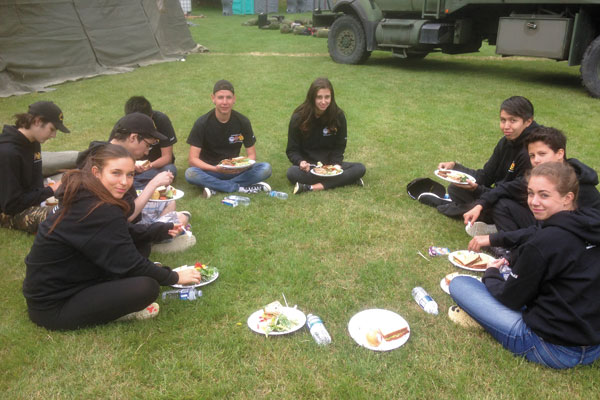
[caption id="attachment_13163" align="alignnone" width="300"] Students enjoy lunch at Raven Culture Camp in Nanoose Bay. Photos by Rachel Lallouz[/caption]Rachel Lallouz, Staff Writer ~The RAVEN program’s Culture Camp Opening Ceremony took place on June 11 in Nanoose Bay, B.C., to mark the beginning of a three-and-a-half-day camp where the 29 RAVEN participants learned about a variety of Aboriginal spiritual practices and beliefs in a military-structured setting.The students gathered in a semi-circle in a field while Brent Edwards, Chief of the Nanoose First Nations, was gifted with sweet grass and flint by Ed Neveau, RAVEN Culture Camp coordinator from Wanipigow, Manitoba, and his wife Madelain Hardisty-Neveau.“I think Canada has diversified now and we’ve seen many First Nations with a rich history of serving in armed forces,” said Chief Edwards. “Culture Camp brings together youth from different backgrounds to learn from each other.”Culture Camp marks the initial portion of the six-week RAVEN program, in which Aboriginal youth are selected from Canadian Armed Forces (CAF) recruiting centres to complete basic military qualification at CFB Esquimalt before graduating in late August.“When the kids come here, whether from a reserve or the city, some have limited cultural knowledge,” explains Ed. “We will incorporate Aboriginal culture through the entire camp and all events here.”The students, ages 16 to 24, come from a wide range of Aboriginal nations across Canada, including Mohawk, Cree, Ojibwe, Metis and Inuit.“It’s been fast paced and I love the culture aspect of it so far,” says Julia Jacobs, a 24-year-old Mohawk youth from Montreal. She says that when the program has completed, she’ll begin studies at Concordia University in First People’s Studies, and also plans to join the Reserve Force at the same time.During the course of the Culture Camp, participants awoke at 4 a.m. and spent their days participating in Aboriginal ceremonies, bonding...

Dan Ouellette

An inside look at Quality Engineering Test Establishment

[caption id="attachment_13160" align="alignnone" width="300"] Dan Ouellette, group leader of Quality Engineering Test Establishment, Measurement Sciences in Ottawa, demonstrates the movement of an articulating arm Coordinate Measurement Machine, which is used for both contact (tactile probing/scanning with a stylus), and non-contact scanning using a laser accessory at the recent Open House. Photo by DND[/caption]DND ~The Quality Engineering Test Establishment (QETE) ensures the materials and equipment provided to the Canadian Armed Forces (CAF) meets the stringent requirements needed to meet the demands of the operational environment.Accident and failure investigation, test and evaluation, acting as the program and technical authority for the CAF calibration, Emission Security and Radio Frequency Safety programs are just a few of the unique services provided by QETE.QETE’s recent open house was an opportunity for their partners such as the National Research Council, Defence Research Department Canada, the Canadian Coast Guard, and the University of Ottawa, to observe the capabilities of the QETE labs and their personnel.“Our biggest strength is our people, by far. Their passion and their commitment for serving the men and women of the CAF are remarkable,” says Serge Carignan, QETE Superintendent.One of the more interesting partners is the Museum of Nature, brought in recently to help with a project on the lethality of range on a new rifle that had to be able to kill a polar bear with one shot. By studying the skeleton of a polar bear, QETE personnel were able to simulate the hide, tissue and bone in a test environment to scientifically determine the lethality of various weapons and ammunition calibre.“This is an example of QETE’s science and engineering department reaching out to any type of organization to get the answers they need,” said Carignan.Performing accident and failure investigations is one of QETE’s most important roles. He emphasized that it is...

HMCS Fredericton arrives home in Halifax on July 5 after a six-month deployment on Operation Reassurance.

HMCS Fredericton completes successful deployment

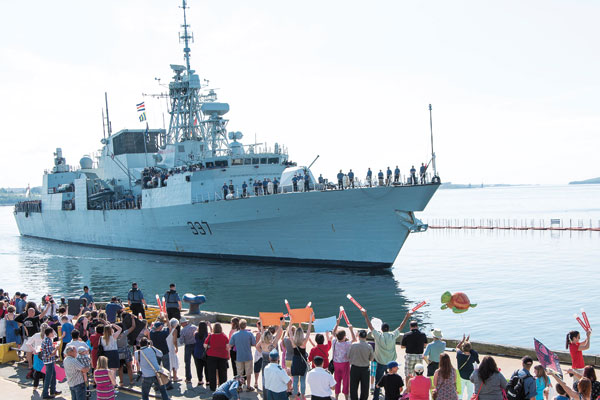
[caption id="attachment_13157" align="alignnone" width="300"] HMCS Fredericton arrives home in Halifax on July 5 after a six-month deployment on Operation Reassurance. Photo by DND[/caption]Royal Canadian Navy News ~The crew of HMCS Fredericton arrived home in Halifax on July 5, reuniting with family and friends after a six-month deployment to the Mediterranean and Black Seas on Operation Reassurance.“Her Majesty’s Canadian Ship Fredericton has completed an outstanding NATO-led maritime Reassurance mission far from home and to the highest traditions of the Royal Canadian Navy,” said Commodore Craig Baines, Commander Canadian Fleet Atlantic. “The ship’s company and embarked helicopter air detachment achieved excellence in operations in all regards, highlighting their unity as a fighting force and ability to overcome serious obstacles and unforeseen circumstances. We are all very proud of our colleagues on HMCS Fredericton: they have earned a brief repose from the busy tempo of military duty and have earned some well-deserved time to enjoy a gorgeous Nova Scotia summer with their friends and family.”HMCS Fredericton deployed as the Maritime Component of Operation Reassurance, the Canadian Armed Forces contribution to support NATO assurance measures in Central and Eastern Europe.The ship departed Halifax on January 5 and began Operation Reassurance duties on January 8. It served with Standing NATO Maritime Group Two (SNMG2), which engaged in maritime situational awareness operations to detect, deter and disrupt terrorism in the Mediterranean Sea. Standing NATO Maritime Groups are multinational, integrated maritime forces made up of vessels from various allied countries. SNMG2 units worked with Greek, Turkish and other authorities to monitor the migrant crisis in the Aegean Sea and report on smuggling activities.In total, HMCS Fredericton was deployed for a period of six months, spending 125 days at sea and travelling 20,770 nautical miles (38,500 kilometres). It led SNMG 2 Task Unit 02 in the Black Sea...

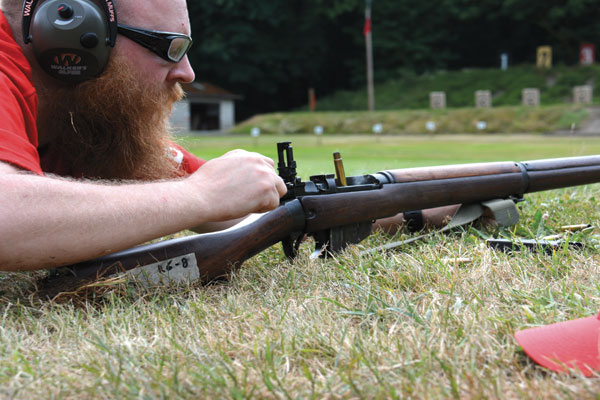
Canadian Ranger Master Corporal Adam Glover

Ranger Patrol

[caption id="attachment_13154" align="alignnone" width="300"] Canadian Ranger Master Corporal Adam Glover, of Gillam Patrol in Manitoba, pulls back on the bolt of his Lee Enfield .303 rifle during marksmanship training at Heals Range in Victoria, BC. Photo by Capt Chris Poulton, Public Affairs[/caption]Peter Mallett, Staff Writer ~They are the eyes and ears of remote Canada and a vital part of the Canadian Armed Forces’ (CAF) domestic operations, but most people still don’t know they exist.With that in mind, the newly appointed commanding officer of the 4th Canadian Ranger Patrol Group (4 CRPG), Lt.-Col Russ Meades, says one of his key focuses will be educating both military personnel and the public about the approximately 5,000 part-time Canadian Rangers across our country who provide patrols for national-security and public-safety missions in difficult to access, sparsely settled regions as members of the Canadian Army Reserve.Lt.-Col Meades is now the man in charge of the 1,000 Canadian Rangers in the four western provinces and their immense area of 2.71-million square kilometers of rugged terrain and coastline in B.C., Alberta, Saskatchewan and Manitoba with 43 locations between the Pacific Coast and the Ontario border.“Part of my personal quest during my tenure will be to dispel some of the myths and standardize and build on our message of who we are and what we are about so we can garner greater public understanding,” said Lt.-Col Meades. “To command 4 CRPG is a great honour and a privilege and also a massive undertaking and responsibility, but above and beyond that it’s a wonderful opportunity.”After the Change of Command Ceremony held at Camp Albert Head on June 26, Lt.-Col Meades was quick to point out that his predecessor, outgoing commanding officer Lt.-Col Tim Byers, did “stellar work” in overseeing the transition of the unit after control of the Canadian...

Garrison Petawawa Combatives Grappling Championships

Leading Seaman wins gold at annual grappling championship

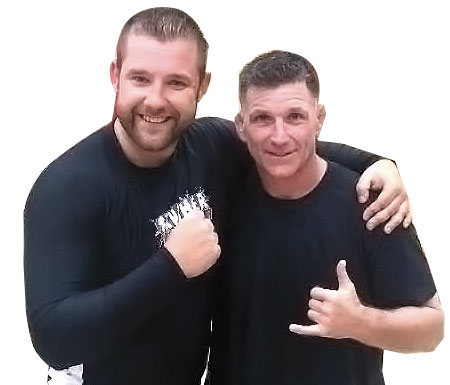
[caption id="attachment_13151" align="alignnone" width="300"] LS Thibault poses with Major Steve Burgess, Senior Combatives Instructor/Tournament Director, at the Garrison Petawawa Combatives Grappling Championships which raised $2,500 to date for the Soldier On program. Photo courtesy of LS Thibault[/caption]Sonya Chwyl, MARPAC Public Affairs ~When Leading Seaman Lee Thibault learned that no one from the Pacific Navy had ever competed in the Canadian Armed Forces’ only grappling tournament, he knew he needed to represent the West Coast.With seventeen years of wrestling experience, LS Thibault is no stranger to combat sports and always tries to maintain a competitive level of fitness. At sea, he runs fitness classes on the flight deck of the ship; on land, he coaches and trains at his local gym, Crusher Combat Sports, and competes in a variety of local amateur tournaments.He first heard about the Garrison Petawawa Combatives Grappling Championships through a colleague, Petty Officer Second Class Timothy Rose, who also trains at Crusher Combat Sports and was interested in getting a team together to compete.The tournament takes place every year in Petawawa, Ontario, and is open to members of the CAF actively serving in the Regular or Reserve Force. All money raised by the competition goes to Soldier On, a program that helps serving CAF members and veterans overcome physical or mental health illness or injury through physical activity and sport. This year, the tournament raised nearly $2,500.Grappling is a form of submission wrestling that involves holds and take-downs, but no striking. That makes it a great sport for CAF members, says LS Thibault, because there’s less danger of injury than with other combat sports.Most teams competing in the championship come from the army or air force, and because the tournament was mostly unknown in the navy, LS Thibault and PO2 Rose had a hard time forming a team...

From left to right

Military Police lace up for Special Olympics athletes

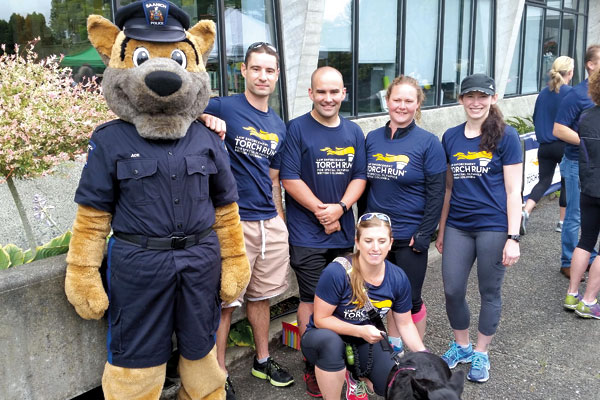
[caption id="attachment_13045" align="alignnone" width="300"] From left to right, SLt Leblanc, MCpl Edwards and PO2 Nilsson from MPU Esquimalt; Lt(N) Joiner; and Capt Harris of Canadian Forces National Investigation Service Pacific Region participate in the Victoria Law Enforcement Torch Run.[/caption]Sgt B.L. Oxford and SLt A.K. Leblanc, Military Police Unit Esquimalt ~On June 18, members of Canadian Forces National Investigation Service Pacific region and Military Police Unit Esquimalt participated in the 2016 Law Enforcement Torch Run (LETR) for Special Olympics in Victoria, BC. The run consisted of a five-kilometre route along the Galloping Goose Regional Trail, beginning and ending at the Saanich Police Department.On June 25, it was the Military Police members of the Canadian Forces Maritime Experimental and Test Ranges Military Police Detachment turn to participate in the 2016 LETR for Special Olympics in Nanaimo, BC. The run consisted of a five-kilometre route beginning and ending at Maffeo Sutton Park in Nanaimo.The LETR is an innovative initiative powered by dedicated law enforcement personnel around the world who want to help Special Olympics athletes experience acceptance, achievement and admiration through sport. It’s an inspiring, joyful phenomenon that has raised approximately $3.4 million in B.C. since 1990 and each year brings in about $30 million U.S. worldwide, all in support of the Special Olympics.The British Columbia LETR is among the most successful and creative branches of the global campaign, and is run in partnership with law enforcement personnel from multiple agencies across the province.

16 new officer cadets were enrolled at a ceremony at Royal Roads University in Victoria. From left to right: Back: OCdt Benjamin Jacobs

New officer cadets join the Regular Officer Training Plan

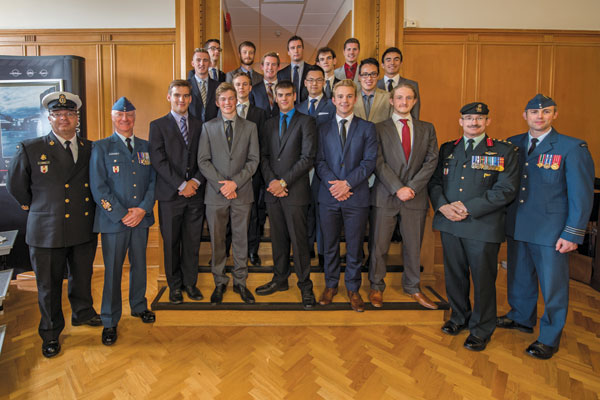
[caption id="attachment_13041" align="alignnone" width="300"] 16 new officer cadets were enrolled at a ceremony at Royal Roads University in Victoria. Photo by MCpl Brent Kenny[/caption]Cpl Rebecca Major, CF Recruiting Group ~On June 23, the Canadian Forces Recruiting Centre (CFRC) Detachment Victoria welcomed 16 new officer cadets into the Canadian Armed Forces (CAF) at the Regular Officer Training Plan (ROTP) enrolment ceremony at Royal Roads University. On June 24, CFRC Vancouver followed suit and enrolled 47 new officer cadets at HMCS Discovery in Vancouver. Both of these ceremonies were presided over by Colonel Timothy J. Bishop, Commanding Officer of Canadian Forces Recruiting Group (CFRG).The ROTP entry program provides fully subsidized education for students to attend either the Royal Military College in St-Jean, QC, the Royal Military College of Canada (RMCC) in Kingston, ON, or an eligible Canadian civilian university of the applicants choosing. During the course of their education, students are provided leadership training and occupation specific courses to help them build towards the foundation of skills required to be an officer.Summer training will include Basic Military Officer Qualification and on the job training in various cities across Canada. On top of these experiences, students earn a salary during the course of their studies and will have already begun contributing towards their pension. Once they have completed their degrees, students are given full-time jobs in their field of study. These jobs are provided to the students in order for them to fulfill their military service, a small price to pay for a free education. This military service is calculated at a rate of two months of service for every one month of education provided.With all of these benefits, it is easy to understand why this program is very competitive. Over 600 Officer Cadets will be enrolled into the Canadian Armed Forces under...

Canucks prospects feel the heat at Damage Control School

[caption id="attachment_13032" align="alignnone" width="300"] Photo courtesy of John W. Penner, John’s Photography[/caption]Lt(N) Nicole Murillo, Base Public Affairs ~The Canucks Prospects were on fire on the ice at their training development camp, but off the ice they were learning to fight fires and floods at the Damage Control Training Facility (DCTF) Galiano.The camp is an opportunity for the athletes to be put through their paces on the ice each day, as well as take part in other team activities throughout the week, such as working with the kids at The Nanaimo Child Development Centre.On July 6, the 33 players from six different countries put their teamwork and communication skills to the test in a number of friendly competitions that tested their damage control and firefighting skills for the coveted DC School Challenge Cup. In one of the first competition, the players were timed as they controlled a flood in the simulator. Then  they headed outside to use the fire hose to knock down three logs before filling up a bucket until a water bottle that was inside floated up to the top and fell onto the ground.“Although we’re a little upset about our loss [of the DCTF Cup], we definitely had a lot of fun today,” said 24 year-old Justin Parizek, an invitee from the University of Nebraska-Omaha. “This correlates really well to hockey; we had to switch off and trust our team-mates to hit the log and fill up the bucket just like we have to trust them with the puck.”Jakob Stukel, a 19 year-old player originally from Surrey, B.C., who played three seasons for the Vancouver Giants, also didn’t win the DC Cup, but got the chance to fulfill his other childhood dream: being a firefighter.“This was a really great experience and a bit of a surprise,” said Stukel. “You have to work together as a team here, just like we have to on the ice and the level of communication is similar to what we have to do...

HMCS Calgary’s Directed On-the-job Training Program team. Photo by Kathryn Mussallem

Training program sees stokers thrive

[caption id="attachment_13025" align="alignnone" width="300"] HMCS Calgary’s Directed On-the-job Training Program team. Photo by Kathryn Mussallem[/caption]Lt(N) J. Ryan Edgar, HMCS Calgary ~With the busy operational schedule of Royal Canadian Navy (RCN) warships, obtaining new sailor-specific qualifications can be a challenge. The RCN put the Directed On-The-Job Training Program (DOJT) in place a few years ago in order to allow sailors, who otherwise would not have the opportunity, to go to sea and progress their training. Participants are able to focus all their efforts on learning and completing their training packages, resulting in impressive progress towards new qualifications. During HMCS Calgary’s transit from Esquimalt, B.C., to Pearl Harbor, Hawaii, in support of Exercise Rim of the Pacific 2016, six marine engineers working towards their 2E Certification and six working towards their 3E Certification were able to participate in the program.During their time aboard, the trainees had the opportunity to participate in engineering drills and practice emergency responses in the event of equipment failures. Additionally, they were able to conduct system walkthroughs and take advantage of the ship’s on-board training system. Evenings were spent creating technical reports, drafting system drawings and presenting technical information.“It’s been a great experience,” said LS Tyler Jennings, a Cert 2E trainee. “I’ve been exposed to many different scenarios and have been able to participate in different evolutions that I wouldn’t have been exposed to back at my home unit. DOJT has allowed me to complete my training package, now I just need to challenge my qualification board.”At the end of the serial, trainees completed an average of 33 per cent of their packages, with some members completing as much as 57 per cent.“We’ve seen phenomenal progress over the past two weeks.” said Lt(N) Rowan Wilson, the Engineering Officer running the program. “The trainees have seamlessly integrated with the...

A Caribbean diver conducts a hull inspection as part of a counter-mine training scenario during Exercise Tradewinds 16 in Montego Bay

Divers teach partner nations in Caribbean

[caption id="attachment_13021" align="alignnone" width="300"] A Caribbean diver conducts a hull inspection as part of a counter-mine training scenario during Exercise Tradewinds 16 in Montego Bay, Jamaica on June 20. Photo by Sgt Yannick Bédard, CF Combat Camera[/caption]Capt Christopher Daniel, CF Combat Camera ~More than ten clearance divers from the Royal Canadian Navy’s Fleet Diving Unit (Atlantic) and Fleet Diving Unit (Pacific) were operating out of Discovery Bay, Jamaica, for Exercise Tradewinds 2016 from May to June.The diving component of the exercise started with the Canadian divers teaching the Ship’s Team Diver Course to Caribbean trainees. After that, the trainees applied their new skills by conducting diving in support of fleet operations.“The training events that we’ve done have been ship’s diver-related scenarios, which include hull searches, jetty sweeps, bottom searches and minor salvage projects,” said Lieutenant(Navy) J.R. Gallant, Executive Officer of Fleet Diving Unit (Atlantic) and officer-in-charge of the Canadian dive contingent at Exercise Tradewinds 2016.These training scenarios help to enhance the diving skills of partner nations and increase their overall level of interoperability within the region through instruction in areas such as basic dive theory, diving physics and underwater navigation, and search and recovery techniques.“Everything we’ve taught our partner nation divers they could be called upon to do to protect the Caribbean region,” said Lt(N) Gallant.Leading Seaman Paul Paquette is a Canadian clearance diver from Fleet Diving Unit (Pacific) working as an assistant instructor during the exercise. “My job is to ensure all candidates learn diving to high standards so they can go out on their own and be safe and proficient in the water,” he said.According to Lance Corporal Ameal Douglas, a diver from the Jamaican Defence Force, the exercise has been “a wonderful experience.”“We’ve learned a lot from our Canadian counterparts as well as with our partner nations...

RCN takes next step in naval training

[caption id="attachment_13017" align="alignnone" width="300"] Sailors march past the Reviewing Officer, Commander of Maritime Forces Pacific, Rear-Admiral Gilles Couturier, during the Naval Personnel and Training Group Change of Command parade at Work Point, Canadian Forces Base Esquimalt, on July 6. Photos by Cpl Stuart MacNeil, MARPAC Imaging Services[/caption]Sonya Chwyl, MARPAC Public Affairs ~Last Wednesday, Maritime Forces Pacific’s finest was on full parade to mark the reconfiguration of the Naval Training Development Centre (Pacific) and Naval Fleet School (Pacific).The large-scale parade was accompanied by the Naden Band, and followed by a formal renaming and change of command, during which Commander S.E. Hooper took command of the Naval Training Development Center (Pacific), while Commander Todd Bonnar took command of the Naval Fleet School (Pacific).The ceremony signalled the next step in the RCN’s Future Naval Training System initiative, which will re-configure five training centres across Canada into three campuses in Halifax, Esquimalt and Quebec.“This is the inception of a new organizational structure,” said Rear-Admiral Gilles Couturier in a speech following the parade. “Today, we’re celebrating the implementation of modern training aligned across three campuses.”The new structure – a “system of systems,” according to RAdm Couturier – will leverage emerging technology to generate efficiency and support operational excellence.In Esquimalt, the newly-named Naval Fleet School (Pacific) will deliver individual and career courses, while the Naval Training Development Center (Pacific) will be the RCN’s Center of Excellence for engineering, damage control, command, leadership and professional development curriculum and courseware development.The schools will allow Regular and Reserve Force sailors to train at home or at their own units in a shorter time span by completing coursework through a blend of traditional classroom learning, distance education, virtual tools and hands-on experience.“We’re seeking to train officers where they live,” said RAdm Couturier. “Through modernization, we believe we can reduce course length by thirty percent.”Innovative training methods, such as virtual ship models and bridge simulators, will help prepare sailors for work on board the RCN’s forthcoming Arctic Offshore Patrol Ships, Joint...

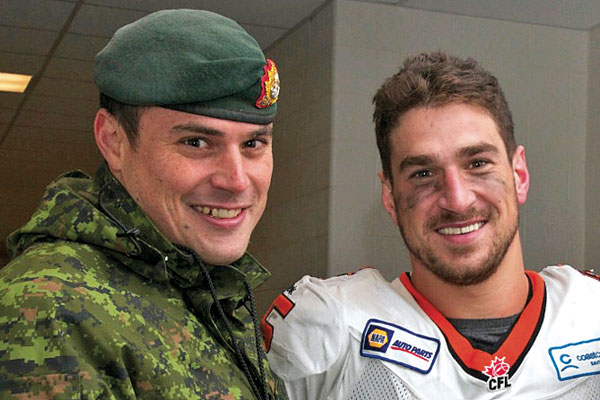
Major Nick Arakgi (left) and his brother

CAF night has big impact on two Lions

[caption id="attachment_13013" align="alignnone" width="300"] Major Nick Arakgi (left) and his brother, BC Lions linebacker Jason Arakgi. Photo courtesy of BC Lions[/caption]Matt Baker, BC Lions ~The BC Lions Football Club was proud to hold Canadian Armed Forces Night when the Toronto Argonauts came to town last Thursday. Tickets were given to servicemen and servicewomen who may not otherwise be able to attend a game.Hunter Steward and Jason Arakgi both have strong ties to the Canadian Armed Forces: Hunter’s Father Robin serves as a Lieutenant Colonel in the army, and was on hand assisting in the coin toss with Rear Admiral Gilles Couturier of the Royal Canadian Navy, while Jason’s older brother Nick currently serves as an infantry officer in the Royal Hamilton Light Infantry.Football is often referred to as a “battle in the trenches” or a “war of attrition.” Considering the great game involves big hits, banging pads and lots of excitement, most of the time such comments are not met with much resistance.“You compare it just because football is a match up of man against man and you have to physically dominate the other person,” Steward said. “It’s totally different than war absolutely. Lives aren’t at stake.”The elder Steward has quite a decorated record serving our country, including a tour in Afghanistan in the first couple of years following the 9/11 terrorist attacks.“He was pretty high up in the ranks, I think a major at the time,” Hunter Steward said. The Lions offensive lineman was barely into his teens when his father went overseas, and he admits it was pretty intense times for the family. “I knew he wasn’t directly out in the field, but you still have all those concerns. I am very proud of the work he’s done.”In addition to Afghanistan, Steward’s Father also did tours in Bosnia...

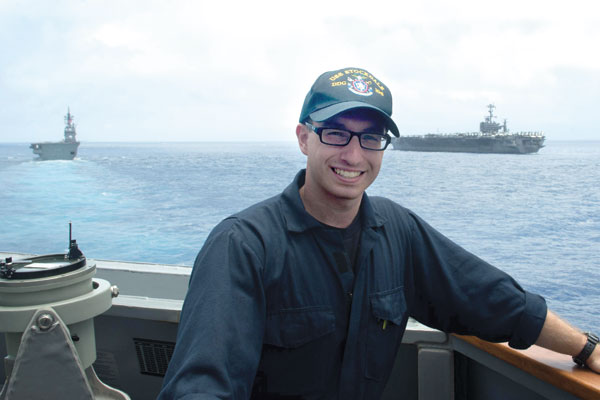
Alek Robaczewski

Summer at sea: Naval Cadets sail in U.S. warships

[caption id="attachment_12976" align="alignnone" width="300"] Naval Cadet Alek Robaczewski on the bridge wing of USS Stockdale in the Philippine Sea.[/caption]Sonya Chwyl, MARPAC PA Office ~Not many summer jobs give university students the chance to gain hands-on experience in their field, and even fewer provide the opportunity to travel while doing it.That’s what makes the Naval Personnel and Training Group’s (NPTG) On the Job Experience (OJE) program such a great opportunity.This summer, the OJE program has given a number of Royal Military College Naval Cadets the chance to live and work on board military ships for the first time. Twelve of them are spending the summer with the United States Navy on some of the most advanced warships in the world, including guided missile destroyers.“It’s hard not to be jealous of these cadets,” said Lieutenant(Navy) Charlotte Farish, the OJE Program Coordinator. “I think they’re going to have such an amazing summer.”Five Naval Cadets have joined the United States Ships (USS) Stockdale, Spruance, Chung-Hoon, and Mobile Bay. They’ll be on board for a month and a half, working alongside the American crew.Another group of seven have joined the USS San Diego, where they’ll stay for about a month and get to participate in RIMPAC, the world’s largest international maritime exercise.The cadets are already hard at work orienting themselves on the ship and learning the basics of damage control and firefighting. After that, they’ll be able to carry out basic officer tasks, such as standing watch on the bridge.For the cadets, it’s an opportunity to learn the traditions and practices of one of Canada’s greatest naval allies.“They’re working on major warships that are heavily armed—just phenomenal ships,” said Lt(N) Farish. “They’re going to have so much fun sailing on them.”The time they spend on the water will go towards their sea service insignia.While this...

Explore More

Categories

Top News

E-Editions Archive

News Stories Archive

Proud Supporters

Joshua Buck, Lookout Newspaper