
[wpml_language_selector_widget]
[searchwp_form id="1"]

Latest News

Meet Canadian elite sniper

Former Sniper pens book – coming to Chapters

[caption id="attachment_12528" align="alignnone" width="200"] Meet Canadian elite sniper, Ottawa city Councillor and finalist in 2013's Amazing Race Canada, Jody Mitic, as he signs his memoir Unflinching, that reveals his personal journey into the Canadian military and what happened after he returned home.[/caption]Rachel Lallouz, Staff Writer ~Journaling after a devastating injury has transformed a former Canadian Armed Forces (CAF) sniper into a successful author. Jody Mitic, a retired Master Corporal, and current city counsellor in Ottawa, lost both legs in a landmine accident while fighting in Afghanistan in 2007. “I, like most military guys, never imagined writing a book about myself,” says Mitic.“It started more as self-therapy, just getting my thoughts out, but it slowly morphed into a full book.” Last September, those thoughts became Unflinching: The Making of A Canadian Sniper, published by Simon and Shuster.The book’s paperback edition was released May 3, and Mitic is now embarked on a tour across Canada to promote his work.He will be at Chapters in Victoria May 14 from 2 to 4 p.m.His story begins much like most soldiers in the CAF. He joined the army reserves in Ontario in 1994 when he was 17. Shortly after, in 1997, he joined the Royal Canadian Regiment in Petawawa, where he received his sniper qualifications.“It felt amazing to be trained as a sniper. It ended up being the best job. I loved serving my country in uniform, and I miss it every day,” he says. His life took a dramatic turn on Jan. 11, 2007. While acting as the team leader of CAF snipers in the Tangi Valley, Afghanistan, Mitic stepped on an anti-personnel landmine with a mortar bomb underneath it. He lost both his legs. He retired in June 2014. “Writing about your own experiences is difficult,” he says. “I challenge anyone to do...
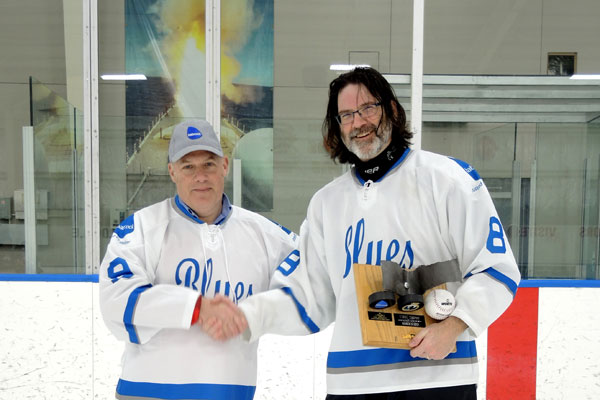
Babcock Blues Team Captain Mark Russell (right) accepts the VISSC (Victoria Class In-Service Support Contract) Hockey Challenge Trophy. The Blues retained their title with a 5-4 shootout win over the RCN Submariners at Wurtele Arena on Apr. 22. PHotos by Peter Mallett

Babcock retains hockey title

[caption id="attachment_12481" align="alignnone" width="300"] Babcock Blues Team Captain Mark Russell (right) accepts the VISSC (Victoria Class In-Service Support Contract) Hockey Challenge Trophy. The Blues retained their title with a 5-4 shootout win over the RCN Submariners at Wurtele Arena on Apr. 22. PHotos by Peter Mallett, Lookout[/caption]Peter Mallett, Staff Writer ~The men and women who maintain Pacific Fleet submarines have another year to gloat over those who sail in them.In a 5-4 shootout hockey game, Babcock Canada Inc. once again bested a team of Royal Canadian Navy (RCN) Submariners in their annual hockey challenge at Wurtele Arena on April 22.The submariner team, made up of personnel from HMC Submarines Chicoutimi and Victoria, didn’t give up the win easily. With just 19 seconds left in the third period, they sent the VISSC (Victoria Class In-Service Support Contract) Challenge hockey game into overtime after scoring the equalizing goal. But then Robert Cookson of the Babcock Blues converted his game-deciding penalty shot to help his team edge out their navy rivals 3-2 in the fifth round of the tiebreaking overtime.“They really got us this time. It will just build up the rivalry for next year,” chuckled Victoria’s MS Douglas Mack in a good-natured reaction to the defeat.The Blues, made up of employees from Babcock Canada, Seaspan Victoria Shipyards and BC Ferries, tapped their sticks on the ice and cheered as they were presented with the VISSC trophy.Bragging rights and nail-biting finishes aside, MS Mack reacted to the loss like most of his teammates, who were brimming with smiles despite the disappointment at the conclusion of the game. He explained the reason for the tournament is more about building “friendships and camaraderie” with the people who build and keep the RCN’s subs running than the final score of the game.The Blues team captain, LCdr...

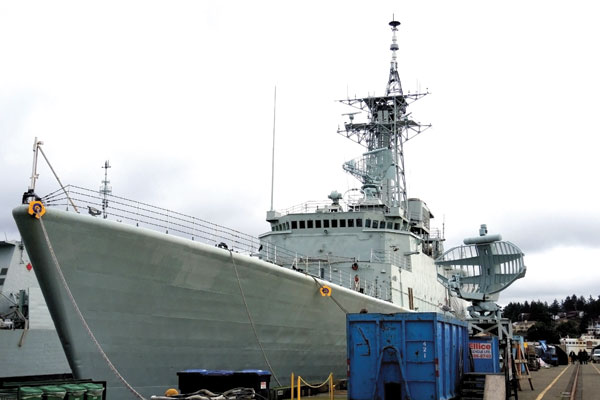
HMCS Algonquin underwent the disposal process at Dockyard’s C Jetty on Feb. 1. Photo by Peter Mallett

Algonquin sails one final time

[caption id="attachment_12520" align="alignnone" width="300"] HMCS Algonquin underwent the disposal process at Dockyard’s C Jetty on Feb. 1.Photo by Peter Mallett, Lookout[/caption]Peter Mallett, Staff writer  ~On Monday at 11 a.m., after 42 years of service to Canada, the former HMCS Algonquin will depart Esquimalt harbour, under tow, never to return.The warship, gutted and stripped, will be hitched to a large ocean-going tugboat, and then moved past Duntze Head and Fisgard Lighthouse to the Strait of Juan de Fuca.Their destination is Liverpool, Nova Scotia, where Algonquin will be broken up and recycled.Departure day will be a “bitter-sweet” moment says Lt(N) Douglas Totten, Executive Officer of Detachment Algonquin. He helped organize the process of stripping the vessel of its parts, liaising with multiple agencies, which took 11 months.“It’s a day to reflect on the past – as sailors often do – there are so many on the coast who will be sad to see her go,” says Lt(N) Totten. “We are expecting a number of people to be on hand at the jetty and Duntze Head Battery when she leaves.”On Nov. 27, 2015, the $39-million disposal contract for both Algonquin and Protecteur was awarded to marine construction firm R.J. McIsaac Construction, Ltd. of Antigonish, N.S.Protecteur, a replenishment oiler, was deemed too expensive to repair after it suffered a massive engine room fire in February 2015. Protecteur, decommissioned in May 2015, left the base on Feb.15 and took 56 days to reach the disposal yard in Liverpool.Former HMC Ships Iroquois, Preserver and Athabaskan, all based on the East Coast, will meet the same fate, but plans for those vessels has yet to be announced.Lt(N) Totten served in Algonquin from 2013 until it was put out of service in 2015. Since the decommissioning ceremony on June 11, 2015, he and his unit of 30 personnel,...

Photo by Cpl Gavin Kennedy

Scottish Starburst by the Sea: Army and Navy join forces for training exercise

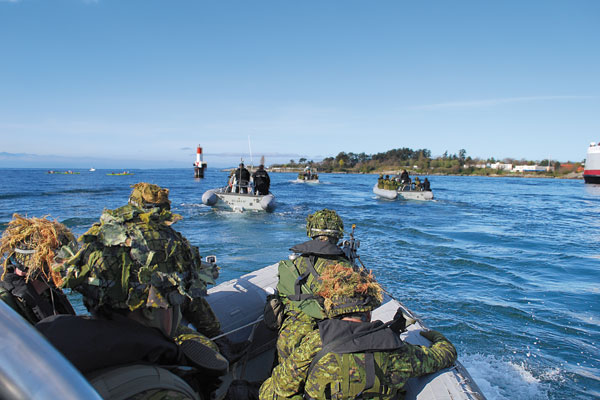
[caption id="attachment_12476" align="alignnone" width="300"] Photo by Cpl Gavin Kennedy[/caption]SLT Rudee Hastie, HMCS Malahat ~Navy and Army Reserve units from across Vancouver Island joined forces April 1-3 for Exercise Scottish Starburst in the waters around Victoria Harbour, Esquimalt Harbour, and the training areas at Albert Head and Rocky Point.The joint exercise entailed diving and small boat operations to insert and extract troops engaged in a land-based scenario.Participating units included HMCS Malahat, the Canadian Scottish Regiment, 39 Brigade Signals Regiment, 11 Service Regiment, 11 Field Ambulance and 5th (BC) Field Artillery Regiment.While spring time small boat exercises – designed to provide training opportunities for members to maintain individual and collective skills – are a normal training event for Malahat, this year’s exercise was a much larger affair. With more than 100 sailors and soldiers from eight Reserve units coming to Victoria from as far away as Comox, it was a great opportunity for joint training and familiarity.The exercise began on Friday evening with broad-scope and unit-specific briefs and drills at Malahat. This was followed by an opportunity to meet members from other units over the time honoured navy tradition of a hot bowl of soup from the galley.On Saturday morning, the units jointly deployed by land and sea to set up a forward operations centre at Albert Head. Each unit focused on providing their specialized skills in support of the exercise.Malahat’s boats deployed to insert Army forces into their land element scenarios. Crews then carried on with small boat and diving operations, but remained available to respond to exercise requirements such as a medical evacuation and water-borne re-supply to units at Rocky Point.39 Signals Regiment provided communications support and 11 Field Ambulance sustained a medical evacuation scenario, both at the Operations Centre and as embedded members of the patrols.On Sunday morning, Malahat’s...

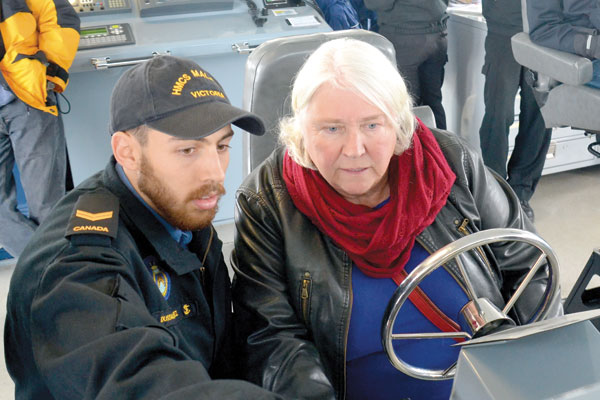
Penelope Tew receives some driving instruction from Leading Seaman Manuel Dussault-Gomez during HMCS Malahat’s annual Family Appreciation Day.

Malahat gives public a glimpse into life at sea with the Naval Reserve

[caption id="attachment_12472" align="alignnone" width="300"] PO1 Albert Van Akker, HMCS MalahatPenelope Tew receives some driving instruction from Leading Seaman Manuel Dussault-Gomez during HMCS Malahat’s annual Family Appreciation Day.Photo by PO1 Albert Van Akker, HMCS Malahat[/caption]PO2 Emily Agopsowicz, HMCS Malahat ~On April 16, family and friends of HMCS Malahat eagerly crossed the brow of an Orca-class Patrol Craft Training (PCT) Vessel moored alongside Malahat in anticipation of a day at sea learning about what Naval Reservists do.The all-ages Family Appreciation Day gave guests the opportunity to try out their “sea legs” while onboard PCT Grizzly 60 as they were shown a variety of demonstrations including high speed manouevers and a Man Overboard Exercise.Back at Malahat, a Rigid Hulled Inflatable Boat (RHIB) and Hurricane were available for public rides in and around Victoria’s Inner Harbour. The day-long event included a barbeque lunch served by the Malahat ship’s company in the Wardroom.Penelope Tew’s son John Law is an Orca Class Engineer and Resource Management (RMS) Clerk at Malahat. She was delighted to get a chance to see the ship her son is trained to work on.“I found the event to be a lot of fun. The man overboard drill was informative. In fact, everything was entertaining and educational.The helm was my own for a few minutes as we wiggled our way toward lunch. The best part of the day was seeing the sailors in action. I’ll go again,” said Tew.“The intent of this exercise was to maximize the opportunity for friends and family, as well as cadets, to sail in an Orca for a few hours for at-sea activities and familiarization,” said LCdr Michael Lawless, Commanding Officer of Malahat and Officer in Charge of PCT Grizzly. “This was also an opportunity for Malahat ship’s company to progress at-sea training requirements, as well as individual...

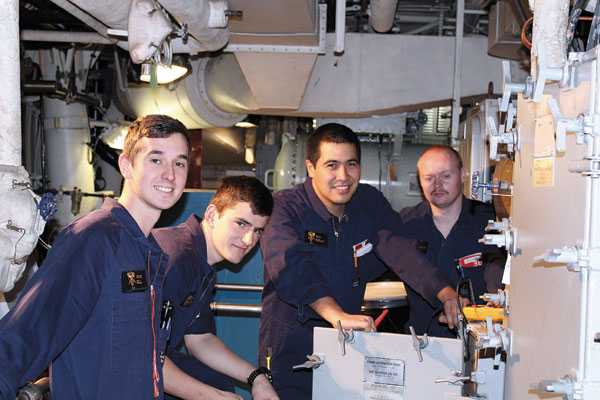
From left to right: New Zealand sailors Able Marine Technician (AMT) Vance Bell

Regulus Exchange gives New Zealand sailors a head start

[caption id="attachment_12468" align="alignnone" width="300"] From left to right: New Zealand sailors Able Marine Technician (AMT) Vance Bell, AMT Robert Jackson, AMT Tomi Fataaiki and Ordinary Marine Technician Damon Dick-Carson work on board HMCS Ottawa.[/caption]Sonya Chwyl, MARPAC PA Office ~ Four New Zealand sailors have travelled more than 14,000 kilometres to join Royal Canadian Navy (RCN) sailors in HMCS Ottawa as part of the Regulus exchange program.They are part of a 30 person contingent sent to work with the RCN.Since January, the Royal New Zealand Navy (RNZN) sailors have adjusted to life aboard a foreign navy ship, having to learn where everything is located in the Canadian frigate, and finding their place within the ship’s crew and culture.“Everyone has been very welcoming,” said Able Marine Technician (AMT) Tomi Fataaiki. “It’s a super friendly atmosphere and the culture is very similar to back home, so we clicked straight away.”The New Zealanders perform the same duties as their Canadian counterpart, Ordinary Seaman Marine Engineers.“All four New Zealanders have been working diligently alongside the Canadian crew,” said Lieutenant (Navy) Jeff Benson. “They’re all fully integrated, and they’re expected and capable of doing all the tasks of any other Ordinary Seaman Marine Engineer.” All four have become qualified Engineering Roundsmen. Ordinary Marine Technician Damon Dick-Carson has also achieved certification as an Emergency Response Roundsman and AMT Fataaiki is now a qualified Canadian Patrol Frigate Damage Control Roundsman.AMT Fataaiki says the exchange program has been an excellent way to kick-start his naval career.“It’s been exactly what I was hoping for. The knowledge I’ve gained here will be really useful, because a lot of the same equipment will be installed on the RNZN’s ships soon. It’s a great way to get ahead of the game.”Before they return home at the end of June, the New Zealand sailors...

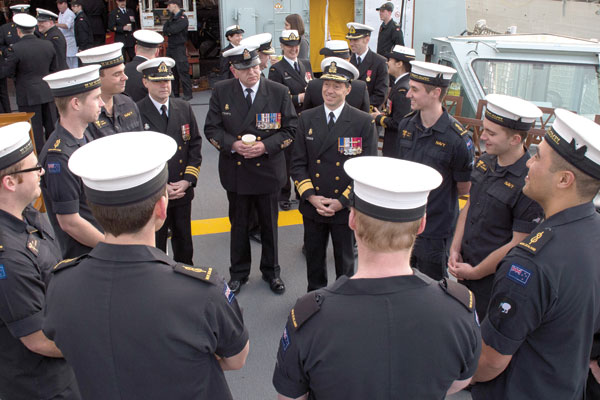
Corporal Blaine Sewell

ANZAC Day celebrated on board Ottawa

[caption id="attachment_12464" align="alignnone" width="300"] Corporal Blaine Sewell, MARPAC Imaging Services[/caption]SLt Melissa Cserhazi, MARPAC PAO ~As the sun rose over HMCS Ottawa’s flight deck, members of the Royal Canadian Navy and the Royal New Zealand Navy paraded to commemorate ANZAC Day, which is celebrated annually on April 25.Known collectively as ANZACs, the Australian and New Zealand Army Corps, along with the Royal Newfoundland and Irish Regiments, landed at Gallipoli, Turkey, during the First World War as part of the Allied expedition. The broad military goal of the campaign was to open up access to the Black Sea and to take the Ottoman Empire out of the war.ANZAC Day took on a special meaning for MARPAC this year with 12 New Zealand sailors training on board Pacific Fleet ships since January.“ANZAC Day is important for us New Zealanders as many of our mates back home have family members that fought at ANZAC Cove,” said Able Marine Technician (AMT) Jared Bryant, one of four New Zealand sailors training on board HMCS Ottawa.“It is an honour to mark this special day of remembrance with them,” said CPO1 Alden Darragh, Coxswain of Ottawa. “It has been a pleasure to sail with these young New Zealanders and to see them join together with the crew of HMCS Ottawa. Our ceremony showcased the importance of serving with our allies and being able to mark the passage of their day of remembrance.”The ANZACs landed on the Gallipoli Peninsula early on the morning of April 25, 1915. The landings were a disaster, with thousands of allied troops gunned down by enemy fire at the base of a steep cliff. By the end of the battle 10 months later, it’s estimated Australia had lost 8,159 service members and New Zealand had lost 2,721.Though the campaign failed to achieve its military...

A view of the disabled Canadian fishing vessel

Chilean ship assists disabled Canadian vessel

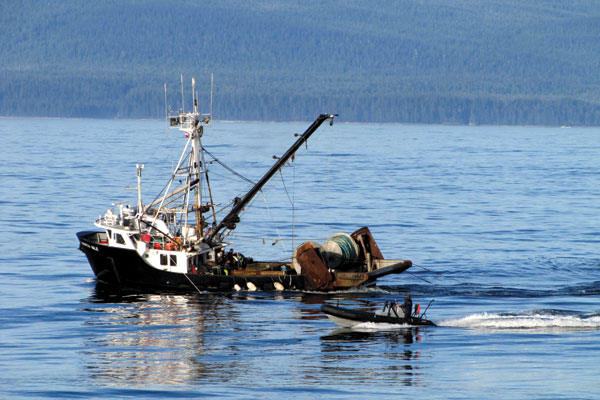
[caption id="attachment_12460" align="alignnone" width="300"] A view of the disabled Canadian fishing vessel, North Isle, as seen from the deck of Chilean Navy Supply Ship Almirante Montt. Photo DND[/caption]Peter Mallett, Staff writer ~The crew of the Chilean Navy supply ship Almirante Montt are being recognized by the Royal Canadian Navy (RCN) for assisting a stranded Canadian fishing boat.The Chilean ship is in town as part of short-term Mutual Logistic Support Agreement between the RCN and the Chilean Navy, which concludes in June.On the afternoon of April 18, the 20 metre fishing vessel North Isle, adrift in the waters near the entrance to the Strait of Juan de Fuca off Port Renfrew, called for help on its radio after suffering a blown hydraulic line. The damaged line, which operates the ship’s net-recovery system, could not be cut free, and its submerged nets were greatly hampering maneuverability and passage through the water.Almirante Montt was on patrol in the vicinity and responded to the request for assistance. They arrived on the scene at 5:30 p.m. Four Chilean sailors, with the necessary tools to make repairs, sped off to the fishing vessel via a Rigid Hulled Inflatable Boat (RHIB)  Working with the crew, the sailors successfully installed five new hydraulic connectors.“I was pleased to learn they were able to assist the crew of the North Isle and get them back on their way,” said Lt(N) Travis Bain, MARPAC Tanker Support Liason Officer, the point of contact for the supply ship. “I think that it’s great having them here to help support us with our RAS [replenishment at sea training], and also an added benefit they were able to successfully assist the distressed fishing vessel that was in a potentially dangerous situation.”Almirante Montt stayed on scene until after midnight when the North Isle was able to...

Jacqueline Carlé

Phenomenal woman award winner named!

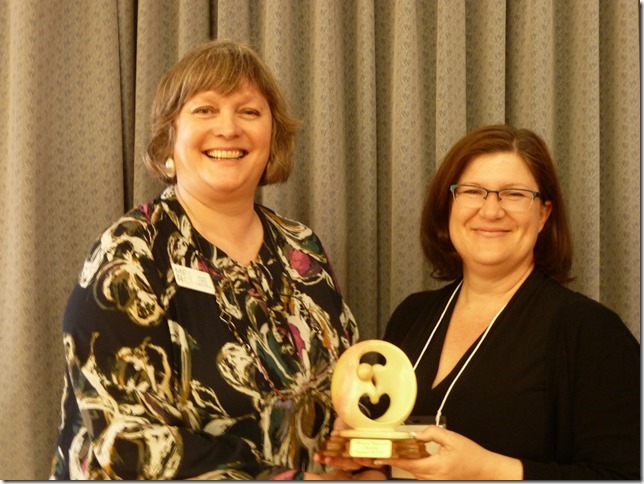
[caption id="attachment_12451" align="alignnone" width="300"] Jacqueline Carlé, Community Engagement Manager at Esquimalt Military Family Resource Centre (left), presents the Maritime Command Pacific Phenomenal Woman Award to CPO2 Nathalie Scalabrini.[/caption]Chief Petty Officer  Second Class Nathalie Scalabrini, a senior instructor at Canadian Forces Fleet School Esquimalt, was presented with the Phenomenal Woman Award at the Pacific Women’s Day, held at Royal Roads University on Saturday April 9. The award recognizes a woman from the military, National Defence or a military family in Maritime Command Pacific for significant achievements or contributions to her community.Chief Scalabrini is the first woman Naval Electronic Sensor Operator to reach her rank and was cited for her dedication, hard work and tenacity in challenging situations. Her diverse volunteer roles include the MARPAC Defence Women Advisory Organization; superintendent of the St. John’s Ambulance Division 61C Youth Program; squad member of CFB Esquimalt Urban Search and Rescue; and field technician with the Search and Rescue Dogs Association of Victoria. When asked what she is proudest of in her life she answered, “My kids.” They have learned, as she did from her own mother, “You’ve got to give back in order to receive.” Many years ago, she discovered a quotation that has been her life’s rule: Alone, you can go faster but together we will go farther. “It works,” she says. “It so works.”

Ships' bells from the two former HMCS (Her Majesty's Class Ships) the Protecteur and the Algonquin.

Ships’ bells carry on naval tradition

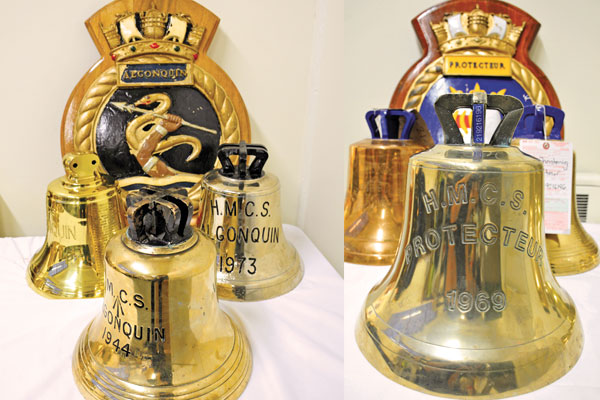
[caption id="attachment_12447" align="alignnone" width="300"] Ships' bells from the two former HMCS (Her Majesty's Class Ships) the Protecteur and the Algonquin.[/caption]Rachel Lallouz, Staff Writer ~ As the final outgoing Executive Officer of detachment Algonquin, Lt(N) Doug Totten has been tasked with collecting and sorting through all of the decommissioned ship’s artefacts, most notably the ship’s bell.“I feel honoured to have this job. This is part of my duty as the last officer for HMCS Algonquin, and it’s a very important one,” says Lt(N) Totten.He says a ship’s heavy brass bell, weighing in excess of 30 pounds, is a familiar sight to young crew members who are often given the job of polishing them until they are pristine. Every ship commissioned in the Royal Canadian Navy (RCN) is given a bell; historically they were used to mark the passage of time at sea or to communicate to other ships on the open ocean. The oldest bell presented to the CFB Esquimalt Naval and Military Museum dates from 1944 and comes from HMS Valentine, the ship that became the first HMCS Algonquin.Because HMS Valentine had battle honours, this particular bell would have seen Second World War conflict firsthand. Lt(N) Totten and museum staff ensured the bells of former HMCS Algonquin and former HMCS Protecteur were added to the collection of over 20 bells from former warships. In the future it is hoped they will go on display for all to see.Ship bells are especially sacred to sailors because they have been traditionally used as baptismal fonts for shipboard christenings. “If a sailor aboard a particular ship would like to christen their child while alongside a naval base harbour, the bell is placed into a special holder by the padre, who dips it into the ocean, filling it with seawater.That water is used to...

HMCS Ottawa

Inland navy reservists get sea time aboard HMCS Ottawa

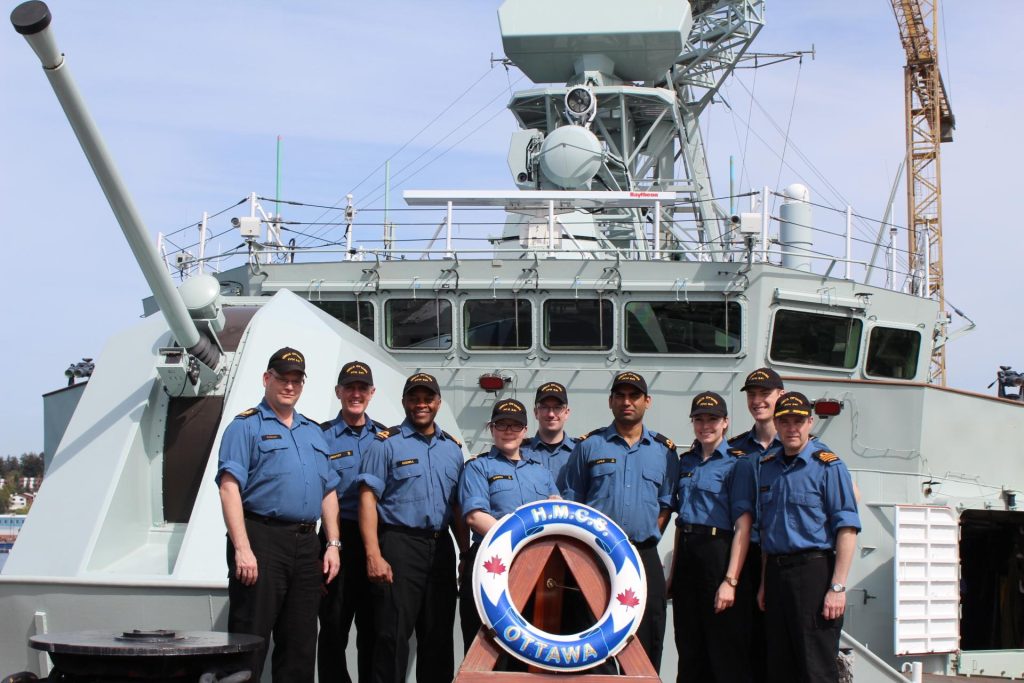
[caption id="attachment_12444" align="alignnone" width="300"] HMCS Ottawa[/caption]Lt(N) Curtis Dollis, HMCS Ottawa ~HMCS Ottawa has just finished Sea Acceptance Trials as part of the continuing effort to bring the ship and crew up to high readiness.While the crew is ready for some well-earned time ashore during the upcoming work period, several temporary members of the ship’s company are taking their at-sea experience back to their respective reserve unit.Reservists sailing in the frigate came about during a recent visit to Ottawa for HMCS Carleton’s official manning ceremony. Commander Sylvain Belair, Ottawa’s Commanding Officer, and Lieutenant-Commander Carmen Lapointe, Carleton’s Commanding Officer, agreed to bring members of their teams together for a brief period during trials to continue their professional development and to gain experience sailing in a major warship. The end of Sea Acceptance Trials was a perfect opportunity as it would expose sailors to a broad variety of operations and training in a short period of time.Sailors from several Naval Reserve Divisions joined Ottawa in Esquimalt, and Vancouver, as the program continued, with participation from Carleton, Chippawa, Discovery, Tecumseh, and Malahat. Junior MARS officers, RMS clerks from shore offices, boatswains, and naval combat information operators with no sea experience, all joined and to learn about life at sea in a Halifax-class frigate. “My four-day sail was a rich and meaningful experience,” said A/SLt Douglas Guerra, a reservist with Carleton. “It was a rare opportunity for me to see what life is like in the Regular Force.I would highly recommend to any reservist to take full advantage of any opportunity in the future to sail on a Halifax Class frigate.”Reserve sailors were involved in all aspects of the operations of the ship throughout the trials period.The members focused on their primary trade-related duties: bridge watchkeeping for the MARS officers, lookout and helmsman for the...

Capt(N) Christopher Earl

Avalanche fighters on Operation Palaci thanked

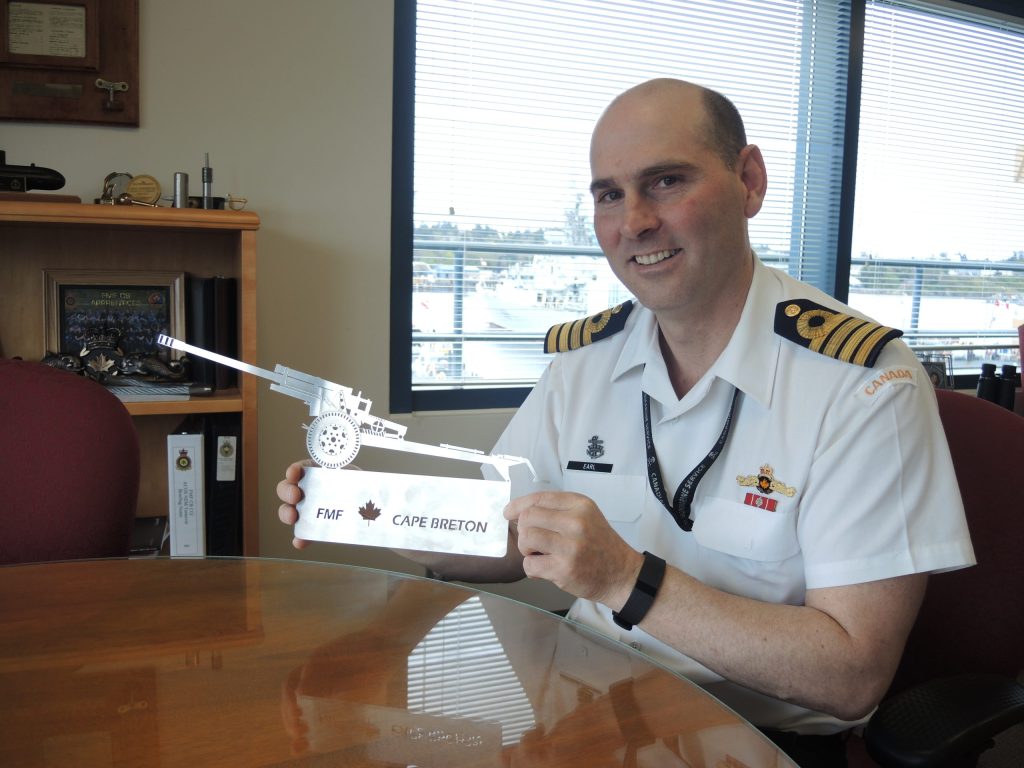
[caption id="attachment_12439" align="alignnone" width="300"] Capt(N) Christopher Earl, Commanding Officer of Fleet Maintenance Facility, displays a prototype of an Operation Palaci commemorative plaque that was presented to 17 members of 5e Regiment d’artillerie legere du Canada from Valcartier, Que. The presentation by the RCN was to thank the soldiers for their work in the anti-avalanche operation as it concluded for another season.[/caption]Peter Mallett, Staff Writer ~To commemorate the end of this season’s Operation Palaci, which kept Rogers Pass safe and open, Fleet Maintenance Facility Cape Breton (FMF CB) presented the soldiers from a Quebec artillery unit with a shiny keepsake.Two weeks ago, Capt(N) Christopher Earl, Commanding Officer of FMF CB, travelled high into the Columbia Mountains of B.C.’s southern interior to personally thank the 17 members of 5e Régiment d’artillerie légère du Canada, based out of 2nd Canadian Division Support Base Valcartier, for their work fighting avalanches.Capt(N) Earl presented the soldiers with an Operation Palaci commemorative coin and a detailed sheet metal statue of the 105 mm Howizter guns they used to blast away at avalanches in Rogers Pass near Glacier National Park.“The men and women who work in our sheet metal shop felt so strongly about the work those in Op Palaci carry out, they decided to make a keepsake for the troops to show their appreciation,” said Capt(N) Earl.“It was a great feeling for me to present them with this gift and I think they really appreciated the gesture as well.”Operation Palaci, a Parks Canada and Department of National Defence joint initiative, is the world’s largest mobile avalanche control program, and at 54 years is the longest running operation in Canadian Armed Forces history, domestically or expeditionary.FMF CB’s role is to maintain the 105-mm Howitzer guns the troops employ to blast away at melting or loose snowpack.The loose snow...

Rachel Lallouz

Wilderness fires no match for new fire truck

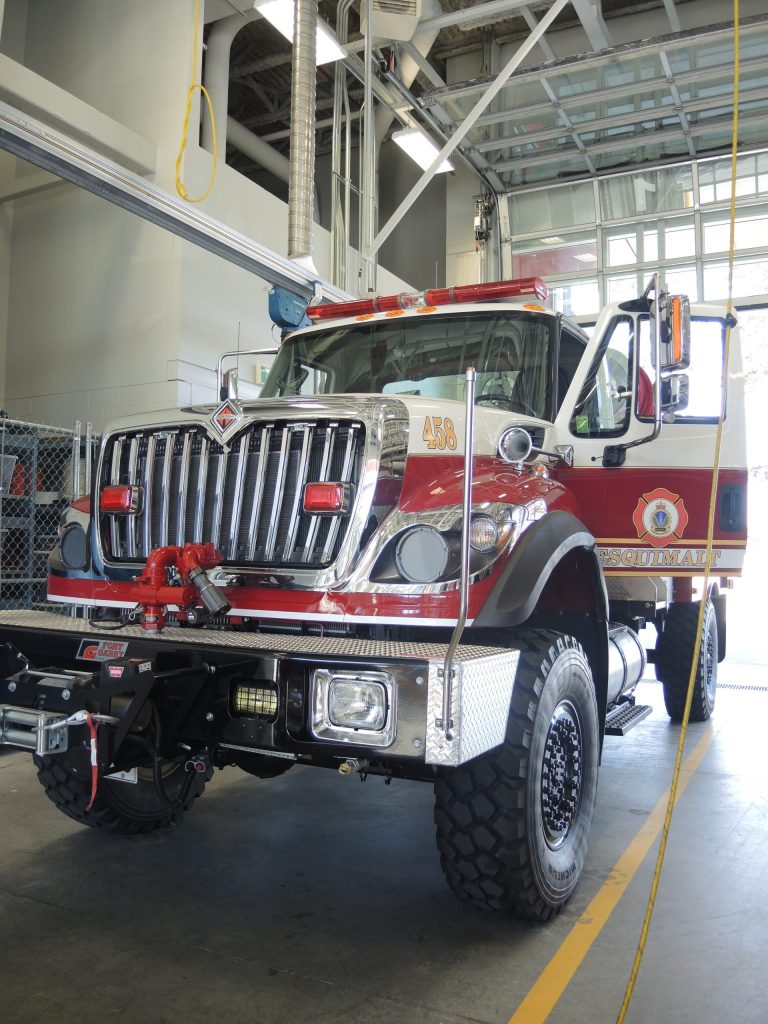
[caption id="attachment_12435" align="alignnone" width="225"] Rachel Lallouz, Lookout The new range truck, used to fight wilderness fires, at the CFB Esquimalt fire hall.[/caption]Rachel Lallouz, Staff Writer ~A new half million dollar fire truck is set to tackle brush fires on DND property and, when called upon, the Greater Victoria area.  The fire hall’s new Range Truck is the only one of its kind on the Island, and is designed to carry two fire fighters at high clearance over hotspots and freshly burned ground.“Its high centre of gravity will make it perfect for combatting fires in underdeveloped areas and wildland dense with trees,” says Fire Chief Steve Mullen, who adds people need only think back to the summer fires in Kelowna to be reminded of how quickly forest fires can spread without proper extinguishment measures.Nozzles running along the truck’s underside can shoot water and foam onto ground that is still smoldering.The truck also has forward ground sweeps, nozzles that can shoot a foam or water path out in front of the truck and enable it to move closer to a fire.If a forest fire has extended up into the tops of the trees, the truck’s bumper turret can fire water directly upwards, knocking down flames that are typically difficult to reach. In the event that water isn’t helping reduce the fire, the truck’s Compressed Air Foam system carries two 25-gallon tanks of Class A Foam to help extinguish stubborn flames.“These features will allow the truck to move through a critical area when fire fighters are responding, and allow the fire fighters to relocate to different points in the brush more easily in the event of a wind shift,” says Chief Mullen.Because the truck holds 1,200 gallons of water, it can also act as a water-supply vehicle to other firetrucks.Once all base fire...

Joseph Noil 1872

CENTURY OLD ERROR RIGHTED FOR HIGHLY DECORATED SAILOR

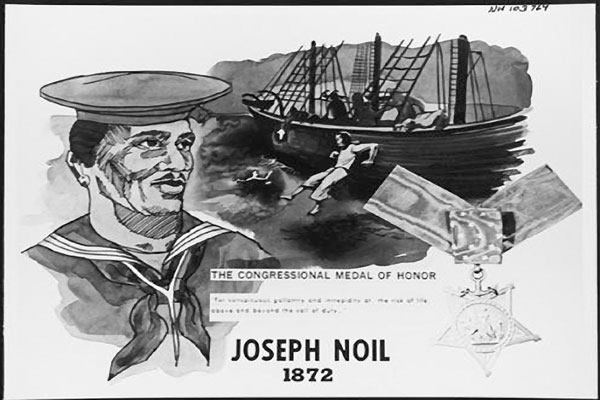
[caption id="attachment_12431" align="alignnone" width="300"] Joseph Noil 1872[/caption]Peter Mallett, Staff Writer ~A 134-year-old grave marker error is being righted in Washington, D.C., next week.On Friday, April 29, at a cemetery on the grounds of Saint Elizabeth’s Hospital, a highly decorated African-Canadian sailor who served with U.S. Navy during the Civil War, then quickly forgotten at war’s end, is finally getting appropriate recognition.Rear-Admiral William Truelove, Canadian Defence Attaché, will join political and military officials from both sides of the border to unveil a Medal of Honor Headstone that properly recognizes the bravery of Joseph Benjamin Noil.On Dec. 26, 1872, Noil was a seaman in USS Powhatan when he dove into frigid seas and successfully rescued a fellow shipmate who had fallen overboard.While the President at that time recognized him for his heroism with its top honor, Noil never received a Medal of Honor Headstone upon his death at the hospital in 1882.Add to that, his name was misspelled on his death certificate – Noel – which was then engraved onto his headstone.The Liverpool, Nova Scotia native is just one of 109 Canadians known to have received the Medal of Honor; there are 3,514 total recipients.He is also the only known African-Canadian to be honoured with the award that is given only to military personnel who have shown personal acts of valor above and beyond the call of duty.Noil also served with distinction in the U.S. Navy throughout the Civil War and by the time of his death had risen to rank of Captain of the Hold aboard USS Wyoming.In 2009, members of the Medal of Honor Historical Society of the United States, working with the Congressional Medal of Honor Society, discovered the grave and the misspelled name.Victoria historian and blogger Bart Armstrong is a member of the U.S.-based historical organization and for...

Photos Op Caribbe A crewmember from HMCS Saskatoon and members of the United States Coast Guard Law Enforcement Detachment secure the seized cocaine bales.

Perseverance pays off; How Saskatoon seized drugs

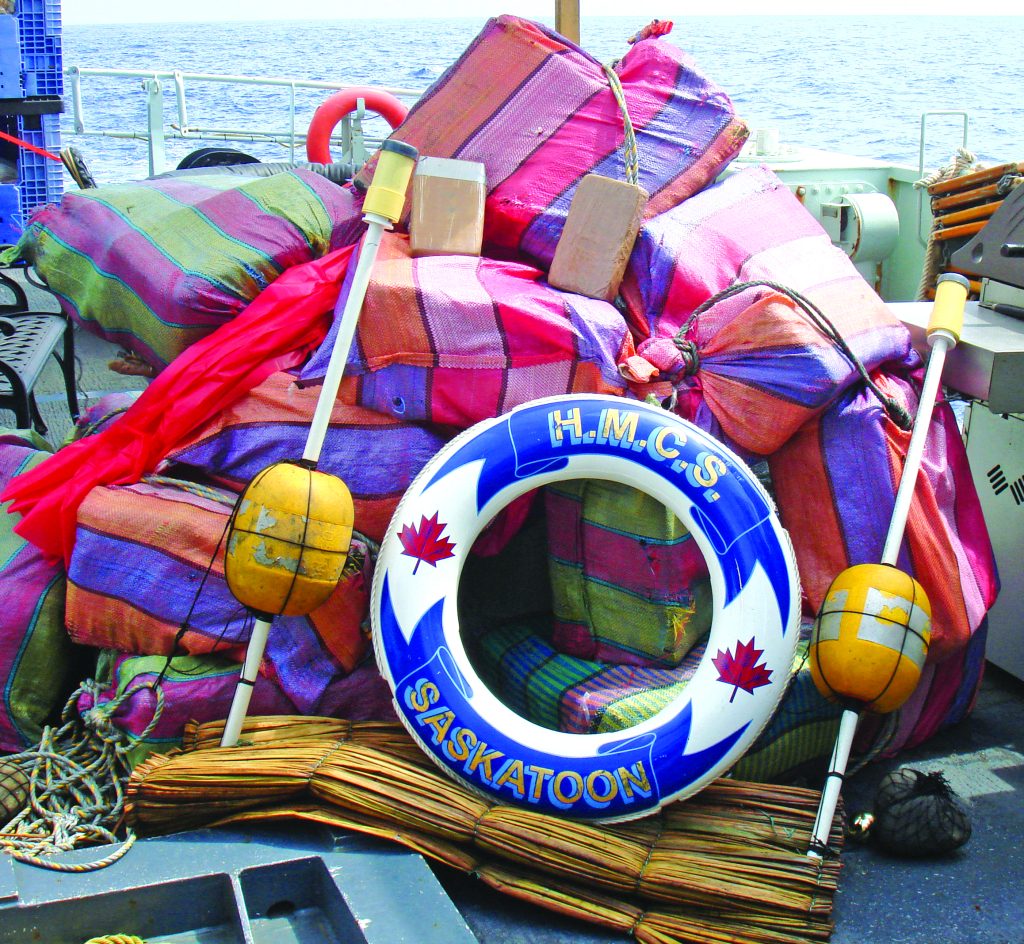
[caption id="attachment_12425" align="alignnone" width="300"] Photos Op CaribbeA crewmember from HMCS Saskatoon and members of the United States Coast Guard Law Enforcement Detachment secure the seized cocaine bales.[/caption]Lt(N) Linda Coleman, Op Caribbe, Public Affairs Officer ~It was a hot and humid day in the eastern Pacific Ocean on March 25 as HMCS Saskatoon and its embarked United States Coast Guard (USCG) Law Enforcement Detachment (LEDET) conducted patrols during Operation Caribbe, Canada’s contribution to the multinational campaign against the trafficking of illicit narcotics.It was a sticky 35 degrees Celsius and the inside of Saskatoon was buzzing with activity.The ship received information from the U.S. Joint Interagency Task Force (South) that a U.S. Maritime Patrol Aircraft (MPA) had spotted a vessel of interest in the area of operations.All shipboard specialists began to work together; the integration of the LEDET with Saskatoon’s operations team was seamless.A positive picture began to develop over the day.The coordinates of the vessel of interest that had been spotted by the MPA were relayed to Saskatoon, and the Commanding Officer, Lieutenant-Commander Todd Bacon, made the order to proceed at operational speed on an intercept course towards the vessel.As the MPA patrolled the area the vessel being monitored, a “panga”-style fishing boat, began to jettison its cargo—a common occurrence throughout Operation Caribbe.The eastern Pacific Ocean is a known drug trafficking area for small boats, often fitted with multiple outboard motors. Saskatoon then prepared for the next phase of this particular tasking.What started off as a “detect, track, approach and intercept” tasking quickly turned into a search and recovery mission.The MPA reported the last known position of the debris field, which would turn out to contain 16 bales of illicit narcotics, and Saskatoon went into search mode.By this point, it was evening and the MPA had returned to base. Once Saskatoon...

The Commanding Officer of HMCS Ottawa

Sea cadets set sail in HMCS Ottawa

[caption id="attachment_12412" align="alignnone" width="300"] The Commanding Officer of HMCS Ottawa, Cdr Sylvain Belair, addresses the group at the conclusion of the scheduled day sail. Photo by Cpl Brent Kenny, MARPAC Imaging Services[/caption]Capt Cheryl Major, RCSU(P) ~More than 200 sea cadets from nine Vancouver Island communities gathered in Victoria April 9-10 for a training weekend that included a day sail in HMCS Ottawa and an Admiral’s Ceremonial Divisions inspection.On Saturday the crew and cadets put the ship through its paces at full speed, up to 30 knots, and heeling over 25 to 30 degrees during manoeuvers. After the demonstration, cadets spent time with sailors at 13 activity stations that showcased the functions of daily life and the rhythm of a Canadian warship, including weapons, fire-fighting, navigation and command, damage control, boarding and rescue.Cadets were even treated to a simulated multi-threat warfare scenario in the operations room.“Spending a day in HMCS Ottawa is an experience I’ll never forget,” said Cadet Naval Seaman Clara Jager, of 136 Amphion Royal Canadian Sea Cadet Corps in Nanaimo. “There’s more to the navy than I ever thought there was. I’m so excited about all the adventures I’ll have as a sea cadet.”    On Sunday all cadets were inspected by Rear-Admiral Gilles Couturier, Commander Maritime Forces Pacific, during an Admiral’s Ceremonial Divisions parade.The parade included a massed band and several promotions and recognitions. This is the first time a divisional parade has been held for Vancouver Island in more than a decade.“The Cadet Program helps thousands of young people grow into well-rounded, community-minded and experienced young adults,” said RAdm Couturier.“Spending time with these great young Canadians and future leaders of this country has truly been inspiring and I want to personally thank everyone involved in supporting our cadets and making this program a success in every way...

Transition Program

Transition program launches for spouses

DNDCanada Company, the leader in military employment transition, in partnership with Military Family Services, has launched the METSpouse Program – a pilot program connecting the spouses of active, reserve and retired members of the Canadian Armed Forces with transportable careers.Leveraging Canada Company’s Military Employment Transition (MET) program, METSpouse will focus on providing this untapped resource of highly skilled, adaptable and motivated employees with career training, mentorship opportunities, and a database of mobile, portable and “telecommutable” jobs that fit the realities of being a military spouse.“The METSpouse Program recognizes that the spouses of our military and veterans face unique employment realities and challenges,” said Canada Company President, Angela Mondou. “For Canada Company, METSpouse is a chance to put our expertise to work for the whole military family, and to create more opportunities for Canadian businesses to benefit from our remarkable military.”The METSpouse Program will help military spouses find gainful and meaningful opportunities through an already established network of national employers. As part of the pilot, METSpouse is now available at select Military Family Resource Centres in seven regions across Canada: Ottawa, Halifax, Montreal, Shilo, Toronto, Valcartier and Winnipeg.For more information visit:www.canadacompany.ca/canadacompany/met/en/index.jsp

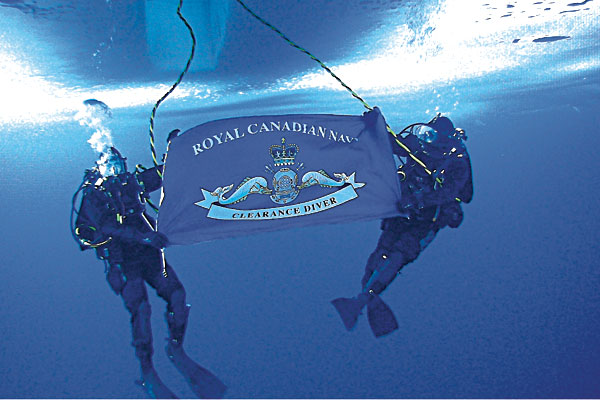
Members of Fleet Diving Unit (Pacific) show the flag underneath the ice as part of ICE EX 2016.

Pacific Fleet Divers operate in Arctic conditions

[caption id="attachment_12401" align="alignnone" width="300"] Members of Fleet Diving Unit (Pacific) show the flag underneath the ice as part of ICE EX 2016.[/caption]LCdr Desmond James, MARPAC PA~Six members of Fleet Diving Unit Pacific recently had the opportunity to operate in Arctic conditions. They worked with allies from the United States Navy and Royal Navy during Ice Exercise 2016 (ICEX 2016).Royal Canadian Navy (RCN) sailors completed ice dives and filled other key operational roles, such as the Range Safety Officer (RSO).Lt(N) John Slack, an RSO at this year’s ICEX, monitored conditions for cracks in the ice that could threaten operations.“This is a very dynamic environment to be working in, where the environment around you is constantly changing and moving,” said Lt(N) Slack. “You look around the ice floe and realize that no one has ever been there before and likely never will be again; it truly is one of the world’s last frontiers.”In the short time the RCN was on site, the camp location had moved 149 nautical miles to the west because of the ice floe, an indication of the challenging conditions.ICEX 2016 is a U.S. exercise developed to train military members in the Arctic environment to refine and validate procedures, which required equipment. It took place this year in March in the Beaufort Sea at a location approximately 160 nm north of Prudhoe Bay, Alaska.

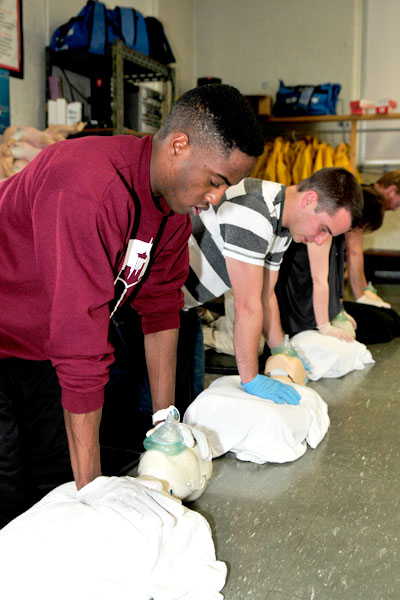
CPR Training stock photo

Sailor puts life-saving skills to work

Peter Mallett, Staff Writer ~An HMCS Regina supply technician is being hailed for his heroic actions by his ship’s crew for administering life-saving CPR to a man in downtown Victoria last week.On the morning of April 14, Cpl Christopher Pearson was travelling to work when at approximately 7 a.m. he came across an unconscious male lying on the ground at the corner of Douglas St. and Yates St. Cpl Pearson said the man had stopped breathing and appeared to be suffering from a drug overdose.Using first aid training, he assessed the man’s medical condition and then administered cardiopulmonary resuscitation while a bystander called 9-1-1. The victim regained consciousness before emergency services arrived on the scene and was transported to hospital.“When I arrived on the scene his body was like a limp noodle and he was unresponsive,” said Cpl Pearson. “After I administered CPR and saw that he had started breathing again, and EMS crews had arrived on the scene, it was a great feeling to know that I was able to help him out of a bad situation.”Regina Coxswain, CPO1 Alan McNaul congratulated Cpl Pearson, noting his actions were symbolic of the “readiness of CAF personnel” to spring into and provide medical assistance when needed.“His confidence and leadership were displayed when he established control of the medical emergency scene and performed CPR, potentially saving the life of a community member,” said CPO1 McNaul. “Cpl Pearson is a strong example of what leadership looks like regardless of rank or level within the Canadian Armed Forces.”At press time further details about the incident and an update on the status of the victim were unavailable.

Big eyes HMCS Winnipeg

Take part in deciding our defence future

[caption id="attachment_11455" align="alignnone" width="300"] What's the future of DND? Have your voice heard.[/caption]Source: D.N.D.What is the future of Defence, and how should the Defence Team of tomorrow look?Canadians will get to have their say in shaping the Nation’s defence policy through a series of collaborative and interactive public consultations, undertaken by the federal government.On April 6, Harjit Singh Sajjan, Minister of National Defence, announced the Government of Canada’s (GoC’s) intent to consult with Canadians about the future of Defence.The objective of the public consultations is to promote the governement’s commitment to open and transparent dialogue with Canadians, and other key stakeholders, including members of the Defence Team, in the development of the new Defence Policy.These consultation sessions are focused on a number of themes and priorities, but focus on three fundamental areas of enquiry:What are the main threats and challenges to Canadian national security?What role do you see for the military in addressing potential threats?How should the Canadian Armed Forces be equipped and resourced to carry out these tasks?  These discussions will take place in cities across Canada from April to July. All Canadians are encouraged participate online www.defenceconsultations.ca/online-workbook.To learn more about contributing, visit the government’s newly launched consultations portal at Defence Policy Review http://dgpaapp.forces.gc.ca/en/defence-policy-review/index.asp.

PO1 Robert Franklin receives his cash prize for weighing in at first place for the “Biggest Loser” competition. A fitness challenge where members pushed themselves to lose weight and get fit while at sea.

No losers in HMCS Vancouver – weighty goals reached

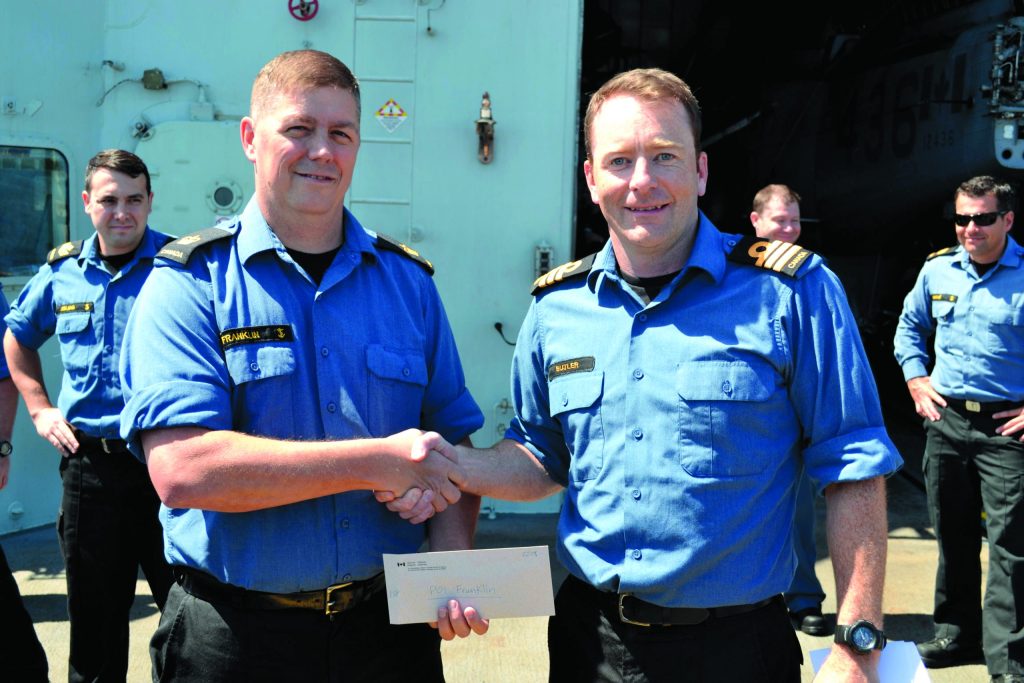
[caption id="attachment_12358" align="alignnone" width="300"] PO1 Robert Franklin receives his cash prize for weighing in at first place for the “Biggest Loser” competition. A fitness challenge where members pushed themselves to lose weight and get fit while at sea.[/caption]LS Sergej Krivenko, HMCS Vancouver ~Health, wellness and physical fitness are aspirations sometimes difficult to achieve and maintain during a deployment.  In order to break free from this typical rut, several initiatives were launched on board HMCS Vancouver, including the embarkation of a Personal Support Programs (PSP) fitness instructor and establishing a routine of fitness windows in the flex, which were treated as sacrosanct “Maslowian” needs.In the same way a flex planner would not dare alter the meal routine on board, Vancouver’s fitness routines were treated no differently.With the playing field leveled and the conditions for success set, man’s, and woman’s, competitive nature took hold and folks began to wonder – who would be the biggest loser?  As Vancouver departed Esquimalt Feb. 1 for SouthPloy, the participants of the ship’s “Biggest Loser” health and wellness challenge lined up outside sickbay for the official weigh-in. The event, organized by PO2 Charles Leblond, had competitors paying a $20 entry fee and weigh-in during each port visit.The winner would be declared based on the greatest percentage of body weight lost over the course of 60 days.The method was simple – diet and exercise.Assisting us with our goals, Matt Kingstone, the ship’s embarked PSP fitness instructor, took time to coach competitors about healthy eating practices.Each week he put out new tips and challenges to assist Vancouver’s Biggest Losers in achieving their goals.Thrice daily, collective fitness classes were conducted on the flight deck.Each period was one hour in duration and addressed a specific aspect of fitness, ranging from stretching to strength and conditioning.In addition to these workouts, Kingstone was...

The 2016 Heroes Hockey Challenge was held at the “Q” Centre in Victoria

THE 2016 HEROES HOCKEY TOURNAMENT HIGHLIGHTS

[embed]https://player.vimeo.com/video/159523890[/embed]The 2016 Heroes Hockey Challenge was held at the “Q” Centre in Victoria, British Columbia. The inspiration behind the event is retired, Master-Corporal Paul Franklin. The two participating teams were the Vancouver Canucks Alumni (CAN) and the Heroes Hockey Challenge (HHC). Both teams fought hard and in high spirits, however, the conquerors of this game were the Canucks. The closing score was 11 CAN and 7 for the HHC.  

Lt(N) Matthew Clark conducts the B.C. Cadet Honour Band during their concert at McPherson Theatre

Naden Band conductor joins prestigious association

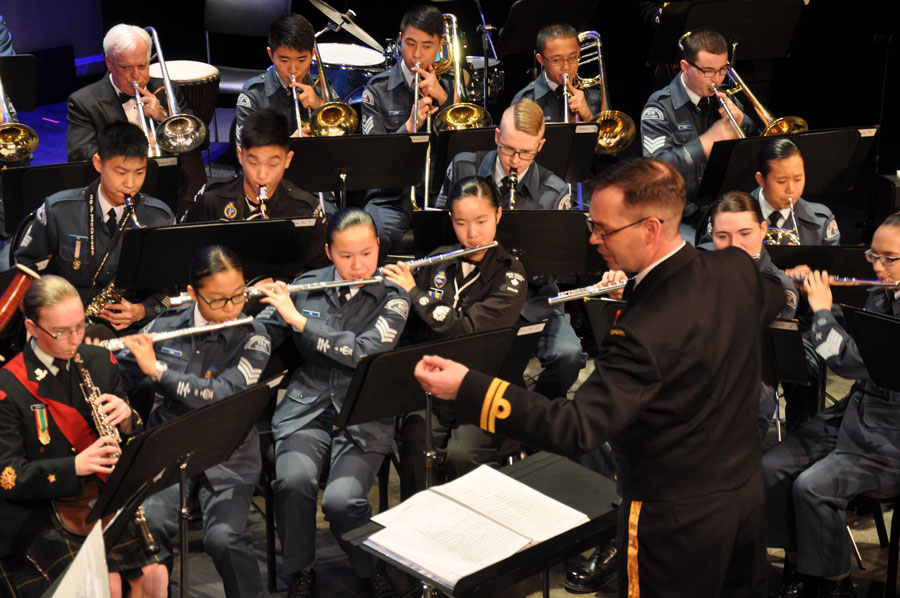
[caption id="attachment_12354" align="alignnone" width="300"] Lt(N) Matthew Clark conducts the B.C. Cadet Honour Band during their concert at McPherson Theatre, March 22.[/caption]Rachel Lallouz, Staff Writer ~Five years conducting the Naden Band of the Royal Canadian Navy has earned Lieutenant (Navy) Matthew Clark some State-side recognition.The naval officer, and highly talented musician, was extended an invitation in early March to join the prestigious American Bandmasters Association (ABA).“There are 300 serving conductors in the Association, and I will make the sixth Canadian,” says Lt(N) Clark. “My father was my first teacher, and he always told me that if I really wanted to be successful at something, I would need to surround myself with experts in that field.As part of this Association, I will be surrounded by the giants of the wind ensemble world, and this will push awareness of professional Canadian military wind bands forward.”The ABA was formed in 1920 by Edwin Franko Goldman, a prominent band composer, to raise esteem for concert bands among musicians and audiences, and to solidify concert band’s place in the cultural heritage of North American society.Apart from the 300 serving conductors and composers of wind band in the principle category, there are 80 associate members.Only those contacted to make an application by a pre-existing member can hope to receive invitation to apply to be in the Association.The application process is strict, requiring years of evidence of a conductor or composer’s work to make the cut. In Lt(N) Clark’s case, music colleague Dr. Gerald King, conductor of the University of Victoria’s Wind Ensemble, began collecting evidence of Lt(N) Clark’s accomplishments starting in 2012.Dr. King filed away audio recordings of the naval officer conducting for the Victoria Symphony, the Naden Band, the University of Victoria, and the Victoria Philharmonic Choir over a period of about four years.  In 2015,...

Sailor and Artist

20 Years of Cartoon Capers

[caption id="attachment_12315" align="alignnone" width="236"] Sailor and artist[/caption]Sailor and artist, LCdr Michael Erwin ~ Two decades ago, in 1996, the Lookout newspaper ran a cartoon submitted by a local officer, then serving at VENTURE, The Naval Officers Training Centre. That cartoon was the first of hundreds that would appear on page four of the Lookout over the next 20 years, and are still being periodically submitted by LCdr Michael Erwin.  The cartoons, always in a 4 in by 6 single frame format, have dealt with a broad range of topics, from ships wandering into “mime” fields, to aardvarks buying “A”s on Wheel-of-Fortune, to fleas wondering if there is life on other dogs.  Some have even gone on to appear in Reader’s Digest and the Weekly World News.  Over the years, the Lookout received the cartoons from deployed ships, overseas operations, and NDHQ, wherever LCdr Erwin was serving at the time.  When asked to comment on the longevity of his submissions, LCdr Erwin, who now works in the field of naval communications, replied, “Cartoons…yay.”  In keeping with the notion that humour is an important stress reliever and morale builder, we hope you enjoy this selection of favourites from the past two decades.

Artist John Horton displays unsigned prints of former HMCS Algonquin

Water colours up for grabs at garage sale

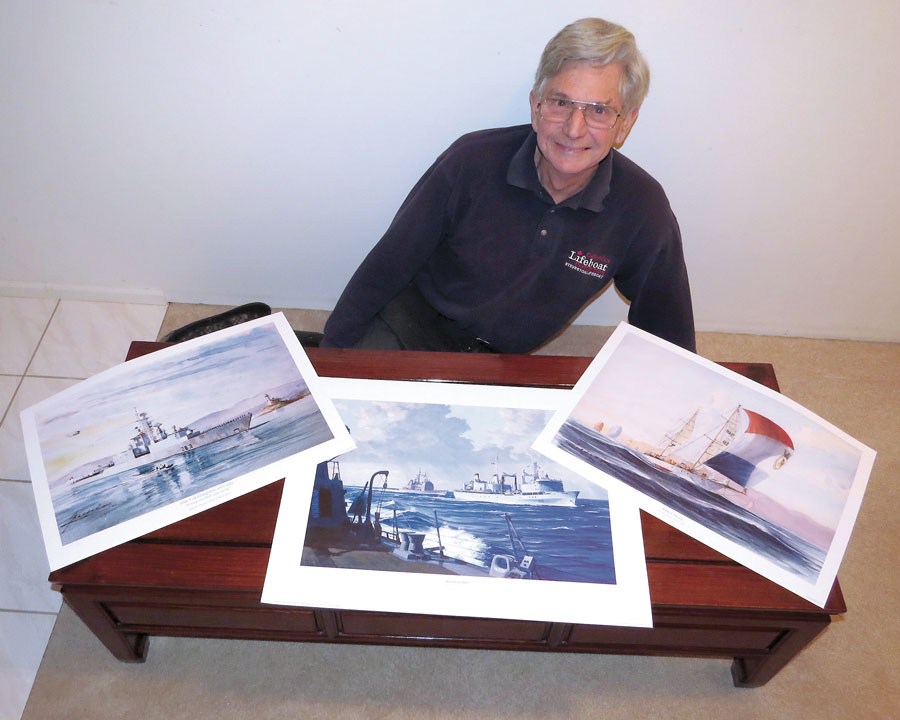
[caption id="attachment_12351" align="alignnone" width="300"] Artist John Horton displays unsigned prints of former HMCS Algonquin, former HMCS Protecteur and HMCS Oriole in his Vancouver home. Horton will be selling his prints at the Maritime Museum of B.C.’s garage sale on April 23.[/caption]Peter Mallett, Staff writer ~World-renowned marine artist John Horton is gift-wrapping some of his best work for the Maritime Museum of B.C.’s April 23 garage sale.Horton, who prides himself at creating detailed watercolour renderings of naval vessels will be selling three of his unsigned prints depicting HMCS Oriole, former HMCS Algonquin and former HMCS Protecteur at the museum’s 13th annual fundraiser at Ogden Point.“Over the years I have relied heavily on maritime museums from Greenwich to Halifax to Vancouver and Victoria and other parts of the world for my research,” says Horton. “What comes around goes around, and since much of my work comes as a result of their efforts it’s only natural that I support them to the utmost.”The garage sale goes April 23, rain or shine, from 9 a.m. to 1 p.m. both inside and outside of Ogden Point’s Pier A Warehouse building at Victoria’s cruise ship terminal on Dallas Road.  For a $5 cover charge (children under 12 are free) attendees can rummage through all things nautical, from marine tools and devices such as winches lines and boat clothing to outboard engines and small boats to recreational equipment, such as kayaks, life jackets and camping accessories to hiking gear.Event organizer Ann Jones says the garage sale typically attracts close to 1,000 spectators and raises $10,000 to help the museum offset operating costs. Having the work of a widely-respected artist such as Horton will be an added boost for the event, says Jones.“He is a highly respected artist; his work is fabulous and we believe there will be...

Congratulations! FMF Cape Breton on your 20th Anniversary

Celebrating the FMF’s 20 year anniversary, 1996-2016

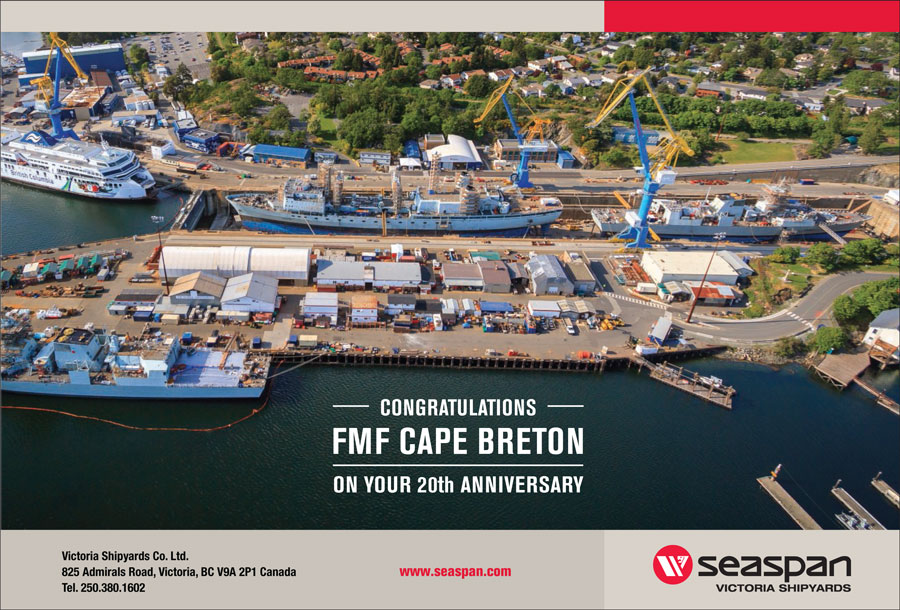
[caption id="attachment_12346" align="alignnone" width="300"] Congratulations! FMF Cape Breton on your 20th Anniversary[/caption]Rachel Lallouz, Staff Writer ~Hundreds of people gathered at one end of dry dock to celebrate Fleet Maintenance Facility Cape Breton’s (FMF CB) 20th anniversary last Wednesday.FMF CB employees, their family members, sponsors and invited guests were treated to a barbecue, and popcorn and cotton candy from a few sponsors for the littler guests.Kicking off the event was traditional drumming performed by members of the Defence Aboriginal Advisory Group. Speaker Mary Ann Thomas, an Esquimalt Nation Elder, then shared a message about the importance of working together.“We all need each other in life,” she said to the crowd.“We need to accept each other. If you want to accomplish something, you’ve got to get along and work with those around you.”After Thomas’s moving speech, the entries for the Apprenticeship Skills Competition were unveiled, representing the handiwork of tradespeople in Fleet Maintenance Facility Cape Breton; metal trades; hull trade; mechanical fitters/ refrigeration mechanics; marine electricians; electronic technicians; machinists, and millwrights. Each group was tasked with creating a display according to a “History of Canadian Navy” theme using only the supplies found within their work centres.The groups started their plan in October 2015, and had from December to February to complete their displays, which ranged from an intricate metal serpent crafted by the metal trade apprentices to a wooden and cloth replica of HMCS Oriole, created by the hull trades (painters, shipwrights/ joiners, riggers, sailmakers, electroplater and laggers).First place was awarded to Group 6B, millwrights. Second place was given to Group 1, metal trades, and an honourable mention was given as a tie between Group 2, hull trades, and Group 6A, machinists.Attendees of the anniversary celebration voted “People’s Choice” style for the metal trades, Group 1.Following the unveiling, music sponsored by 98.5 Ocean...

A sneak preview of CFB Esquimalt’s new exhibit on the First World War- a travelling exhibit lent by the Royal BC Museum. The official opening of the two new exhibits is open to the public April 15 at 10:15 am.

CFB Esquimalt Naval and Military Museum to open two new exhibits

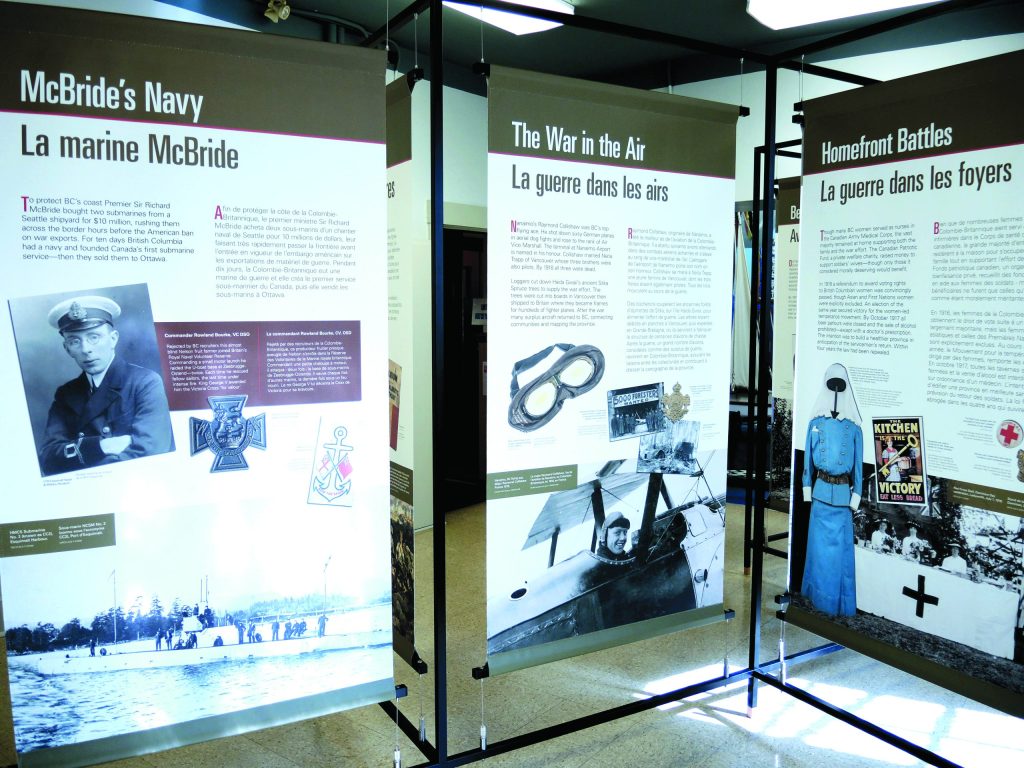
[caption id="attachment_12334" align="alignnone" width="300"] A sneak preview of CFB Esquimalt’s new exhibit on the First World War- a travelling exhibit lent by the Royal BC Museum. The official opening of the two new exhibits is open to the public April 15 at 10:15 am.[/caption]Rachel Lallouz, Staff Writer ~ Commemorating the loss of HMCS Esquimalt.CFB Esquimalt’s Naval and Military Museum will open its first permanent, commemorative display depicting the loss of HMCS Esquimalt on Friday, April 15 at 10:15 a.m. HMCS Esquimalt was the last Canadian ship to be lost in the Second World War after being torpedoed off the coast of Halifax April 16, 1945 – three weeks before the end of the war.“I find the story of this ship so poignant and powerful, and so strongly connected to the community of Esquimalt,” says Clare Sharpe, Museum Exhibit Designer.“I feel real sorrow for the sailors who lost their lives so late in the war. I’m glad we’ll be paying them the respect they deserve through this commemoration.”For the past year, Sharpe has worked to track down photographs of the ship, and to select memorabilia and artefacts to put in the display.Along with Danny Glubus, owner of Suite Signs, Sharpe developed informational panels about the ship using articles written by Robert Fisher.The display will also showcase a watch that was worn by sailor Joe Wilson when the ship sank.“He was the last to die, from the small group of people who survived the sinking, so it’s a very emotional and significant piece to include,” says Sharpe.On Saturday, April 16 at 11 a.m. the annual HMCS Esquimalt commemorative ceremony will take place at 1229 Esquimalt Road. The ceremony will be co-hosted by Canadian Forces Base Esquimalt and the Township of Esquimalt.  Base Commander, Captain (Navy) Steve Waddell and the Township of Esquimalt...

HMCS Vancouver Successfully Completes Joltex 2016

HMCS Vancouver Successfully Completes Joltex 2016

[caption id="attachment_12342" align="alignnone" width="300"] HMCS Vancouver Successfully Completes Joltex 2016[/caption]SLt Sean Catterall, HMCS Vancovuer ~HMCS Vancouver made history during JoLTEX 16 by becoming the first Royal Canadian Navy (RCN) ship to fire the Harpoon Block II missile in Coastal Target Suppression (CTS) mode in the Southern California Operating Areas.Operators positioned ashore directed the firing of three Harpoon missiles from Vancouver, which used GPS waypoint-guidance to follow an ordered flight path prior to impact with sea container targets located on San Nicolas Island, located in operating area.While the firing only took a forenoon watch, JoLTEX 16 was the culmination of months of preparation.The Canadian Forces Maritime Warfare Centre led the planning, which started in 2015. For Vancouver, the first introduction to the project came late last year during a series of meetings to determine the technical and training requirements, as well as the timelines for JOLTEX 16. With technical inspections complete, Vancouver departed Esquimalt in February, deployed to South America with a mission to support the RCN engagement strategy and enhance relationships with several South American navies.However, in the background Vancouver continued preparing for the final objective of the deployment – the missile firing.At the end of March, while visiting Puerto Vallarta, Mexico, Vancouver embarked a team whose role was to put the final touches on the ship’s preparations. Equipment was tested, the operations team’s procedures were refined, and Vancouver was declared ready to proceed.After embarking the Commander of the Canadian Fleet Pacific, the Test Director, and a data collection team, the ship sailed to the range to conduct the firing.  Following an early “wakey-wakey” on April 1, Vancouver came to action stations, closed up section base teams, and assumed damage control condition ZB. After receiving fire missions from operators who had been landed ashore, Vancouver conducted the three harpoon engagements which found...

Military parents seeking support and guidance for dealing with emotional and behavioural challenges with their children can turn to the Military Family Resource Centre’s Triple P Positive Parenting Program.

Positive parenting models at the heart of MFRC program

[caption id="attachment_12324" align="alignnone" width="300"] Military parents seeking support and guidance for dealing with emotional and behavioural challenges with their children can turn to the Military Family Resource Centre’s Triple P Positive Parenting Program.[/caption]Rachel Lallouz, Staff Writer ~ Military parents seeking support and guidance for dealing with emotional and behavioural challenges with their children can turn to the Military Family Resource Centre’s Triple P Positive Parenting Program.The Military Family Resource Centre (MFRC) offers a Triple P suite of services that provides military families with opportunities to engage in conversations regarding the unique challenges of raising children within the military lifestyle.   “This program is based on creating strong, nurturing relationships and positive communication between children and parents,” says Pauline Sibbald, MFRC social worker.Triple P is an evidenced-based program that incorporates five core principles: promoting a positive learning environment, ensuring a safe and engaging environment, providing effective discipline, maintaining reasonable expectations for both parent and child, and taking care of oneself as a parent.The Triple P program has five intervention levels and parents determine for themselves how much help they require.  “This multi-level parenting and family support strategy allows the program to be tailored to meet individual family needs,” says Sibbald.  Parents may choose to attend one-on-one sessions with a Triple P practitioner, register for interactive seminars or participate in a group course.“Because the system is flexible, it’s adaptable and responsive to lifestyle needs and challenges. A parent might just be feeling overwhelmed or frustrated with a situation and may want some parenting tips, or may be dealing with ongoing behavioural challenges,” says Sibbald.  Family Transitions is a new parenting program for separated/divorced parents who are experiencing challenges that are impacting or complicating their parenting.  It takes time to build a new family identity and work through feelings related to the end of...

Peter Mallett

Cadets get insider view of Dockyard

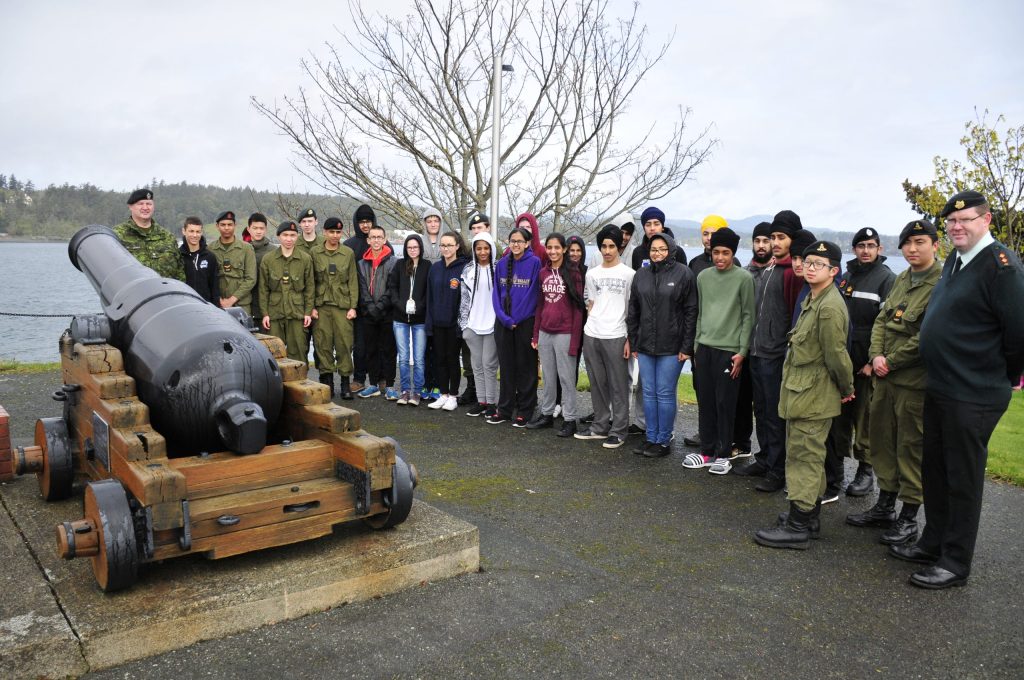
[caption id="attachment_12321" align="alignnone" width="300"] Peter Mallett, Lookout Maj Jim Barrett guides members of Vancouver’s Royal Canadian Army Cadets in a tour of Duntze Head Battery and Dockyard, March 24.[/caption]Peter Mallett, Staff Writer ~Teens from the Royal Canadian Army Cadet Corps (RCACC) marvelled at the Royal Canadian Navy’s Pacific Fleet and Dockyard’s rich naval history during a morning tour March 24.Thirty-five cadets from the lower mainland Corps were given a three-hour guided tour of the base as part of a two-day Citizenship Tour of Victoria. The morning itinerary included stops at the Fleet Maintenance Facility Cape Breton, the dry dock, Duntze Head battery, the Admiral’s House, and a chance to board submarine HMCS Victoria. “The purpose of this and all the tours at the base is to help the community connect with our military,” said tour guide, SLt Louis Pierre Gosselin of Maritime Forces Pacific’s Visits and Protocol office. “The cadets all seemed genuinely interested in the many stories and historical anecdotes we have about Dockyard.”Cadets came from four different units: two from Vancouver’s 2290 RCACC (the 101 Duke of Connaught’s Own Rifle) and the 2472 RCACC (15th Field Artillery), the 3300 RCACC (Bhai Kanhaiya) Surrey, and the 1838 RCACC from Maple Ridge, B.C.  Wet and blustery conditions didn’t seem to dampen their enthusiasm about getting an up-close look at the home of the Pacific fleet.“I thought there were a lot fewer ships here than there actually are. All of us [cadets] seem to be having a good time and learning a lot about the RCN today,” said MWO Andrew Kim, an 18-year-old student from Vancouver’s Magee Secondary School. “For me it was incredible to get a tour of the HMCS Victoria submarine and see how the RCN managed to utilize every single inch of space in the vessel.”During their trip...

Explore More

Categories

Top News

E-Editions Archive

News Stories Archive

Proud Supporters

Joshua Buck, Lookout Newspaper