[wpml_language_selector_widget]
[searchwp_form id="1"]

Latest News

CF divers conduct harbour clearance ops in Ebeltoft

CF divers dip into Denmark waters

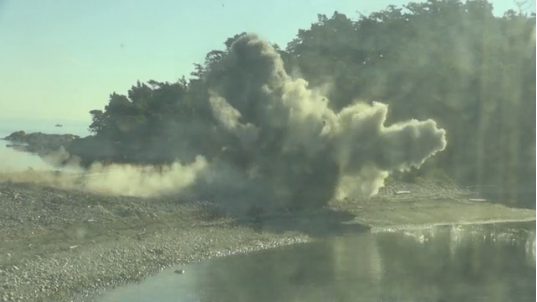
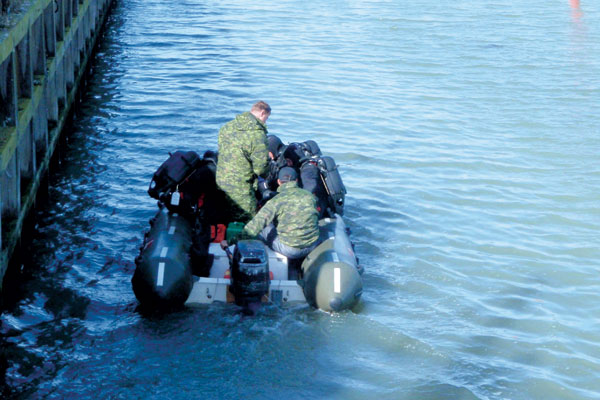
[caption id="attachment_2488" align="alignnone" width="300"] Diver supervisor PO2 Scott Ensor, boat driver LS Tom Amos, and divers PO1 Donald Morris, MS Nick LePage and LS Steve Musgrave depart Lyngsbaek Pier in Ebeltoft, Denmark, to conduct harbour clearance operations. All members are from Fleet Diving Unit (Pacific) except LS Tom Amos who is from FDU (Atlantic).[/caption] Clearance divers from CFB Esquimalt took a dip in the temperate waters off Denmark last month as part of ongoing global relationship development.Six clearance divers took part in Danish Exercise Northern Coast 2012 (DANEX/NOCO), a multinational exercise that focused on international operational cooperation.“From an operational stand point, it gave us a chance to see how the other teams work,” says Lt(N) Demetris Mousouliotis, team leader for the CFB Esquimalt clearance divers. “They’re used to very different environments than we are. They have adapted, and we can learn from those adaptations.”Dive teams arrived in Frederikshavn on Denmark’s northern coast before heading to the harbour town of Hevring for the first phase of the exercise, and then on to Slipshavn for the operational phase.“For both exercises we were tasked with clearing a pier of IEDs [Improvised Explosive Device] and a harbour of underwater mines,” says Lt(N) Mousouliotis. “We used Vanguard Robotic Assessment equipment to inspect potential IEDs and secure the pier. A lot of our equipment, like the hook and line kits, are to ensure we can keep personnel as far from the explosive as possible.”After securing the pier, the team took to the water. Clad in Canadian Clearance Diving Apparatus re-breathers, they first skimmed the surface before diving for underwater mines.During the exercise, Canadian dive teams were able to observe the Danish, American, and Latvian teams.“I learned that our procedures are more or less the same, especially when it comes to diving,” says Lt(N) Mousousliotis. “The details...
RAdm Bennett

Leading as a woman in the Canadian Forces

[caption id="attachment_2443" align="alignnone" width="300"] RAdm Jennifer Bennett has seen many changes to women's roles since she joined the military in 1975.[/caption] Canadian women have played an essential role in all the armed conflicts in which Canada has taken part for more than a century; but it was service in the First and Second World Wars that allowed women to slowly gain recognition as our nation saw increasing numbers of women proudly serving their country in uniform. Although these women did not set out to challenge society’s perceptions on the roles of women in the workplace, they blazed the trail for those of us serving today. While changes since the Second World War were impressive and comprehensive, considering the restrictions to service for women up to that time, there remained many barriers to overcome, and the navy I joined in 1975 was still very traditional in its thinking. I began my career as a Naval Communicator, but could only work in shore-based facilities as women were not allowed to serve in operational units including ships. The Naval Reserve was considered progressive in those days as females were given limited opportunities to go to sea for training but, only during the day in smaller class vessels. When I did navigation training as an officer, we sailed in YAGs, came into a port each afternoon, got on a bus and returned to Victoria to stay overnight on the base while the male Commanding Officer and crew stayed onboard. The next morning, we travelled to meet the ship and the same pattern repeated itself, but we had to stay within range of a bus trip back to Victoria.   Women did not march in platoons with men because our uniform skirt was tapered and did not allow us to step out with the same...

plaque dedication

Underwater plaque honours submariner

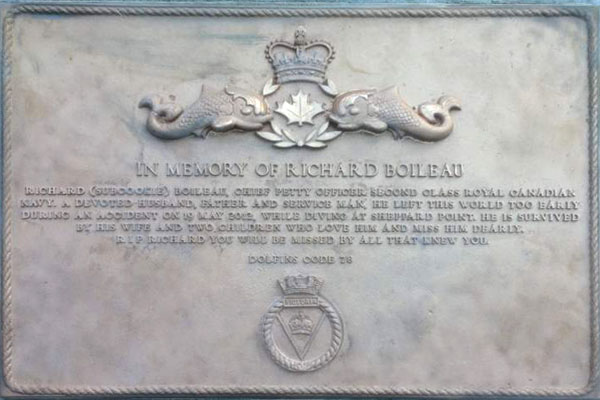
[caption id="attachment_2439" align="alignnone" width="300"] The plaque commemorating CPO2 Boileau was placed on the bottom of the ocean at Sheppard Point.[/caption] Family, friends and military members paid homage to CPO2 Richard Boileau on Oct. 6 at the site of the diving accident that claimed his life on May 19. Five members of Fleet Diving Unit (Pacific) joined by HMCS Victoria’s Executive Officer, LCdr Christopher Holland, dedicated a memorial plaque to honour his life. The party was transported from Brentwood Bay to Sheppard Point where the plaque was later placed. “It was a beautiful day and a fitting tribute for Richard and his family,” said diver CPO2 Rob DeProy. Divers CPO2 DeProy and Richard Parker were with CPO2 Boileau during the accident in the waters of the Saanich inlet near Sheppard Point. In memory of their friend they dove to the ocean floor to lay the plaque. Before rising to the surface they touched the plaque and shook hands to honour their friend. “The plaque was laid in 18 metres of water in a place that is accessible to all levels of divers and will be enjoyed for years to come,” said CPO2 DeProy. Fleet Maintenance Facility foundry crafted the brass work for the plaque, an idea spearheaded by CPO2 DeProy. “Everyone agreed it was a fantastic gesture and the family thanked all who were involved. It was an emotional day for everybody; family were very appreciative of the work that went into it and thought that it was a good tribute,” said CPO2 DeProy. CPO2 Boileau was the coxswain in HMCS Victoria before his death. Before taking on the role of coxswain he served as a cook in HMC Ships Protecteur, Vancouver, Regina and Victoria in 2003. Shelley Lipke, Staff Writer

Doula program aids parents-to-be

[caption id="attachment_2436" align="alignnone" width="300"] Lt(N) Ashley Logan, a volunteer doula for the MFRC, says doulas can relieve the stress of going through childbirth.[/caption] The Military Family Resource Centre (MFRC) helps military families, even before some family members are born. The MFRC provides the services of doulas, non-medical people who assist a mother and/or her partner before, during, and after childbirth. “We provide emotional and physical support to the parents,” says Lt(N) Ashley Logan, a volunteer doula with the MFRC. “No matter what the exact circumstances of the birth are, for a lot of people having an educated person there who has seen the process before can make such a huge difference to them.” Lt(N) Logan took a doula certification course while on maternity leave last year and has been volunteering with the MFRC as a doula since July. She says her favourite part is being able to give back to military families in the same position she was once in. “After I went through childbirth, I realized it’s a much bigger process than I thought it was,” she says. “I love being able to provide a supportive atmosphere for the mothers and their partners. It comforts them to know that I’ve been through it as well.” Doulas take an almost never ending number of workshops and courses to familiarize themselves with all the aspects of childbirth such as breastfeeding workshops, child birthing workshops, and courses on postpartum depression. “Our goal is to make both parties more comfortable any way we can,” says Lt(N) Logan. “That can mean helping the mother find more comfortable birthing positions, mentally preparing the husband for his wife’s caesarean birth, or even just staying with the mother so the father can go get a snack.” Lt(N) Diane Larose, a Public Affairs Officer currently on maternity leave, came across the MFRC’s doula program while pregnant with her first child. Of her two births, both have been at home, and both have been attended by a doula. The...

Screen capture from Naval Warfare: Arctic Circle

Indie game offers realistic future naval warfare

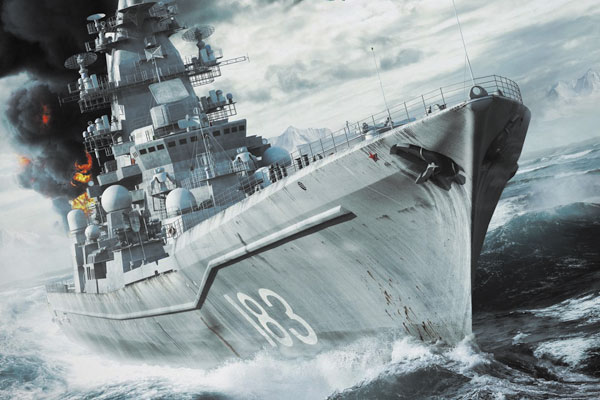
[caption id="attachment_2386" align="alignnone" width="300"] Naval Warfare: Arctic Circle is a real-time strategy game.[/caption] The future of naval warfare is unclear, but thanks to modern gaming we can guess. Naval Warfare: Arctic Circle is a Real Time Strategy game (RTS) by Turbo Tape Games that presents a realistic and engaging view of future naval combat. “It’s important to us, and we think what you see in the game is similar to what you can find in the real world,” says Jan Haugland, Chief Technical Officer of Turbo Tape Games. “We want weapon ranges, max speeds, sensor accuracy, and so on to reflect reality.” The game is set in the year 2030, and imagines a conflict in the North Atlantic, Arctic Ocean, and Baltic Sea, where melting polar ice caps have opened up the north for exploration and resource exploitation. With the current political climate and tensions over ownership of Arctic channels, this conflict doesn’t sound implausible. “There are certainly political differences between the NATO powers and Russia today, but I can’t imagine these nations would let it come to World War Three without nukes, which is basically what this game is,” says Haugland. “Luckily, I think, this scenario will remain in the world of fiction.” Though the game is set almost 20 years in the future, Haugland says the goal was to portray the future of naval warfare as realistically as possible. “We didn’t do this to have a game with science fiction units,” Haugland says. “All the ships, submarines and aircraft in the game, as well as the sensors and weapons employed, are real, either already operational or in advanced stages of development.” This allows Turbo Tape Games to include units that are well known such as the F-35 stealth fighter and the UK’s new Queen Elizabeth class aircraft carrier....

2012 Canadian Forces Anthropometric Survey

Body scans and future military

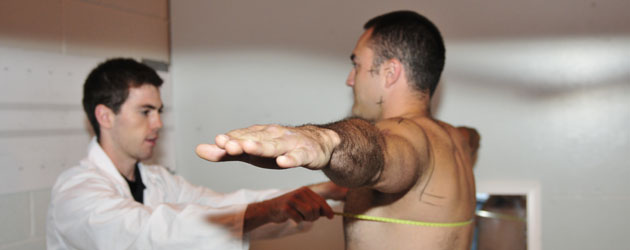
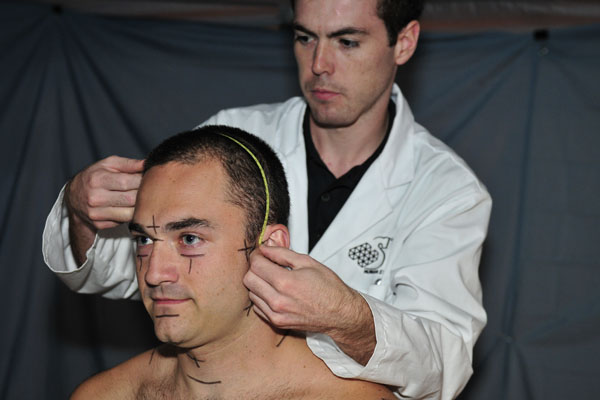
[caption id="attachment_2342" align="alignnone" width="300"] OS Scott Hickey, marine systems engineer student from Fleet School volunteered to take part in the 2012 Canadian Forces Anthropometric Survey. This is the first time a survey has ever been conducted across the Canadian Forces to establish data on the size and form of a range of military members.[/caption] Last week, the upper level of the Naden Gym took on the look and feel of a scientific research lab. Dressed in blue robes, 180 CFB Esquimalt members had lines and x’s drawn on them before they were measured and guided behind curtains where three-dimensional lasers mapped out images of their bodies. It looked like a scene from a sci-fi movie. This was part of the 2012 Canadian Forces Anthropometric Survey, a Canadian Forces wide study involving 15 bases and wings. The study is being conducted for the Canadian Forces by Defence Research and Development Canada, an agency that provides DND, other government departments and the public safety and national security communities with the knowledge and technologies needed to defend and protect Canada’s interests at home and abroad. “This is the first time the Canadian Forces have done a study like this involving navy, army and air force,” said Allan Keefe, project lead from Defence Research and Development Canada (DRDC). Current clothing and workspace standards are based on an army survey conducted in 1997, and there was evidence to suggest the survey needed to be updated, he says. “Knowledge of the size and form of the body of Canadian Forces personnel is crucial to properly specify, evaluate, and develop military equipment and individual clothing,” said Keefe. “We are taking a proportionate sampling approach to ensure we have proper representation of gender, occupation, age and language. This allows us to get a non-bias snapshot of the body...

International Expedition in Iceland

Cadets take on Iceland terrain

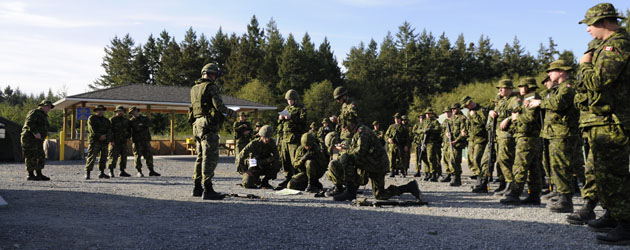
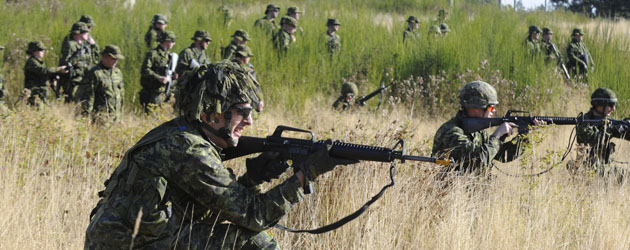
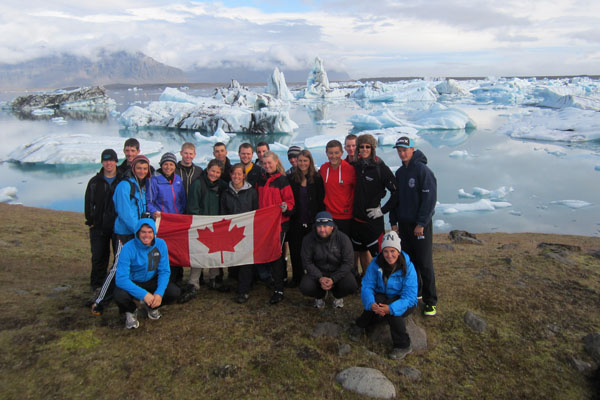
[caption id="attachment_2339" align="alignnone" width="300"] Seventeen Royal Canadian Army Cadets and three Cadet Instructor Cadre Officers from across Canada participated in a rigorous international expedition in Iceland from Aug. 24 - Sept. 6.[/caption] Seventeen Royal Canadian Army Cadets and three Cadet Instructor Cadre Officers from across Canada participated in a rigorous International Expedition in Iceland from Aug. 24 to Sept. 6, which tested their physical and mental limitations. The itinerary included a self-sufficient and gruelling 10-day hiking and mountain climbing expedition through Iceland’s south-western region, followed by three days of equally challenging mountain biking. Participants ascended 1,000 metres of altitude and higher, through technical terrain, rivers, and mountains, each one carrying a rucksack of 50 lbs. “The itinerary was very challenging, even for an experienced adventure enthusiast to attempt,” said mountain guide Vidar. “When I first heard that I was to do this with a group of teenagers, I thought this is crazy.” On day seven of the expedition, the group’s mountain guides were alerted to an approaching storm that could bring dangerously high winds and subzero temperatures. “It was really tough,” recalls cadet Matthew Wickwire, 18, from Halifax, N.S., a member of 2501 1st Halifax-Dartmouth Field Regiment Army Cadet Corps. “After seven days of hiking and climbing through all types of weather and nearing the end of the expedition, the guides told us that we were going to have a long day tomorrow, a really long day.” Due to the potential of a heavy storm, they couldn’t take the chance of being caught in high altitude, so they had no choice but to get out of there fast. On day eight of their expedition, cadets, staff, and guides woke at 4 a.m. to the daunting task of crossing the Skeioararjokull glacier, the third largest glacier in the world, which would...

Dieppe remembered: heroes 70 years later

Dieppe remembered: heroes 70 years later

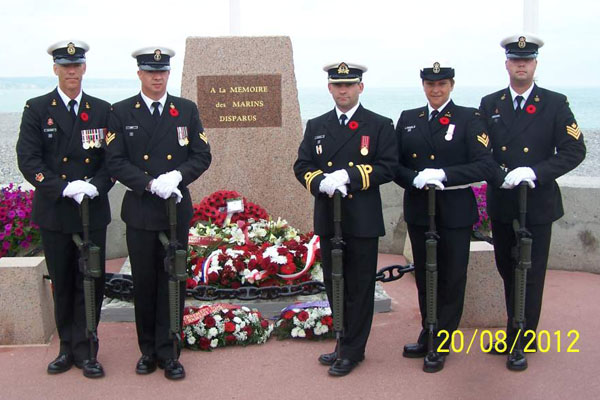
[caption id="attachment_2336" align="alignnone" width="300"] Representatives from the Royal Canadian Navy at the 70th Anniversary of the raid in Dieppe, France. From left to right: PO1 Yvan Vallières, MS Ryan Hart, Lt(N) Jason Delaney, MS Kimberly Sampson, and PO2 Mickael Pinault-Lepage.[/caption] MS Hart and I were both selected to represent Maritime Forces Pacific (MARPAC) at the 70th Anniversary of the raid in Dieppe, France. We flew into Trenton and had two full days of parade practice before departing for France. One the first day we practiced individual drill movements. The second day we trained with the contingent of 107 individuals from all three elements on the five different parade scenarios. A military airbus took us from Trenton to Ottawa where we picked up veterans who participated in the raid. Those veterans were 92 to 95 years young and came from Montreal to Vancouver. Then we flew to Lille, in northern France, where two buses drove us the three hours to Dieppe. Once in Dieppe, we were given our hotel room, which we shared with two or three roommates. The next morning, the contingent was driven to the three beaches where the raid took place. A Canadian historian talked to us a length about what went on that day. I visualized what the soldiers saw once they landed on the beach. We were also driven to the furthest point inland where the Allies marched to. Following this tour, we went to a theatre and saw the world premiere of “Dieppe Uncovered". The declassification of documents led to this documentary, after 15 years of research by military historian David O'Keefe. One of the main British spies featured in the documentary was present in the audience. That night, we went to Les Vertus Canadian Cemetery where we had a chance to browse for an...

Explore More

Categories

Top News

E-Editions Archive

News Stories Archive

Proud Supporters

Joshua Buck, Lookout Newspaper