[wpml_language_selector_widget]
[searchwp_form id="1"]

Latest News

HMCS Regina

Hockey night in Oman

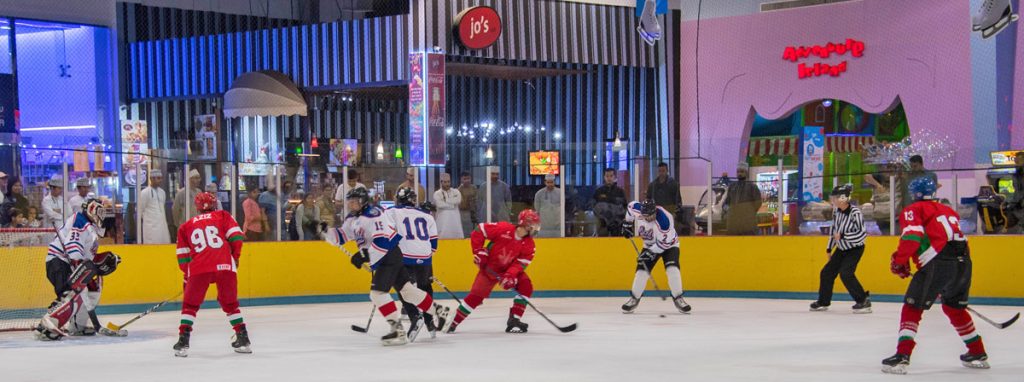
Lt(N) Linda Coleman, HMCS Regina ~It was April 27, a Saturday night, when HMCS Regina was alongside in Muscat, Oman, for a port visit during Operation Artemis.While many Canadians were watching playoff hockey on Hockey Night in Canada back at home, HMCS Regina had their own version going on: Hockey Night in Oman. Oman is known for its beautiful beaches and hot weather. But ice hockey? Not so much. Yet to our surprise, ice hockey not only exists in Oman, but is alive and well.In over 30 degree heat, HMCS Regina’s hockey team made their way to an ice hockey rink called “Fun Zone” in Muscat to play against an expat team called the Wadi Dogs, and the Oman national ice hockey team, the Khanjars.The game was organized by PO2 Tom Orlowski, a Marine Technician onboard Regina, and Aaron Grimley, a member of the expat team in Muscat. It was thanks to Mr. Grimley that Regina had the privilege to play against the Oman national team. The Oman national hockey team was founded in 2014, but it originally started because of the Canadian expat community in Oman. “Back in 2008, we saw a group of Canadians playing here once a week,” said Ibrahim Galadiri, a player on the Oman national team. “We bought some hockey equipment and decided to join them, and day by day we got more players. We decided to make our own team, and then the government decided to support us in 2014.” The team is an associate member of the International Ice Hockey Federation, plays against other Gulf countries, and participates annually in the Challenge Cup of Asia.“It’s fantastic to see how hockey has grown around the world,” said LS Eric Johnston during intermission. “To play in Oman in the Middle East, it’s amazing.” “I never imagined...
LS Scott Ferron

Submariner carves a unique hobby

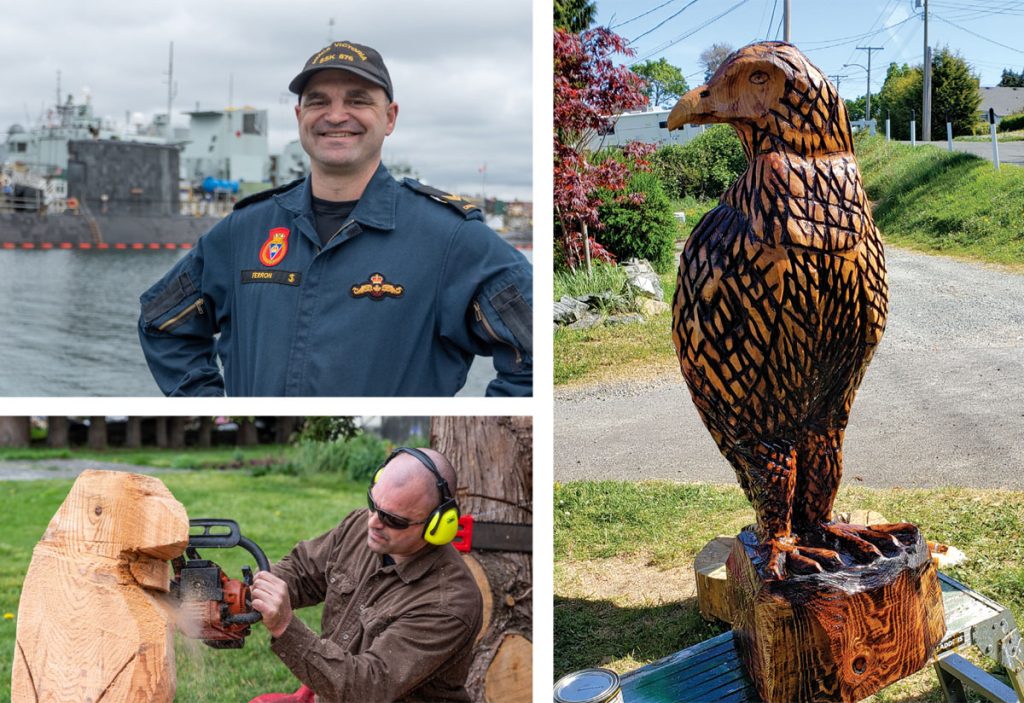
[caption id="attachment_20743" align="alignnone" width="593"] LS Scott Ferron[/caption]SLt M.X. Déry, MARAPC Public Affairs Office ~Wood chips fly in all directions as LS Scott Ferron grips his chain saw and taps a block of red cedar. With each cut from the rotating teeth an eagle takes form.His emerging sculpture is practice for the Campbell River Shoreline Art Competition.“Being able to take a chain saw with that much power and make a work of art is something that intrigued me,” said LS Ferron, a Marine Technician in HMCS Victoria. Prior to joining the Navy in 2010, he worked in forestry and discovered this unique art form when he witnessed a competition. “It was the first time I saw someone carve a work of art with a chainsaw,” he said. “I found a new use for that power tool.”Under the mentorship of Chris Foltz and Bob King, two award winning carvers, LS Ferron learned this craft.He is now revving up for the competition in June, which means making sure the chain saws are in working order and practicing on multiple canvases or logs. But raw material can get expensive.To save money, he looks for free material such as deadfall. But he must be mindful of rot, nails, or anything that would destroy his tools. Luckily British Columbia has plenty of red cedar, which is rot resistant and a softwood, making carving easier. He managed to acquire a fair amount of wood from a local resident who was willing to part with it if he carved her a dog.The practice pieces don’t compare to the massive lumber he’ll carve during the four-day competition; a typical piece is eight feet tall and four feet in diameter. Competitors are given about 40 hours to carve their submissions, plus they do a quick carve that is auctioned off.“It requires a...

A ship’s journey – deployment to deployment

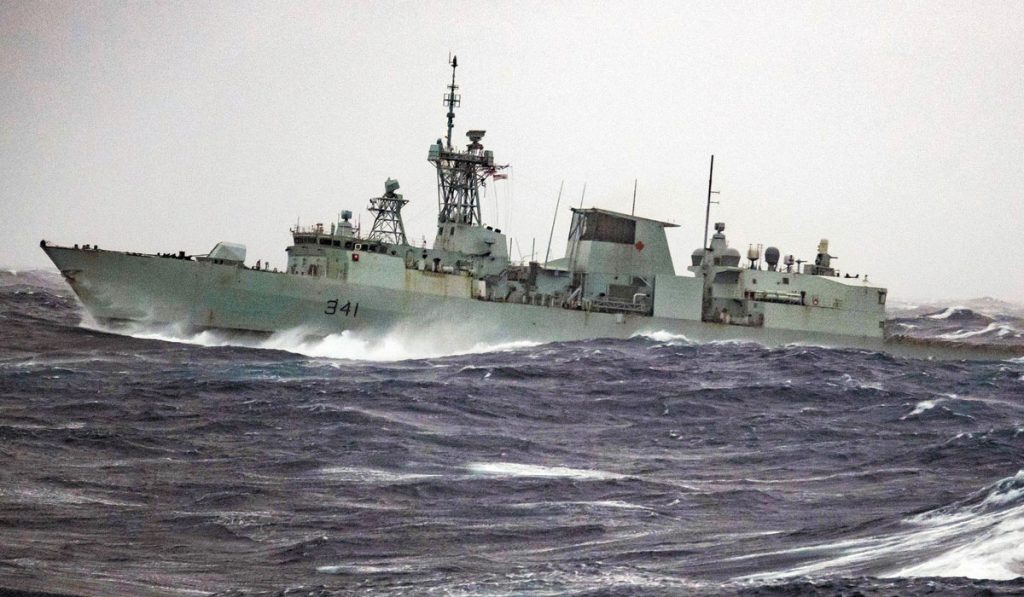
SLt Matthew Mooney, HMCS Ottawa ~It takes a lot for a ship and crew to be ready to let go her lines and proceed to sea in support of Canadian operations around the world. The process begins the moment the ship returns from her previous deployment. A warship is like a floating city that is constantly supporting its crew. After a long deployment overseas, the ship needs to proceed alongside for a maintenance period where anything that degraded overseas can be repaired or replaced. Ottawa’s road to readiness began in September when she and her crew returned from their summer deployment to Exercise Rim of the Pacific (RIMPAC).During October of last year, work was conducted on a number of systems to bring the ship back up to its full fighting order. Both software and hardware was replaced in order to ensure that sailors would have the best equipment to support them on their missions. But it isn’t only the equipment that is changed. The crew of a warship is dynamic; it is constantly being supplemented as crew members go on leave or career courses or get posted in and out. So, in addition to new equipment, there are always new personnel to train and mentor in their new roles or, in many cases, on their new ship. Ottawa took the opportunity, while sailing for the Submarine Commander’s Course in February to invite Sea Training (Pacific) to help mentor the team in an Assisted Ship Readiness Training (ASRT) program. During ASRT, Sea Training ran the crew, who in many cases was working together for the first time, through exercises designed to highlight areas for improvement for the future. The ASRT program aims to assist all of the different organizations in HMC ships. There are simulated warfare engagements, gun shoots, simulated boardings, and...

Bike crashes scuttle triathlete’s Ironman dreams

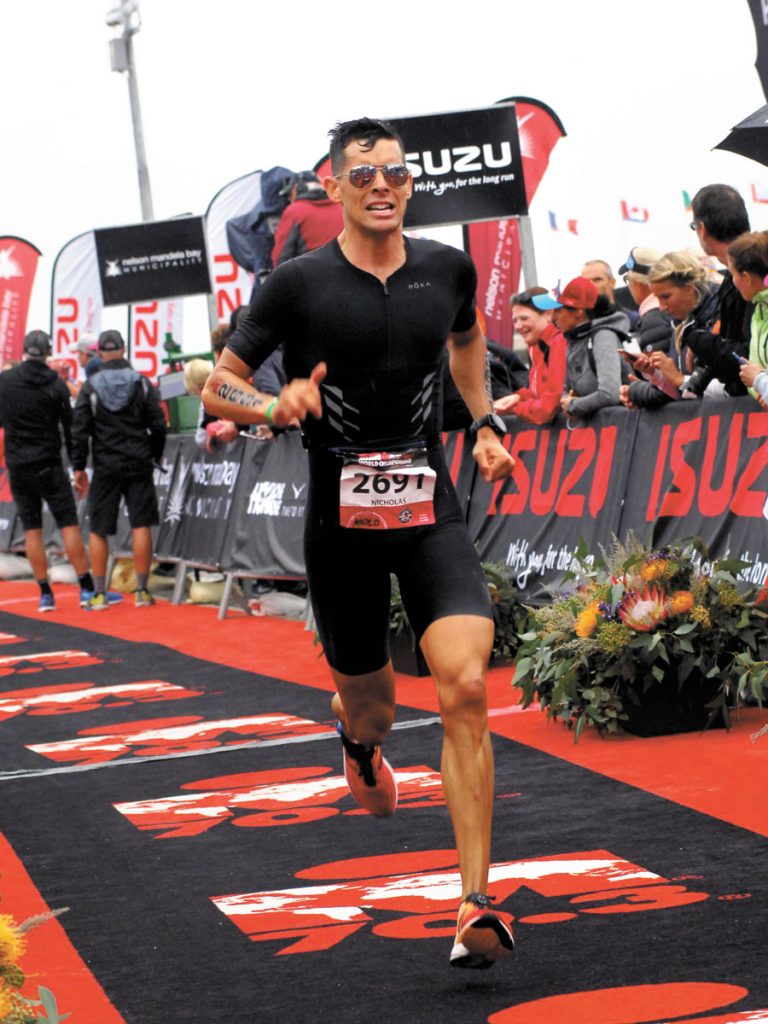
Peter Mallett, Staff Writer ~It has been a punishing start to 2019 for Lt(N) Nico Lightbody. The award-winning triathlete had two serious accidents that have left him with broken bones, and unlikely to compete in any sport competitions until late this year.While at an Ironman training camp in Los Angeles Jan. 24, he took a spill riding his bike down a steep incline. His bike flipped and he went over the handlebars and landed on his back with the impact breaking his right collarbone and his helmet in two. The injury required doctors to insert pins and a plate in his shoulder to hold his collarbone in place. Lt(N) Lightbody estimates he was travelling 40 kilometres an hour when his back wheel struck a small rock on the path. Then three weeks ago he was riding his bike on Ash Road in Saanich and was taking a sip from his water bottle when a utility vehicle suddenly stopped in front of him. He was able to brake before striking the back end of the vehicle, but the braking action pushed all his weight forward and his entire body flipped forward over his handlebars. He landed on his head and back, and this time suffered a broken left collarbone, more road rash, and soft tissue damage in his right forearm.“My first injury came as a complete shock and I didn’t know I had broken anything,” said Lt(N) Lightbody. “In my latest accident it was a case of surreal disbelief that this could happen again, and then sadness.”He was back to training for the June 1 Ironman 70.3 competition in Hawaii when the second accident happened. “It was super unfortunate to break my collarbone for the second time in three months,” said Lt(N) Lightbody. “All my races for this year are up in...

Photo by LS Gibson

Orca class trains with Cyclone

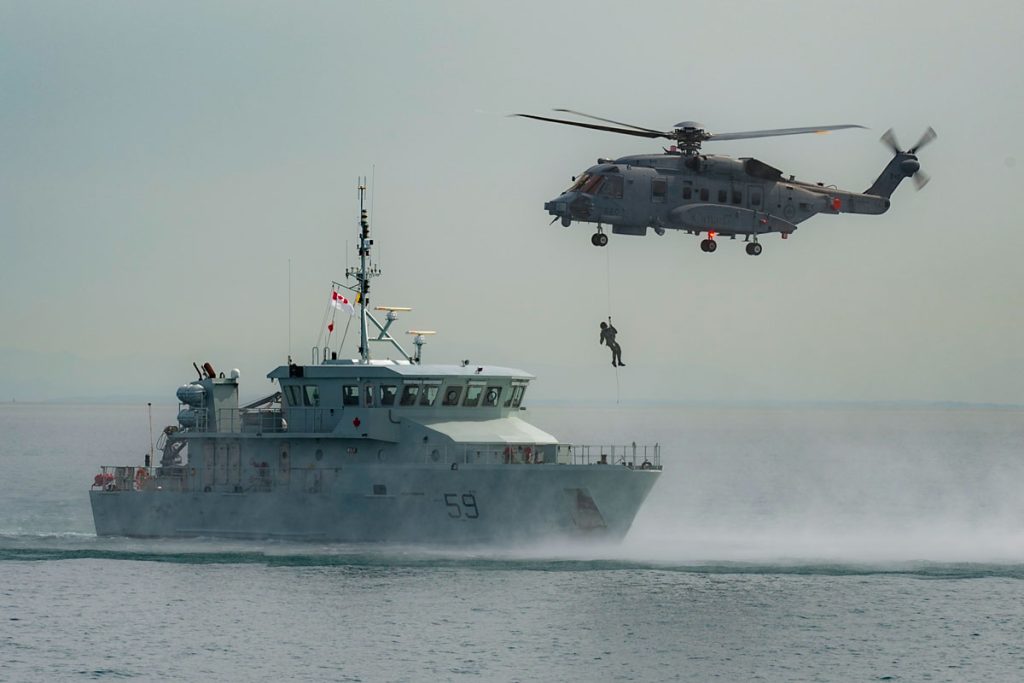
[caption id="attachment_20731" align="alignnone" width="593"] Photo by LS Gibson, MARPAC Imaging Services[/caption]Lt(N) Evan Park, Naval Fleet School (Pacific) ~On a clear sunny afternoon in Constance Bank, four Patrol Craft Training (PCT) Orcas operated with a CH-148 Cyclone Helicopter (call sign Stinger 20) for the first time. The vessels were at sea in support of the Athabaskan Naval Warfare Officer IV Charge phase.The Cyclone, a much more powerful aircraft than the Sea King, created significant downwash, so it was important to determine the effects on the Orca class and to practice countering such effects. Once interoperability was proven, the aircraft pilot and the officers in charge of PCT Wolf, Raven and Grizzly exercised personnel transfers between the two platforms. “Proving the concept opens the door to future transfers of provisions or personnel while underway, increasing flexibility in routine operations and/or during emergency response situations” said LCdr Erik Poirier, Officer in Charge of PCT Wolf.Athabaskan NWO IV Charge students, in their last training phase before joining the fleet, had a unique opportunity to work with the new airframe. “Working with the Cyclone this week was a rare opportunity for myself and my fellow students,” said A/SLt Liam Moors. “We did not expect to work with it until we reached the fleet, let alone be a part of the first operation ever between the two platforms. It was a great experience.”

A sailor assumes force protection duty.

Hot success – the road to cocaine seizure on Operation Caribbe

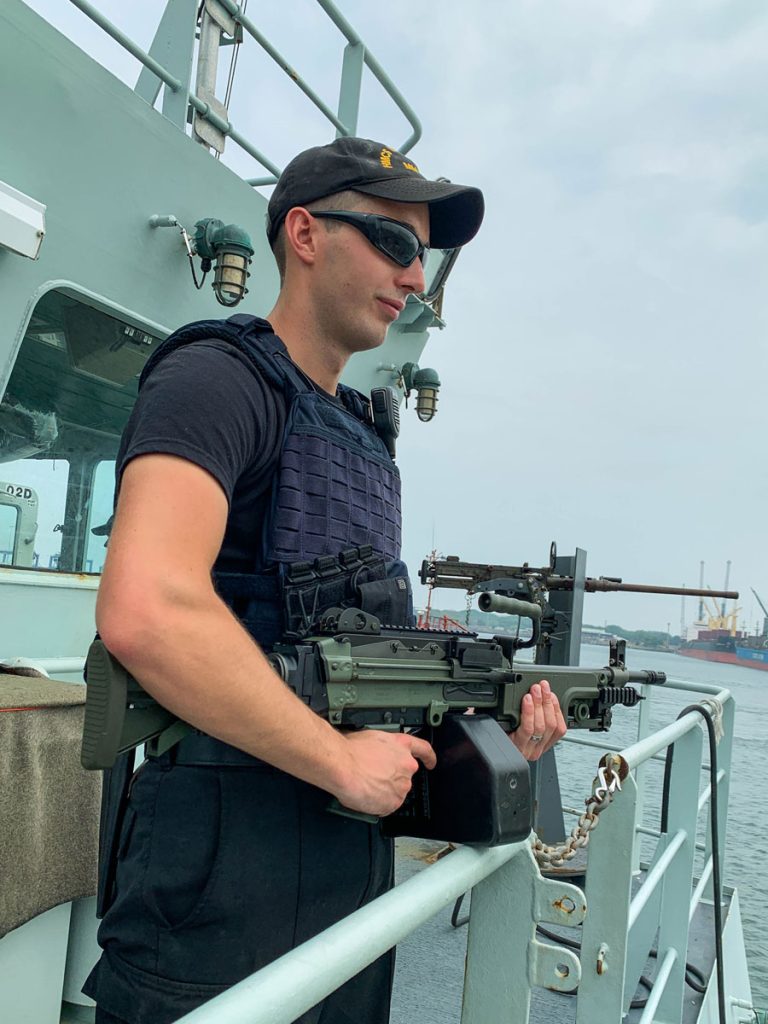
[caption id="attachment_20728" align="alignnone" width="593"] A sailor assumes force protection duty.[/caption]Capt Annie Morin, Public Affairs Officer, Operation Caribbe ~As HMCS Yellowknife sails under the hot sun in the Eastern Pacific Ocean, the air is heavy with humidity, bringing the temperature to about 45 degrees with the humidex. It’s nearly impossible to stay dry even when limiting your movements. Your clothes stick to you in all the wrong places; the nape of your neck perpetually clammy. Inevitably, sweat is just something you have to deal with. The ship’s task at hand on Operation Caribbe is to find and board vessels of interest carrying illicit drugs, and on April 14 they made their first drug bust. Start of the actionOn the bridge of the ship, everything was dark apart from the faint lights emanating from the equipment. From afar, Yellowknife was nearly invisible sailing in its search area when the radar picked up a signal from a nearby vessel. The helmsman piped boarding stations signaling to those involved in the boarding to get ready; the ship’s Rigid-Hulled Inflatable Boats was lowered into the water with the United States Coast Guard (USCG) law enforcement detachment who would actually perform the boarding. The crew positioned the ship favorably using the moonlight so it could remain unseen by the vessel for as long as possible. A Costa Rican flag was spotted on the vessel. Other than required communications with the operations room, the bridge was quiet in anticipation. In complete darkness, the RHIBs pulled away. As the RHIBs came to the sides of the suspected smuggling vessel, the Captain was hailed by USCG members; the suspects stood noticeably surprised by the sudden nocturnal apparition, but remained calm. One by one, the USCG members climbed on board the vessel, having received authorization to board by authorities. Upon receiving...

Retired submariner Jim Northrup spoke to members of the Lost Soul group about the history of the Naval Museum and some of his own experiences in the building. Photo by Ryan Melanson

Seeking out spirits at the Naval Museum of Halifax

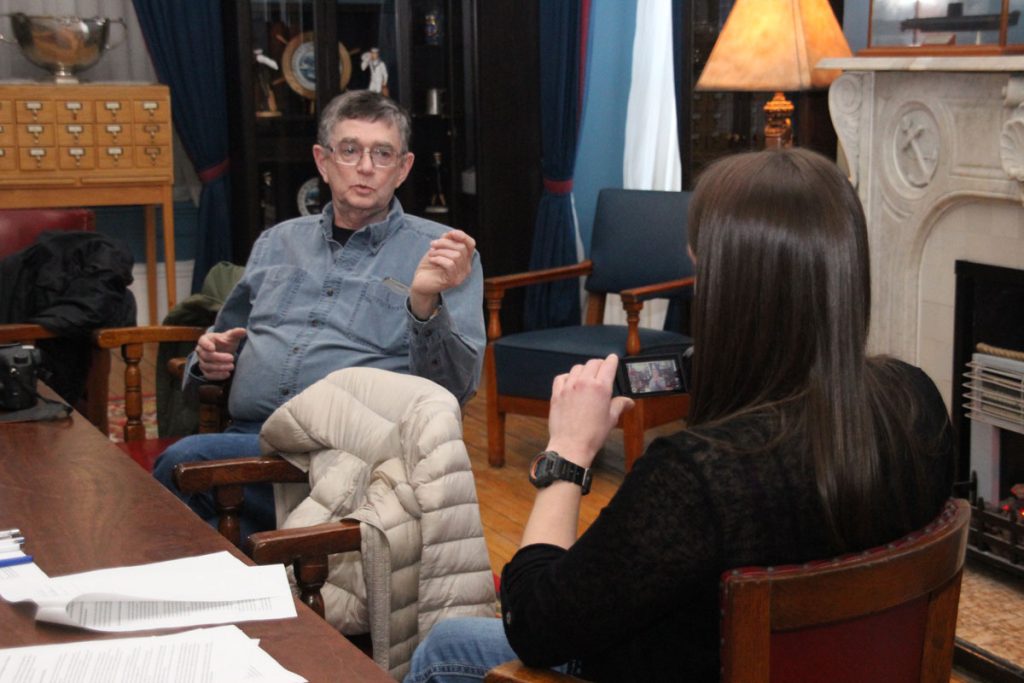
[caption id="attachment_20704" align="alignnone" width="593"] Retired submariner Jim Northrup spoke to members of the Lost Soul group about the history of the Naval Museum and some of his own experiences in the building. Photo by Ryan Melanson, Trident Staff[/caption]Ryan Melanson, Trident Newspaper ~Jim Northrup says he’s heard a lot of strange stories about the Naval Museum of Halifax over the years.A retired submariner and volunteer at the museum, Northrup recalled a story from a commissionaire who saw a woman in the building after hours, only to have her disappear when he spoke to her. He also remembered contractors replacing the windows of the 200-year-old building, who talked about feeling the presence of people standing behind or beside them while they worked.“There’s all kinds of stories like that. I’ve felt it too. I had a friend who called this building the creepiest place he ever worked in,” Northrup said.Those types of stories were what led Lost Soul Spiritual Services, a local group that specializes in spiritual and paranormal house cleansing, to the museum on March 25 for a special visit and to investigate.While the group normally works with people who are troubled by feelings of spirits or paranormal activity in their homes, CFB Halifax agreed to have the group in for an investigation into the creepy tales that have circulated for years.Heather Rann, a self-described medium and one of the founders of the group, said she’s done similar work in the past at the Halifax Citadel and Fortress of Louisbourg, but the Naval Museum marked the biggest project with her current teammates and new gear, including a Structured Light Sensor camera system, like the type often used to seek out paranormal activity on TV.“This is one of our bigger and more exciting investigations,” she said.Rann and her colleagues got a tour of the...

Yellowknife’s cooperation in the name of science

[caption id="attachment_20701" align="alignnone" width="592"] An officer from HMCS Yellowknife deploys an Argo float in the Pacific Ocean. Photo by Captain Annie Morin[/caption]Capt Annie Morin, Public Affairs Officer Operation Caribbe ~Recently, HMCS Yellowknife was asked by the Department of Fisheries and Oceans (DFO) to water deploy an Argo float as part of a broad-scale global array of temperature/salinity floats. This piece of equipment provides continuous monitoring of temperature, salinity, and the velocity of the upper ocean. To gather the information, the Argo floats go through a cycle of approximately 10 days. The float first descends at a depth of approximately 1,000 meters and drifts for eight to 10 days. At that point, it descends further to about 2,000 meters before ascending to the surface over a period of approximately six hours where it will spend some time at the surface of the water to transmit its data. While submerged, the float collects water column information and data. The cycle is then repeated to gather and transmit new data.  “HMCS Yellowknife was presented with the opportunity to contribute to the gathering of oceanographic data and gladly accepted the offer,” said Lieutenant Commander Donald Thompson-Greiff, the ship’s commanding officer. “By supporting the Department of Fisheries and Oceans with the deployment of an Argo float off Latin America, we are able to help the collection of a range of data valuable for research.” Debuted in 2000, the program activates about 800 floats each year which contributes to a greater understanding of the oceans. The data gathered by the floats is released near real-time to the Argo Global Data Centres located in Brest, France, and Monterey, California. Overall, the global network includes some 4,000 Argo floats around the world with over 30 participating nations in the program.Lieutenant (N) Josée Belcourt, Maritime Forces Pacific Formation Oceanographer, was the liaison between DFO and the Royal Canadian Navy to facilitate deployment of the floats. She explains that the data gathered “provides valuable scientific information to monitor ocean variability, including...

Members of the French Navy NH90 helicopter detachment from Task Force 473 meet with members of HMCS Regina’s Cyclone helicopter detachment on the ship’s flight deck. Photo by Cpl Stuart Evans

Royal Canadian Navy strengthens interoperability with French Navy Carrier Strike Group

[caption id="attachment_20697" align="alignnone" width="591"] Members of the French Navy NH90 helicopter detachment from Task Force 473 meet with members of HMCS Regina’s Cyclone helicopter detachment on the ship’s flight deck. Photo by Cpl Stuart Evans[/caption]Lt(N) Linda Coleman, HMCS Regina Public Affairs Officer ~Last Tuesday, HMCS Regina conducted a cooperative deployment with French Task Force (TF) 473, a Carrier Strike Group with nuclear-powered French Navy aircraft carrier Charles de Gaulle as its centerpiece. The cooperation took place in the Arabian Sea with the goal of enhancing interoperability and improving communications.The day started with an Air Defence Exercise (ADEX), which saw French Navy Rafale M Fighter jets take off from Charles de Gaulles aircraft carrier to conduct maneuvers over Regina. As the jets flew over the warship as low as 200 feet, Regina’s operations room was buzzing with activity. The aim was to exercise Above Water Warfare capabilities by practicing detect to engage, warnings, self defence against unknown strike / fighter bomber aircraft, and air to surface missiles. “The ADEX was a lot of fun for our Above Water Warfare team to track and locate French fighter jets,” said Lt(N) Adam Ness, Regina’s Above Water Warfare Officer. “The opportunity to work with an aircraft carrier and its fighter jets doesn’t come around very often, so it was a unique opportunity for us to exercise these skills. Happy to say that we rose to the challenge resulting in a successful exercise.” The afternoon saw TF 473’s NH90 Helicopter conduct deck evolutions with Regina, including hoisting, slinging, and landings. For Regina’s embarked Cyclone helicopter detachment, it was an opportunity to conduct joint training. “The deck evolutions went very well with the French Navy. It’s great professional development for us to work with other countries, see how they operate and perform these procedures, which is a...

Ask a Battle of Atlantic Survivor: Q&A with Peter Chance

Ask a Battle of Atlantic Survivor: Q&A with Peter Chance

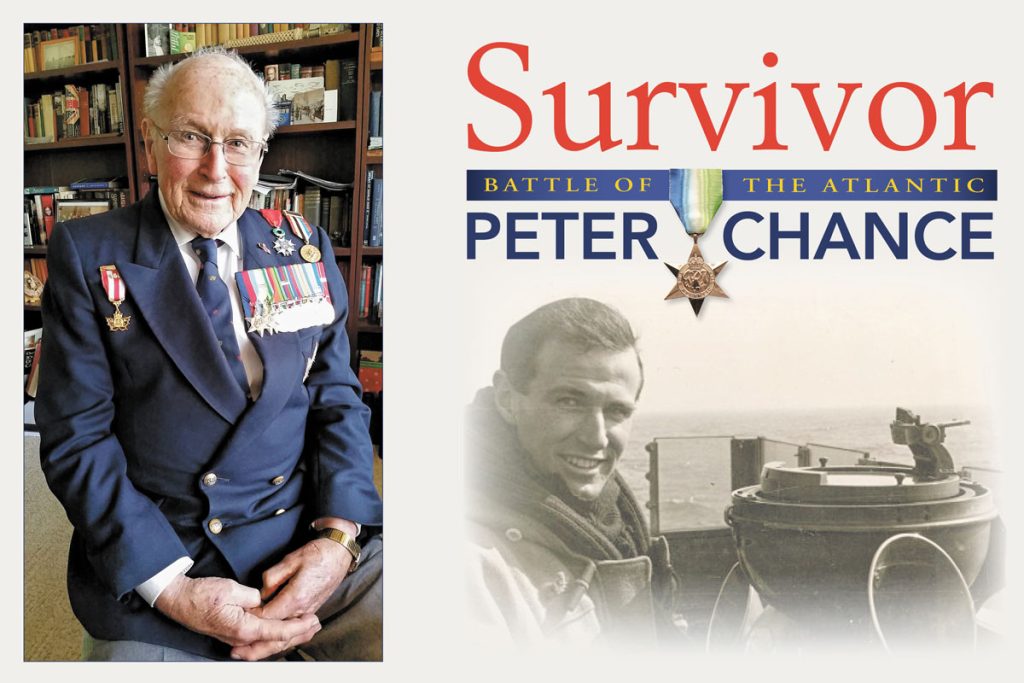
Peter Mallett, Staff Writer ~During the Second World War, Commander (Retired) Peter Godwin Chance served in a variety of Canadian warships including HMCS Skeena, HMCS Seacliff, and HMCS Gatineau.After the war, he would see combat again as part of Canada’s support of UN operations in the Korean War. From April 1951 to July 1952 he served aboard tribal-class destroyer HMCS Cayuga, overseeing navigation and air direction during bombardments along the coastline. In 1986, he was awarded and the Admiral’s Medal and then in 2002 the Queen’s Golden Jubilee Medal; in 2014 he received the French Legion of Honour Medal at the rank of Knight and was also awarded a Minister of Veterans Affairs Commendation. Today, Chance delights at the opportunity to share his vivid descriptions about his experiences at sea. His autobiography entitled, A Sailor’s Life 1920 to 2001, was published by SeaWaves Books in 2011.Commander (Retired) Peter Godwin Chance, 98, answered some questions from today’s sailors about his service, and survival, on the Atlantic Ocean during the Battle of the Atlantic.---CPO2 Joe Dagenais, Chief Boatswain Mate HMCS ReginaQ: Sir, first of all thank-you for your service, and all that you and your shipmates did for Canada. My question is which of the over 40 missions that you participated in was the most memorable?A: Operation Neptune because of the magnitude and scope, and it helped settle the course of the war. LS Robert Thrun, Marine Systems Engineering Division HMCS ReginaQ: What were your initial reasons for enlisting in the service? Also did your personal experiences throughout the course of the war change you view point of the services or strengthen the beliefs that you already held and caused you to enlist?A: I enlisted because my next-door neighbour in Ottawa was a Sub-Lieutenant at the local reserve division known as The Ottawa...

Lieutenant Commander Malcolm Barry

New Zealand sailors remember the Battle of River Plate

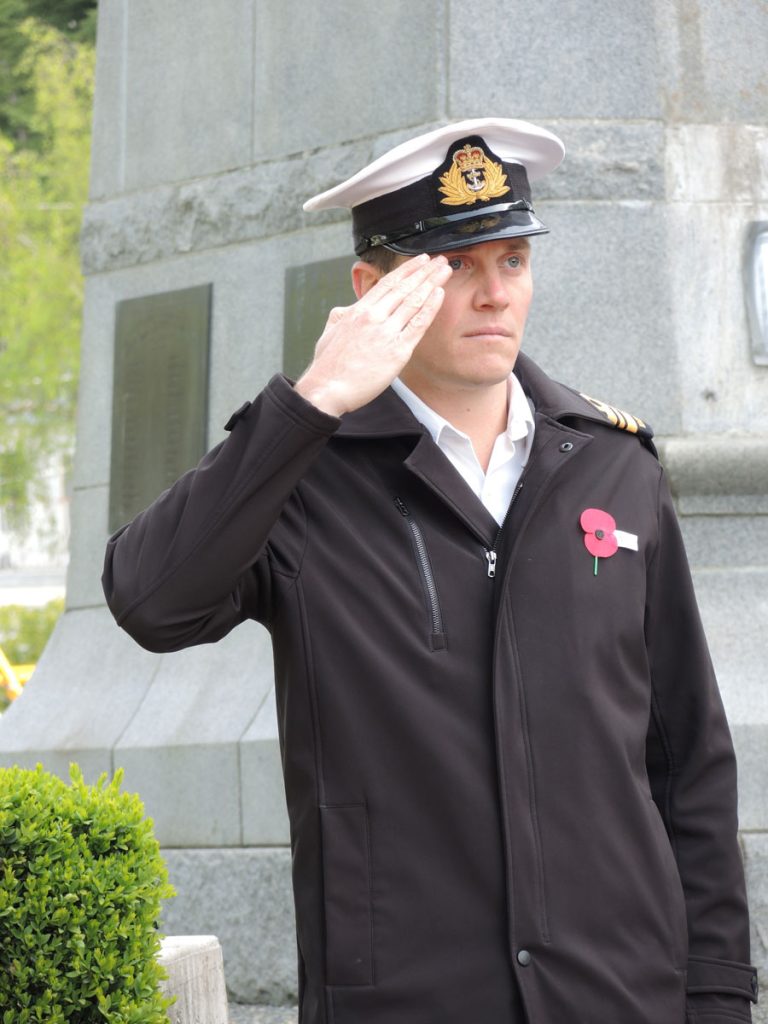
[caption id="attachment_20694" align="alignnone" width="591"] Lieutenant Commander Malcolm Barry, Operations Officer for Royal New Zealand Navy vessel HMNZS Te Mana, salutes during last week’s ANZAC Day ceremony at the Esquimalt Memorial Park Cenotaph.[/caption]Peter Mallett, Staff Writer ~When sailors of the Royal New Zealand Navy (RNZN) gathered to commemorate ANZAC Day last week, the Battle of River Plate was not far from their thoughts. The decisive battle occurred in the first few months of the Battle of the Atlantic and unfolded off the coast of Uruguay in late 1939. HMS Achilles, a New Zealand-crewed British warship, helped deliver a crushing defeat to Germany and morale-boosting victory for the Allies. Loaned to New Zealand by the British, Achilles played a pivotal role in disabling Germany’s formidable pocket battleship Graf Spee. Even though Achilles and two Royal Navy ships were heavily outmuscled by the superior German surface raider, Achilles became the first New Zealand warship engaged in a Second World War naval battle, and also their first win.Last week on April 25, at 10 a.m., approximately 80 RNZN sailors from Her Majesty’s New Zealand Ships (HMNZS) Te Mana and Te Kaha gathered at the cenotaph in Esquimalt to commemorate ANZAC Day. The national day of remembrance is observed in Australia and New Zealand; it was originally established to commemorate the two nation’s sacrifices of the First World War. Nowadays, ANZAC Day pays homage to military personnel who served in all wars, both conflicts and peacekeeping operations. For sailors of the RNZN, The Battle of River Plate will always be in their thoughts. Lieutenant Commander Malcolm Barry of Te Mana was one of those who bowed his head in a moment of silence to remember his countrymen who sacrificed so much. LCdr Barry says his thoughts drifted to his Great Grandfathers who fought in the First World...

Hero Warship: Museum’s latest exhibit

Hero Warship: Museum’s latest exhibit

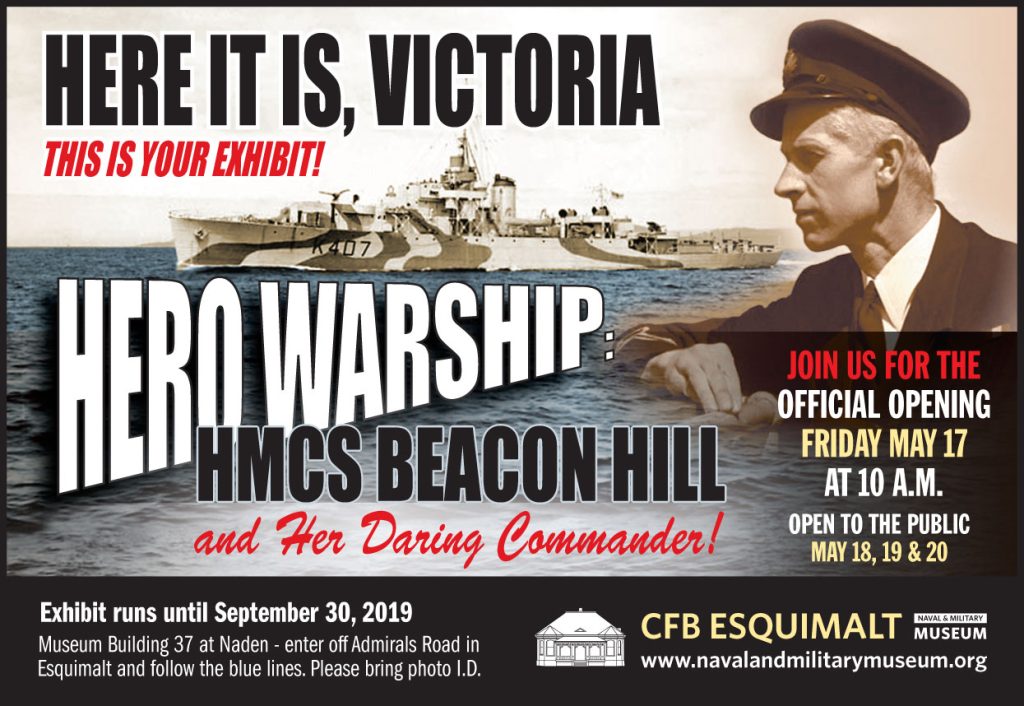
Clare Sharpe, CFB Esquimalt Naval and Military Museum ~The story of Victoria’s adopted ship, HMCS Beacon Hill and the courageous young naval hero who commanded her are the focus of a new exhibit at the CFB Esquimalt Naval and Military Museum, opening May 17.“Hero Warship: HMCS Beacon Hill and Her Daring Commander” celebrates the ship’s strong historical ties to Victoria, and the deep local connections between her Commanding Officer, Edward Theodore ‘Ted’ Simmons, and the city he called home.‘Ted’ Simmons became a celebrated hero of the Battle of the Atlantic in the Second World War. Yet he remains relatively unknown in his former home community, and his daring exploits have gone largely unrecognized. Like many Canadians who sacrificed personal security for the uncertainties and danger of wartime service, Simmons displayed genuine bravery in the face of terrible - and terrifying - circumstances.Simmons was born in Vernon, B.C., on July 6, 1910; he was the son of a police officer. Eventually moving to Victoria, he worked in the textbook division of the Department of Education as a provincial civil servant before taking a sales job with a local company, Standard Furniture, where he was training to be an interior decorator. Simmons was a leading light in Victoria’s amateur theatrical community during the 1930s. He served as President of the city’s Beaux Arts Society and acted and danced in the society’s productions. From many accounts, he was a fun-loving and gregarious man with a lively wit and sense of humour. In 1939, with war in Europe looming, Simmons registered for service with the Royal Canadian Naval Volunteer Reserve (RCNVR), even before the navy had the authority to recruit him into the strength of the RCNVR. He left civilian life and a promising career for the uncertainties of war and the serious perils of...

Rear-Admiral Bob Auchterlonie

Message from the Admiral

Rear-Admiral Bob Auchterlonie ~Esquimalt, B.C., is approximately 5,000 kilometers from Halifax N.S., and 7,600 km from London, England. In fact, we in Victoria are closer to Tokyo than Berlin. So why should Canadians on the Pacific coast care about the Battle of the Atlantic?The answer is simple. When Canada declared war on Germany in September 1939, and sent ships and sailors to sea on convoy escort duties, the whole country committed to the effort. Men and women from every corner of the dominion volunteered to serve in the Royal Canadian Navy (RCN). Thousands of British Columbians from all walks of life served in the RCN – the Victoria school teacher, the Kelowna forester, the Bella Bella fisherman, the Vancouver mechanic. They left family and friends, boarded busses or trains and headed east to join the fight. Geography ceased to matter. The sailor wearing the RCN uniform wasn’t from Thunder Bay, Lethbridge, Moose Jaw or Trois Rivieres. He was from HMCS Swansea or HMCS Haida, or she was from HMCS Shelburne or HMCS Newport Corner. The battle happened on the Atlantic, but it was fought by Canadians from all over.And fight they did. The ships of the RCN and the Merchant Navy maintained the vital sea lanes that supplied the Allied war effort for six grueling years. At the cost of thousands of lives and hundreds of ships, the sea routes between North America and England were made secure from the German U-boats.By D-Day in 1944, the allies had superiority in the air and control over the sea lanes. It is safe to say that without the herculean effort of the corvettes, destroyers, merchantmen and RCAF aircraft, the Normandy invasion would not have been possible.After Victory in Europe in 1945, the sailors went home to pick up where they left off....

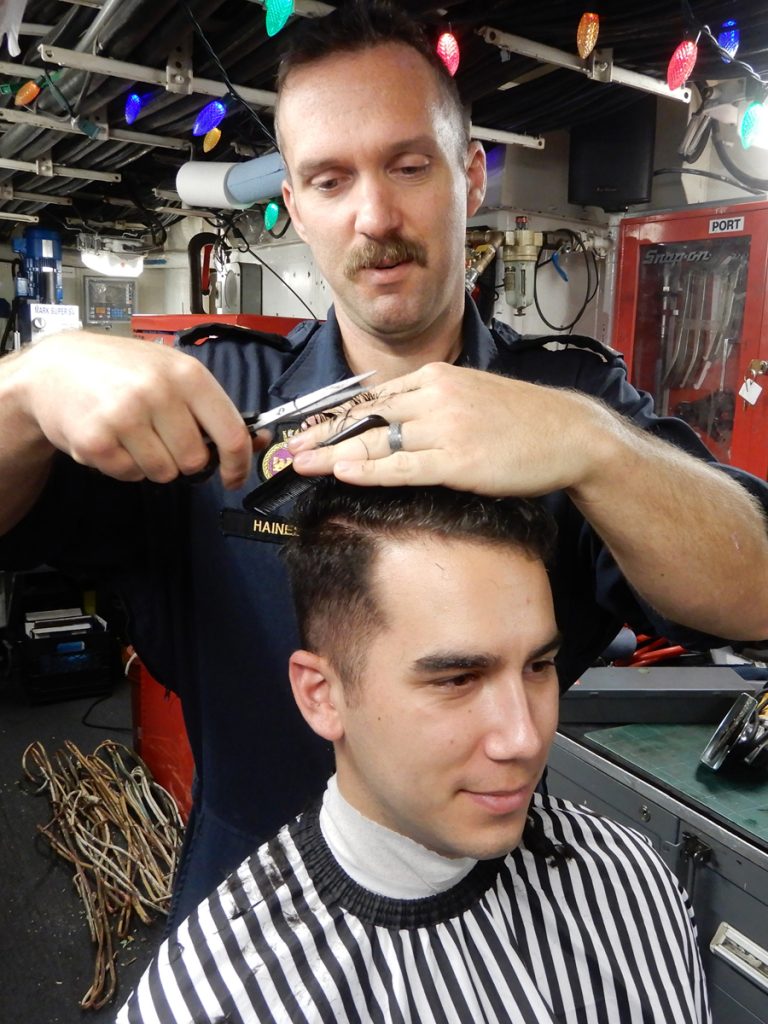
LS Tyler Steffan gets a hair cut from MS Jeffrey Haines as part of a fundraiser for children’s sports charity Jump Start.  Photo by LS Thrun

Sailor’s barbershop fundraises to give kids a Jump Start

[caption id="attachment_20667" align="alignnone" width="592"] LS Tyler Steffan gets a hair cut from MS Jeffrey Haines as part of a fundraiser for children’s sports charity Jump Start. Photo by LS Thrun[/caption]Peter Mallett, Staff Writer ~If you pass by the “stoker’s” workshop in HMCS Regina, you might catch a glimpse of that infamous barbershop red and blue pinstripe icon. This is the home of the Greasy Clippers, a make-shift barber shop with Master Seaman Jeffrey Haines behind the clippers.The 34-year-old Marine Engineering Technician is currently on a seven-month deployment in the Arabian Sea and Indian Ocean as part of Operation Artemis. On his down time, he heads to his makeshift barbershop to keep his shipmates shipshape, and the fundraising pot growing for Jump Start. All the proceeds he raises - $5 a hair cut – goes to the Canadian Tire charity that benefits children’s sports. It gives economically disadvantaged youth the chance to participate in organized sports programs and physical activities by paying for equipment, registration fees and other costs.“It’s a hard concept for kids to understand why their parents can’t afford something,” said MS Haines. “I’ve always loved what Jump Start has stood for because I believe all kids should have the opportunity to play sports no matter what their background or financial situation.”Jump Start was launched by the Canadian Tire Corporation in 2005. It has assisted over 1.9 million children and last year raised close to $30 million to support community-based sports programs. MS Haines is a self-taught barber and began cutting his and his children’s hair after buying a set of clippers. Two months into Regina’s deployment he has done over 140 haircuts. Along with some generous tips he has raised over $1,000. The barber shop is his first charity project and took a bit of planning. The week before...

Jeepapalooza – a drive for charity

Jeepapalooza – a drive for charity

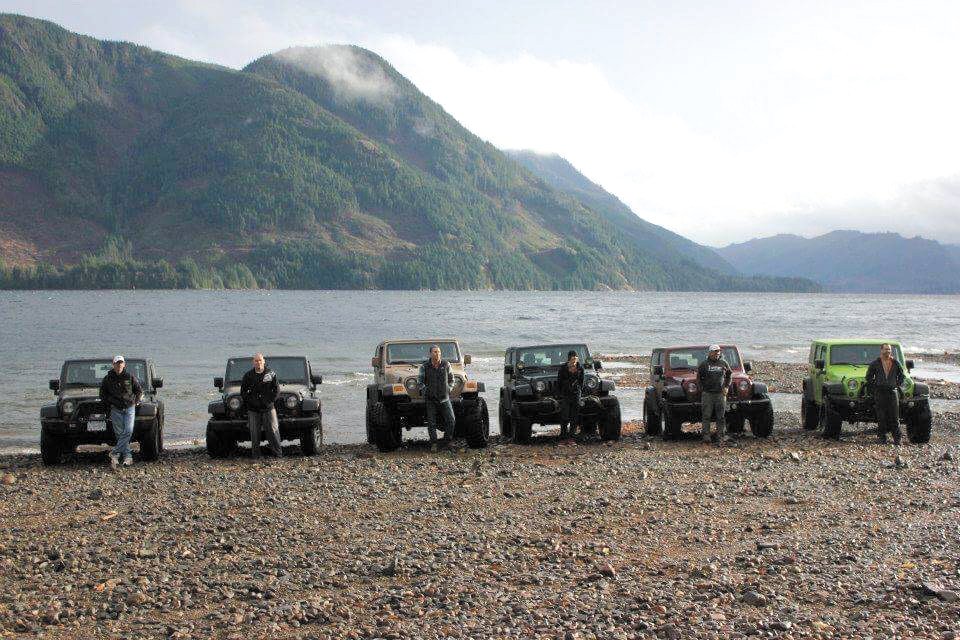
Peter Mallett, Staff Writer ~A submariner with HMCS Chicoutimi, along with other members of the military community, is gearing up for next month’s Jeepapalooza cancer fundraiser. The May 17 to 20 event combines camping and camaraderie with a weekend-long off-road caravan for jeep and SUV enthusiasts, taking them on a journey past lakes, streams valleys and mountain vista points on logging territory of the Comox Valley. This will be Petty Officer Second Class Oleg Mamontov’s fifth time as a participant in the sixth annual event. He returns year after year for a few days of fun and adventure, but also because it serves a much more practical purpose. “The whole point of Jeepapalooza is to raise as much money as we can for the B.C. Cancer Foundation,” says the 42-year-old submariner. “We are looking for individuals and businesses to support us in any way they can from monetary donations, to donations of prizes for our silent auction, to buying raffle tickets.”Jeepapalooza’s goal this year is to raise funds for the Immunotherapy Research Program at Vancouver Island’s Deeley Research Centre of Victoria. Last year, support for the event surpassed expectations with $31,000 raised. This year, the charitable event hopes to meet or surpass that total. As for the fun factor, PO2 Mamontov says that begins after participants set up their campsites at the Jeepapalooza camp ground. After that, most of their time during daylight hours is spent off-roading in jeeps and other similar-style vehicles on a huge swath of private property owned Timber West Logging territory.When the vehicles are turned off the fun and friendship-building ramps, says PO2 Mamontov. “During the day it’s all about big jeeps, big tires and lots of mud, but the fun continues at night. If you like the outdoors but are not into exhausting activities like hiking...

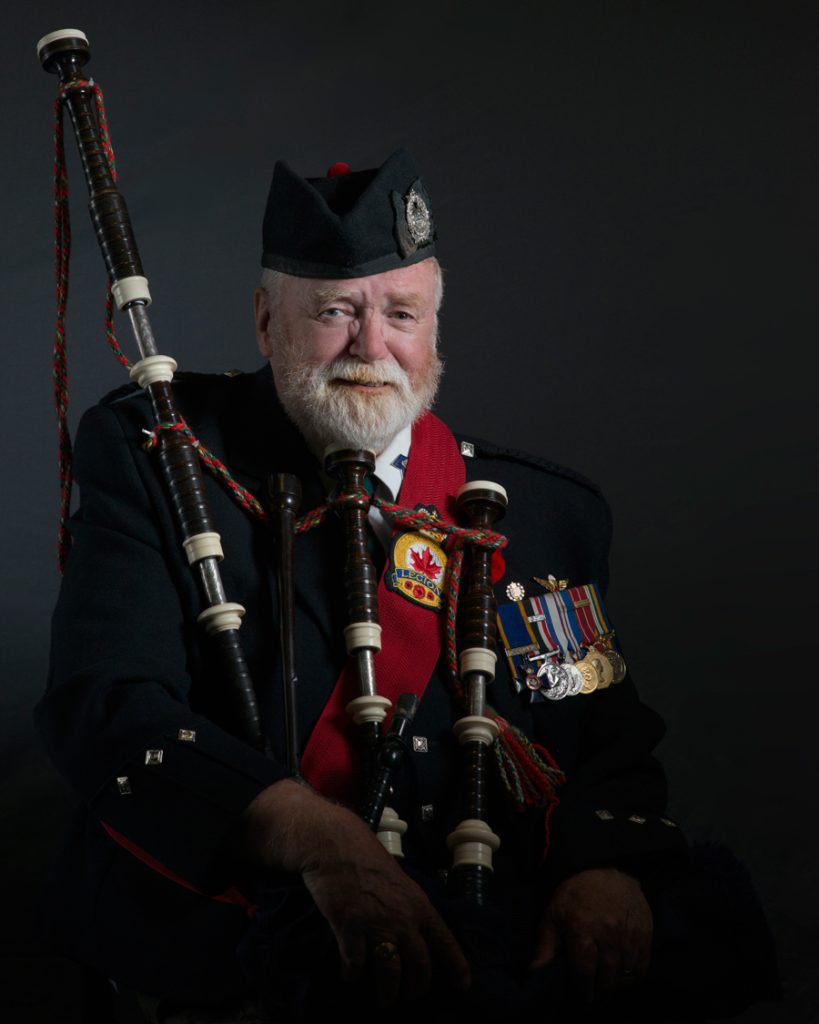
Lt-Col Jon Lynn Moffat (deceased)

Photographer focuses on veterans

[caption id="attachment_20661" align="alignnone" width="592"] Lt-Col Jon Lynn Moffat (deceased)[/caption]Peter Mallett, Staff Writer ~When a hobby merges with passion and determination, it becomes a mission.For Chief Petty Officer Second Class John Penner that hobby is photography and that mission is capturing the faces of veterans, young and old. He captures their essence, their personality by staging them against a dark background with minimal lighting. This creates an intended prestige, an acknowledgement of his or her service to Canada. Chief Penner’s growing collection of images are for his Veterans Portrait Project, which he hopes to take on the road at some point as a travelling exhibit. “I think people need to see that veterans are people, that is the concise way I can boil it down,” said CPO2 Penner, 51. “There is a lack of this visibility in Canada, whereas in the United States people are much more nationalistic and have more national pride and support for their military. In Canada when we aren’t at war, and especially outside of military cities, this sentiment is not as strong.”He began his Veteran’s Portrait Project seven years ago and has photographed approximately 300 men and women. His next phase is to choose 40 or 50 portraits and print and mount them in large scale format. Cost is holding him back as it could amount to over $8,000. The inspiration for his project came following the death of his mother. He realized there were hundreds of pictures of him, his father, and his brothers, but sadly only one of her, as she was the family photographer.When a friend, recently retired from the military, complained he didn’t have photos of himself in uniform to pass down to his grandkids, Chief Penner had a revelation. “I always tell people you aren’t taking pictures for yourself but for your family....

Canadian Forces amends dress code for women

Canadian Forces amends dress code for women

DND ~The National Defence Clothing and Dress Committee met for its semi-annual meeting on Dec. 10, 2018. The committee tackled several issues that affect Canadian Armed Forces (CAF) members who express their gender as women, and as a result several amendments to Ref b were proposed to the Armed Forces Council. The following is a summary of those approved changes for CAF member who express their gender as women. Hairstyles for long hair in addition to currently approved hairstylesIt will now be permitted to wear single pony tails in all orders of dress other than ceremonial or full dress (all Number One order of dress). The pony tail will follow the existing regulations regarding single braids (length not to exceed below the top of the armpit, to be gathered in the centre back of the head).  Operational, health and safety considerations will remain paramount and local commanders will continue to have the authority to restrict the wearing of long hairstyles as applicable for such reasons. NylonsThe wearing of nylons will be optional. As optional items, members would be responsible to purchase them. The regulations regarding nylons remain unchanged (plain pattern skin-toned).Footwear to be worn with the CAF skirt and pantsOptional footwear will be amended to reflect that heel height is not to exceed 5 cm in height thus allowing the addition of flats and all heights in between, but not ballerina slipper styles. Ref b will be amended in due course. Questions concerning these changes or further clarification to the amendments in Ref b can be submitted to +DHH3@CMPDHH@Ottawa-Hull or addressed through the chain of command.

HMCS Regina’s crew poses with over 3

Regina makes second drug bust

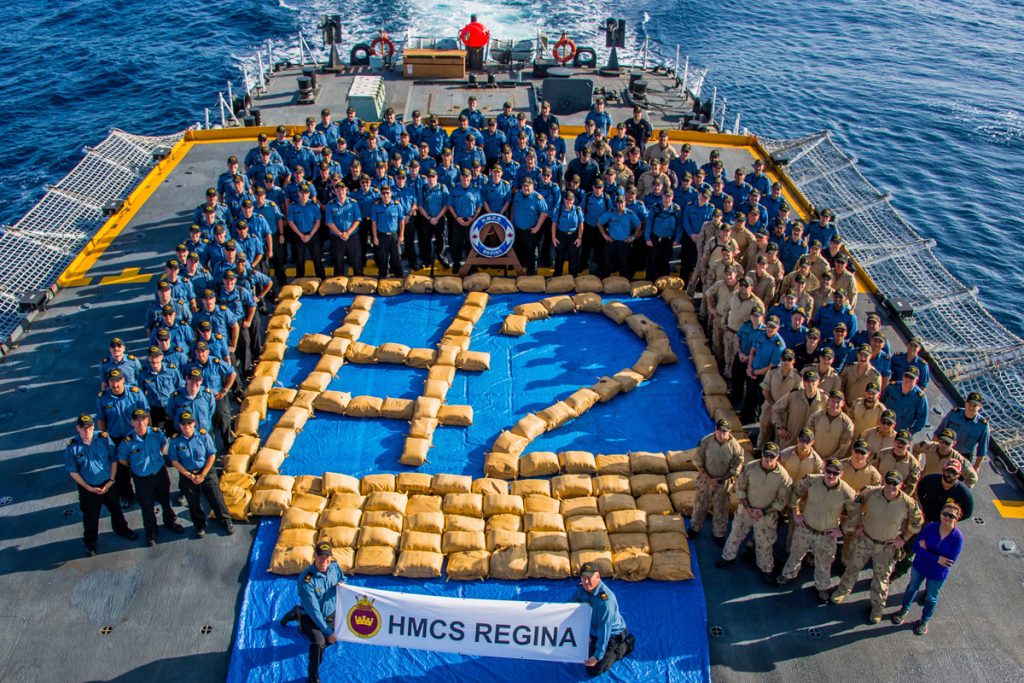
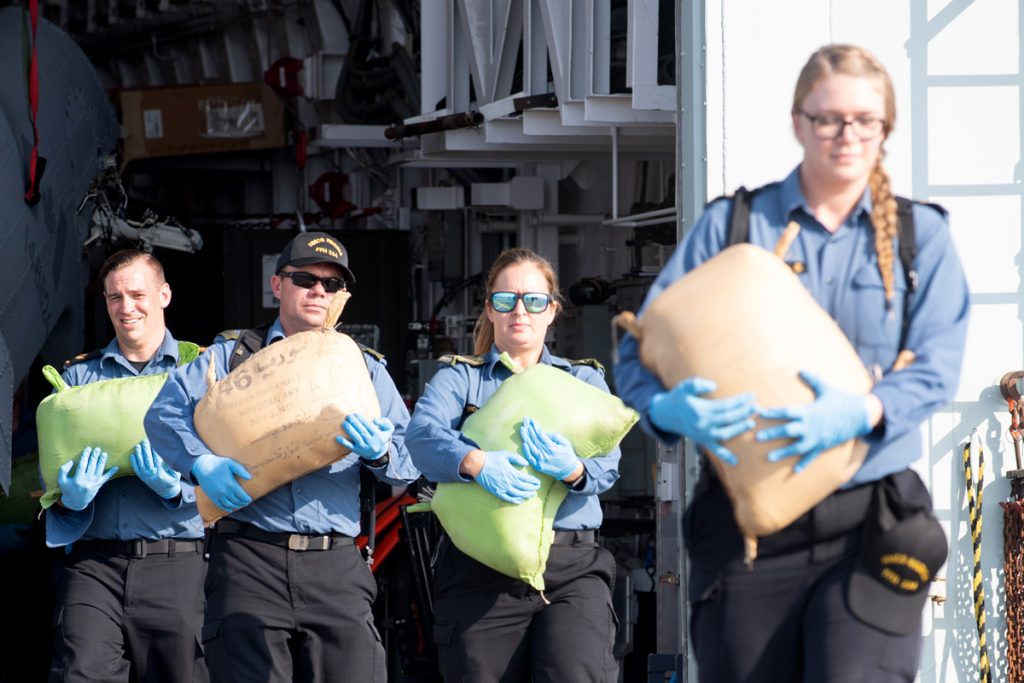
[caption id="attachment_20655" align="alignnone" width="591"] HMCS Regina’s crew poses with over 3,000 kilograms of narcotics seized from a dhow on April 15 during Operation Artemis in the Pacific Ocean. Photo by Corporal Stuart Evans, Borden Imaging Services[/caption]Peter Mallett, Staff Writer ~HMCS Regina and crew completed a second sizable drug bust following the seizure of approximately 3,000 kilograms of hashish of the coast of Oman.The Canadian warship is participating in Operation Artemis and the Canadian Armed Forces Combined Task Force (CTF) 150, part of an international counter-terrorism and maritime security operations in the Indian Ocean involving the combined maritime forces of 33 nations. The latest seizure unfolded April 15 after a suspicious fishing vessel was spotted in an area of the Indian Ocean known as the Hash Highway.“We had some intelligence that we might need to go closer to the Yemeni coast,” said Commander Jacob French, Commanding Officer. “So we took off at high speed towards that direction, and saw a dhow that matched the description we received. We tried to hail the dhow, but the vessel didn’t respond. As a result, we deployed our Naval Tactical Operations Group to board and investigate further.”The Naval Tactical Operations Group (NTOG) boarded the dhow (a local fishing vessel) and found 150 bags of hashish. The narcotics were transferred to Regina where they were subsequently destroyed. “I am extremely proud of the hard work of our ship’s company and we remain ready to continue our mission with the Combined Maritime Forces Coalition,” said Cdr French. “Our efforts are ensuring the funding from illegal narcotics is staying out of the hands of criminal and terrorist organizations.” Regina’s efforts are being assisted by Naval Replenishment Unit (NRU) Asterix, “who is playing a vital role in Canadian naval operations by providing us with endurance,” said Commander French. “Asterix is...

A crew member from HMCS Whitehorse rescues sea turtles trapped in netting in the Pacific Ocean during Operation Caribbe. Photo by Op Caribbe Imagery Technician

Wildlife rescue at sea

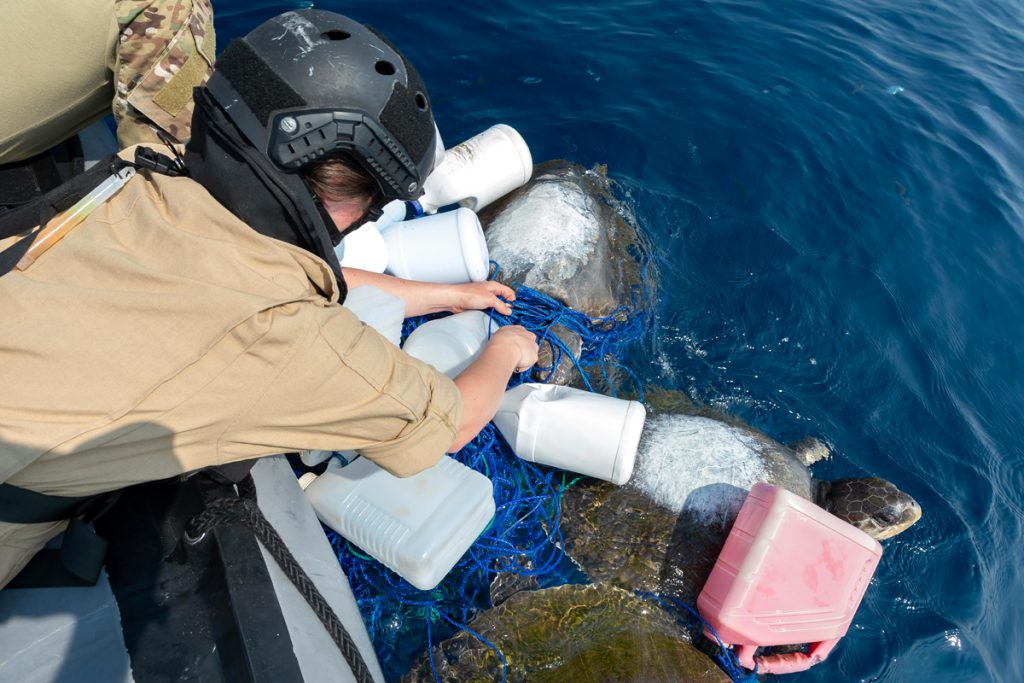
[caption id="attachment_20652" align="alignnone" width="591"] A crew member from HMCS Whitehorse rescues sea turtles trapped in netting in the Pacific Ocean during Operation Caribbe. Photo by Op Caribbe Imagery Technician[/caption]Captain Annie Morin, Public Affairs Officer on Operation Caribbe ~While deployed on Operation Caribbe, HMC Ships Yellowknife and Whitehorse were able to save seven sea turtles from a dire situation on four separate occasions over the first two days of April. On routine patrol in their respective areas, the bridge teams in both ships spotted tangles of debris on the water’s surface before realizing it was sea turtles caught in fishing net and used plastic bottles.Debris is regularly investigated as it could be bales of drugs jettisoned by smugglers. With each ship’s respective Commanding Officer’s permission, the crews were sent out in a Rigid Hull Inflatable Boat to examine the floating mass. Determined to save them, the team cut away the netting until they were free; gently releasing them back into the ocean. Yellowknife and Whitehorse are currently deployed on Operation Caribbe in the Pacific Ocean, Canada’s contribution to Operation Martillo, a U.S. Joint Interagency Task Force South operation responsible for conducting interagency and international detection and monitoring operations and facilitating the interdiction of illicit trafficking.

HMCS Regina’s Naval Tactical Operations Group boards a dhow during Operation Artemis.

Canada Concludes Highly Successful Command of CFT 150

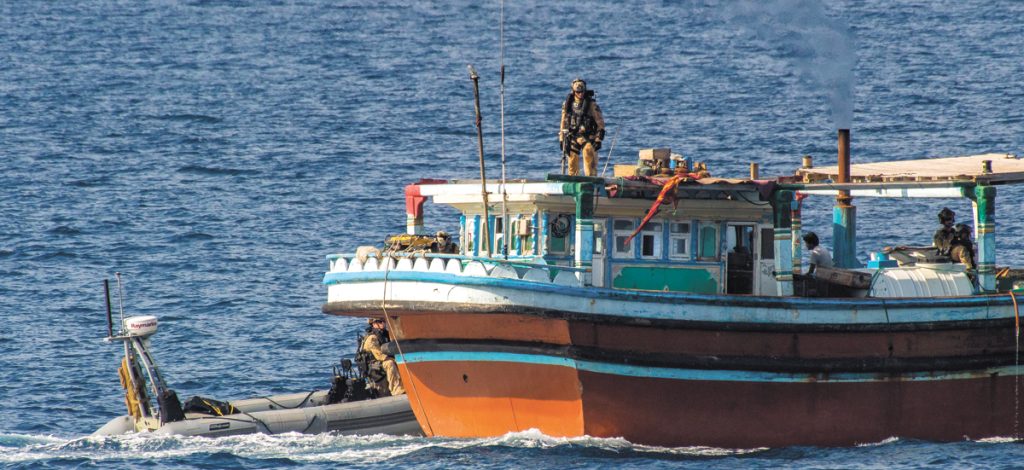
[caption id="attachment_20649" align="alignnone" width="592"] HMCS Regina’s Naval Tactical Operations Group boards a dhow during Operation Artemis.[/caption]Lt(N) Linda Coleman, CTF 150 Public Affairs Officer ~Canada is a member of CMF and has been contributing to CTF 150 since the beginning of the partnership in 2001.Last week, Canada handed over command of Combined Task Force 150 (CTF 150) to Pakistan, completing Canada’s fourth command of this multinational counter-terrorism Task Force.Commodore Darren Garnier, Royal Canadian Navy, relinquished command April 11 to Commodore Alveer Ahmed Noor of the Pakistan Navy during a change of command ceremony held at Naval Support Activity (NSA) Bahrain. The ceremony was presided over by Vice-Admiral James Malloy, USN, Commander Combined Maritime Forces (CMF). Through maritime security operations, regional engagements, and capacity building activities, CTF 150 and coalition partners work to deter and deny terrorist organizations any benefits from employing the high seas for smuggling illicit cargo including narcotics, UN embargoed weapons, and Somalian charcoal.Profits from drug trafficking in the region are a known source of funding for terrorists and criminal networks. This represents a common threat to the security and prosperity of the region. Member countries that contributed to CTF 150 success during this rotation include Australia, Canada, France, Pakistan, the United Kingdom, and the United States, all working together in direct support in pursuit of CMF goals.Canada-led Task Force successThe Canada-led Task Force, supported by the Royal Australian Navy (RAN), completed a highly successful tour by directing 18 boardings from our coalition partners, and seizing and destroying over 33,000 kg of illegal narcotics, with a regional wholesale value of over $41 million (USD). This marks the second largest volume of illegal narcotics seized in CTF 150 history. Notably, in December 2018, Royal Navy warship HMS Dragon broke a record when the ship conducted the largest drug haul in CMF...

Bid to rename Bay Street Armoury launched

Bid to rename Bay Street Armoury launched

Peter Mallett, Staff Writer ~Two advisory groups of the Bay Street Armoury have made a formal request to rename the National Historic Site in honour of General Sir Arthur Currie. The name-change application was submitted to the federal government branch responsible for name changes to federal buildings, the Ministry of Environment and Climate Change, in late March. The application came from members of the 5th B.C. Field Regiment Royal Canadian Artillery Foundation and The Canadian Scottish Regiment (Princess Mary’s) Board of Regimental Trustees. Retired Brigadier-General Mike Heppell, a member of the regimental trustees, is spearheading the call to rename the armoury and says he is doing his best to inform the community about the reasoning behind the name change. “The thinking behind our motion is to have such a unique and historic building named after a prominent military leader synonymous with Victoria, instead of being named after a street,” said Heppell. “Currie was a local reserve military commander who went off to the First World War, was appointed to command large formations, had a very analytical mind and never lost a battle.”Currie rose through the ranks during his military career, starting out as a pre-war reservist gunner in the Canadian militia in 1897 while he worked as both a teacher and businessman. Commissioned as an officer in 1900, he commanded the newly-created 50th Regiment Gordon Highlanders in 1913 and was later appointed Commander of the 2nd Canadian Brigade when war broke out in Europe. Ironically, it was Currie himself who was opposed to the construction of the armoury while he was Commanding Officer, 5th (BC) Artillery Regiment; instead, he wanted a much larger facility than what had been proposed.  The two pre-war regiments commanded by Currie, 5th (BC) Brigade and 50th Gordon Highlanders, are a part of the lineage of the...

Right to left: MBdr Lefave

Operation Palaci comes to a close

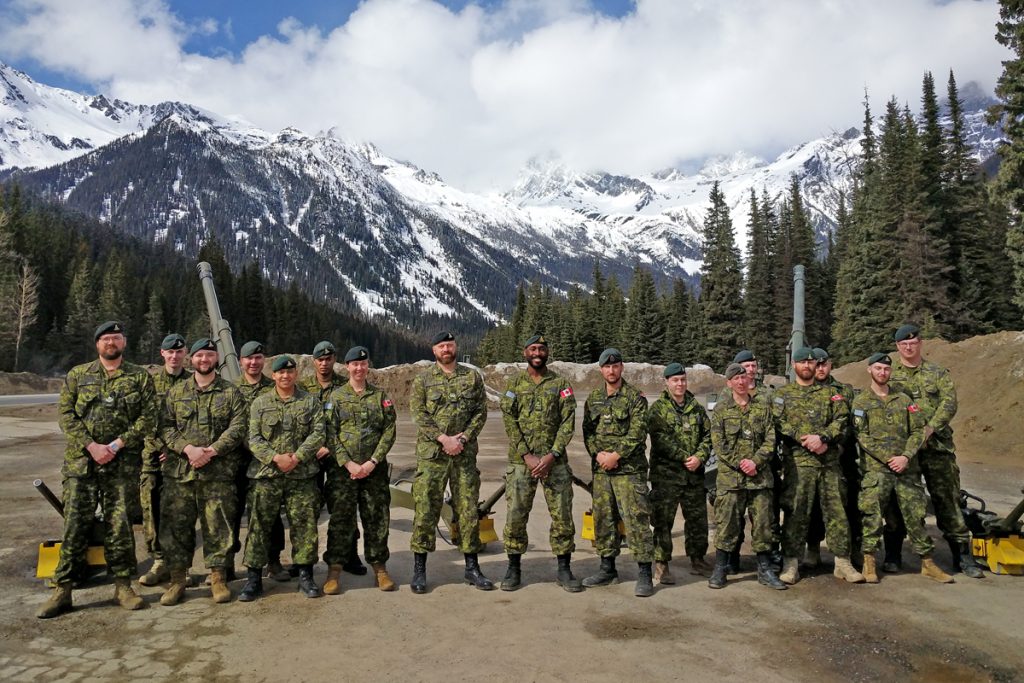
[caption id="attachment_20615" align="alignnone" width="593"] Right to left: MBdr Lefave, Gnr Kostenchuck, Gnr Hammond, Bdr Pashe, Gnr Lacsamana, MBdr Ribeiro, Bdr Pizunski, MWO Lenius, LT Burrell, Cpl Gagnon, Sgt Gingras, MBdr Hilbich, Bdr Delongchamp, Bdr Rockwell, Gnr Timm, Gnr Hall, and Bdr Ferguson.[/caption]Ashley Materi, 3rd Canadian Division Public Affairs ~Operation Palaci, the combined military and Parks Canada effort to keep Roger’s Pass open during the winter, has come to a close.This year, members of the 17 Royal Canadian Artillery fired 400 rounds from 16 gun positions that marked 134 different avalanche paths and approximately 270 artillery targets. “I’m very proud of the troop for the work that they have done,” said Lieutenant Jermaine Burrell, troop commander. “This was a great learning opportunity for junior artillery officers in one of the most beautiful landscapes in the world.” The avalanche control program required two rotations of approximately 17 Royal Canadian Artillery members, 12 Parks Canada avalanche forecasters and technicians, and visitor safety staff, two Parks Canada Law Enforcement Officers, and Parks Canada highway staff. Each day, approximately 3,000 vehicles make the journey through Rogers Pass in B.C., connecting Canadians and visitors to the cold-weather splendours offered in Glacier National Park and beyond. This historic travel corridor through the Columbia Mountains receives, on average, 10 meters (32.5 feet) of snow at tree line each year. Road conditions can quickly become treacherous in inclement weather, and avalanches that reach the Trans-Canada Highway create chokepoints for thousands of vehicles and dozens of freight trains. In partnership with Parks Canada, military gunners from all over Canada come together during Operation Palaci to conduct avalanche control using C3 105mm Howitzers with meticulously planned artillery strikes. Running annually since 1961, it is the longest-running Canadian Forces operation, domestic or expeditionary, in Canadian history.“The operation is vital in keeping one of...

Lisa Church

Recycling bin to aid MFRC

[caption id="attachment_20612" align="alignnone" width="593"] Lisa Church, Military Family Resource Centre (MFRC) Esquimalt Community Engagement Manager, drops a beverage container into the new Bottle Depot community donation bin at the CANEX convenience store in Colwood. Proceeds from donations will go to support the MFRC’s deployment programs. Photo by Peter Mallett, Lookout[/caption]Peter Mallett, Staff Writer ~It’s big, its blue and it needs some bottles and cans from you.A new community donation bin for returnable beverage containers at the CANEX Expressmart in Colwood has been established to benefit the Esquimalt Military Family Resource Centre (MFRC).Recycling firm The Bottle Depot donated a bin and has agreed to collect and sort the drink containers on behalf of the MFRC, with 50 per cent of proceeds going to the non-profit organization’s Deployment Respite Childcare.“It is wonderful to be involved in this latest project with the MFRC because Bottle Depot is all about connecting with the community and that is what are always striving to do,” said Kelly Gorman, Operations Manager at Bottle Depot.Each bin holds approximately 1,000 beverage containers, which she said can be worth approximately $100.Lisa Church, MFRC Community Engagement Manager, says the unique fundraising initiative couldn’t have happened without the help of CANEX Esquimalt manager Sara Johnson.“This is a wonderful community partnership that will assist the MFRC with desperately needed cash to help run its deployment programs,” said Church.For more information about the MFRC, its programs and how to donate visit their website at esquimaltmfrc.com. Plus don’t forget to drop off your recyclables!

Acoustics symposium shifts to West Coast

Peter Mallett, Staff Writer ~Over 200 military acoustics experts from across Canada converged on CFB Esquimalt last week for the 2019 Maritime Acoustics Symposium. The biannual symposium is traditionally held at CFB Halifax, but this year saw the first-ever shift to the west coast with Canadian Fleet Pacific (CANFLTPAC) hosting the event at dockyard’s Maritime Forces Pacific (MARPAC) headquarters April 8 to 12. Introductory remarks were made by Commodore Angus Topshee, Commander CANFLTPAC.This year’s symposium theme was Regeneration of Anti-Submarine Warfare Through Reconnection, with the week’s discussions including all components that comprise Anti-Submarine Warfare. Approximately 25 presenters spoke to the group and led discussions on various topics.Event organizer, Chief Petty Officer Second Class Line Laurendeau, Staff Officer Underwater Warfare CANFLTPAC, says a key area the symposium focussed on was ways Sonar operators and other military members can better assimilate with the CH-148 Cyclone helicopter. “Personnel focussed on acoustics in Canada’s military normally work within their own separate silos, so this reconnection through the symposium enables us to better understand how our ships and sub-surface vessels work with our new helicopters and properly use sensors and acoustics equipment,” said CPO2 Laurendeau. Formation Chief, and former Sonar Operator, Chief Petty Officer First Class David Steeves led the second day of the symposium with a discussion about the fleet and the importance of acoustic-based intelligence gathering. The week-long event also included a little fun and friendly competition. Sonar Operators from HMC Ships Winnipeg, Ottawa, Calgary, and Vancouver, HMC Submarines Victoria and Chicoutimi, MARPAC, and Canadian Joint Operations Command participated in the Petty Officer Gailand Guptill Memorial Competition. The competition was led by PO1 Champion and took place at Naval Fleet School Pacific. It featured three tests to evaluate sonar operators’ capabilities in acoustics analysis, submarine detection and tracking, weapons systems and trade cohesion, awarding prizes...

Ordinary Seaman Logan J. Hunder

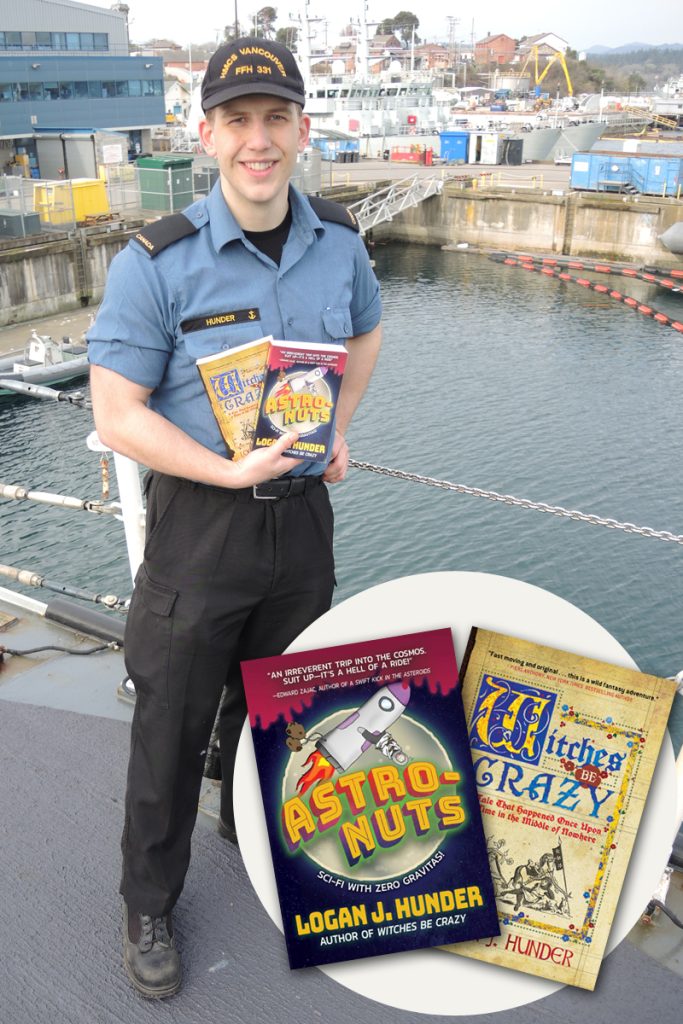
Sailor takes novel approach to writing

[caption id="attachment_20605" align="alignnone" width="593"] Ordinary Seaman Logan J. Hunder[/caption]Peter Mallett, Staff Writer ~A young sailor says he is pleasantly surprised with the reaction, sales, and the hopefully uproarious laughter being generated by his first-ever novel.Ordinary Seaman Logan J. Hunder works as a Naval Communicator aboard HMCS Vancouver, and is also the author of Witches Be Crazy, a quirky paperback novel that has developed a cult following. It is best described as one-part fantasy and two-parts comedy. He says his book is a deliberate Murphy’s Law-style comedic attack on the classic medieval quest story where everything can and will go wrong.He began writing Witches Be Crazy in 2014 after completing a degree in Criminal Justice at Camosun College. After its release in 2015, OS Hunder has been attracting a loyal following and receiving mostly favourable reviews. He also admits he never anticipated his writing would ever be published. “The book was my first attempt at a real writing project, and I wasn’t sure if anything was going to come of it. When I was in college, I was completely focused on my studies and by the end I was sick of the rigid structure of academic papers, so I eventually turned to creative writing as an outlet. I thought I would just put my writing in a binder and show it to the odd friend and that was about it.”Before putting his novel into storage, OS Hunder decided to shop it around with the hope of finding an agent and publisher. He did. The book was released last summer by San Francisco-based Skyhorse Publishing. His farcical fantasy novel has already surpassed sales of 2,500 copies and is now going into its second printing. The story takes place in the mythical Kingdom of Jenair and focuses on a king who has fallen ill...

From left: Master Seaman Mark Sebulsky

HMCS Regina makes first drug bust

[caption id="attachment_20602" align="alignnone" width="591"] From left: Master Seaman Mark Sebulsky, Master Corporal Derek Scott, Corporal Chantale Robichaud and Leading Seaman Jessica Armstrong transport the first load of seized hashish to the ship’s flight deck. Photo by MCpl PJ Letourneau, CF Combat Camera[/caption]Lt(N) Rob Davenport, HMCS Weapons Officer ~On April 7, Regina boarded an unregistered dhow (local fishing vessel) in the Arabian Sea sailing on the “Hash Highway” – a known smuggling route in the Indian Ocean. The boarding led to Regina’s first drug bust of Operation Artemis 2019, seizing more than 2,500 kilograms of hashish. By intercepting the drugs at their source, Regina is reducing the flow of illegal narcotics and money into the hands of organized crime and terrorist groups. Regina, working under Canadian-led Combined Task Force (CTF) 150, is operating in the Arabian Sea as part of a 33-nation coalition known as Combined Maritime Forces. The mission: counter-terrorism and maritime security operations aimed at intercepting the smuggling of illicit goods, including narcotics, which fund terrorist networks. The illegal narcotics flow from the Makran Coast to Yemen and Africa, some of which are eventually destined for Europe and North America. At first glance, seizing and destroying drugs appears to accomplish the objective; however, the situation in the Indian Ocean is far more complicated. The people who transport these illegal narcotics are not evil actors of organized crime or terrorists. They don’t resist being boarded, nor do they interfere with the boarding team during a search of the vessel. The crew are typically fishermen, taking a lucrative opportunity to transport cargo to support their families due to poverty and instability in their home regions.Although it’s imperative for ships under the command of CTF 150 to stop the flow of illicit narcotics and money through the Arabian Sea and Indian Ocean, it...

Private (Retired) Tanner Wilson gets some practice in on the driving range at Bear Mountain Golf Club during a Soldier On Golf Camp

Soldier On tees up recovery with golf

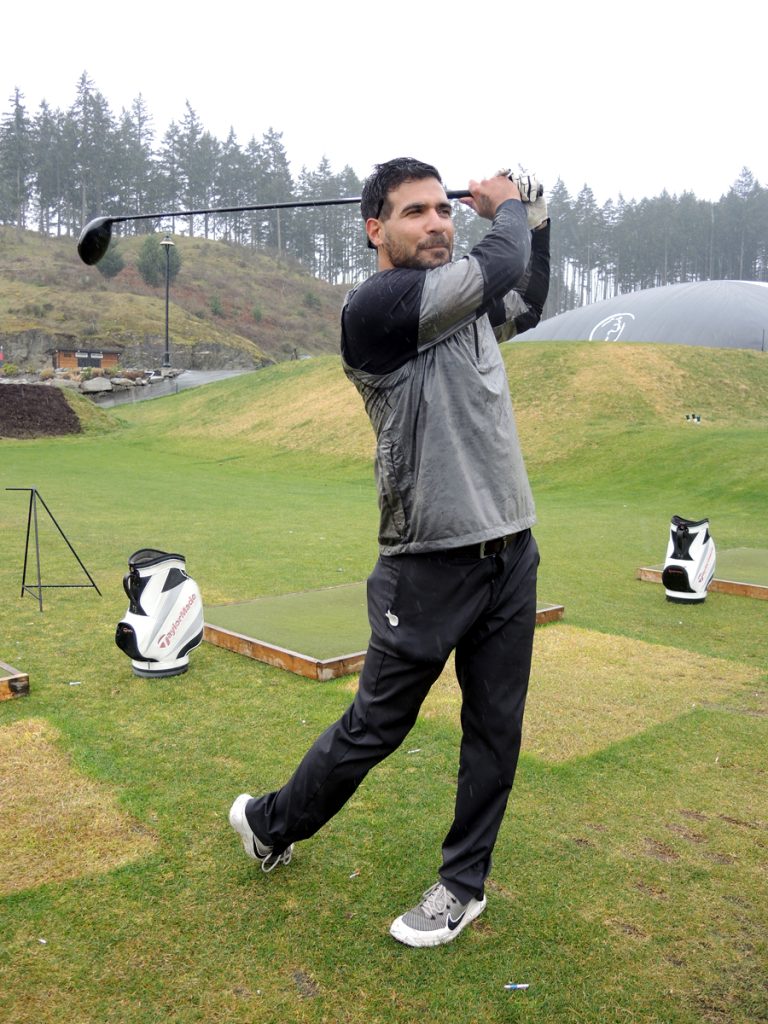
[caption id="attachment_20590" align="alignnone" width="592"] Private (Retired) Tanner Wilson gets some practice in on the driving range at Bear Mountain Golf Club during a Soldier On Golf Camp, April 2. Wilson did two tours in Afghanistan and says the sport of golf has been essential to his recovery from Post-Traumatic Stress Disorder (PTSD). Photo by Peter Mallett, Lookout[/caption]Peter Mallett, Staff Writer ~Inclement weather didn’t thwart a group of ill and injured military members from hitting the links at Bear Mountain last week; they soldiered on.Twelve veterans and currently ­serving military members from Western Canada were in the midst of a four-day Soldier On golf camp in Victoria, April 2 to 5. Four area golf clubs (Victoria Golf and Country Club, Bear Mountain Golf Club, Highland Pacific Golf and Uplands Golf Club) graciously waved their green fees and provided free instruction from their golf pros during the camp. The Soldier On program is run by the Canadian Armed Forces Transition Group with a mandate to encourage participants to use sport for recovery and lead active, physically fit lives. It’s a concept that Master Corporal (Retired) Michael Feyko fully believes in. He broke multiple bones below his waist after a parachuting accident in Edmonton in 1997. He was medically released from the military in 2001 and says he turned to golf for recovery. Today, Feyko is a teaching professional with the PGA of Canada and works with Soldier On participants at their golf camps. “I can relate to them and they can learn the game of golf from someone who was in the same situation as them,” says Feyko. “I can tell them what to expect, what the next bump is or what the next road block is going to be, and how to keep going even when you feel like you can’t.”Corporal (Retired)...

New beer and label honours navy

New beer and label honours navy

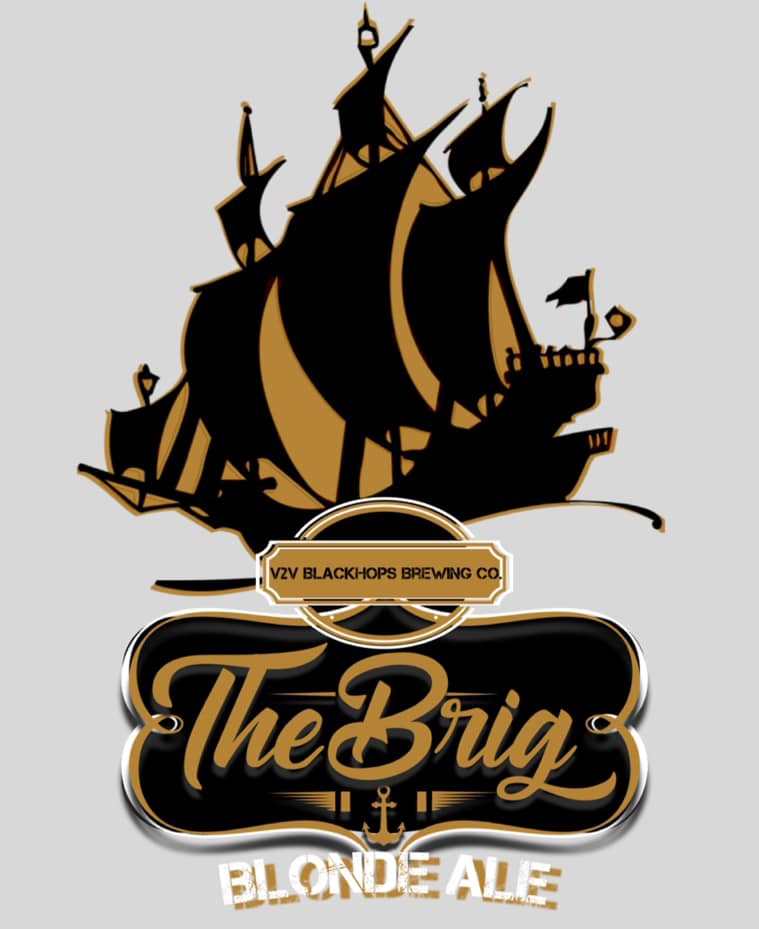
Peter Mallett, Staff Writer ~A new Victoria microbrewery that supports veterans’ programs is launching its second beer, a blonde ale whose name and logo celebrates a British naval ship. The new brew comes on the heels of a month-long Name that Beer and Design a Logo contest by V2V Black Hops Brewing. The brewery’s Graeme Hafey announced the new Kolsch-style summer ale will be called The Brig Blonde Ale. Micheal Bevans, a resident from Cardston, Alberta, came up with the winning name for the new beer. His black and gold sleeve design features one of England’s brig-style ships used by the Royal Navy during the Napoleonic Wars. Hafey and two V2V co-workers judged 20 entries and chose Bevans’ name and design to be the most appealing.V2V launched its first beer Victory Ale in November 2018, an English Bitter-style ale that celebrated the 100th anniversary of the armistice of the First World War, and the brave Canadians who fought and died there. This time, Hafey says, he wanted to employ a naval theme as a dedication to the Royal Canadian Navy. He was impressed by the more than 20 entries, many of which came from CFB Esquimalt civilian staff and military personnel. Bevans received the $150 cash prize for his winning entry. He donated his winnings to Steve Critchley, the owner of Can Praxis, an Alberta-based charitable organization that uses horseback riding and equine engagement to help military, veterans and first responders and their partners suffering from Post-Traumatic Stress Disorder (PTSD) and mental trauma injuries. V2V Black Hops Brewing recently announced a brewing production partnership with Spinnakers Brew Pub, which will now produce his craft beer in small batches. Victory Ale is currently available in Cascadia Liquor Stores, Four Mile Liquor Store and the Tudor House Liquor Store. Victory Ale draft is...

Left: A recovered Canadian issue Mark IV 1942 gas mask. Right: British ceramic anchovy paste jar dating to between 1830 and 1860

Dredging up the past

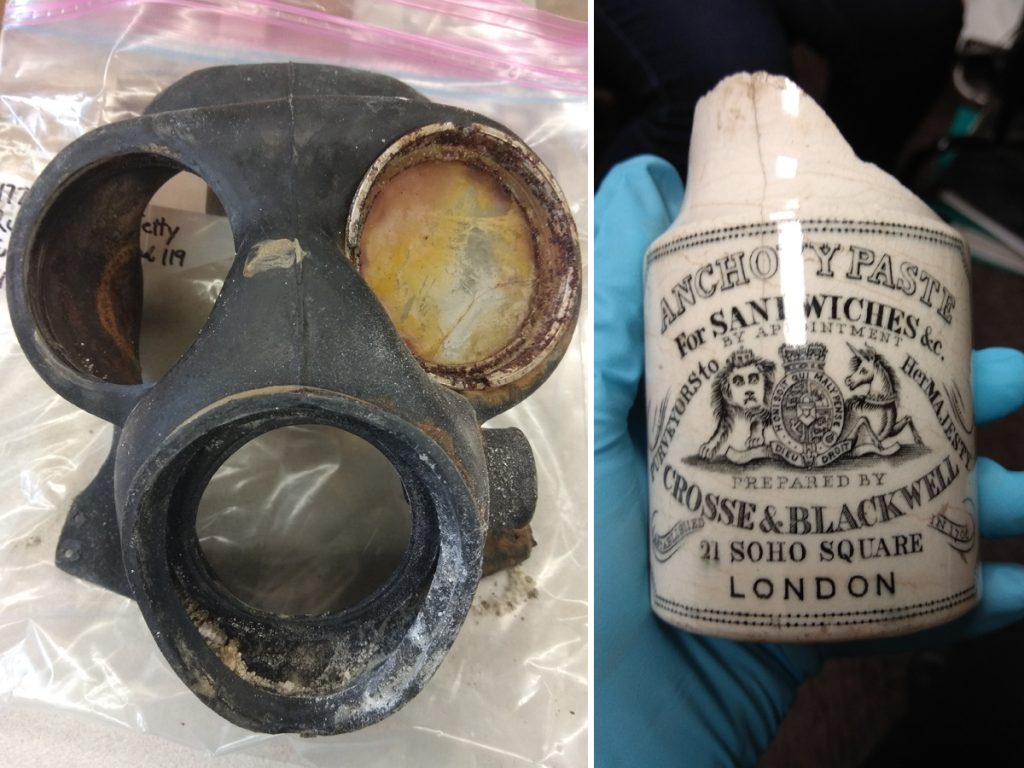
[caption id="attachment_20584" align="alignnone" width="593"] Left: A recovered Canadian issue Mark IV 1942 gas mask. Right: British ceramic anchovy paste jar dating to between 1830 and 1860, recovered near B Jetty.[/caption]Caitlin Craig, Formation Safety and Environment ~Over the last four years the Esquimalt Harbour Remediation Project has recovered a treasure trove of artifacts, the oldest of which date back to the mid-1800s. The aim of the project is to remove contaminated sediment surrounding A, B, and C jetties, as well as the ML Floats. This is performed by a large crane barge, which lifts the sediment onto a neighbouring processing barge. As the sediment is screened, archaeologists, working alongside contractors, recover artifacts as they appear.With dredging finished at A and B Jetties, and scheduled to be finishing at C Jetty and the ML Floats in April, around 2,000 artifacts have been reclaimed from the sea floor.The oldest artifacts tell a story of the Royal British Navy, before the Royal Canadian Navy was established in 1910. These include medicine bottles belonging to a ship’s physician, mess plates, and buttons from various departments ranging from the Royal Marines Light Infantry to the Royal Marine Artillery.Many more artifacts provide a glimpse into the life of a sailor in the early 1900s: numerous clay pipes show affiliations, such as with the Royal Antediluvian Order of the Buffalos, familial ties, such as the Isle of Man, and activities like soccer. Toiletry and hygiene bottles such as hair tonic and cologne were found in abundance. Other items remind us of more recent times, like the Second World War-era communications headset, six gas masks, and microfiche pages from 1975. Being buried in sediment, as well as surrounded by cold water, has helped preserve the artifacts – the bacteria that would normally break these materials down can’t thrive in...

LS Jefren Liu

Sailor Profile: LS Jefren Liu

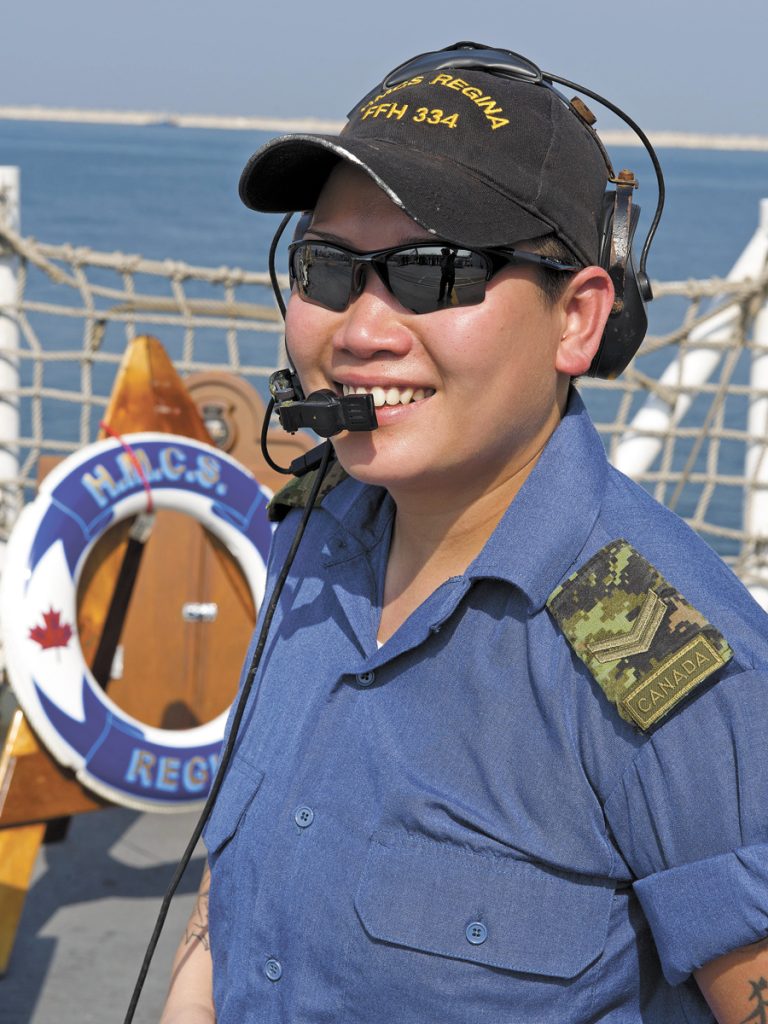
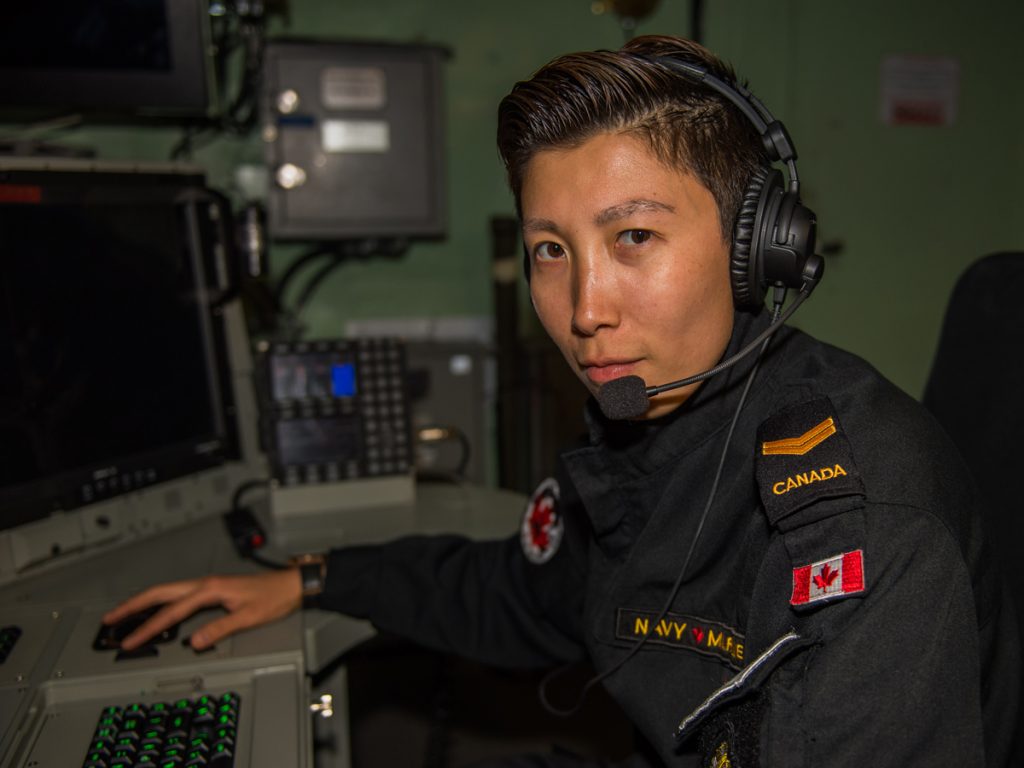
[caption id="attachment_20581" align="alignnone" width="592"] LS Jefren Liu[/caption]Cpl Stuart Evans, HMCS Regina ~Leading Seaman (LS) Jefren Liu, a Naval Combat Information Operator (NCIOP) aboard HMCS Regina, is passionate about her job.The Toronto, Ontario, native says anything combat related has NCIOPs in the front row of the Operations Room. “The Commanding Officer gives authorization for weapon release in accordance with his rules of engagement based on the information we provide to him – above water warfare, surface warfare and underwater warfare,” she explains. “During peacetime sailing, we are the eyes of the ship to monitor long-range air traffic and long-range surface traffic, as well as anti-collision reporting. During a search and rescue situation, we are the link to report back to Canada regarding the exact situation report and casualty states.” When asked for any pointers to potential recruits in the trade, she said, “Attention to detail would be the key to success in this trade. This is a fighting trade. You can experience any other trades in the civilian world except for operations trades. We are the trade that pieces everything together. It requires a lot of exercises and training, but when it comes to real life scenario it’s only cooler than you thought.”

Explore More

Categories

Top News

E-Editions Archive

News Stories Archive

Proud Supporters

Joshua Buck, Lookout Newspaper