New manual puts a name to a fin
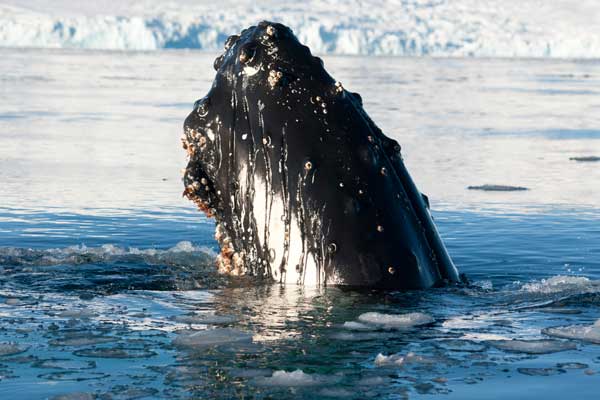
[caption id="attachment_4331" align="alignnone" width="300"] A humpback whale’s head. People often can’t tell the difference between Humpback and Grey whales.[/caption] The waters that make up the workplace of the Royal Canadian Navy (RCN) are home to countless forms of marine life. Throughout the day, any number of these seafaring critters may be observed by ship’s staff, and it’s a sailor’s duty to take notice. Through a voluntary program run by the Vancouver Aquarium, the Department of Fisheries and Oceans (DFO) receives marine mammal and reptile sightings data from a variety of sources, including lighthouse keepers, tugboat captains, B.C. Ferries, recreational boaters and private researchers. MARPAC vessels and staff are also an integral part of the sightings network, and ships’ staff record and report all sightings and interactions with marine mammals, with location, bearing, species, number of individuals, and whether or not any young are present. “It’s important to the DFO and to organizations like the navy that we know where and when these animals are sighted,” says Danielle Smith, an Environment Officer with Formation Safety and Environment. “Some ocean areas see very little vessel traffic, especially in the winter season, and the data provided by the navy may be the only observations available. Some of the records provided by ships’ staff are of endangered or threatened species; these data points are extremely important to the DFO when making conservation and management decisions.”With the staggering variety of marine life, it can sometimes be difficult to accurately record the type of marine mammal encountered, especially to someone unfamiliar with the many types of marine life in Canada’s waters. “Some of these species vary from one another in very subtle ways,” says Smith. “The difference between a Grey whale and a Humpback, two species people often confuse, can be recognized by the presence or...