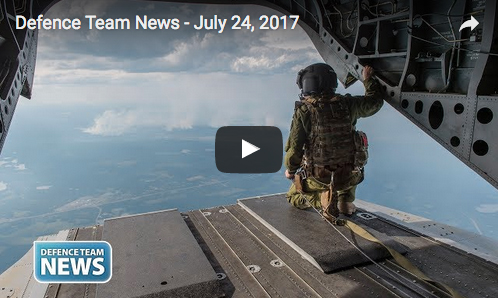
Defence Team News – July 24, 2017
In this episode, we’ll tell you how the Canadian Armed Forces are supporting emergency response efforts to combat the wildfires in British Columbia, and highlight exercises Sea Breeze, and Talisman Sabre 2017.
In this episode, we’ll tell you how the Canadian Armed Forces are supporting emergency response efforts to combat the wildfires in British Columbia, and highlight exercises Sea Breeze, and Talisman Sabre 2017.
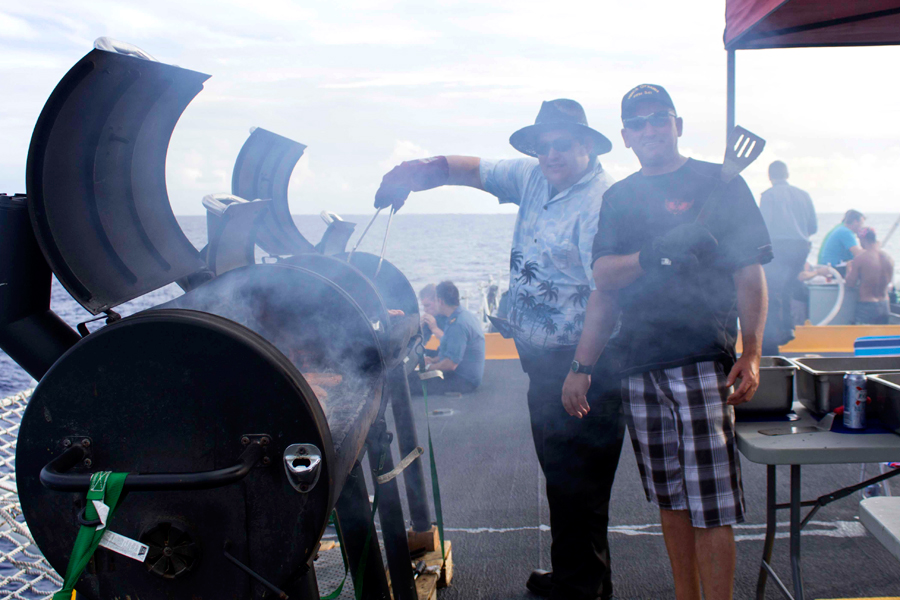
[caption id="attachment_16668" align="alignnone" width="450"] Crewmembers enjoy a barbeque on the flight deck, served up by the Chiefs and Petty Officers.[/caption]SLt Mairi Anderson, HMCS Ottawa ~Everyone knows that familiar feeling on a Sunday night of Monday looming with its return to work, and that the weekend just wasn’t long enough.How often have you wished you had just one more day, one more Sunday to enjoy your weekend?HMCS Ottawa, currently transiting the Pacific from Japan to Hawaii, got to experience the joy of an extra Sunday as they crossed the International Date Line from west to east July 23. Known as “Double Day” in HMCS Ottawa, July 23 came twice in 2017. “Eggs? Eggs? You want eggs? Two? Can I interest you in three?” called out Lieutenant (Navy) Julian Yates, the ship’s Logistics Officer.To make the ship’s second experience of July 23, 2017, special, the Wardroom served breakfast to the Master Seaman and Below in a reversal of ranks. Junior sailors called out their breakfast order to the heads of their departments while joking ran up and down the meal line. Everyone in Ottawa was relieved the next day when the cooks took up their regular station on the steam line and the morning eggs arrived as ordered.For those to whom Sunday is a day of reflection and prayer, the Padre on board, Captain Joachim Nnanna, offered a bible study to celebrate having two Sundays back to back.“We have a wonderful congregation on board the ship and they ask the really hard questions. Double Day brought up the theological question of which is the real Sunday, the real day of rest? The fact that the crew asks these kinds of questions points to a deep spirituality and an attitude of seeking answers that attracted me to military Chaplaincy in the first place.”Some sailors...
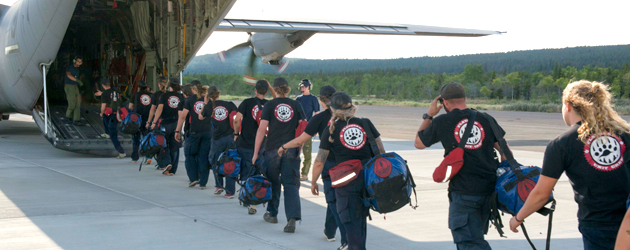
[caption id="attachment_16691" align="alignnone" width="560"] Photo by Cpl Nathan Spence, 19 Wing Imaging[/caption]The Ministry of Forests Flathead Unit Crew from the South East Fire Center British Columbia board a CC-130 Hercules aircraft during Operation Lentus July 25.
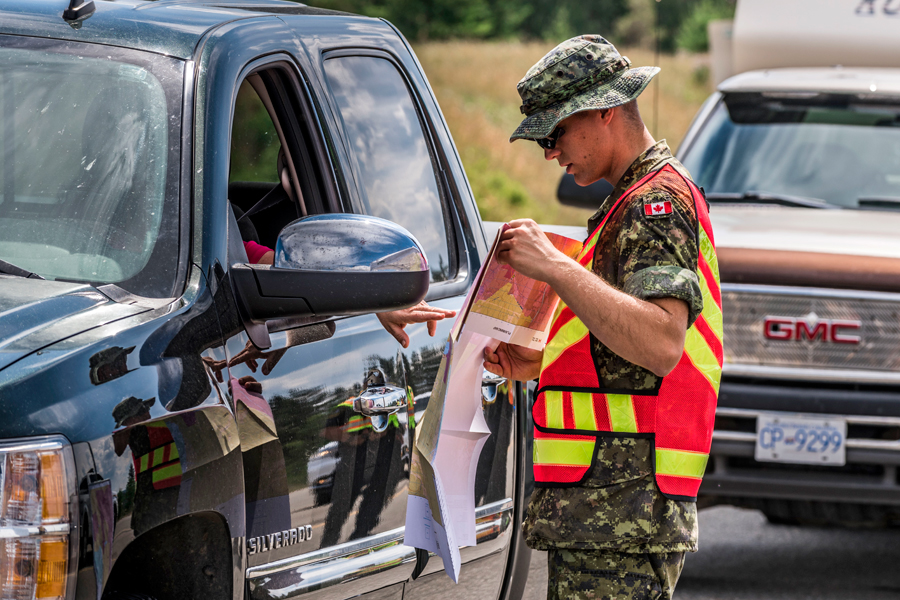
[caption id="attachment_16664" align="alignnone" width="450"] A member of Land Task Force - Pacific shows a returning resident of Williams Lake, B.C., the evacuation alert and order areas during Operation Lentus. Photo by MCpl Malcolm Byers, Wainwright Garrison Imaging[/caption]Land Task Force, Public Affairs ~As the wildfires continued to rage in B.C.’s interior last week, the Province of British Columbia requested additional assistance from the Government of Canada. Following that request, Canadian Army members made their way to the interior to join the Royal Canadian Air Force in supporting wildfire fighting efforts.The majority of the land forces are from 1 Combat Engineer Regiment (1 CER) in Edmonton, Alberta. They arrived in Williams Lake July 21, and linked in with partner organizations already in place to manage traffic observation and reporting points.“We’ve been ready for this deployment; vehicles were ready to go and we were itching to get out the door,” said Corporal Thomas Hart, a combat engineer working alongside three other Canadian Armed Forces (CAF) members and a RCMP officer at an observation and reporting point south of Williams Lake. “By coming out here we get to help fellow Canadians in a real-life situation, dealing with a real-life problem, where we can have a beneficial and positive impact on their lives.”Farther south, CAF members had the opportunity to welcome residents of 100 Mile House home after the evacuation order was downgraded to an evacuation alert on July 22.Soldiers saw lots of weary but grinning faces as locals returned home following nearly two weeks away.“It’s been very rewarding to work in our own community, which we don’t always get to do,” said Master Corporal Roger Beverage, a Canadian Ranger with the 100 Mile House patrol. “Also, it’s been a new experience working so closely with other agencies such as the RCMP and Regular Force.”Once...
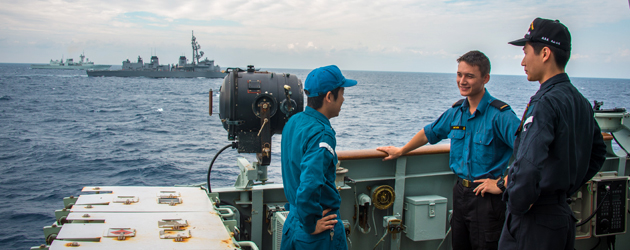
[caption id="attachment_16686" align="alignnone" width="560"] Photo by Cpl Carbe Orellana, MARPAC Imaging Services[/caption]OS Alexander Meyer from HMCS Winnipeg talks with members of the Japanese Maritime Self-Defence Force June 18.
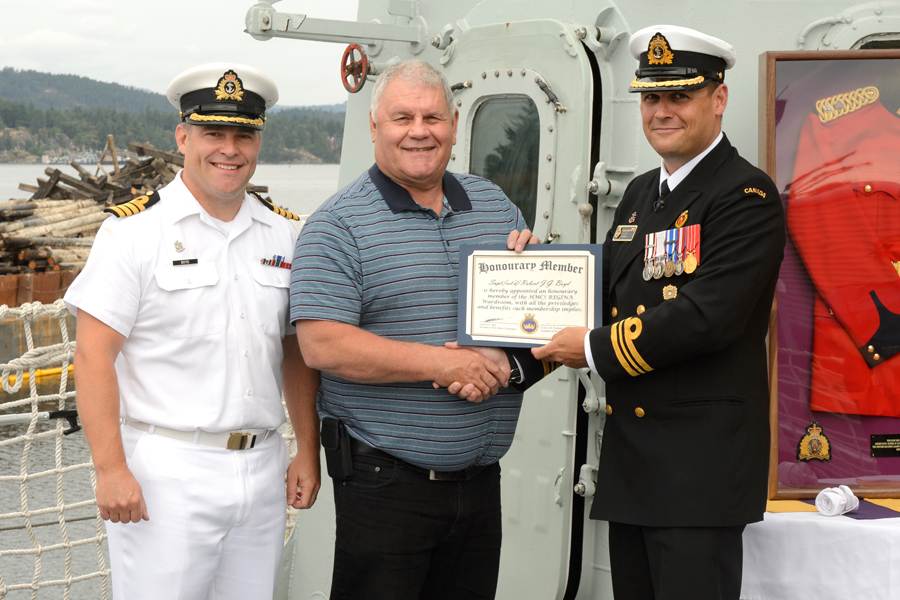
[caption id="attachment_16660" align="alignnone" width="450"] Royal Canadian Mounted Police Superintendent (Retired) Robert Boyd receives an honorary membership to HMCS Regina’s wardroom by the ship’s Executive Officer, Lieutenant-Commander Andrew Graham and Base Commander, Captain (Navy) Jason Boyd.[/caption]James Vassallo, Base Public Affairs ~This is a story about connections: between a ship and a land-locked city, between those who protect us from threats at home and those who protect us from threats abroad, between a man and his uniform, between a father and son.Two weeks ago, a special donation was made to HMCS Regina that brought all those connections together into one shadow box to be displayed in the ship.On the ship’s flight deck, with members of the crew in attendance, Superintendent (Retired) Robert Boyd, a 41-year veteran of the Royal Canadian Mounted Police (RCMP), bestowed his Red Serge uniform to the ship. It is to replace another one that went missing during the ship’s mid-life refit.Also on hand to witness the event was former Regina Commander, Captain (Navy) Jason Boyd, son of Superintendent Boyd.“The idea that a piece of my father will be immortalized with this ship for as long as she sails, it’s a feeling that’s hard to describe,” he says.The backstory of how this uniform came to the ship begins last year when Lieutenant-Commander Andrew Graham assumed the job as Regina’s Executive Officer.“I began to learn about this link between the City of Regina’s Royal Canadian Mounted Police and the ship,” he says.The RCMP Academy, Depot Division, which trains future Mounties, is located in Regina, the ship’s namesake city. Over time the ship has acquired Mountie memorabilia such as artwork of the iconic front-wise facing bison head. It has also added a little Mountie flavour to the ship with red-yellow-blue striping painted on doors, and two graphic plates of a mounted...
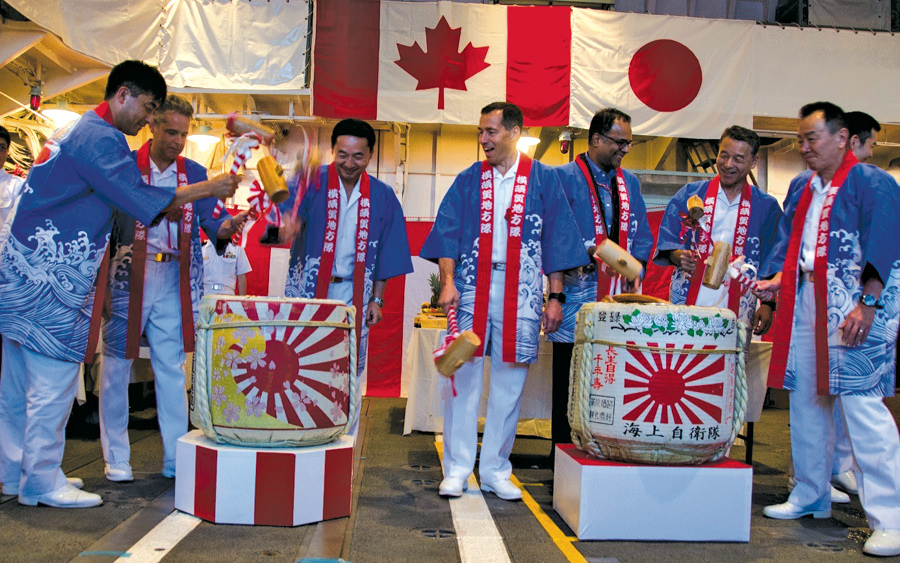
[caption id="attachment_16636" align="alignnone" width="450"] Rear-Admiral G. Couturier, Deputy Commander Royal Canadian Navy, watches Commander S. Belair, Commanding Officer, HMCS Ottawa, break open the sake casks at a reception onboard Japanese Maritime Self-Defense Force Ship Umigiri on July 11 during a port visit to Tokyo, Japan, on Poseidon Cutlass 17. Photo: Royal Canadian Navy Public Affairs[/caption]SLt Kassandra O’Rourke, HMCS Ottawa ~The skyline of Tokyo brimmed with skyscrapers as Her Majesty’s Canadian Ships Ottawa and Winnipeg came alongside Harumi Passenger Terminal July 11, in Tokyo, Japan. Welcoming them on the jetty were members of the Port Authority and the Japanese Maritime Self-Defense Force (JMSDF), including a band dressed in impeccable white uniforms.That evening members of the Royal Canadian Navy were hosted on board JMSDF Ship Umigiri.It was a reunion of friends as the Japanese and Canadian warships have been transiting together since early July, and had the pleasure of attending receptions together in Kure, Japan.The reception and hospitality was impressive as everyone enjoyed sushi, tempura and other Japanese delicacies while sharing stories of the last few weeks of naval exercises.Rear-Admiral Gilles Couturier, Deputy Commander Royal Canadian Navy, was present for a reception onboard Ottawa July 13, co-hosted by the Canadian Ambassador to Japan, His Excellency Ian Burney.Members of the government, academics, business and diplomatic community came together to enjoy unique Canadian food and drink, and to celebrate Canada’s 150th birthday and the ongoing relationship with Japan. The event further enhanced Canada’s diplomatic and military ties in Japan, including the mutual commitment to peace and stability in the Asia Pacific region, highlighted in many of the remarks offered during the official speeches.The following day a group of sailors from Ottawa and Winnipeg made their way to Onagawa in the north east of Japan. While there, they visited with the Mayor, His Worship Yoshiaki Suda,...

Peter Mallett, Staff Writer ~Calling home or catching up with friends on social media just got a whole lot easier on board surface warships thanks to a new policy by the Royal Canadian Navy (RCN).New regulations greatly expand the areas ships’ companies can use their cell phones and other personal mobile devices.Chief Petty Officer Second Class Carl Dixon, Information and Security Systems officer for Joint Task Force Pacific N6, says the new policy takes effect immediately.“This is a time where the RCN emphasizes our motto that says: People First, Mission Always. This new policy is a progressive one that allows sailors to have a much better quality of life while they are away from their loved ones, all the while maintaining a high degree of security,” says CPO2 Dixon.Most high-tech gadgets including cell phones, tablets, E-Readers, game consoles, Blu-Ray players, wireless speakers, smart wear and virtually any device capable of wireless transmission, can now be used in almost every location on a surface vessel. Their use continues to be restricted in areas where classified processes is taking place, such as the bridge and Operations Room.The old policy limited the use of wireless technology to the flight deck, quarter decks and hangar of Halifax-Class Frigates, and similar areas on other RCN vessels. While RCN ships do not transmit a Wi-Fi signal, sailors will now be able to make personal phone calls and use data from bow to stern, when they are in range of their private carrier’s signal.MARPAC Information and Protection Officer, Robert Sayle says the policy change had been in the works for some time, and after a careful review of the policy by senior leadership, the thumbs up was given for the changes.“There has been a big push for this initiative and a risk analysis was recently done by DND...
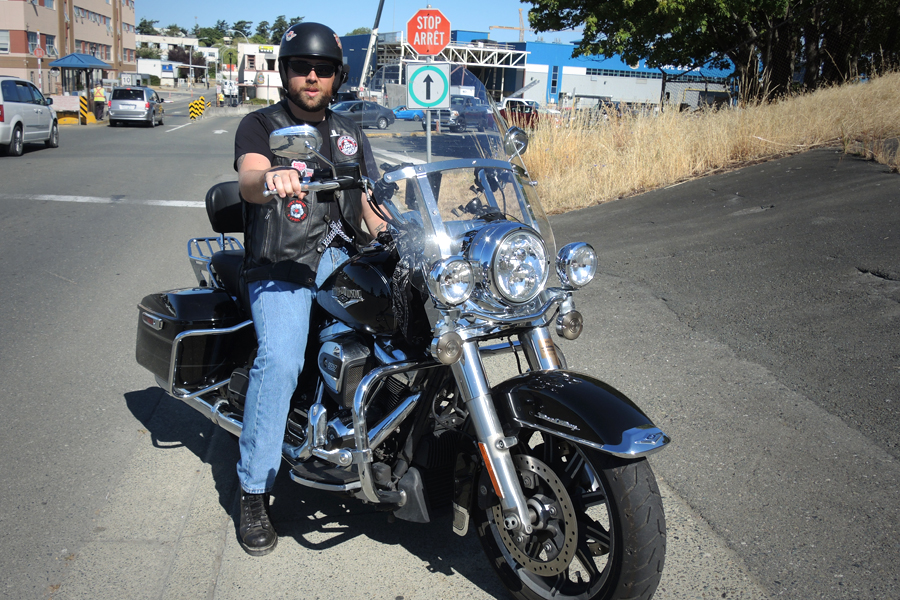
[caption id="attachment_16630" align="alignnone" width="450"] LS Michael Hodgson shows off his Harley Davidson Road King at a parking lot in Dockyard. He will join 300 riders in the Military Police National Motorcycling Relay and will ride his bike from Victoria to Jasper, Alberta, the first leg of the coast-to-coast fundraiser for visually impaired children. Photo by Peter Mallett, Lookout Newspaper[/caption]Peter Mallett, Staff Writer ~Leading Seaman Michael Hodgson is revving up for the Military Police National Motorcycle Relay (MPNMR).Straddling his 2017 Harley Davidson Road King, the sailor will join other motorcyclists July 30 as they venture from Victoria to St. John’s, NFLD. He won’t go the full distance across Canada, but rather tackle the first leg of the event that covers British Columbia up to Jasper, Alberta.In total, about 300 people will ride to raise funds for the Military Police For Blind Children.“While the relay is a lot of fun it’s also an inspirational experience because we are helping out a great cause,” said LS Hodgson. “We have fun, and stop in the towns along the way. Last year people shouted support out of their cars and lined the streets as we entered town.”The MPNMR is the world’s longest annual motorcycle relay, travelling more than 10,000 kilometres from coast to coast each year with stops at Canadian Armed Forces establishments and points of interest along the way.Founded as a way to build camaraderie between military police and motorcycle enthusiasts, the relay is now open to anyone who wishes to ride for a day, a province, or coast to coast. In 2016, the relay raised $60,000 for the charity and organizers are hoping to match and even surpass that goal.LS Hodgson has set a personal goal of $1,000 for this year’s ride, and says he believes the whole effort is for a more-than-worthy...
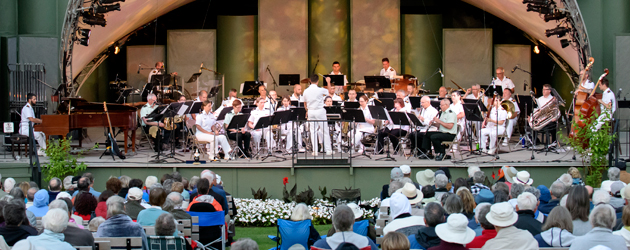
[caption id="attachment_16653" align="alignnone" width="560"] Photo by Cpl Stuart MacNeil, MARPAC Imaging Services[/caption]The Naden Band of the Royal Canadian Navy performs a concert at Butchart Gardens July 13.
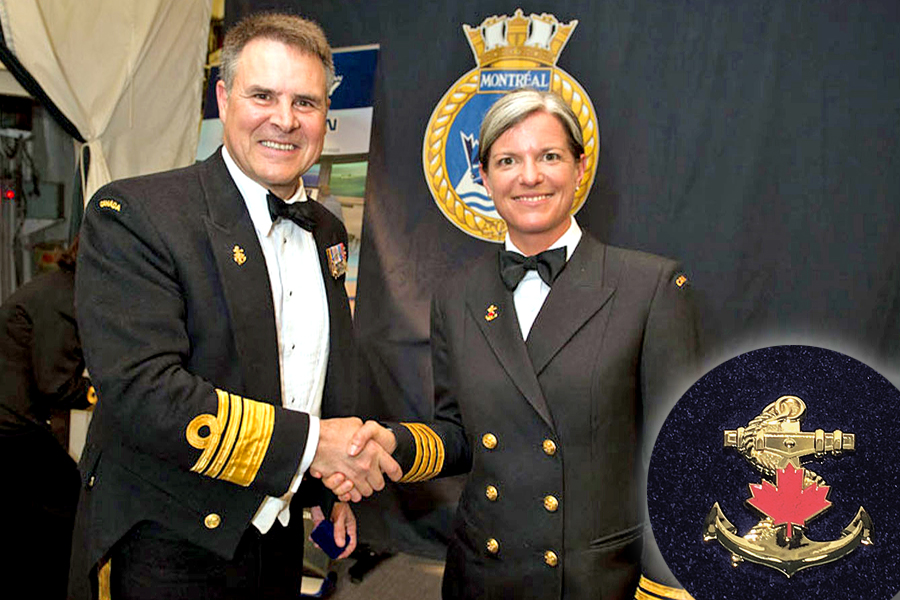
Kylee Mackay, Crowsnest ~The Royal Canadian Navy (RCN) has come up with an innovative way to identify and honour its Honorary Naval Captains (HCapt (N)).The HCapt(N) insignia pin is a new lapel pin designed to be worn on the HCapt(N) uniform. This pin uniquely represents the commitment to the RCN made by these leaders who have been appointed to act as a bridge between the RCN and their own sectors of influence.HCapts(N) are distinguished Canadians who have been appointed by the Minister of National Defence to take on the role of ambassador for the RCN to the Canadian people. They forge lasting relationships with RCN senior leadership and help the navy communicate its strategic direction and priorities through a variety of events and outreach opportunities.The new insignia pins were presented to a number of the HCapts(N) during a mess dinner onboard HMCS Montréal while the ship was docked in Montréal for the city’s 375th anniversary on May 17.HCapt(N) Mandy Farmer, from Victoria, was in attendance to receive her pin that night.“The HCapt(N) insignia pin is very important to me in this role. It is quite an honour to represent the Royal Canadian Navy and I know that it will provide a unique conversation starter when worn with my civilian clothing in my local and professional communities to speak about RCN personnel, programs, and opportunities,” she said.The insignia pins aim to enhance the esprit de corps within the RCN’s HCapt(N) community and provide them with a distinctive identifier they can wear on their military or civilian dress. Former HCapts(N) may also wear the pin in perpetuity.Depicting the RCN fouled anchor, the new insignia pin is similar to the Sea Service Insignia worn by all RCN officers and non-commissioned members to mark their days at sea. A red maple leaf added to...
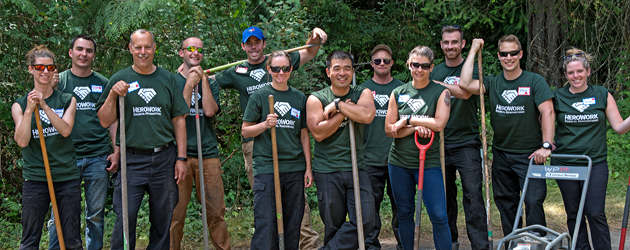
[caption id="attachment_16650" align="alignnone" width="560"] Photo by JW Penner, John's Photography[/caption]Members of the Canadian Armed Forces gather for a group shot during a HeroWork Radical Renovation at the former site of Prospect Lake Golf Club July 15.
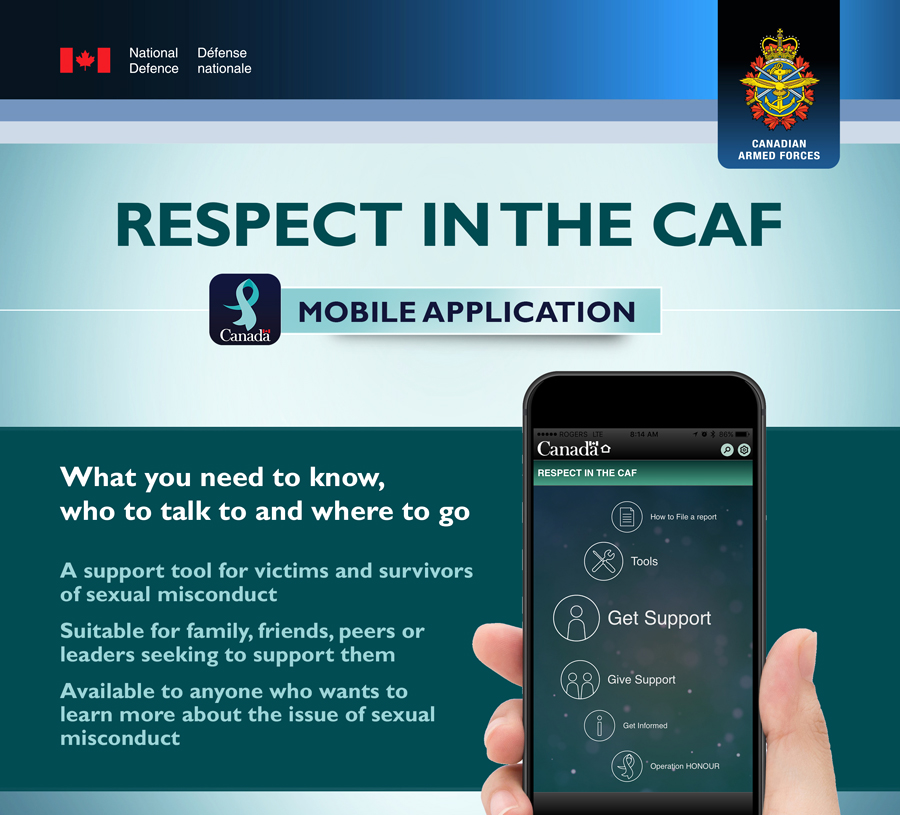
DND ~The Canadian Armed Forces (CAF) have released a mobile application as a support tool for victims and survivors of sexual misconduct, and anyone who supports them.The “Respect in the CAF” app is focused on victims; it can be used by anyone as it provides valuable insight on victim trauma, resources available to deal with the impacts of an incident, and links to other educational materials.The new app’s architecture is designed to be highly flexible and expandable. Through routine updates the app will add new modules and eventually serve as a compendium of information and resources related to Operation Honour. The goal is to make accessing information simple and easy in order to enable CAF members to deal more confidently and knowledgeably with the prevention of, and response to and support of anyone dealing with incidents of sexual misconduct.The app is meant to complement and enhance existing sexual misconduct resources that span response and support to training and intervention. The app includes support for both those in crisis, as well as tools and educational information for anyone dealing with, or interested in learning more about addressing sexual misconduct. The resources are directly linked to the Operation Honour lines of operation – understanding, support, response and prevention.The app is part of the Operation Honour mission to eliminate harmful and inappropriate sexual behaviour in the Canadian Armed Forces and is one of many ways of enhancing support and response when an incident does occur.The Respect in the CAF mobile app has downloadable checklists, and procedures and interactive tools for those in a position to support victims and survivors of sexual misconduct.The Respect in the CAF app is a free download from app stores, for use with smartphones and tablets using iOS, Android, Windows phone, and Blackberry platforms.The app is geo-referenced, and can...
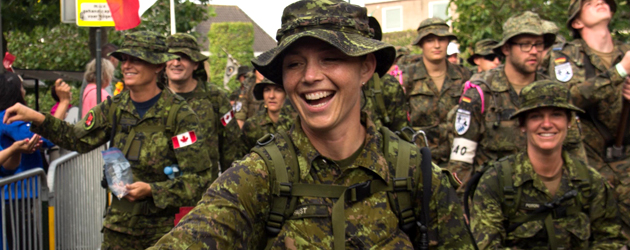
[caption id="attachment_16645" align="alignnone" width="560"] Photo by MCpl Charles A. Stephen, Formation Imaging Services Halifax[/caption]Members of Joint Task Force Nijmegen participate in the 2017 Four Days Marches Nijmegen on July 19.
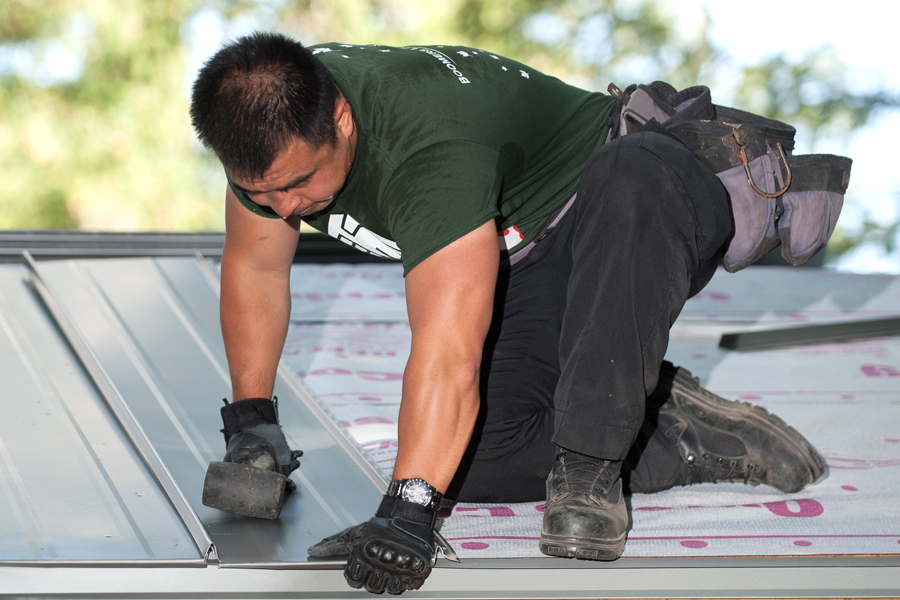
[caption id="attachment_16621" align="alignnone" width="450"] A member of the Canadian Armed Forces installs a new roof during a HeroWork Radical Renovation at the site of the former Prospect Lake Golf Club. Military and civilian volunteers built a campsite for Victoria-based non-profit Power To Be. Photo by JW Penner, John’s Photography[/caption]Peter Mallett, Staff Writer ~Members of CFB Esquimalt’s workforce were an integral part of the crew that turned the recently closed Prospect Lake Golf Course into an inclusive recreational hub for people with physical, mental, or financial barriers.More than 60 base employees tightened their work belts laden with tools and worked alongside more than 300 HeroWork Society volunteers July 7 and 16, to turn former Honorary Captain (Navy) Cedric Steele’s 78-acre parcel of land into a summertime oasis.“My family and I made the decision not to subdivide our land for development but to put it to good use to help the community,” says Steele.The project was organized by the HeroWork Society for another Victoria-based charity Power To Be, who will run the property and provide participants access to nature-based adventures.Personnel from 19 Wing Comox and the Bay Street Armoury were also among the pool of volunteers who successfully completed the project, one that HeroWork Executive Director, Paul Latour dubs a “Radical Renovation.”A long list of upgrades and building projects were completed over the 10 days, including the construction of raised bed camping platforms, a full renovation of two existing structures and their conversion into an education centre and a storage building, a built-from-scratch storage facility for kayak and paddling equipment, two toilet enclosures, a kilometre of pathway and roadways, and extensive landscaping with tee boxes, sand traps, gardens, and fencing.Captain Joe Welsh, a Transportation Officer with Base Logistics, put in multiple full day’s work at the site.“Base Logistics is keen on supporting...
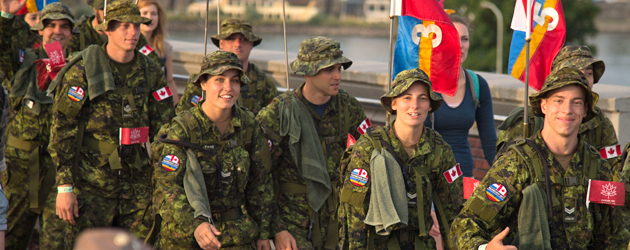
[caption id="attachment_16642" align="alignnone" width="560"] Photo by MCpl Charles A. Stephen, Formation Imaging Services Halifax[/caption]Members of Joint Task Force Nijmegen participate in the 2017 Four Days Marches Nijmegen on July 18.
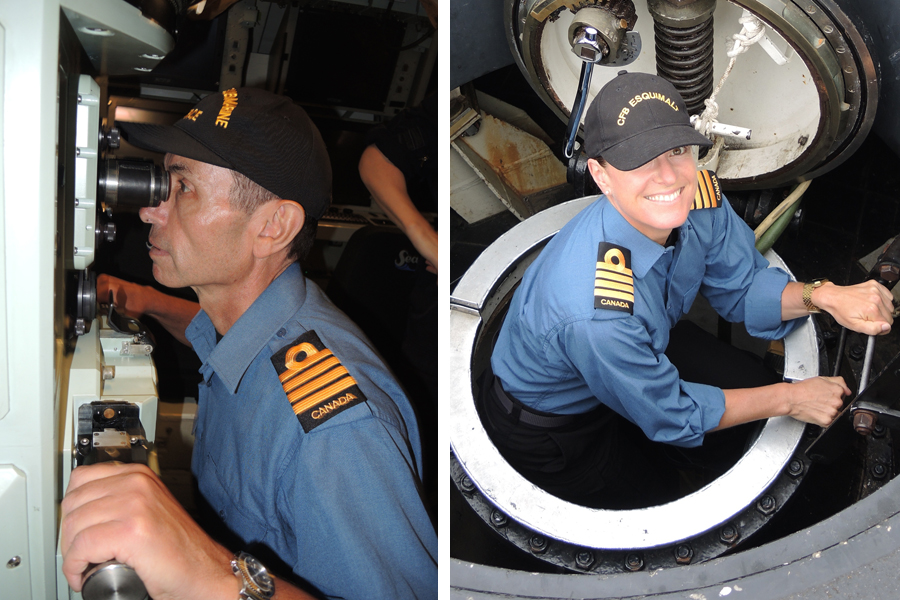
[caption id="attachment_16618" align="alignnone" width="550"] Left: Honorary Captain (Navy) David Labistour scopes out dockyard through the submarine’s periscope. Right: Honorary Captain (Navy) Mandy Farmer climbs down the ladder into a Victoria-Class submarine to check out the living and working space within the boat. Photos by Peter Mallett, Lookout Newspaper[/caption]Peter Mallett, Staff Writer ~Clad in their naval combat dress, two West Coast-based Honorary Captains (Navy) climbed down the main access hatch of HMCS Chicoutimi July 13 to tour the living and working space of the long-range hunter-killer submarine.Once inside the boat, HCapt(N) Mandy Farmer and HCapt(N) David Labistour were able to see the internal workings within the black cigar-shaped hull.“The submarine was pretty mind blowing, and I can only imagine what life must be like on board for extended periods of time,” said HCapt(N) Farmer. “What also blew me away was the camaraderie and overwhelming sense of family amongst submariners. The passion and dedication they have for their boats and each other was inspirational.”Submariners Lt(N) David Hendry and CPO2 Jonathan Wright took the two guests through the boat, stopping at the control room to explain how the sonar, control console, and periscope work.The two were also shown the messes, living quarters, weapons storage, and engine rooms.“Having people come down in the submarine and see the work that we do gives them a different and unique perspective on what submarines can offer to Canada,” said Lt(N) Hendry. “They can see the capabilities we have, and the importance of the programme, and what life is like onboard a submarine. It is something that myself and the crew are passionate about, so we always love the opportunity to show off what we do, how we live, and the conditions that we work in.”Before they ventured down the hatch, the two Honorary Captains tried their hand...
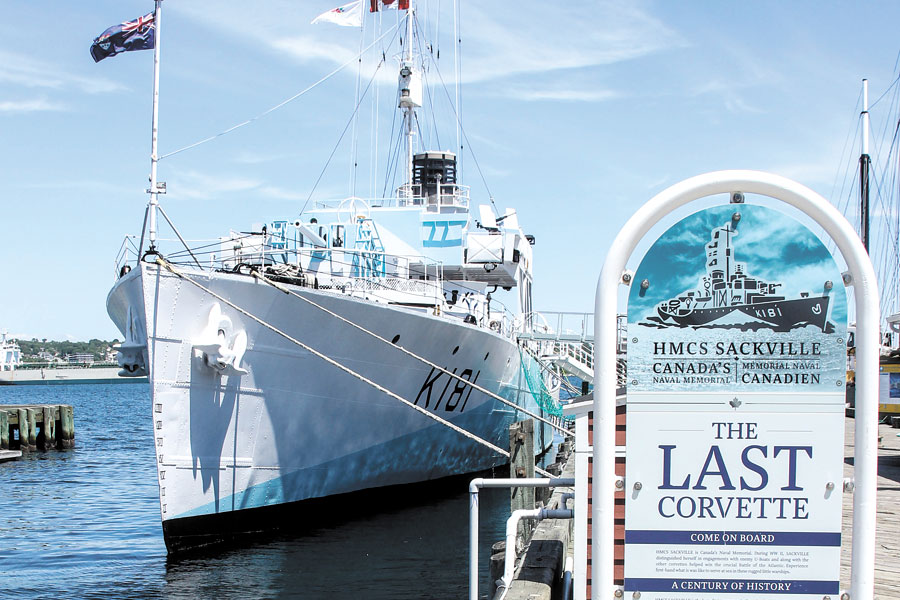
[caption id="attachment_16606" align="alignnone" width="450"] HMCS Sackville, Canada’s Naval Memorial, is open for tours for the season, seven days a week from 10 a.m. - 4 p.m. on the Halifax Boardwalk. Photo by Ryan Melanson/Trident Staff[/caption]Ryan Melanson, Trident ~HMCS Sackville is one of the top destinations for tourists along the Halifax Waterfront and across the region, and they’ve got the certificate to prove it.The last of Canada’s Second World War Corvettes, now a museum ship under the care of the Canadian Naval Memorial Trust, recently received its 2017 Certificate of Excellence from Trip Advisor. These are awarded each year based on the attractions or businesses that get consistently strong reviews from the website’s users, and Sackville has been chosen a number of years in a row.“It shows that we’re still getting good reports from guests, and we’re pretty pleased to be included in the top 10 year after year, out of about 150 sites in the HRM,” said Doug Thomas, the executive director of the Memorial Trust, after the vessel’s first fully open day of the season on June 26.Every summer, Sackville crewmembers meet visitors or cruise ship passengers who have family naval or Second World War connections, who are military or history buffs, or who are simply moved by touring such an impressive piece of Canadian history and getting a small look at what life was like for sailors during the Battle of the Atlantic.“It’s a place that is often a destination for people when they get here. All of us have had people who come to the ship and describe it as being the main thing they want to see on their cruise or while they’re in Halifax,” Thomas said. “She’s the last one, there simply are no more corvettes of her type.”For those who aren’t planning on stepping...

LS A.M.C. Noye, Community Relations – MPU Esquimalt ~Summer is here, which means more of the defence team are commuting to and from the base on bicycles. School is also out, which means children are off for the sunny season, and a lot of them are riding their bikes in our neighborhood.Local residential housing unit residents in Belmont Park and Work Point, and Military Police patrol personnel alike have observed children riding without a helmet or adult supervision, and a few near-miss incidents have occurred.MPs will proactively approach youth displaying good cycling habits, and address those requiring reminders about safety. For the last couple of years, MPs have issued “positive tickets” (a free entry to one of the CRD recreation centres), but will also step up prevention and enforcement of the BC Motor Vehicle Act (BCMVA).DO'sAlways come to a full stop at stop signs and red lights. Failure to stop is illegal under the BC Motor Vehicle Act. The fine is $167.Cycle in traffic safely and predictably. Signal before turning, and learn the skills needed to control your bike. Unsafe operation of a bicycle is subject to various parts of Section 144 of the BC Motor Vehicle Act, with fines ranging from $196 to $368.Yield to pedestrians crossing the street and to buses when they are leaving a stop. Failure to yield results in a minimum fine of $168.Take care when passing parked cars to leave enough space for drivers and passengers to open car doors.Helmets must be worn at all times when cycling. Failure to wear your helmet can result in a $29 fine. Safety vests or reflective clothing are also highly recommended.Lock your bike when on the Base. MP and Commissionaires are required to remove any unsecured bikes found on DND property and secure them at the MP...
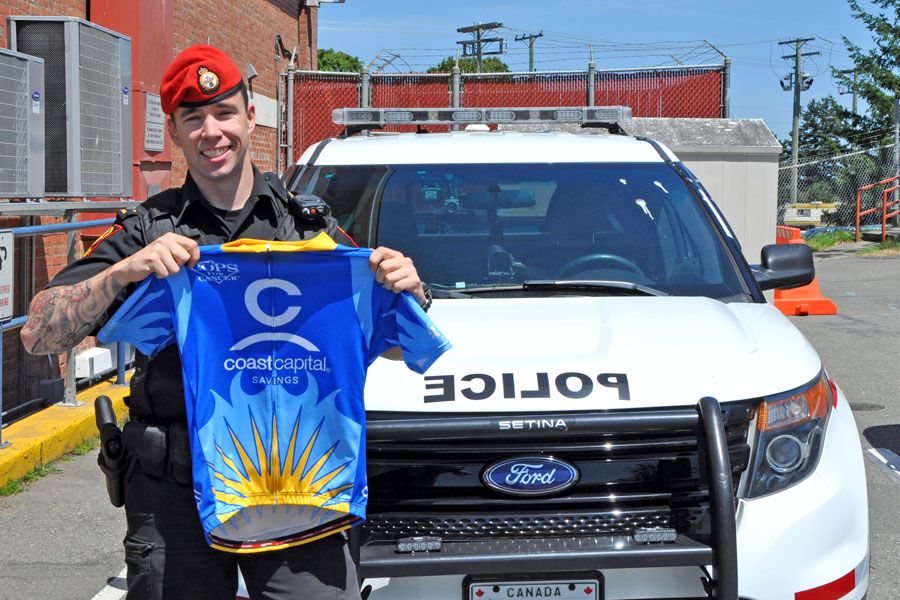
[caption id="attachment_16597" align="alignnone" width="450"] Corporal Matthew Best, Military Police Unit Esquimalt poses with a Tour de Rock jersey.[/caption]Will Chaster, MARPAC Public Affairs ~Riding 1,100 kilometres from one end of Vancouver Island to the other isn’t relaxing, but it does generate plenty of goodwill.That’s what Corporal Matthew Best of the Military Police Unit Esquimalt and his 23 co-riders are preparing to do when they take part in the Canadian Cancer Society Cops for Cancer Tour de Rock bike ride from Sept. 23 to Oct. 6.Tour de Rock is a nation-wide event that raises awareness and money for cancer patients and cancer research, and has been taking place annually over the past 20 yearsThe Vancouver Island segment of the Tour de Rock raises millions of dollars every year, with most of the proceeds going towards helping children affected by cancer attend Camp Goodtimes, a camp that provides these children and their families with a fun, medically supervised experience.Snaking its way from Port Alice all the way down to Victoria, the ride seeks to reach as many communities as possible.“This is about getting all of Vancouver Island involved,” says Cpl Best.In an effort to visit as many communities as possible, Tour de Rock takes a winding route, with riders cycling between 40 to 140 kilometres in a day. This year’s riders are a diverse group. In addition to Cpl Best, there is another MP from CFB Comox on the ride, plus three Saanich police officers, one Victoria Reserve Constable, RCMP officers, media and corporate riders, and, new to this year, firefighters and paramedics.They have been training since March 5, but are aware there is still a lot more training to do.“There are three groups: a northern, a middle, and a southern Island group, which train separately three days a week. Here in Victoria Tuesdays...
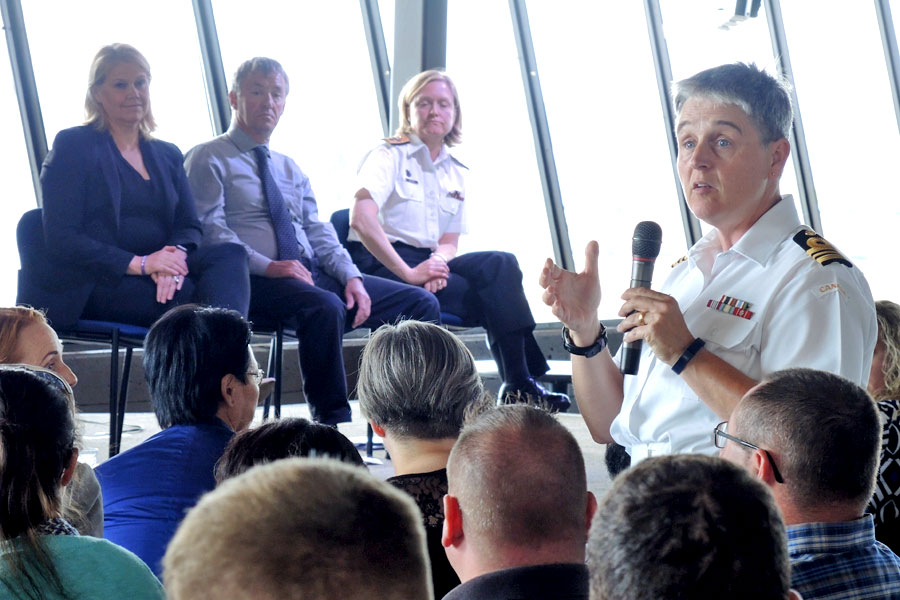
[caption id="attachment_16594" align="alignnone" width="450"] LCdr Judith Harlock from Joint Personnel Support Unit addresses the audience during the town hall. Background from left: Jody Thomas, Senior Associate Deputy Minister and DND Mental Health Co-Champion, Jerry Ryan, Federal Government Dockyard and Trades and Labour Council (East), and Commodore Marta Mulkins, Commander Navy Reserves. Photo by Peter Mallet, Lookout[/caption]Maritime Forces Pacific (MARPAC) hosted a town hall July 7 focussed on building a healthy, respectful, and supportive work environment.The forum, attended by approximately 350 Defence Team military and civilian members, was led by a five-person panel consisting of senior leadership and health care officials. They discussed the MARPAC Health and Wellness Strategy, and described both successes and challenges of program delivery.Keynote speaker Jody Thomas, Senior Associate Deputy Minister (SADM) and DND’s Mental Health Co-Champion, emphasized the importance of getting people the help they need, and the critical role all members of the Defence Team have in achieving this, regardless of rank.She added that communication and openness are critical in improving the delivery of Total Health and Wellness programs and support for the ill, which is a key component in Canada’s new Defence Policy.“Hopefully, many of us will come away from today’s discussion with an understanding that all of us must take a more robust role in raising the flag when someone in your department or unit is not well,” said Thomas.After a lively one-hour, open-microphone question and answer session, Thomas and the other panelists put pen to paper in signing a Mental Health Pledge as part of MARPAC’s Health and Wellness Strategy. Other panelists who signed the document were Commodore Marta Mulkins, Commander of Canada’s Navy Reserves; Commander Charles Cross, Canadian Forces Health Services Centre Pacific; Jerry Ryan, the Federal Government Dockyard and Trades and Labour Council (East) President and DND Mental Health Co-Champion;...
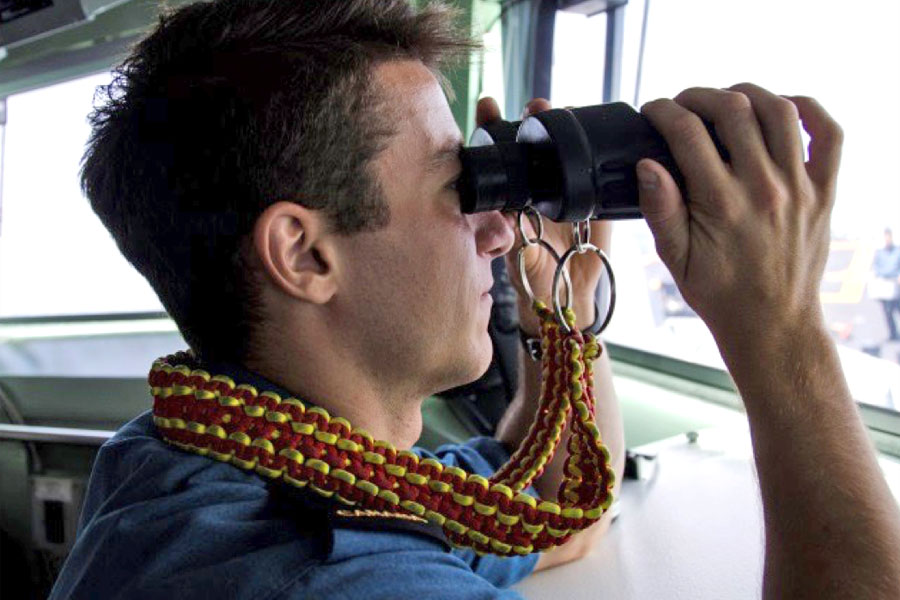
[caption id="attachment_16591" align="alignnone" width="450"] Ordinary Seaman Olivier Gingras uses binoculars with a decorative strap knotted by the Deck Department. Photo by Royal Canadian Navy Public Affairs[/caption]SLt S.M. Anderson, HMCS Ottawa ~The colourful yellow, blue and white lines hang from a hook on the deck head in the small room under the flight deck of HMCS Ottawa.The lines and the sailor working on them, Ordinary Seaman Olivier Gingras, sway slightly with the movements of the ship as he creates a new binocular strap for the ship’s bridge. His fingers moving dexterously as he plaits the lines into a colourful, intricate whole, turning a simple binocular strap into a symbol of the history and tradition of the Royal Canadian Navy.Naval rope work is as much a symbol of the navy as an anchor or the naval crown. It is a mixture of unique knots and braids that form complex patterns and are used to cover items throughout the ship.Functional rope work can be used to reinforce hawsers or keep lines from chafing, and is a necessary skill when out at sea, far from replacement ropes.Decorative rope work with intricate patterns and colours that cover railings or bell pulls lends to the beauty and pride of a ship, and is an increasingly rare skill for modern sailors.“Rope work has to do with pride on an individual level,” says Chief Petty Officer Second Class John Kranz, Chief Boatswains Mate. “It identifies the ship’s colours as well as how skilled the Deck department is.”From the intricately patterned binocular straps on the bridge to the elaborate knot work on the ship’s paddles that hang in each of the messes, it is clear the art of rope work is alive and well in Ottawa.Ornamental rope work or “tiddly rope work” as the boatswains call it, is a...

[caption id="attachment_16588" align="alignnone" width="450"] Sailors from the Japanese Maritime Self-Defense Force, HMCS Ottawa, and HMCS Winnipeg after a baseball game. Photos by Royal Canadian Navy Public Affairs[/caption]SLt Matthew Golding, HMCS Ottawa ~While deployed on Exercise Poseidon Cutlass 17, Her Majesty’s Canadian Ships Ottawa and Winnipeg became the first Canadian warships to visit Kure, Japan.Kure, located near Hiroshima in the southern part of Japan, is a major shipbuilding city and the second largest naval base of the Japanese Maritime Self-Defense Force (JMSDF).The Japanese military welcomed Ottawa and Winnipeg to Kure July 5 with a ceremony in the hangar of Japanese Ship (JS) Umigiri where traditional gifts of flowers were exchanged.Commodore J.B. Zwick, Commander Canadian Fleet Pacific, and the command teams of Ottawa and Winnipeg then met senior naval staff of the JMSDF at Kure Naval Base.The visit continued over the following days with sailors from JS Abukuma and Ottawa touring each other’s ship.“Touring JS Abukuma was really interesting,” said Sub-Lieutenant O’Rourke, a Maritime Surface and Sub-Surface Officer in Ottawa. “They use much of the same equipment as we do; there were far more similarities than differences in the two ships.”Continuing the relationship building, the JMSDF invited the Royal Canadian Navy to join them for a baseball game. A joint team from Ottawa and Winnipeg started the game strong, scoring 11 runs in the first inning. The JMSDF team played well but in the end the Canadian team managed to pull off the victory.“It was a great social sporting event,” said Petty Officer First Class Dagenais, a boatswain from Ottawa. “It was exciting to play baseball with the Japanese, laughing and having fun. After the game we all shook hands, bowed, and exchanged ship’s hats.”After hosting the Canadian reception onboard Winnipeg, the Japanese hosted the ship’s delegation with a reception on board...
In this episode, we highlight Operation NUNAKPUT 2017, the 101st International Four Day Marches in Nijmegen, and three Indigenous Summer Programs taking place across Canada in July and August.
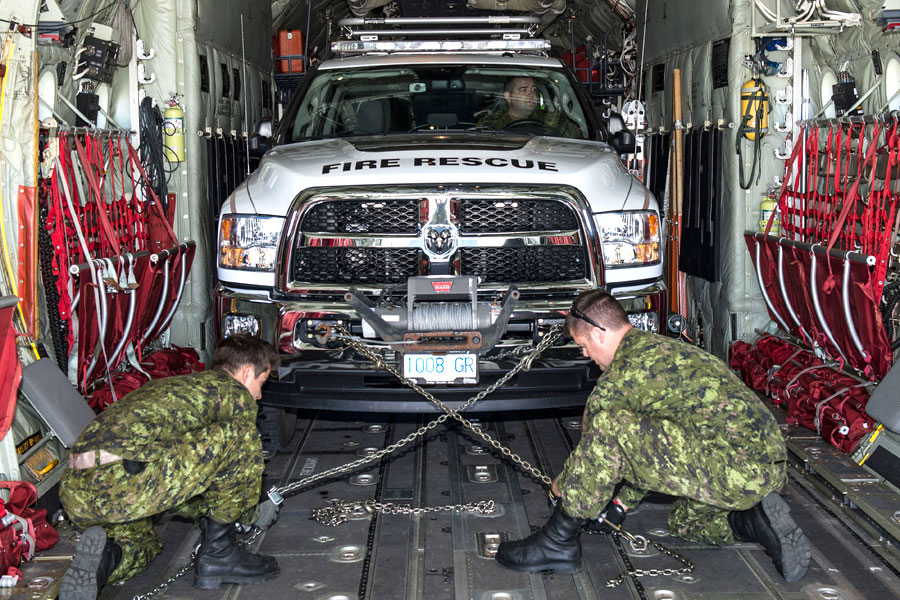
[caption id="attachment_16584" align="alignnone" width="450"] Members of 19 Wing Comox secure a fire rescue truck after loading it onto a C-130 Hercules aircraft at CFB Comox in support of Operation Lentus, which is providing support in fighting the wildfires in B.C.’s interior. Photo by Cpl Jeffrey Clement, 19 Wing Imaging[/caption]Lt(N) Melissa Kia, MARPAC PAO ~In response to the threats posed by the wildfire situation in the interior of B.C, the provincial government requested federal assistance from the Canadian Armed Forces (CAF) July 9.The CAF declared Operation Lentus active with its principal goal to assist with this provincial emergency.The CAF was well situated to quickly respond as there were already Royal Canadian Air Force (RCAF) aircraft pre-positioned in Kelowna and CFB Comox in anticipation of this situation growing worse.Two aircraft, a CC-130J Hercules and a CC-177 Globemaster, are presently operating out of CFB Comox. Additionally, three CH-146 Griffon helicopters and two CH-147F Chinook helicopters are supporting the wildfire operations out of Kamloops.The operation has already provided much needed help to the province. Flights from CFB Comox have delivered essential firefighting equipment to Bella Coola, including a Comox fire truck and water distribution systems to battle the flames.RCAF Griffon and Chinook helicopters stationed at Kamloops airport are providing air reconnaissance over Prince George and surrounding communities for provincial authorities, allowing them to better assess the needs of communities affected by the fires, and how best to fight the blazes. As of July 12, more than 14,000 people have been evacuated from their homes and over 33,000 hectares of land have been devastated by the wild fires in multiple regions in the Chilcotin Plateau and Cariboo regions of B.C.The Canadian Armed Forces will continue to assist B.C. on Operation Lentus for the duration of the provincial need for assistance, and will remain in close communication...

Major Grant Whittla, Acting Commanding Officer Base Information Services Esquimalt, and Captain Joshua Weissbock, Operations Officer Base Information Services Esquimalt, presented awards and promotions. [caption id="attachment_16556" align="alignnone" width="560"] MS Solomon Slazenger is promoted to his current rank by Maj Grant Whittla (left), Acting Commanding Officer BIS Esquimalt, and Captain Joshua Weissbock, Operations Officer BIS Esquimalt.[/caption] [caption id="attachment_16557" align="alignnone" width="560"] MCpl Christopher Blake is promoted to his current rank by Maj Grant Whittla and Captain Joshua Weissbock.[/caption] [caption id="attachment_16558" align="alignnone" width="560"] Sgt Philip Berresford is promoted to his current rank by Maj Grant Whittla, and his wife Kathy Berresford.[/caption] [caption id="attachment_16560" align="alignnone" width="560"] MS Mikhail Joukov is promoted to his current rank by and Captain Joshua Weissbock and Maj Grant Whittla.[/caption] [caption id="attachment_16561" align="alignnone" width="560"] MS Bryan Haugh is promoted to his current rank by and Captain Joshua Weissbock and Maj Grant Whittla.[/caption] [caption id="attachment_16562" align="alignnone" width="560"] MS Timothy Shao receives the Bronze Level Sea Service Insignia from Maj Grant Whittla.[/caption]
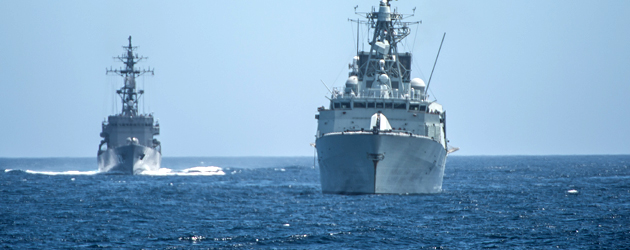
[caption id="attachment_16577" align="alignnone" width="560"] Photo by Cpl Carbe Orellana, MARPAC Imaging Services[/caption]HMCS Ottawa and Japanese Maritime Self Defence Force Ship Abukuma (229) sail behind HMCS Winnipeg during a joint exercise on Poseidon Cutlass July 3.