[wpml_language_selector_widget]
[searchwp_form id="1"]
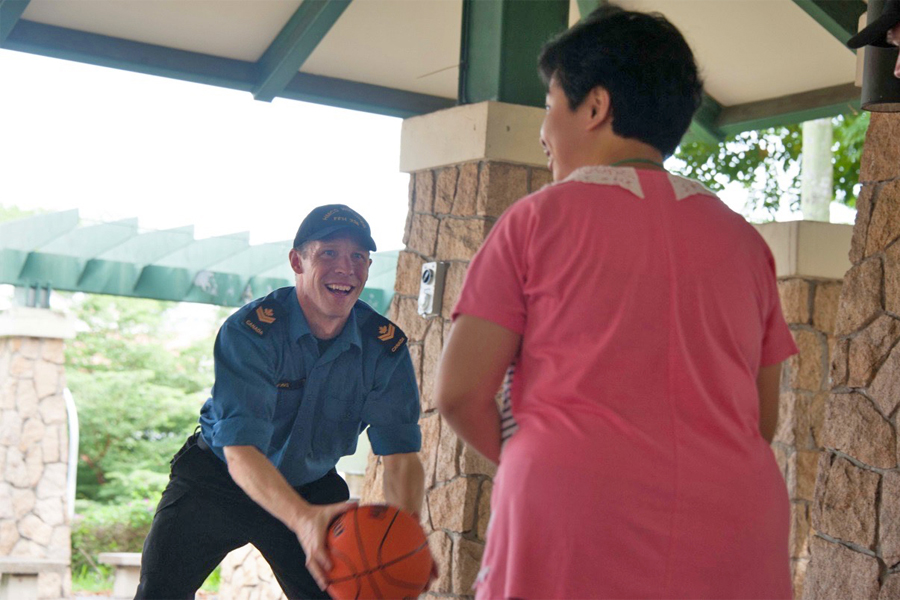
MS Kevin Simons joins in a sports activity at the Ang Mo Kio Training and Development Centre.

HMCS Winnipeg furthers community relations in Singapore

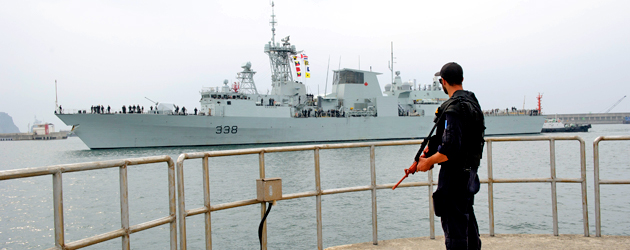
[caption id="attachment_16400" align="alignnone" width="450"] MS Kevin Simons joins in a sports activity at the Ang Mo Kio Training and Development Centre.[/caption]Padre Matthew Squires, HMCS Winnipeg ~Eighteen members of HMCS Winnipeg shared the June 2 morning with residents and staff of the Ang Mo Kio Training and Development Centre (AMK TDC) as a community relations initiative in support of Poseidon Cutlass 17.Ang Mo Kio is one of six training and development centres run by an organization in Singapore named the Movement for the Intellectually Disabled (MINDS). It is the mission of MINDS to provide care, improve well-being, and facilitate the cognitive development of Singaporeans in need.This is not the first time the Royal Canadian Navy has been involved in supporting MINDS. In January 2016, 17 members of Winnipeg visited the Fernvale Gardens School during Operation Reassurance, and during WESTPLOY 2016 HMCS Vancouver visited the Eunos Training and Development Centre.The morning began with a briefing by Isaac Loh, AMK TDC Training Officer. Loh’s brief raised awareness of the Centre’s work and provided situational awareness in preparation for the sailor’s morning with the clients. Half of the crew volunteered their time conducting much-needed maintenance on the facility, while the other half joined the clients in a nature walk coupled with sports activities.Upon completion of the morning, the crew distributed goodie bags prepared by Swee Leng Ng, Public Affairs Officer of the High Commission of Canada in Singapore. Each goodie bag was distributed with pride, testifying to Canadian generosity while displaying a Canada 150 logo.When reflecting on his time with the residents of the Centre Leading Seaman Kyle Pillar said, “As members of the CAF we have the ability to provide aid and care to those in need, whether the need be big or small. Spending the morning with the kids at the Ang...

Canada 150 - mapping the past and present

Canada 150 – mapping the past and present

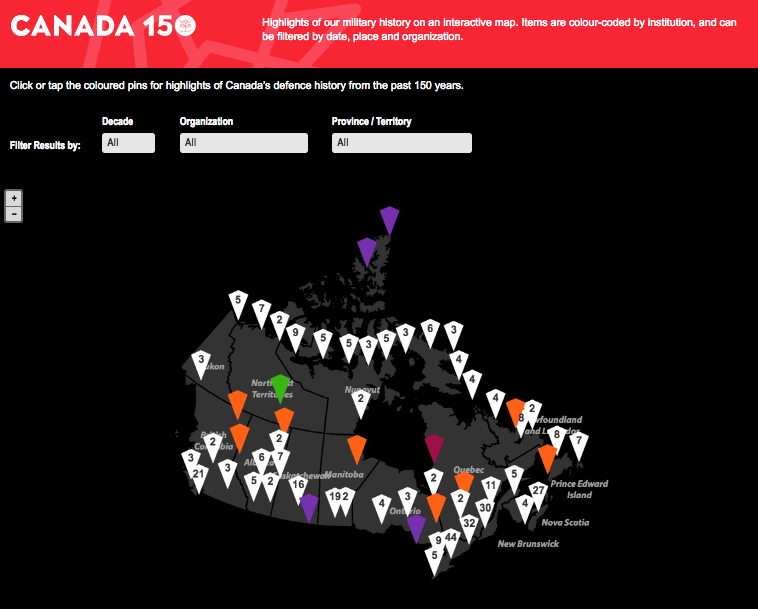
DND ~In honour of Canada 150 celebrations, the Department of National Defence and the Canadian Armed Forces have launched a commemorative Canada 150 Defence Interactive Map.Canada 150 Defence Interactive Map: Mapping our Past and Present is a new online map that illustrates the impact the Canadian Armed Forces have had in communities around the country.Spanning 15 decades of Canada’s military history, this map details interesting events from the past as well as present-day accomplishments that pop up in the exact geographic location where they actually happened.Curious about the Snowbirds in Moose Jaw or the Cadets in Whitehorse? Filter your search by decade, organization, province, or territory to find out.One hundred and fifty years of Canadian history is an important milestone for our nation. It is an opportunity to share the stories and show the impact of past and present members of the Canadian Armed Forces and Defence personnel in shaping our country.Check out the Canada 150 Defence Interactive Map http://caf-fac.ca/defence-150-map or by searching #DefenceMap on Twitter and participate in the conversation online. The map will also be featured on touch-screen kiosks during Canada 150 exhibits across the country throughout spring and summer 2017.

Exchanging platforms, unique and similar

[caption id="attachment_16390" align="alignnone" width="450"] SLt Kassandra O’Rourke (left) meets her New Zealand counterpart, SLt Caitlin Wiseman, who spent a few days sailing with HMCS Ottawa.[/caption]SLt Kassandra O’Rourke, HMCS Ottawa ~I had the privilege of spending a few days on board the New Zealand frigate Te Kaha during the recent Pacific Guardian Exercise, a multi-national event with the goal of improving cooperation and interoperability between navies.The four-day exercise off the South East Coast of Japan was led by Commander Canadian Fleet Pacific and included HMCS Ottawa, HMCS Winnipeg, JS Inazuma and HMNZS Te Kaha.The Royal New Zealand Navy is incredibly professional and knows how to balance the hard work associated with life at sea. The ship’s motto is ‘He Ponanga Kaha’ or ‘Service with Strength.’I was picked up and transported over to their flight deck by their Sea Sprite helicopter. Once I arrived on board I was shown to the wardroom and to my cabin where I shared a room with one other female bridgewatchkeeper.I started noticing early on how similar our navies were to each other.The bridge equipment is almost identical to our own. One big difference I found interesting was that, although their ship is only slightly smaller than ours, they sail with 50 fewer personnel than we do.Their bridge watchkeepers must also attain three separate tickets to get qualified in comparison to our one. They will be fully qualified upon achieving their final ticket, whereas we must stand a Naval Officer Professional Qualification board in order to be promoted to Lieutenant (Navy).That first afternoon, I participated in a boxing fitness class. At first I was unaware of how the class was going to be broken down. I saw the crew putting on the boxing gloves that were littered all over the flight deck, so I ­followed suit. An unexpected steering gear breakdown drill pulled the instructor away to different duties. Suddenly a voice recording came over the work out speakers with a countdown starting at 10. With about...

Meet the new Base Commander

Meet the new Base Commander

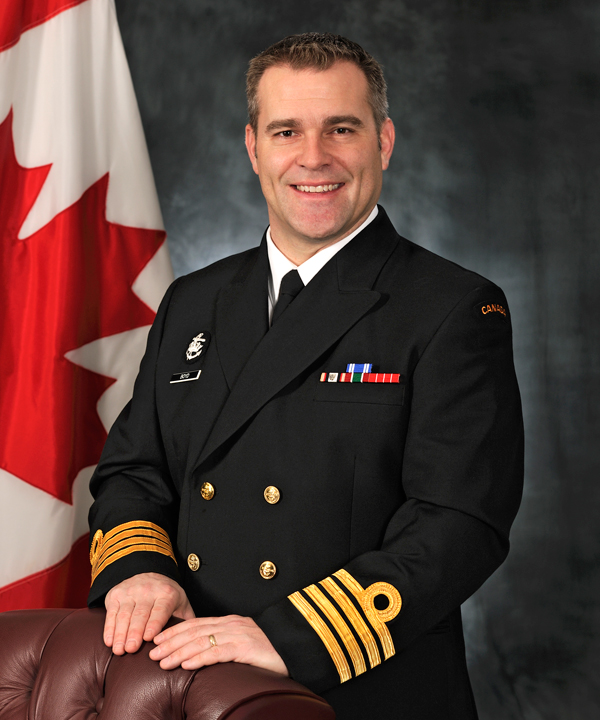
James Vassallo, Base Public Affairs ~Coming from a small town in rural Saskatchewan with wheat fields below and a big sky above, a young Jason Boyd wanted to fly.“I wanted to be a fighter pilot as a kid,” says Capt(N) Boyd, sheepishly acknowledging the impact the film “Top Gun” had on him while growing up. “It wasn’t that I was so naïve that I didn’t know we had a navy, but the movie was the only real connection I had to the military.”However, CFB Esquimalt’s new Base Commander did have a connection to public service, something inspired in him by his father who served with the Royal Canadian Mounted Police for 41 years.After being approached by the Royal Military College with an offer to play hockey, get a good education, and a guaranteed job that would also allow him to serve, he jumped at it.“They deemed I wasn’t fit to fly an aircraft but my second choice was a Maritime Surface and Sub-Surface (MARS) officer,” says Capt(N) Boyd. “All I knew was I wanted to do something operational and be in a leadership position. I’ve never looked back since.”His time at the ice rink - supported by what he describes as some of the best lessons in leadership he ever received - gave him an appreciation of how important consistency is, and the ways to be part of, and support a team.“The things you experience in team sports are so applicable to everyday life,” he says. “You face adversity, you learn how to deal with the ups and downs, but you work together to overcome that and accomplish goals. This bonds you with people.”With this philosophy in place, his career as a MARS Officer led him from ships - as a bridge watchkeeper in Her Majesty’s Canadian Ship (HMCS) Iroquois;...

Farewell Commodore Waddell

Farewell Commodore Waddell – a look back on three years

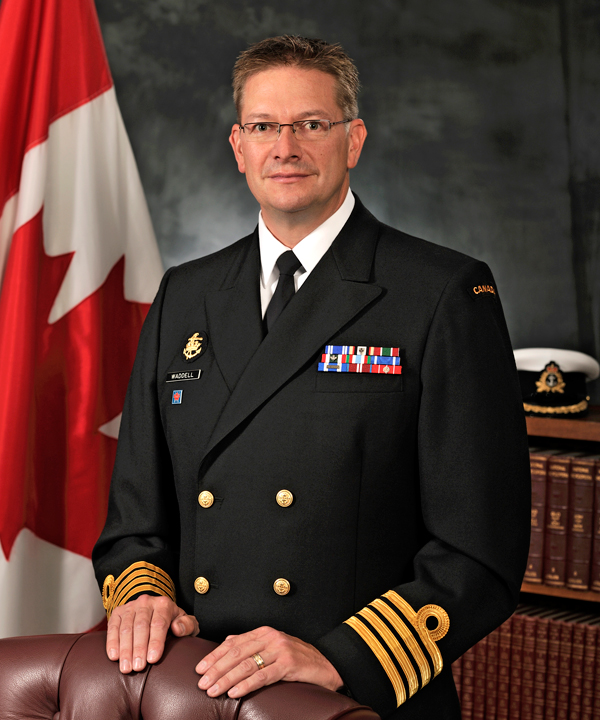
James Vassallo, Base Public Affairs ~Early in his time as Base Commander, Commodore Steve Waddell, promoted to his current rank earlier this month, began to address the issues that landed in his sights.He made a plea to whomever was placing sharp objects on the ball fields around CFB Esquimalt to stop, and just come and talk to him about it instead.Seeing the impact of early morning starts – missed breakfasts, childcare conflicts, worsened commutes – he moved Base Divisions to later in the day, making it less formal and allowing people to ask questions or bring forward issues after inspection.Concerned over the availability and condition of residential housing units at remote sites, he worked to change that.By themselves these are perhaps small things, but together they represent something significant: a way of leading, and an understanding of him as a leader.“After almost 28 years in the navy I don’t think I’ve really changed who I am,” he says. “I recognize the value of our output has always been based on the aggregate of the efforts of everybody. Going around talking to people, understanding their issues and validating they’re part of a greater activity, whether big or small, that was always important to me.”That “greater activity” was a deceivingly simple sentiment: get warships to sea for Canadians. In practice there was always the potential for things to become more complex given a diverse civilian and military workforce, significant interdependencies between internal and external organizations, and needs spread over a wide range of areas – hospital services, IT infrastructure, human resources issues, support for military ­families – that go far beyond operationalizing a military.“Unlike a ship, it can be harder to build esprit de corps across a diverse portfolio like the base, but I always reminded people about all the valuable things...

(Centre) Rear-Admiral Art McDonald

New leadership for base

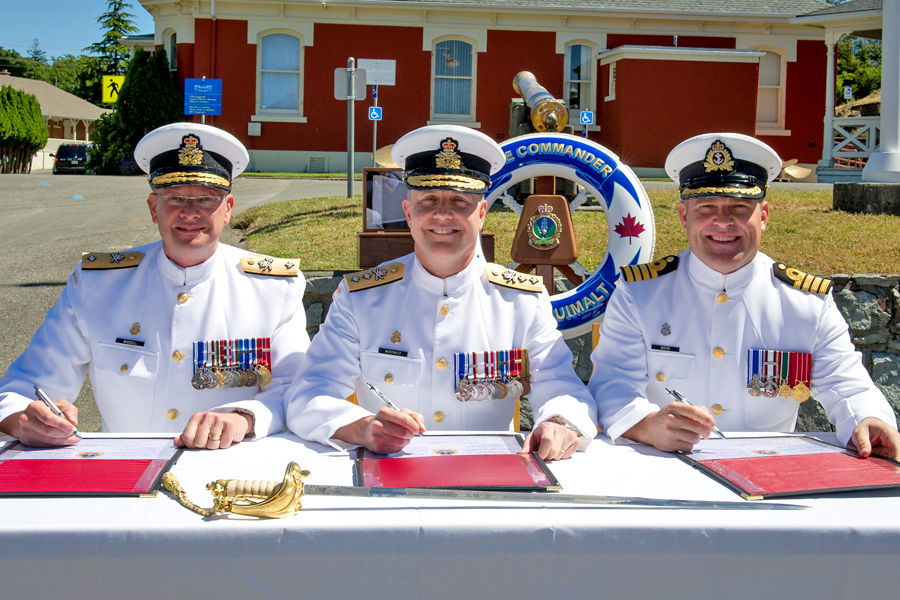
[caption id="attachment_16380" align="alignnone" width="450"] (Centre) Rear-Admiral Art McDonald, Commander Maritime Forces Pacific; former Base Commander Commodore Steve Waddell (left); and incoming Base Commander Captain (Navy) Jason Boyd (right), sign off on papers officially appointing Capt(N) Boyd to his new post during a Change of Command Ceremony at Museum Square, June 22.[/caption]By Peter Mallett, Staff Writer ~Last Thursday, with the summer sun in full bloom, Captain (Navy) Jason Boyd became the new Base Commander in a change of command ceremony brimming with warmth and fond farewells.First to the podium was Elmer George representing the Songhees Nation. He gave a special blessing that reaffirmed the unique connection CFB Esquimalt has with the First Nations communities of Greater Victoria.Humour, pride and humility were well woven into Commodore Steve Waddell’s address. Having spent one of the longer terms as the “Fourteenth Mayor” – a month shy of three years – he made certain to acknowledge all units, both military and civilian, for their efforts supporting the fleet.“Spending three years as CFB Esquimalt’s Commander was a unique opportunity to forge deep bonds across the region and witness the incredible contributions our people make to each other, the community and our mission as part of the Department of National Defence,” he said.Then, with the military parade neatly lined row upon row on the museum parade square, and hundreds of spectators assembled to witness the event, Cmdre Waddell, Rear-Admiral Art McDonald, Commander Maritime Forces Pacific, and Capt(N) Boyd all signed the command change certificates signifying the legal transfer and change in leadership.During his remarks, RAdm McDonald likened the Base Commander’s job to that of a Mayor, noting the “city” of CFB Esquimalt has its own fire department, police force, schools, and even a newspaper. Cmdre Waddell, he said, “showed dedication and tact” while fostering relationships both inside...

Preparing for the future

Peter Mallett, Staff Writer ~The opportunity for civilian employment within the Federal Government has become a reality for many post-secondary students looking for short or long-term public service jobs.Several of the Department of National Defence’s new student hires are already at work at CFB Esquimalt and other military bases across the nation. Their presence has been bolstered this year following a report by Canada’s Privy Council in March that urged the government to revamp efforts to attract, retain and develop skilled labour for its civilian workforce.The Annual Report of the Clerk of the Privy Council noted that since over 9,000 public servants have retired within the last year, the Federal Government must now work on innovative student recruitment “in an effort to mobilize the energy and creativity of a new generation of public servants.”Following the report’s release, DND Deputy Minister John Forster made the pledge to hire 1,200 new student workers to its civilian ranks.National Student Hiring Team stood up in March to expedite the student hiring process across DND. Roxana Kendall, team lead, says the 18-member team is specifically focussed on the recruitment and hiring process to make sure the Federal Government meets its hiring targets.Kendall’s hiring team began the first big push to get several post-secondary and secondary students to work across the Formation in its Co-operative Program and Federal Student Work Experience Program (FSWEP).Civilian student employees who work at the base are broken into three categories:Co-Op Program placements, which includes university and college students normally working a 16-week paid work-study term as part of their course of study;FSWEP that enables full-time and returning students hands-on work experience and the ability to apply for targeted job opportunities as well as a general database anywhere in a variety of Federal Government departments; andthe Student Bridge Program that encourages the integration of students with past government work experience into a permanent or term public service position. Placements can range from highly-skilled technical jobs with Base Logistics and Fleet Maintenance Facility,...

The Naden Quartet Band plays on Edmonton’s foc’s’le during a cocktail party.

HMC Ships Brandon, Edmonton joined Portland Rose Festival

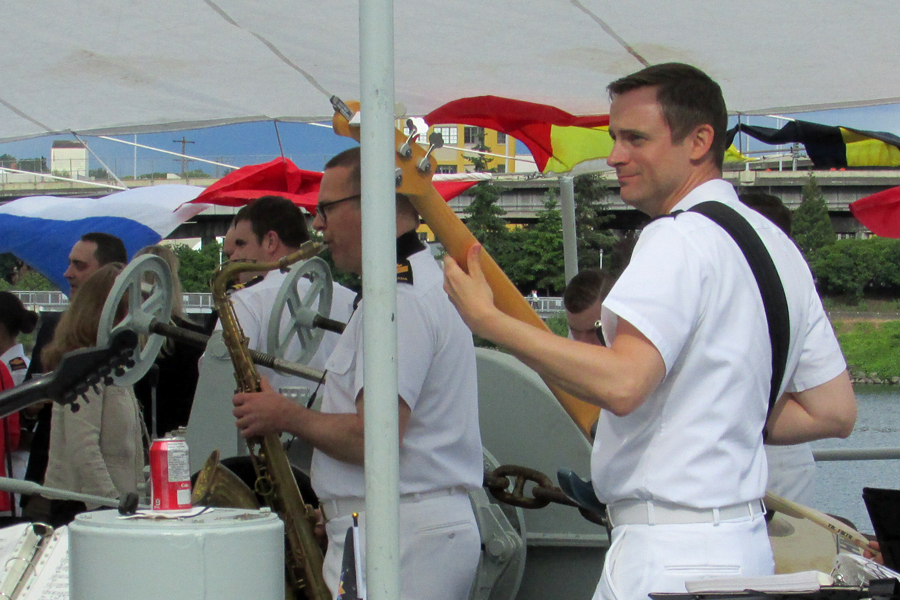
[caption id="attachment_16328" align="alignnone" width="450"] The Naden Quartet Band plays on Edmonton’s foc’s’le during a cocktail party.[/caption]Peter Mallett, Staff Writer ~Royal Canadian Navy (RCN) outreach efforts were in full bloom again last week with HMCS Brandon and HMCS Edmonton’s participation in the Portland Rose Festival.The two Kingston-class Maritime Coastal Defence Vessels were moored at the Portland Seawall, June 7 to 12, as part of the Fleet Week segment of the month-long civic festival held each year in June.Two United States Navy (USN) vessels, aircraft carrier USS Bunker Hill, and Independence-class combat ship USS Jackson, along with three United States Coast Guard vessels – USCGC Alert, Bluebell and T/V Ironwood – also participated.The company of all six warships gave guided tours during Fleet Week, an event that celebrates Portland’s more than 100-year relationship with the navy.This was the fifth Rose Festival for LCdr Lucas Kenward, Commanding Officer of Edmonton, who said he relishes the opportunity to represent the RCN at this event.“Portland is a wonderful city and as one would expect they really roll out the red carpet for our sailors with multiple events and activities throughout the Portland region during Fleet Week. The Seawall area in particular is abuzz with many uniformed personnel interacting with the citizens of Portland and its tourists, touring each other’s ships, and exchanging stories of times at sea.”Brandon’s Commanding Officer, LCdr Jolene Lisi noted her ship’s company were “truly overcome by the hospitality of Portland” and also valued their interaction with USCG and USN crew in a social setting.On June 10, the RCN ships co-hosted a Canadian reception with Consul General James K. Hill and Commander MARPAC, who was represented by Commander Michele Tessier, Commander Coastal Forces. Dignitaries such as Vice-Admiral Nora Tyson, Commander USN Third Fleet; Vice-Admiral Midgette, Commander Coast Guard Pacific Area; and Rear-Admiral...

Construction starts for wastewater plant project

Construction starts for wastewater plant project

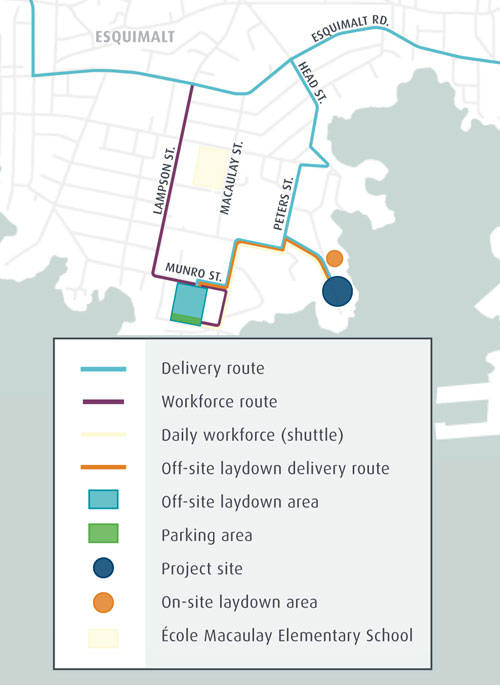
Peter Mallett, Staff Writer ~Those living and working in close proximity to McLoughlin Point in Esquimalt will soon contend with increased traffic and noise levels associated with the Wastewater Treatment Plant construction project.Officials from the Capital Regional District (CRD) are awaiting building permits before excavation and controlled blasting commence at the Wastewater Treatment Plant (WWTP) construction site.The construction site is in close proximity to Work Point’s military barracks, Naval Officer Training Centre, and military housing units.A spokesperson from the CRD says they anticipate construction to begin ramping up late June with a completion target of 2020.“We are very mindful that construction does have an impact on the local community, and we are making sure the management team and all our contractors consider the traffic and noise impacts as they plan their work,” said Elizabeth Scott, WWTP Deputy Project Director. “There is a traffic management plan developed by the contractor [Harbour Resource Partners] that had input from the public and was approved in May [2017].”Scott anticipates increased traffic of approximately 30 trucks hauling excavated material per day along the McLoughlin Point delivery route, which uses Peters Street and Head St. via Esquimalt Road. The majority of blasting and excavation is expected to wrap up late August, after which truck traffic will vary between five and 15 trucks per day, depending on the construction stage, until the project is done in 2020.Disruptions to traffic on Bewdley Avenue and Anson St. are also expected during geotechnical investigations and construction to accommodate a pipeline that will connect to the existing CRD pumping station at Macaulay Point Park as part of the conveyance system to pump liquid waste to the new treatment plant at McLoughlin Point. Construction will also take place along Victoria View, Patricia Way and Peters Street to accommodate utility servicing and as part...

Dockyard blasting begins this week

Dockyard blasting begins this week

[caption id="attachment_16321" align="alignnone" width="450"] Photo by MCpl Chris Ward, Imaging Services, CFB Esquimalt[/caption]Peter Mallett, Staff Writer ~Construction crews working on the A/B Jetty Recapitalization Project in Dockyard will begin 10 weeks of controlled blasting operations starting June 21.The use of explosives will be limited to a controlled site and occur up to three times a day on land located near B Jetty and the foot of Rainbow Drive, and is expected to conclude in early September.Blasting is part of the excavation of 11,000m3 of bedrock to allow for proper elevation of the extension of the utility corridor, and new electrical substation, Jetty Interface Building, and filter press building to process oily waste water.Erin Rice, Team Leader Construction Services for Defence Construction Canada, says blasting will be limited to a controlled site and provide no danger to neighbourhood residents. She said pre-blast signals of 12 short whistles followed by an all-clear five-second whistle will likely be the only audible noise for residents.“The blasting activities are limited to very low velocities due to the surrounding heritage structures, and conducted by a team with extensive experience blasting in the dockyard,” said Rice. “We have retained geotechnical engineers to monitor all blast impacts, and the contractor and consultants will both be monitoring activity with seismographs placed in the vicinity.”People working in Dockyard are reminded to heed all safety signage and avoid the area.Blasting on the site will be necessary at some point in 2018, with details and timelines to be announced at a later date.Communications packages explaining further details about the blasting are being sent to effected stakeholders in close proximity to the site, and Rice said a timetable of the blasts will also be made available.Work on the demolition of B Jetty, an initial phase of the $781 million, eight-year A/B Jetty recapitalization...

Warship celebrates Canada 150 in an unusual way

Warship celebrates Canada 150 in an unusual way

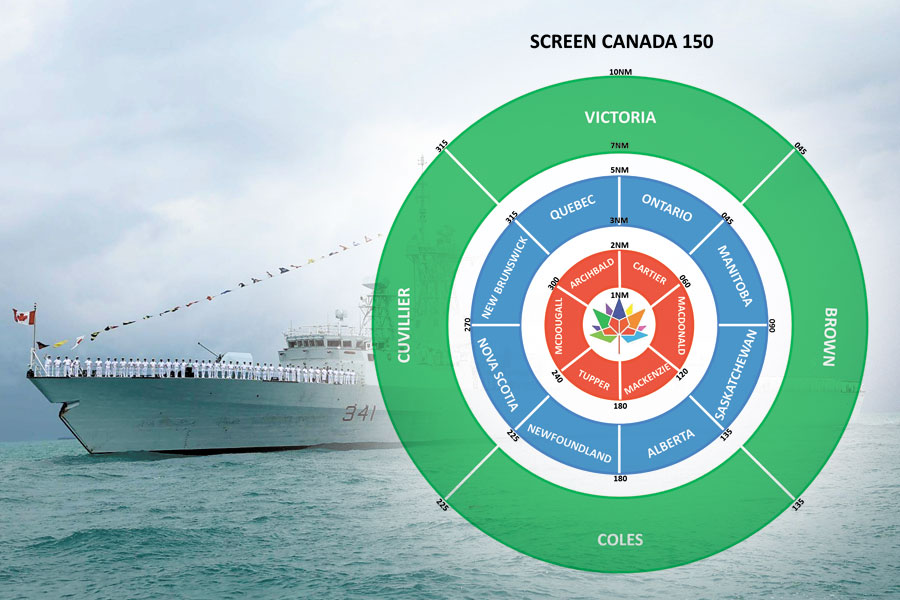
[caption id="attachment_16318" align="alignnone" width="550"] Warship celebrates Canada 150 in an unusual way[/caption]Lt(N) Daemen Wolch, HMCS Ottawa ~How does a Canadian warship commemorate Canada 150 while deployed half way around the world?In the case of HMCS Ottawa, the answer would be with a specially created “Canada 150” screen, being used by the ship during Poseidon Cutlass 17, while conducting exercises with other navies in the region – part of Canada’s strategic involvement in the South China Sea.Screens are tools used by navies to assist with the assignment of positioning when working with other ships at sea. Different segments of the surrounding area are each assigned a name for the sake of brevity. Often a theme is chosen for the names that reflects the mission at hand. In this case, Ottawa chose to spread some Canadiana to foreign warships.The Canada 150 screen celebrates the sesquicentennial with an ode to the mothers and fathers of Confederation, as well as a nod to the Canadian provinces. The inner sectors are named after Fathers of Confederation: Sir John A. MacDonald, Sir George Archibald, Sir George-Étienne Cartier, Sir Charles Tupper, Alexander MacKenzie, and William McDougall.The middle sectors each bear the name of a Canadian province.Finally, the outer sectors are named after Mothers of Confederation: Queen Victoria, Anne Brown, Mercy Coles, and Luce Cuvillier.The screen was first used by HMCS Ottawa, HMCS Winnipeg and HMAS Ballarat, an Australian warship. The three ships conducted exercises over the course of three days using the Canadian designed screen. The screen was also successfully used with the French ship Prairial during a full day of activities. The Canada 150 screen will be used with other regional partners as HMCS Ottawa continues its mission of global engagement on Poseidon Cutlass 17.The Canada 150 screen will see its next use during Pacific Guardian...

MWO Dave Daly

Traffic technicians prepare NST lift off

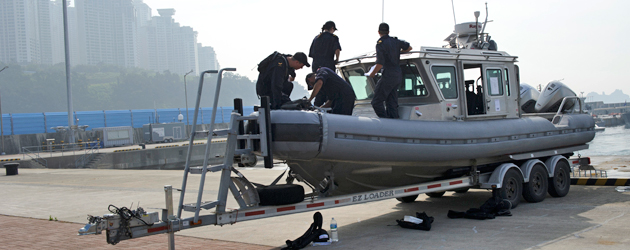
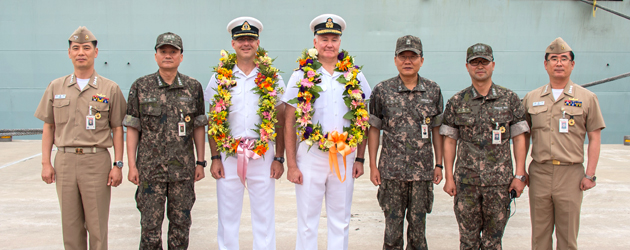
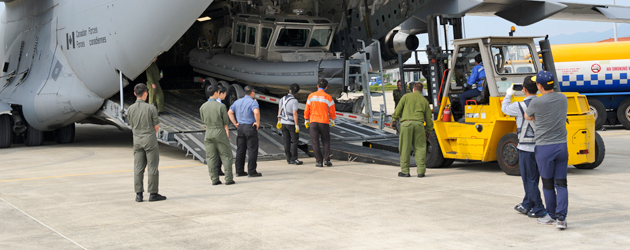
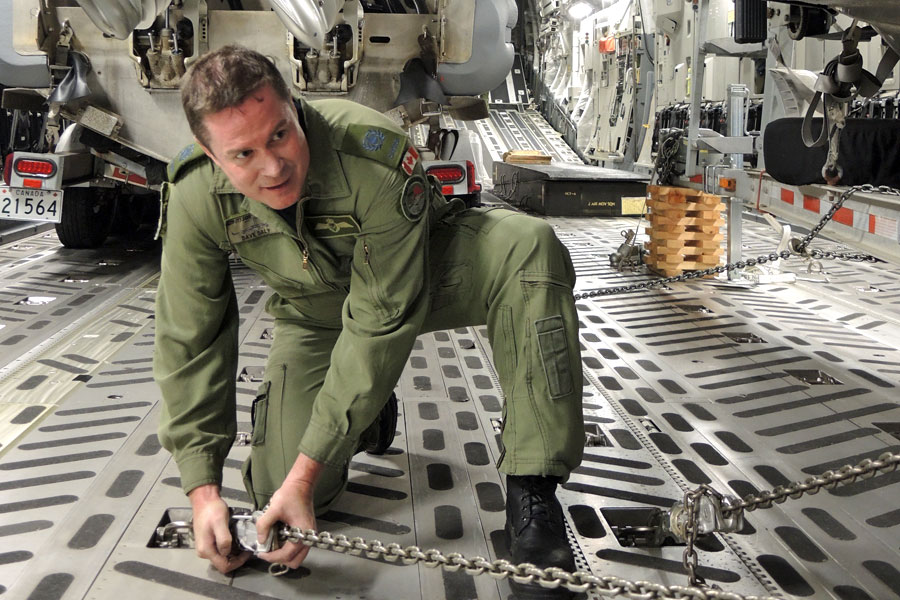
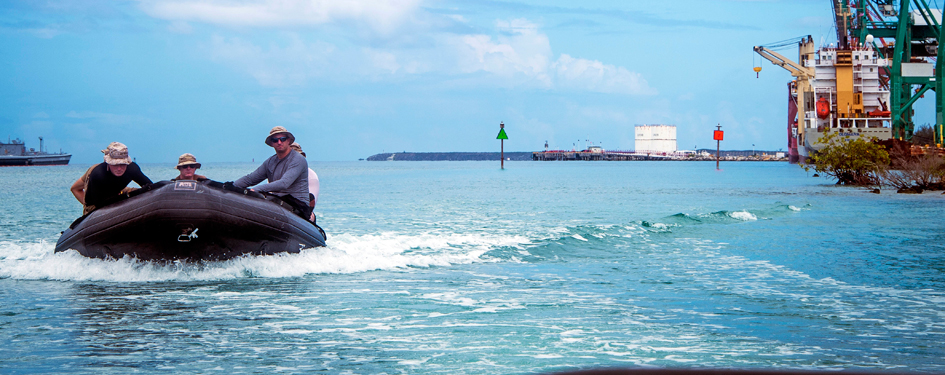
[caption id="attachment_16315" align="alignnone" width="450"] MWO Dave Daly, a Loadmaster with 429 Transport Squadron in Trenton, Ont., secures a RHIB to the floor of a C-17 Globemaster cargo plane. Photo by Peter Mallett/Lookout[/caption]Peter Mallett, Staff Writer ~Traffic Technicians at Base Logistics are being hailed for their work getting 32,000 tons of Naval Security Team equipment airlifted to Busan, South Korea, for their upcoming deployment.The 75-member Naval Security Team will provide port security for Poseidon Cutlass 17, where HMC Ships Ottawa and Winnipeg will be involved in a multinational task group performing interoperability exercises and above and below water warfare training.This is the first time traffic technicians have tackled packing both a C-130 Charter plane and a C-17 Globemaster cargo plane at the Victoria International Airport.Included in the shipments were two Defender Class Rigid Hulled Inflatable Boats weighing more than 10,000 lbs each, security team body armour, and medical equipment.“Deploying equipment on aircraft is not something the RCN normally does, as our personnel usually deploy aboard RCN vessels, and all of your equipment is always with you at sea,” says Lt(N) Tim Turner, Naval Security Team Executive Officer. “This has been a monumental undertaking for the Traffic Tech and other Base Logistics employees, and they have done a brilliant job of moving all the little pieces to South Korea. It has been critical component to making our mission successful.”One key component of the Naval Security Team deployment will be providing “a bubble of protection” around the Canadian warships entering and exiting the harbour in Busan. The team will work closely with the Republic of Korea Navy to provide force protection at sea, and on land to provide protection from threats to and from controlled access points.Traffic Tech Sergeant Andrew Tobin will meet the cargo planes in South Korea to help facilitate the...

New milestone met by HMCS Ottawa

New milestone met by HMCS Ottawa

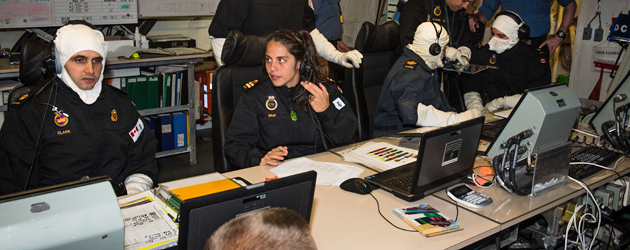
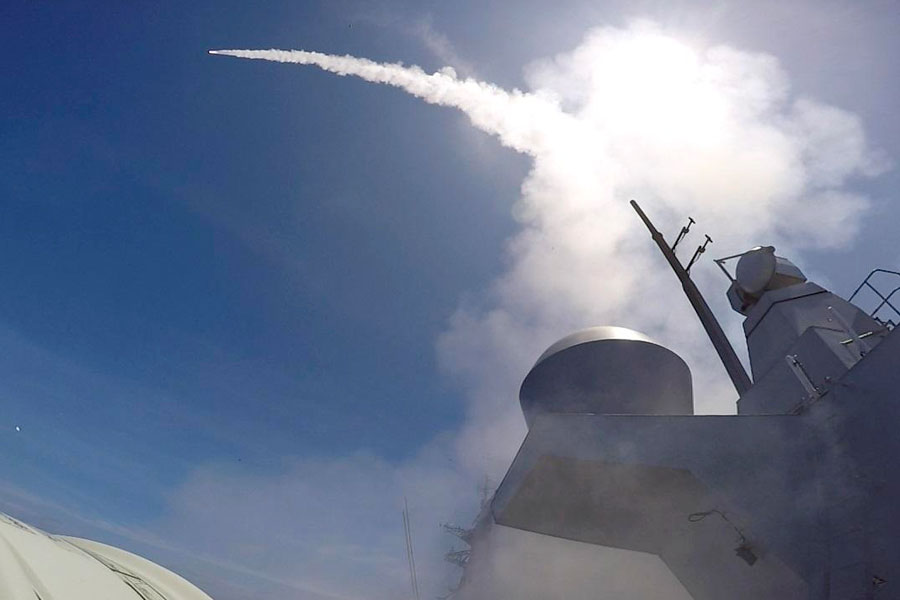
SLt Jacob Booth, HMCS Ottawa ~HMCS Ottawa achieved another milestone after successfully completing a layered missile engagement against a Hammerhead target while deployed on Poseidon Cutlass 17-1.After many weeks of training, the exercise concluded with the launch of an Evolved Sea Sparrow Missile (ESSM) and engagements with the Bofors 57mm Mark III and 20mm Close-in-Weapons-System in an impressive display of firepower.Conducted off the coast of Okinawa, Japan, a first for the Royal Canadian Navy (RCN), the trial demonstrated the capabilities of the ESSM when used in Surface-to-Air in Surface-to-Surface (SASS) Mode against a small boat attack, as might be experienced during asymmetric warfare.The target for the event was provided by QinetiQ Target Systems Canada (formerly Meggitt), a Canadian company based out of Medicine Hat, Alberta.Intended for destruction, these targets provide an opportunity for ships to exercise their skills while employing weapons systems to their full potential.Preparations were extensive and undertaken over countless hours of training and study. From refining a checklist of actions by individual team members, to refining the optimal employment of weapons and sensors, and participating in increasingly complex training scenarios, the operations room worked on every detail to hone their operational skills and warrior spirit. This not only ensured the success of the shoot, but also the defence of the ship against asymmetric threats such as small boats.Although everything was well prepared by the time Ottawa arrived on the range, Fire Control Operator LS Derek Urichuk said the anticipation in the operations room was palpable.“I couldn’t believe the nervous excitement that was felt throughout the ship as we all awaited the shoot,” he says.A very early morning start saw the commencement of checklist items that culminated with a mid-morning action alarm energizing the ship to action stations.Closing at high speed, the target was piloted towards Ottawa to...

Brian Seymour

Royal B.C. Museum showcases collection

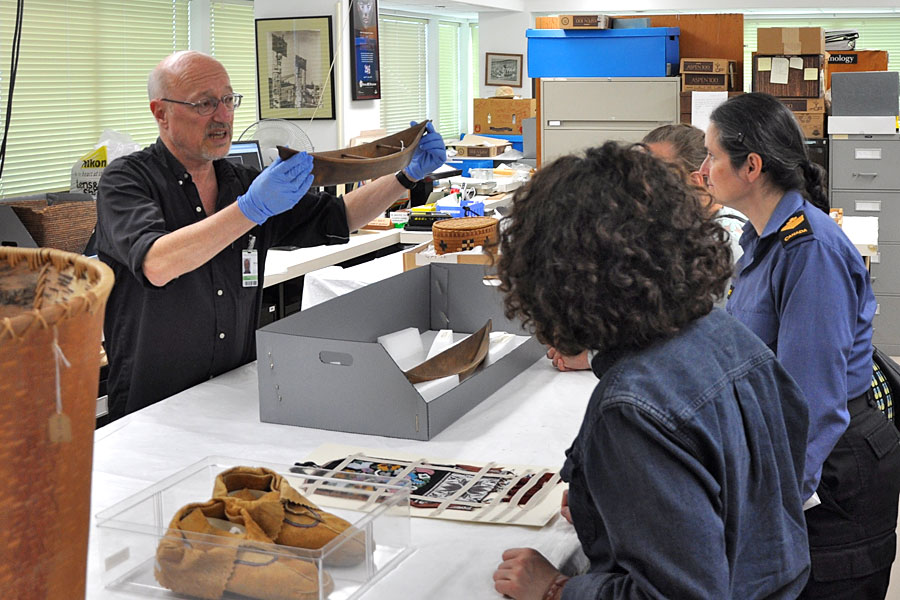
[caption id="attachment_16275" align="alignnone" width="450"] Brian Seymour, Collections Manager of the Department of Anthropology of the Royal BC Museum, show artifacts to CFB Esquimalt members during a special collections tour. Photo by William Chaster, MARPAC PA Office[/caption]William Chaster, MARPAC PA Office ~High in the upper floor of the Royal B.C. Museum, in an area not open to the general public, Brian Seymour, an Anthropology Collections Manager, holds a small, angular shard of rock to the light.Surrounding him is a group of 16 people from CFB Esquimalt, gazing intently at the shard.At first glance it resembles a regular stone, but upon closer examination chips and grooves become apparent, too intentional to be from natural causes. This sliver of rock, explains Seymour, is an ancient tool used by a member of a First Nations community hundreds of years ago, carefully shaped and scratched so it could cut or grind plant and animal materials.This tool is one of dozens of artifacts showcased to base members during a museum tour organized by the Defence Aboriginal Advisory Group (DAAG) May 25.“The tour was absolutely outstanding,” said Lisa deWit, an employee with Formation Review and a member of the Wet’suwet’en First Nation. “The archive is a real treasure and I felt we could connect in a meaningful way to our culture and ancestors.”The tour was in honour of Aboriginal Awareness Week.As Seymour took the group through each room, all crammed with historical First Nations’ objects, he gave encyclopedic detail on those items he chose to highlight, such as carved wooden flutes lining a drawer. In another cabinet, he revealed a selection of woven hats, each with a unique design embroidered around the brim, carefully stored so as not to lose their shape.This was the DAAG’s first visit to the First Nations Collections.“It was so popular we filled...

Explore More

Categories

Top News

E-Editions Archive

News Stories Archive

Proud Supporters

Joshua Buck, Lookout Newspaper