[wpml_language_selector_widget]
[searchwp_form id="1"]

Best foot forward with 49th CISM World Military Marathon

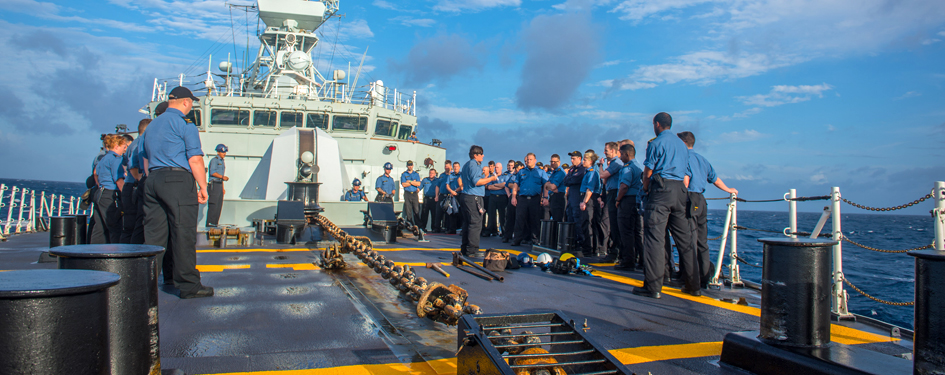
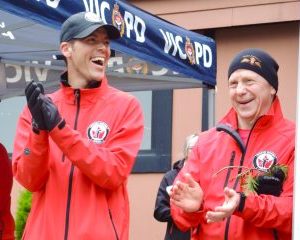
[caption id="attachment_16271" align="alignnone" width="450"] Alexandre Boulé finishes first in the men’s Canadian competitors with a time of 2:35:23. Photo by Corporal Lisa Fenton, Canadian Forces Support Unit (Ottawa) Imaging Services[/caption] CFMWS ~The 49th CISM World Military Marathon Championship (WMMC) was hosted in Ottawa May 28. The event, which took place within the broader Scotiabank Ottawa Marathon, included 83 military athletes from all over the world competing from 22 CISM nations.The hard fought battle ended with a clean sweep from Poland, with Arkadiusz Gardzielewski taking first place overall in the men’s side, and Iwona Bernardelli taking first for the women’s, with times of 2:13:42 and 2:34:46 respectively.The Canadian contingent had another strong showing, with Alexandre Boule coming first among men’s Canadian competitors with a time of 2:35:23, and Kathleen Beaudry finishing strong with a time 3:11:37 for the women’s competitors.Founded in 1948, the International Military Sports Council (CISM) is one of the largest multidisciplinary sports organizations in the world. Created with the mission of promoting peace and international dialogue through sport, CISM allows the militaries of the world to compete peacefully in the spirit of cooperation.The WMMC is one of many world championships that occur in CISM, and this year’s competition saw some of the top runners in the world competing in Ottawa.

HMCS Ottawa visits Shanghai

HMCS Ottawa visits Shanghai

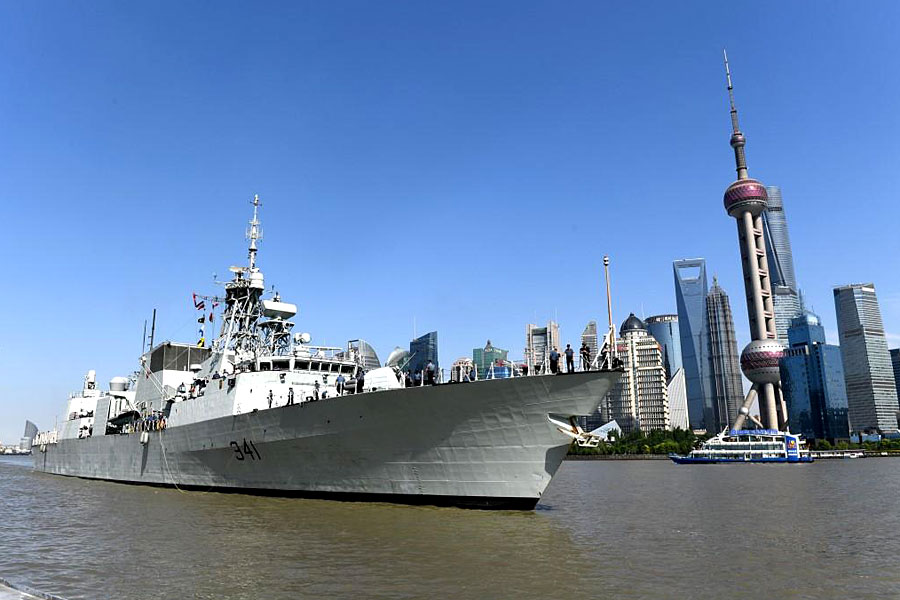
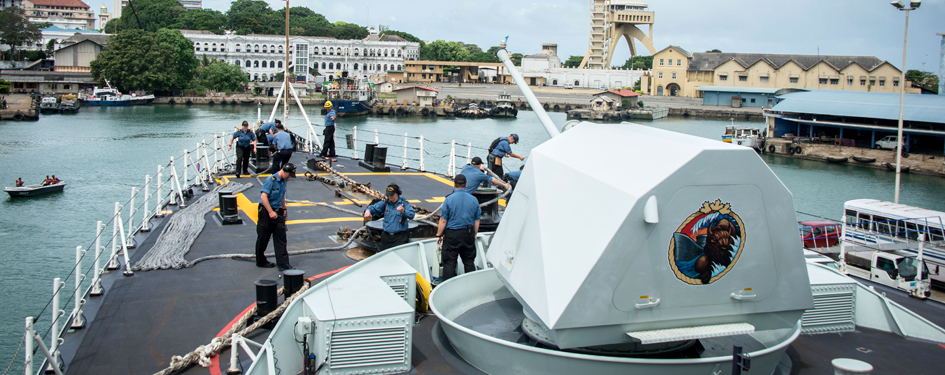
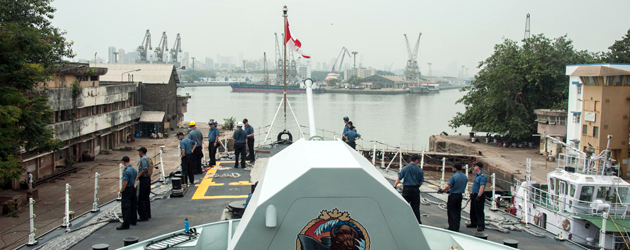
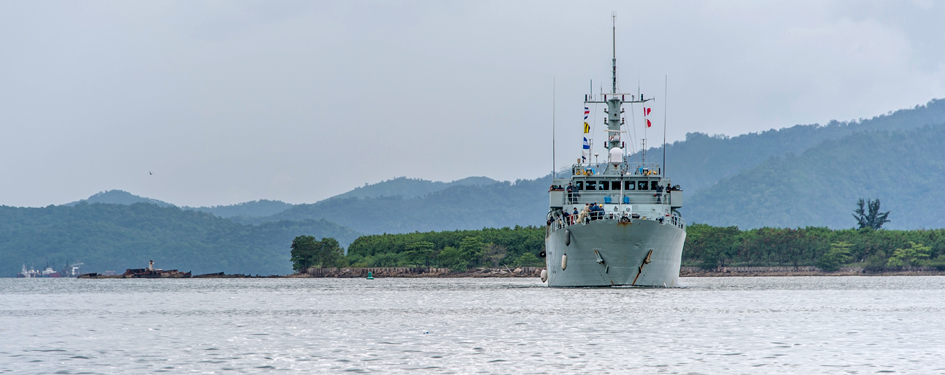
SLt Ben Mullin-Lamarche, HMCS Ottawa ~As the People’s Liberation Army Navy (PLA(N)) brass band echoed from the jetty in Shanghai, China, HMCS Ottawa came alongside May 26, greeted by Senior Captain Wei, Chief of Staff to the Commander Shanghai Naval Base, and sailors from the host ship Zuxhou.That evening, members of the ship’s company were treated to a reception against a backdrop of the brightly lit Shanghai skyline.There, they mingled with the officers and crew of the host ship and enjoyed a buffet dinner. The reception included speeches given by Rear-Admiral Wang, Commander Shanghai Naval Base, and Rear-Admiral Art McDonald, Commander Maritime Forces Pacific. Both highlighted the importance of relationships and communication between the navies in the Asia-Pacific region.This visit marked Ottawa’s third to the Chinese city, the first being in 2002 and the second in 2008. However, it was the first Royal Canadian Navy ship deployed on Poseidon Cutlass, an operation designed to provide opportunities to conduct diplomatic engagements to other countries in support of Government of Canada objectives.The next afternoon, Rear-Admiral McDonald visited PLA(N) ship Zuxhou, and made an office call on Vice Mayor of Shanghai Xu Kunlin, before coming aboard Ottawa to present awards and promotions.Included in the parade was recognition of some deserving sailors for their work and dedication with Commander Maritime Forces Pacific and Formation Chief coins.“It is definitely a different experience,” said Leading Seaman Tom Eustace, who was presented with a Bravo Zulu Coin by the Admiral. “I was not expecting it at all. It’s nice to be recognized in front of peers.”Following the awards ceremony, the ship’s company prepared a reception for key community, PLA(N) and Canadian leaders in Shanghai, which was hosted by RAdm McDonald and the Canadian Ambassador to China, the Honourable John McCallum.While the ship was hosting events onboard, members...

Carol and Scott Lee and their children Kristen and Graham with a historical survey marker that will be transformed into a headstone for a distant relative. Photo by Peter Mallett

Historical survey marker to become headstone

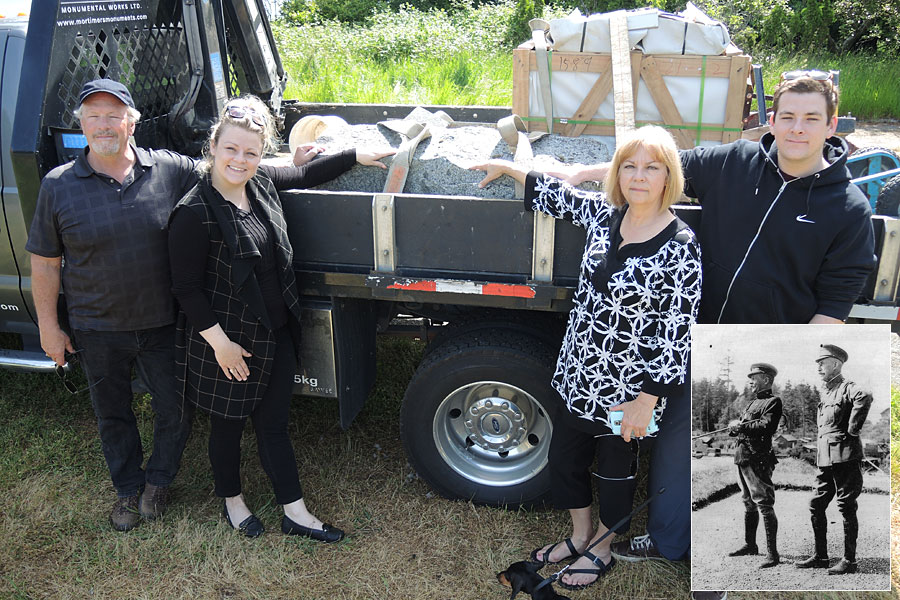
[caption id="attachment_16264" align="alignnone" width="450"] Carol and Scott Lee and their children Kristen and Graham with a historical survey marker that will be transformed into a headstone for a distant relative. Photo by Peter Mallett, Lookout. Bottom right: Colonel Josiah Greenwood Holmes (right) with Major James Peters at Work Point in 1909.[/caption]Peter Mallett, Staff Writer ~A 19th Century granite survey marker, placed by Dominion of Canada surveyors to establish the bounds of Work Point Barracks in 1887, will become a tombstone for the Deputy Adjutant General of Military District # 11 appointed in 1883.Descendants of Colonel Josiah Greenwood Holmes were at the Work Point Barracks site June 6 as workers from Mortimer’s Monumental Works dislodged the massive granite marker from the ground and hauled it on to a flatbed truck with a mechanical arm.The marker had been cast aside following the demolition of the Work Point’s Officers’ Mess in 2006.“It’s terrific to see this stone finally being pulled from the ground,” said Carol Lee, great-granddaughter of Col Holmes. “This process is helping myself and other family members rediscover our military heritage, and someone who played such an important role in the history of Victoria and Canada.”Col Holmes was born May 28, 1845, in St. Catharines (Upper Canada). A graduate of Royal Military College, he worked as an adjutant (administrator to a senior officer) of A Battery in Ontario from 1872 until his promotion to the Commander of Military District # 11, including ‘C Battery” and the Canadian School of Artillery in Victoria -Esquimalt. He had previously served in the Fenian Raids in 1866 and 1870. He eventually retired in 1909 and passed away at his home in Victoris in 1928.C Battery was gazetted in 1883, and arrived in Victoria in 1887, established to shore up coastal defences to protect Victoria and...

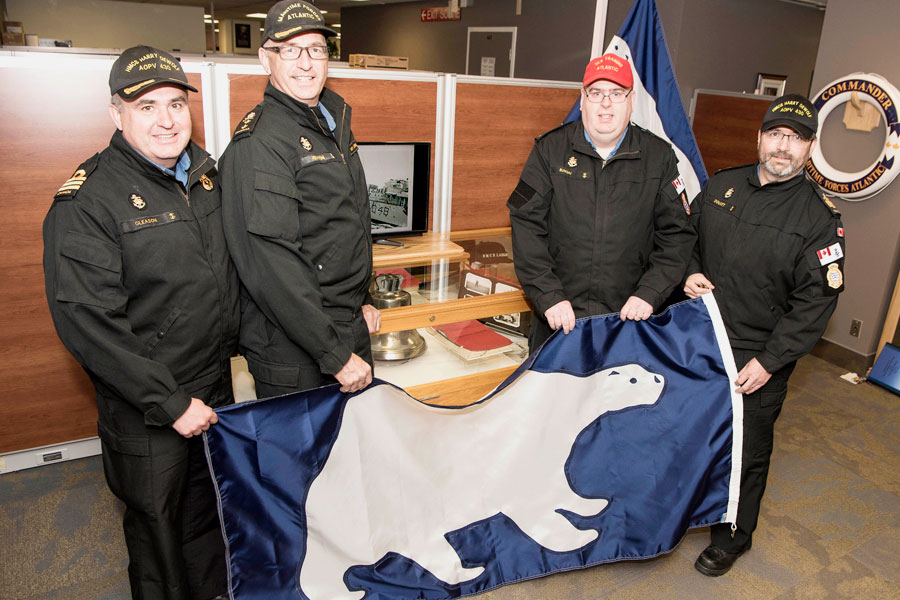
In front of the Arctic display outside the Commander of Maritime Forces Atlantic’s (MARLANT) office

HMCS Labrador’s Polar Flag to fly again

[caption id="attachment_16261" align="alignnone" width="450"] In front of the Arctic display outside the Commander of Maritime Forces Atlantic’s (MARLANT) office, Cdr Corey Gleason, Commanding Officer HMCS Harry DeWolf; RAdm John Newton, MARLANT; CPO2 Rick Bungay, Sea Training Atlantic; and CPO1 Gerry Doucet, Coxswain HMCS Harry DeWolf, display the Polar Flag. Photo by Mona Ghiz, MARLANT PA[/caption]CPO2 Richard Bungay, Sea Training Atlantic ~When HMCS Labrador undertook its maiden deployment in 1954, it was the first warship to travel the Northwest Passage and circumnavigate North America.Throughout its operational history with the Royal Canadian Navy (RCN) the ship was unique, as it had created its own unofficial ship’s flag.The Polar bear, a universal symbol of the Arctic and unofficial ship’s mascot, was hoisted while at anchor and entering and leaving harbor, signifying an end of a voyage. The crew called it the Polar Flag and it was a source of pride and cohesion.Fast forward 64 years later, being an enthusiastic student of RCN history and proponent of RCN Arctic deployments, I wanted to link the past with the future of the RCN in the Arctic.I wanted to recreate the flag, and so I proposed the idea to the Commander of Maritime Forces Atlantic who is also interested in the Arctic and its history.The flag has now been recreated and is displayed outside the Admiral’s office as a cornerstone of the Arctic display recently erected.When HMCS Harry DeWolf is commissioned, it will fly this flag as the ship’s company of Labrador once did.To be successful in the Arctic we must look to the past as well as the future, and I believe the reconstituted Polar Flag will serve as a tangible link between our shipmates of the past and a source of pride of Harry DeWolf’s crews of the future.

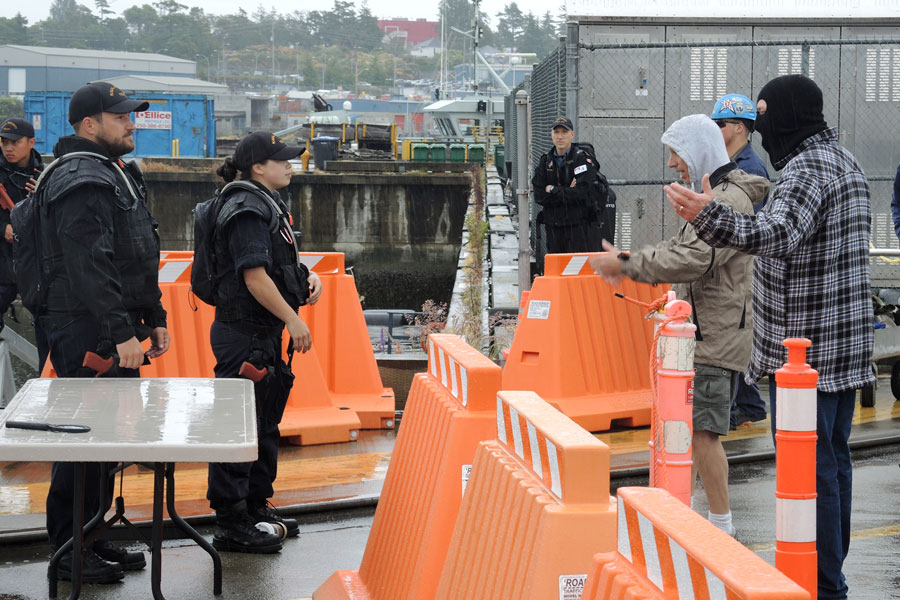
Photo by Will Chaster

Naval Security Team prepares for deployment

[caption id="attachment_16258" align="alignnone" width="450"] Photo by Will Chaster, MARPAC PA[/caption]Will Chaster, MARPAC Public Affairs Office ~A crowd of shouting protestors march towards a barricade guarded by a security force wearing dark Kevlar vests. Most of the protestors stop a few feet from the guards, but two walk up to the barricade, screaming with arms waving. In the midst of this chaos, the Kevlar-clad guards remain immovable; calmly they defuse the situation and do not react to the provocation of the activists. After a while the crowd disperses and the guards fall out.A protest scenario was one of many exercised last week by the Naval Security Team (NST) as part of their Validation Readiness Training in order to deploy. The training was implemented by Sea Training Pacific.“We’re making these exercises as close to the real thing as possible so they are prepared for any eventuality,” said Commander Christopher Peschke, Commanding Officer of Sea Training Pacific. The week-long exercise took place on land and at sea, and included everything from low-key activities such as searching bags and checking identification, to high pressure situations such as confronting a crowd of angry protestors or dealing with a car bomb.The 78 NST reservists from across the country underwent weeks of individual training in first aid and weapons drill before arriving at CFB Esquimalt.“There’s such a wide variety of people here; we have everyone from newly graduated university students to school teachers to a dentist. It’s a really interesting crowd,” said Cdr Peschke.Their training involved inter-agency participation from B.C. Ambulance, 11 Field Ambulance, Military Police Unit Esquimalt, Fleet Diving Unit (Pacific), HMCS Vancouver crew, and Sea Training staff.Members of the NST are selected from a pool of reservists who must sign a reserve contract and go through intensive training before being allowed to deploy overseas.Their job...

Unusual rescue

Unusual rescue

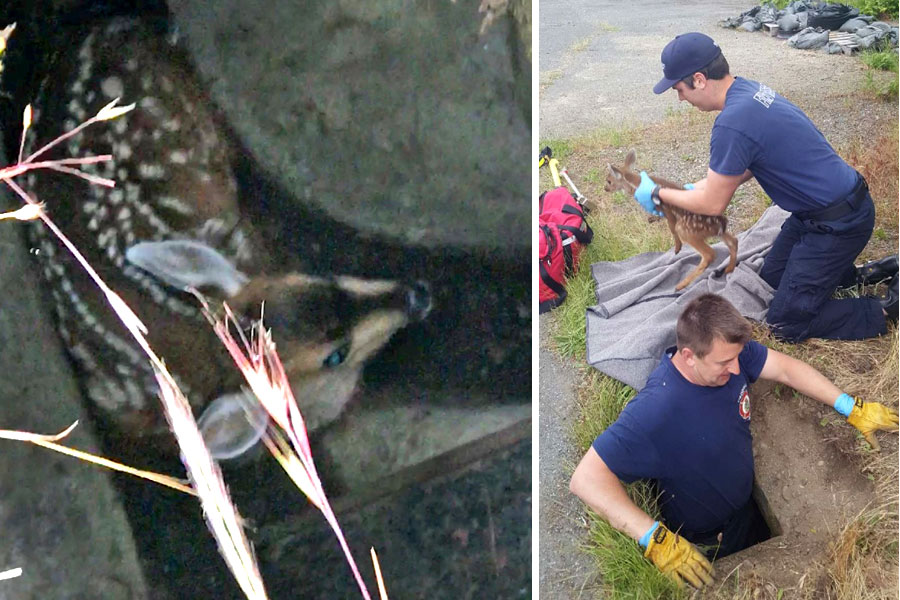
Will Chaster, MARPAC PA Office ~Animal handling isn’t a skill most firefighters expect to develop, but some members of the CFB Esquimalt Base Fire Hall can put that on their resumes following their actions on  June 7.Around 6:30 p.m. a call came in from a couple out for a walk near Work Point who had found a fawn stuck in a water catch basin.Four members of the Base Fire Hall responded to the call.When they arrived they realized the drain was too deep to simply reach down and get the baby.With the mother deer watching from a nearby field, Firefighter Tyler Werbowski shimmied down into the hole.“I stroked the fawn’s head a bit and then picked it up. It was pretty docile and didn’t struggle or anything which was good,” said Werbowski.He then passed it up to Firefighter Ben Josephson who lowered it to the ground. As soon as its hooves hit the soil the fawn bounded off into the bushes, evidently none the worse for the wear.“We were just happy the little guy was okay,” said Firefighter Josh Peterson.While the mother deer didn’t say thank you, the situation drew praise from their supervisor.“I’m really proud of these guys, they handled the situation very well,” said Geordie Douglas, Deputy Fire Chief.While this isn’t quite in their job description, it’s quite the “en-deer-ing” story that the firefighters will remember for some time.  

Base Commander Capt(N) Steve Waddell

POESB Change of Command moves offshore

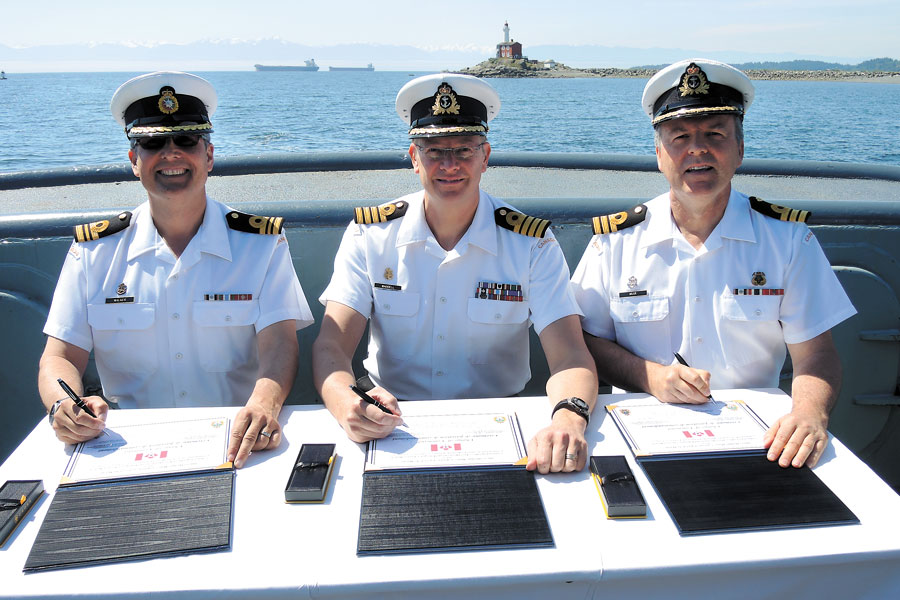
[caption id="attachment_16211" align="alignnone" width="450"] Base Commander Capt(N) Steve Waddell, center, signs the change of command certificates that officialises passing command of Port Operations and Emergency Services from outgoing Cdr Andrew Muir to incoming Cdr Greg Walker. Photos by Peter Mallett, Lookout Newspaper[/caption]Peter Mallett, Staff Writer ~With Fisgard Lighthouse as backdrop and a brilliant blue sky overhead, Port Operations and Emergency Services Branch (POESB) held its Change of Command ceremony aboard CFAV Glendale.Base Commander Capt(N) Steve Waddell presided over the on-the-water ceremony held May 29 on the rear-deck of the 95-foot Glen-class tug signing the official Change of Command certificates between outgoing POESB Commanding Officer, Cdr Andy Muir and the incoming Cdr Greg Walker.Cdr Muir, 53, has spent 32 years in the Royal Canadian Navy. With this Change of Command he will retire to become the Superintendent of both Hydrographic Services Offices in Halifax and Esquimalt. He says the new job offer was too good not to accept.“I have had a lifelong love of charts and maps, coupled with my navigation experience and my educational background. It was the perfect change of career opportunity for me,” said Cdr Muir.Cdr Walker, 56, has 22 years as a naval officer, and was previously the Executive Officer for reserve unit HMCS Malahat. He assumes command of a unit that provides coordinated operational and emergency services to the fleet and base, and oversees the management of Esquimalt and Nanoose Harbours for the Department as the Queen’s Harbour Master.POESB consists of three sections: Canadian Forces Auxiliary Vessels (CFAV), the CFB Esquimalt Fire Service, and a small headquarter staff.This is his first command position, but, like Cdr Muir, he also noted the job opportunity was “too good to turn down.” He said he will now focus on providing operational support and guidance to the civilian employees in...

The traditional keel-laying for the future HMCS Margaret Brooke was held at Irving’s Halifax Shipyard in Halifax

Keel-laying marks next step for AOPS project

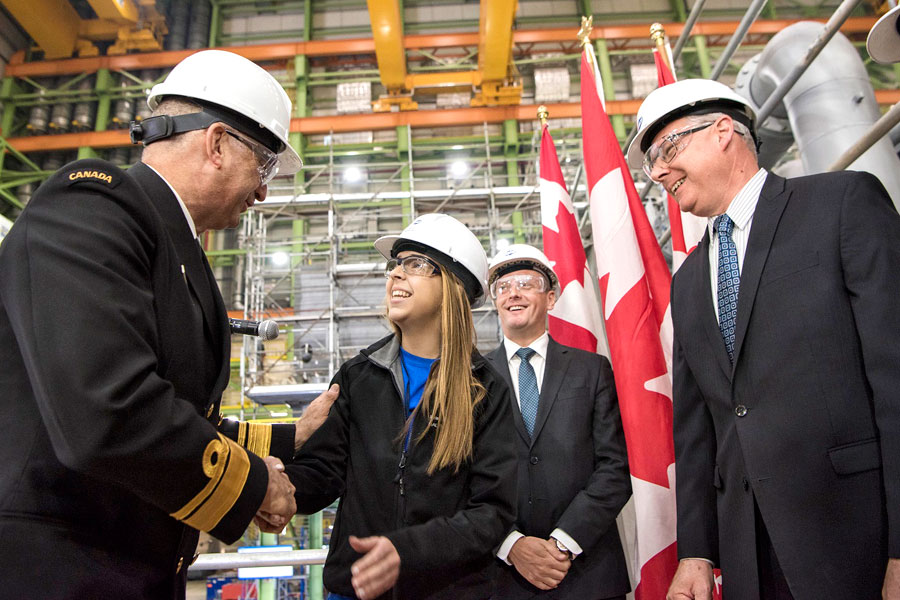
[caption id="attachment_16208" align="alignnone" width="450"] The traditional keel-laying for the future HMCS Margaret Brooke was held at Irving’s Halifax Shipyard in Halifax, Nova Scotia, where a coin was placed on the ship’s keel by Olivia Strowbridge, the first woman in a trade supervisory role in the shipyard and its first female certified ship spray painter. In shipbuilding tradition, the coin will remain within the ship’s structure for its entire life and will invite good luck to the vessel and crew throughout its service. Photos by Mona Ghiz, MARLANT PA[/caption]Ryan Melanson, Trident ~The second of the planned Harry DeWolf class Arctic Offshore Patrol Ships (AOPS) recently passed an important date in a ship’s life, with the Royal Canadian Navy (RCN) and Irving Shipbuilding holding a keel-laying ceremony for the future HMCS Margaret Brooke. The small gathering took place at Irving’s Halifax Shipyard Assembly Hall on May 29.The ceremony involves placing a coin on the keel of the ship, which will remain in place throughout its years in service, and is meant to bring good luck to all those who sail in it. The coin placed on the future Margaret Brooke may bring extra good luck, thanks to the four-leaf clover depicted on it.The ship is named after LCdr Margaret Brooke, an RCN Nursing Sister decorated for gallantry during the Second World War, who was known to carry two four-leaf clovers in a silver locket for good luck following her survival of the sinking of the ferry SS Caribou off the coast of Newfoundland in 1942.LCdr Brooke was named a Member (Military Division) of the Order of the British Empire for her bravery and attempts to help others during that deadly wreck.She died in early 2016 in Victoria, and it was recently announced that her niece, Margaret Elizabeth Brooke, will be the sponsor...

First Navy Bike Ride around CFB Esquimalt

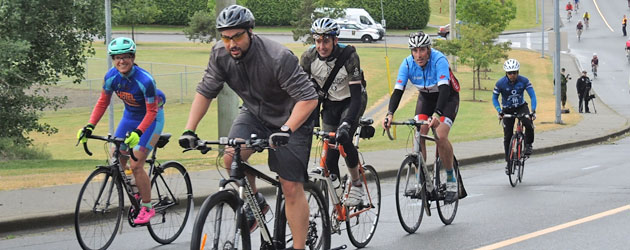
Peter Mallett, Staff Writer ~Cool wet conditions didn’t deter military and civilian personnel who took to their two wheel rides for the inaugural Navy Bike Ride in Esquimalt on June 2.More than 300 cyclists took part in the 10-kilometre non-competitive, family-friendly ride organized by Personnel Support Programs (PSP).Riders set off from the Naden Drill Shed and wound their way through two loops of the course that stretched through both Dockyard and Naden. Most riders took between 30 to 45 minutes to complete the course.Vice-Admiral Ron Lloyd, Commander Royal Canadian Navy, took part in the race. VAdm Lloyd is an avid cyclist who makes the 50 kilometre round-trip commute from his home in Orleans, ON, to his office in Ottawa. He gave the cyclists a pre-ride pep talk in the Naden Drill Shed, joking about his cycling gear and that “sailors and spandex normally don’t mix.”“I can’t be more pleased how the navy has embraced this event,” he said after completing the ride. “There was energy and excitement in this event and everyone seemed to have completed the course with smiles on their faces.”On May 20, he was one of approximately 700 cyclists who participated in a similar ride in the National Capital Region.Matt Carlson, CFB Esquimalt Navy Bike Ride organizer and PSP fitness coordinator, said this year’s inaugural bike ride was an overwhelming success.“Despite the less than ideal weather conditions we had an excellent response,” said Carlson. “One can clearly see our employees and military personnel embrace the concept of a healthy lifestyle with regular physical activity and fun such as this ride.”Carlson noted that several steep inclines on the course, wet conditions, and morning traffic caused some safety concerns. He said PSP will look to make alterations to the race course for next year’s event.Special thanks to Babcock Canada and BMO who come on board as event sponsors.

HMCS Calgary crewmembers practice evacuating a casualty under the supervision of a CFB Esquimalt USAR team instructor.

Urban rescue program expands to include ships’ crews

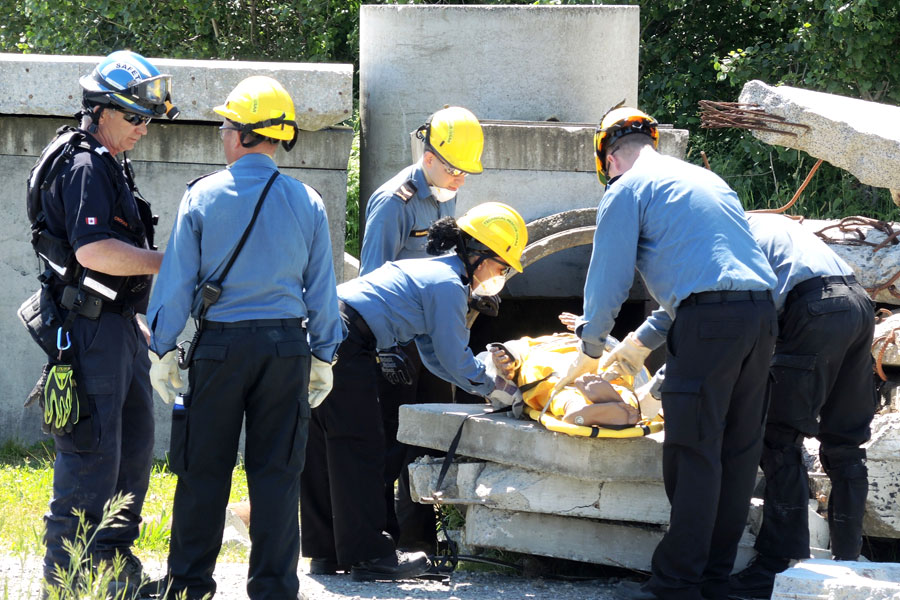
[caption id="attachment_16200" align="alignnone" width="450"] HMCS Calgary crewmembers practice evacuating a casualty under the supervision of a CFB Esquimalt USAR team instructor.[/caption]Will Chaster, MARPAC PA Office ~Urban search and rescue has now expanded to include Royal Canadian Navy sailors through the launch of a new training program.The HMC Ship Disaster Response Course trains sailors on light urban rescue to enable them to assist in a disaster, such as the 2016 New Zealand earthquake.The first to trial the program was 110 crewmembers from HMCS Calgary, which is currently in refit. They spent three days at Work Point’s search and rescue training area from May 23 to 26.Under the guidance of 12 trainers from the CFB Esquimalt Urban Search and Rescue (USAR) team, sailors worked through multiple stations that simulated a disaster zone. This involved working together in teams in order to shore up structures and extract casualties from under debris.“This course is designed around the equipment that all ships embark while on deployment,” says Petty Officer First Class Chance Sheffield, Operations Chief of CFB Esquimalt’s USAR team. “Medium and heavy USAR teams require specialized gear and training, so we’re drilling the crew in non-structural ‘light’ USAR techniques based on the equipment they will have at their disposal.”Ships carry rappelling gear, medical equipment such as spine boards, and basic tools, but lack the specialized kit of dedicated heavy and medium USAR teams. These include heavy duty saws for cutting through thick concrete blocks and advanced lifting equipment such as air bag systems for raising heavy pieces of debris.“The first part of the training focused on recognizing damage to structures and advanced first aid techniques, while further training concentrated on working together as a team in disaster situations. This had a special eye towards interoperability with other nations in the event of an incident...

CPO1 Daniel Mercier

Give a lift for ALS

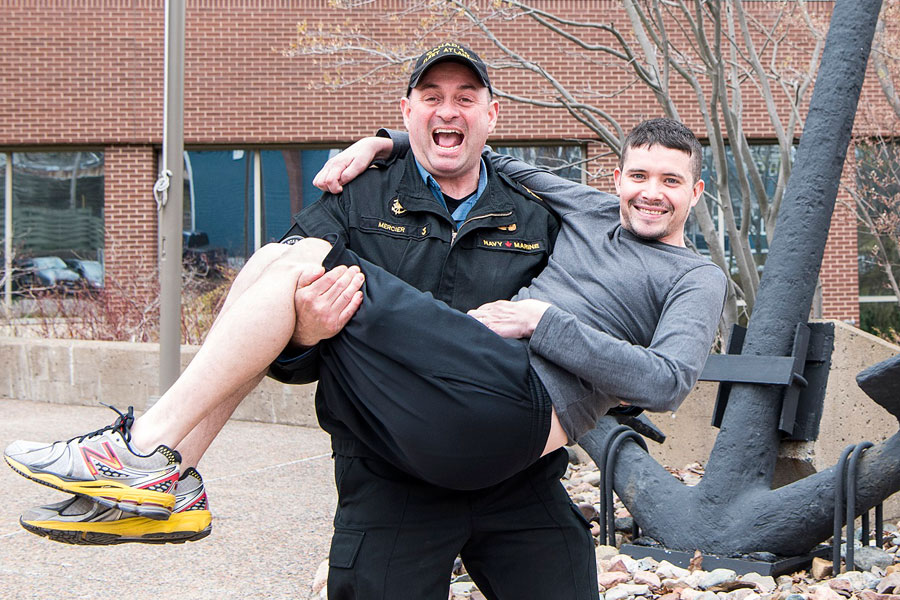
[caption id="attachment_16197" align="alignnone" width="450"] CPO1 Daniel Mercier, Fleet Chief Canadian Fleet Atlantic, lifts PO2 William Duff as part of the Give A Lift campaign. Replacing the Ice Bucket Challenge, this is the new fundraiser for ALS awareness. Photo by Mona Ghiz, Marlant Pa[/caption]Virginia Beaton, Trident ~Receiving a diagnosis of Amyotrophic Lateral Sclerosis (ALS) can change a life in a minute.So can a decision to participate in the Give A Lift for ALS campaign. This fundraiser, a follow-on to the wildly successful Ice Bucket Challenge two years ago, is a grassroots campaign to raise awareness of ALS. All money raised goes to fund research into the disease through the Adaptive Canuck ALS Foundation, a charitable foundation managed by Canadian ALS patients and their families. Tax receipts are provided.The Give A Lift challenge is asking for people to accept this challenge, especially between now and Father’s Day, June 17. The idea is to lift someone up, in as creative a way as possible, take a photo, and share it on social media. Nominate three friends to do the same, using #ALSlift and including alslift.org in the post.CPO1 Daniel Mercier recently took up this challenge. He chose to lift PO2 William Duff who was recently diagnosed with ALS. His wife is also military and the couple has two young children.

Kent Hehr

Minister highlights funding for veteran program

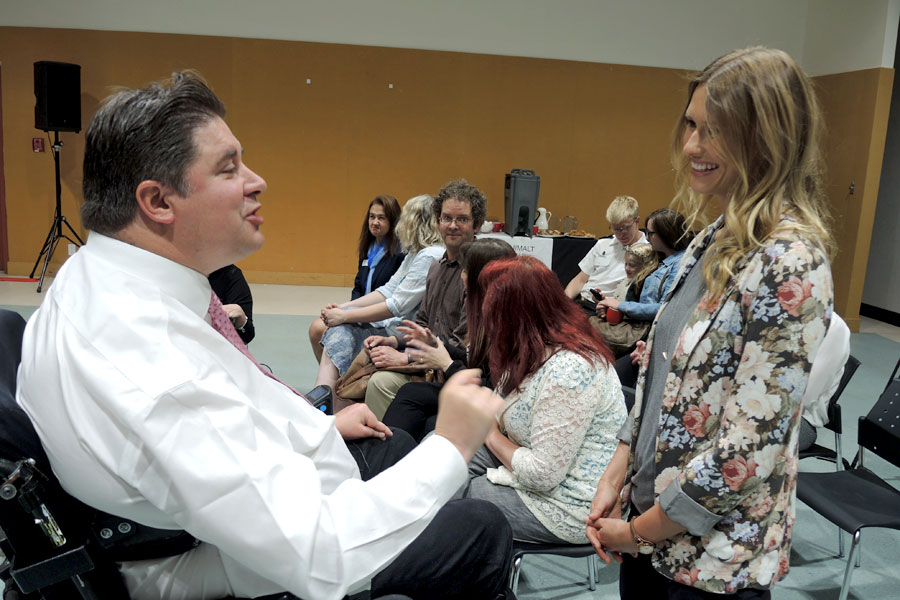
[caption id="attachment_16194" align="alignnone" width="450"] Kent Hehr, Minister of Veterans Affairs, meets with Military Family Resource Centre social worker Kaitlyn Ross during his visit to the Colwood Pacific Activity Centre May 30. Photo by Peter Mallett, Lookout[/caption]Peter Mallett, Staff Writer ~Last week, the Colwood Pacific Activity Centre played host to a Member of Parliament.Kent Hehr, Minister of Veterans Affairs, held a briefing at the centre to highlight the new role Military Family Resource Centres (MFRC) across the country will play in assisting medically-releasing veterans and their families.“The Military Family Resource Centres are the cornerstone of Canada’s military communities and it is the group of people in this room today that make the magic happen,” said Hehr. “By opening up Military Family Resource Centres across the country to veterans and their families we are emphasizing they always were, and still are a part of the military family.”The 2017 budget spells out additional resources for those who served in the Canadian Armed Forces, in particular, a Veteran Family Program for medically-releasing veterans. It was piloted at eight MFRCs, including Esquimalt, and will now be available at all 32 Centres.“We have participated in the pilot program for the past year-and-a-half,” said Kaitlyn Ross, a social worker who coordinates the MFRC Esquimalt’s Veteran Family Program. “As an organization, we will continue to provide transition support services for military families that need assistance.”Hehr, who also serves as Canada’s Associate Minister of National Defence, made note of the re-opening of nine regional Veteran Affairs Offices and the hiring of 400 support staff. He also outlined the government’s new financial commitment to veterans, families, and caregivers with the rollout of multiple new programs and supports that include: The introduction of the Family Caregiver Relief Benefit that offers in-home caregivers a $1,000 per month, tax-free benefit to those caring...

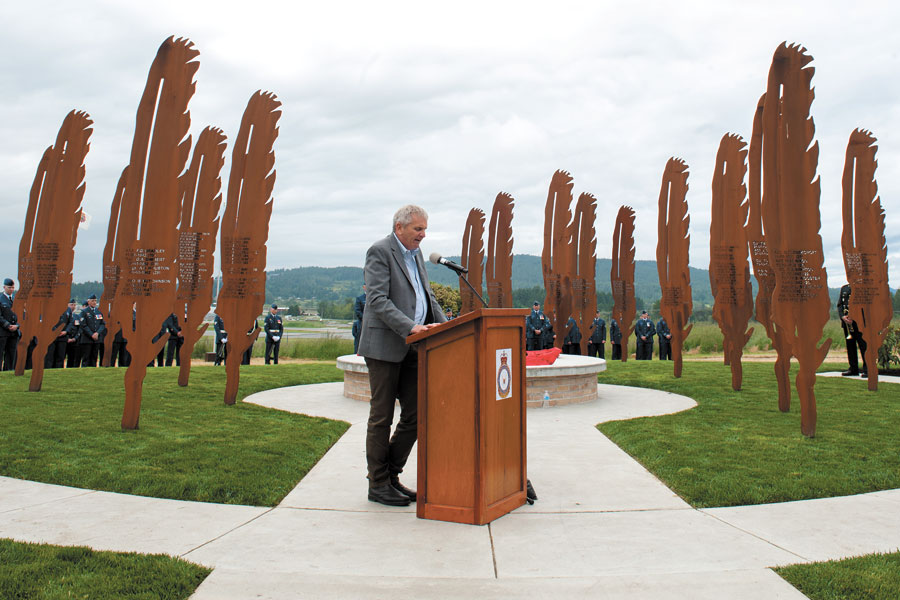
Sculptor Illarion Gallant speaks during the unveiling and dedication of the Hospital Hill Memorial Sculpture he designed called “Lost Airmen of the Empire” at the Victoria International Airport June 1. Photo by MCpl Chris Ward

Memorial sculpture unveiled

[caption id="attachment_16191" align="alignnone" width="450"] Sculptor Illarion Gallant speaks during the unveiling and dedication of the Hospital Hill Memorial Sculpture he designed called “Lost Airmen of the Empire” at the Victoria International Airport June 1. Photo by MCpl Chris Ward, MARPAC Imaging Services[/caption]Captain Peter Ryan, 12 Wing PAO ~Several hundred people attended a dedication June 1 on the north side of the Victoria International Airport, overlooking 443 Maritime Helicopter Squadron, for those posted to the Royal Canadian Air Force Station Patricia Bay, and who died during the Second World War.The memorial consists of 25, 12-foot high, Corten steel, Cooper’s Hawk feathers with the names and ages of each fallen member cut into the feathers.The memorial is located on Hospital Hill, named for the base hospital at the time.Over 5,000 personnel trained as pilots, navigators, armourers and mechanics as part of the British Commonwealth Air Training Plan. This was the third largest training centre of its kind in Canada at the time.A total of 179 people perished while posted to, or working at, RCAF Station Patricia Bay, or were aboard aircraft from that base.The occasion was marked by a Trooping of Colours by 443 Maritime Helicopter Squadron, remarks from dignitaries, and a flypast featuring a variety of RCAF aircraft.“It was an honour for 443 Squadron to be part of this event and to participate in the planning sessions leading up to the memorial dedication to the Lost Airmen of the Empire,” said LCol Shawn Williamson, 443 MH Squadron commanding officer. “This memorial overlooks 443 Squadron at Victoria International Airport and serves as a reminder of past sacrifices, and the important role our RCAF members in the maritime helicopter community carried out in the defence of Canada aboard Royal Canadian ships deployed on missions around the world. We are proud members of this...

Tax exemption for deployed members

Tax exemption for deployed members

DND ~Recognizing the commitment and sacrifice that Canadian Armed Forces members - and their families - make for Canada when a member deploys abroad, Defence Minister Harjit S. Sajjan, Finance Minister Bill Morneau, and Public Safety Minister Ralph Goodale have announced the Government’s intention to exempt the military salaries of all Canadian Armed Forces personnel deployed on named international operations from federal income taxes, up to and including the pay level of Lieutenant-Colonel.This tax relief would also apply to police officers deployed on international operational missions.This measure is part of a broader package of administrative changes and new measures included in Canada’s new Defence Policy, which will be made public on June 7, 2017.These changes ensure that Canadian Armed Forces personnel and police officers deployed on designated international missions are recognized for their sacrifice and that of their family.While the number of CAF personnel on deployed operations changes from day-to-day, there are currently approximately 1,450 Canadian Armed Forces personnel deployed on international military operations.The Government intends to make this measure retroactive to Jan. 1, 2017. These changes will not affect the assessment and awarding of existing hardship and risk allowances earned by Canadian Armed Forces personnel deployed abroad.

Explore More

Categories

Top News

E-Editions Archive

News Stories Archive

Proud Supporters

Joshua Buck, Lookout Newspaper