[wpml_language_selector_widget]
[searchwp_form id="1"]
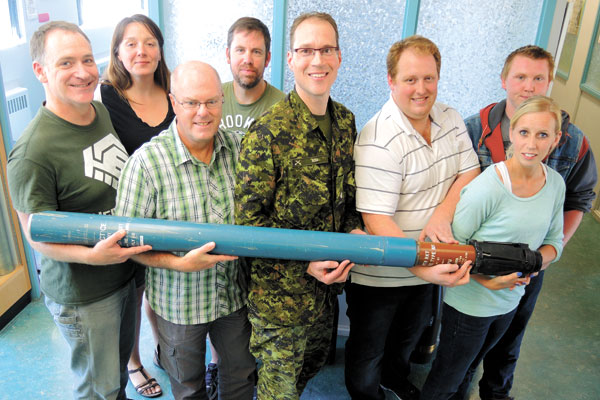
Civilian ammunition technicians in training (Left) Ed Cawley

Highly specialized apprenticeship program offered at Rocky Point

[caption id="attachment_13999" align="alignnone" width="400"] Civilian ammunition technicians in training (Left) Ed Cawley, Michelle Chowns, Tervor Marcotte, Scott Mathieson, Alfred Nelson and Kala Chaulk display a 100 mm Shield Practice Rocket at Rocky Point Ammunition Depot. They are joined by Rocky Point Commanding Officer Maj Jean-Luc Rioux (fourth from right) and Material Processing Officer Makr Field (third from left). Photo by Peter Mallett, Lookout[/caption]Peter Mallett, Staff writer ~A unique apprenticeship program at Canadian Forces Ammunition Depot Rocky Point will ensure there’s a cache of civilian ammunition technicians for the future.These highly specialized tradespeople are responsible for the maintenance, storage and cataloguing of an estimated 260 types of ammunition, plus the safe shipment to military units throughout British Columbia, and the loading of ammunition onto and off of Royal Canadian Navy warships.Currently, 53 civilian staff, including 30 ammunition technicians, two military Ammunition Technicians and two military Ammunition Technical Officers are employed at the depot.  Most of the civilian ammunition technicians work in the Ammunition Maintenance Facility or in the 23 long-term storage magazines, which are located on 500 acres on the southern tip of Vancouver Island.The earth-covered bunker-style magazines, which look like a series of small grassy hills, were built to ensure the force of any potential explosion would be directed upward, not outward. This means if one were to explode, the others would be safe.“There are two sides to storage; we have new ammunition arriving off contract and we have the ammunition we get back from ships and military units.  In either case, we are required to make sure they are in working order and can be stored safely,” explains Rocky Point Materiel Processing Officer Mark Field. “The other aspect is  periodic inspections, and scheduled maintenance.  It’s up to us to make sure nothing is going wrong with the material during...
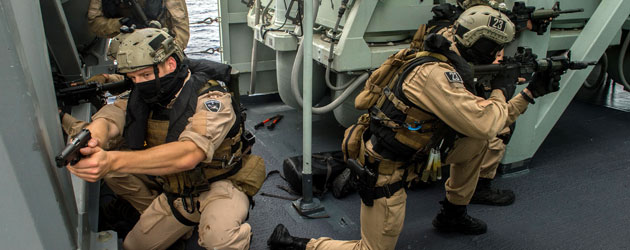
Photo by MCpl Alexandre Paquin

Changes to veterans income support benefits

[caption id="attachment_13996" align="alignnone" width="400"] Photo by MCpl Alexandre Paquin, Formation Imaging Services[/caption]DND ~The ongoing care, support and well-being of ill and injured Canadian Armed Forces (CAF) members, veterans and their families, is a high priority for the CAF, Department of National Defence (DND), Veterans Affairs Canada (VAC) and the Government of Canada. Whether our personnel are on the road to recovery, rehabilitation, returning to military duty, or transitioning to civilian life, the CAF is dedicated to assisting them through their challenging journey.All CAF members need to be aware of changes to VAC income support benefits that will take effect Oct. 1, 2016, as many personnel have questions about what this means for them and how they can apply to receive such benefits. This change will affect all veterans as well as ill and injured CAF members who may be medically released in the future.As announced in Budget 2016, funding for income support benefits for veterans in VAC’s Earnings Loss Benefit (ELB) program will be raised from 75 to 90 per cent of a veteran’s pre-release salary. Additionally, the benefit will be indexed so that it keeps pace with inflation. While VAC’s ELB income support benefits will increase, it is important to note that CAF Long Term Disability (LTD) benefits will not. It will remain at 75 per cent of a veteran’s pre-release salary and existing benefits will not be affected. Therefore, in order to be considered for the additional benefit, people must apply to VAC.Note that the Service Income Security Insurance Plan (SISIP) administers the CAF LTD policy on behalf of the Chief of the Defence Staff and Manulife is the insurer. As the employer sponsored group disability plan, CAF LTD is first payer for benefits and remains among the best LTD plans offered in the country.Veterans or those medically...

A view of the 1890s shell store houses located on Esquimalt Harbour’s Cole Island. Photo courtesy of Province of B.C. Heritage Branch

Pair of Cole Island buildings slated for renovation

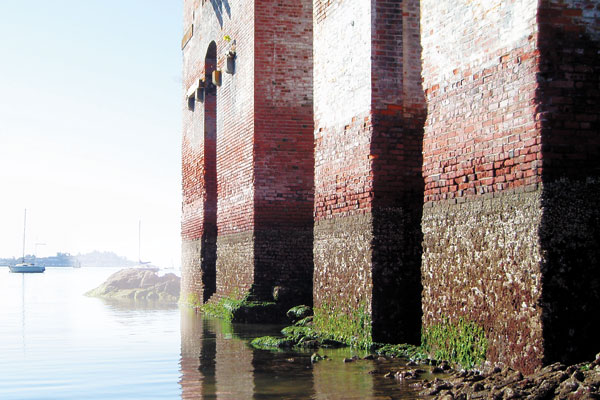
[caption id="attachment_13993" align="alignnone" width="400"] A view of the 1890s shell store houses located on Esquimalt Harbour’s Cole Island. Photo courtesy of Province of B.C. Heritage Branch[/caption]Peter Mallett, Staff Writer ~A historical ammunition depot, located on the tiny, rocky outcrop in Esquimalt Harbour called Cole Island, is being restored.More than 150 years ago, the remote island was chosen to house ammo because of its distance from the naval hub, and was named after Edmond Picoti Cole, master of HMS Fisgard. By the end of the Second World War the depot was no longer required.The island has been undergoing a transformation since 2006 when it was recognized as a National Historic Site by the Historic Sites and Monuments Board of Canada.Prior to that point, the 150-year-old buildings had fallen into a state of disrepair as the area was visited by partiers, vandals and those wanting to dump their refuse.The two brick and timber buildings at the heart of this phase of restoration were built around 1859 and once housed shells and other ammo.The Province of British Columbia, the custodian of the Cole Island,  and Parks Canada are pumping $200,000 into the renovation, with upgrades being carried out under the guidance of B.C.’s Ministry of Forests Lands and Natural Resource Operations Heritage Branch.The branch is currently researching what the two buildings looked like by sifting through old navy correspondence, reviewing 1940s era RCAF aerial photographs, and hearing from residents and employees who frequented the site through the Friends of Cole Island network.“We want to find out how far the balconies, which were used to load ammunition, extended into the water and what the buildings looked like from the seaward side,” says Richard Linzey, Heritage Branch manager. “We have begun to mobilize and get on the island to do the work, so any new...

Members of HMCS Uganda and HMCS Quebec Veterans Association pose for a group shot during a tour of HMCS Ottawa

Veterans association holds last reunion at CFB Esquimalt

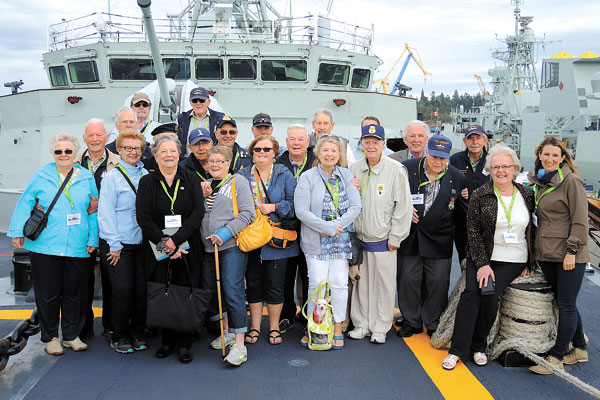
[caption id="attachment_13990" align="alignnone" width="400"] Members of HMCS Uganda and HMCS Quebec Veterans Association pose for a group shot during a tour of HMCS Ottawa, Sept. 16, 2016. Photo by Peter Mallett, Lookout[/caption]Peter Mallett, Staff Writer ~They reminisced, raised a tot of rum and then said their heartfelt farewells as members of HMCS Uganda and HMCS Quebec Veterans’ Association held their final reunion at the Base from Sept. 16-18.Fourteen veterans and 16 of their family members travelled from across Canada for one last weekend to recall their days aboard the Colony-class light cruiser that was transferred to the Royal Canadian Navy in October 1944 as HMCS Uganda and then renamed HMCS Quebec during its recommissioning in 1952.Their weekend in Victoria included a tour of the CFB Esquimalt Naval and Military Museum, lunch at the Esquimalt legion, a tour of HMCS Ottawa, dinner at the Wardroom, a church service at St. Andrew’s Chapel/Christ the Redeemer and then a traditional Up-Spirits where a toast was offered to each sailor.While aboard Ottawa the veterans marvelled at the evolution of naval warfare.“It’s surprising how far the level of technology for armaments has advanced,” remarked 91-year-old AB (Ret’d) Hugh Murray of London, Ont., who joined the RCN at the age of 17 and served as a gunner on Uganda from 1944 to 1945. “The 3.5 mm guns aboard Ottawa can fire 220 shells per minute while the guns we used could fire about 14. It’s quite a contrast.”Uganda was not only the RCN’s flagship but the only one to serve against Imperial Japan during the Second World War.  Murray said the ship took on enemy fire multiple times and was attacked by Kamikaze pilots on three separate occasions. Other moments that stood out for him included the vessel’s participation in the bombardment of Truk Island during...

Members of the then named Canadian Forces Personnel Support Agency

CFMWS celebrates 20th anniversary

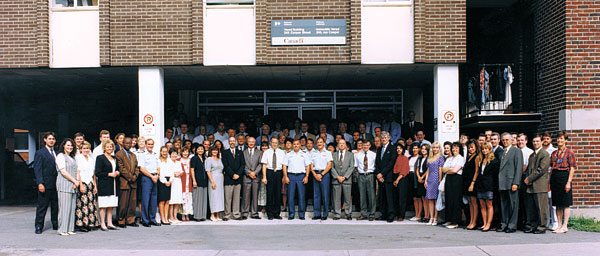
[caption id="attachment_13987" align="alignnone" width="540"] Members of the then named Canadian Forces Personnel Support Agency, now the Canadian Forces Morale and Welfare Service, pose outside their headquarters in Ottawa in 1996. The organization is celebrating their 20th anniversary this year. Photo courtesy of CFMWS[/caption]CFMWS ~This year, Canadian Forces Morale and Welfare Services (CFMWS) is celebrating 20 years of unrelenting dedication to helping Canadian Armed Forces members and their families with services that are tailored to handle many unique aspects of the military lifestyle.It was on Sept. 3, 1996, that the Canadian Armed Forces (CAF) and the Department of National Defence implemented a VCDS Instruction that launched the provision of Personnel Support Programs through a Non-Public Property (NPP) delivery model.Prior to Unification of the CAF, virtually all NPP activities were controlled and managed at the local level.  However, the idea of a common system of NPP control and administration was recommended back in 1966 in a study conducted by Rear Admiral C.J. Dillon. Years later, the concept of delivering morale and welfare programs through a combination of Public and NPP resources was introduced and approved. These defining actions opened the door to a concerted morale and welfare program delivery in the CAF and greatly impacted the direction that led to the birth of the present thriving model that is in place now.By merging PSP services with those offered by CANEX, SISIP Financial and NPP administration, the Canadian Forces Personnel Support Agency (CFPSA), the precursor to today’s CFMWS, was created. Later, administration of Military Family Services and Casualty Support Management were added to CFMWS’ mandate to become a unified organization and the service provider of choice for the military community.In the 20-year span of CFMWS’ existence, more than just the name has changed; however, its mandate has remained constant throughout. To echo the...

HeroWork volunteers swing their pick axe and shovels while performing landcaping work as part of their Radical Renovation of the Rainbow Kitchen on the grounds of the Esquimalt United Church. Photo by Tom Gore

Military and community come together for radical renovation

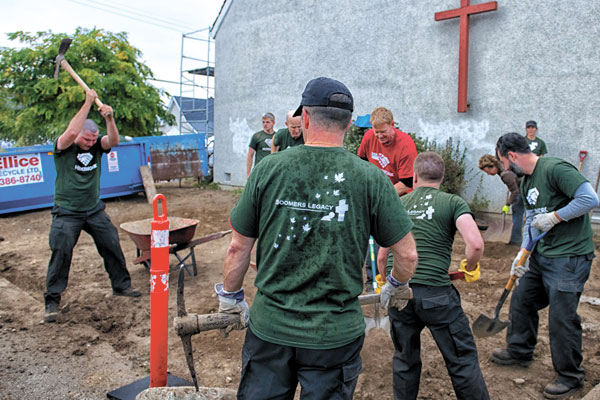
[caption id="attachment_13984" align="alignnone" width="400"] HeroWork volunteers swing their pick axe and shovels while performing landcaping work as part of their Radical Renovation of the Rainbow Kitchen on the grounds of the Esquimalt United Church. Photo by Tom Gore, HeroWork[/caption]Peter Mallett, Staff Writer ~Military personnel and civilians worked side-by-side battling wet and muddy conditions during the opening weekend of a massive renovation project at Esquimalt’s Rainbow Kitchen.The $500,000 ‘Radical Renovation’ being carried out by local non-profit charity HeroWork, at the Esquimalt United Church facility on Admirals Road, kicked off on the evening of Sept. 16. The community-driven building project is similar to an old-fashioned barn-raising or the quick-turn-around home rebuilding work done by Habitat for Humanity. It uses large numbers of volunteers to get large-scale construction projects done quickly.The kick-off began with volunteers marching from the Canteen Road parking lot to the job site with a police escort and musical accompaniment provided by the Naden Band. After a warm welcome, some words of encouragement by organizers and stakeholders and a complimentary fully-catered barbeque, approximately 150 volunteers rolled up their sleeves and began work on the first phase of the project. Some of the initial work performed included a massive landscaping project on the church’s grounds, stripping the roof of its shingles and gutting portions of the inside of the building.“The level of assistance we received from CFB Esquimalt was amazing,” said HeroWork founder and executive director, Paul LaTour. “The fact that they all showed up on a Saturday morning with smiles on their faces when it was pouring rain, got soaked to the bone and covered in mud, but continued to work, helped us move the project forward without any major delays.”The project’s military liaison, Lt(N) Colin Dudeck, said the enthusiasm and encouragement from organizers and stakeholders made the unpleasant weather...

A message from the Base Commander: NDWC C2016

I remain very pleased to continue on in the role of Chair for your 2016 National Defence Workplace Charitable Campaign (NDWCC).  It is inspiring to be part of such a dedicated team of volunteers and donors! Having had the opportunity to serve as your Chair for two full campaigns, I can tell you from experience that it is immensely rewarding to be part of such a worthy effort.Although we remain part of the overall Federal Government charitable campaign (GCWCC), DND has rebranded to National Defence Workplace Charitable Campaign (NDWCC) to better identify with our very own National Defence community and the close ties we have with the charities we support in our local communities where we reside, volunteer and raise vital funds annually.Our primary goals for the 2016 NDWCC will continue to be all inclusive canvassing, ensuring that our defence community receives accurate and helpful information regarding our workplace campaign and increasing levels of participation through both volunteerism and donations.Of course we must also remember to celebrate our successes and share the stories of individuals who have been helped – many of whom are now giving back and nurturing that continuous circle of caring and philanthropy.  It is so important to take time to reflect on how each of us is touched, directly or indirectly, by charitable community, social, and health organizations.  Your participation, whether through the United Way of Greater Victoria, Healthpartners, or your individually chosen charities, continues to make substantial and fundamental improvements for so many lives on a daily basis.I encourage all of you to think about how you might support your charitable campaign. We hope to see you participate in some of the many fun events that will occur over the course of the next few months, such as Dress with a Difference Fridays, the DND/Royals...

HMCS Charlottetown’s Chiefs (from left to right) CPO2 Kent Ellerbeck

HMCS Charlottetown ‘pushing up’ awareness at sea

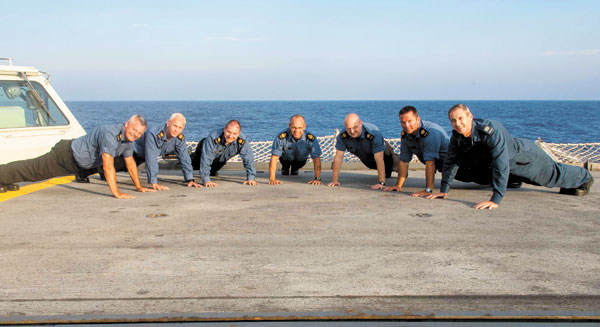
[caption id="attachment_14022" align="alignnone" width="400"] HMCS Charlottetown’s Chiefs (from left to right) CPO2 Kent Ellerbeck, CPO2 Robert Embree, CPO2 Dave Skinner, ship’s Coxswain CPO1 Anthony Greig Bishop, CPO2 Mathew Boniface, CPO2 Kevin Reid and MWO Mike Windsor participate in the 22 Push-up Challenge on the flight deck during OP Reassurance in the Mediterranean Sea. Photo by Cpl Blaine Sewell, Formation Imagery Services[/caption]Lt(N) Bill King, HMCS Charlottetown ~On Aug. 19, our Defence Minister, the Honourable Harjit Sajjan, posted a video to his Facebook page showing him doing 22 pushups as part of a campaign to raise awareness of the high suicide rate among Canadian and American Armed Forces members, veterans and first responders.Statistics gathered in the United States in 2013, revealed that an average of 22 veterans committed suicide each day. Here in Canada, we lost 160 veterans to suicide between 2004 and 2014, more than the total number of Canadian Armed Forces members killed in Afghanistan.The challenge – film yourself doing 22 pushups a day for 22 days and nominate others to do the same.The Commanding Officer and crew members on board HMCS Charlottetown were challenged by friends and former shipmates to support the cause while deployed in the Mediterranean Sea. In a video of almost half the ship’s company doing pushups on the flight deck, Commander Andrew Hingsten said, “The 22 Pushup Challenge is intended to raise national awareness of the high number of veteran suicides, and the associated mental health issues. Unfortunately, these issues are all too real in our line of work. I looked for 21 friends to participate, but I found so many more.”

Tyrone Pile

Pearson’s new VP a naval veteran

[caption id="attachment_13829" align="alignnone" width="240"] Tyrone Pile[/caption]Danielle Pope, Pearson College ~Tyrone Pile is accustomed to leading. He served Canada and the Royal Canadian Navy for more than 35 years in various capacities, from Commander of the naval frigate HMCS Regina, to Rear-Admiral and Commander of Maritime Forces Pacific.While the military lifestyle left Pile and his family used to moving locations rather than staying in one place (17 moves, to be exact), he finds a surprise twist in his new position at Pearson College as he will be working very close to home.Since marrying his Metchosin-raised wife, Debra in 1980, Pile and his family have bounced between various locations across Canada with the hope to someday settle down on Vancouver Island. Now, as Pearson’s Vice President of Operations and Administration, he’s set his anchor firmly in a most favoured location.His career started near Pearson back in 1975 when he left the small gold-mining town of Geraldton, ON, to attend Royal Roads Military College (now Royal Roads University) in Victoria. His interest in engineering was overtaken by a love of writing, history and the humanities, leading to an Honours Degree in English and graduation from Royal Military College in Kingston, ON, in 1979.He believed great lessons sat waiting in those history texts, but it would be a decade before Pile returned to school on a navy scholarship, earning his Master’s Degree in History at the University of Victoria.“A lot of wisdom can be gained in trying to learn from those who’ve learned before you,” he says. “Integrated learning includes learning from the past.”In his new role, Pile will report to the President and be responsible for finance, operations, human resources, revenue generation and legal matters at Pearson College.“What I see at Pearson is tremendous potential,” he says. “It’s a talented, committed and resourceful...

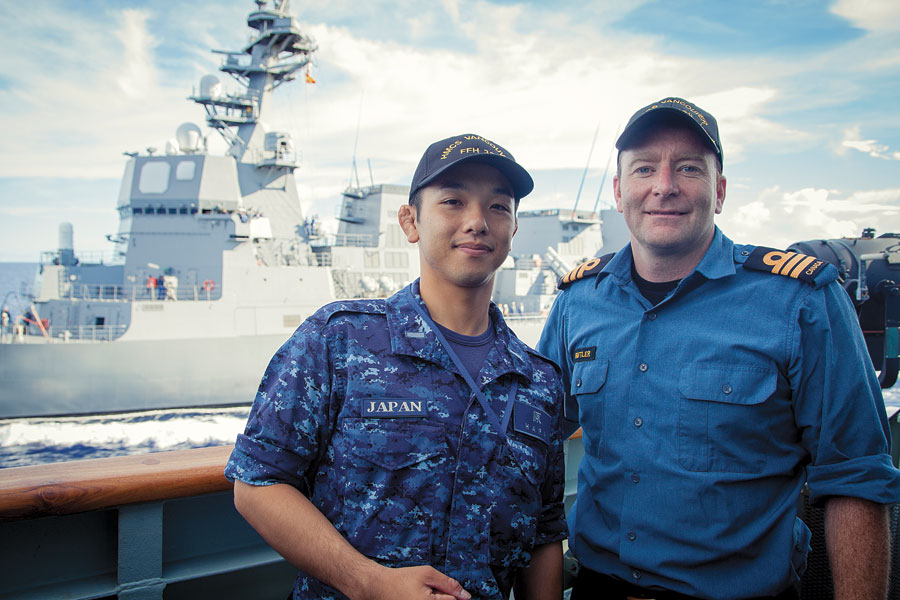
Ensign Yusuke Hara meets Commander Clive Butler during a CrossPol exercise while Vancouver transits in company of Japanese Maritime Self-Defense Force ship Fuyuzuki.

HMCS Vancouver Arrives in the Land of Plenty

[caption id="attachment_13825" align="alignnone" width="400"] Ensign Yusuke Hara meets Commander Clive Butler during a CrossPol exercise while Vancouver transits in company of Japanese Maritime Self-Defense Force ship Fuyuzuki.[/caption]HMCS Vancouver arrived in Darwin, Australia, last week to take part in Exercise Kakadu 2016, Australia’s largest international maritime exercise.The ship began its transit to Australia last month following participation in RIMPAC off the coast of Hawaii. While en route they stopped for a port visit in Guam before completing the transit alongside Japanese Maritime Self-Defense Force Ship Fuyuzuki, participating in joint training along the way.Kakadu aims to strengthen mutual understanding and interoperability and will see Vancouver showcase advanced surface gunnery capabilities designed to better protect sailors and warships operating in littoral waters.There are 19 nations taking part in the exercise from Sept. 12-24: Australia, Canada, Fiji, France, India, Indonesia, Japan, Malaysia, New Zealand, Pakistan, Papua New Guinea, Philippines, Republic of Korea, Singapore, Thailand, Timor Leste, Tonga, United States of America and Vietnam.Upon completion of Kakadu, Vancouver will embark on WestPloy 2016. This deployment will further allow the ship to engage in a variety of training opportunities with foreign navies while also visiting several countries in the Asia-Pacific region before returning to Esquimalt at the end of the year.

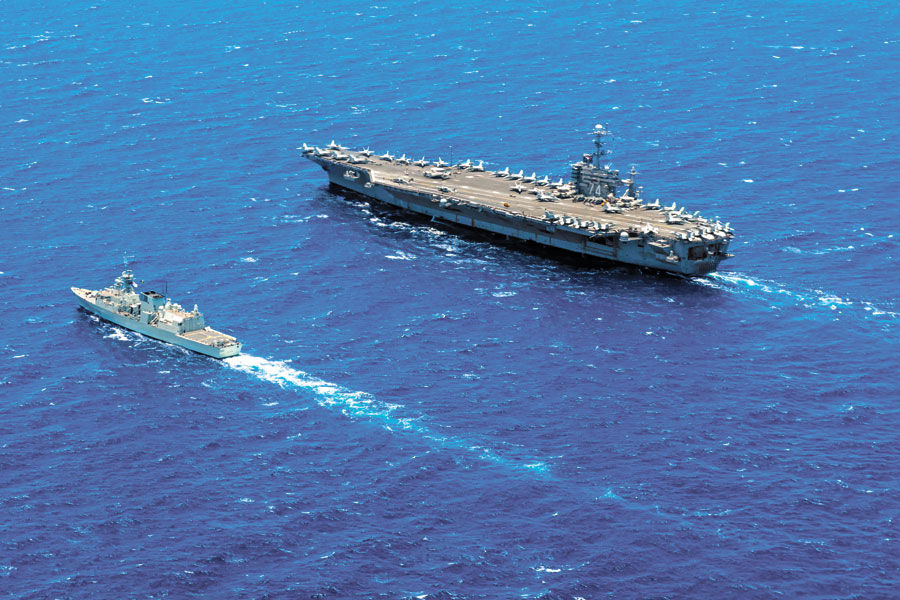
RCN Halifax-class frigate HMCS Calgary steams alongside Nimitz-class aircraft carrier USS John C. Stennis during RIMPAC 2016. Photo by U.S. Navy Mass Communication Specialist 3rd Class Sierra D. Langdon

Canadian Sea Combat Commander’s RIMPAC role

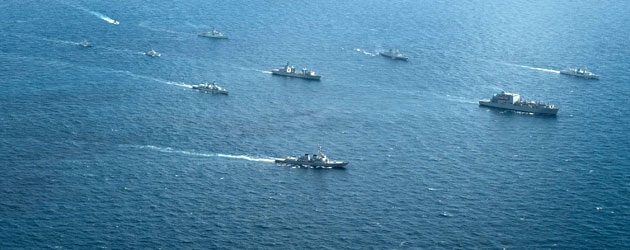
[caption id="attachment_13822" align="alignnone" width="400"] RCN Halifax-class frigate HMCS Calgary steams alongside Nimitz-class aircraft carrier USS John C. Stennis during RIMPAC 2016. Photo by U.S. Navy Mass Communication Specialist 3rd Class Sierra D. Langdon[/caption]Lt(N) Stuart MacDonald, SCC Battle Watch Officer ~RIMPAC 16 provided an opportunity for the Royal Canadian Navy (RCN) to achieve an historic first by assuming the role of Sea Combat Commander (SCC), embarked in HMCS Calgary with its integrated command suite, from July 11 to Aug. 2.During the world’s largest maritime exercise, the SCC led by Capt(N) Jason Boyd, Director New Capability Introduction, and supported primarily by Canadian Fleet Pacific staff was given the responsibility for defending the aircraft carrier USS John C. Stennis from surface and sub-surface opposed units, as well as planning and executing offensive strikes both on the surface and in the air.“It was an honour to fulfill the role of SCC and act in the capacity of Destroyer Squadron Twenty-One for USS John C. Stennis,” said Capt(N) Boyd.The SCC had the opportunity to assume the role of Commander Task Group 170.1 consisting of nine ships divided in two separate Surface Action Groups, from several countries including the U.S., Australia, Korea, Singapore, Chile and India.Over the course of the exercise French and Indonesian warships were also attached, along with other allied nations, swelling the number of ships to 15, all integrated into a single Carrier Strike Group supporting Stennis.Unlike Destroyer Squadron staff, which conduct their leadership from the Carrier, the smaller-in-numbers RCN staff would further be challenged by being separated from Stennis to execute its role as SCC from onboard Calgary.The command suite integrated into Calgary through the Halifax Class Modernization refit provided multi-function consoles and large screen tactical displays. They allowed SCC and the Battle Watch Officers and Chiefs to maintain full situational awareness...

A display of E.J Hughes sketches and the finished painting entitled Armoured Car

E.J. Hughes art on display at museum

[caption id="attachment_13818" align="alignnone" width="400"] A display of E.J Hughes sketches and the finished painting entitled Armoured Car, painted in 1946, are on display at the Ashton Armoury Museum. Hughes was a Second World War artist and the painting pictured above shows an armoured car receiving maintenance by a Royal Canadian Dragoons’ member. Photos by Jazz Campbell[/caption]Peter Mallett, Staff Writer ~Sketches from renowned Canadian artist E.J. Hughes have returned home to the Ashton Armoury Museum in Victoria after being on display in July and August at Frameworks art gallery in Duncan.While Hughes was best known for his land and seascapes, these 20 sketches are from his brief career as a military artist during the Second World War.Hughes’ conceptual sketches, which he envisioned in Kiska, Alaska, the site of the Battle of Kiska, were a popular attraction in Duncan says Museum Director Ted Leaker.“People were astonished because they never thought they would see something like this,” he says. “One attendee said they never really understood how Hughes got to his final product, so these sketches reveal how he developed his concept on canvas.”Born in 1913, Hughes was a gunner with the Royal Canadian Artillery during the first years of the Second World War. He then served as one of Canada’s official war artists between 1943 and 1946, sharing with Canadians the sacrifices made by the men and women of the Canadian Armed Forces.After the war, Hughes became better known for his non-military paintings, including his painting of Lake Okanagan that fetched over $402,000 at an auction in 2007.“Many visitors to the museum were surprised to learn he also did military paintings, but this work is well known in Canada’s military communities,” says Leaker.The collection was donated by HCol (Ret’d) F. Roseborough of 11 Field Ambulance Victoria. The museum is open to the...

DND announces first major tender for CFB Esquimalt harbour infrastructure

News ReleaseDND announces first major tender for CFB Esquimalt harbour infrastructureSeptember 21, 2016 – Esquimalt, British Columbia – National Defence / Canadian Armed ForcesThe Government of Canada is committed to providing the sailors of the Royal Canadian Navy with the modern, functional facilities they need to complete important operational missions on behalf of Canadians. The Department of National Defence (DND), through Defence Construction Canada, has issued a tender that will mark the beginning of the second phase of a major project to replace the two main operational berthing facilities for Royal Canadian Navy ships at Canadian Forces Base (CFB) Esquimalt in British Columbia.The ongoing A/B Jetty Recapitalization Project, an infrastructure initiative first announced in 2013, is intended to provide Maritime Forces Pacific with modern, versatile and structurally sound berthing facilities for Canada’s current and future Pacific Naval Fleet. The project also has the potential to create 1,400 jobs throughout the duration of work.The current tender, estimated at $72 million, involves the demolition of the existing “B” Jetty at Her Majesty’s Canadian (HMC) Dockyard Esquimalt and site preparation work. Future work will involve the rebuilding of “B” Jetty and then the demolition and rebuilding of “A” Jetty. DND has budgeted $781 million to deliver the A/B Jetty Recapitalization Project.Both jetties are used for berthing operational warships leaving for or returning from missions at sea. Built more than 70 years ago, they are well past their intended service life and poorly suited for modern naval vessels. The rebuilding of these important structures represents the most significant engineering undertakings in this area of the Esquimalt Naval Dockyard since World War Two.QUOTES“Modern and functional ship-berthing facilities are essential to meet the operational missions of the Canadian Armed Forces and the needs of the Royal Canadian Navy. The long history of Esquimalt Harbour, which has been closely associated with the presence of the Royal Canadian Navy for over 100 years, is about to enter a new era.”– Defence Minister Harjit S. Sajjan“The Navy’s existing ‘A’...

Photos by Shelley Fox

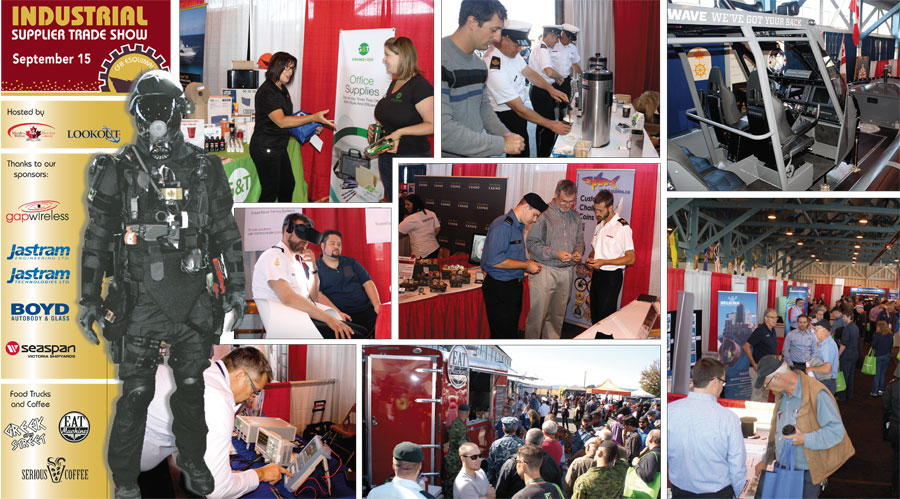
Industrial Supplier Trade Show

[caption id="attachment_13814" align="alignnone" width="450"] Photos by Shelley Fox, Lookout[/caption]There was much to see at the Industrial Supplier Trade Show Sept. 15 at the Naden Drill Shed. For example, a Titan boat, 10 metres in length, with the entire cockpit suspended on high speed wave impact technology produced by Shockwave was a huge draw. Not to mention the virtual reality demo from Racerocks 3D and so many other examples of modern technology on display. Show-goers also enjoyed Serious Coffee, and a free lunch from two food trucks. Attendance was high, with more than 900 DND employees making it out to the event.Click here for more photos of the event!

Photo taken for a Naval Security Team recruitment poster

New naval security team set to enhance force protection

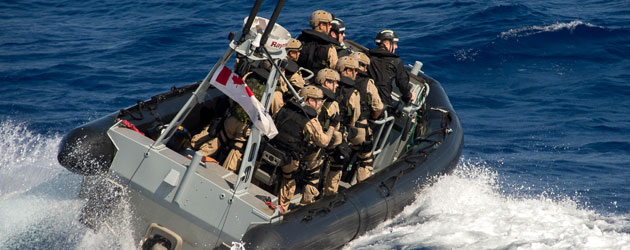
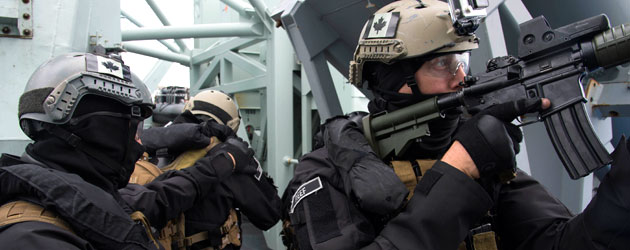
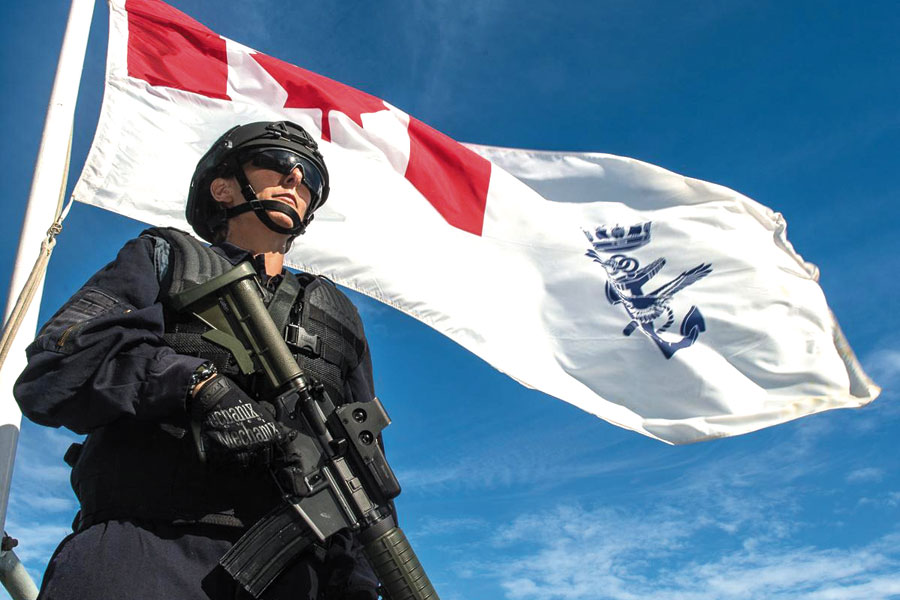
[caption id="attachment_13810" align="alignnone" width="400"] Photo taken for a Naval Security Team recruitment poster, Sept. 7 on HMCS Edmonton. Photo by Cpl Andre Maillet, MARPAC Imaging Services[/caption]Darlene Blakeley, Navy Public Affairs Ottawa ~In an effort to enhance the safety and security of its ships and personnel while on deployment, the Royal Canadian Navy (RCN) is developing a new capability called the Naval Security Team (NST), designed to support specific missions.The NST will be composed primarily of naval reservists and will include a full-time command team to ensure personnel, training, and equipment are available for deployment.“The NST starts with a command and support cell, and then has other teams attached, like Lego blocks, as the mission dictates,” explains Commander Jeffrey White, Officer-in-Charge of the NST concept. “These attached layers will include a security or force protection section, a tactical boat section, a mobile repair team and intelligence support.”The team’s task will include port force protection and host nation liaison, along with support and intelligence requirements in foreign ports.After selection, the team of approximately 30 to 50 personnel will be trained to meet specific mission requirements. For most force protection missions, this will include use of force, rules of engagement training, more advanced weapons training, small boat tactics, communications, deployed logistics and liaison skills.Cdr White says the force protection burden placed on a ship’s company when deployed can be challenging to maintain over time and reduces the availability of personnel to support other tasks, such as maintenance.“NST seeks to support and help address this deficiency by providing an extra layer of force protection,” he says. “This capability requires short-term commitments that fit well into the lifestyle of part-time reservists, allowing our Naval Reserve to fulfill another role in the defence of Canada.”During the recent Rim of the Pacific (RIMPAC) exercise, a small group...

Explore More

Categories

Top News

E-Editions Archive

News Stories Archive

Proud Supporters

Joshua Buck, Lookout Newspaper