RIMPAC 2016
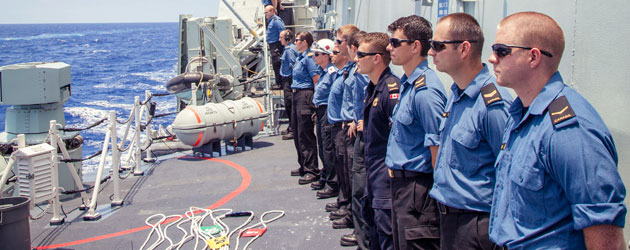
[caption id="attachment_13280" align="alignnone" width="540"] Photo: LS Sergej Krivenko, HMCS Vancouver[/caption]HMCS Vancouver's RAS team forms up on the starboard bridge wing during RIMPAC 16 on July 22.
[caption id="attachment_13280" align="alignnone" width="540"] Photo: LS Sergej Krivenko, HMCS Vancouver[/caption]HMCS Vancouver's RAS team forms up on the starboard bridge wing during RIMPAC 16 on July 22.

Rachel Lallouz, Staff Writer ~Youth attending Personnel Support Programs’ (PSP) Fun Seekers Day Camps this summer have the opportunity to create art for a special picture book, “A Pollen Fairy Named Squirt.”The book is authored by Fay Maddison, CEO and President of the Natasha’s Woods Foundation.The book is one of four written by Maddison, and supported by her foundation. It embodies a fantastical and magical main character with the ability to overcome everyday life challenges that children of first responder families may face. These challenges include having a loved one suffer from Post-Traumatic Stress Disorder (PTSD), or amputation, or the death of a loved one in service.This particular book features a tiny pollen fairy that gets moved or “posted” frequently.Like her books, Maddison’s foundation aims to raise awareness of and unconditional support for the mental wellness of children in both first responder and military families. The charity focuses on harnessing the power of story-telling and the arts to generate resources required to provide programs and support services for children affected by their parents’ service.During PSP’s Fun Seekers Summer Camps Ryan Anderson, Manager for Community Recreation at CFB Esquimalt, says children will read “A Pollen Fairy Named Squirt” and then be asked to draw a picture interpreting the story.The pictures will be submitted to the Foundation for possible inclusion in the book.Original art selected will best depict the storyline, explains Maddison, and the work of multiple young artists will be included in the book.“Sales of this children and youth illustrated picture book series will always give back to children and youth services programs,” says Maddison, who notes that the books will create a legacy by children, for children.In partnership with PSP, the Natasha’s Wood Foundation will also provide funds for grants that PSP Recreation departments can apply for to organize and...
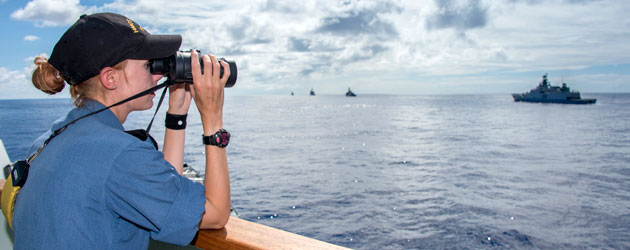
[caption id="attachment_13277" align="alignnone" width="540"] Photo: MCpl Mathieu Gaudreault, CF Combat Camera[/caption]A sailor from HMCS Calgary observes the gun firing exercise during RIMPAC 16 on July 18.
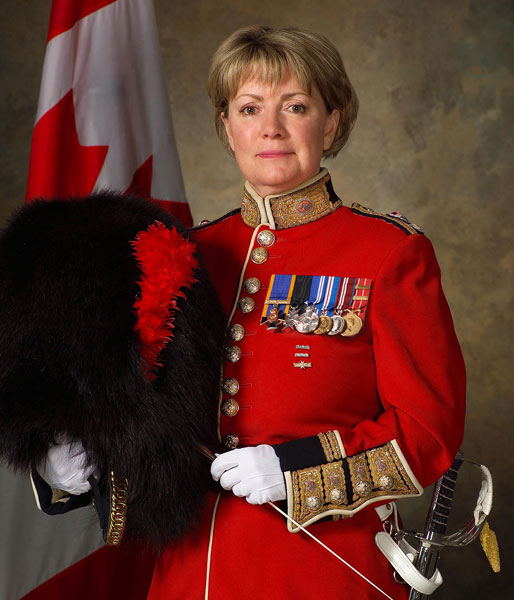
[caption id="attachment_13285" align="alignnone" width="257"] Lieutenant Colonel Frances Chilton-Mackay Photo by CFSU (O) Photo Services[/caption]Jeanne Gagnon, Guard of Honour ~July 21, 2016Ottawa, Ontario — Without fanfare, Lieutenant Colonel Frances Chilton-Mackay is retiring from the Canadian Armed Forces at the end of July as she is turning 60, the CAF’s mandatory retirement age. She said she has no specific retirement plans aside from travelling and spending more time with her grandchildren.She retires as the first female Director of Music of the Regimental Band of the Governor General’s Foot Guards, a role she took over in 2005. LCol Chilton-Mackay also taught instrumental music with the Ottawa-Carleton District School board high schools for 14 years.“I have had two wonderful careers – being a music teacher in the public school system and being in the military as a military musician and Director of Music,” said LCol Chilton-Mackay. “With the Canadian Armed Forces, I gained an expertise in military music. Just the opportunity to bring military music to the forefront – as part of our ceremonial events, particularly for the Army, was an outstanding experience.”She began her military career 40 years ago when she enrolled as a Reserve musician with the 7th Toronto Regiment, Royal Canadian Artillery Band while in university. She plays the clarinet. She joined the Governor General’s Foot Guards Band when she moved to Ottawa in 1985. LCol Chilton-Mackay was eventually named the band’s Director of Music, which she said represents a significant achievement.“It’s been almost 11 years that I have been a conductor of the band,” she said. “I took what had previously been a man’s world and was thrilled to have been named the first female conductor of this very fine band.”In her daytime role as the Army Major Events Planner, she has organized many events, including the annual Army Ball...
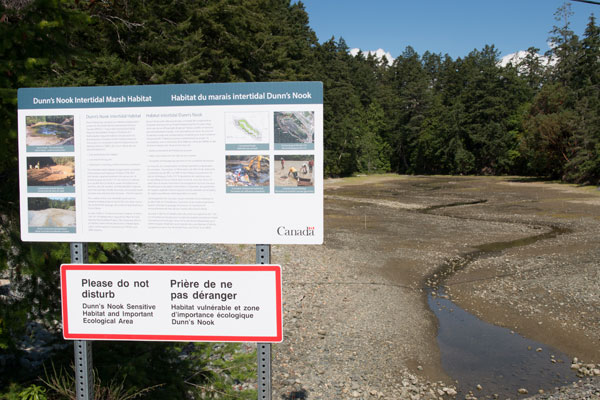
[caption id="attachment_13232" align="alignnone" width="300"] Image of Dunn’s Nook Fish Habitat project, taken at F Jetty, CFB Esquimalt. Photo by LS Ogle Henry, MARPAC Imaging Services[/caption]Lorraine Crinkley, FSE ~Public Works Government Services Canada (PWGSC) and Formation Safety and Environment (FSE) were onsite July 18 at Colwood for the unveiling of the Dunn’s Nook Fish Habitat Compensation Project.The project created intertidal marsh habitat at Dunn’s Nook located adjacent to F jetty in Colwood.As part of the PWGSC’s Esquimalt Graving Dock Waterlot Remediation Project, the Dunn’s Nook habitat was created to offset impacts caused by project activities.As part of the agreement, PWGSC cleaned up a contaminated site within Dunn’s Nook, improved the local habitat, and will transfer any surplus habitat credits to DND for application on future marine capital projects. Dunn’s Nook had been impacted by human activity since the mid 1900s when Wilfert Road and the culverts beneath it were constructed. This original development restricted tidal flow and passage of fish and other marine life into the marsh, and caused standing water to remain during low tide events. This resulted in anoxic, low quality fish habitat that had the potential for stranding and killing fish.Intertidal marsh area in Esquimalt harbour is a rare feature, and successful re-establishment of this habitat would be a substantial contribution to local biodiversity. Salt marshes are one of the most productive ecosystems on earth; they act as nurseries for plant and animal species, provide food and habitat for birds and other wildlife, slow shoreline erosion, absorb excess nutrients, and help to protect coastal areas from flooding.The Dunn’s Nook Fish Habitat Compensation Project began with the completion of several site assessments including a tidal flow assessment, chemical analysis of soils, and archaeological assessment to ensure the protection of nearby archaeological site DcRu-137.Once the assessments were completed, 930m3 of...
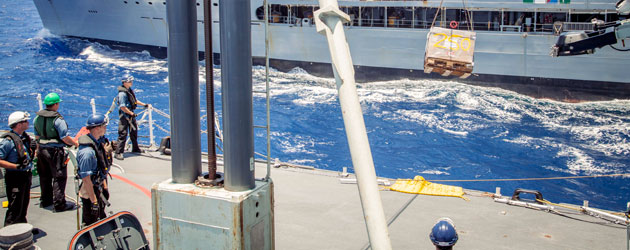
[caption id="attachment_13274" align="alignnone" width="630"] Photo: LS Sergej Krivenko, HMCS Vancouver[/caption]USNS Henry J. Kaiser delivers supplies to HMCS Vancouver's forecastle during a replenishment-at-sea for RIMPAC 16 on July 22.
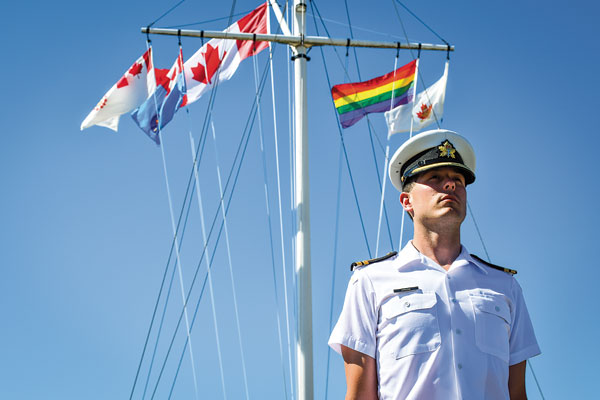
[caption id="attachment_13227" align="alignnone" width="300"] Lt(N) Brian Broom[/caption]Rachel Lallouz, Staff Writer ~In recognition of Lesbian, Bisexual, Gay, Transgender and Queer Pride Month, the iconic Rainbow Flag was flown for the first time during the opening summer parade at HMCS Quadra Cadet Training Centre.More than 800 cadets and staff were in attendance as the colourful flag waved in the wind overhead.Lieutenant (Navy) Brian Broom, a B.C. Course Officer for Drill and Ceremonial, organized the Rainbow Flag’s presence to ensure all cadets on course felt welcomed and respected.“As an officer in the cadet organization’s administrative and training service, I wanted to be the voice for cadets that may not necessarily feel safe or who may struggle with identifying themselves,” he said. “I wanted to show silent communication to everyone that we are a youth program of equality, and we were able to show this to everyone by raising the Rainbow Flag.”Lt(N) Broom, who identifies as a member of the LBGTQ community, says his experience as a young army cadet in Ontario was fraught with harassment. He was made fun of routinely for his identity.“My experience happened years ago, but to see the Rainbow Flag going up now shows the forward thinking our youth programs are based upon,” he says.To have the flag raised, Lt(N) Broom consulted with his command staff; he then drew up a memorandum that was sent to the Commanding Officer of the Regional Cadet Support Unit. His suggestion was given the green light without hesitation.As the cadet band played on, and just shortly after the Canadian Flag was raised, the Rainbow Flag was hoisted up by a cadet as the first division of cadets marched by for the summer.“I was standing just off of the parade square, watching it be raised up,” says Lt(N) Broom. “It was a very personal...
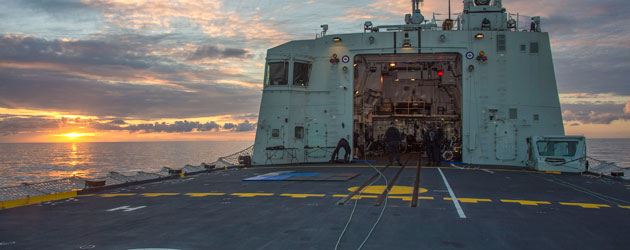
[caption id="attachment_13271" align="alignnone" width="540"] Photo: MCpl Mathieu Gaudreault, CF Combat Camera[/caption]Sailors from HMCS Calgary clear the deck after a Naval Boarding Party training scenario during RIMPAC 16 on July 18.
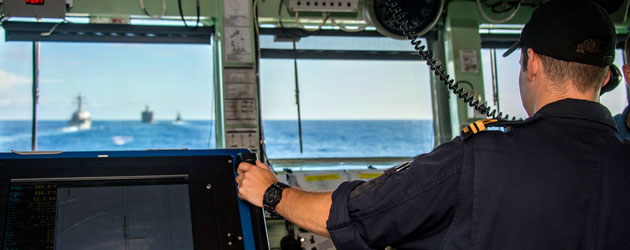
[caption id="attachment_13268" align="alignnone" width="540"] Photo: MCpl Mathieu Gaudreault, CF Combat Camera[/caption]SLt Sean Catterall from HMCS Vancouver speaks with his Commander during a naval exercise for RIMPAC 16 on July 18.
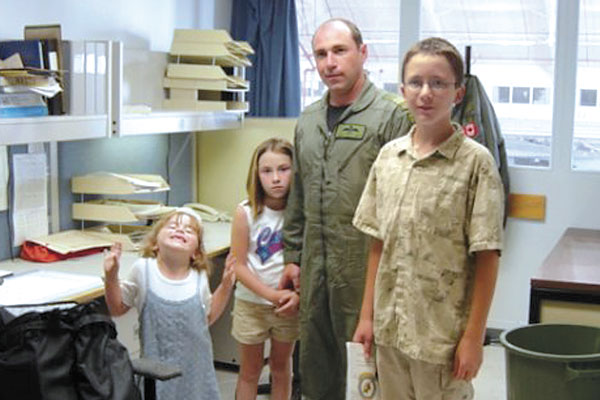
[caption id="attachment_13224" align="alignnone" width="300"] Captain Kevin Naismith with his children Halsey, Arina, and Adam.[/caption]Rachel Lallouz, Staff Writer ~Canada Company, an organization that provides outreach between Canada’s Armed Forces (CAF) members and the corporate world, announced June 24 an enhancement of their Scholarship Fund at their annual scholarship awards ceremony in Toronto.The scholarship fund exists to provide financial assistance towards the post-secondary education of eligible children of Canadian soldiers who have been killed while serving in domestic or international operations of the Canadian Armed Forces and Reserves any time since Jan. 1, 2002.For the purpose of this Scholarship Fund, “killed while serving” shall include Canadian soldiers, who, while still serving in the military and having served in an active role in a domestic or international operation of the Canadian Armed Forces and Reserves any time since 2002, or who took their own lives where the suicides have been determined by a Board of Inquiry to be death by suicide attributable through military service.Eligible candidates who enroll or continue their enrolment in full-time post-secondary academic studies may be awarded annual scholarships of up to $4,000 per academic year and may be available for a maximum of four years.An initial contribution of $100,000 from the Canada Company Board of Directors to the fund has since been matched by TD, Scotiabank, RBC and BMO. This spurred an additional $10,000 donation from The Globe & Mail bringing the total additional funding to $510,000.“It is important to Canada Company that we support the men and women in uniform, and their families,” says Angela Mondou, President of Canada Company.Belinda Naismith and her family are one of over a hundred families who have been supported by the fund. Her eldest son Adam was one of the first recipients of the scholarship fund when it was founded in 2008.Adam...
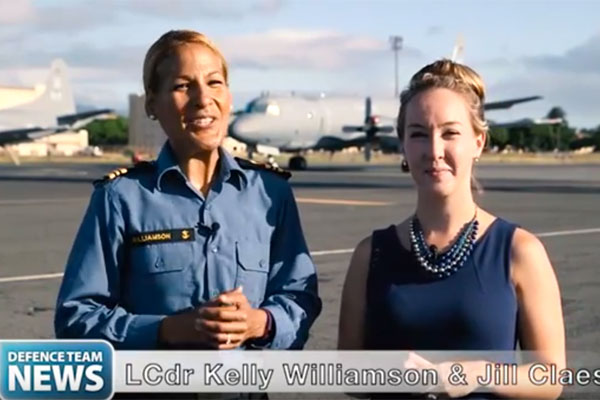
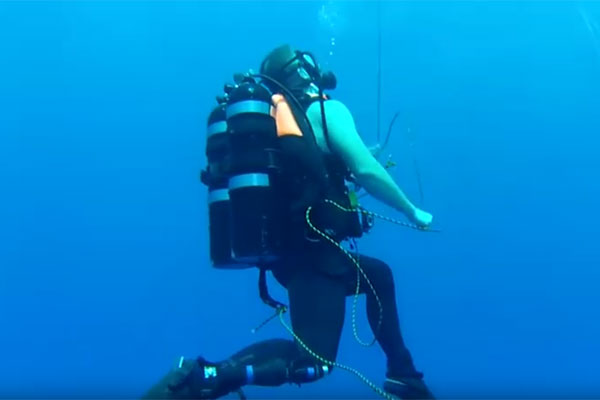
In the last RIMPAC episode of Defence Team News from Hawaii, we learn more about the practical experience the world’s largest maritime warfare exercise offers.
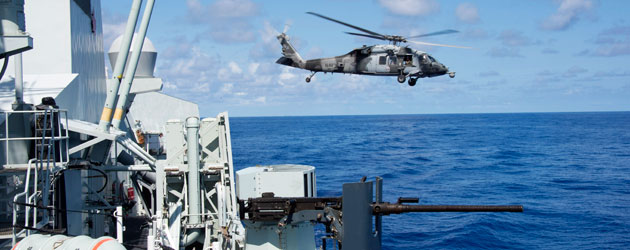
[caption id="attachment_13248" align="alignnone" width="540"] Photo: MCpl Mathieu Gaudreault, CF Combat Camera[/caption]A US Navy SH-60 Sea Hawk Helicopter takes off from HMCS Calgary during RIMPAC 16 on July 18.

[caption id="attachment_13221" align="alignnone" width="300"] A diver selected to survey USS Arizona swims slowly alongside the decaying ship. Photo courtesy LS Joe Falletta[/caption]Rachel Lallouz, Staff Writer ~Three Clearance Divers had a rare opportunity to dive an American historical site.Leading Seaman Joe Falletta, LS Raphael Marcouiller and LS Benoit Leonard from Fleet Diving Unit Pacific, and Master Corporal Nathan Rommens, Combat Diver from CFB Gagetown, were among the first non-Americans to complete a diving survey of USS Arizona, a ship bombed and sunk in Pearl Harbor by the Japanese in 1941.“The ship is a war memorial, and isn’t open to the public because it is an actual gravesite with 900 American sailors still trapped inside of it,” says LS Falletta.He and a group of 10 divers from Australia, South Korea, New Zealand, and the Netherlands were selected to attend the dive, led by an American National Parks representative diver.They are now among the less than 100 people who have ever seen the ship from beneath the surface.Before donning their Compressed Air Breathing Apparatuses, the group was taken to the Arizona Memorial in Pearl Harbor, a large white shrine situated in the middle of the harbor, to pay their respects and more fully understand the story of USS Arizona, located in the water almost directly beneath the memorial.The group dove about eight metres into the green waters, working with about 10 to 15 feet of visibility to view the ship, which stands upright on the ocean floor.“I felt shock and awe that I was even down there, because this dive had been scheduled and cancelled at the last minute at previous RIMPACs due to the sheer magnitude of the dive,” says LS Falletta. “So to be honest, up until I had my tanks on, there was still a part of me that thought...
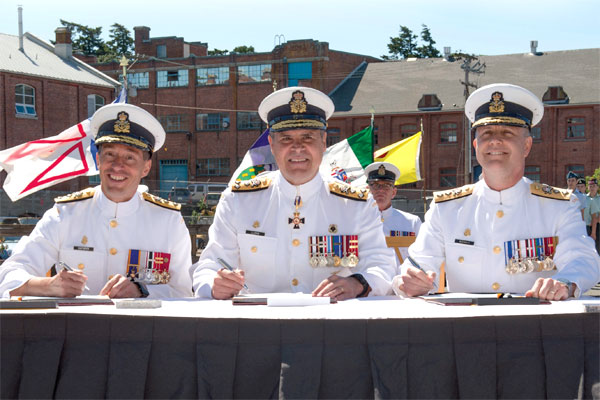
[caption id="attachment_13217" align="alignnone" width="300"] From the left: Rear-Admiral Gilles Couturier, Vice-Admiral Ron Lloyd, and Rear-Admiral Art McDonald sign Change of Command Certificates. Photo by Leading Seaman David Gariépy[/caption]Rachel Lallouz, Staff Writer ~A crowd of military personnel and invited guests took their seats at A Jetty on Friday morning, July 22, to witness the change of command between Cape Breton native Rear-Admiral Art McDonald and Rear-Admiral Gilles Couturier.Following an inspection of the Guard of Honour, the two Admirals signed the certificates officially changing command of Maritime Forces Pacific and Joint Task Force (Pacific) to RAdm McDonald. Overseeing the event was Vice Admiral Ron Lloyd, the new Commander of the Royal Canadian Navy (RCN).“I look forward to the privilege of working with the integrated military and civilian team here as we continue to ensure that we deliver operational excellence – at home and abroad, both today and tomorrow,” said RAdm McDonald in his formal address.Prior to assuming the Maritime Forces Pacific command, then-Commodore McDonald served as Director General of Naval Force Development from 2013 to 2016, overseeing planning and conducting one of the largest peacetime renewals in RCN history.In his address, RAdm McDonald highlighted the important milestones solidified by previous the commander, RAdm Couturier, including listening to, and working with Canada’s First Nations, and noting the previous commander’s respect for diversity and ability to tackle conduct issues head-on.He closed his speech by sharing his feelings of dedication to the future of the RCN.“You need to know that I am committed to helping you continue the great work of RAdm Couturier in the watch ahead, and that I wish to remain focused on the ships – yes, our warships for sure, but in addition to warships, I’m talking about relationships, mentorships, and ownership,” RAdm McDonald said. “These words will serve as the lead...

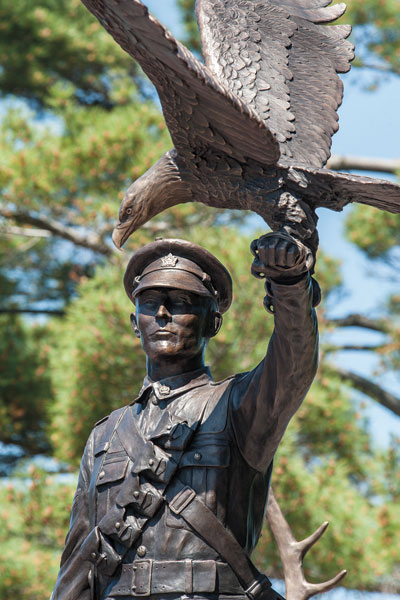
[caption id="attachment_13169" align="alignnone" width="200"] Detail of the statue unveiled to commemorate Company Sergeant-Major Francis Pegahmagabow’s contribution to the Canadian Armed Forces. Photo by MCpl Precious Carandang[/caption] Capt Jonathan Link, 4th Canadian Division Public Affairs ~One hundred years after earning his first of three medals in the Great War, a life-sized bronze statue of Company Sergeant-Major (CSM) Francis Pegahmagabow was un-veiled at a ceremony in Parry Sound, Ontario, on June 21st, 2016, National Aboriginal Day.The event, attended by Lieutenant-General Marquis Hainse, Commander of the Canadian Army, representatives of the Government, First Nations, the Canadian Military as well as other dignitaries, honoured the incredible life of CSM Pegahmagabow both on and off the battlefields of France and Flanders.“Company Sergeant-Major (CSM) Francis Pegahmagabow is one among many indigenous people who chose to proudly serve their country. I was delighted to attend the unveiling and recognize such an important military and historical figure,” said LGen Hainse in a prepared statement for National Aboriginal Day.The monument was commissioned by the Ontario Native Education Counselling Association, which raised half of the $169,000 needed to realize it. The remaining half was provided by the Department of Canadian Heritage.Standing approximately three metres or 10 feet tall, the monument depicts CSM Pegahmagabow in his wartime uniform with an eagle above and a caribou at his side. The eagle represents the connection to the Creator while the caribou represents the Pegahmagabow family clan.“He stands for something more than just who he was,” said Tyler Fauvelle the Sudbury-based sculptor of the statue, noting CSM Pegahmagabow’s life as a warrior in peace and war. “His fight, both here for Native rights and on the Western Front, resonates with all Canadians.”It is difficult to overstate CSM Pegahmagabow’s accomplishments. When war broke out in 1914, Pegahmagabow, then a 24-year-old orphaned member of the Wasauksing...
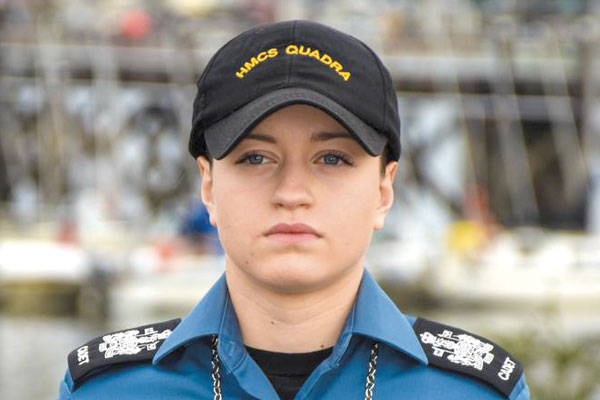
[caption id="attachment_13166" align="alignnone" width="300"] CPO1 Mikaela MacMullin, HMCS Quadra. Photo by Rachel Lallouz, Lookout[/caption]Rachel Lallouz, Staff Writer ~Eighteen-year-old Chief Petty Officer First Class Mikaela MacMullin will have more responsibility than most teenagers this summer as the newly-appointed Coxswain of HMCS Quadra, Cadet Training Centre, based in Comox.From June 29 until August 22, CPO1 MacMullin will oversee eight chiefs assisting her to manage 158 staff cadets and 855 course cadets being trained at HMCS Quadra in courses spanning rifle drill, marching and sailing.“Finding out I’d be Coxswain was a great blessing and amazing opportunity for me,” says CPO1 MacMullin, who was notified just prior to the beginning of summer. “I really enjoy watching the younger cadets grow and I love seeing them learn new skills, and then teach other cadets the new skills they’ve just learned.”Six years ago, CPO1 MacMullin joined Cadets in Edmonton, Alberta, when she was in Grade 7. She explains that she enjoyed learning how to march on her first night, and kept going back.“Since then, I’ve been attending HMCS Quadra every summer, where I trained as a Drill and Ceremonial Instructor and then eventually worked my way up to Senior Petty Officer for a drill course,” she says. “Last year I was Chief of Land Operations.”She says it was her early years in the Cadet Training Program where she learned the leadership skills so crucial to her current role: leading divisions and parades, learning how to teach activities and grow the skills of others and learning how to be the best possible team mate.“Apart from the skills I developed, I’m really patient, outgoing and I tell the truth – plus I try to be funny,” she laughs. “I try to promote the fun aspect of what we are doing while maintaining the professionalism of a training centre.”For...
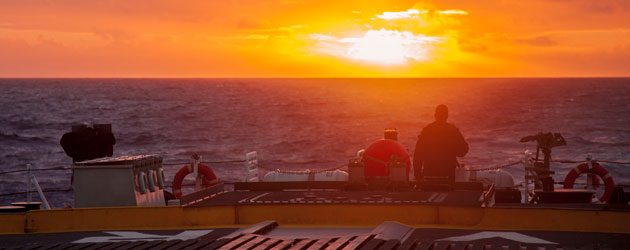
[caption id="attachment_13195" align="alignnone" width="300"] Photo: LS Sergej Krivenko, HMCS Vancouver[/caption]The Lookout on board HMCS Vancouver keeps watch as the sun rises in the Pacific Ocean during RIMPAC 16 on July 17.

NEWS RELEASEDefence Minister Concludes Visit to RIMPAC 2016July 22, 2016 – Joint Base Pearl Harbor-Hickam – National Defence / Canadian Armed ForcesAs part of the Government of Canada’s commitment to maintaining strong, multilateral ties with allies in the Asia-Pacific region, Defence Minister Harjit S. Sajjan today concluded a successful visit with Canadian Armed Forces (CAF) personnel and international partners in the region of the Hawaiian Islands during the world’s largest international maritime exercise, Rim of the Pacific (RIMPAC) 2016.During his visit, Minister Sajjan met with some of the 1,500 Canadian sailors, soldiers, airwomen, and airmen participating in this year’s exercise, and received operational briefings from RIMPAC leadership.Minister Sajjan visited Her Majesty’s Canadian Ship Calgary, one of two modernized Canadian Patrol Frigates currently deployed on RIMPAC. While at sea, Minister Sajjan met with the ship’s company and observed gunnery, ship boarding, and air defence training. Minister Sajjan also spent time with Royal Canadian Air Force (RCAF) personnel deployed as part of the Air Task Force (ATF). The ATF deployed to RIMPAC 2016 represents one of the largest deployments of RCAF assets to an exercise in recent history and is composed of elements from each of Canada’s air combat capabilities.The Canadian contribution to RIMPAC 2016 underlines the strategic importance of the Asia-Pacific region, of increasing international interest in the area, and of unique opportunities to demonstrate interoperability with partner military forces. RIMPAC 2016 provides a unique training opportunity that allows participants to foster and sustain cooperative relationships that are critical to ensuring the safety of sea lanes and security on the world’s oceans.QUOTES“The Canadian Armed Forces’ participation in RIMPAC 2016 underscores Canada’s commitment to maintaining strong, productive ties with our partners and allies in the Asia Pacific region. While it is always an honour to spend time with our soldiers, sailors, airwomen,...
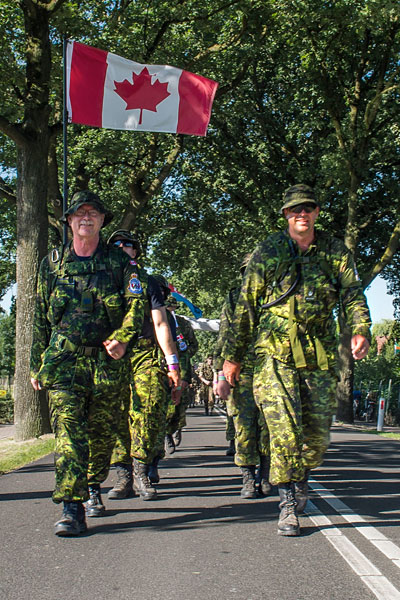
NEWS RELEASECanadian Armed Forces teams complete the 2016 Nijmegen MarchesJuly 22, 2016 – Ottawa – National Defence / Canadian Armed ForcesToday marks the end of the 100th annual International Four Days Marches Nijmegen in the Netherlands. This year, more than 200 Canadian Armed Forces (CAF) members from across Canada and Formation Europe participated in the marching event, and were awarded a special 100th anniversary edition of the Four Day Marches Cross.The CAF contingent, led by Colonel Kristiana Stevens for the second year, marched 40 km a day for four days, an effort culminating in a five-kilometre victory parade. The parade was attended by thousands of spectators who cheered the CAF contingent in commemoration of the Canadian soldiers who liberated the Netherlands from Nazi occupation during the Second World War.Originally a means by which the Dutch infantry aimed to increase their long-distance marching and weight-carrying ability, the Nijmegen Marches have evolved into an international four-day event that draws more than 50 000 civilians from over 50 countries, in addition to military participants, to challenge their physical and mental endurance. The CAF has participated in the Marches every year since 1952.QUOTES“The Canadian contingent can look back and be proud of having overcome the major challenge presented by the Nijmegen Marches. They can be proud as well for having paid such a fitting tribute to the Canadian servicemen and women who fought and died in Europe during the First World War and the Second World War, and for their own military service as members of the Canadian Armed Forces who continue to answer their nation’s call in the name of peace and security.”Lieutenant General Guy Thibault, Vice Chief of the Defence Staff“I could not be any more appreciative of the strength of character that our Canadian Armed Forces members demonstrated once again this...
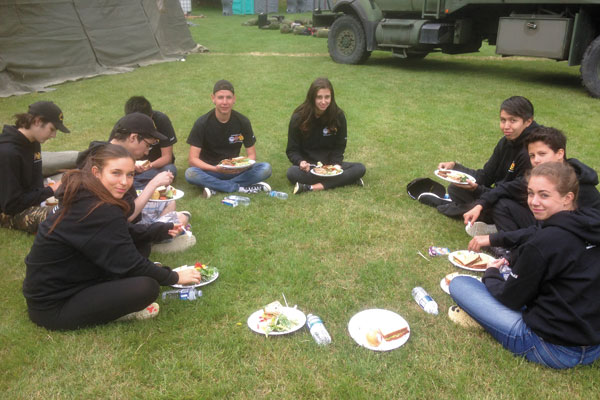
[caption id="attachment_13163" align="alignnone" width="300"] Students enjoy lunch at Raven Culture Camp in Nanoose Bay. Photos by Rachel Lallouz[/caption]Rachel Lallouz, Staff Writer ~The RAVEN program’s Culture Camp Opening Ceremony took place on June 11 in Nanoose Bay, B.C., to mark the beginning of a three-and-a-half-day camp where the 29 RAVEN participants learned about a variety of Aboriginal spiritual practices and beliefs in a military-structured setting.The students gathered in a semi-circle in a field while Brent Edwards, Chief of the Nanoose First Nations, was gifted with sweet grass and flint by Ed Neveau, RAVEN Culture Camp coordinator from Wanipigow, Manitoba, and his wife Madelain Hardisty-Neveau.“I think Canada has diversified now and we’ve seen many First Nations with a rich history of serving in armed forces,” said Chief Edwards. “Culture Camp brings together youth from different backgrounds to learn from each other.”Culture Camp marks the initial portion of the six-week RAVEN program, in which Aboriginal youth are selected from Canadian Armed Forces (CAF) recruiting centres to complete basic military qualification at CFB Esquimalt before graduating in late August.“When the kids come here, whether from a reserve or the city, some have limited cultural knowledge,” explains Ed. “We will incorporate Aboriginal culture through the entire camp and all events here.”The students, ages 16 to 24, come from a wide range of Aboriginal nations across Canada, including Mohawk, Cree, Ojibwe, Metis and Inuit.“It’s been fast paced and I love the culture aspect of it so far,” says Julia Jacobs, a 24-year-old Mohawk youth from Montreal. She says that when the program has completed, she’ll begin studies at Concordia University in First People’s Studies, and also plans to join the Reserve Force at the same time.During the course of the Culture Camp, participants awoke at 4 a.m. and spent their days participating in Aboriginal ceremonies, bonding...
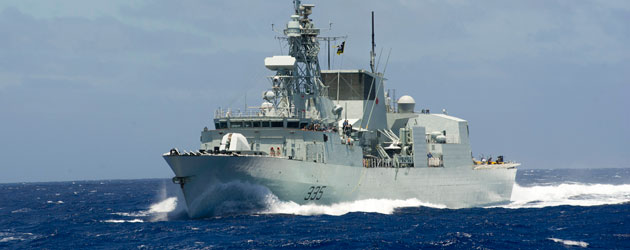
[caption id="attachment_13192" align="alignnone" width="300"] Photo: Mass Communication Specialist 1st Class Ryan Riley (U.S. Navy)[/caption]HMCS Calgary transits to RIMPAC 16 on June 24.

[caption id="attachment_13160" align="alignnone" width="300"] Dan Ouellette, group leader of Quality Engineering Test Establishment, Measurement Sciences in Ottawa, demonstrates the movement of an articulating arm Coordinate Measurement Machine, which is used for both contact (tactile probing/scanning with a stylus), and non-contact scanning using a laser accessory at the recent Open House. Photo by DND[/caption]DND ~The Quality Engineering Test Establishment (QETE) ensures the materials and equipment provided to the Canadian Armed Forces (CAF) meets the stringent requirements needed to meet the demands of the operational environment.Accident and failure investigation, test and evaluation, acting as the program and technical authority for the CAF calibration, Emission Security and Radio Frequency Safety programs are just a few of the unique services provided by QETE.QETE’s recent open house was an opportunity for their partners such as the National Research Council, Defence Research Department Canada, the Canadian Coast Guard, and the University of Ottawa, to observe the capabilities of the QETE labs and their personnel.“Our biggest strength is our people, by far. Their passion and their commitment for serving the men and women of the CAF are remarkable,” says Serge Carignan, QETE Superintendent.One of the more interesting partners is the Museum of Nature, brought in recently to help with a project on the lethality of range on a new rifle that had to be able to kill a polar bear with one shot. By studying the skeleton of a polar bear, QETE personnel were able to simulate the hide, tissue and bone in a test environment to scientifically determine the lethality of various weapons and ammunition calibre.“This is an example of QETE’s science and engineering department reaching out to any type of organization to get the answers they need,” said Carignan.Performing accident and failure investigations is one of QETE’s most important roles. He emphasized that it is...
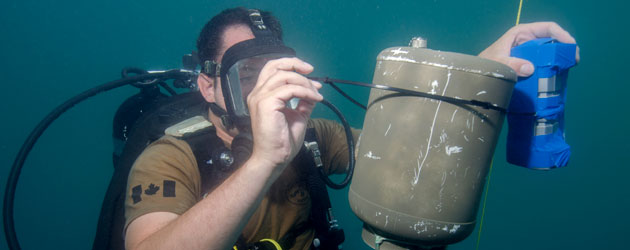
[caption id="attachment_13189" align="alignnone" width="300"] Photo: MCpl Chris Ward, MARPAC Imaging Services[/caption]A clearance diver from Fleet Diving Unit (Pacific) attempts to neutralize a simulated suspicious device during an exercise for RIMPAC 16 on July 14.
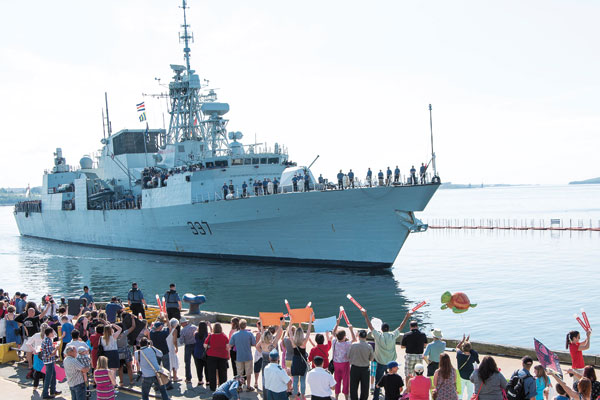
[caption id="attachment_13157" align="alignnone" width="300"] HMCS Fredericton arrives home in Halifax on July 5 after a six-month deployment on Operation Reassurance. Photo by DND[/caption]Royal Canadian Navy News ~The crew of HMCS Fredericton arrived home in Halifax on July 5, reuniting with family and friends after a six-month deployment to the Mediterranean and Black Seas on Operation Reassurance.“Her Majesty’s Canadian Ship Fredericton has completed an outstanding NATO-led maritime Reassurance mission far from home and to the highest traditions of the Royal Canadian Navy,” said Commodore Craig Baines, Commander Canadian Fleet Atlantic. “The ship’s company and embarked helicopter air detachment achieved excellence in operations in all regards, highlighting their unity as a fighting force and ability to overcome serious obstacles and unforeseen circumstances. We are all very proud of our colleagues on HMCS Fredericton: they have earned a brief repose from the busy tempo of military duty and have earned some well-deserved time to enjoy a gorgeous Nova Scotia summer with their friends and family.”HMCS Fredericton deployed as the Maritime Component of Operation Reassurance, the Canadian Armed Forces contribution to support NATO assurance measures in Central and Eastern Europe.The ship departed Halifax on January 5 and began Operation Reassurance duties on January 8. It served with Standing NATO Maritime Group Two (SNMG2), which engaged in maritime situational awareness operations to detect, deter and disrupt terrorism in the Mediterranean Sea. Standing NATO Maritime Groups are multinational, integrated maritime forces made up of vessels from various allied countries. SNMG2 units worked with Greek, Turkish and other authorities to monitor the migrant crisis in the Aegean Sea and report on smuggling activities.In total, HMCS Fredericton was deployed for a period of six months, spending 125 days at sea and travelling 20,770 nautical miles (38,500 kilometres). It led SNMG 2 Task Unit 02 in the Black Sea...
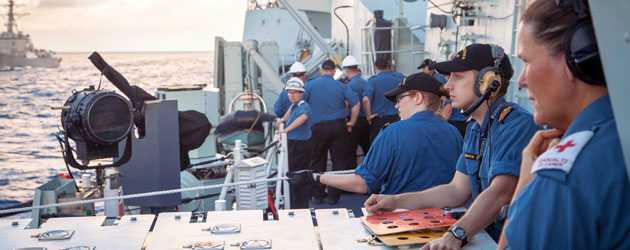
[caption id="attachment_13186" align="alignnone" width="300"] Photo: LS Sergej Krivenko, HMCS Vancouver[/caption]Cpl Nancy Rheaume, SLt Taylor Workman and SLt Jessica Lamshoeft from HMCS Vancouver work at a replenishment-at-sea with USNS Kaiser during RIMPAC 16 on July 14.
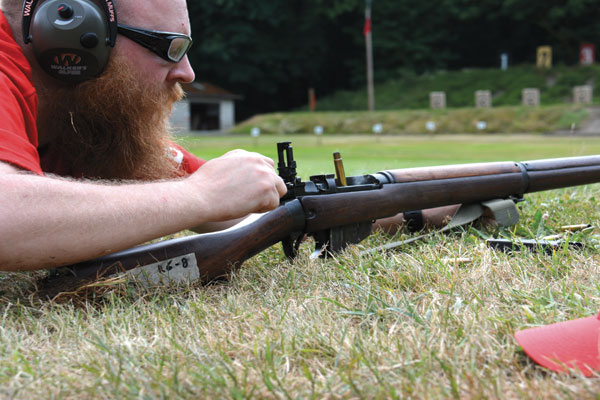
[caption id="attachment_13154" align="alignnone" width="300"] Canadian Ranger Master Corporal Adam Glover, of Gillam Patrol in Manitoba, pulls back on the bolt of his Lee Enfield .303 rifle during marksmanship training at Heals Range in Victoria, BC. Photo by Capt Chris Poulton, Public Affairs[/caption]Peter Mallett, Staff Writer ~They are the eyes and ears of remote Canada and a vital part of the Canadian Armed Forces’ (CAF) domestic operations, but most people still don’t know they exist.With that in mind, the newly appointed commanding officer of the 4th Canadian Ranger Patrol Group (4 CRPG), Lt.-Col Russ Meades, says one of his key focuses will be educating both military personnel and the public about the approximately 5,000 part-time Canadian Rangers across our country who provide patrols for national-security and public-safety missions in difficult to access, sparsely settled regions as members of the Canadian Army Reserve.Lt.-Col Meades is now the man in charge of the 1,000 Canadian Rangers in the four western provinces and their immense area of 2.71-million square kilometers of rugged terrain and coastline in B.C., Alberta, Saskatchewan and Manitoba with 43 locations between the Pacific Coast and the Ontario border.“Part of my personal quest during my tenure will be to dispel some of the myths and standardize and build on our message of who we are and what we are about so we can garner greater public understanding,” said Lt.-Col Meades. “To command 4 CRPG is a great honour and a privilege and also a massive undertaking and responsibility, but above and beyond that it’s a wonderful opportunity.”After the Change of Command Ceremony held at Camp Albert Head on June 26, Lt.-Col Meades was quick to point out that his predecessor, outgoing commanding officer Lt.-Col Tim Byers, did “stellar work” in overseeing the transition of the unit after control of the Canadian...
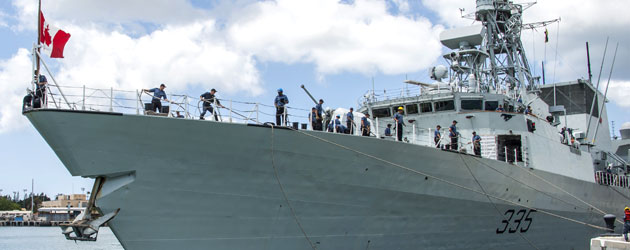
[caption id="attachment_13180" align="alignnone" width="300"] Photo: Cpl Brett White-Finkle, CF Combat Camera[/caption]Sailors from HMCS Calgary prepare to depart from Joint Base Pearl Harbor-Hickam, Hawaii for the sea phase of RIMPAC 16 on July 12.
In this episode of Defence Team News, the ships head out for the at-sea portion of RIMPAC, the world's largest largest international maritime exercise.
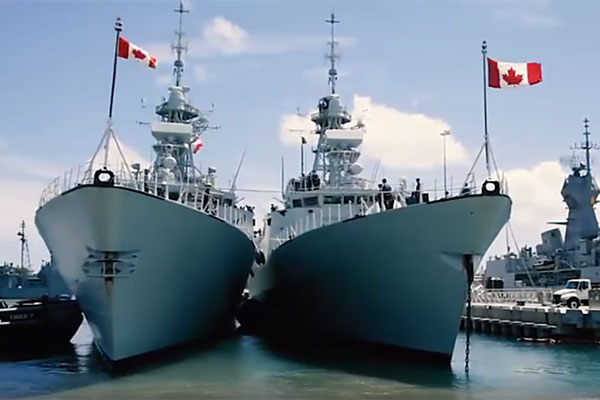
In this episode of Defence Team News, we bring you RIMPAC footage straight from Pearl Harbour, Hawaii.