[wpml_language_selector_widget]
[searchwp_form id="1"]

Grizzlies take the plunge with divers

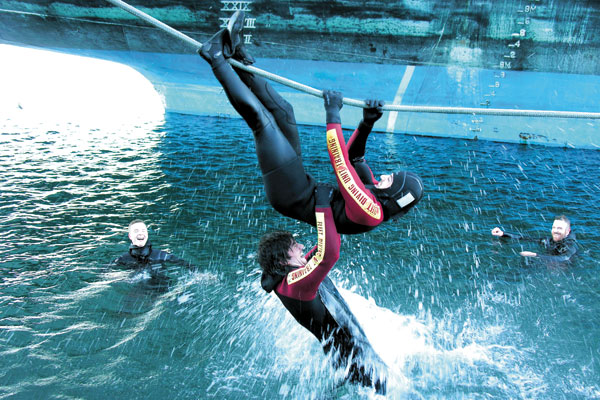
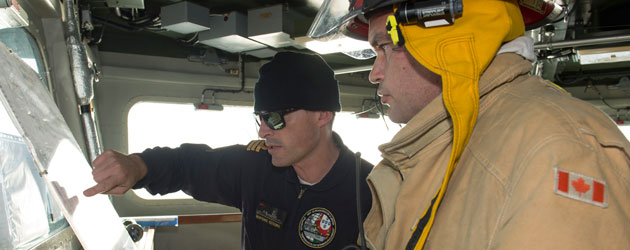
[caption id="attachment_11373" align="alignnone" width="300"] Hockey players from the Victoria Grizzlies complete their morning training session at Fleet DivingUnit Pacific by navigating a rope bridge.[/caption]Peter Mallett, Staff WriterPlayers from the Victoria Grizzlies Junior A hockey team in Colwood traded skates for wet suits Nov. 3 when they stepped into the world of Navy Clearance Divers. This annual event is offered to the BCHL hockey club as an outreach piece to show the young hockey players an aspect of military training, leadership and teamwork that exists just a short walk from the team’s home arena, the nearby Q Centre.Just like navy divers in training, the players suited up and plunged into Esquimalt Harbour for the daily fitness drill known as “The Morning Swim.”On the shore, Fleet Diving Unit Pacific Training Officer Lt(N) Walter Dubeau barked instructions and encouragement.More teamwork was tested when the players divided into two teams and climbed on to a rope bridge suspended above the water.  Balance and strength were assessed.From the vantage of the shore, Lt(N) Dubeau spoke to the correlation between teamwork used by his divers and that of a professional hockey team.“Teamwork is part of everything we do in the Fleet Diving Unit. We have to work together; our entire training manual speaks to this. If you don’t have teamwork then [clearance] tasks cannot be completed. It’s the same in hockey.”Those tasks are not simple ones; they require the full engagement of the team to ensure a diver’s safety, whether it is cutting and welding the bottom of a ship or rendering sea mines safe with underwater explosives.“Truth be told, they [navy divers] work much harder than us,” said Grizzlies’ Jake Stevens, 18, a defencemen from Chicago Illinois. “The only thing that keeps them going in their rigorous training is their will and desire.”He says what he...

No Stone Left Alone: School children remember the fallen

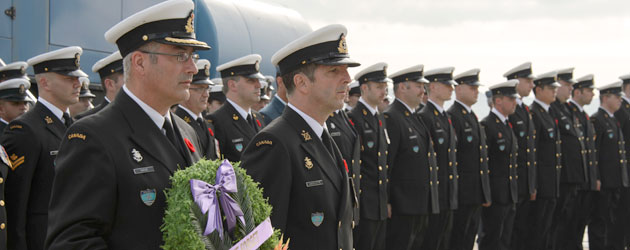
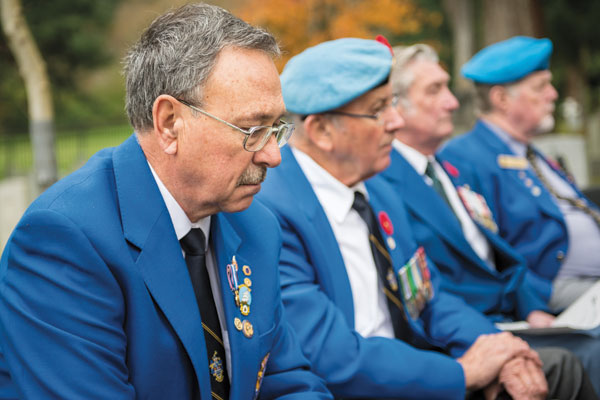
[caption id="attachment_11370" align="alignnone" width="300"] A veteran prays during a No Stone Left Alone Ceremony at the Esquimalt Veterans Cemetery (God’s Acre).[/caption] Peter Mallett, Staff WriterThey may be gone, but the supreme sacrifices of Canada’s war dead aren’t being forgotten by Canada’s next generation.This year’s Nov. 6 No Stone Left Alone event saw more than 60 Grade 6 students from Rockheights Middle School honoured and solemnly remember the selfless acts of heroism by Canadians in uniform, by placing poppies on over 2,000 gravesites at Esquimalt’s national historic site, God’s Acre Veterans Cemetery.“The goal of the No Stone Left Alone ceremony is to educate and engage youth in honouring every soldier who has fought for our Canadian freedoms, and to ensure their acts of bravery are remembered and never forgotten,” said Rockheights Middle School Principal, Maryanne Trofimuk.The annual campaign was launched in 2011 by Edmonton’s Maureen G. Bianchini in an effort to recognize the nation’s fallen by placing a poppy on the headstones at military fields of honor.This year’s commemorative event involved 3,400 students in B.C., Alberta, Manitoba, New Brunswick, Nova Scotia and the Northwest Territories, placing a total of 20,000 poppies on military gravesites.In Esquimalt, a gathering of over 250 people - students and current and former military members - remembered the cost of war during a ceremony at the Colville Road cemetery. The burial ground was originally built by Rear Admiral George Fowler-Hastings in 1868 as a place of rest for Royal Navy sailors, but has since expanded to encompass all members of the Canadian Armed Forces.“Ceremonies such as the one today remind us that freedom comes with a cost, while also providing the opportunity to thank the veterans past and present who put on the uniform of the Canadian Armed Forces and serve Canada proudly,” said LCdr Michael Erwin during...

Monument unveiled at veteran’s lodge

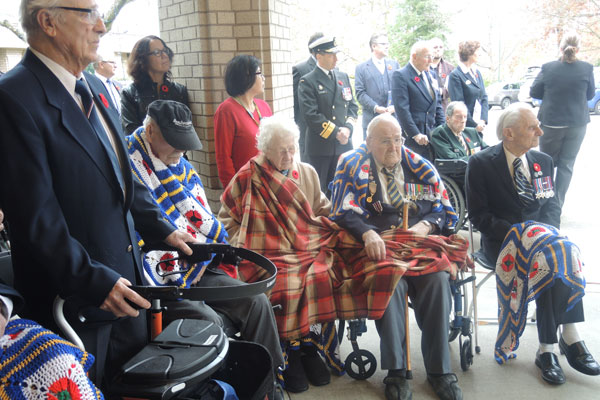
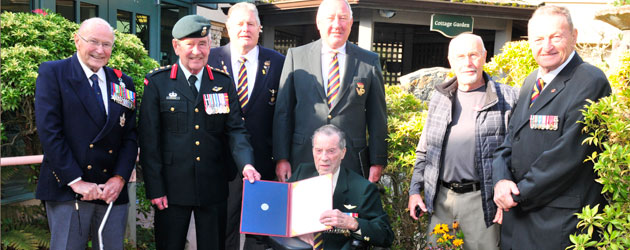
[caption id="attachment_11367" align="alignnone" width="300"] The morning of November 10th was when the Lodge at Broadmead unveiled a new monument and many veterans came out to take part in the ceremony.[/caption] Rachel Lallouz, Staff WriterThe day before Remembrance Day, Judith Guichon, Lieutenant Governor of British Columbia, accompanied by Maritime Forces Pacific Commander, Rear-Admiral Gilles Couturier, unveiled a new monument at the Lodge at Broadmead in front of a crowd of Second World War and Korean War Veterans.The granite monument commemorates the 20th anniversary of the Lodge’s opening, and the 70th anniversary of the end of the Second World War.A plaque on the monument’s polished front reads:“Dedicated to the Canada’s veterans, especially those cared for at the Lodge.”“I believe it is the responsibility of every Canadian to show great respect and to remember the men and women who served, and who continue to serve in uniform today,” said LGov Guichon in her address to the crowd. “I am humbled by their actions.” RAdm Couturier echoed the Lieutenant-Governor’s words, thanking and applauding the Lodge for serving the resident veterans with caring, respect, and integrity.“I want to say thank you, too, to the veterans who carried the flame so high, and who gave us the opportunity to follow in their footsteps,” he said. Second World War veteran, Major (retired) Murray Edwards, acting as a representative of all veterans at the Lodge, expressed his gratitude for the new monument.“We, the veterans and other residents here at the lodge wish to extend our thanks for the arrangements made today. Remembrance Day is a time for sober reflection,” said Edwards.“As we view this monument, we will never forget.” In keeping with the Lodge’s high number of veteran residents, Broadmead Care Board Chair Paul Morgan announced a name change for the Lodge following the unveiling.The Lodge at Broadmead will...

Ceremonial Guard: Donning the Scarlet Tunic

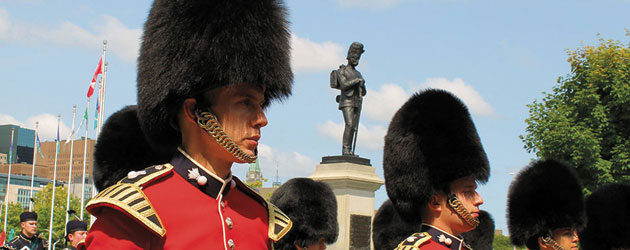
Uniforms are a display of strength, of unity, and of belonging. They inspire a sense of identity.Enter the sea of red comprising members of the Ceremonial Guard of the Canadian Armed Forces. Represented by over 80 different units, once the Ceremonial Guard dons the scarlet tunics the expectation of oneness, sameness, is brought upon them as every move is executed in perfect synchronization. The uniforms they wear are those of the Governor General’s Foot Guards and Canadian Grenadier Guards; two regiments that continue to contribute significantly to this day.Upon arrival, new recruits are taken and put into the tender care of their instructors. During the indoctrination period, recruits are required to completely commit themselves day and night to a program of training that addresses any inadequacies, teaches the customs and practices of the group, and  the customs and practices of the Canadian Armed Forces (CAF).The Ceremonial Guard is a composite CAF unit of over 400 people including the Governor General’s Foot Guard company and the Ceremonial Guard Band. The majority of the Guard is composed of Regular and Reserve Force Guard, and includes soldiers from regiments across Canada, and the ceremonial members from Canada’s navy and air force.“I remember my first experience and first march,” says Corporal Christopher Hutchinson. “The focus was still on individual development, but at the same time joining the Ceremonial Guard stopped being about just you.”The soldiers become assimilated into military society, culture, and way of life. As the teaching and indoctrination continues, the trainees begin to bind together as a group. The recruits are then tested through a series of challenges. These trials are both physically and mentally demanding, designed to induce stress and measure their reactions to ensure teamwork.“It’s about performing and standing up and becoming a symbol,” says Cpl Hutchinson.Shift from civilian to...

Exercise Joint Warrior 152

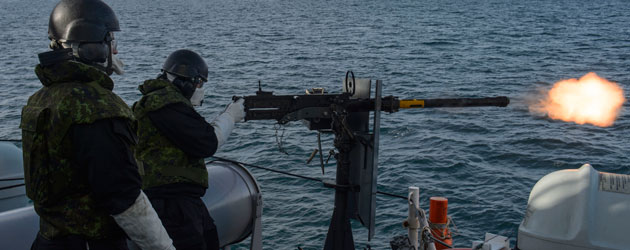
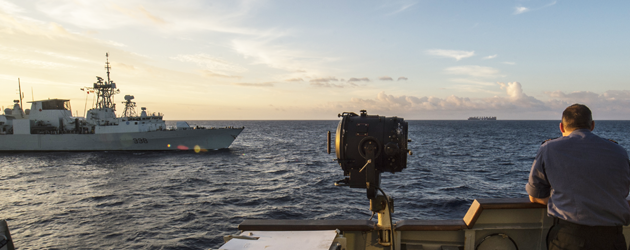
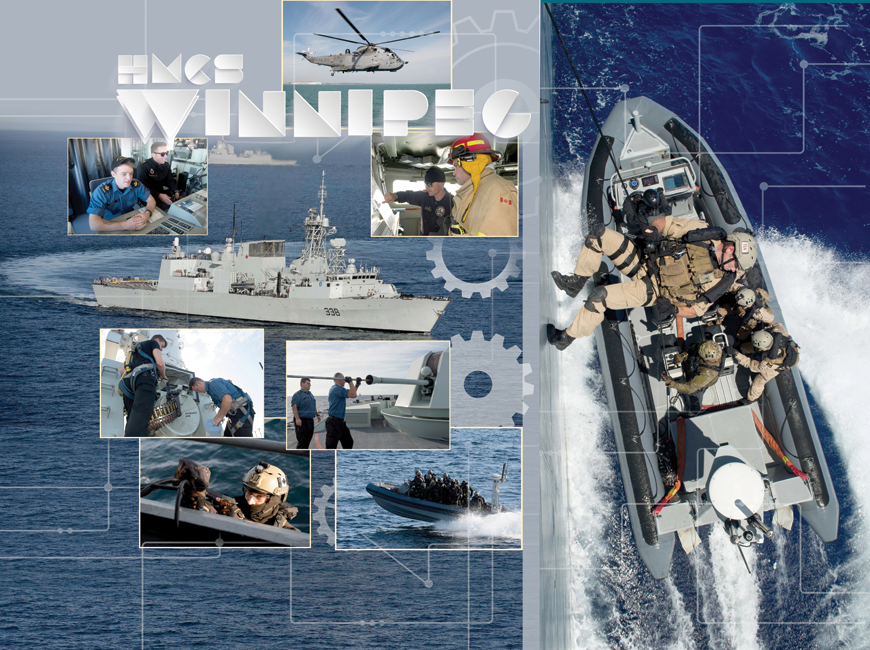
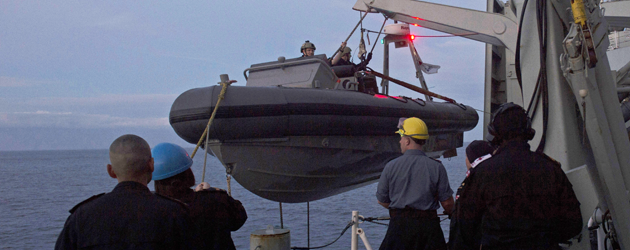
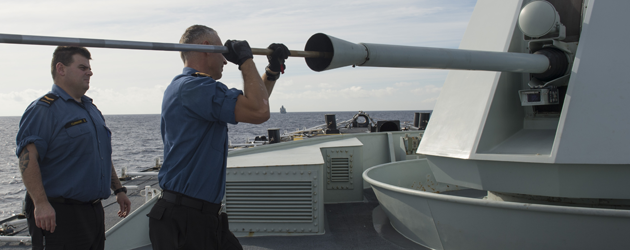
 Crew members on board HMCS Winnipeg use a .50 calibre machine gun during an asymmetric attack training scenario during Exercise Joint Warrior. SLt Jamie TobinHMCS WinnipegHMCS Winnipeg and its Standing Maritime Group One (SNMG1) consorts participated in Exercise Joint Warrior 152 (Ex JW152) from Oct. 5 to 15. Joint Warrior is a multinational joint task force exercise in the coastal waters of Scotland involving more than 30 warships representing 12 countries. During the exercise, the task group’s mission was to assist a fictitious nation with the enforcement of a mock United Nations Security Council Resolution. The resolution called for protection of the population from the threat of terrorism, protecting critical infrastructure, reassuring the local and international community, and ensuring freedom of maritime navigation.“Exercise Joint Warrior 152 was a great opportunity for HMCS Winnipeg to train with all of our warfare capabilities while demonstrating the value that this high-readiness team brings to international operations,” said Commander Pascal Belhumeur, Commanding Officer of Winnipeg.During the exercise, all of Winnipeg’s capabilities were put to the test. The ship’s Above Water Warfare team protected the population and infrastructure by defending against aerial and surface threats from military forces, while the Underwater Warfare team scanned the waters of the exercise area searching for submarines and other subsurface threats.The scenario also saw the ship’s Sea King helicopter fly reconnaissance missions to identify various threats and provide aerial protection to both the ship and its allies. It also included mine countermeasure units working to clear the waterways of explosive hazards.Further, Winnipeg’s Enhanced Naval Boarding Party boarded several suspicious vessels in the region to investigate their business and ensure that they were not contributing to terrorist activity.Finally, the remainder of the crew in Winnipeg supported the exercise’s other tasks by maintaining the ship’s propulsion and combat systems, responding to damage...

Canadian aviators

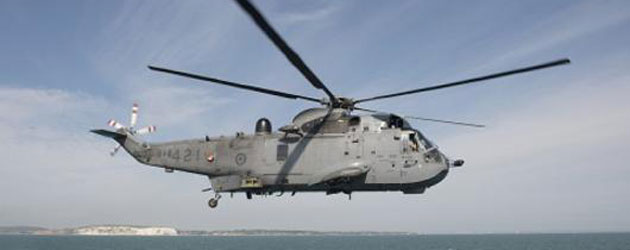
Two Canadian Aviators fly with the SNMG2 Command Staff Air DetachmentHMCS WinnipegTwo members of HMCS Winnipeg’s Helicopter Air Detachment (HelAirDet) took part in a unique opportunity this past summer on board the Standing NATO Maritime Group Two (SNMG2) flagship, Federal German Ship (FGS) Hamburg while operating in support of Operation Reassurance. During the SNMG2 assembly in Palma de Mallorca, Spain, the task group’s Chief of Staff was looking for a helicopter element coordinator. A person in this position tasks and schedules all of the task group’s helicopter operations while balancing maintenance and crew requirements.  The Canadian tactical coordinators from Winnipeg’s HelAirDet volunteered.“Over the following few days we changed our mentality from being helicopter operators to members of the SNMG2 staff. Using our experience as operations officers, we jumped into preparations to ensure that we were prepared to successfully manage five helicopters from four nations,” said the first pilot.The decision was made to have one Helicopter Element Coordinator remain onboard FGS Hamburg while the other pilot assumed all flying duties on Winnipeg. The duties switched after two weeks. “Surprisingly, task group coordination was very similar to a basic helicopter start; setup your lines of communication, check everyone’s equipment, and brief the plan. Next, you acquire all the information about each nation’s helicopter equipment. Finally, give the plan to the professional air crews in a timely fashion so they can highlight or resolve any possible conflicts before they become showstoppers,” added the second pilot.  As helicopter element coordinators, the pilots coordinated a multitude of operational and exercise flight missions including a medical evacuation, multiple anti-submarine exercises and an emergency response.  Both pilots quickly developed the skill of discerning which information was crucial to the Admiral and which was not.The Canadian tactical coordinators each received an overwhelming welcome from their German hosts and would...

The ‘hollow joy’ of freedom, POW survivor recalls bombing of Nagasaki

[caption id="attachment_11332" align="alignnone" width="300"] Nagasaki after the atomic bomb was dropped.Image by Cpl Lynn P. Walker, Jr. (Marine Corps) - DOD”War and Conflict” image collection (HD-SN-99-02900). Licensed under Public Domain via Commons.[/caption] [caption id="attachment_11333" align="alignnone" width="227"] Image by Peter Mallett, LookoutSecond World War veteran Rudi Hoenson goes through his photo album as he recalls his prisoner of war experience.[/caption]Each November, when prisoner of war survivor Rudi Hoenson pauses to reflect on the true meaning of Remembrance Day a long ago nightmare comes to the forefront.“I get so many sad feelings that well up inside of me and my thoughts instantly flash back to Nagasaki and the [Japanese] POW camp,” says the 92-year-old veteran. “I think of all the people who died needlessly right in front of my eyes, and what went on across Europe, and in Nazi concentration camps. It’s unbelievable, unimaginable to think that all of this could happen, but it did.”The final and most horrific chapter in Hoenson’s war life was as a Japanese POW on Aug. 9, 1945, when a United States B-29 bomber dropped “Fat Man” on Nagasaki.While it was a traumatic event for him, he says the use of the bomb was necessary and saved “countless untold” lives in the process.“If it wasn’t for the bomb, I would not be here today,” he says. “All of us POWs would have been killed if the Americans landed on Japanese soil [with ground troops]. Furthermore, the bomb itself saved millions of lives that would have been lost had the war dragged on.”The young soldier joined the Dutch army after the bombing on Pearl Harbor at age 17. While they valiantly worked to protect the Dutch East Indies from the Japanese in 1942, the island eventually fell into enemy hands. Hoenson was captured and became a POW, first at Singapore’s Changi Prison, and later to Camp Fukuoka 14 in Nagasaki.For more than three years, Hoenson and his fellow prisoners performed forced labour for the Mitsubishi Shipyard, helping the...

A diary of discoveries…

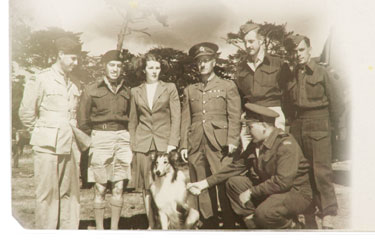
[caption id="attachment_11329" align="alignnone" width="300"] Ralph Thistle, centre, gathers with his family and their beloved Collie in Canada, early 1940s.[/caption]Sylvia Thistle-Miller pulls on a pair of tight white gloves, before carefully picking up a palm-sized journal of red, worn leather.“I was raised with the stories of my past told to me as I sat on my grandmother’s lap,” she says, while turning the yellowed pages. “But with many people who fought in the wars, they don’t share everything. There was a lot of quiet.”Three years ago, Thistle-Miller was cleaning out her mother’s house when she came across a box of tiny, pocket-sized diaries. As a child, she was given several of them by her grandmother, and upon rediscovering them she set about throwing them out.“But I noticed that one of them was so much more worn than the rest,” she says. “I don’t usually check these things, but I ended up opening it.”Written in barely legible cursive were the carefully pencilled notes of her grandfather’s experience fighting in France and Belgium during the First World War. Thistle-Miller was shocked to find detailed day-to-day accounts of his time spent in the trenches at Ypres, where he wrote of being gassed in what is known as the world’s first chemical warfare attack on April 22, 1915.Thistle-Miller was three-years-old when her grandfather died, and says the only knowledge she has of him lies in black-and-white photographs, stories passed down from family members, and the journal.Her grandfather, Ralph Thistle, was born in St. John’s, Newfoundland, in 1889, to a family of ship builders and printers who had called the province home since the 1500s. “Prior to World War One breaking out, my grandfather had been a member of the 48th regiment of the Newfoundland Highlanders for seven years,” says Thistle-Miller. “He already knew how to shoot,...

Young Canadian carries torch of Remembrance

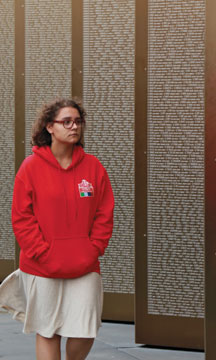
[caption id="attachment_11325" align="alignnone" width="180"] Isabelle Ava-Pointon, 2015 Beaverbrook Vimy prize winner, scans the names of 580,000 men who died in northern France during the First Word war. The alphabetically engraved names reside on the Ring of Remembrance - Notre Dame de Lorette.[/caption]November 11th is coming. Once again we feel mildly uncomfortable at the thought of having to stand in silence and think of unpleasant things.We are in the midst of the centenary of the First World War, and there are no living veterans of that conflict.Now, more than ever, it is our duty to keep the flame of remembrance burning.That word, remembrance, is often heard this time of year. But why commemorate events that happened a century ago? Why must we honour lives that were cut short 100 years past?Some answers are easily apparent. Remembering the horrors of war will ensure that we do everything in our power to avoid armed conflict. Yet some reasons are not so evident, and thus for young people like myself, it can be hard to understand the importance of this day.Before I participated in the Beaverbrook Vimy Prize, I knew it was important to remember the World Wars, but I was not entirely sure why. A fortnight in Europe changed all that.There is another reason for remembrance equally as important as ensuring future peace, but much harder to grasp: it is our duty to remember and honour the lives of the tens of thousands who gave their all for their country. The suffering that these men and women had to endure is beyond the scope of most of our imaginations.This summer I walked across the battlefields of Vimy Ridge and Passchendaele. I ran across No Man’s Land on the Somme. I waded in the sea and marched through the sands of Juno beach. I...

Forces members can unite with veterans

MS Brandon Ensom sees no better way to understand military history than to sit with a veteran and hear their service stories.The Lodge at Broadmead, home to many aging veterans, is the stage for those oral recollections to unfold.  The sailor discovered the place two years ago when he accompanied Rear-Admiral Bill Truelove on a visit to the seniors home.“It’s important for veterans to know that today’s generations of members acknowledge and appreciate the sacrifices and what they went through,” he says.“And it’s important for us to hear their stories. You can read about historical events, or watch television shows depicting them, but to actually hear what Juno Beach was like at 8 a.m. on June 6, 1944, from a person who was present – there’s no comparison.”The sailor is hoping to lure other military members to join him on his third Thursday of each month visit  to the Lodge.He takes a maximum of 10 volunteers. People meet at 10 a.m. in front of the Pacific Fleet Club and climb aboard a bus to ease the transportation burden.People sign in with the front desk and proceed to the Lodge’s main lounge, The Oak Room.“It’s pretty informal after that,” says MS Ensom.“A volunteer sits down with a senior, introduces themselves, and usually gets a very enthusiastic reception.”The chats last about an hour before hopping on the bus back to the base.“It’s pretty humbling to know we all wear the same uniform,” he says.“I’ve talked to people who have escaped from prisoner-of-war camps multiple times, and we talk about having a bad day at sea or the office. It’s invaluable to hear what they have to say.”Sometimes there aren’t enough military members to pair up with the expectant storytellers.“We might arrive with only four or five members to a full house of...

Sixteen naval reservists deploy on board HMCS Winnipeg

Sixteen naval reservists from across Canada deployed on board HMCS Winnipeg June 15 to support Operation Reassurance, Canada’s contribution to NATO assurance measures in Europe.“Our reserve members are integrating seamlessly into the ship’s company,” says Commander Pascal Belhumeur, Commanding Officer of HMCS Winnipeg.“This deployment provides them with incredible exposure to unmatched training opportunities on board a modernized Halifax-class ship in real-time international operations.”These naval reservists represent a number of naval professions.Three are currently serving on the Royal Canadian Navy’s (RCN) first Enhanced Naval Boarding Party, a team that specializes in maritime interdiction operations.For the past few years, the RCN has been transitioning into a “One Navy” concept that employs reserve and regular forces on operational missions.Naval Reserve members have been deploying on major operations since late 2013, but Winnipeg is the first ship to employ reserve members in almost every department.“As a naval combat information operator (NCIOP), I feel really lucky to serve in a warship that has the most modern warfare system,” says Leading Seaman Jefren Liu, originally from HMCS York.“Operating the updated Combat Management System is an experience that I may not have had without this deployment.”  Maritime surface and sub-surface officers in the Naval Reserve also tend to serve the majority of their careers in Kingston-class vessels.This deployment has provided Sub-Lieutenant Michael Van Vlaenderen from HMCS Chippawa with a unique opportunity to sail on board a ship named after his home town while putting his skills to the test on a major warship.“Every day and every evolution is a learning opportunity. The ships do things differently and it is important to always adapt,” says SLt Van Vlaenderen.“During my time in Winnipeg, I have had the opportunity to train for my Officer of the Day and Naval Officer Proficiency Qualifications [both Regular Force qualifications] and gain the experience...

Navy, ship builder set new course, seek input from sailors

The Royal Canadian Navy (RCN) and the team at Project Resolve and Chantier Davie Canada Inc. are looking for naval and air force input into the conversion of the German container ship MV Asterix, which will provide interim at-sea support services to meet the RCN’s operational requirement for at-sea replenishment.An online survey has been created for sailors and air crew to choose the amenities that would best suit them when away on deployment and make any other suggestions they think would help the ship achieve its mission.“This has never been done in any navy in the world,” says Spencer Fraser, chief executive officer of Project Resolve Inc.“We want our sailors and air crew members to have input on designing their ship. These are young Canadians, why shouldn’t they have the right stuff to do the job?”To date, over 150 people have answered the 25-question survey that explores safety, comfort and productivity.Fraser says they are “listening very carefully and closely” to the all the feedback from Canadian Armed Forces members.The survey concludes at the end of November, so Fraser urges CAF members to get online and have a voice in the ship conversion process.Asterix has been delivered to Levis, Quebec, where Davie Shipbuilding will do the conversion.Pending the finalization of the agreement with the government, the converted vessel will be delivered to the navy for service in the summer of 2017.Fraser is very familiar with life aboard a ship.He retired as a Lieutenant Commander in 2003 and during his career spent extended time on multiple ships. He says it is the “little things” that can be a big deal and impact both morale and productivity.The survey can be accessed at https://theomx.com/surveys/2015/projectresolve.In the meantime, work continues to build two Queenston-Class Joint Support Ship (JSS) to be delivered to the navy in 2020. Peter MallettStaff Writer

Make me a Tank: 3d printing the future of training

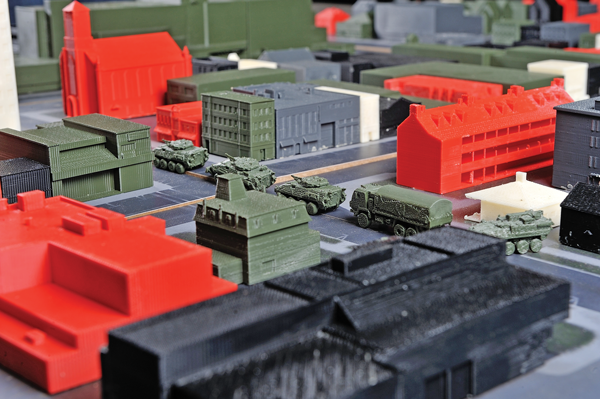
Major Tom Batty, officer commanding of the Army Learning Support Centre (ALSC), 5th Division Support Group Gagetown, picks up Fredericton’s City Hall to show off the detail in the hands of the clock face in the tower, and then sets the building back in place on its foundation.Then he picks up the Justice Building across the street and slowly turns it on its side to show the level of detail in the brickwork over the front door.Next he lines up a convoy of Light Armoured Vehicles (LAVs) and Leopard 2 tanks.It is not superhuman strength that lets Maj Batty accomplish these feats – but rather feats of human ingenuity working in combination with modern technology.The entire model of downtown Fredericton was built in Gagetown using innovative 3D printers, and sits on a plywood board that is 2m x 3m square.This tiny town site plays an important role in helping Canadian soldiers learn about modern urban warfare, such as training in positioning troops and vehicles effectively in an urban core.Instead of the past practice of conducting training exercises in the actual downtown core, scenarios can now be replicated accurately using the model in a so-called “cloth model” exercise.A “cloth model” exercise is a war game event conducted on a table, on the ground, or on paper to practice particular maneuvers, battles or missions.The 3D models enhance those tactical discussions and have the added geometric advantage of being able to build accurate scale models of the environments in which soldiers train.These 3D printers are among the most innovative workhorses and are currently at work 24/7 to produce tiny replicas of vehicles, firearms and training aids on an “as-needed” basis, processing orders submitted from various schools, training centres and units within the Canadian Army.The manageable size of the tiny models allows soldiers to...

Explore More

Categories

Top News

E-Editions Archive

News Stories Archive

Proud Supporters

Joshua Buck, Lookout Newspaper