Plotting a course
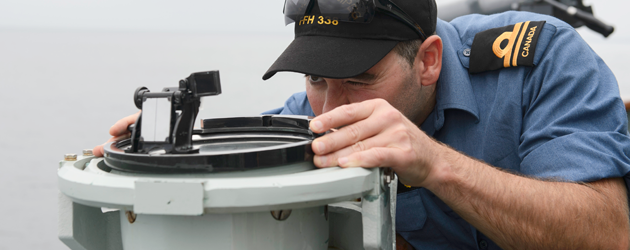
Sub-Lieutenant Matt Baker, a Bridge Watch Keeper under training from HMCS WINNIPEG shoots a bearing during OP REASSURANCE in the Eastern Atlantic Ocean on August 31, 2015.
Sub-Lieutenant Matt Baker, a Bridge Watch Keeper under training from HMCS WINNIPEG shoots a bearing during OP REASSURANCE in the Eastern Atlantic Ocean on August 31, 2015.
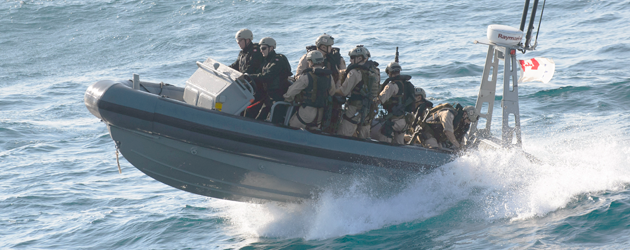
Naval Boarding Party returns to HMCS WINNIPEG after conducting training with Portuguese Flagship DON FRANCISCO DE ALMEIDA in the Eastern Atlantic Ocean during OP REASSURANCE on September 1, 2015.
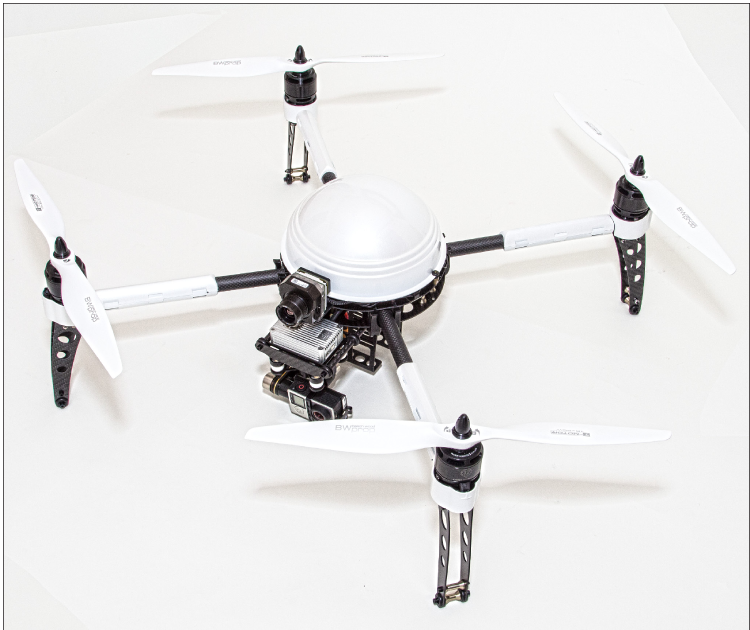
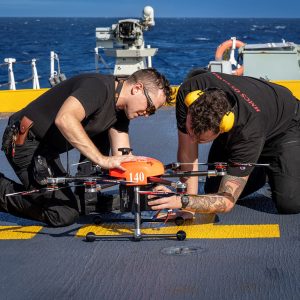
Logan Rode hopes his latest flying drone creates a big buzz when it lands at the Naden Drill Hall during the Sept. 17 CFB Esquimalt Industrial Supplier Trade Show.“We are really excited about coming to CFB Esquimalt and connecting with military and department of defence staff,” says Rode.“It’s a great opportunity for our company to do some networking and get some feedback from people in the military about our product.”The X-Bot, a remote controlled, unmanned Aerial Vehicle (UAV), and a consumer grade drone will be showcased by the 35-year-old Victoria-born entrepreneur at the trade show.Rode is founder and president of ProPhotoUAV Technology Corp.He describes his company’s latest invention – the X-Bot- as a “sophisticated eye in the sky” or “flying robot”, and sees it as key development in the rapidly-expanding field of UAVs.“It’s definitely not a fad; the X-Bot is the next wave in high-tech, compact flying technology,” he says.Rode warns the X-Bot is not to be confused with increasingly popular recreational UAVs used by amateur hobbyists, and adds it can be used to perform a variety of tasks.“The sky is the limit in terms of applications of this technology for military, emergency services and search and rescue purposes,” says Rode.“Unfortunately, most of the media coverage surrounding UAV’s has been primarily focused on the negative aspects of this technology such as privacy issues, but the X-Bot doesn’t really fall into that category.”The X-Bot is not a toy, he says. It was designed to capture high-resolution video, infrared, thermal and other images, and can be controlled from a tablet, Google maps or a standard handheld controller.The four-quad prop UAV features a three-axis stabilized gyro for the delivery of stable HD images.Its body is made of light carbon fiber and normally weighs about five kilograms, depending on the payload. It has a...
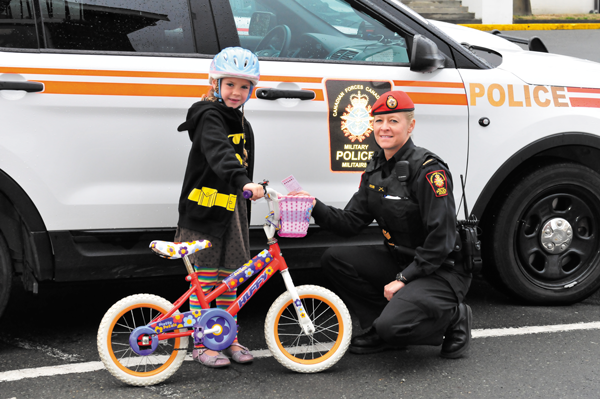
[caption id="attachment_10721" align="aligncenter" width="300"] Sgt Marji Fischer gives Kairi Playle, 6, a positive ticket for wearing a helmet with when riding her bike.[/caption]Police ticketing of youth has a new purpose on base and around the city.Police personnel within the south island police services area, including Military Police from Military Police Unit Esquimalt, are rewarding youth demonstrating good behaviour with “Positive Tickets.”Good deeds such as skateboarding with a helmet and bicycling safely, picking up litter, staying drug free, and helping others will be noticed, and Military Police may reward youth with a ticket. The tickets are the size of a hockey trading card and earn youth free drop-in admission to a recreational centre within the Greater Victoria Capital Regional District, including the Naden Athletic Centre. At the NAC, they can be redeemed for one free access to the gymnasium, pool, weight and cardio rooms (15+ years), and arena.However, the number of the tickets is limited, so there will be some discretion as to when they are issued. While conducting proactive patrols in the military communities, Military Police will not only be canvassing individuals for breaking the law, but will also look for good deeds and positive behaviours by community youth. The intent of the program is to reduce juvenile problems in the community, boost self-esteem and improve community relations with youth. “Our military police patrols interact with youth residing within the eight residential housing unit sites located within a 25 kilometre radius of CFB Esquimalt,” says Major Michael Lemire, Commanding Officer of the Military Police Unit Esquimalt.“The act of giving out the positive tickets will help further build relationships between youth and the Military Police. We always strive to have positive interactions with those we provide law enforcement and Force Protection services to, and this program helps us do that.” The...
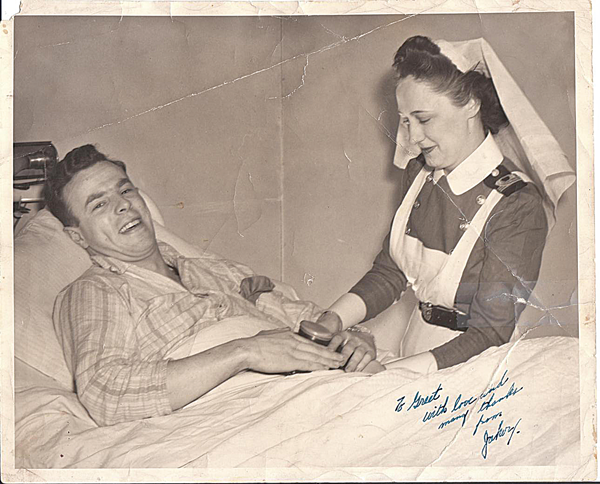
In 1943, at the pinnacle of the Second World War, Margaret “Greet” Ferguson, a graduate nurse trained in a Toronto hospital, found herself treating wounded Canadian sailors at the base in Newfoundland.She was one among 99 other nurses chosen as Canada’s first contingent of Naval Nursing Sisters.“I always had wanted to be a math teacher,” says Ferguson, 97.“But my brother and I ended up being in Grade 12 together, and my dad couldn’t afford to send us both to college when we graduated at the same time, so it was proposed that I try nursing school, which was free.”Ferguson, who grew up in the tiny hamlet of Inverness, Nova Scotia, was accepted into St. Michaels, a strict Catholic nursing hospital in the heart of bustling Toronto.She says she still remembers the immaculate tile halls of the hospital and the scratching from her stiffly starched white collar as she worked.“But I just kept wondering: is the war going to be over by the time I finally finish the three years of my training?”By the end of her final year, Ferguson had accepted a position in the obstetrics ward at St. Michaels.It was then that the Minister of National Defence, Angus MacDonald, put out a call to the country for 100 naval nurses.Before then, nurses could only join the air force or army.“I desperately wanted a change at that point in my life,” says Ferguson.Minister MacDonald, once the Premier of Nova Scotia, had been born and raised in Inverness.One phone call to MacDonald, and Ferguson found herself with a tentative offer that she might be one of the first naval nurses to serve.“A few days after I called Angus, I got a call from a commander at the recruiting base in Toronto, HMCS York.He said: ‘I don’t know who the heck you...
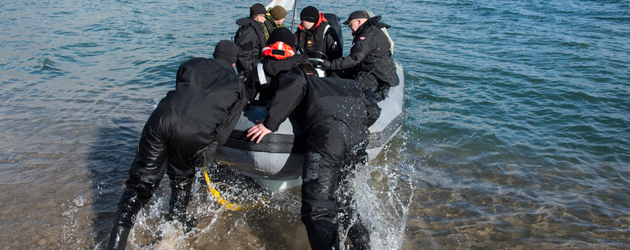
Representatives of the Canadian Joint Operations Command and Joint Task Force (North) launch a Rigid Hull Inflatable Boat (RHIB) in Sachs Harbour, Northwest Territories during Operation NANOOK on August 23, 2015.
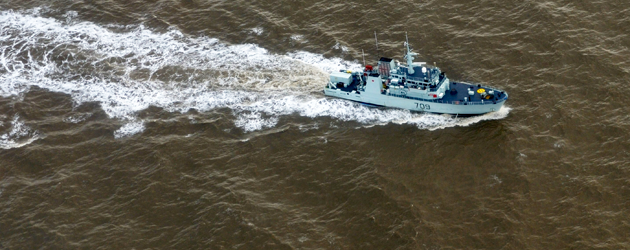
Her Majesty’s Canadian Ship (HMCS) Saskatoon sails toward Tuktoyaktuk, North West Territories in the Beaufort Sea after Operation NANOOK 2015, on August 28, 2015.
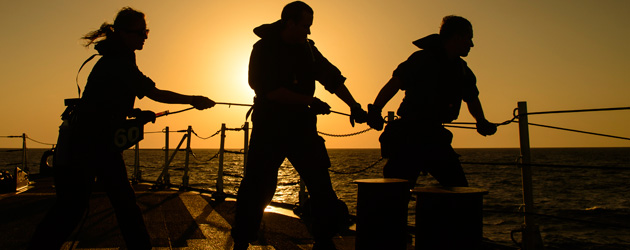
Line handlers on board HMCS WINNIPEG control the distance line of the ship during a Replenishment At Sea with Spanish Ship CANTABRIA during Operation REASSRUANCE on August 18, 2015.
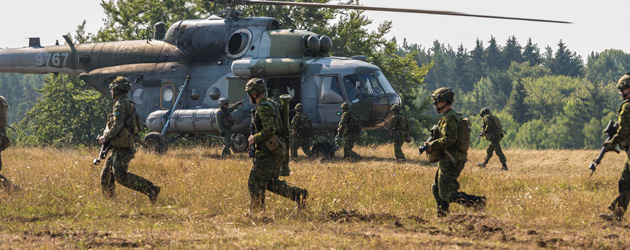
CF members load onto a MI-17 helicopter during Exercise ALLIED SPIRIT II at the Joint Multinational Readiness Center in Hohenfels, Germany, on August 21, 2015 during OP REASSURANCE.
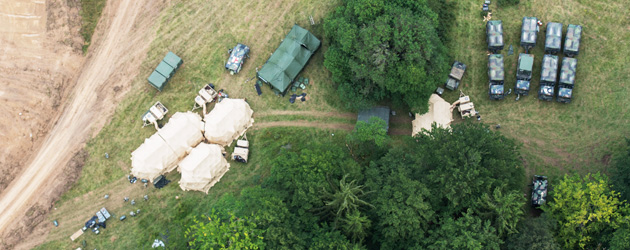
Aerial view of the field hospital where medical staff and their allies give medical attention to role players in the Hohenburg training area during EX ALLIED SPIRIT II, at the JMRC in Hohenfels, Germany.
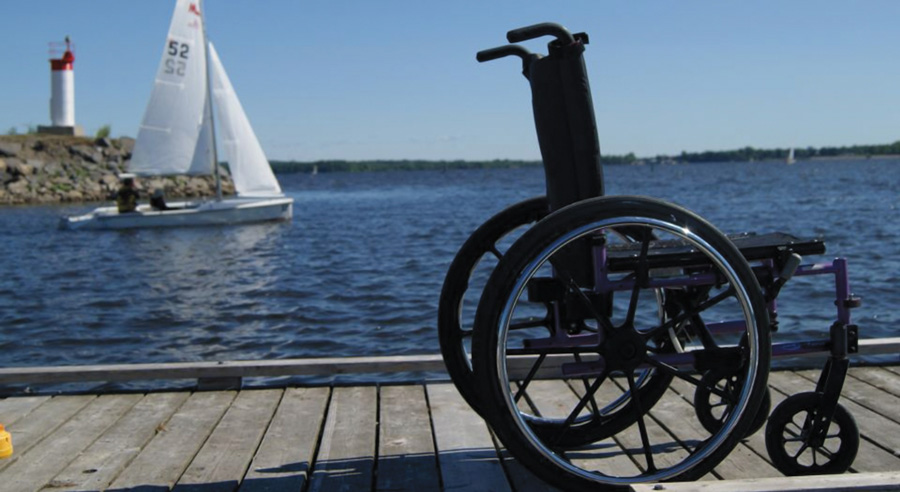
A team of volunteers are getting set to huff, puff, and put some wind into the sails of this year’s Mobility Cup.The Canadian Forces Sailing Association (CFSA) located at Munroe Head on the north side of Esquimalt Harbour is host to the 24th annual edition of Canada’s international regatta for sailors with disabilities, Sept. 7 to 11. “We have been working all year to get our club ready for this event,” said Bill Macdonald, Disabled Sailing Association representative for CFSA. “It is a big effort, but it is also a lot of rote because we have done this so often before.”CFSA hosted the Mobility Cup in 1995 and again in 2001. Macdonald says this year’s regatta will require over 150 volunteers to help welcome 42 competitors from across the United States and Canada.Most volunteer positions have been filled, but Macdonald says they are still looking for a few good men and women to assist. CFB Esquimalt is providing tents, chairs, tables and several other support items. He says the CFSA are expecting a crowd of 300 to 400 people for the five-day event.“It is just incredible and truly amazing that they have opened their doors to us again,” said Emily Boardman, Coordinator of Services at Recreation Integration Victoria.“The ramps and washrooms at the CFSA are easily accessible and have been redone, which will make the experience for participants much easier.”CFB Esquimalt renovated all the heads and wash places to make them accessible in 2001, and a new ramp to the docks was installed in 2008 Macdonald and Boardman both say the salt water course, which runs to the south of Royal Roads University in nearby Colwood, will pose unique challenges for some sailors. “Esquimalt Harbour can be quite fluky and unpredictable the way the wind is constantly changing as it...
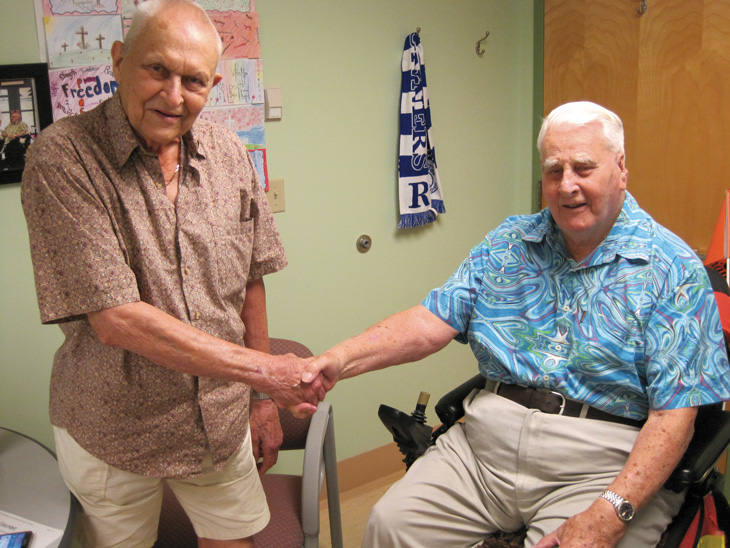
So far, Second World War veteran Rudi Hoenson has given away $4 million of his fortune, but says his latest donation may be his most meaningful.Earlier this month the 92-year-old Victoria philanthropist, and atomic bomb survivor, announced he would match donations of up to $200,000 to help cover the costs of new overhead lifts in all the rooms at The Lodge at Broadmead. The Lodge at Broadmead is a 229-bed residential care facility with 115 priority access beds for veterans, 110 beds for seniors in the community, and four respite care beds for veterans.The Lodge is the primary priority access bed facility for veterans on Vancouver Island.“This is a complete game-changer and is also critically important for care at The Lodge at Broadmead,” said Jennifer Jasechko, Broadmead Care’s Fund Development Consultant.“Residents will be able to get out of bed more often and easily, so it’s much faster, more dignified, comfortable, and also saves injuries to our staff.”Previously, Jasechko says residents had been forced to wait for caregivers to arrive with portable lift units and then move them into wheelchairs or commodes.The new lifts cost $5,300 each and will make life “considerably easier” for both residents and care-givers. “I am veteran myself so I feel quite an association with the people here at the Lodge at Broadmead because I know what many of them went through,” said Hoenson.“Many people who live here are war veterans or fought in World War Two as I did. I think it’s a good place to give back some money and make their lives here better.”Hoenson was just 1.9 kilometres away from ground zero when the second atomic bomb ever used in warfare was dropped on Nagasaki, Japan.Surviving that experience, he says, gave him a “greater understanding” of humanity and also helped him gain insight into...
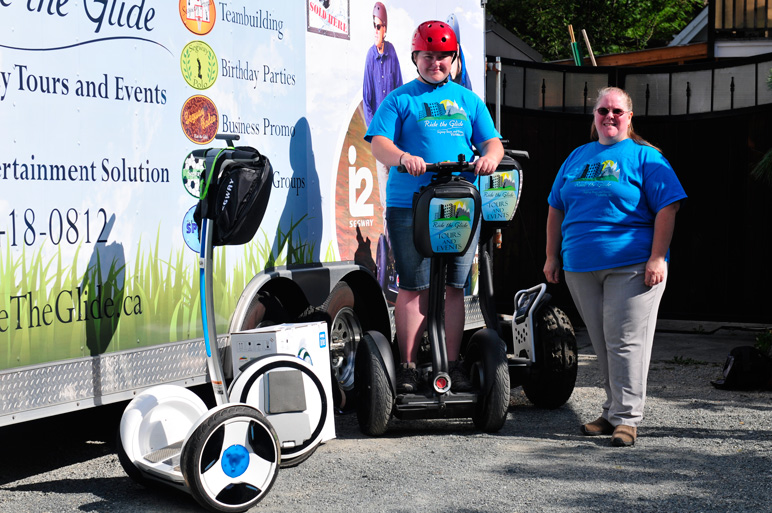
Want to get to from point A to B quickly, in style, off road, and use green transportation?Segways are the total solution.Not sure what a Segway is?No worries, vendor Ride the Glide - Segway Tours and Events, the self-balancing specialists, will be showcasing the personal transporters at the Sept. 17 CFB Esquimalt Industrial Supplier Trade Show. “We love the fact that they are green technology with their rechargeable lithium ion batteries,” says Corinne Besler, co-owner of Ride the Glide Segway Tours and Events, Victoria.“Rather than hop in your car, you can hop on a Segway. Plus it’s just so much fun,” Besler says Segways and other self-balancing products are a great form of travel for the average person who needs to commute a short distance, such as to and from work. Segways are a staple in warehouses, airports, and can assist anyone who owns a large property to get around quickly. “They actually decrease the fatigue of people who need to get from point A to point B multiple times a day; so they can increase productivity as well,” she says. On display at the tradeshow will be the Segway x2, an off road model that can travel between 15 to 19 kilometres on one charge, and has large wheels that are perfect for traversing multiple terrains on a property.Also showcased will be the Segway i2, which can carry a person between 30 and 38 kilometres on one charge, and the Chinese version of the Segway, the Ninebot Elite, which has smaller wheels and a more streamlined shape for commuters. Also on display, the NinebotOne, an electric unicycle that uses Segway technology. “They are all highly maneuverable and take up about as much space as your own personal body space. Plus, they can stop on a dime or go as...
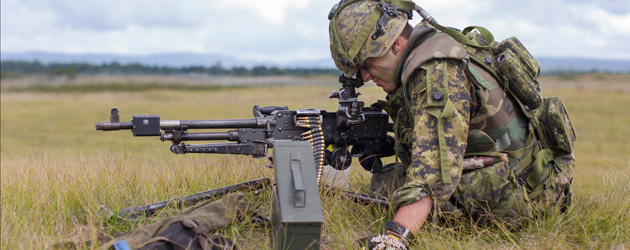
Pte. Austin Silva of The Lorne Scots maintains security behind a C-6 machine gun at a defensive position during Exercise STALWART GUARDIAN on August 24, 2015 at Garrison Petawawa, Ontario.
A CH-124 Sea King Helicopter from HMCS WINNIPEG prepares to land on Spanish Ship SANTA MARIA for a medical evacuation during OP REASSURANCE.
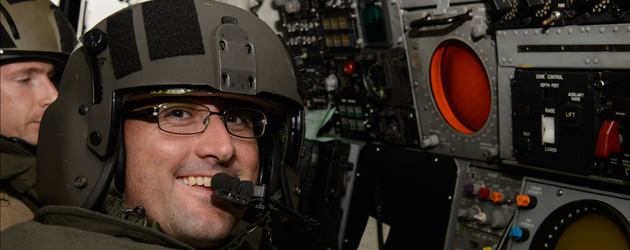
A CH-124 Sea King Helicopter Airborne Electronics Sensor Operator from HMCS WINNIPEG performs in-flight checks while on OP REASSURANCE in the Mediterranean Sea on August 13, 2015.
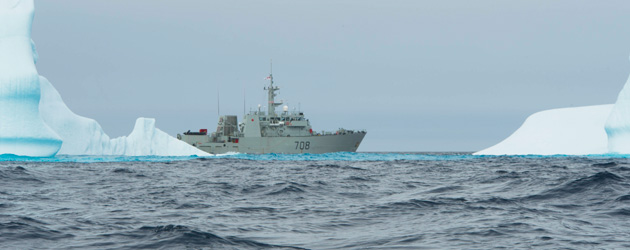
Her Majesty's Canadian Ship MONCTON passes an iceberg in the Arctic Ocean during Operation QIMMIQ on August 19, 2015.
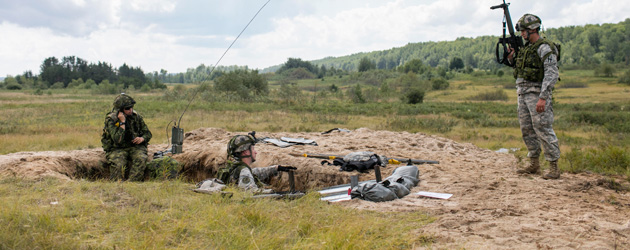
Members of the Canadian Army Reserve from 4th CAN-DIV and members from "B Coy", 2nd Battalion, 121st Infantry, 48th Brigade of the Georgia National Guard build a trench during EX STALWART GUARDIAN, Petawawa, Ontario.
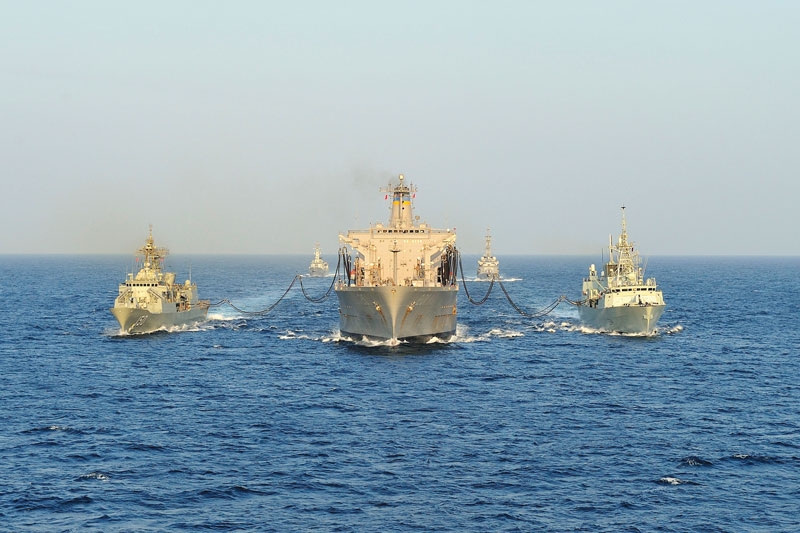
Preparation is the key to operational excellence.Sailors devote countless hours to sharpening their skills in order to maintain readiness throughout the fleet.As the Royal Canadian Navy (RCN) continues its high pace of operations and prepares to receive the future fleet, it is vital this readiness is maintained through training of its sailors.Since 2010, over 150 RCN members have participated in the Regulus Program that facilitates exchanges with partner navies from around the world, providing unique training opportunities and exposing sailors to the diverse cultures of many allied navies.Recently, Petty Officer Second Class Tony Goodwin was sailing with the Royal Navy aboard a Royal Fleet Auxiliary tanker.With 10 years of experience serving on the recently paid off Protecteur-class supply ships, PO2 Goodwin was assisting in the development of replenishment at sea (RAS) training opportunities for RCN sailors.“I was identifying training opportunities for Royal Canadian Navy sailors onboard the Royal Fleet Auxiliary to help prepare our navy to receive the joint support ships and to help strengthen the already excellent ties we have with the Royal Navy,” said PO2 Goodwin.While sharpening sailor’s skills, the Regulus program is also helping to strengthen relationships with allied nations, increasing interoperability and reinforcing the navy’s commitment to international peace and security.“This growing interoperability is vital to sustaining a relevant, world-class navy,” said Lieutenant (Navy) Arthur Halpenny, Regulus Personnel Coordinator.“The Royal Canadian Navy is now more agile and capable to operate with partner navies, as the program not only builds relationships at the candidate level, but at the staff level as well.”Canada is currently one of 10 countries participating in the program, which includes Australia, Chile, France, Ireland, New Zealand, Peru, Portugal, the United Kingdom and the United States.Originally implemented as a way to get more RCN sailors to sea during a period of reduced sailing opportunities...
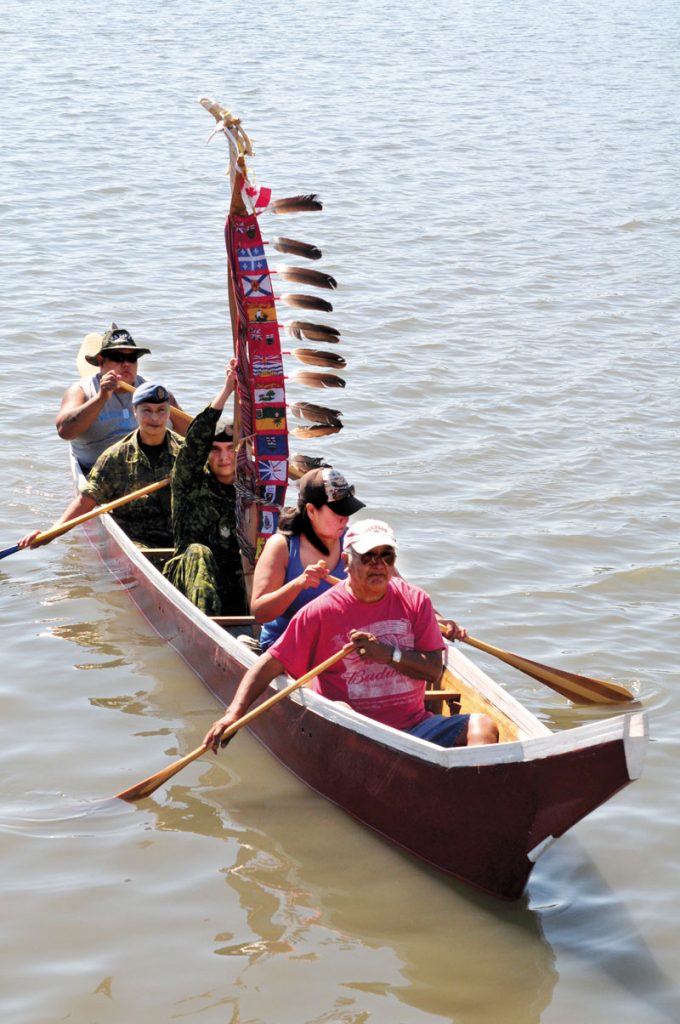
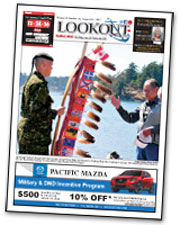
A hawk circled high in the bright blue sky and a family of otters splashed and frolicked by the shoreline as Sgt Moogly Tetrault-Hamel and paddlers from the Songhees nation headed for an inlet off Esquimalt harbour in a traditional Coast Salish family canoe last Wednesday.In his hands was the Canadian Armed Forces Eagle Staff, a highly honoured and sacred icon of First Nations’ people, similar to a nation’s flag.The military had brought their Eagle Staff for the Raven graduation, but before it could be used, First Nation protocol dictates that permission must be sought and accepted to bring the Eagle Staff into the traditional territories of the Songhees and Esquimalt Nations. “It’s really encouraging and important that members of the Canadian Armed Forces asked our people for permission to come ashore, and that they showed such a willingness to follow our traditions,” said Songhees Nation Elder, Elmer George.“The Eagle Staff came by water and canoe because this is the traditional way of meeting outsiders coming into our community.”At 2 p.m. the canoe arrived on the shoreline behind the Esquimalt Nation’s administrative office.About 50 onlookers from both communities looked on from a rocky bluff as Sgt Tetrault-Hamel asked Elmer George for permission to come ashore.He gave his permission and then took a moment for prayer as the Eagle Staff made its official entrance into the territory of the Coast Salish Peoples.“It was a great honour and I felt very blessed when I was asked to do this. It was hard to feel anything but pride as I walked ashore,” said Sgt Tetrault-Hamel.The Eagle Staff has great spiritual and cultural relevance for the people of Turtle Island (North America) MWO Grant Greyeyes, Aboriginal advisor with Army Headquarters, described it as a “highly honoured and consecrated object” and a “conduit of prayer”...
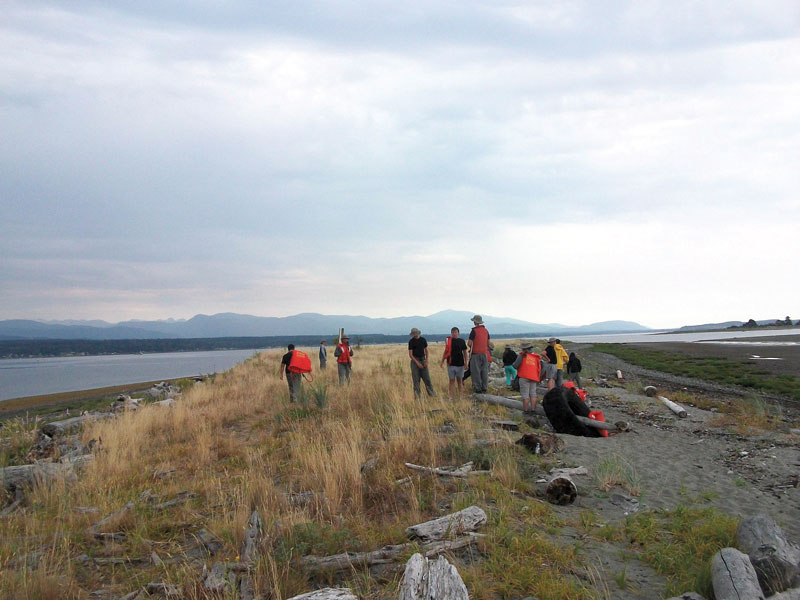
Youth wanting that last summer camping trip – with no parents – should look no further than the Tri-Cadets Camp-Out at Albert Head.From Sept. 1 to 3, youth can camp out in tented bivouac sites and participate in air rifle marksmanship, canoeing, orienteering activities, hiking, and a range of sports, and discover what the cadet program is all about.“The camp out’s goal is simple: to promote fun, challenge, and making friends,” says Lt(N) Cynthia Lawless, Commanding Officer of the Royal Canadian Sea Cadets Corps 263 and core organizer of the camp. “We are looking to develop teamwork and esprit de corps as well, all components of a well-rounded cadet.”Lt(N) Lawless says the value of the camp lies in its blending of activities from each of the three cadet elements: air, land, and sea.Participants will learn basic bush living and be challenged to adjust to life in a large group with very little access to technology and amenities.Senior cadets from across the island will help instruct the youth who are completely unfamiliar with cadet activities or skills, making it a truly youth-led event.“Cadets excel the most through play and learning, whether on the water, in the bush, or on the field,” says Lt (N) Lawless. “So these youth are going to thrive off the energy of each other during those three days.”Rachel Lallouz Staff Writer (more…)
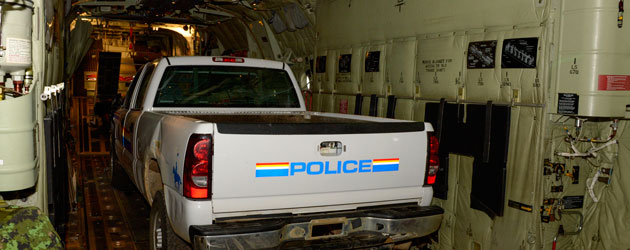
Members of the Canadian Armed Forces on board a CC-130J Hercules aircraft transport a RCMP truck from Inuvik Mike Zubko Airport to Yellowknife Airport in the Northwest Territories during OP NANOOK.
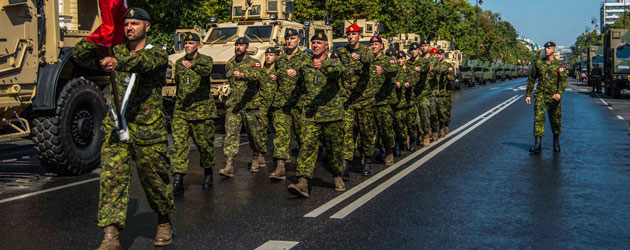
Canadian military members march during the Polish Armed Forces Day Parade in Warsaw, Poland, on August 15, 2015 during OP REASSURANCE.
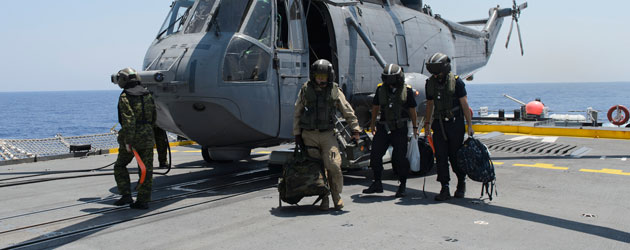
Two members of the Spanish Navy arrive on HMCS WINNIPEG to participate in cross training between the Spanish Navy and Canadian Navy in the Mediterranean Sea during OP ACTIVE ENDEAVOUR.
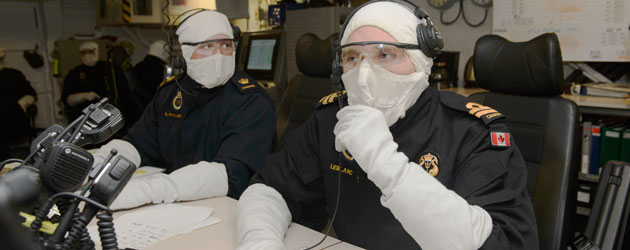
Members of HMCS WINNIPEG respond to mock emergencies in the ship’s damage control headquarters while conducting a battle scenario exercise during OP REASSURANCE.
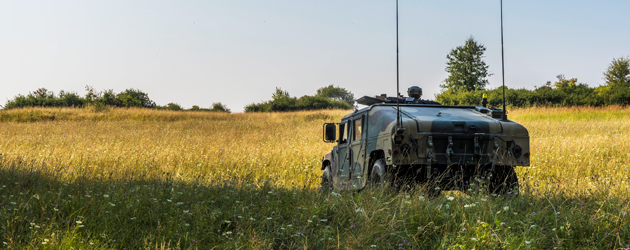
Military members in a High Mobility Multipurpose Wheeled Vehicle (HMMWV) wait at a contact position during a situational training exercise at the Joint Multinational Readiness Center in Hohenfels, Germany.

HMCS WINNIPEG breaks away from Spanish Ship CANTABRIA after conducting Replenishment at Sea (RAS) during Operation ACTIVE ENDEAVOUR on August 2, 2015.