Gaining Situational Awareness
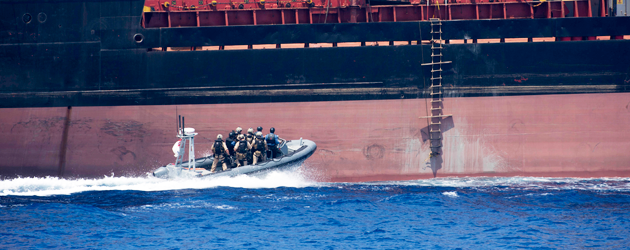
Boarding Party from HMCS WINNIPEG approach a merchant vessel in the Mediterranean Sea to conduct a maritime situational awareness approach to inform the crew during OP ACTIVE ENDEAVOUR.
Boarding Party from HMCS WINNIPEG approach a merchant vessel in the Mediterranean Sea to conduct a maritime situational awareness approach to inform the crew during OP ACTIVE ENDEAVOUR.
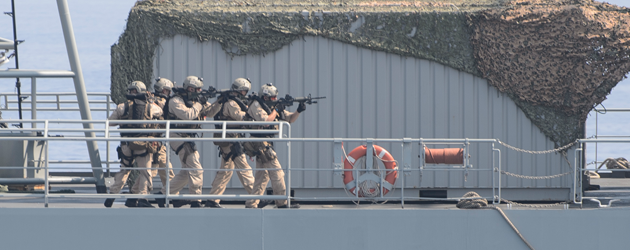
The Enhanced Naval Boarding Party from Her Majesty’s Canadian Ship WINNIPEG clear the deck of Spanish Ship CANTABRIA in a boarding exercise during Operation ACTIVE ENDEAVOUR.
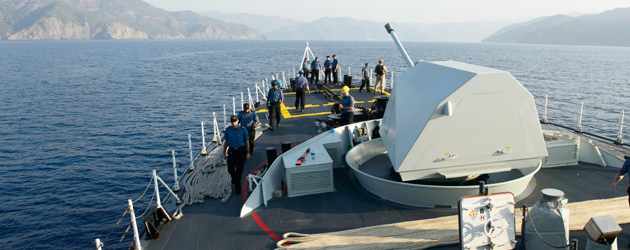
Her Majesty’s Canadian Ship WINNIPEG arrives at Aksaz Naval Base in Turkey during Operation REASSURANCE on August 5, 2015.
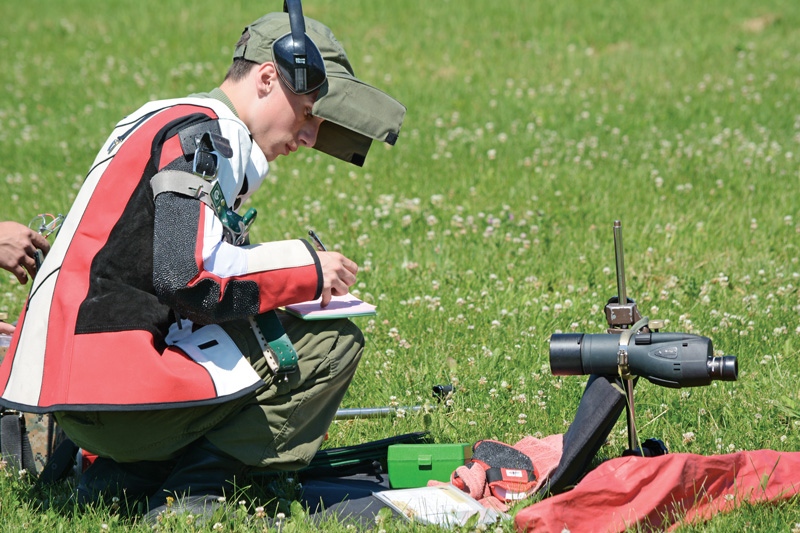
[caption id="attachment_10607" align="aligncenter" width="300"] Philippe Asselin[/caption]He traded in his trumpet for a Fullbore rifle and now WO Philippe Asselin is making beautiful sounds on the shooting range.“There are so many similarities; playing trumpet and shooting are both about breathing control and concentration,” says WO Asselin, a member of the Royal Canadian Army Cadets National Rifle Team (RCAC NRT). “While it’s super important to hit the right notes in a wind instrument, for shooting you need to get your breathing right to get your site perfectly centered.”That insight has helped the International Baccalaureate Grade 12 student at Esquimalt’s École Victor-Brodeur flourish as a competitive marksman.WO Asselin returned from England’s prestigious Bisley Imperial Meeting (July 9 to 18) with a 7th place finish in the Chairman’s Final portion of the competition, competing against a pool of 500 shooters from around the world.“I didn’t get too excited because you can’t get distracted with how well you are doing in this sport or it will throw you off entirely, and I still had more events to compete in,” says the cadet with the 2483 Princess Patricia’s Canadian Light Infantry (PPCLI).Before his success on the shooting range, there was always music. He had been a band member since joining the cadets in 2012 and was awarded Most Proficient Musician in the 2483 PPCLI in both 2013 and 2014.But the life-long fan of Dizzy Gillespie who describes his trumpet as an “old friend” decided to give up music before heading to Bisley.“It was kind of heart breaking for me, but the music just took up too much of my time and I was no longer able to participate,” he said.The decision to take a temporary break from music came last year after he made the RCAC NRT. It took three years to build his qualifications for...
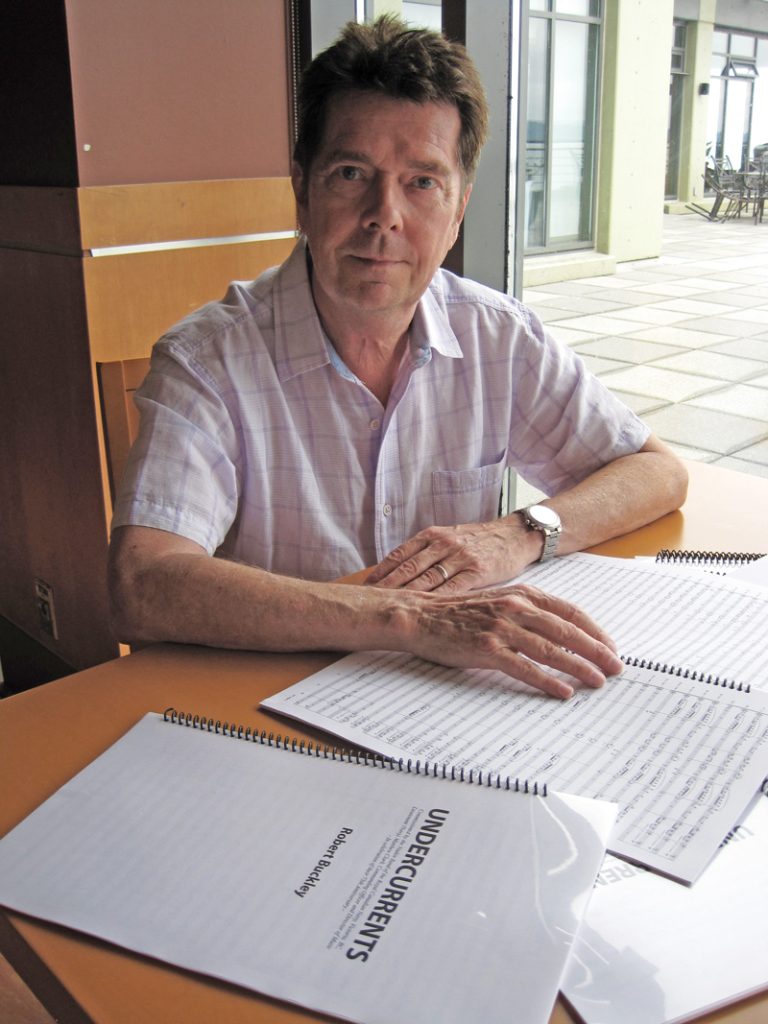
[caption id="attachment_10604" align="aligncenter" width="224"] Bob Buckley[/caption]Seated far back in the crowd at the bustling Ladner Band Festival last June, Bob Buckley was entranced by the perfectly played music of the Naden Band of the Royal Canadian Navy.“They were unbelievable that day,” says Buckley. “They are probably one of the best wind ensembles I’ve ever heard in the world.”Buckley, a Canadian composer who has written hundreds of scores for television shows and movies, approached Director of Music for the Naden Band, Lieutenant (Navy) Matthew Clark after the show, proposing the two collaborate on a musical project.“When Bob came up to me, I told him, ‘we have played your music before’,” says Lt(N) Clark. “From there we started a conversation about working together.”Lt(N) Clark wound up commissioning Buckley to write a piece for their 2014 Christmas concert. From there, the two agreed to pair their individual experience to record and produce a CD.“It was always my dream to be a serious composer,” says Buckley, who studied composition at the University of Washington and the University of British Columbia. “But then I got seduced by rock and roll for 20 years.”He has conducted and arranged for major artists such as Michael Bublé, Bryan Adams, Celine Dion, Our Lady Peace, Simple Plan and Aerosmith, to name a few.His musical genius has led him to play in more than a few rock bands, and even a wind ensemble in Holland. Buckley has published at least 60 different wind band compositions with North American and Dutch music publishers.For the CD, he agreed to compose a number of original pieces, and Lt(N) Clark worked with the band to rehearse and polish Buckley’s music.The CD, “Undercurrents”, is comprised of 15 tracks of contemporary wind music. It features a range of tones and styles, from jazz and classical to...

[caption id="attachment_10597" align="aligncenter" width="300"] LS Jessica Spence (left), Base Foods; Katerina Stewart, Canadian Forces Fleet School Esquimalt; and Sgt Moogly Tetrault Hamel, 39 Service Battalion, pose with the Raven statue as the troops fall in during the Raven program’s career day at Work Point Aug. 14.[/caption]As recruits in this year’s Raven program prepare to soar into adulthood, they are learning why a career in the Canadian Armed Forces may be the right flight-path for them.On the morning of Aug. 7, participants in this year’s Aboriginal youth employment program received words of inspiration and encouragement from CPO2 Gus Greer and six other guest speakers during a career day at Work Point’s Nixon building.“Nothing but good can come from being part of the Raven program,” said CPO2 Greer of HMCS Calgary.“You got out of your comfort zone, got off the ‘res’ or your small town and saw how the rest of the world operates. When you get back to your community you have more tools in your tool kit to deal with life.”CPO2 Greer grew up in Creighton Mine, a small mining town southwest of Sudbury, Ont. Many of his days were spent with his grandparents and other family members on a nearby reserve. He told the group he understands why leaving their tightly knit communities is both a “challenging” and “completely new experience” for most of them.A former Raven recruit also spoke to the youth. LS Jessica Spence, Galley Manager for Base Foods, grew up on the Peguis First Nation reserve, 140 kilometres north of Winnipeg.She was a member of the Raven program in 2006, before joining the military in March 2009 as a cook. She encouraged this year’s class to appreciate the significance of their Raven experience.“Ravens this is your family right now,” said LS Spence. “You spent the summer with...
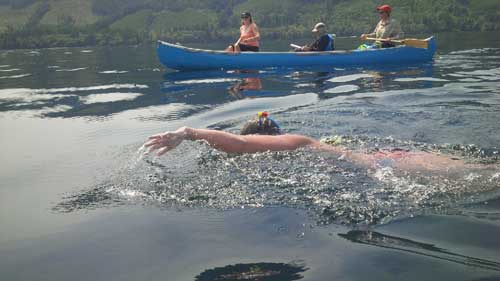
After 50 hours submerged in the choppy, wind-blown waters of Cowichan Lake an exhausted Cpl Alex Cape decided to call it quits.She swam a remarkable 94 kilometres in the large freshwater lake over the August long weekend, but fell two kilometers short of the world record for longest continuous open-water swim.“I swam pretty freaking far. I still can’t completely wrap my brain around it,” said Cpl Cape, 35.“There have been 12 people who have walked on the moon, but only four have swum this distance before, solo and unassisted.”On Sunday evening around the supper hour, Cpl Cape and her support crew in nearby escort boats decided to end her aquatic marathon due to safety concerns.Cpl Cape, an experienced swimmer who works as a medical technician at CFB Esquimalt’s clinic, says she doesn’t consider the result a failure.She and her swimming partner Susan Simmons, 50, set off from the shores of Municipal Beach on the southern shores of the lake on Friday July 31 at 4 p.m., with an aim to swim 105 kilometers.Simmons has multiple sclerosis, so her goal to smash distance swimmer Vicki Keith’s 1987 benchmark was even more incredible.The two Victoria Masters Swim Club members took on the challenge to raise funds for Special Olympics and MS and to raise awareness about the website ‘What’s Your 105?’Simmons previously swam the English Channel and the Georgia Strait and was aware of the daunting challenge she faced this time around.In 2014, the two completed a 70 km swim of Cowichan Lake, but this time around the weather conditions were much less favourable with higher winds and waves.By midmorning on Saturday, Simmons had covered 44 km before her MS had the final say about how far she could push her body.Vertigo, vomiting and the inability to keep vital nutrients in her...
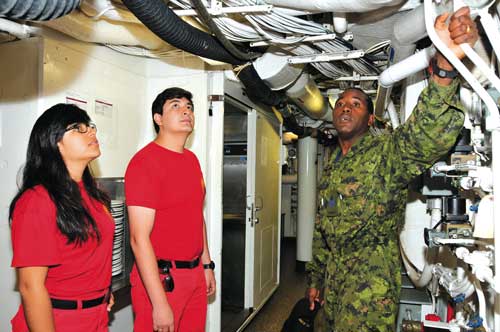
Peruvian volunteer firefighters Estefania Moraves, 21, and Marco Abad, 23, tried on fire fighting gear, examined emergency supplies and travelled through the narrow passageways of HMCS Calgary on July 31.The tour of the Canadian warship focussed on fire safety precautions and gear used on board a Royal Canadian Navy frigate.Ship firefighter, Sgt Veron Atkinson led the two through every nook and cranny of the ship, from the Officer’s Mess to the machinery control rooms.“I’ve learned a lot since arriving in Canada,” says Abad.“I’m paying attention to skills that are different here that I can bring back to Peru to improve my own firefighting techniques.”The two were invited for a visit to Canada by Firefighters Without Borders member Stephanie Dunlop, the Fire Chief of the Metchosin Fire Department. Moraves and Abad spent three weeks touring fire halls in Langley, Burnaby, Sidney, Central Saanich, and Oak Bay, before crossing the brow of Calgary.When Firefighters Without Borders members visited fire stations in Callao, Peru, three years ago to teach skills courses to volunteers, Dunlop was introduced to the two, who were eager to expand their knowledge of fire fighting with a trip to Canada.When a big brush fire broke out in Metchosin at the end of July, the two were put on the line and helped get the fire under control.They were given extrication training and high rescue rope training in Sooke, and have done ride-alongs with the Langford and Salt Spring Island Fire Halls.The two also toured CFB Esquimalt Fire and Rescue Fire Hall.As volunteer firefighters, both Moraves and Abad must meet a required number of hours spent in their fire halls each month.Moraves dashes from her classes as an engineering student to her fire hall multiple times a week, for a total of 31 hours per month.Abad, who is also studying engineering,...
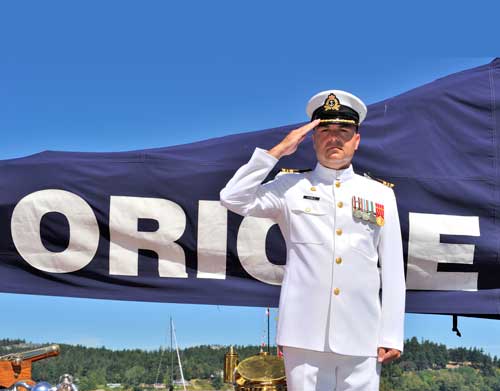
After sailing as HMCS Oriole’s Captain for almost four-and-a-half years, LCdr Kibble handed over command to LCdr Michael Wills July 30. The new Commanding Officer is junior to him in age, but carries equal confidence and capacity to bear the responsibly of skippering the 94-year-old sailing ketch. Oriole was designed and built in 1921 as a racing platform. It was eventually commissioned into the Royal Canadian Navy (RCN) in 1952. LCdr Kibble says all but a few really understand the true power of this ship, both as a racing/training vessel and a floating ambassador. “HMCS Oriole packs a wallop for Canadians in general, and the RCN in particular wherever we go. We draw huge crowds of young and old alike, and we are center stage.” He adds, “She’s a better ship now than when she was first built,” referencing the vast changes that only a commissioned vessel in the navy can receive through the decades.During his four years at the helm, LCdr Kibble has witnessed the “oohhs and aahhs” from sailors and the public as they tour the vessel, or take part in sailing it around Vancouver Island waters. “Sailors hailing from every nation flock to have a look at her and talk to her crew. On behalf of Canada, she gives us a resonating voice with the public, and it’s an experience they never forget.”First taught to sail by his father, LCdr Kibble then honed his skills aboard the Golden Hinde, a replica of Sir Francis Drake’s ship. From there his schooling included two 140 foot top sail schooners, Winston Churchill, and Malcom Miller. As a professional mariner, the next step in his progression was joining the RCN. LCdr Kibble was scoffed at when he boldly declared to a Navy Selection Board he had his crosshairs set on Oriole....
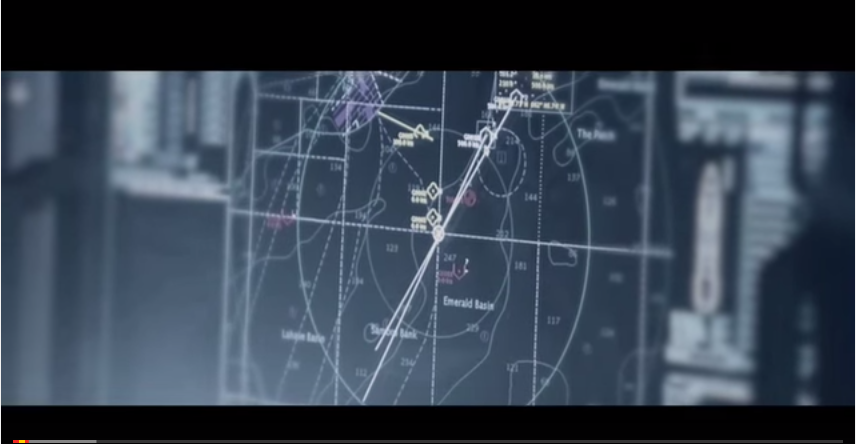
In the documentary, RCN sailors explain why the frigates needed upgrading, the complexity of the task, and the meticulously planned and executed engineering challenges. An RCN commodore and three commanding officers walk through the process, from the fine details to the big picture. Video: Courtesy of RCN - Youtube Channel
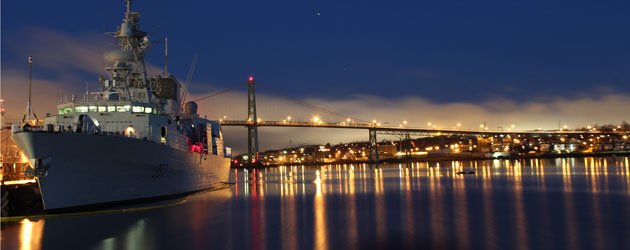
HMCS Fredericton sits in Halifax Harbour, Nova Scotia, near the MacDonald Bridge.
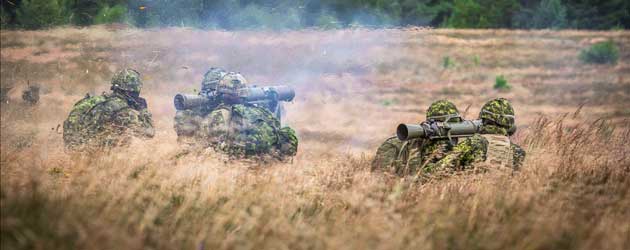
Land Task Force members are encompassed by the heat wave of a M2CG-Carl Gustav recoilless rifle while conducting a live fire exercise at Mielno range in Glebokie, Poland during OP REASSURANCE.
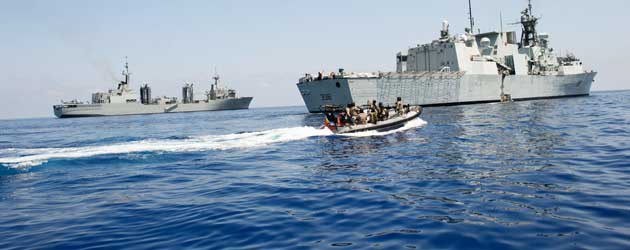
Members of the boarding party from Spanish Ship CANTABRIA prepare to board HMCS WINNIPEG while conducting training with Standing NATO Maritime Group Two during OP REASSURANCE.
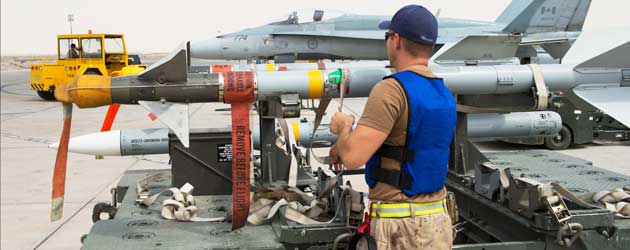
A RCAF Air Weapon Systems Technician, deployed as part of Air Task Force – Iraq, prepares munitions for loading to a CF-188 Hornet, at the Camp Patrice Vincent flight line in Kuwait.

A beautiful sunrise in Esquimalt Harbour with Maritime Coastal Defence Vessels in the background, taken from the Victoria Shipyards south jetty.
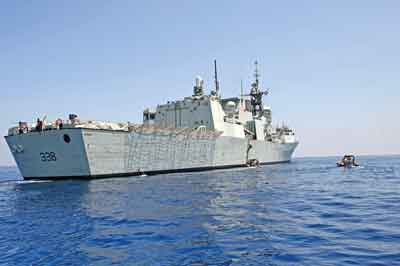
After months of trials, high-readiness preparations, and many personnel and equipment related challenges, HMCS Winnipeg officially joined Standing NATO Maritime Group Two (SNMG2) in Palma de Mallorca, Spain, July 15.Winnipeg joined the task group as part of Operation Reassurance, Canada’s commitment to NATO assurance measures in Central and Eastern Europe. “Our team lives by the ship’s motto ‘one with the strength of many’ and I am proud to say that Winnipeg’s strength now extends to our NATO allies,” said Commander (Cdr) Pascal Belhumeur, Commanding Officer of Winnipeg.While in Palma de Mallorca, Winnipeg’s crew and command team met with SNMG2 Command (flag) ship, Federal German Ship (FGS) Hamburg, as well as Spanish Ship (SPS) Cantabria and SPS Santa Maria for the first time.In addition to holding planning meetings, FGS Hamburg crew hosted the task group’s first diplomatic engagement event, and all SNMG2 ships were open for public tours to local residents and tourists.“It was an honour to meet with all of the international SNMG2 ships that we will be working with,” said Rear-Admiral (RAdm) Jorg Klein, Commander of SNMG2.“Our assembly in Palma de Mallorca marks the start of our efforts as a team and I am certain that our working relationships will grow stronger over the coming months.”Each ship sailed into Palma harbour on July 15 as individual units, and on July 20, SNMG2 sailed out of Palma harbour as a well-disciplined and professional NATO task group.SNMG2 is now in the Mediterranean Sea conducting fleet integration training to build team cohesiveness and they stand ready to provide necessary support to our NATO Allies.SLt Jamie TobinHMCS Winnipeg

“Brutal, Mad, Xciting!” blared one newspaper headline after the 2012 summer Olympic men’s quarter-finals in BMX racing resulted in 10 crashes involving 21 riders.But that’s not how members of the Greater Victoria BMX Association would describe their local version of the sport.Speaking with some of the civilian and military members of the club, the words you hear are inclusive, friendly, family-oriented and fun.Yes, there are similarities between local racing and the extreme event.While elite tracks ramp-up the level of difficulty, all tracks share the same basic features.They’re about 1,000 feet long with an elevated start gate, banked switchback turns, and straights that present a variety of obstacles – hills, really – for riders to pedal over, “manual” on one wheel, or jump.Each track also has a “rhythm section,” a closely spaced series of small hills, or “rollers,” designed to develop pumping skills.It’s a compact course that demands riders use a whole repertoire of cycling techniques, all in the 30 to 40 seconds it takes to race one lap.“It’s just a great place for kids to learn, to be confident riders on their bikes, which translates to commuting on the road or to any other cycling discipline. And they can learn these skills in a controlled environment,” says Cam Smith, President of Greater Victoria BMX and storesman within the Environmental Materials Section of Base Logistics at CFB Esquimalt.“Even friends of mine who race bikes and know bikes can’t believe how proficient our kids are at riding.” It’s no surprise, he adds, that Sir Chris Hoy, one of Britain’s most decorated track cyclists started in BMX racing, as did mountain-biking champion Anne-Caroline Chausson, who returned to BMX for the sport’s debut in the 2008 Olympics, winning gold for France.Greater Victoria BMX has produced its own share of top riders, including Brandon Reid,...
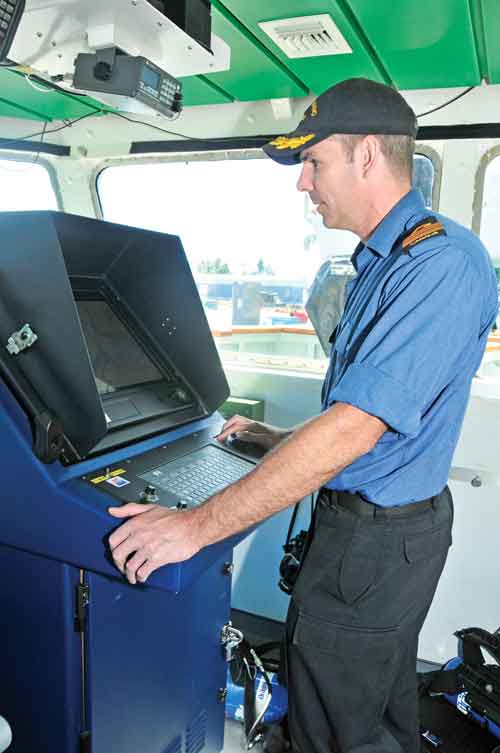
[caption id="attachment_10521" align="aligncenter" width="199"] Commanding Officer of HMCS Nanaimo LCdr Jeff Hopkins reviews an electronic map on board the ship’s bridge in preparation for Operation Nanook.[/caption]On Tuesday, HMCS Nanaimo and HMCS Saskatoon left the shelter of Esquimalt Harbour for six weeks of work in the ice laden waters of the Arctic.The two ships will make the 3,500 mile journey to Tuktoyaktuk in the Northwest Territories for the annual Operation Nanook, where they will conduct surveillance and presence activities in the area.Operation Nanook is the Canadian Armed Force’s largest annual northern training and sovereignty activity, working alongside other government departments to establish a visible federal presence in our northern communities.This year’s operation marks the first deployment north of the 60th parallel for a Pacific Fleet ship since HMCS Cedarwood in 1949.“This particular Operation Nanook is special,” says Lieutenant-Commander Brad Henderson, Commanding Officer of Saskatoon.“In the past, ships participating in Operation Nanook left from the East Coast, so this is the first time we are entering the Arctic from the West.”The operation will help to prepare the stage for more extensive operations to be conducted in the future by Arctic Offshore Patrol Ships.Training in the northern environment is anticipated to iron out logistical and operating challenges posed by remoteness and harsher environmental conditions in the North.The exercise will also play a key role in establishing a federal presence in Canada’s northern communities, which LCdr Jeff Hopkins, Commanding Officer of Nanaimo, says is integral to supporting Canada’s Northern Strategy.“But apart from that, we’ll be providing valuable operating time for our sailors in a more challenging environment,” says LCdr Hopkins.Nanaimo’s crew will operate a towed side-scan sonar system, which will capture high definition images below the water. The device is used to efficiently create an image of large areas of the sea floor.Once in...

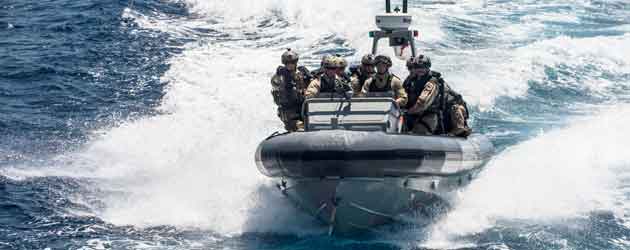
The Enhanced Naval Boarding Party from HMCS WINNIPEG conducts small boat exercises in the Mediterranean Sea during Operation REASSURANCE on July 31, 2015.
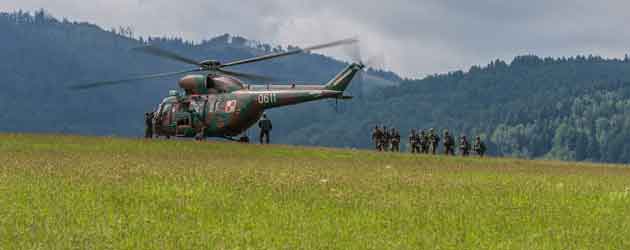
Canadian parachutists board a W3 Falcon helicopter from the loading area of a parachute training exercise organized by 6th Airborne Brigade of the Army of the Republic of Poland in Kalna, Poland, during OP REASSURANCE.
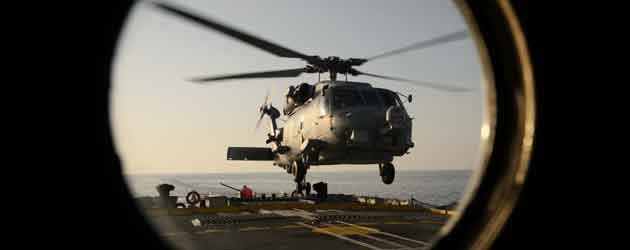
A SH-60B Seahawk helicopter from the Spanish Navy lands on the deck of HMCS WINNIPEG during training flights conducted by Standing NATO Maritime Group Two during OP REASSURANCE.

A Land Task Force member sniper zeros his McMillan Tac-50 caliber, C15 Long Range Sniper Weapon (LRSW) at the shooting range in Zaworske, Poland, on July 21, 2015 during Operation REASSURANCE.

Soldiers from the 2nd Battalion, Royal 22e Régiment, and several Reserve units, participate in an insertion exercise above the Citadelle of Québec, on July 29, 2015.
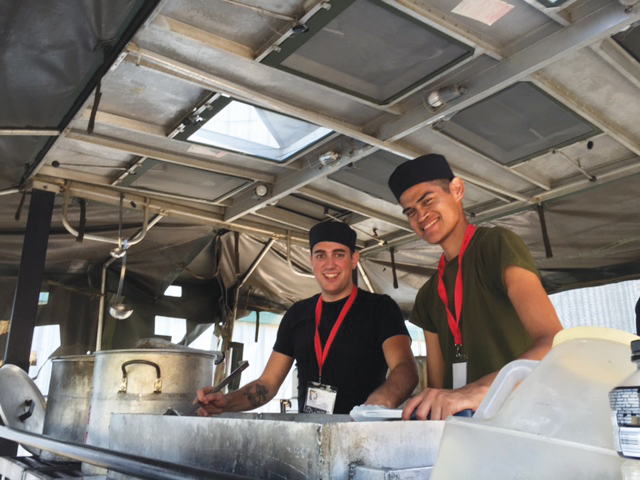
[caption id="attachment_10459" align="aligncenter" width="300"] LS M. Sevigny of Base Foods and Cpl Raymond Sam of 39 Service Battalion work the grill in one of the Mobile Kitchen Trailers.[/caption]They cooked enough food to feed an army and now members of the Canadian Armed Forces (CAF) are receiving a heartfelt salute from the 2015 B.C. Elders Gathering.“The support of the Canadian Forces at our event was both inspiring and encouraging,” said Mavis Underwood of the Elders Gathering Planning Committee and elder with the Tsawout Nation.“It built bridges between our communities and truly was a very powerful happening for everyone in our community from our youth to our elders.”Military cooks from CFB Esquimalt’s Base Foods joined forces with 39 Service Battalion and First Nations cooks to provide food for 5,000 people at the 39th Annual B.C. Elders Gathering at the Panorama Recreation Centre in North Saanich earlier this month.The CAF supplied three kitchen trailers staffed with 10 Cooks, to supplement the Tsawout Kitchen staff and volunteers at the annual event.Working side by side, military and First Nations cooks prepared western European cuisine such as soup, sandwiches and chicken, as well as traditional aboriginal dishes including smoked salmon and bannock.The gathering gave Esquimlt’s cooks the rare opportunity to train for cooking in Field Kitchens in a remote environment.“Their main area of expertise is in static kitchens or in galleys on ships,” said Sgt Barbara Lane of Base Foods.“Although they didn’t get the full field experience because they had access to electricity and water, they did get a better understanding of both what will happen when they work remotely and the actual physical work environment in a field kitchen.”Sgt Moogly Tetrault-Hamel helped facilitate the military involvement in this year’s gathering and began planning for it in November 2014.During the event, he was the overall Operation...

[caption id="attachment_10456" align="aligncenter" width="300"] "Our letter mail volumes have decreased considerably over the last few years, and that decline is not going stop..."[/caption]By the end of 2015, Canada Post anticipates that Residential Housing Units (RHU) associated with CFB Esquimalt will be converted from the individual mailing system to community mailbox delivery.Andrew Graves, an advisor for Canada Post’s Communication Services, says the conversion is a result of newly emerging trends in the mailing needs of Canadian households.“Our letter mail volumes have decreased considerably over the last few years, and that decline is not going stop as Canadians move to digital communications,” says Graves.“Canadians sent 1.4 billion fewer letters in 2014 than they did in 2006. At the same time, we are seeing growth in our parcel volumes, but it is still not enough to compensate for the loss in our lettermail business.”The new community mailboxes will feature individual locked compartments for each household.These compartments are large enough to accommodate magazines without having to be rolled up as well as parcels of the same size.Eighty per cent of parcels currently delivered by Canada Post will fit in the newly redesigned boxes.Large parcel compartments will be located at each community mailbox station, allowing members of a household to access their packages without travelling to a post office or having them left on the doorstep.Residents of communities converting to the new system are asked to fill out surveys early in the process to share their priorities and preferences when it comes to the conversion.“Because every community is a little bit different, we approach each community separately,” says Graves.“Teams across the country in every community are trained as experts to find the most suitable places for the mailboxes in a given neighborhood.”Using this feedback, CFB Esquimalt and Canada Post worked together to develop a community...
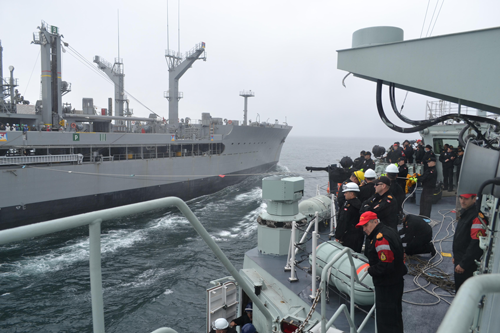
[caption id="attachment_10452" align="aligncenter" width="300"] The crew of HMCS Vancouver practices Replenishment at Sea manouvers with Chilean Navy ship Almirante Montt.[/caption]To prepare HMCS Vancouver for its ongoing Replenishment at Sea (RAS) operations with the Chilean Navy, the Commander of Sea Training (Pacific), Cdr Chris Peschke, and a team of eight instructors have designed and implemented at-sea training for participating sailors.“We use the expression ‘showing people what right looks like’ to explain how we take a ship’s crew and help build their skills to a certain level so they can continue with training and development on their own,” says Cdr Peschke.“Sea Training opens the door and the ship does the rest.”On any work-up or at-sea training period, Sea Training instructors board a ship to provide individualized overview, instruction and debriefing on basic seamanship, navigation, exit from the harbour, and a range of safety precautions such as man overboard procedures.The training aims to bring a crew’s capability to multi-threat warfare or serious damage control.“We assess the threats a ship is going to face, the area of the world she’s going to be operating in, and then we develop a specific training work up so the ship is comfortable operating when it gets there.”In HMCS Vancouver’s work with Almirante Montt, Cdr Peschke says his team has faced the challenge of training for the specifics of RAS operations.Though routine, the operation is risky.It involves stringing steel cables under 5,000 pounds of tension between a replenishment tanker and a receiving ship.Then heavy pallet loads are sent across with food, fuel and ammunition.Cdr Peschke and his team utilized the Sea Training Guide, Combat Readiness Requirements and past experience to design a program that increases in complexity as the training goes on.“We started off with two ‘dry hook-ups’ where hoses were passed from [Chilean ship] Almirante Montt to...
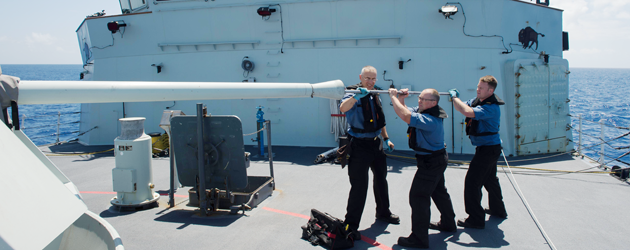
Weapon Engineering Technicians aboard Her Majesty’s Canadian Ship WINNIPEG conduct routine maintenance to the Bofors 57mm gun after a firing exercise during Operation REASSURANCE on July 9, 2015.