Taking Cover
A member of 3rd Battalion, The Royal Canadian Regiment (3 RCR) peers over a tree covered position during an attack on Exercise SARMIS 15 in Cincu, Romania on May 20, 2015 during Operation Reassurance.
A member of 3rd Battalion, The Royal Canadian Regiment (3 RCR) peers over a tree covered position during an attack on Exercise SARMIS 15 in Cincu, Romania on May 20, 2015 during Operation Reassurance.
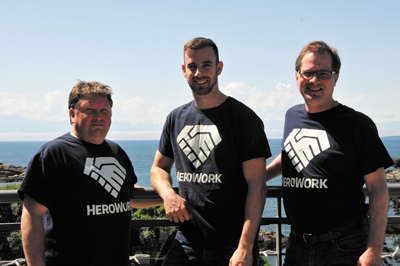
[caption id="attachment_9947" align="aligncenter" width="300"] Peter D. Smither, President and Senior Project Manager of Iron Triangle Project Management Inc., Lt(N) Colin Dudeck, Project Manager of HeroWork, and Paul Letour, Founder and Executive Director of HeroWork are set to work on this year’s renovation project: the Citizen’s Counselling Centre.[/caption]The HeroWork Program Society is calling out for volunteers to help them complete their 2015 project– the overhaul of the Citizens’ Counselling Centre.Over 1,000 low income individuals a year find solace in the counselling services offered by the Centre. However, the 50-plus-year-old building they operate out of has not had repairs in 25 years.The mix of charitable work in a diminished infrastructure meets HeroWork’s mandate – to help other charities thrive by renewing and refreshing their physical building through events called Radical Renovations.Helping plan the Citizens’ Counselling Centre renovation is Lt(N) Colin Dudeck, who lends his experience and skills from his role with the Halifax Class Modernization to the Herowork project management team. “Military volunteers have helped in our past two projects,” says Lt(N) Dudeck, referencing base volunteers who were key to renovating Threshold Housing in 2014, a transitional housing centre for at-risk youth, and the Mustard Seed Food Bank in 2013.The extensive experience military volunteers have working in teams, combined with their specializations in the trades, make them an incredibly valuable resource for the project, says Lt(N) Dudeck. “In the navy, we do a lot of work in small groups; on a ship it might be something like changing out a pump, where we coordinate getting a job done together with our different skills sets.”HeroWork needs more volunteers for three successive weekends: May 29-31, June 6-7, and June 13-14, with the first weekend being the biggest need.Work varies from demolition to carpeting, trim work to carpentry, to moving furniture.Paul Latour founded HeroWork six...
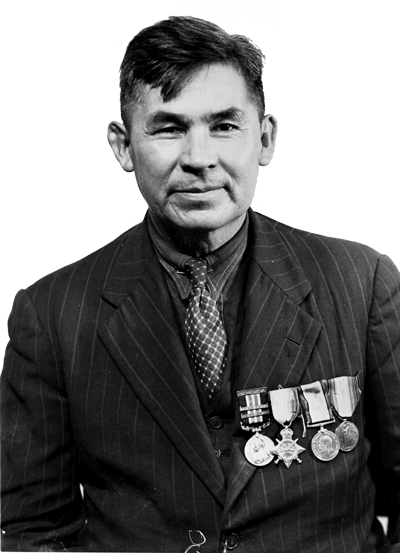
Whether fighting in the trenches of the First World War or fighting in the political arena for full rights for his people, First Nations soldier Sergeant Francis Pegahmagabow is a Canadian hero.The Ojibwe soldier from Wasauksing First Nation near Parry Sound, Ontario, was not only one of the most effective snipers and scouts in the Canadian Expeditionary Force (CEF), but of the Aboriginal peoples who participated in the First World War, he is the most decorated.Recognized three times for bravery and devotion under fire in Belgium and France, he is one of only 38 Canadians to earn the Military Medal with two bars, each bar referring to a recognized act of bravery.The modern equivalent to the Military Medal is the Medal of Military Valour, the third highest award for military valour in the Canadian honours system.Sgt Pegahmagabow was (most likely) born on March 9, 1889, in what is now Shawanaga First Nation, near Parry Sound.His father, a member of Wasauksing First Nation on Parry Island, died when Sgt Pegahmagabow was a baby.His mother also fell ill, so he was raised by his Shawanaga relatives, only returning to Wasauksing First Nation as an adult.As a young man, he turned his hand to several trades, including working as a seaman on boats in Georgian Bay.At 21, he learned to read and write English, a rare skill for a First Nations person of that generation.“We have great admiration for him for that,” said the veteran’s great-grandson, Dr. Brian McInnes.When Britain declared war on Germany on Aug. 4, 1914, Canada too was at war as a member of the British Empire.Sgt Pegahamagabow was among the first recruits, signing up on Aug. 13, 1914, despite an early prohibition against the enlistment of Aboriginal Peoples.Sgt Pegahmagabow served with the 23rd Northern Pioneers Regiment, based in Parry...
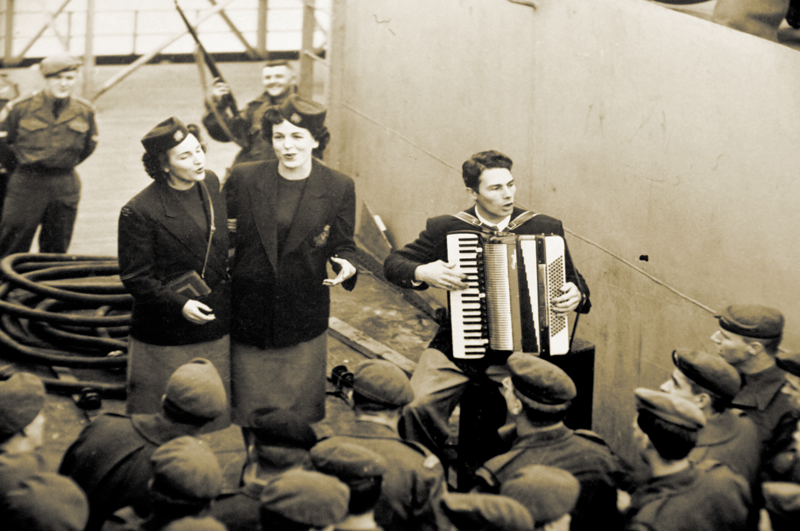
On a hot summer afternoon in 1947, 27-year-old Verna Mary Smith, a Victoria entertainer, performed a hand balancing and acrobatics show on the grass in James Bay’s MacDonald Park.A few days later, a photograph of Smith’s show in the local newspaper caught the eye of Gerry Gosley.He was amazed at the balancing act Smith accomplished in the photo as she lifted her entire body off of the ground and contorted it in the air, supported by a single hand.Gosley, who was interested in performing himself, couldn’t resist approaching Smith and propose the two pair up and start a show to tour around Victoria.Smith, an adventurous and vivacious young woman, agreed immediately with one condition - that she direct and choreograph the show and train accompanying performers.With an agreement in place, the two started “The Smile Show.”“Our first show as a group in Victoria was at the Britannia Legion,” recalls Smith, 95, and the last surviving member of the original group.“Gerry and I went out and got some posters, and we used water and flour to paste them up on all the telephone poles, and we filled the Legion that night. We had a heck of a good show, and we got a heck of a good write up done in the local paper.”Their performance was based off English comedy and variety shows, and featured different acts of singing, dancing, and acrobatics accompanied by band-style music.Victoria is Smith’s home-town, and she first learned to sing as a girl at St. Anne’s Academy.“I did my first show when I was three-and-a-half-years-old. It was on account of my mother’s influence – she started teaching me songs early on, and she loved the English comedy shows.”As she grew up, and her musicality became more pronounced, she trained with a German opera singer.On her own,...
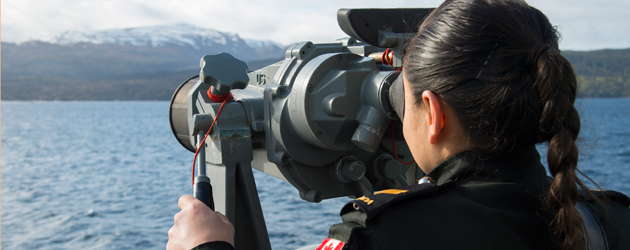
A member of Her Majesty's Canadian Ship FREDERICTON looks at the shoreline in Sognedjøen Fjord, Norway during OP REASSURANCE on May 8, 2015.

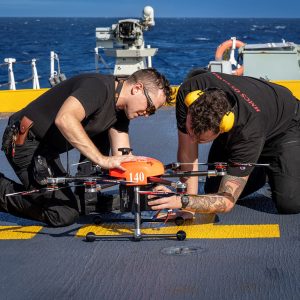
Members of HMCS FREDERICTON perform maintenance on the ship Bear Trap, a system used in assisting the landing of the CH-124 Sea King helicopter during Operation REASSURANCE.

Corporal Jason Taylor, from 4 Engineer Support regiment, clears debris in Sankhu, Nepal, May 17, 2015.
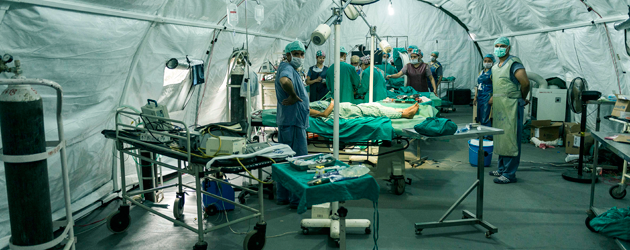
24 Hrs after being set up by members of Canada’s DART, a temporary surgical wing was up and operating at the Nepal Orthopedic Hospital in Japarti, Nepal on 15 May, 2015.
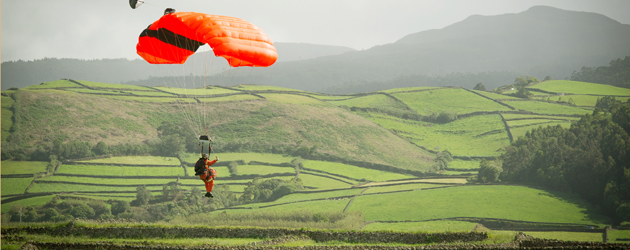
A Search and Rescue Technician from 413 Squadron prepares to land during a search and rescue exercise as part of ASAREX15 in Azores, Portugal on May 6, 2015.
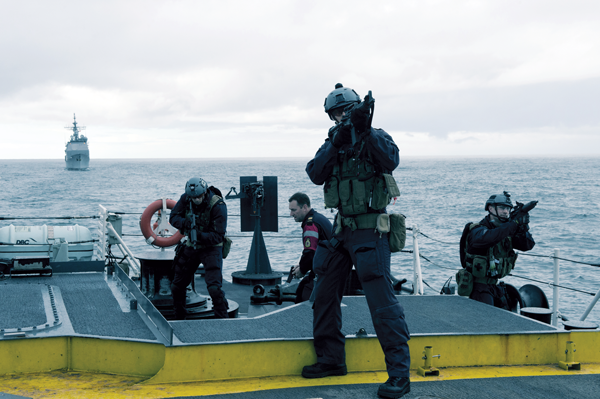
[caption id="attachment_9904" align="aligncenter" width="300"] The Naval Boarding Party from HMCS Winnipeg practices ship clearing drills during Exercise Trident Fury off the west coast of Vancouver Island on May 5.[/caption]Exercise Trident Fury ended last Friday with more than 1,200 personnel going back to their units with a strong sense of accomplishment having flexed their mettle / metal.The warfare exercise, that took months of preparation for 12 days of round-the-clock training, is a biennial, and often multinational naval exercise held off the coast of Vancouver Island by Maritime Forces Pacific.From May 4 to 15, seven Canadian and American naval vessels conducted maritime scenarios and weapons firing off in the Strait of Juan de Fuca. This location provided some challenges because to the south are active shipping lanes, but safety was at the forefront of the exercise.Challenges and mounting complexity were built into each scenario by the planners.Under assessment were air and surface joint operations that included maritime surveillance, live air and surface weapons firing, and anti-submarine warfare training.Several government agencies were brought into the exercise.Members of the Royal Canadian Mounted Police, the United States Navy (USN) and the United States Coast Guard (USCG) all brought their particular skill sets.Over the course of the exercise these agencies enhanced their skills required to operate seamlessly with the military during real-life international operations.Special guest Jason Kenney, Minister of National Defence and Minister for Multiculturalism, joined HMCS Winnipeg during the exercise to witness the full scope of Canada’s navy and air force capabilities.Also participating in Trident Fury were HMCS Ships Calgary, Saskatoon, and Yellowknife, United States Ship Cape St. George, United States Coast Guard Cutter Active, and RCN Orca-class vessel Wolf.Royal Canadian Air Force assets included the CP-140 Aurora Long Range Patrol Aircraft and CH-124 Sea King ship-based helicopters.American air assets included the USN P-3 Orion...
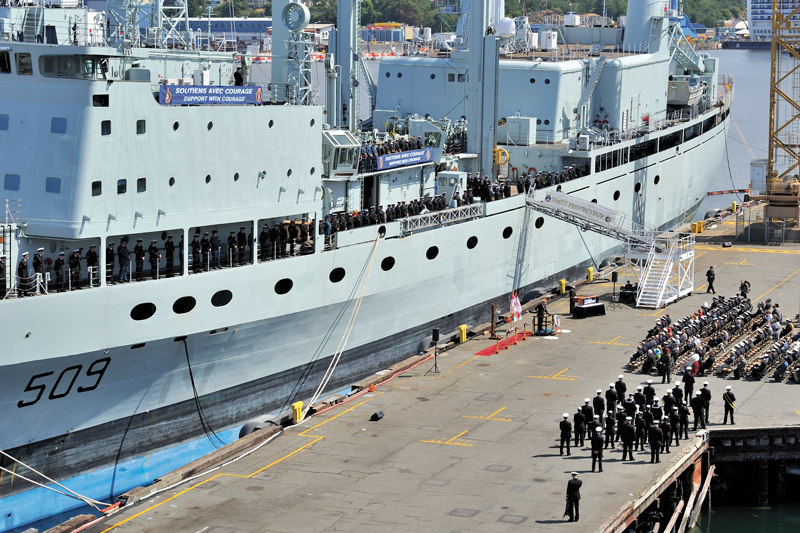
“If our frigates and destroyers are our eyes, ears, and hands, then surely Protecteur was the heart of the fleet,” said Lieutenant Commander Blair Brown, the ship’s last commanding officer, to those witnessing Protecteur’s paying off last Thursday.Behind him loomed the ship’s grey hull, sitting high in the water because it no longer carried fuel and cargo to replenish other warships. Commissioned on Aug. 30, 1969, Protecteur served for 46 years on both coasts as a replenishment oiler that kept Canadian and allied ships stocked with the necessary provisions to successfully complete combat operations. “In her 46 years of service, Protecteur’s reach has far exceeded her grasp,” said LCdr Brown, the 33rd commanding officer of the ship.“She’s served her community well.” Before LCdr Brown were guests, a mix of former Protecteur sailors, dignitaries and civilians, sitting in neat rows, all gathered to mark the historic event.Adding to the celebratory occasion was the music of the Naden Band of the Royal Canadian Navy. Hovering in the distance was a Sea King ready to give an aerial salute with a fly past. Protecteur’s legacy is long and varied, full of colorful stories and heroic moments. In 1982, the ship with Sea King embarked, and crew were responsible for the rescue of 28 Norwegian sailors from motor vessel Essi Silje, a chemical tanker whose port engine room had caught fire. Protecteur was involved in combat missions during the first Gulf War in 1991 on Operation Desert Shield.A year later it deployed to Florida as part of the relief effort after Hurricane Andrew.Following a violent outburst in East Timor in 1999, Protecteur was deployed as part of the Australian-led peacekeeping task force.In 2014, the navy decided to retire the veteran ship. But the end date was accelerated because of a crippling engine room fire...
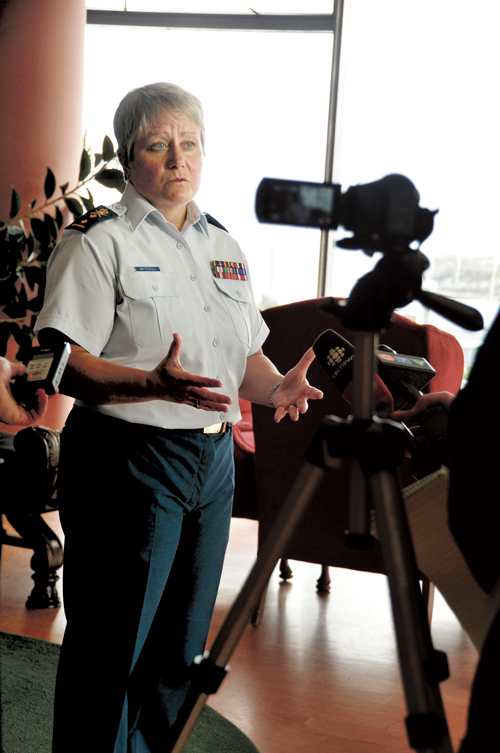
[caption id="attachment_9896" align="aligncenter" width="199"] MGen Christine Whitecross answers questions during a media event at the Wardroom, at the conclusion of her visit to CFB Esquimalt.[/caption]Major-General Christine Whitecross, commander of the new Canadian Armed Forces Strategic Response Team on Sexual Misconduct, visited CFB Esquimalt to clarify details of the new action plan dealing with sexual misconduct in the military.The base visit is just one of many underway to have face-to face interaction with military members in a town hall setting.On May 13, she conducted three separate town halls at Esquimalt, reaching about 1,000 military members, which provided an opportunity to interact directly with CAF members.“I think the biggest thing we need to communicate is that people need to be aware of their actions and their language and how it affects other people,” said MGen Whitecross.“So we’re giving them some tools to do that, because ultimately we have a responsibility to our people that they work in a safe and respectful environment.”Her 25 person team, comprised of military and civilian personnel, is responsible for conducting a detailed review of former Supreme Court Justice Marie Deschamps final report on sexual misconduct.They will then develop an action plan to address and implement the report’s findings that says the “sexualized culture” in the Forces disproportionately affects lower-ranking female members.The plan will address all 10 of Dechamps’ recommendations for the Canadian Armed Forces, including establishing a centre for survivors of sexual harassment and assault that is independent of the chain of command.“We want to make sure that people who go to the centre are not unduly influenced by their own chain of command; so they feel compelled and empowered to go to a central agency that will help them in terms of victim support and advocacy.”She adds, “My mandate was clear from the Chief of the...

Help get the director to Washington DC by donating to https://www.indiegogo.com/projects/land-of-the-sun-director-film-go-to-dc
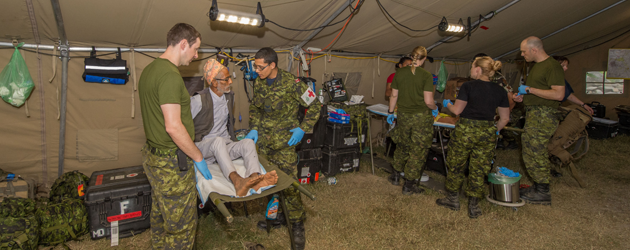
The medical staff of the Disaster Assistance Response Team, (DART) operates a medical clinic station for Level 1 care to Sumitra camp Sindhupalchok district during Operation Renaissance in Nepal, May 8, 2015.
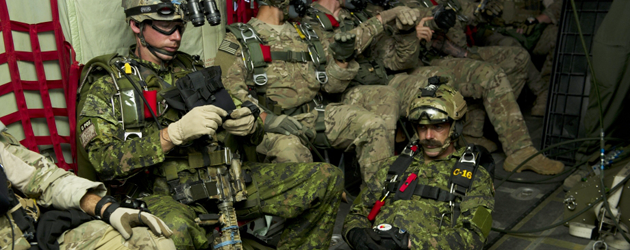
US Airborne 7th Group and members of the Canadian Special Operations Regiment, await inside a Halo to conduct freefall operations during exercise in Florida.
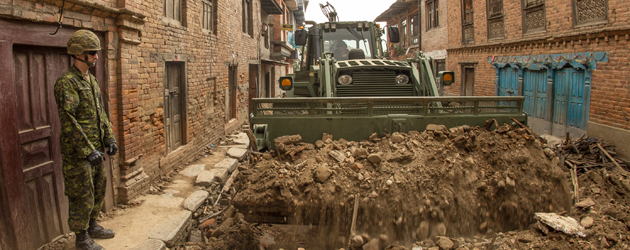
Combat Engineers from the DART team remove debris as part of route clearance for the village of Sankhu, Nepal, during Operation Renaissance.

A Canadian soldier engages in Forward Observation Officer (FOO) training at Drawsko Pomorskie training area in Poland on May 6, 2015 during OP REASSURANCE.
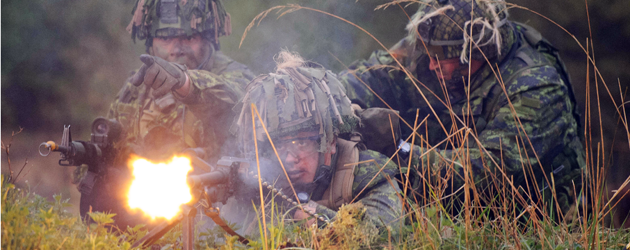
Members of 2nd Battalion, PPCLI fire a C-9 light machine gun at enemy forces during Exercise KAPYONG BUGLE, an urban operations exercise in Paderborn, Germany on May 4, 201
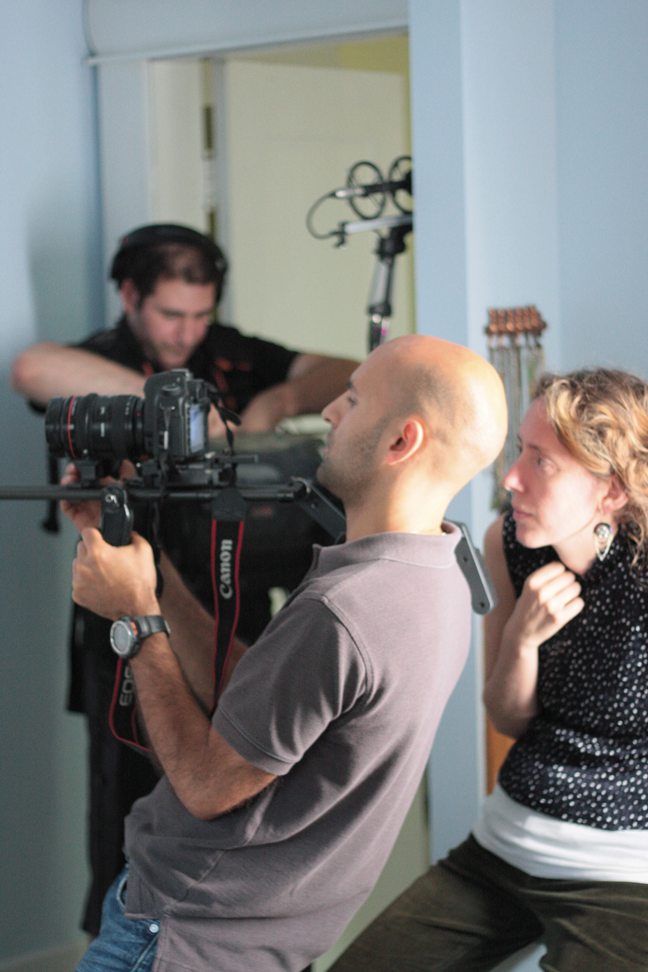
[caption id="attachment_9857" align="aligncenter" width="200"] The Land of the Sun crew on location in Vancouver, with Sasha Popove filming (center), Melissa Flagg (far right), and Jason Segal (far left).[/caption]Leaving loved ones behind is an all too familiar experience for any military member, and Victoria director Melissa Flagg portrays this in her new film, “Land of the Sun.”The 17-minute short follows the story of a Canadian military family struggling to make it through a long separation when husband Shale is away on tour in Afghanistan.It is the deep longing followed by the joy of reunion that Flagg’s film so accurately captures.“I wanted people to identify with the struggles of a Forces member who must leave what they love, and to give people a sense of how hard it is in military families – what people actually go through when they spend time apart,” she says.Flagg grew up in Victoria and became interested in photography when she was in high school, printing and developing her own photos in the school’s darkroom.From there, she started experimenting with digital media and film.After a number of small student films produced during her time studying at Emily Carr University of Art and Design, Flagg produced her first independent film, “Finding and Fraying”, in 2008.The medium of film became the perfect creative outlet for her through the solitary time spent script writing and the cooperation during production and post-production.“What I love about film is that I have time to be alone with my ideas, but I can creatively play with others,” she says.“And what amazes me about the collaborative aspect is that everybody who contributes something makes the project so much fuller and richer. It’s not something I could have ever made on my own.”Flagg’s idea for the military-themed film started to percolate when she was finishing post-production...
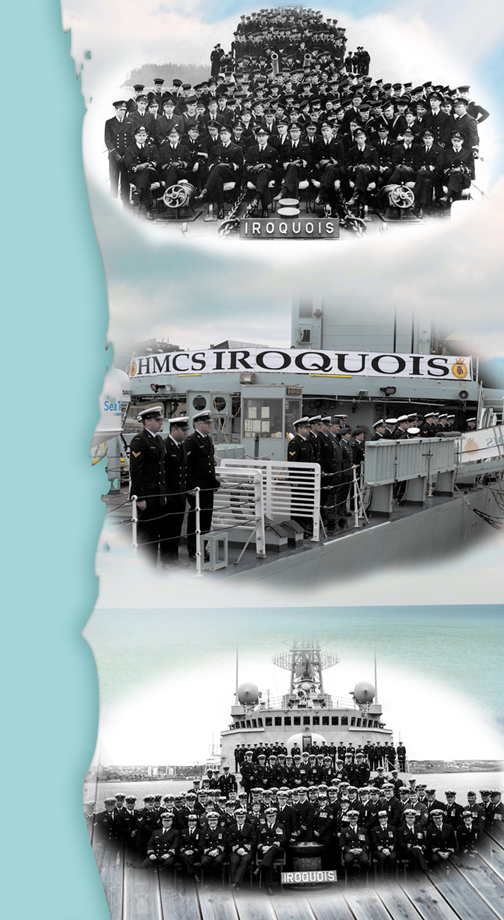
[caption id="attachment_9854" align="aligncenter" width="164"] The crew of the first HMCS Iroquois, commissioned in 1942, crowd the deck of the ship.[/caption]The Naval Ensign has been lowered for the last time in HMCS Iroquois.The Royal Canadian Navy (RCN) honoured the Tribal class destroyer for its 43 years of service with a paying off ceremony at HMC Dockyard Atlantic, May 1. Commissioned on July 29, 1972, the anti-submarine warfare destroyer served as the command ship of the East Coast Fleet.Iroquois was the first of its class, one of four RCN destroyers. Iroquois completed a Tribal Class Update and Modernization Project refit in 1992, when it was made a modern area air defence platform. VAdm Mark Norman, Commander RCN, said for those on the outside, a ship is just a lot of steel. “Those of us who go down to the sea in ships see it differently. We see it as a living thing, brought to life by the passion, energy and professionalism of the crew.” He said one synonym for a vessel is a container – “a container of unbridled enthusiasm.”He shared one memory from his own time in Iroquois, running the main passageways of the ship playing peek-a-boo with his then four-year-old daughter, upon return from a long deployment.To the ship’s company past and present, as well as the trades people of Fleet Maintenance Facility Cape Scott, VAdm Norman said, “I thank you for keeping the old girl running. It is truly time to thank her and say farewell.” He spoke of transition, turning tides, and moving forward.“It’s time to close a chapter. It’s time to say goodbye.”RAdm John Newton, Commander Maritime Forces Atlantic, told stories from many Iroquois missions, such as fighting through 70-foot seas while en route to Iceland at the height of the Cold War, thereby testing the kit...
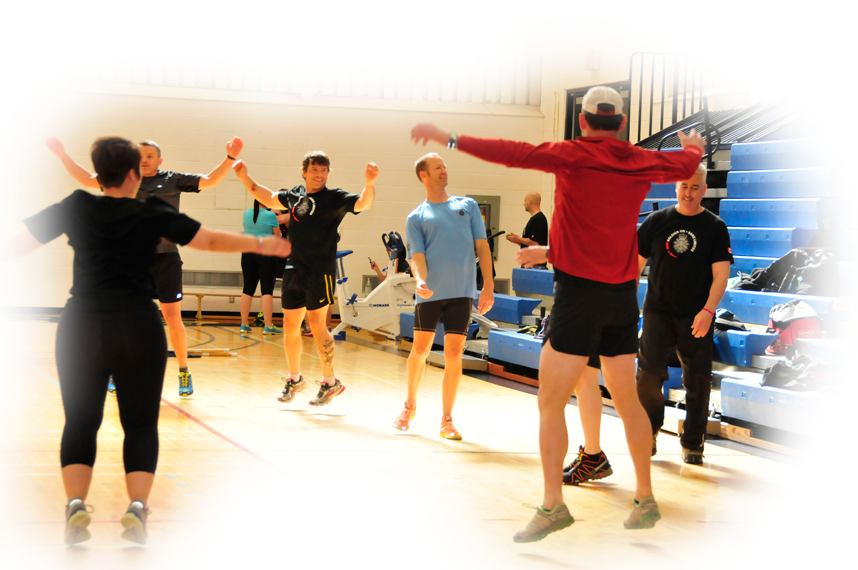
[caption id="attachment_9848" align="aligncenter" width="300"] The Soldier On group starts their fitness testing for the day at PISE, on May 5, completing jumping jacks.[/caption]The Pacific Institute for Sports Excellence (PISE) was the backdrop for the kickoff to a five-day Soldier On Multisport Camp.A team of 29 serving and former Canadian Armed Forces (CAF) members from across Canada spent May 5 to 9 training for rowing, cycling, and triathlon with Olympic and Paralympic coaches.Participants were flown to Victoria, free of cost, to push themselves physically and mentally as they were introduced, or re-introduced, to a sports intensive lifestyle.“The intent of the camp was to inspire and motivate ill and injured members and former members through the transformative power of sport,” says PO1 Joe Kiraly, Operations Warrant for Soldier On.“We wanted to provide an opportunity to show the positive role physical fitness plays in an individual’s journey to recovery.”Successful applicants were chosen from across Canada, based on regional priorities and first time participation.Five members were from Victoria. Only those who have suffered a permanent physical injury or mental health illness while enrolled in the CAF were eligible to apply.Many participants had either minimal experience in their chosen sport group, or had never tried it, while others had been near professional athletes in their sport of choice before sustaining injury.“We kicked off the week with a series of physical tests measuring body data, musculoskeletal strength, and aerobic fitness capability, all of which were organized by Jonathan Ritchot, the PISE Adapted Strength and Conditioning Specialist,” says PO1 Kiraly.Aspiring student physiotherapists and strength conditioning professionals from Camosun College’s Centre for Sport and Exercise Education carried out modified push up tests, sprint tests, and grip tests.A quick game of wheelchair basketball followed, sponsored by the Canadian Wheelchair Sports Association.The remainder of the week saw the participants split...
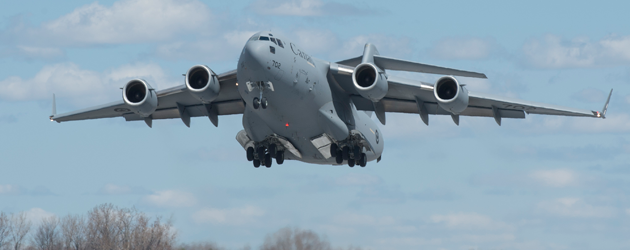
A CC-177 Globemaster aircraft loaded with elements of the Disaster Assistance Response Team (DART) and personnel takes off from 8 Wing Trenton bound for Nepal on April 28, 2015.
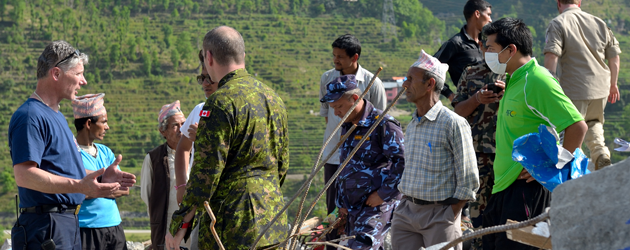
A Canadian Armed Forces Light Urban Search And Rescue (LUSAR) team works alongside members of the Burnaby Fire Department and locals from the village of Lamosengu, 70 km northeast of Kathmandu, Nepal on May 1, 2015.
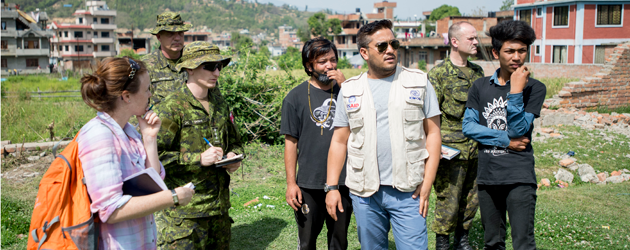
A representative from USAID visits an Internally Displaced Persons' camp site with Nicole Lunstead from Canada's Department of Foreign Affairs, Trade and Development, MWO Mechefske, Capt. Thomas and WO Winstanley during a recce patrol in Kathmandu, Nepal.
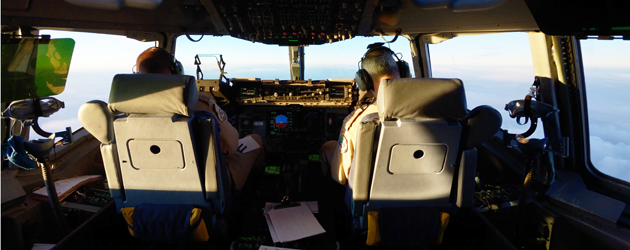
Capt. Thomas Turk and Capt. Russ Black from 429 Squadron, fly a CC-177 Globemaster III enroute to Nepal to support the transport of initial elements of the DART as well as relief supplies, medical and Light Urban Search and Rescue personnel.
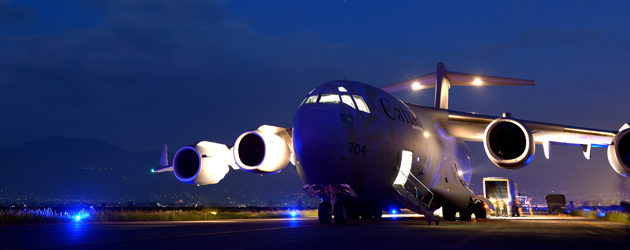
Essential medical equipment and supplies as well as initial elements of the DART such as relief supplies, medical and Light Urban Search and Rescue personnel wait to be unloaded from a CC-177 Globemaster III at Katmandu Airport in Nepal.

[caption id="attachment_9811" align="aligncenter" width="300"] Army cadets from 3300 RCACC stand ready to march in the Vaisakhi parade, which was part of the festival celebrations that took place on April 18 in Surrey, B.C. More than 250,000 people attend Vaisakhi celebrations in Surrey each year.[/caption]3300 British Columbia Regiment Royal Canadian Army Cadet Corps in Surrey, B.C. celebrated the addition of the honour title “Bhai Kanhaiya” to their official name with a fundraising dinner held Friday, April 10.The cadet corps is the first in Canada to be formed and supported by the Sikh community, although it is open to all youth.The name Bhai Kanhaiya was chosen to honour a historical figure in the Sikh community. Bhai Kanhaiya (1648 - 1718) practiced Sewa, translated as selfless service, which is the spirit of generosity towards fellow human beings.During the battle of Anandpur in 1704, Bhai Kanhaiya helped the wounded without discrimination for soldiers on either side of the battle.He continued to be known for his tolerance, kindness and compassion with no distinction of religion, nationality, colour, caste or creed, and is now seen as a forerunner of the Red Cross and Red Crescent Societies.Cadets and staff of 3300 RCACC have embraced the idea of Sewa, or selfless service, as it encompasses the values of the cadet program.“As we move forward, the Bhai Kanhaiya cadet corps will continue to serve as an inspiration for other programs, which embrace Canada’s multiculturalism, and offers young Canadians opportunities to interact with youth from other cultures,” said Harbinder Singh Sewak, chairman of the Friends of the Sikh Cadet Society.The fundraising dinner was held on the eve of Vaisakhi celebrations, a traditional time of harvest and plenty, with an attendance of more than 400 guests.The event was attended by the Minister of National Defence and Minister for Multiculturalism, Jason Kenney;...