
[wpml_language_selector_widget]
[searchwp_form id="1"]
eyeglasses 2015

New process launched for eyeglasses

Beginning Jan. 15, the Canadian Forces Health Services Group launched a new process for the provision of eyeglasses to Canadian Armed Forces members.This process will not apply to CAF recruits in St. Jean where an onsite provider will remain in place for provision of eyeglasses to that population.When a determination is made at the member’s supporting health care clinic that new eyeglasses are required, the member will report with paperwork from the clinic to an optical provider of their choice.This will not include use of online providers due to an inability to guarantee prescription and initial fitting accuracy in that environment.As with other medical corrective devices, a cost limit is set with the claims administrator and is based on reasonable and customary costs for eyeglasses.Costs over and above these amounts will be an individual CAF member responsibility, which is not unlike the current situation under a contracted provider.Further details on this process will be distributed by your supporting health care clinic when eyeglass provision is next required.Note that members must report to the clinic prior to obtaining eyeglasses at a provider of choice to ensure eligibility for eyeglasses replacement or initial issue.It is expected that this new process will increase CAF member choice in eyeglasses while reducing out of pocket expenses through individual exploration of cost effective options.DND

reservist officer image

Reservist Police Officer

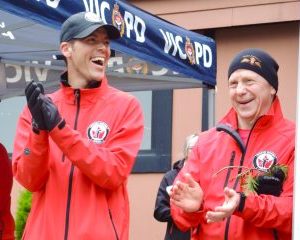
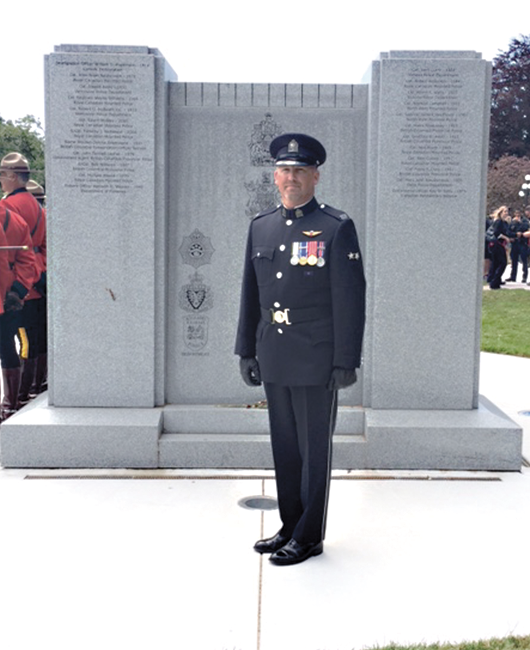
[caption id="attachment_8953" align="alignnone" width="244"] Maj Brendon Leblanc, reservist and Victoria Police Officer[/caption]If there’s anything Maj Brendon Leblanc loves, it’s serving his community.The reserve solider with 5th Field B.C. Regiment, is also a Victoria police officer.He had his civilian work acknowledged in a Nov. 19 ceremony when he was named 2013 Traffic Law Enforcement Officer of the Year in B.C.“That was pretty awesome; I don’t know how else to describe it,” says Maj Leblanc. “It was nice to be recognized for my efforts, by both the B.C. Association of the Chiefs of Police, and by my peers.”Seconded to the RCMP-lead Integrated Road Safety Unit, Maj Leblanc headed up Operation Praesidium, a project aimed at the apprehension of “prolific drivers”, a category that comprises prohibited drivers, suspended drivers, and drivers that drive without a license, presenting a danger to road safety.“There are people who continually drive without a license or on suspension,” he says. “When they drive they’re endangering the community, and breaking the laws, so we figured out a way to use the resources at our disposal to apprehend them.”Maj Leblanc and his team generated an internal database of prolific drivers known to police, and people on prohibitions for alcohol, speeding, licensing related offences.Utilizing community knowledge and information, they worked to apprehend these people while they were driving under their prohibitions. Since the integration of Operation Praesidium, approximately 50 prolific offenders were taken into custody, a fact of which Maj Leblanc is very proud.“It was the opportunity of a lifetime from a police perspective, to see a project go from an idea to the operations plan, to supervising resources at a roadside level, to seeing some convictions happen,” he says. “It was fantastic.”Along with the success of Operation Praesidium, Maj Leblanc has been responsible for the arrest of 257 impaired drivers....

REGULUS keeps sailors’ skills sharp

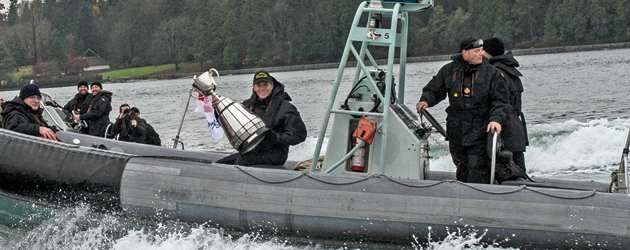
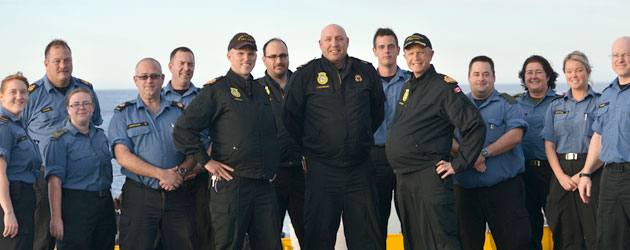
[caption id="attachment_8950" align="alignnone" width="300"] SLt Sulyma pauses for a photo with the auxiliary patrol ship in the background.[/caption]“REGULUS is about getting young men and women of the RCN to sea during a period of reduced sailing opportunities" - Link It’s said that a ship is only as strong as its crew: skills, experience and proficiency are critical for all ranks and sea trades, and for the operational excellence of a navy as a whole. When the Royal Canadian Navy (RCN) was anticipating limited at-sea experience for some sailors as the Halifax-class Modernization (HCM) program was kicking into gear, they looked to the REGULUS program.“REGULUS is about getting young men and women of the RCN to sea during a period of reduced sailing opportunities,” said Lt(N) Arthur Halpenny, REGULUS’ new Personnel Coordinator.Through personnel exchanges with friendly navies around the world, Canadian sailors hone their skills and gain valuable experience while sailing on board foreign vessels, strengthening the RCN’s core competencies.REGULUS addressed a challenge posed by the Halifax-class Modernization (HCM) program.With many of the RCN’s Halifax-class frigates – dubbed the “backbone” of the Canadian fleet – going through modernization work, the RCN was challenged with keeping its sailors ready for operations as Canadian platforms became less available for training or deployment.Since the REGULUS inception in 2010, more than 150 RCN personnel have been sent abroad to countries such as the United States, New Zealand, Australia, the United Kingdom, and Chile.“The exchanges are mutually beneficial. If possible, we’ll place our sailors in billets that the partner navy may have trouble filling. Partner navies, in turn, often seek RCN training once they witness the talent and professionalism of our sailors.”But the benefits go beyond simply keeping sailors well-trained. In the 21st century, successful maritime operations depend upon partnerships and coalitions.Programs such as REGULUS build bridges between like-minded navies, allowing them to work together to confront and deter threats to maritime security. “The young Canadian and allied sailors who bond on these adventures will be the institutional...

'="Christmas eve baby arrives"

Special Christmas bundle arrives for one sailor

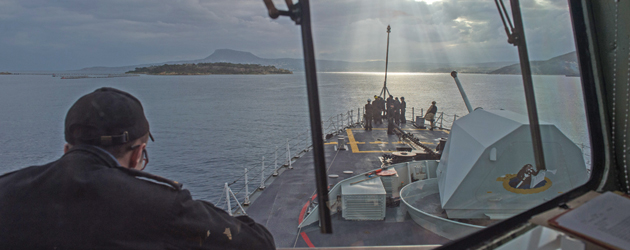
[caption id="attachment_8919" align="alignnone" width="300"] MS Kurt Sheppart on board HMCS Toronto experienced becoming a father anew from the Mediterranean.[/caption]Christmas at sea away from family will always be challenging for a long list of reasons; not the least of which is the addition of a new family member from afar.On board HMCS Toronto one particular sailor experienced becoming a father anew from the Mediterranean.MS Kurt Sheppard, a boatswain and member of the deck department, knew he might miss the birth of his second child when the ship deployed in July 2014, but could not have guessed he would have a Christmas Eve baby.“When I heard that she had arrived, my first thought was:  ‘I have to call!’. I can hardly wait to meet Sadie, my daughter. I can’t wait to go home to spend time with my family,” said MS Sheppard.“The most important thing in my life is my family. I love being a dad. It is my first and only priority.”He joined the Royal Canadian Navy in 2000 as a boatswain. Boatswain is referred to as a “hard sea trade,” which means they spend the majority of their time at sea instead of ashore.They are the maintainers of the upper decks, ensuring the upkeep of the ship’s husbandry and seamanship equipment in support of operations.Boatswains are, also, the boat drivers, small caliber weapons custodians, and seamanship experts.There is no civilian equivalent for their job, making it perhaps the saltiest of sea trades.There are 18 boatswains on board Toronto deployed on Operation Reassurance in the Mediterranean Sea.“When I joined, I went boatswain because it was the most interesting to me and I like working with my hands” explains MS Sheppard.“We are the jacks of all trades on board. We get to spend more time outside, physically working than any other trade...

Organic waste base collects

Base now collecting organic waste

[caption id="attachment_8915" align="alignnone" width="300"] Collecting Organic Waste[/caption]Did you know that CFB Esquimalt produces over 1,400,000 kg of waste each year?At one time half was  sent to the Hartland Landfill as garbage and the other half  recycled or repurposed.Thirty percent of all solid waste generated in the Capital Regional District (CRD) is organic waste.As such, the CRD will be enforcing this new bylaw, banning organic waste from the regular garbage stream.In this way, the CRD hopes to reach their goal of diverting 70% of waste materials from the landfill.In advance of this new bylaw, CFB Esquimalt’s Base Foods locations, such as Nelles Block, Chiefs and Petty Officers’ Mess, Work Point Galley and the Wardroom, diverted  220,000 kg of organic waste in 2014. This year, the program will expand to target the largest producers of food waste on base, including ships alongside, Base Foods locations, and contract kitchens (New Wave Café, FMF Cafeteria, etcetera), which should triple the amount of organic waste recovered.Your organics green bin will look similar to the one pictured, and will be located with the other waste disposal totes at select locations.The next phase of the organics program will study the viability of capturing smaller sources of organic waste, such as used bathroom paper towels, and office kitchen material around the base.In the meantime random organics bins from smaller sources will be located throughout Dockyard for voluntary disposal.For questions regarding green bin locations, please contact Bruce Chambers at 250-363-5454.Examples of acceptable organic waste include:meat & bonesgrainsdairy productseggs & eggshellsvegetables & fruits soiled paper productsFor a more detailed list of what food waste is accepted and what is not, please visit the following link:www.crd.bc.ca/......../acceptable-organicsFor further questions, comments, or concerns please contact Kara Foreman at 250-363-7457. 

'="sinking annapolis"

Annapolis to become artificial reef this week

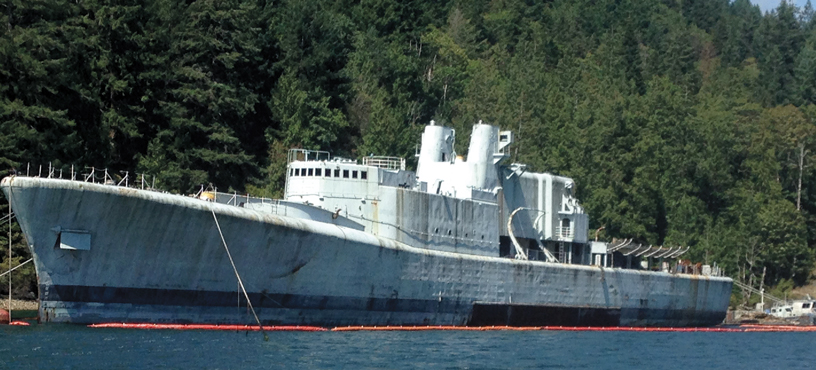
[caption id="attachment_8907" align="alignnone" width="300"] Former HMCS Annapolis, stripped of all environmental contaminants, awaits its final fate alongside Long Bay on Gambier Island.[/caption]On Saturday, the last of the Annapolis Class Helicopter Destroyer Escorts (DDH) will be at the bottom of Halkett Bay Marine Provincial Park on Gambier Island, British Columbia, to start its new life as an artificial reef.Former HMCS Annapolis, decommissioned in 1996, will be sunk by the Artificial Reef Society of British Columbia (ARSBC) on Jan. 17.ARSBC purchased the ship in 2008 from the Federal Government.However, changing provincial and federal regulations, environmental concerns, and legal challenges drastically slowed the project.“The project is now rapidly moving into its final phase of readiness,” says Howie Robins, President of the ARSBC.“We successfully navigated through all the obstacles and now have all the required federal and provincial permits in place, and the legal challenges dismissed in federal court.”Annapolis spent nearly three decades in service to the Royal Canadian Navy.It was used as a training vessel, and noted for being the first navy vessel to have a towed array sonar system, as well as the first to have a gender-integrated crew.The vessel has been prepared for sinking by ARSBC, which stripped it of all hazardous materials, making it the most comprehensively prepared man-made reef in the world in terms of environmental cleanliness.Following its sinking, Annapolis becomes one of seven marine habitats created by the Reef Society; the seven are five former RCN vessels, a coastal freighter present during D-Day, and the world’s first intact Boeing 737 passenger jet, all sunk in different marine areas of B.C.“The ARSBC’s mandate is to create long-term sustainable marine habitats using ethical means of vessel preparation that help promote eco-dive adventure tourism. It’s good for the small businesses, the economy, the environment, and the province as a whole,” says...

college network support base

College Support Network

[caption id="attachment_8846" align="alignnone" width="300"] SISIP and CANEX representatives present Capt(N) Steve Waddell, Base Commander of CFB Esquimalt, with a cheque for $177,819.[/caption]Military family members are being supported through the College Transferability Network to make their educational goals a reality.Many military spouses hold off on educational or professional pursuits while in charge of the day-to-day care of the family, and organizing the household while the military member is away on training or operations.The limitations imposed by frequent relocations with the military also take priority. However, pursuing higher learning or professional training has gotten easier, and there are initiatives in place to help make education aspirations more attainable.College Transferability NetworkHistorically, it has been problematic for military family members to transfer educational credits from one institution to the next. Understanding the challenges of regular military postings, the Royal Canadian Air Force and North Island College in British Columbia hosted a summit in 2013 with the aim of expanding educational opportunities for military families.What ensued was the development of the College Transferability Network, a community of public colleges, nine to-date, that have signed a memorandum of understanding to foster a barrier-free learning environment for military families.Military family members are being supported through this network to make their educational goals a reality.Supporting the educational goals of military members and their families is not new. More than 40 years ago, the University of Manitoba began assisting military members and their spouses through their Military Support Office.The University continues this support today by granting university credit for military courses and training, as well as providing military members and their civilian spouses services that include credit assessment and transfer, program advising and planning and other administrative support.Education OptionsThe Military Support Office at the University of Manitoba, and now the College Transferability Network provide options that significantly reduce completion...

PFC Christmas contest

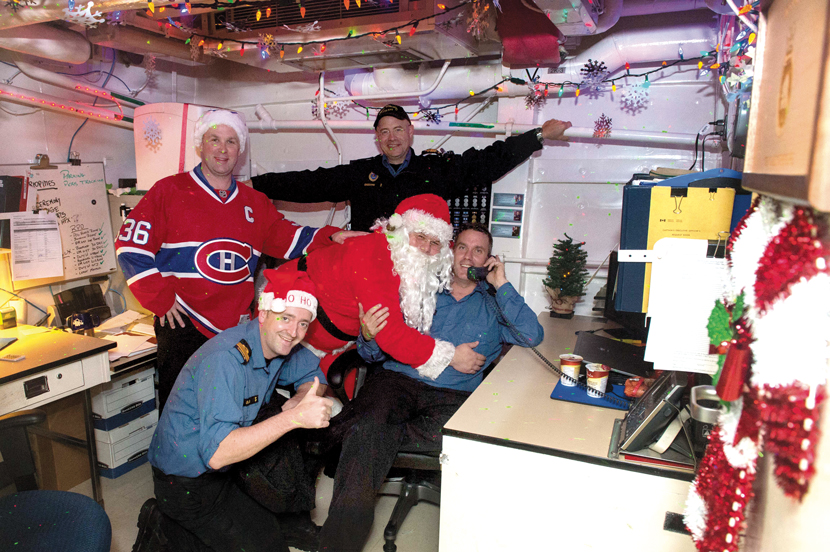
Christmas trees at the Pacific Fleet Club

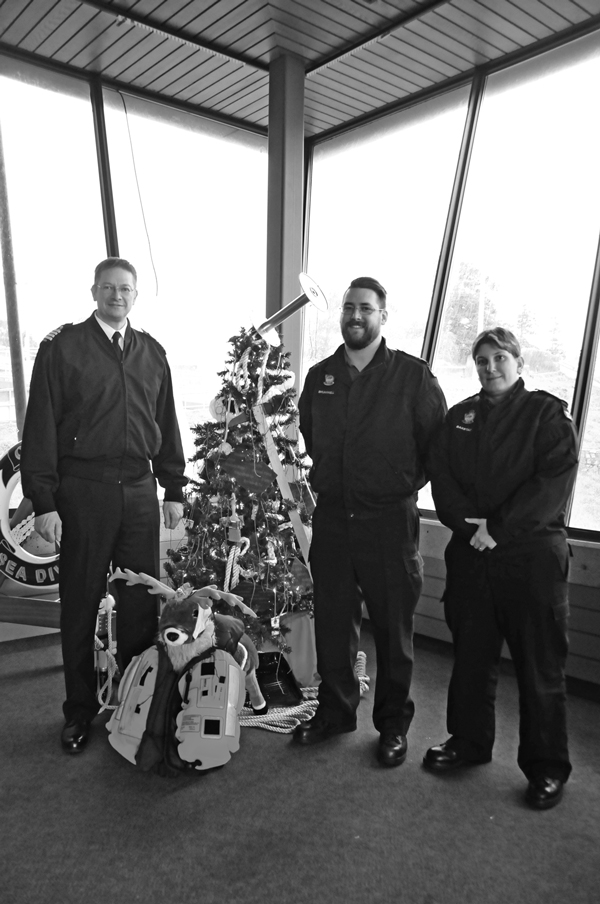
[caption id="attachment_8841" align="alignnone" width="199"] MS Amy Bakstad and Lt(N) Andrew Brumwell of Seamanship Division accepted the prize for Seamanship Division’s “Best Griswald Tree”.[/caption]A flurry of decorating and creativity took place in the Wardroom, The Chiefs’ and Petty Officers’ Mess, and the Pacific Fleet Club during the first two weeks of December as members from 25 MARPAC units decorated pre-lit Christmas trees in a show of holiday spirit and healthy competition.Units that participated competed for prizes in three coveted categories: (1) Most Festive Design; (2) Best Griswold Design (for the most outlandish tree); and (3) Best Charlie Brown (for most commercialized or valiant effort).The contest was judged Dec. 16, and the panel included the Base Commander, Capt (N) Waddell; the Base Administration Officer, Cdr Golden; the PMC of the C& POs’ Mess, CPO1 Bodie; the Formation Chief, CPO1 Feltham; the Base Chief, CPO1 Taylor; the Formation Master Seaman, MS Ensom; and the Holiday Event Coordinator, Christine Farrington.It was a difficult decision to choose a winner in each of the three categories. All the trees were decorated with creativity and imagination that it was clear the holiday spirit was alive and well in the Formation.In the end, however, there could only be one winner in each category.The judges awarded the title of Most Festive Tree to HMCS Regina.The title of Best Griswold tree went to Seamanship Division at CFFSE, and the Best Charlie Brown tree went to the staff at CANEX.Honourable mention was given to 1 Dental Unit Detachment for their heartwarming reminder that the holidays do not have to be painful.MasterCard gift certificates were presented to the winning units by the Base Commander on Dec. 18.Judges and organizers for this year’s holiday lighting program would like to convey a sincere thank you to all of the participants in this year’s Formation...

'="Valcartier Green Firing range"

Valcartier first to have green firing range

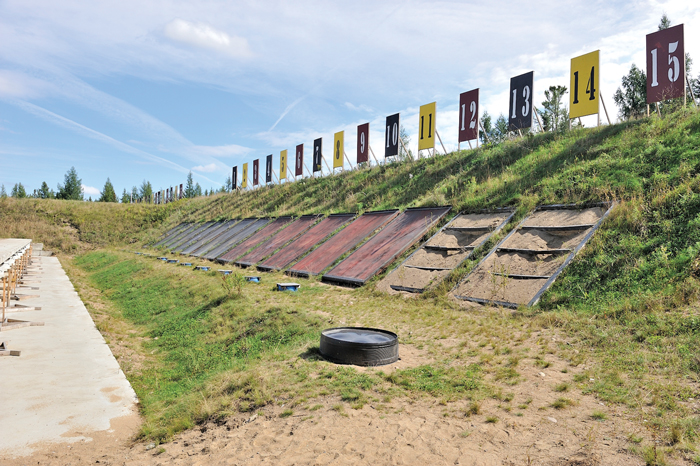
[caption id="attachment_8836" align="alignnone" width="300"] The new bullet catchers are easy to modify and adapt to various weather conditions.[/caption]2nd Canadian Division Support Base Valcartier has officially become the first Canadian Forces Base to use a green small arms firing range, called the Nicosie firing range.The new bullet catchers at 2nd Canadian Division Support Base Valcartier caught the attention of a number of project stakeholders during a recognition ceremony on Sept. 9.The new catchers minimize the environmental impact of military training while ensuring the firing range complies with the Defence Environmental Strategy.The bullet catchers retain metal residue from small arms projectiles to prevent seepage water from reaching the firing range’s groundwater flow.In 2007, Defence Research and Development Canada (DRDC) and the Director of Land Environment began considering ways to create an improved and more cost-effective bullet catcher.After developing and testing various prototypes, the final design was revealed in 2011.To reduce the speed of projectiles, steel boxes filled with sand were built and installed on the existing range butts, and covered in self-healing membranes.When bullets puncture the membrane, the holes close over on their own.Receptacles developed by Institut national de recherche scientifique (INRS) collect the effluent made up of seepage water, directing its flow toward a treatment system.Valcartier military members have been training with these catchers for two years to measure the effectiveness of the self healing membrane and the cells’ impermeability.The catchers bore these trials well, and an independent study found they were 54 per cent more economical than the conventional sand butts after 20 years of use.This level of performance offers a long-term solution for managing metal residues from projectiles and should also reduce the environmental impact to almost zero.Military members who have tried the catchers had only good things to say about them.They pointed out that the catchers decrease noise...

RAdm Bill Truelove and Mrs. Brenda Truelove

Wishing you the best of the holiday season

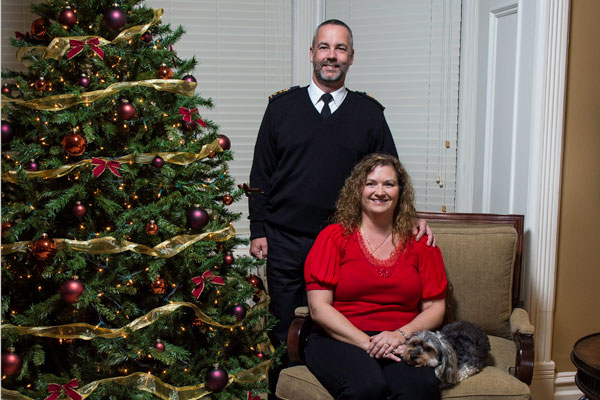
[caption id="attachment_8824" align="alignnone" width="300"] RAdm Bill Truelove and Mrs. Brenda Truelove wish the entire MARPAC team a Merry Christmas and a prosperous new year.[/caption]As the year draws to a close and we enter the Christmas/New Year season, I hope that you’ll take the opportunity for some well-deserved leave. It is an important time to spend with family and friends, reflect on the past year, and prepare for the year ahead.In looking back over the last year, I am incredibly proud of what our Formation has achieved. Operational excellence, our core mission, was evident in our ships, with embarked UAV and Air dets, and submarines deployed on operations and exercises around the globe. I am particularly proud of the tremendous accomplishments of HMCS Regina during her extended deployment on Op Artemis and Op Reassurance and all the units that deployed on Op Caribbe.  I would also highlight the excellent work done by all the participants in Ex RIMPAC.  At the same time, I note with pride the return of Calgary, Winnipeg & Vancouver to the fleet having completed their modernization while also highlighting the return of Chicoutimi to sea; our second operational submarine on the West Coast.Once again our Joint Rescue Coordination Center provided assistance in almost 3000 requests for assistance; saving lives every day.  Our Joint Task Force Pacific have also been busy conducting a range of operations and exercises across the province. I also applaud the outstanding work done by the Cadet organization; 7000 cadets in 140 Corps/Squadrons – future leaders of Canada all.At the same time, we have seen the Formation grow considerably as we have taken on responsibilities for the Reserve component, Naval Training System, Advanced Naval Boarding Party and Commander, Canadian Submarine Force.  These steps in our ‘One Navy’ evolution are important and we could not...

Robyn Los cuddles child at Malawi orphanage

MFRC member’s travels changed lives

[caption id="attachment_8821" align="alignnone" width="300"] Robyn Los cuddles an orphan at the Kondanani Orphanage in Malawi, Africa.[/caption]In the city of Blantyre, Malawi, in Africa, Victoria resident Robyn Los found a way to help children in need, and in doing so, created a new life for herself.Los, an Early Childhood Educator at the Colwood Pacific Activity Centre, took a mission trip in 2009 to rural Malawi. While visiting the country’s universities with 20 other students from across Canada, Los visited Kondanani Orphanage in Blantyre.“Seeing the work they were doing at the orphanage, I just saw how many of these children needed love and attention. I felt like there was something I could do to help improve their lives,” she says. “The work they do at Kondanani is incredibly inspiring, and I just couldn’t get it out of my mind. I knew that I had to go back.”She returned in 2010, spending a year volunteering at Kondanani and teaching in the orphanage’s school. It was during this year that Los met her to-be husband David, turning what was initially going to be a three month trip into three years.Moving from Kondanani to a private school in Blantyre, Los got a close look at the education system in a culture that hasn’t traditionally had much use for Western education.“School isn’t a big deal over there. They didn’t have an education system of their own, so schools would use American curriculums,” she says. “So at some schools, Malawian children would be learning about American history and taking tests on it. It was kind of strange, but it gave me an opportunity to improvise and teach them things that would be more useful to them.”After that, Los moved on to teaching at an international school, alongside teachers from all over the world. Teaching with a British...

FMF Co-op Student Sylvia Penkova

FMF co-op student named Co-op Student of the Year

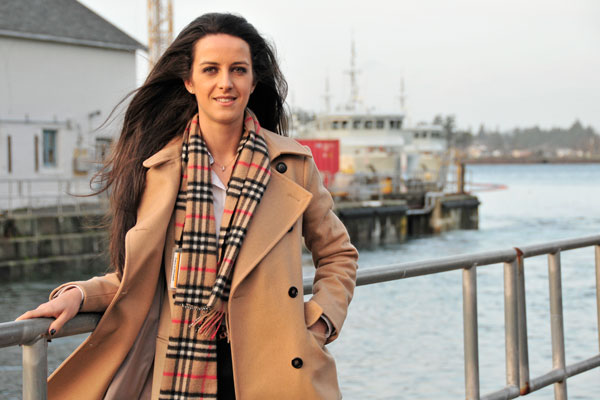
[caption id="attachment_8817" align="alignnone" width="300"] Silvia Penkova was named Co-op Student of the Year for her efforts during a work term at FMF Industrial Engineering from January to April of 2014.[/caption]Fourth year Mechanical Engineering student Sylvia Penkova is a hard worker and now she has an award to prove it.Penkova was recently named Co-op Student of the Year by the University of Victoria for her work with Fleet Maintenance Facility (FMF) Cape Breton Industrial Engineering from January to April of 2014.“I was very happy to hear I’d been chosen,” says Penkova. “I knew that I worked hard, but it’s always nice to be recognized for the time and effort you put into your tasks.”During her three month co-op, Penkova worked on a number of primary and secondary projects with FMF, including designing a new Submarine Hydraulic Oil Polishing Unit, and collaborating with the team on the Waste Water Treatment Plant and Electroplating Facility.  Penkova says the experience she got working alongside FMF engineers and shop workers was more challenging than the work done in school.“In school when you’re working on projects there is always someone you can talk to, or a manual you can read to fill in a blank,” says Penkova. “When you’re designing something from scratch and you run into a problem there isn’t a manual you can look at. It was up to me to come up with a lot of the fixes for these problems, which was invaluable information and experience.”Tom Percy, Industrial Engineering Manager at FMF, says having Penkova on board not only gave her the experience she needed, but greatly benefitted FMF as well.“With the amount of projects we have on the books, it can be difficult to make time with the resources we have available,” he says. “Having someone like Sylvia around, with her...

Explore More

Categories

Top News

E-Editions Archive

News Stories Archive

Proud Supporters

Joshua Buck, Lookout Newspaper