Chicoutimi starts trials
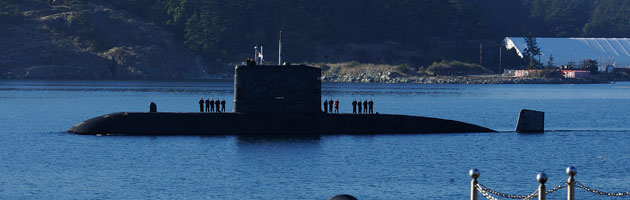
HMCS Chicoutimi departed from Canadian Forces Base Esquimalt for a month of trials and evaluations on Sept. 28. Pictured here, it sails out of Esquimalt harbour, past Duntze Head.
HMCS Chicoutimi departed from Canadian Forces Base Esquimalt for a month of trials and evaluations on Sept. 28. Pictured here, it sails out of Esquimalt harbour, past Duntze Head.
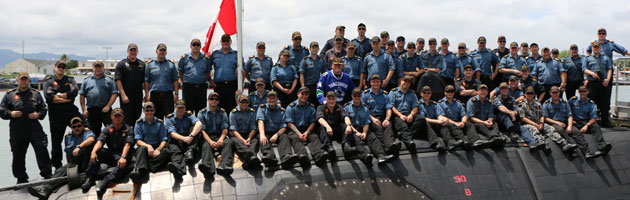
The crew of HMCS Victoria, during the Rim of the Pacific Exercise in Hawaii, line the submarine, with Victoria’s Commanding Officer, Cdr Alex Kooiman, wearing the Alex Burrows Canucks Jersey.
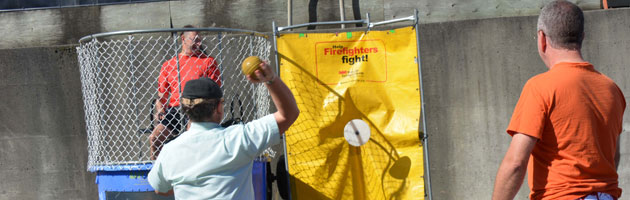
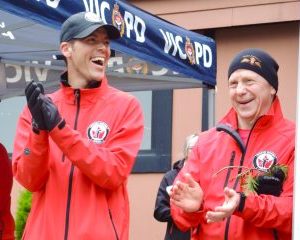
Cdr Wes Golden, Base Administration Officer, watches CWO Isabelle Galbrand take a shot at dunking the new Base Commander during the Formation Appreciation BBQ Sept. 30.

AB Mike Muraca reads the Lookout Newspaper, CFB Esquimalt’s award winning community paper during the 74th year of National Newspaper Week, which takes place Oct. 5-11.
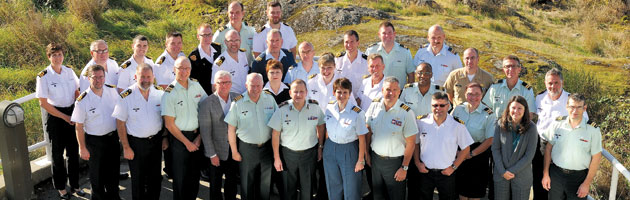
Military Chaplains gather at CFB Esquimalt’s Chief and Petty Officer’s Mess for a group photo during the annual RCN Chaplain Conference from Sept. 29 to Oct. 1.
When it comes to sports, it’s always nice when a little glory makes its way to the sidelines. That’s just what happened when two dedicated and passionate people from CFB Esquimalt got a tip of the hat on a national scale.CPO2 (Ret’d) Dan Fogarty and MS (Ret’d) Jeffrey Green have both been recognized with a nomination for a Canadian Armed Forces (CAF) Sports Award. Fogarty netted a nomination as Male Coach of the Year, while Green is in the running for Official of the Year.“It’s thrilling to be recognized on a national level,” says Fogarty, who retired this year and now works for Fleet Maintenance Facility as a civilian contractor. “You know, you just do what you do, not for the recognition but for the love of it. To get acknowledged for what you love it pretty awesome.”Fogarty has coached the CFB Esquimalt ball hockey team since 2005; this year is the first year he did not coach in almost a decade. The team and its accomplishments saw significant growth under his leadership.“When I started there were players that could barely hold a stick,” he says. “They practiced, and I gave them a helping hand here and there, but over time they grew, and through word of mouth got more people out, and before long we had a real team on our hands.”That team took home the CAF Regional’s in 2013, and had a fourth place showing at the CAF Nationals.For Green, he began officiating hockey games following a life-long love of the sport. A player for many years, he made the transition to the lines to try something new.“It seemed interesting to see it from the other side, so I thought I’d give it a shot,” he says. “The interactions with the players and coaches really gave me a...
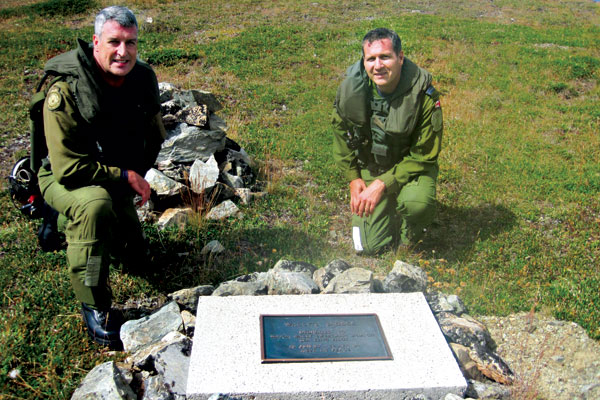
[caption id="attachment_8106" align="alignnone" width="300"] MWO Mike Tuohy (left) and LCol Patrick MacNamara kneel by the Wally Sweetman memorial plaque.[/caption]Five members of 443 Maritime Helicopter Squadron paid tribute to one of their own in August - a fellow aviator who died in an accident two decades ago.While performing a mountain flying training exercise, the group flew their CH-124 Sea King helicopter to a mountain saddle southwest of Keremeos, B.C., that is perched at an altitude of 7,400 feet. The destination is a place known as “Wally’s Saddle”, named after Major Wally Sweetman, a Sea King pilot and former 443 (MH) Squadron member, whose sacrifice and heroism 20 years ago will not be forgotten. During the morning of April 28, 1994, a transfer of Sea King helicopters was taking place from 12 Wing in Shearwater, Nova Scotia, to 443 (MH) Squadron in Patricia Bay, British Columbia. Major Sweetman was the aircraft commander and Major Bob Henderson was the co-pilot.En-route over the Bay of Fundy near Saint John, New Brunswick, the crew experienced an aircraft emergency. A fuel line broke, causing complete engine failure and a fire on board the aircraft at 6,000 feet.As the aircrew were preparing for a forced landing, burning fuel was entering the cabin from above causing blinding smoke to rapidly fill the cockpit. In spite of the chaos, the pilot performed an autorotation and managed to execute a survivable landing. The Navigator and Flight Engineer escaped, albeit with severe burns. Unfortunately, both Wally Sweetman and Bob Henderson were killed in the ensuing inferno. Their actions, however, live on as an example of bravery, courage, and outstanding airmanship.In 1999, a memorial plaque was commissioned in Wally Sweetman’s honour. His friends and relatives thought there would be no better place to remember him than in the area he loved so much, located in...
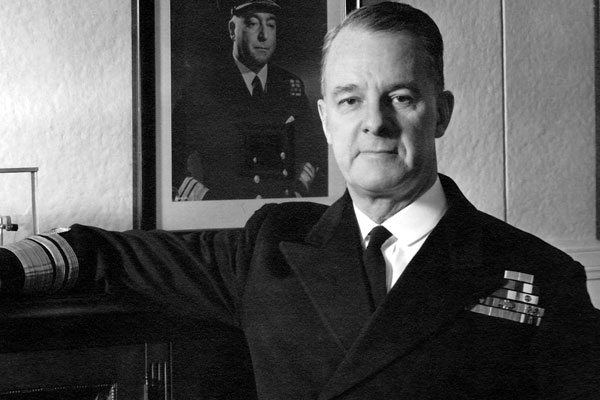
[caption id="attachment_8109" align="alignnone" width="300"] The first of the Royal Canadian Navy’s Arctic/Offshore Patrol Ships is named after Vice-Admiral Harry DeWolf, who was decorated for outstanding service throughout his naval career.[/caption]Prime Minister Stephen Harper announced Sept. 19 the name of the first Royal Canadian Navy’s Arctic/Offshore Patrol Ships (AOPS).Her Majesty’s Canadian Ship (HMCS) Harry DeWolf is named in honour of the wartime Canadian naval hero.HMCS Harry DeWolf is the first of the AOPS designed to better enable the RCN to exercise sovereignty in Canadian waters, including in the Arctic.The AOPS will be known as the Harry DeWolf Class, with HMCS Harry DeWolf as the lead ship. Subsequent ships in the class will be named to honour other prominent Canadian naval heroes who served their country with the highest distinction.This is the first time in its 104-year history that the RCN is naming a class of ships after a prominent Canadian naval figure.A native of Bedford, Nova Scotia, Vice-Admiral Harry DeWolf (RCN) was decorated for outstanding service throughout his naval career, which included wartime command of HMCS St. Laurent from 1939-40, and later, his 1943-44 command of HMCS Haida, known as the “Fightingest Ship in the RCN.”Canada defends more coastline than any other country, as it is bounded by three oceans. The AOPS will conduct sovereignty and surveillance operations in Canadian waters on all three coasts, including in the Arctic.The AOPS will also be used to support other units of the Canadian Armed Forces in the conduct of maritime-related operations and to support other government departments in carrying out their mandates, as required.The AOPS will be built by Irving Shipbuilding Inc. in Halifax, Nova Scotia.DND
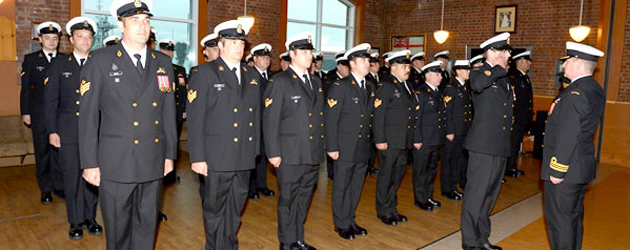
RAdm Bill Truelove, Commander MARPAC, presents Operational Service Medals to crew members of HMCS Victoria Sept. 23.
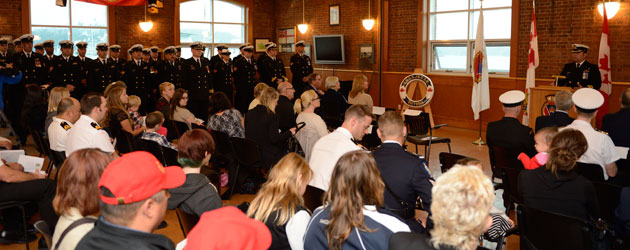
Crew members of HMCS Victoria were presented with Operational Service Medals for the submarine's contribution in Operation Caribbe during a ceremony at CFB Esquimalt Sep. 23.
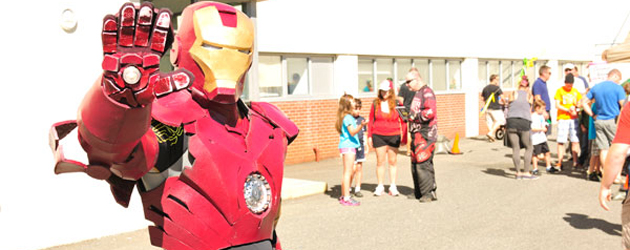
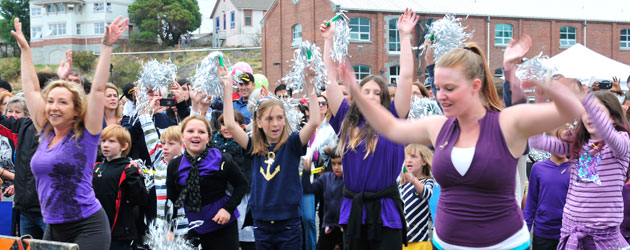
Ironman, a member of Superheros of Victoria, entertains the crowd at Formation Fun Day, Sept. 20.
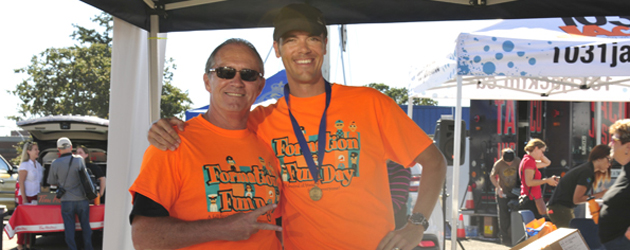
Matt and Len from Personnel Support Services (PSP) man the tent and pass out some free water bottles at Formation Fun Day, Sept. 20.
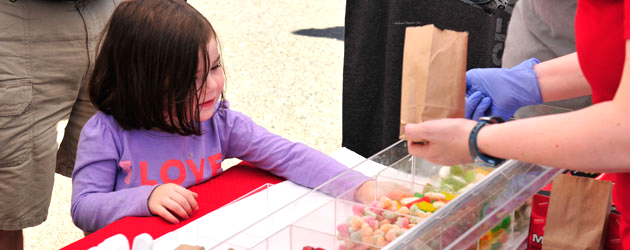
Addyson Creamer, 5, gets her pick of the goodies at the CANEX candy tent at Formation Family Fun Day Sept. 20.
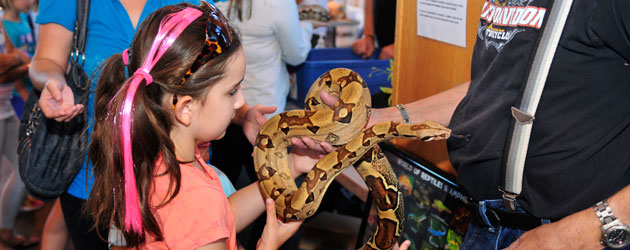
Sophia Lesperance, 8, handles a boa constrictor provided by Creatures Pet Store at Formation Family Fun Day, Sept. 20.
Post by Maritime Forces Pacific.
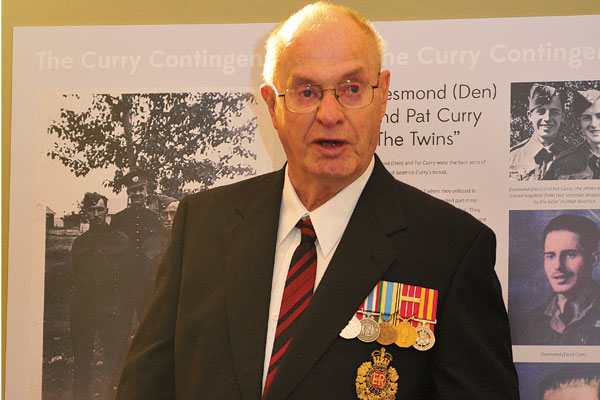
[caption id="attachment_8015" align="alignnone" width="300"] John “Jack” Curry, youngest child of Beatrice and Charles Curry, speaks at the unveiling of “The Curry Contingent” exhibit.[/caption]A new display at the CFB Esquimalt Military and Naval Museum is shining a light on an oft-forgotten piece of military history.“The Curry Contingent: A Canadian Family’s 100+ Years of Service” chronicles the history of the Curry family. It began withCharles Curry who served Canada in the First World War; his nine children followed in his footsteps serving Canada in either military or civilian service.“This is the story of an ordinary family going to great lengths to serve their country,” said Base Commander, Capt(N) Steve Waddell on Sept. 22 at the display’s unveiling. “To have a single family be so devoted to their nation, and supporting its values, freedom, and citizens, is truly an inspiration.”Consisting of letters, interviews, and family photos, the display goes through each Curry’s service, and life before and after the military.John “Jack” Curry Senior, the youngest of Charles and Beatrice Curry’s nine children, and one of two surviving “Curry Contingent” siblings, came to the display’s opening from Regina, Saskatchewan, where he now lives. Too young to join his siblings during the Second World War, Jack enlisted in the Royal Canadian Engineers in 1954. Serving in Germany, Chilliwack, and Egypt, he retired in the 1970s.“Those were great years,” he says. “It was a family tradition, and they were truly some of the best years of my life. I wouldn’t trade anything for them.”Jack says the display touched him deeply.“It’s a great thing to have our history join the history of the military,” he says. “It’s hard to believe anyone would go to this length just for our family, but it is a great thing to see.”The Curry legacy continued following the Second World War, with...
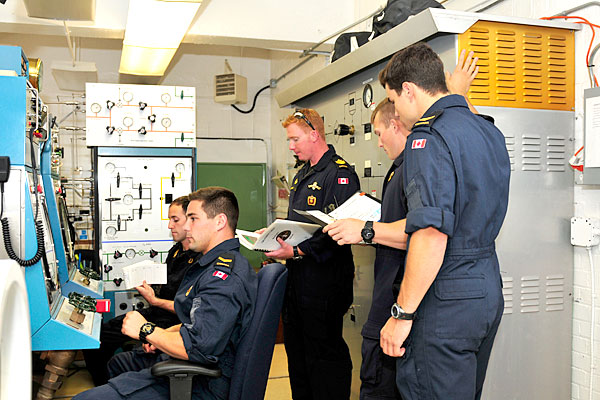
[caption id="attachment_8012" align="alignnone" width="300"] Clearance diver students learn how to use the hyperbaric chamber at Fleet Diving Unit (Pacific).[/caption]At first glance the Hyperbaric Chamber at Fleet Diving Unit (Pacific) (FDU(P)) looks like a time machine or even a futuristic prison cell; but the students of the Clearance Diver Course quickly learned it’s the best way to save a diver’s life.Gathered around the many knobs, buttons, and valves rising from the consoles, they were instructed on the procedures for treating divers whose bodies have become acclimatized to various depths and pressures.The normal atmospheric condition experienced on dry land is called normobaric pressure. When divers go under the surface, the pressure of the water and air above them increases with depth. This additional pressure causes several changes in the way a human body processes blood gases such as oxygen and nitrogen. If a diver surfaces too quickly, the gases in the blood can convert to bubbles and cause a very dangerous situation called the bends, or decompression sickness. A hyperbaric chamber can return a diver to the same depth and pressure experienced during the actual dive. This procedure in the hyperbaric chamber allows the nitrogen in the bubbles to escape naturally, leaving only absorbable oxygen.“It can be a fairly complicated process, but it’s absolutely vital to get it right,” says LS Mathew Kyte, one of the instructors at FDU (P). “This is just one piece of the Clearance Diver Course, but it is a very important one, and we want to make sure everyone is prepared for anything.”When a diver surfaces and is considered to be at a risk of decompression related injuries, they’re moved to the hyperbaric chamber, which works by pumping pressurized air into the metal container. The diver remains in the chamber anywhere from four to eight hours, sometimes...
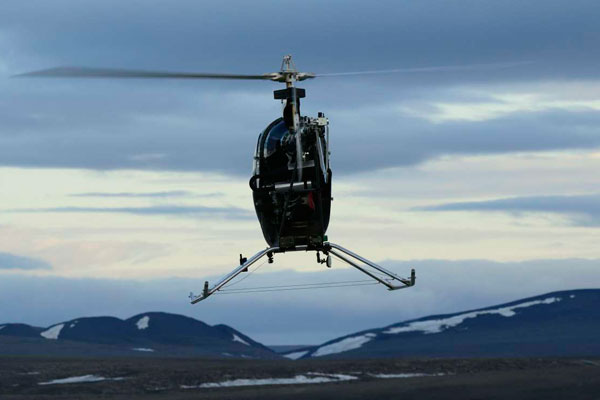
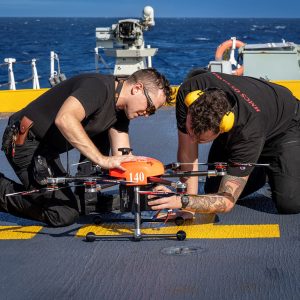
[caption id="attachment_8003" align="alignnone" width="300"] Janice Lang, DRDC photographerLeft: The Aphid Unmanned Aerial Vehicle (UAV) soars above the testing ground at Canadian Forces Station Alert. Used for scouting and surveillance, this small, remotely controlled helicopter is capable of flying 100km/h.[/caption]DND is currently using test drones and looking into the viability of using unmanned systems in the North.In August, 14 scientific and military personnel travelled to Canadian Forces Station (CFS) Alert, Nunavut, to test the viability of both ground and aerial unmanned vehicles—also called drones—in arctic environments.Conducting eight experiments over a 12 day period, the viability of these vehicles was tested in search and rescue, hazard mitigation, and communications simulations.“We were interested in the deployment of unmanned vehicles in terms of supporting DND operations,” says Dr. Simon Monckton, a scientist with Defence Research and Development Canada (DRDC), and the lead Unmanned Aerial Vehicle (UAV) scientist on the Joint Arctic Experiment. “Unmanned vehicles have never been piloted this far north before, so we were unsure how they would operate in such an extreme environment. It was our biggest question setting out.”During the exercise, two types of unmanned vehicles were implemented. The first, the Unmanned Ground Vehicles (UGV), were used for up-close investigation. About the size of a two-person All-Terrain-Vehicle, they were outfitted with tracks instead of tires to navigate the rugged Arctic environment. One of the two UGVs also featured a large manipulator arm on the front bumper, which is capable of lifting 200lbs at full extension. Teams in a large tracked vehicle following the UGVs piloted them remotely.The UAVs were utilized for surveillance, mapping, and reconnaissance. Converted from commercially available helicopters, they are about six-metres long, and feature a variety of still and video equipment. They can fly 100km/h for an hour and half before refuelling. Teams situated in a fixed location...
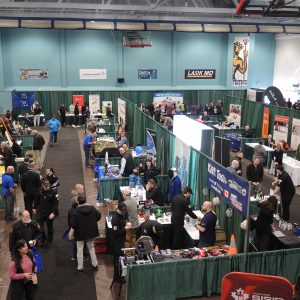
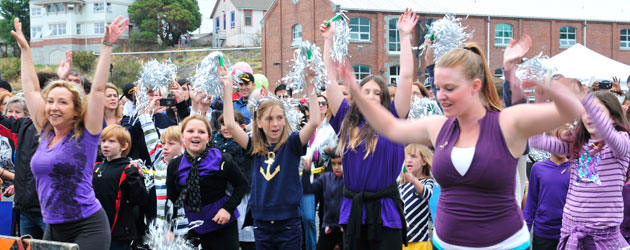
Gallery of the Trade Show[gallery link="file" ids="eyJ1cmwiOiJodHRwczpcL1wvd3d3Lmxvb2tvdXRuZXdzcGFwZXIuY29tXC93cC1jb250ZW50XC91cGxvYWRzXC8yMDE0XC8wOVwvdHJhZGVzaG93ODcxLmpwZyIsInRpdGxlIjoidHJhZGVzaG93ODcxIiwiY2FwdGlvbiI6IiIsImFsdCI6IiIsImRlc2NyaXB0aW9uIjoiIn0=,eyJ1cmwiOiJodHRwczpcL1wvd3d3Lmxvb2tvdXRuZXdzcGFwZXIuY29tXC93cC1jb250ZW50XC91cGxvYWRzXC8yMDE0XC8wOVwvdHJhZGVzaG93ODgzLmpwZyIsInRpdGxlIjoidHJhZGVzaG93ODgzIiwiY2FwdGlvbiI6IiIsImFsdCI6IiIsImRlc2NyaXB0aW9uIjoiIn0=,eyJ1cmwiOiJodHRwczpcL1wvd3d3Lmxvb2tvdXRuZXdzcGFwZXIuY29tXC93cC1jb250ZW50XC91cGxvYWRzXC8yMDE0XC8wOVwvdHJhZGVzaG93ODY4LmpwZyIsInRpdGxlIjoidHJhZGVzaG93ODY4IiwiY2FwdGlvbiI6IiIsImFsdCI6IiIsImRlc2NyaXB0aW9uIjoiIn0=,eyJ1cmwiOiJodHRwczpcL1wvd3d3Lmxvb2tvdXRuZXdzcGFwZXIuY29tXC93cC1jb250ZW50XC91cGxvYWRzXC8yMDE0XC8wOVwvdHJhZGVzaG93OTI4LmpwZyIsInRpdGxlIjoidHJhZGVzaG93OTI4IiwiY2FwdGlvbiI6IiIsImFsdCI6IiIsImRlc2NyaXB0aW9uIjoiIn0=,eyJ1cmwiOiJodHRwczpcL1wvd3d3Lmxvb2tvdXRuZXdzcGFwZXIuY29tXC93cC1jb250ZW50XC91cGxvYWRzXC8yMDE0XC8wOVwvdHJhZGVzaG93ODgwLmpwZyIsInRpdGxlIjoidHJhZGVzaG93ODgwIiwiY2FwdGlvbiI6IiIsImFsdCI6IiIsImRlc2NyaXB0aW9uIjoiIn0=,eyJ1cmwiOiJodHRwczpcL1wvd3d3Lmxvb2tvdXRuZXdzcGFwZXIuY29tXC93cC1jb250ZW50XC91cGxvYWRzXC8yMDE0XC8wOVwvdHJhZGVzaG93ODUwLmpwZyIsInRpdGxlIjoidHJhZGVzaG93ODUwIiwiY2FwdGlvbiI6IiIsImFsdCI6IiIsImRlc2NyaXB0aW9uIjoiIn0=,eyJ1cmwiOiJodHRwczpcL1wvd3d3Lmxvb2tvdXRuZXdzcGFwZXIuY29tXC93cC1jb250ZW50XC91cGxvYWRzXC8yMDE0XC8wOVwvdHJhZGVzaG93ODUyLmpwZyIsInRpdGxlIjoidHJhZGVzaG93ODUyIiwiY2FwdGlvbiI6IiIsImFsdCI6IiIsImRlc2NyaXB0aW9uIjoiIn0=,eyJ1cmwiOiJodHRwczpcL1wvd3d3Lmxvb2tvdXRuZXdzcGFwZXIuY29tXC93cC1jb250ZW50XC91cGxvYWRzXC8yMDE0XC8wOVwvdHJhZGVzaG93OTE2LmpwZyIsInRpdGxlIjoidHJhZGVzaG93OTE2IiwiY2FwdGlvbiI6IiIsImFsdCI6IiIsImRlc2NyaXB0aW9uIjoiIn0=,eyJ1cmwiOiJodHRwczpcL1wvd3d3Lmxvb2tvdXRuZXdzcGFwZXIuY29tXC93cC1jb250ZW50XC91cGxvYWRzXC8yMDE0XC8wOVwvdHJhZGVzaG93ODgxLmpwZyIsInRpdGxlIjoidHJhZGVzaG93ODgxIiwiY2FwdGlvbiI6IiIsImFsdCI6IiIsImRlc2NyaXB0aW9uIjoiIn0=,eyJ1cmwiOiJodHRwczpcL1wvd3d3Lmxvb2tvdXRuZXdzcGFwZXIuY29tXC93cC1jb250ZW50XC91cGxvYWRzXC8yMDE0XC8wOVwvdHJhZGVzaG93OTIyLmpwZyIsInRpdGxlIjoidHJhZGVzaG93OTIyIiwiY2FwdGlvbiI6IiIsImFsdCI6IiIsImRlc2NyaXB0aW9uIjoiIn0=,eyJ1cmwiOiJodHRwczpcL1wvd3d3Lmxvb2tvdXRuZXdzcGFwZXIuY29tXC93cC1jb250ZW50XC91cGxvYWRzXC8yMDE0XC8wOVwvdHJhZGVzaG93OTAzLmpwZyIsInRpdGxlIjoidHJhZGVzaG93OTAzIiwiY2FwdGlvbiI6IiIsImFsdCI6IiIsImRlc2NyaXB0aW9uIjoiIn0=,eyJ1cmwiOiJodHRwczpcL1wvd3d3Lmxvb2tvdXRuZXdzcGFwZXIuY29tXC93cC1jb250ZW50XC91cGxvYWRzXC8yMDE0XC8wOVwvdHJhZGVzaG93ODkzLmpwZyIsInRpdGxlIjoidHJhZGVzaG93ODkzIiwiY2FwdGlvbiI6IiIsImFsdCI6IiIsImRlc2NyaXB0aW9uIjoiIn0=,eyJ1cmwiOmZhbHNlLCJ0aXRsZSI6bnVsbCwiY2FwdGlvbiI6ZmFsc2UsImFsdCI6IiIsImRlc2NyaXB0aW9uIjpudWxsfQ=="]

Images from the homecoming of HMCS Regina to CFB Esquimalt on September 17, after an eight-month deployment in support of Operations Artemis and Reassurance.
Images from the homecoming of HMCS Regina to CFB Esquimalt on September 17, after an eight-month deployment in support of Operations Artemis and Reassurance.
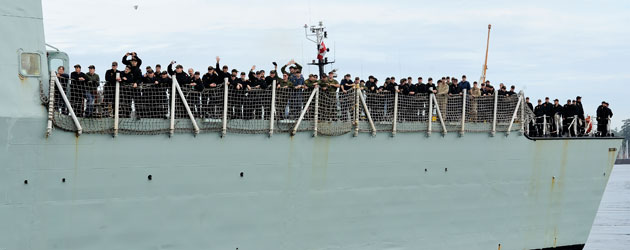
Images from the homecoming of HMCS Regina to CFB Esquimalt on September 17, after an eight-month deployment in support of Operations Artemis and Reassurance.
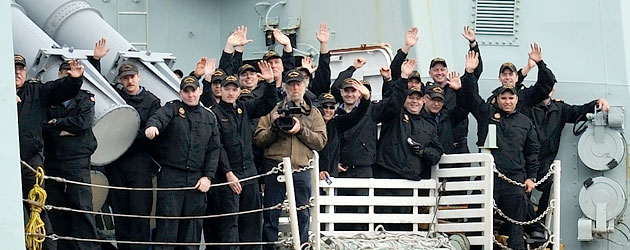
Images from the homecoming of HMCS Regina to CFB Esquimalt on September 17, after an eight-month deployment in support of Operations Artemis and Reassurance.
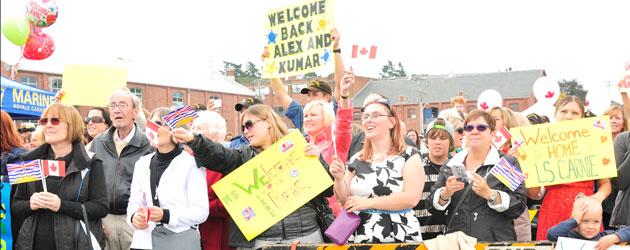
Images from the homecoming of HMCS Regina to CFB Esquimalt on September 17, after an eight-month deployment in support of Operations Artemis and Reassurance.
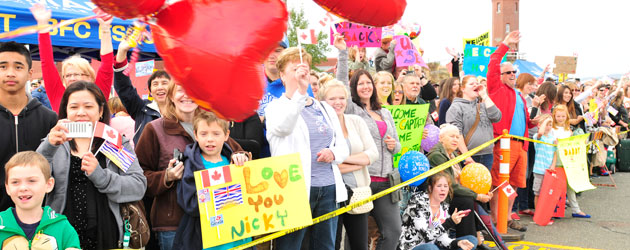
Images from the homecoming of HMCS Regina to CFB Esquimalt on September 17, after an eight-month deployment in support of Operations Artemis and Reassurance.
[caption id="attachment_7917" align="alignnone" width="300"] Joan O. Thomas receives the Minister of Veterans Affairs Commendation for her work with the Royal United Service Institute, and her instrumental role in raising two plaques commemorating the service of all Nursing Sister servicewomen during the Second World War, of which Thomas served herself.[/caption] [caption id="attachment_7918" align="alignnone" width="300"] James MacMillan-Murphy is honoured for his work as a Peacekeeper, and his dedicated involvement in various veterans programs including the Editor and Founder of the Blue Beret newsletter, founder of the Canadian Peacekeeping Veterans Association, and his work with the Royal Canadian Legion.[/caption]Julian Fantino, Minster of Veterans Affairs, visited CFB Esquimalt Sept. 12 to recognize 11 Vancouver Island veterans for their service to Canada.The veterans each received the Minister of Veterans Affairs Commendation, which honours veterans and civilians for exceptional work within the veteran community.“It’s a privilege to recognize the selfless efforts of these individuals who have generously given their time and energy to support and care for our veterans,” said Minister Fantino.“Their exemplary contributions are indicative of the enormous respect and gratitude shared by all Canadians for the men and women who have served in uniform.”The awards were handed out during a banquet in the Rainbow Room at the Chiefs’ and Petty Officers’ Mess.Among the recipients were two Victoria residents, James Patrick MacMillan-Murphy, and Joan O. Thomas.MacMillan-Murphy is a retired Peacekeeper who was recognized for his work as founder of the Canadian Peacekeeping Veterans Association, the founder and editor of The Blue Beret newsletter, and work with the Royal Canadian Legion and the Air Cadet League of Canada.Thomas served as a Nursing Sister in the Royal Canadian Army Medical Corp during the Second World War. Since then, she served as secretary-treasurer for the Royal United Services Institute in the 1970s, and was instrumental in the raising of two plaques commemorating all Nursing Sister servicewomen, which now stand in Langford’s Memorial Park. Shawn O’Hara, Staff Writer
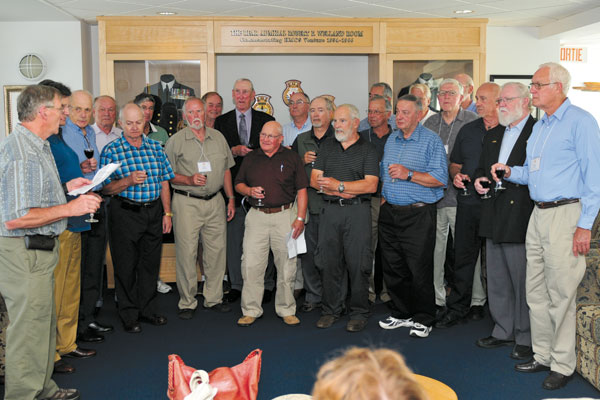
[caption id="attachment_7914" align="alignnone" width="300"] The Venture Class of 1964 raises a glass to new and old friends, and those who have died, during the 50th anniversary of their graduation.[/caption]Laughs were shared, glasses were raised, and more than a few tears were shed when 25 men gathered at Naval Office Training Centre (NOTC) Venture to mark 50 years since they had passed through its doors.Members of the Venture Class of ‘64 gathered in the Wellend Room at the Venture Accommodation Block to bid farewell after a three-day celebration of their momentous milestone.“It’s nice to see all these old faces, even after all this time,” said Cdr (Ret’d) Graeme Evans, a resident of Victoria and graduate of the 1964 Short Service Officer Plan, who came for the festivities. “We all stayed in relatively close contact during our careers, and even in our retired lives it’s still refreshing to see people again.”Get-togethers like this have happened every five years since 1974. Organized largely by Cdr (Ret’d) Matt Durnford, they began as a way to keep tabs on old friends, and maintain bonds made many years ago.“We all went through a lot together back in the day, and you don’t forget friends like these,” says Cdr Durnford, who now lives in Riverport, Nova Scotia. “We’ve all spread out over the last 50 years, so it’s nice to be able to get together, catch up, and remember the old times.”The celebrations included a meet and greet at the Royal Victoria Yacht Club, dinner at the Union Club, and a lot of laughs.The class also raised a glass of 35-year-old port to those of their group that have passed on.“It’s been a long time, and we’ve lost more than a few,” says Cdr Durnford. “They are in our hearts and our minds, and we will never...