Vocal resonance
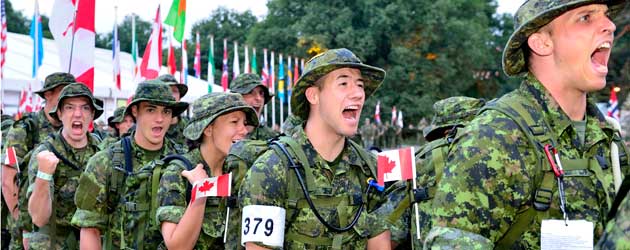
The Canadian Armed Forces Nijmegen contingent make their presence known to all personnel at Camp Heumensoord before departing for a 40 kilometre march on July 17 during the 97th International Four Days Marches Nijmegen, Netherlands.
The Canadian Armed Forces Nijmegen contingent make their presence known to all personnel at Camp Heumensoord before departing for a 40 kilometre march on July 17 during the 97th International Four Days Marches Nijmegen, Netherlands.
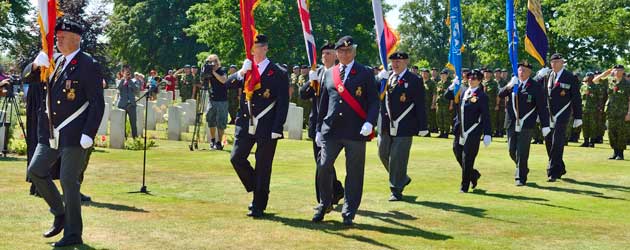
Legion members participate in the Canadian Armed Forces Nijmegen contingent parade at the Groesbeek Canadian War Cemetery to pay their respects on July 18 during the 97th Annual International Four Days Marches held in Nijmegen, Netherlands.
14 Wing Greenwood's Nijmegen team passes through the town of Groesbeek while on their 40 kilometre march on July 18 during the 97th Annual International Four Days Marches held in Nijmegen, Netherlands.
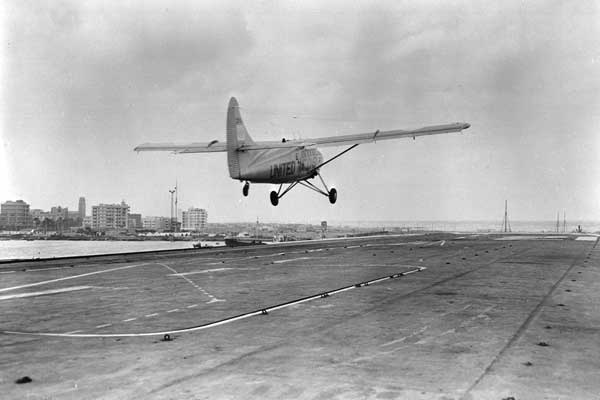
[caption id="attachment_4377" align="alignnone" width="300"] An RCAF Otter takes off from the flight deck of HMCS Magnificent.[/caption] One of the more delightful things about historical research is the interesting nuggets that I find when combing through old records and files. Often the nuggets that I uncover have nothing to do with the primary focus of my research (much to the chagrin of my boss), but they do often tend to generate a great story.As a case in point, a few years ago I came across an approved unit crest for 115 Air Transport Unit (ATU). Given the Egyptian image within the crest, I was curious to find out more about this particular unit of the Royal Canadian Air Force (RCAF). In truth, I found many stories, but one of the best was that 115 ATU became the first, and to my knowledge, only RCAF unit to operate fixed-winged aircraft off the deck of one of Her Majesty’s Canadian Ships.This particular RCAF composite unit was part of the Canadian contribution to the United Nations Emergency Force (UNEF). In its first iteration (there would be a second UNEF created in 1974), the UNEF was deployed beginning in November 1956 during the Suez Crisis.In a nutshell, the Suez Crisis revolved around Egyptian President Gamal Abdel Nasser nationalizing the Anglo-French Suez Canal Company and the waterway from which the company got its name. When Israel and Egypt went to war in October of that year, the British and French governments, who had already worked out a deal with the Israelis, invaded Egypt ostensibly to safe-guard the canal. It being the height of the Cold War, there was a significant danger that the Soviets (supporting Egypt) and the West (supporting Israel, Britain and France) might get drawn into the conflict, resulting in a major war. The...
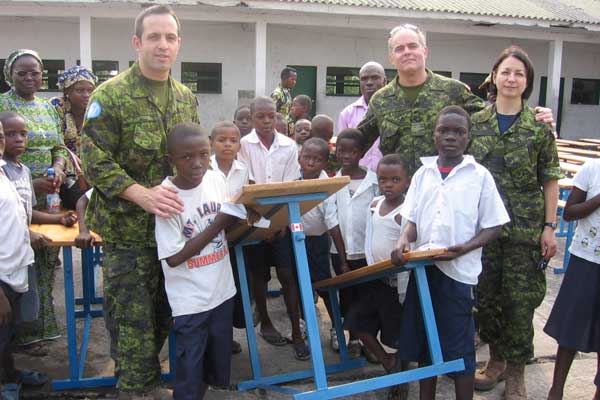
[caption id="attachment_4374" align="alignnone" width="300"] Maj Nickolas Roby, Maj Dany Hétu, Maj Dany Jacob-David, and Kimpoko school children move their new desks in their classrooms.[/caption] As the newly procured school desks were off loaded from the United Nations (UN) cargo vehicles, the children and villagers of Kimpoko began to chant a traditional Congolese song, thanking the Mundèle (the white travellers) for giving them a helping hand. The children danced and assisted us in moving the desks into their classrooms; it quickly became evident that The Boomers Legacy Fund had once again changed the lives of those less fortunate, but this time it was far from the Afghanistan desert.The village of Kimpoko is situated approximately 45 kilometres east of Kinshasa in the Democratic Republic of the Congo (DRC) and houses 100 civil war widows and their children. In 2006, Canadian Armed Forces members here in the DRC recognized the requirement for assistance in the village. Since then, various projects have been initiated and completed including the construction of water wells, and the construction of 40 homes. More recently, CAF members have assisted in the financing of the education of the children of Kimpoko by paying $8,000 in tuition costs per year.During a recent visit, Operation Crocodile Task Force members identified the requirement for classroom desks, as many students were either sitting on the dirt floor, or were crowded three to five children on one bench, which was originally constructed for only two children. It was clear these conditions were not conducive to a beneficial learning environment.Remembering the work that had been completed under the auspices of The Boomer’s Legacy Fund, a request was submitted for funding in order to assist in the purchase of school desks.About $10,000 was allocated for the acquisition allowing us to purchase 150 desks for the three Kimpoko...
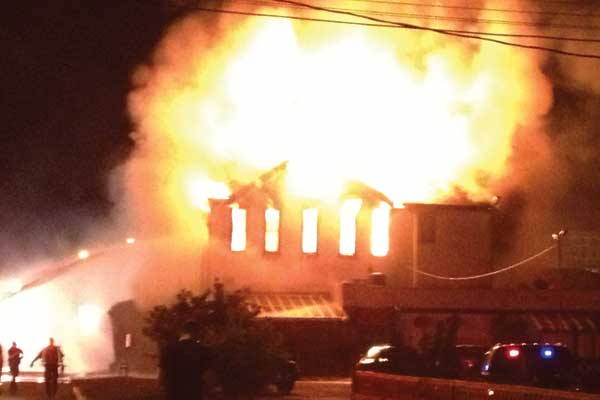
[caption id="attachment_4371" align="alignnone" width="300"] Taken between 2:45 and 3 a.m., these photos show the blaze at its peak.[/caption] It only took three minutes for CFB Esquimalt firefighters to respond to the 2:30 a.m. emergency call last Tuesday; however, when they arrived on scene the Tudor House was already engulfed in flames. “As soon as I pulled out of the station I saw flames three metres above the roof,” says Battalion Chief, Randy Morton.Bright orange flames were consuming both floors of the building and the unique castle-like tower. But the fire hadn’t quite taken the beer and wine store, and Morton knew it wouldn’t be long before the alcohol inside became fuel for the fire.With no one inside the building, Morton and the Incident Commander from Esquimalt Municipal Fire decided their mission would be to contain the fire to the 109-year-old structure and keep surrounding buildings safe.The two fire departments, which have a mutual aid agreement, set up a perimetre of people and equipment, dousing the structure with water from three hydrants to ensure the flames wouldn’t reach the building next door, which housed residents and several businesses.“It was in such close proximity to the building behind it, it would have set that building on fire,” says Morton.Even though firefighters managed to contain the fire by about 4:20 a.m., smoke from the blaze migrated through open windows in the next building setting off fire alarms. Residents were being evacuated.Adding to the inferno was alcohol from the bar and grease from the kitchen fryer. There was also a gas line that had to be closed off. Fortis BC employees arrived at 3:30 a.m. and dug into the ground with a backhoe to manually pinch the line.Eliminating at least one fuel source for the fire went a long way to help crews douse...
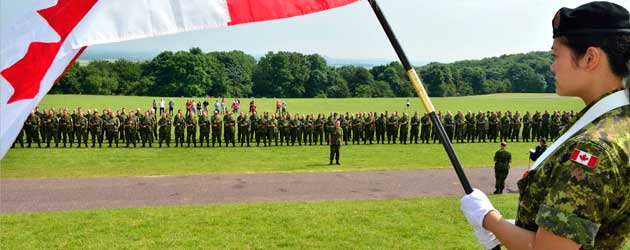
Sentry guard, Cpl Judy Lai from the Royal Canadian Dragoons, stands guard in front of the Canadian National Vimy Memorial in Vimy, France during a wreath laying ceremony held on July 13, 2013.
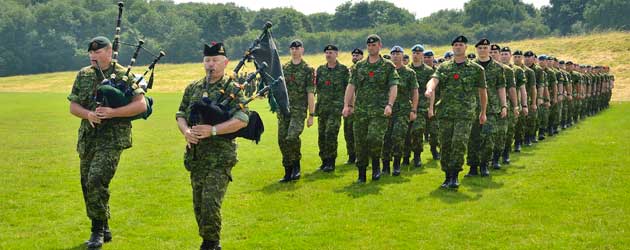
The Nijmegen Contingent prepare to pay their respects during the Vimy Memorial service held in memory of veterans who fought and died during the Second World War
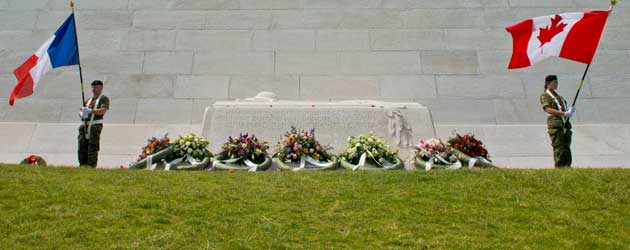
Sentry guards, MCpl Douglas Laydon, 2 Combat Engineer Regiment Petawawa (left) and Cpl Judy Lai, Royal Canadian Dragoons Petawawa, stand guard in front of the Canadian National Vimy Memorial in Vimy, France during a wreath laying ceremony.
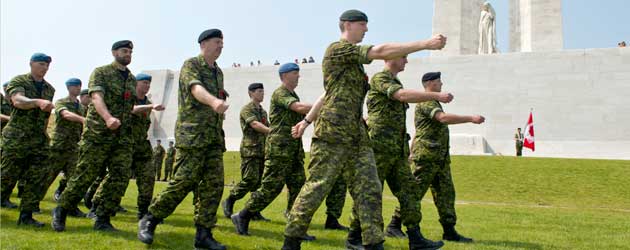
The Nijmegen Contingent parade marches in front of the Canadian National Vimy Memorial in Vimy, France during a wreath laying ceremony held on the July 13, 2013.
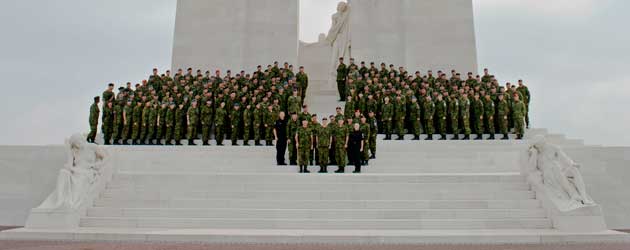
More than 200 Canadian Armed Forces members stand at the back of the Canadian National Vimy Memorial in Vimy, France, while touring the Vimy Ridge area during the 97th Annual International Four Days Marches held in Nijmegen, Netherlands.
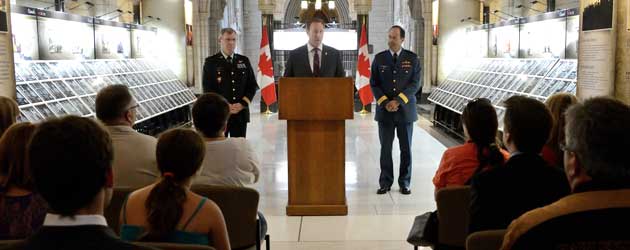
Peter MacKay, Minister of National Defence, flanked by Commander Canadian Joint Operations Command, LGen Stuart Beare (left) and Chief of the Defence Staff, Gen Thomas Lawson (right), during the unveiling of the Afghanistan Memorial Vigil on Parliament Hill.
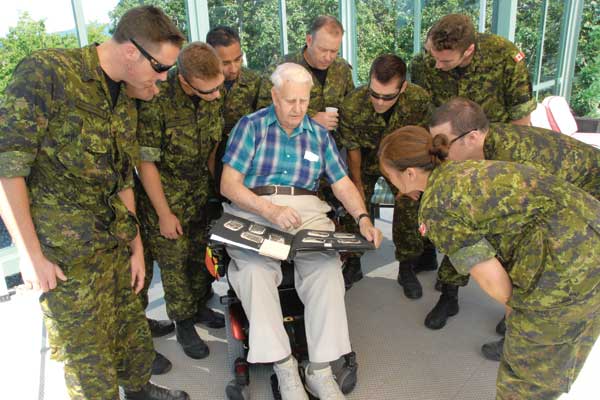
[caption id="attachment_4339" align="alignnone" width="300"] Maurice Hundleby, 91, shows the 2013 CFB Esquimalt Nijmegen Marching Team photos from his time in the Netherlands as part of Canada Command Headquarters during the Second World War.[/caption] Two weeks ago, shouldering 30 pound rucksacks in 30 degree heat, the 11-member CFB Esquimalt Nijmegen March team trekked from the field at Work Point to the Lodge at Broadmead in full kit.Waiting for them at the end of their journey was Maurice Hundleby, a 91-year-old veteran. The team, on one of their final training marches before heading to The Netherlands for the rigorous annual four day march, was making a special visit to see Hundleby.Hundleby, who was born in Victoria in 1922, joined the infantry before heading to Europe in 1944 to work as a clerk in the Canadian Command Headquarters in Nijmegen as Allied forces liberated the Netherlands from Nazi occupation.Germany invaded the Netherlands in May 1940 and relinquished its stronghold in 1945, when it was liberated by Canadian Forces. The region was in rough shape as famine, forced upon the Dutch citizens by the Nazi government, had led to the deaths of about 20,000 people. “I remember walking through the streets and seeing the kids there starving. Everyone was living on bread. We gave them whatever we could,” he recalls sitting on the rooftop terrace at Broadmead Care, a Victoria retirement home for veterans, surrounded by young military members in CADPAT.On Tuesday, July 16, the base marching team, dressed in combat uniform and carrying a 10kg rucksack, will begin their walk through the same territories Hundleby and other Canadian Forces member traversed 68 years ago. “I wanted the team to get a first-hand account of what that time was like, and why we’re doing what we do,” says CPO2 Chris Koblun, team leader for...
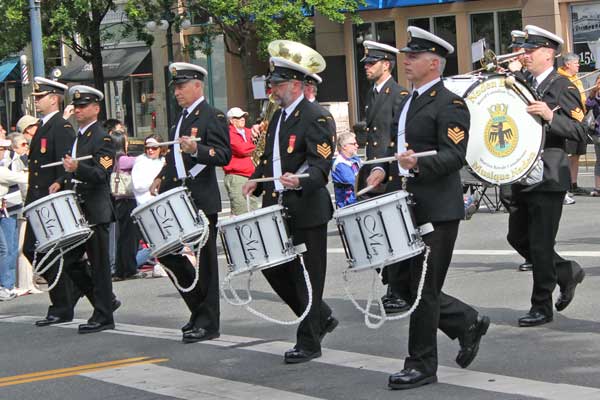
[caption id="attachment_4335" align="alignnone" width="300"] The Naden Band five-person corps of drums took to the streets during the Victoria Day Parade.[/caption] In April, there was an unusual sound coming from the museum parade square; a steady drum beat that echoed throughout Naden. Making the rhythmic noise was a five-person corps of drums training under the watchful eye of Naden Band Chief, CPO2 Pierre Cayer. The distinct staccato of the side drums, along with the military precision of the professional musicians, was impressive, and reminisced of times gone by.“Out of respect for our proud navy heritage and to remember the days when military bands had such a huge importance, I was inspired to facilitate a comeback of the corps of drums here at Naden,” said Lt(N) Matthew Clark, Commanding Officer of the Naden Band.With origins dating back as far as the mid 17th century, drummers were used by the Royal Marines to transmit signals on the battlefield by beatings, but eventually were replaced by buglers. In 1902 at the Coronation Review for King Edward VII in England, Lt George Miller put 30 side drummers in the front ranks of massed Royal Marine bands. Since then, side drummers have always been in the front rank of Royal Marines Bands.LCdr (Ret’d) David J Freeman, an avid historian and volunteer at the CFB Esquimalt Naval and Military Museum explained the historical development of the corps of drums in the Canadian Armed Forces. “As far as can be determined, Royal Canadian Navy bands copied the Royal Marines front rank tradition for side drummers. A photo of King George VI presenting Colours to the Royal Canadian Navy in 1939 here in Victoria shows some 40 musicians with the side drummers in the front rank. This practice continued throughout the Second World War. In the late 1940s, the...
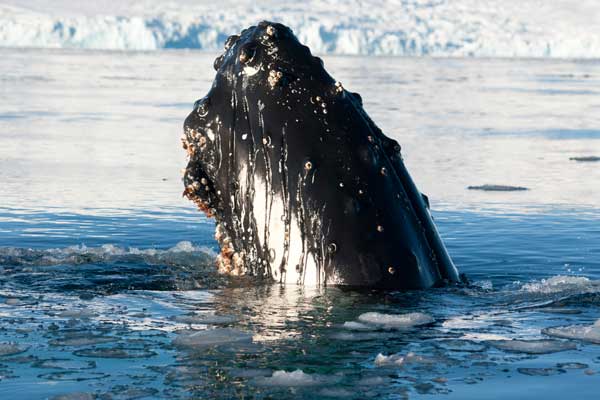
[caption id="attachment_4331" align="alignnone" width="300"] A humpback whale’s head. People often can’t tell the difference between Humpback and Grey whales.[/caption] The waters that make up the workplace of the Royal Canadian Navy (RCN) are home to countless forms of marine life. Throughout the day, any number of these seafaring critters may be observed by ship’s staff, and it’s a sailor’s duty to take notice. Through a voluntary program run by the Vancouver Aquarium, the Department of Fisheries and Oceans (DFO) receives marine mammal and reptile sightings data from a variety of sources, including lighthouse keepers, tugboat captains, B.C. Ferries, recreational boaters and private researchers. MARPAC vessels and staff are also an integral part of the sightings network, and ships’ staff record and report all sightings and interactions with marine mammals, with location, bearing, species, number of individuals, and whether or not any young are present. “It’s important to the DFO and to organizations like the navy that we know where and when these animals are sighted,” says Danielle Smith, an Environment Officer with Formation Safety and Environment. “Some ocean areas see very little vessel traffic, especially in the winter season, and the data provided by the navy may be the only observations available. Some of the records provided by ships’ staff are of endangered or threatened species; these data points are extremely important to the DFO when making conservation and management decisions.”With the staggering variety of marine life, it can sometimes be difficult to accurately record the type of marine mammal encountered, especially to someone unfamiliar with the many types of marine life in Canada’s waters. “Some of these species vary from one another in very subtle ways,” says Smith. “The difference between a Grey whale and a Humpback, two species people often confuse, can be recognized by the presence or...
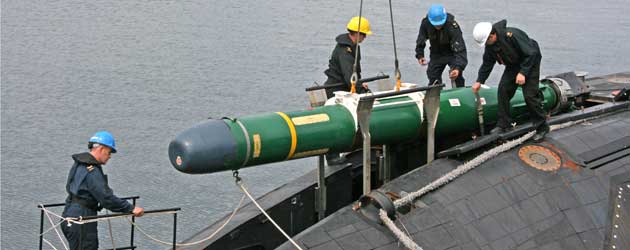
A crew prepares to crane a Mk 48 Heavyweight Torpedo from HMCS Victoria to the jetty.It was the first offload of Mk 48 Heavyweight Torpedoes at Canadian Forces Ammunition Depot Rocky Point.
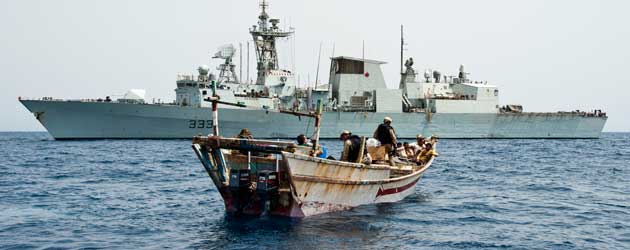
HMCS Toronto's boarding party searched a skiff in the Red Sea and recovered 249 kilograms of narcotics as part of Operation Artemis.
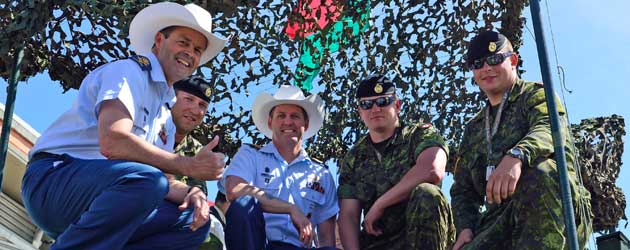
Canadian Armed Forces Chief of Defence Staff, Gen Tom Lawson, and Chief Warrant Officer, Kevin West, pose with members of the Lord Strathcona’s Horse (Royal Canadians) atop a Leopard 2A4M tank at the 2013 Calgary Stampede.
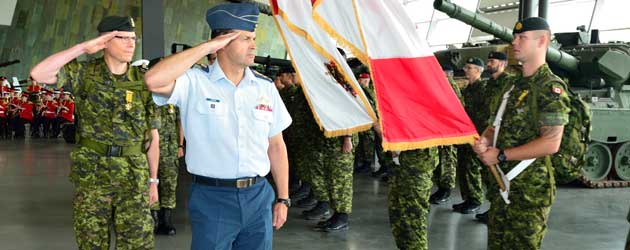
Gen Tom Lawson (centre), Chief of the Defence Staff, and Commander Joint Task Force Nijmegen, BGen Kevin Cotten, inspect the Nijmegen Contingents departing for the Netherlands during the Nijmegen send off parade.
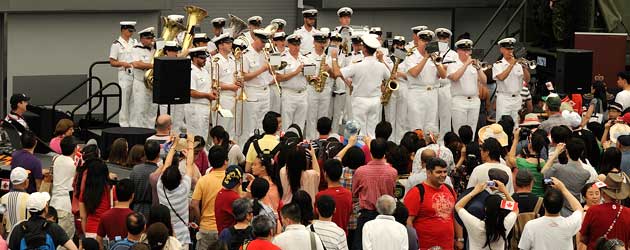
The Naden Band of the Royal Canadian Navy performs during the Canada Day celebrations at Canada Place, Vancouver, BC. The Canadian Armed Forces brought engaging displays and exhibits from all three elements to be enjoyed by spectators.
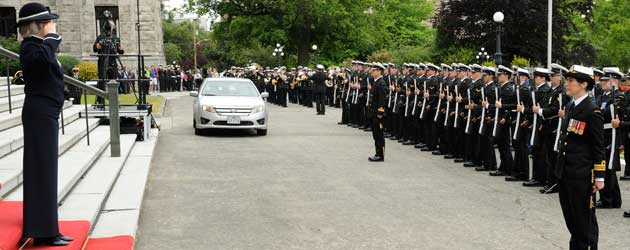
Lieutenant Governor of B.C. Judith Guichon receives a Vice Regal Salute from the guard of Honour during the opening of the 1st Session of the 40th British Columbia Legislative Assembly on June 26.
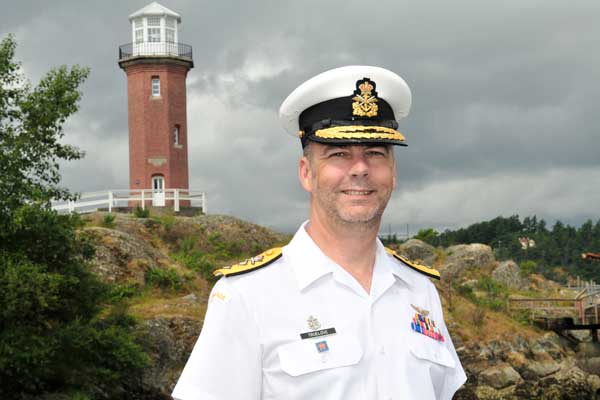
[caption id="attachment_4283" align="alignnone" width="300"] After a year in the driver’s seat at Maritime Forces Pacific, RAdm Bill Truelove updates the Formation and reflects on the previous year.[/caption] With one year at the helm of Maritime Forces Pacific (MARPAC)/Joint Task Force Pacific (JTFP), RAdm Bill Truelove has frequently turned heads with his “on again off again” beard. But the growth and clip of his chin hairs is a testament to how active his year has been - both on ship and on land. “So much has happened this past year and my role has been busy,” he says. “My job as Admiral comes with many challenges and it is the reality that there are not enough hours in a day. I think every Admiral who has sat in this chair wants to do more. I get many requests to be in places and I hate saying no.” From his corner office window that overlooks Esquimalt Harbour, he’s watched many warships pack up and deploy on sea trials, operations and deployments - from the Rim of the Pacific Exercise, to Trident Fury, to HMCS Regina’s deployment, to the Arabian Sea. On some of these exercises and operations he has sailed, and others he has monitored from his second story office in D100. During his watch, HMCS Victoria has seen great success at sea, including “her impressive and strategically important” MK48 Torpedo firing during RIMPAC. Pacific Fleet ships also participated in Ex Trident Fury this spring, and JOINTEX, a large scale joint exercise that included participants from RCAF, Canadian Army, SOF and friends from the U.S. Navy and Coast Guard. “The ships also completed a very successful visit to Vancouver where they had the opportunity to showcase the RCN to the citizens of that important Canadian economic hub and Pacific port city,”...
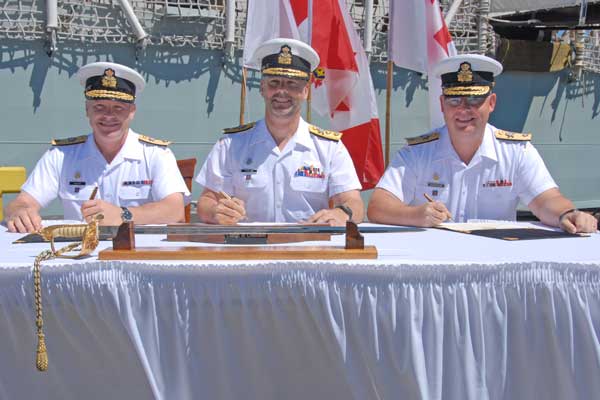
[caption id="attachment_4280" align="alignnone" width="300"] With the sun smiling down on the trio, Cmdre Bob Auchterlonie (right) assumed command of Canadian Fleet Pacific from Cmdre Scott Bishop (left) July 3. Commander Maritime Forces Pacific/Joint Task Force Pacific, RAdm Bill Truelove (centre), oversaw the signing of the Change of Command certificate.[/caption] Against the backdrop of HMCS Regina, and under the shining summer sun, Cmdre Scott Bishop passed on command of Canadian Fleet Pacific (CANFLTPAC) to Cmdre Bob Auchterlonie.The July 3 ceremony was attended by friends, family, distinguished public officials, past and present military officers, and overseen by RAdm Bill Truelove.Cmdre Bishop spoke about his time as Commander CANFLTPAC, and his appreciation of those he worked with in that time.“In my time at CFB Esquimalt the West Coast has become a home away from home, and I’m going to miss it dearly,” he says. “At the same time, I know the men and women of the Pacific Fleet will be in good hands with Cmdre Auchterlonie.”Cmdre Bishop also addressed RAdm Truelove for his leadership and support.“Sir, it has been a real pleasure to work with you. I’m truly grateful for the friendship, support, and leadership you have shown me and my team,” he said. “I can say that none of the advancements the Pacific Fleet has enjoyed in the last year would have been possible without you. Thank you, sir.”CPO1 David Bliss, Fleet Chief Petty Officer, then presented Cmdre Bishop with his pennant, which was lowered for the last time as his command was relinquished to Cmdre Auchterlonie.RAdm Truelove then took the podium to thank Cmdre Bishop, and wish him luck on his new position.“Your dedication to getting this fleet in fighting shape, and working with the soldiers, sailors, airmen and women of our armed forces has been truly inspirational,” he says. “I...
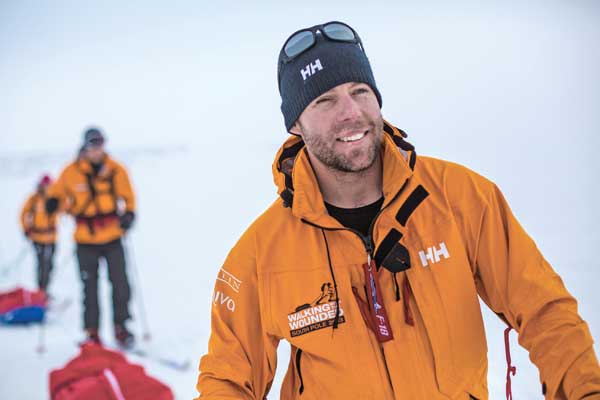
[caption id="attachment_4277" align="alignnone" width="300"] MCpl Chris Downey and the rest of Team Commonwealth pull pulks during expedition training in Iceland.[/caption] Teams of wounded veterans from the U.K., the U.S. and the Commonwealth (Australia and Canada) are embarking upon on one of the most high profile and toughest expeditions of modern times - walking to the geographic South Pole. Walking with the Wounded - South Pole Allied Challenge is an extreme undertaking for 11 people that will take 16 days and cover 330 kilometres in -35C, all to show the world the extraordinary courage and determination of wounded military members.MCpl Chris Downey and Cpl Alexandre Beaudin D’Anjou will represent Soldier On and the Canadian Armed Forces as a beacon of hope and inspiration for other injured veterans. Both were wounded during their tour in Afghanistan. “I want to prove to other wounded servicemen that you can still do great things as a wounded soldier,” said 31-year-old combat engineer Cpl D’Anjou. “I know a lot of guys who are wounded and on the couch, and I want to tell them live their lives. We only have this time to take advantage of life, and if you have a goal you should go for it.”Following extensive training, teams will fly to Antarctica in November. They aim to reach the South Pole around Dec. 17.“For me it’s about doing this with 11 other wounded soldiers in the hopes that together we will inspire thousands of injured soldiers to start living the life they should despite the limitations they may have,” said 31-year-old air weapons systems technician and EOD operator, MCpl Chris Downey.Each team has four members, and the Canadian soldiers have teamed up with two Aussies. In Cold Lake, Alberta, MCpl Downey has been hauling a sled weighing 70 kilograms about 13 kilometres to...
2013 Esquimalt Navy Run from Lookout on Vimeo.
Formation Fun Day is even better than ever and the weather promises to be gorgeous. Bring your family and friends and enjoy street performers, face painting, motocross test rides, RHIB rides and more! Got little kids? Look for the parent tent.
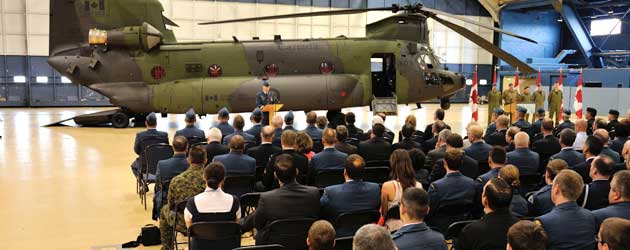
Canada's Armed Forces welcome the first CH-147 Chinook helicopter with an official ceremony in Ottawa. Defence Minister Peter MacKay was there to welcome the new addition to Canada's tactical transport capability.