5th Annual Boomer’s Legacy Ride
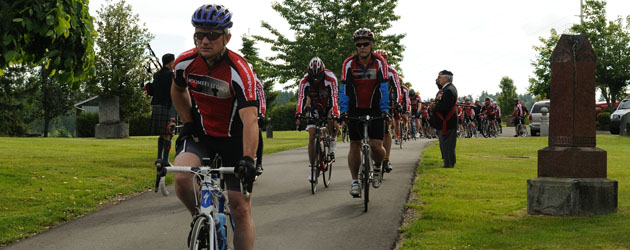
Participants of the 5th annual Boomer’s Legacy Ride depart Courtenay Civic Cemetry to continue on their 240 kilometre ride to Victoria, BC on June 15. This journey will taken the riders 2 days to complete.
Participants of the 5th annual Boomer’s Legacy Ride depart Courtenay Civic Cemetry to continue on their 240 kilometre ride to Victoria, BC on June 15. This journey will taken the riders 2 days to complete.
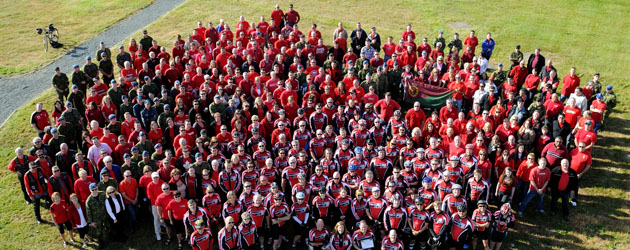
Group photo of the Boomer’s Legacy participants and Red Shirted 19 Wing Supporters.
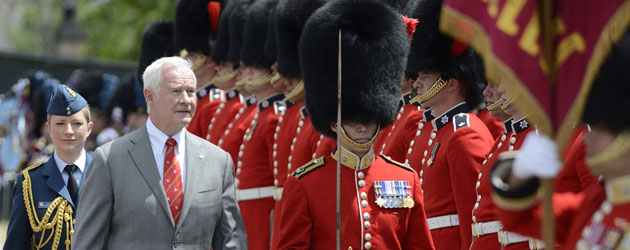
His Excellency the Right Honourable David Johnston, Governor General of Canada inspects the Ceremonial Guard as part of the Canada Day celebrations held on Parliament Hill.
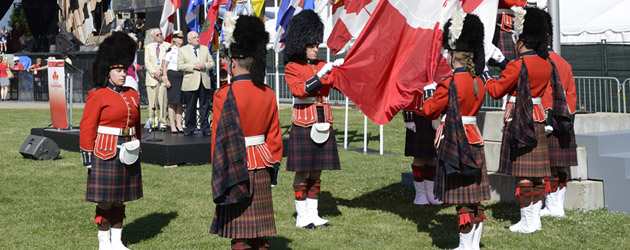
This year’s official flag raising during Canada Day festivities on Parliament Hill marks the 50th anniversary of the Canadian Coast Guard and the War of the 1812 Bicentennial.
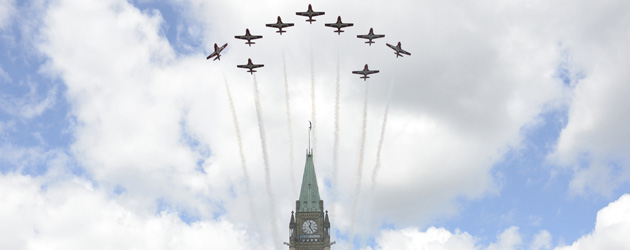
The Canadian Forces Snowbirds Demonstration Team conducts a fly-past above Parliament Hill as part of Canada Day celebrations in Ottawa.

[caption id="attachment_1350" align="alignnone" width="300"] The crew of NOTC Venture rides the Big Bike for charity.[/caption] At 39 years old the last thing I ever thought my spouse Blaise and I would face was the news that he needed open heart surgery in order to replace his mitral valve. Leading up to the day we were told of his condition, life seemed fairly normal. The kids had gone back to school and Blaise started to experience some flu-like symptoms. He just thought they had brought home the latest virus and he was the next victim. This went on for a few days and through some coaxing I finally talked him into going to the hospital to get checked out. Less than 24 hours later he was told he had endocarditis, which, as was explained to us, is inflammation of the inside lining of the heart chambers and heart valves. Two weeks in the Jubilee Hospital, and six weeks of home antibiotic therapy later the impact of the endocarditis and infection was known and surgery was scheduled. The support of the amazing doctors involved and the information that was made available to us from the Heart and Stroke Foundation truly got us through this period of our lives, and Blaise is doing great. Fast forward to a few months ago when the advertisement for this year’s Heart and Stroke - Big Bike Challenge caught my eye. Who couldn’t have fun with 29 people on a bike, riding through downtown Victoria. With promotional package in hand I approached our Executive Officer, LCdr Ryan Klassen who agreed without hesitation to become the Team Leader. His brilliant mind at work, the team name “BLogged Arteries” was conceived. This was our first year in this event and the team raised $1,763.10 for this very worthwhile...
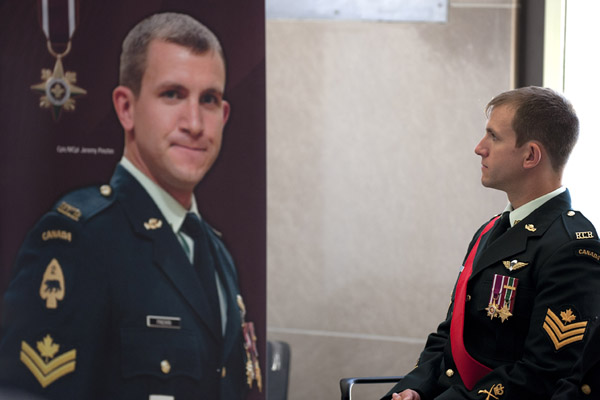
[caption id="attachment_1346" align="alignnone" width="300"] As a recipient of the Star of Military Valour, Sergeant Jeremy Pinchin, SMV, listens to The Decorated inaugural speech given by the Chief of Defence Staff, General Walter Natynczyk.[/caption] A new initiative called The Decorated Programme was unveiled June 14 in Ottawa. It aims to increase awareness of the outstanding achievements of decorated CF members. The Decorated recognizes the bravest of the brave: those who display the ultimate example of devotion to duty in the presence of the enemy, or who willingly and knowingly place themselves in harm’s way to save or protect others. This initiative is being promoted a number of ways. An exhibit featuring portraits and citations of highly decorated CF members is presently situated in the National Capital Region until the end of June, and will travel throughout the country to various bases in the fall and early next year. The Decorated website has been launched and features military valour and bravery decoration recipients dating back to 2001, and other related news. Also, news stories on decorated CF members will be featured in upcoming issues of The Maple Leaf. “Canadian Forces members have always, and will continue to exemplify a set of military values that are dear to us all: duty, loyalty, integrity and courage,” says Chief of the Defence Staff General Walt Natynczyk while unveiling The Decorated programme in Ottawa. “The Canadian Forces members celebrated within The Decorated represent the very best qualities of all those who serve, whether it be in battle or while helping those in need.” To learn more about the decorated CF members featured within The Decorated program, please visit the Defence Team website at http://dt-ed.mil.ca/ Corporate Internal Communications
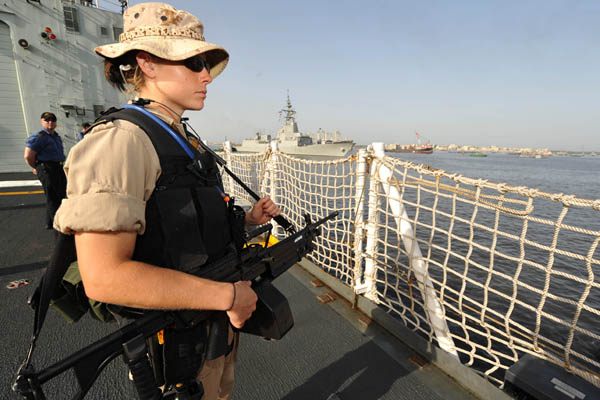
[caption id="attachment_1341" align="alignnone" width="300"] Counter-piracy. On April 26, 2009 a member of the Naval Boarding Party stands watch as Her Majesty's Canadian Ship (HMCS) Winnipeg participates in an SNMG1 port visit to Karachi Pakistan to increase awareness of NATO activities in the region.[/caption] Royal Roads University, the Asia Pacific Center for Security Studies, and Maritime Forces Pacific will be holding the biennial Maritime Security Challenges conference in Victoria, B.C. from Oct 1-3, 2012 Women have made tremendous strides in the United States Armed Forces; however, many still seek further equality in the realm of combat operations. In February, the Pentagon opened up 14,000 positions for servicewomen that were previously unavailable to them, marking a milestone that will see females in roles such as intelligence officers, tank mechanics, and rocket launcher crew members. While there are still approximately 255,000 combat-related roles that women are prohibited from participating in, the nature of modern warfare has distorted the concept of front lines, ensuring that every person deployed to a warzone, male or female, has the potential to become involved in combat. The unbalanced differentiation between the U.S. military and the adversaries they face in combat zones in Afghanistan and Iraq have forced insurgent groups to confront American and allied forces in irregular ways, which have made non-combat roles extremely dangerous. The threat of suicide bombings, improvised explosive devices, and ambush tactics carried out by guerrillas disguised as allied security forces have all been evident in countless instances. This challenge of unconventional warfare has increased the demand for more combat-ready troops, and has led the U.S. military to allow women to be attached to battle units. Although women cannot officially participate in U.S. infantry or special forces operations, they are still regularly subject to warfare dangers through attachment to combat groups in supporting roles...
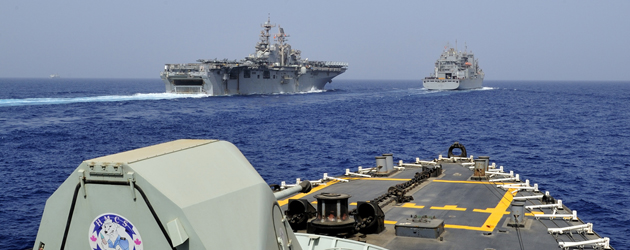
HMCS Charlottetown stands by while the USS Iwo Jima (left) moves in to conduct a replenishment at sea with USS Carl Brashear in the Gulf of Aden while on Operation Artemis on June 11, 2012.
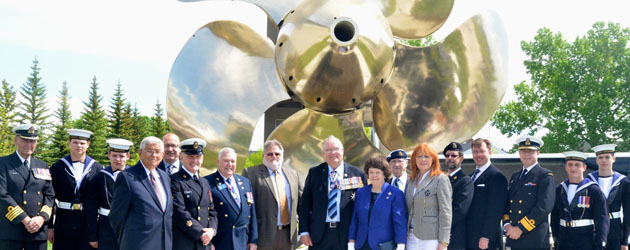
Huron Screw monument is unveiled at the Naval Museum of Alberta.
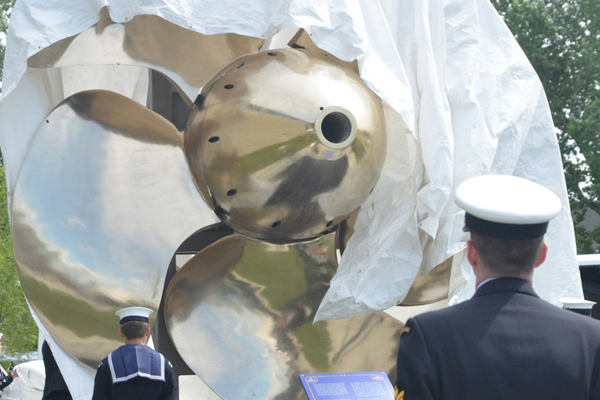
[caption id="attachment_1268" align="alignnone" width="300"] PO2 Matthew Grady gives the order to unveil the HMCS Huron Screw Monument at the Military Museums on June 3, in Calgary, Alberta.[/caption] Naval veterans and dignitaries gathered Sunday June 3 for the unveiling of HMCS Huron’s port screw. Also on hand were member of the public, as the unveiling coincided with Armed Forces Day at the Military Museums in Calgary, Alberta. The 17-foot, five blade variable-pitch port screw was shipped in eight parts from Esquimalt to Calgary by Arthur Hazle, and then cleaned using a high-pressure water jet by Murray Hazle. Don Connolly, Gary Hansen, Jack Pidgeon, Gord Rowan and Andy Madsen then hand buffed all the surfaces and applied a clear coat to prevent future discoloration. The unveiling ceremony took place outside the Naval Museum of Alberta. Lieutenant-Governor Donald S. Ethell, Member of Parliament Rob Anders, and Calgary Deputy Mayor Diane Colley-Urquhart each spoke before Rear-Admiral Mark Norman, Deputy to the Commander of the RCN, ordered the unveiling. The monument is dedicated to “the men and women who served in the boiler and engine rooms of the ships of the RCN in the 20th century.” A good number of these engine room artificers and stokers were on hand for the ceremony. Scott Hausberg, Contributor
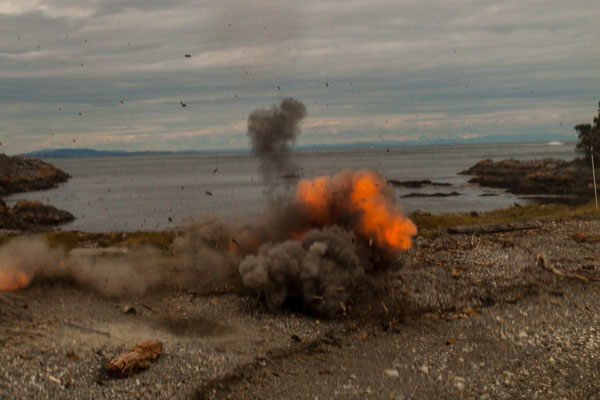
[caption id="attachment_1264" align="alignnone" width="300"] Bentinck Island boom in training.[/caption] Fleet School boatswain students no longer have to pack a bag and travel across the country to receive Qualification Level 6 training to ready them for Range Safety Officer duties. The three-month course, which includes two weeks of hands-on demolition training on Bentinck Island, is now available at CFB Esquimalt as a pilot trial. Only a handful of boatswains are chosen – between eight and twelve students for each serial. Live training is always the most exciting, with students learning to set explosives and then detonating and watching it blow up. The upward spray of sand usually earns a gasp or two from them. Bentinck Island, long ago a leper colony, is DND’s demolition range and test site range for explosives. Its location so close to Race Rocks Ecological Preserve means many procedures are in place to ensure continued protection of that area. Fleet School pays particular attention to the time of the year, avoiding nesting birds, new seal pups and migration of marine mammals such as whales and sea lions. Blasts are spaced out at a minimum of 10 minute intervals, and the size of the explosion is carefully monitored. “We maintain a constant watch for all land and marine animals,” says PO1 Raymond Shaw, demolitions instructor of Fleet School’s Seamanship Division. “We continually work with outside agencies, cooperating with their studies as to how our training impacts the wildlife nearby at Race Rocks. We ensure our activities are conducted in a manner and in an area where there isn’t a chance of harming wildlife.” To ensure the explosion is small, yet impressive, they use C4 plastic explosive. “Its the same material that demolitions teams would use to clear beaches of a large objects, or clear navigational hazards at...
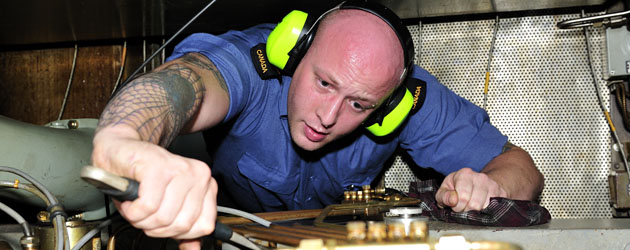
AB Brent Hillier, a Marine Engineering Mechanic, conducts maintenance on a diesel generator in the forward auxiliary machinery room onboard HMCS Charlottetown in the Gulf of Aden while on Operation Artemis on June 13, 2012.
“We are the invisible minority” says Capt(N) Luc Cassivi, the Chief of Staff Plans and Operations at Maritime Forces Pacific Headquarters. “We have gone ahead in spades in lesbian, gay and transgender issues in the Canadian Forces, but if we don’t keep it on our minds, we will fall back into complacency and we don’t want to go there.” With 29 years of service as a submariner, Capt(N) Cassivi has experienced a sea-change in attitudes regarding gays, lesbians and transgendered members in uniform. Given that June is National Gay and Lesbian Pride month, sexual minority service members such as Capt(N) Cassivi pause for consideration when assessing their experiences in uniform. Joining the Navy in 1983, Capt(N) Cassivi graduated from the Collège Militaire Royale du Canada at a time when the CF actively enforced a policy of systemic discrimination banning gays and lesbians from military service. “In those days, we were an organization rooted in conservative values,” says Capt(N) Cassivi. Exposed to repeated insensitivities coupled with the fear of being found out, the young submariner’s thoughts were pervaded with a sense of fear and reprisal. “There was a special investigations unit in the military during those days whose aim was entrapment and rooting us out. It was awful and it was traumatic,” says Capt(N) Cassivi. According to Professor Alan Okros, Deputy Director of Academics at the Canadian Forces College in Toronto, between 1988 and 1992, the CF introduced an interim policy not to actively recruit lesbian and gay members; however, those current serving members who were ‘determined’ to be either lesbian or gay were deemed ‘career frozen’. “Those individuals were not eligible for training, promotion, deployments or career courses,” says Dr. Okros. Many lesbian and gay members released from service as a result. Yet change was coming. The cause for...

PO1 Dori Aubin will go down in history as the first female electrician in the Royal Canadian Navy. Now serving on HMCS Vancouver, she reflects on making a choice to serve in what typcially was a male dominated trade.
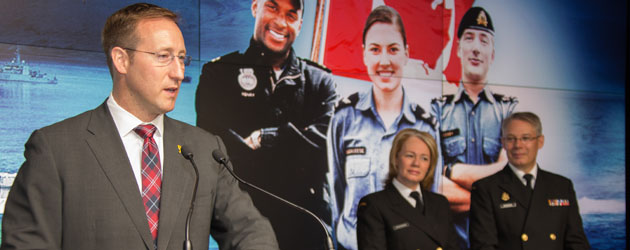
The Honourable Peter MacKay, Minister of National Defence and Vice-Admiral Paul Maddison, Commander Royal Canadian Navy, welcome Arlene Dickinson as the newest Honorary Captain for the Royal Canadian Navy, in Ottawa, on June 22, 2012.
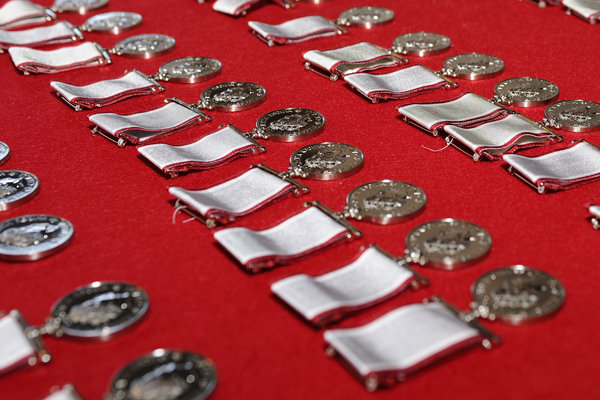
[caption id="attachment_1234" align="alignnone" width="300"] The ship’s company of HMCS Protecteur gathered in the Naden Drill shed June 11 for presentations of the medals with the Expedition Ribbon for their role in Operation Carribe.[/caption] Dressed in their Number Ones, the crew of HMCS Protecteur stood erect and proud in the Naden Drill Hall June 11, set to receive their individual medals for a mission well done. The honour was for their work supplying Operation Caribbe’s ships, who were working to halt the flow of illegal drugs into North America through the Caribbean Sea, the Gulf of Mexico, and the shores of Central and South America. Under the direction of Canada Command, Protecteur provided support in missions taking place from August to October 2010. During that time, they travelled to and from the “hot zone” of operations off the coast of Columbia, providing more than eight million gallons of fuel to participating patrol ships. Protecteur also sailed support missions from May to June 2011 in the Caribbean Basin and the East Pacific. Op Caribbe was responsible for 33 arrests, as well as the confiscation of 12 metric tons of cocaine, totalling a street value of more than $235 million. Cdr Todd Bonnar, Commanding Officer of Protecteur, and crew received the Operational Support Medal (OSM). The OSM was awarded in 2010 to recognize certain military operations for which there were no medals available. It is awarded to those who are deserving of recognition due to the service granted and risks taken on overseas missions in potentially dangerous environments. “The crew did exceptionally well,” said Cdr Bonnar. “They had to endure a sweltering work environment. The average temperature in the Gulf had to be in low 30s." RAdm Bill Truelove, Commander Maritime Forces Pacific/Joint Task Force Pacific, came to speak to the crew and...

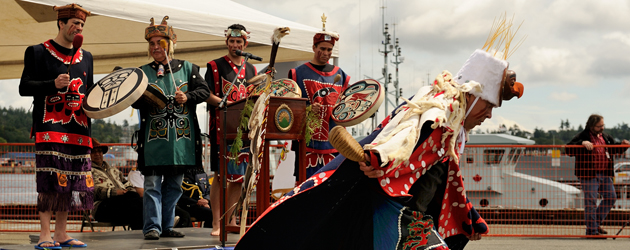
First Nations Le La La Dance Group performs during National Aboriginal Day celebrations at Her Majesty's Canadian Dockyard Esquimalt on June 8, 2012.
Traditional navy whalers entertain the crowd with a race in Esquimalt Harbour during National Aboriginal Day celebrations at Her Majesty's Canadian Dockyard Esquimalt on 8 June 2012.
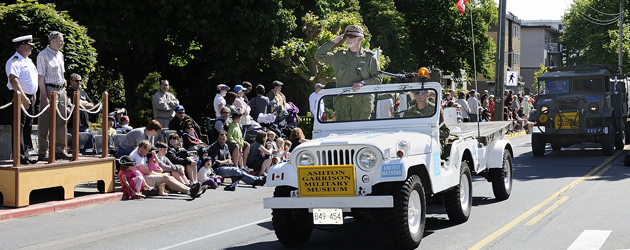
Vintage Vehicles from Ashton Garrison Military Museum take part in the Buccaneer Days Parade.
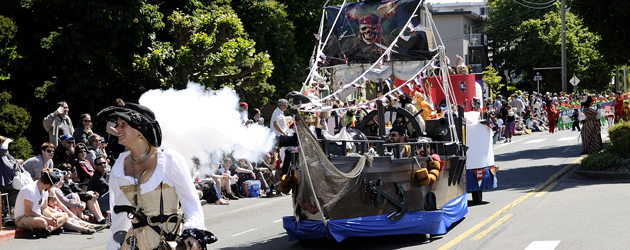
One of the many period themed floats taking part in the Buccaneer Days Parade.
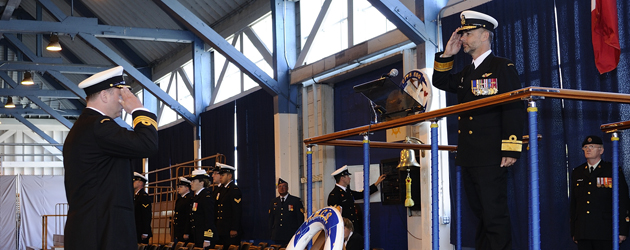
RAdm Bill Truelove, Commander Maritime Forces Pacific receives the general Salute from Commander Bonnar, Commanding officer of HMCS Protecteur.
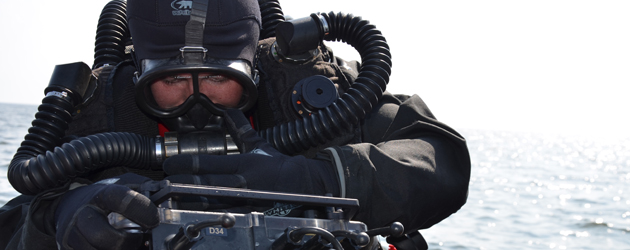
LS Chris Cooper sets up the underwater sonar imaging system prior to a dive. This uses sonar to create a picture on the bottom of the ocean floor.
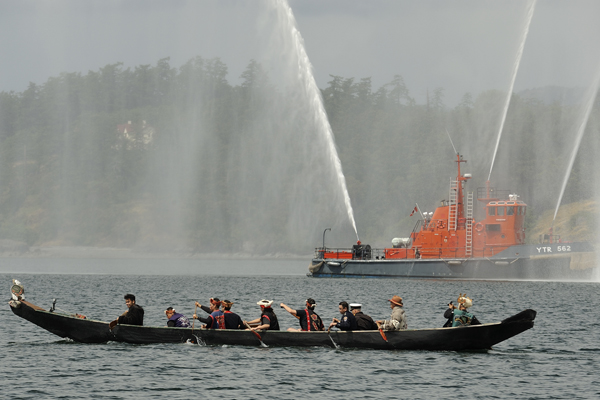
[caption id="attachment_1162" align="alignnone" width="300" caption="His Honour Steven Point, Lieutenant Governor of British Columbia, and CFB Esquimalt Base Commander, Capt(N) Craig Baines, paddle across Esquimalt harbour to A Jetty in a First Nations dugout canoe with eight First Nations paddlers."][/caption]Through the misty spray churned up by Firebrand’s hoses, a wooden craft slowly approached A jetty last Friday. Propelling it through the harbour were 10 men of varying ages and strength, each pulling a brightly painted paddle through the water. As the black vessel, with a hand carved eagle mounted at the stern, pulled alongside A jetty, onlookers were able to see more clearly just who had arrived. The paddlers were Lieutenant Governor Steven Point, Base Commander Capt(N) Craig Baines, Inspector Steven Ing, George Taylor and the Le-la-la Dancers. The guests were here to co-celebrate National Aboriginal Day and National Public Service Week with hundreds of DND employees. The Le-la-la Dancers performed a series of ceremonial dances, including the Chief’s Peace dance. This dance symbolizes the trust between the local First Nations and the Canadian Forces, a dance few outside the First Nations community witness. After the dances, LGov Point took the podium to address the crowd. “We have every right to celebrate. We have every right to be proud of who we are; never forgetting our culture, but ever so willing to share that which we remember, and that which we know,” said LGov Point. “I believe these celebrations must continue not only because we have survived as a people, but because we’re going to march into the next century as a growing and thriving part of this country. We’re going to make a contribution to this country that will mark us as Canadians above and beyond.” LGov Point reflected on a tumultuous past and described his vision for a better...
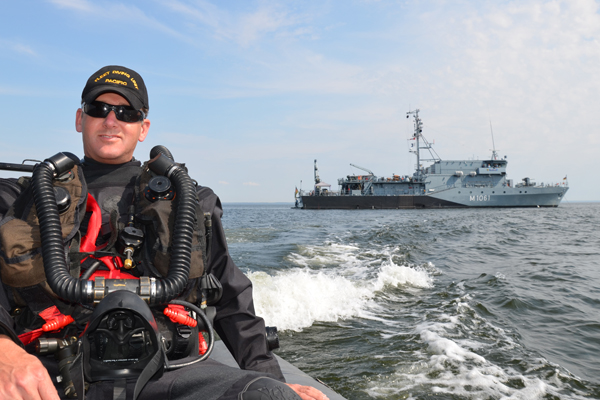
[caption id="attachment_1157" align="alignnone" width="300" caption="Lt(N) Rick Kappel relaxes in the zodiac, with FGS Rottweil in the background after diving for mines in the Baltic Sea."][/caption]Fleet Diving Unit (Pacific) made history when they deployed a clearance diving team on board the German mine hunting ship Rottweil for Operation Open Spirit, held May 10-25. The operation involved locating and disposing of Second World War legacy sea mines in the Baltic Sea, where thousands of mines still pose a hazard to shipping. Nearly 80,000 mines were laid mainly by German and Russian forces during the First and Second World Wars to deny freedom of movement on the seas. Tens of thousands are still unaccounted for. The annual operation was led by the Estonian Navy this year, with several navies participating, mainly from the Baltic region, but was the first time for Canada. This was also the first time a Canadian Clearance Diving Team (CAN CDT) worked side by side with German Minentauchers (Mine Divers) to conduct Naval Mine Countermeasure (NMCM) clearance operations. The experience not only provided valuable operational exposure for the team, but under the spirit of “partnership for peace”, also a significant stride forward in building a professional working relationship between the two countries’ navies. The German mine hunting ships are state of the art. They are designed to minimize magnetic and acoustic signatures that can trigger “influence” mines to detonate. Rottweil also employed hull-mounted sonar and an autonomous underwater vehicle that uses side scan sonar to map the sea bottom. Upon recovery of the vehicle, German and Canadian underwater divers analyzed the information and classified contacts. Mine-like contacts were investigated by diving on their position and confirming their origin. More than 200 dives were collectively conducted by the two teams during the two-week operation; 15 mines were...
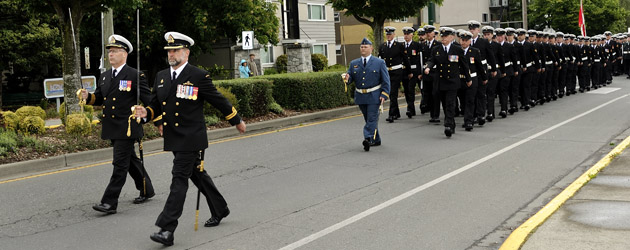
Base Commander Capt (N) Craig Baines, leads the parade of military personnel to Municipal Hall in the Freedom of the Township of Esquimalt ceremony.
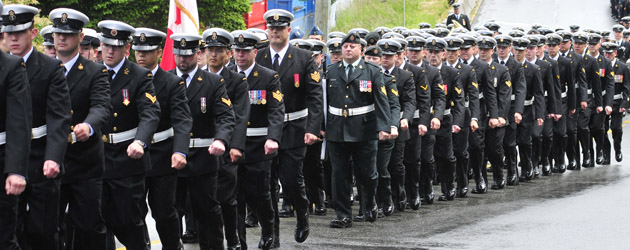
The parade of 440 military members marches back to dockyard after the freedom of the Township of Esquimalt ceremony.