[wpml_language_selector_widget]
[searchwp_form id="1"]
Naval Reserve Centennial 2023

Canada’s Naval Reserve celebrates centennial

LCdr Paul Pendergast, Naval Reserve, Public Affairs — The Naval Reserve will celebrate a big milestone in 2023, marking 100 years of service to Canada. There will be commemorative events and activities throughout the year, most of them conducted locally by Canada’s 24 Naval Reserve Divisions, located in most major cities nation-wide. Some events will also be national in scope. “It has been an honour to work on this project to commemorate the contributions of our sailors to Canada over the last 100 years,” said Chief Petty Officer First Class (CPO1) Patty Bouthat, the centennial’s Project Coordinator. “From helping to win the Battle of the Atlantic in the Second World War to coming to the aid of Canadians during natural disasters, to deploying with the Royal Canadian Navy (RCN) across the full spectrum of its operations, naval reservists continue to have a lasting impact on our nation.” Twelve Reserve divisions will celebrate their own centennials this year with local celebrations. Canadians across the country will be able to watch some of the biggest events take place on Sept. 23, when 4,000 sailors will be on parade in 24 cities across the nation. The Naval Reserve 50th Anniversary Monument in Ottawa will be restored and rededicated, and Navy Bike Ride and Nova Scotia International Tattoo will both have a Naval Reserve Centennial theme. Ottawa’s Canadian Tulip Festival will highlight the sacrifice of naval reservists, known as citizen-sailors, from the Royal Canadian Navy Volunteer Reserve (RCNVR) who served in the Second World War. The beginnings of a Naval Reserve force in Canada were due largely to the efforts of one man, Rear-Admiral (RAdm) Walter Hose, a Royal Navy officer who transferred to the RCN. He had served with Royal Navy reservists from Newfoundland during the First World War and was impressed with their seamanship...
Esquimalt Tritons

Tritons hit Canada-West hockey high note

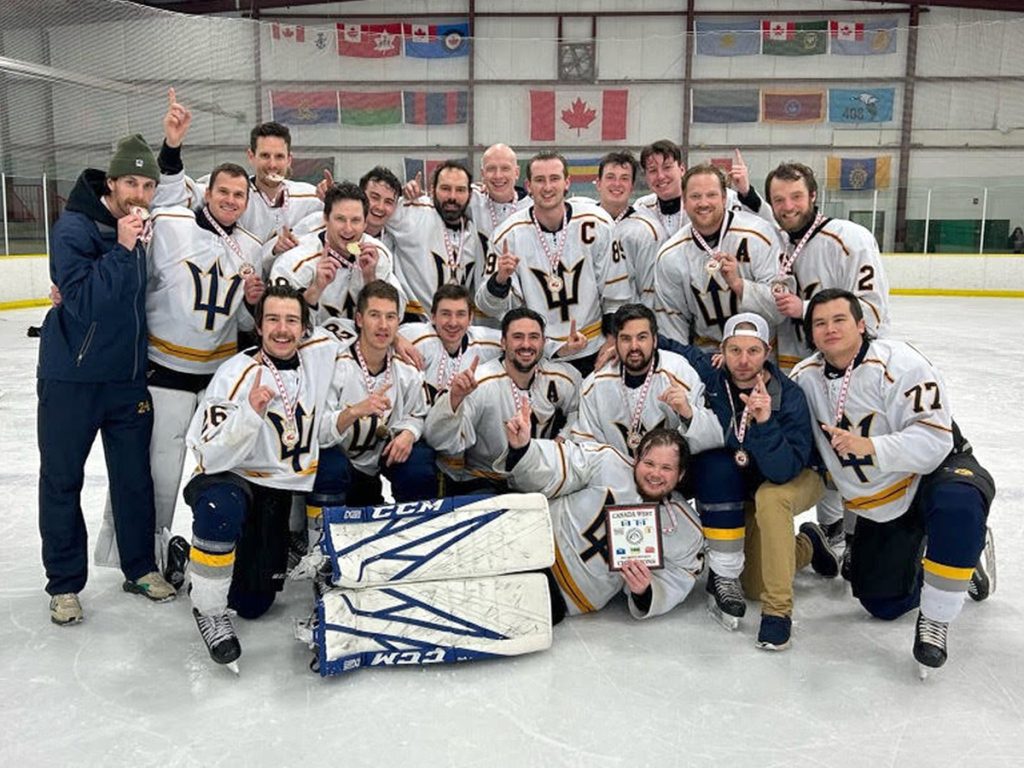
Peter Mallett, Staff Writer — Members of the Esquimalt Tritons broke into song moments after clinching a berth in next month’s Men’s Hockey National Championship tournament. After accepting their winner’s medals, the players retreated to their locker room belting out their best rendition of Juno Award winner Carly Rae Jepsen’s hit song Call Me Maybe, said Petty Officer First Class (PO1) Curtis Gillies, Triton’s Assistant Captain and Team Manager. “The team was really excited to win and meet all our goals so overall there was a true sense of accomplishment,” PO1 Gillies said. “The locker room was electric and we had an excellent championship sing-along to cap things off.” The Tritons overcame a slow start in the Canada West Regionals competition on Jan. 15-20 at CFB Edmonton. The blue and gold overcame two losses in the round-robin phase with the sweet reward of a thrilling 5-4 overtime victory over the host team on Jan. 20. A/SLt Darcy McHugh scored the winning goal. He converted his wrist shot from the left face-off circle midway through the first sudden-death overtime period to give Esquimalt the tournament title. The Tritons also defeated CFB Winnipeg in their opening game before falling to Edmonton and Comox in the round-robin. They defeated Comox 8-3 in the tournament semi-final on Jan. 19. Master Corporal (MCpl) Colin Maclean was voted Most Valuable Player of the Championship game for Esquimalt and A/SLt McHugh for the entire tournament. Other standouts for Esquimalt included Sub-Lieutenant (SLt) Seamus Maguire and Sailor First Class (S1) Derek Cheetham. PO1 Gillies, who plays left wing for Esquimalt, said getting the most out of each player on their 20-person roster was crucial to the victory. “The key to our success in this tournament was from our depth as we could play every member on every line and through...

Little Ditty Box

A Little Ditty: a personal spin on possessions

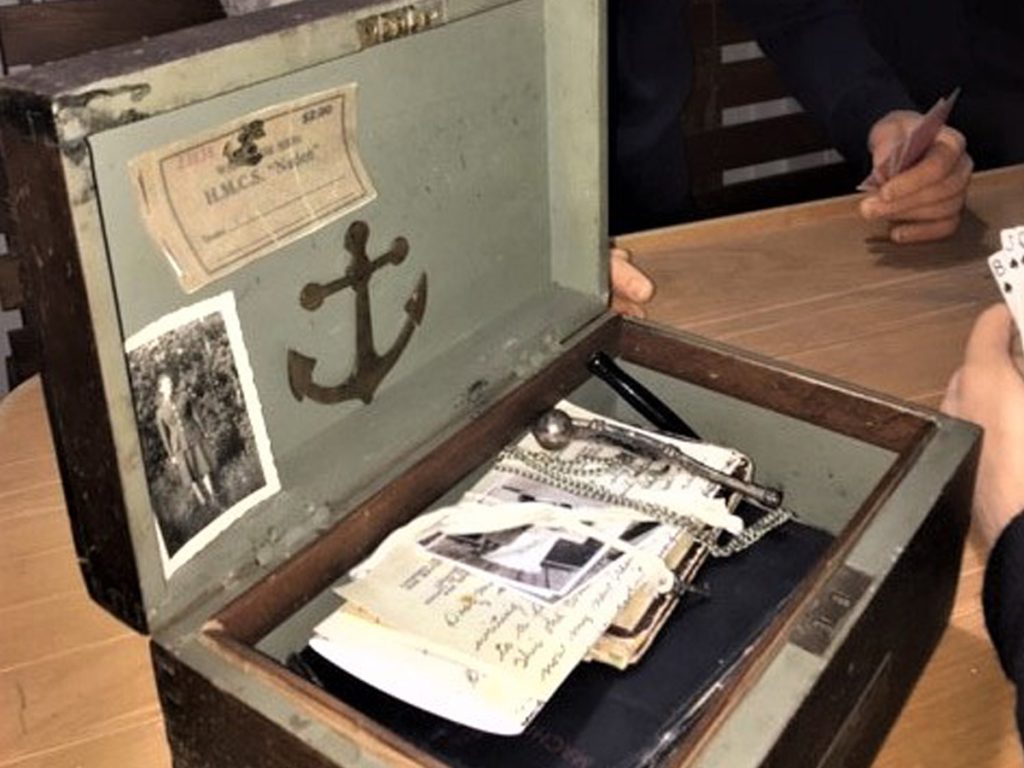
From the Archives: Stories from the CFB Esquimalt Naval and Military Museum Clare Sharpe, CFB Esquimalt Naval and Military Museum — One of the most prized possession in the belongings of ships’ ratings in years gone was the ditty box. A ‘ditty box’ (or bag) was a small, usually lockable receptacle every sailor made to store and protect treasures such as letters, photos, and mementoes of loved ones. In addition to holding personal memorabilia, keepsakes and souvenirs, it had practical articles such as sewing supplies and soap. These could also house specialized work tools of the sailor’s trade, such as a bosun’s call (whistle) or a fitting or accessory needed to complete routine shipboard tasks. The need for such an item likely arose due to the lack of personal space aboard ships, where living was essentially communal, and privacy was at a premium. A few theories float around about the name. Ditty bags and boxes date as far back as the 1600s, if not earlier, and were made of cotton known as ‘dittis’, thus the name ‘ditty box’. Another theory is from the word ‘ditto’ or ‘the same thing’ as a ditty box held two of everything – two sewing needles, two spools of thread, and so forth. Yet another possibility is that ‘ditto’ was short for either ‘commodity’ or ‘oddity’. Still, another suggestion is that ‘ditty’ has its roots in the ancient term ‘dight’, meaning to clean, repair or make good. Some containers were round, and others were square; some were plain, while some were decorated. Favourite motifs were diamond shapes, stars, names and initials. Some ditty boxes were embellished with coins, medals, anchors and other paraphernalia carved or burned into the wood, especially on the lid. Wood was the most common material, while whalers sometimes used baleen from the jaws...

Broadmead’s Veterans Memorial Lodge’s Veterans Association

Broadmead Veterans Association renews spirit

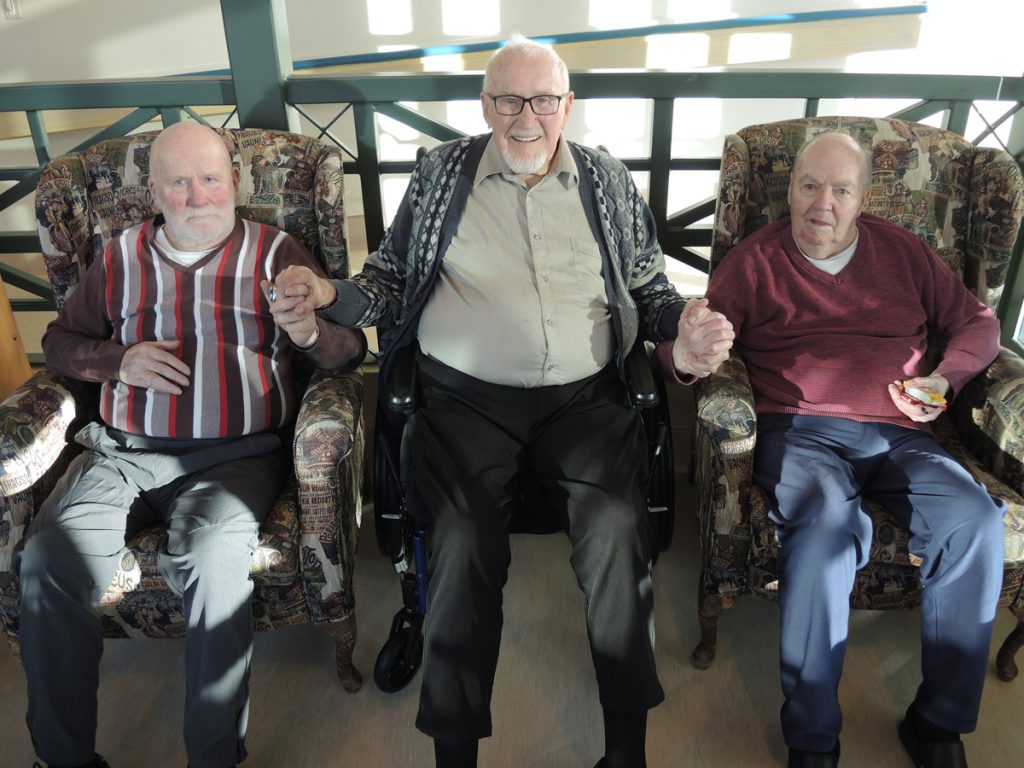
[caption id="attachment_31749" align="aligncenter" width="595"] Members of Broadmead’s Veterans Memorial Lodge’s Veterans Association include: (left) Paul Newcombe, Vice President; Lloyd Liesch, President; and Bruce McShannon, Social Justice Executive, say its encouraging to see the progress of their organization in giving a voice to residents at the long-term care home. Photo: Peter Mallett, Lookout staff[/caption] Peter Mallett, Staff Writer — An advisory group at Broadmead’s Veterans Memorial Lodge has given former military members a more prominent decision-making voice while encouraging camaraderie. Resident’s councils are not uncommon at long-term care homes across the province, but one made up exclusively of veterans is unique, said Janet Power, Executive Director of Veterans Lodge. “It gives them a voice and they use this group to express themselves and share their experiences with other veterans,” Power said. “They also help other residents and help improve their lives.” The Veterans Association is a resident’s council representing 115 veterans at Broadmead Care’s 225-person long-term care home in Saanich. The Association was formed in May 2021 amid the COVID-19 pandemic. The Association was helping its members end isolation. Now, it has also become a valuable resource for healthcare staff for a more comprehensive sense of issues concerning residents. Power said the group has contributed to significant improvements at the Lodge. Some of their accomplishments include organizing Remembrance Day ceremonies during the pandemic, creating a Celebration of Life book that holds the legacy of past Lodge residents, and designing a Veterans Recognition Wall made up of military memorabilia, which will be prominently displayed. Over the holidays, Association members formed a carolling group and serenaded residents who were isolated in their rooms. The Veterans Association is run by a seven-member Executive headed by Lloyd Liesch, Association President and a former Royal Canadian Air Force member. Liesch, 98, served Canada during the Second World...

Veteran’s artwork provides seascape escape

[caption id="attachment_31742" align="aligncenter" width="595"] Rhapsody in Blues painting (above) is a view overlooking the Strait of Juan de Fuca from her apartment in downtown Victoria. Photo: Susan Kruzel and Peter Mallett Lookout Staff.[/caption] Peter Mallet, Staff Writer — After recently launching her Pacific Seascapes exhibit at Gallery Splash in Esquimalt, painter Sergeant (ret’d) Susan Kruzel admits she is swimming in her art, literally. As patrons at a nearby coffee shop exit into the lobby, they appear drawn to her paintings. As an artist, Kruzel takes extreme gratification in this. “I hope that if one person sees my art, it will at least bring a little bit of beauty, tranquility and relief from the everyday grind,” she said. This is the first time a large-scale art gallery has dedicated an entire exhibit to her paintings. Her artwork has previously appeared in multiple art-friendly coffee shops across the city since 2018, an exhibit at the Victoria International Airport in 2019, the Saanich Library, the Coast Collective Art Centre in 2020, and most recently at the Art Faire Urban Arts Tour in June 2022. Kruzel says she wanted the viewer to be transported with her painting, feel one with nature and forget about their problems and the busy city life. She draws inspiration from photographs and walks along the seaside at the first light of day, a moment which she describes as truly magical. Since growing up in Hungary, Kruzel had always been drawn to the water but lacked the swimming skills to immerse herself in it. “I struggled in my personal journey of learning how to swim but I have always been drawn to water, if not mesmerized by it,” she said. Kruzel served 28 years in financial for the Canadian Armed Forces. She took photography courses in her spare time during her military service. Her postings took her across the country, but she ended her career in Esquimalt where she worked in the Base Orderly Room (BOR) in claims and as a...

Recession

SISIP can help relieve financial anxiety

Shannon Childs, Personal Financial Planner, SISIP Financial — A weight lifted in 2021 when individual investors saw a rebound in their portfolios from the downturn of 2020. With a sense of normal returning to the world, people started to feel at ease: unknowing that 2022 would bring strong headwinds. Seeing the largest rate hike in over 40 years caused even risk-adverse individuals to feel significant losses. It felt as if no one’s investments were safe. The volatility seen in 2022 is a good reminder of how quickly and drastically the market and funds can change. With losses in our portfolio, we saw substantial cuts to transfer values upon early release. Cash values were nonexistent or reduced to minimal amounts. Many of us rely on these values as a buffer in the transition to the next stage, as a down payment for property or retirement, as other employers may not provide retirement plans. For some, postponing release can be an option; for others – current opportunities or challenges can force our hand. A stressful process now turns into a larger, more complicated decision. Knowing the pension options and benefits and understanding your immediate and future tax consequences will assist you in making informed decisions. History has shown periods of volatility run short. If we hold strong, avoid looking at our statements and continue our contributions, we will benefit from the discounted prices and rebound that follows volatility patterns. Automatic contributions over time provide the benefit of dollar cost averaging, the practice of investing a fixed dollar amount at regular, pre-determined intervals. Since the amount is fixed, you buy fewer units when the prices are higher and more units when prices decrease. This provides the benefit of growth over time, a consistent plan and spreads funds over multiple pay periods. As uncertainty in the...

Jolly Roger

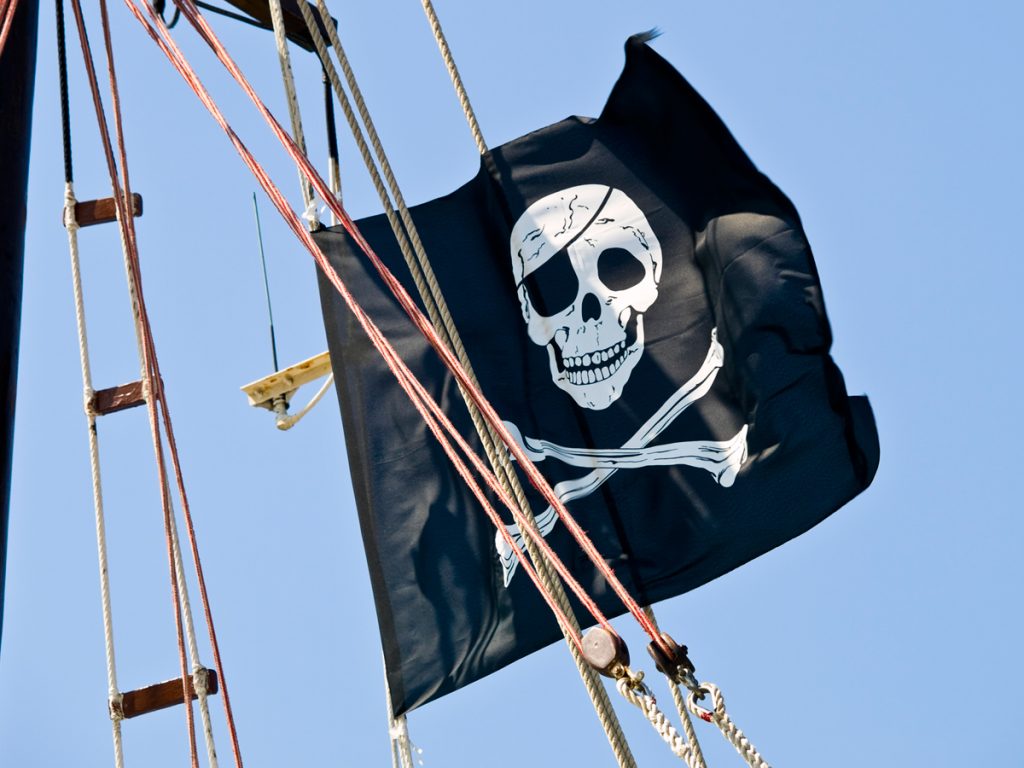
Jackspeak: Jolly Roger

Roger is a voice communications proword which means ‘received and understood’, i.e., “The formation will transit Haro Strait at 0900”. Reply: “Roger”. Proword is short for procedures words and describes the specific words and phrases used in radiotelephone communications. Roger being as commonplace as it is today, it is strange how most people have yet to learn the derivation of the term. One explanation of its origin is a tidy piece of folklore which states ROGER is an acronym meaning ‘Received Order Given Expect Results’. Alternatively, there is a more logical explanation of how Roger began to be used in the 1940s when the name ‘Roger’ was the ‘spelling alphabet’ equivalent for ‘R’, the first letter in the word ‘received’. Roger is a commonly used proword that leaks from the voice communications world to a sailor’s everyday jargon, i.e., “Bloggins, will you pass me the navy gravy?” Bloggins: “Roger”. In voice communications, Roger is often combined with the prowords over or out, such as ‘Roger over’ or ‘Roger out’. Over is used when a reply is expected. Out is used when no response is expected or required. The phrase ‘over and out’ is something you may hear in popular culture, but it is never used in actual practice. Other common prowords are Wilco, which means, ‘I understand and will comply’; Say again, used to request a message be repeated; and Correction, which means, “I made an error in this transmission. Transmission will continue with the last word correctly sent”. While Roger is a method of verbal acknowledgement, the correct way to respond to an order given by a superior is Aye Aye, which means, “I understand the command and hasten to comply with the order”. While the word Aye is derived from the Olde English ‘ay’, which means ‘ever’, it...

Cardiac arrest survivor hails CPR superheroes

[caption id="attachment_31727" align="aligncenter" width="596"] (Left) Sergeant Martin Ouellet; Jennifer Bolster, Paramedic Practice Leader; Sergeant Sonya March; Warrant Officer Nicolas D’anjou; Warrant Officer Scott Rose; Chris Millar, Advance Care Paramedic; Jennifer Taronga, Honour Guard. Photo: Acting Sub-Lieutenant Ty Pellerin, Base PA.[/caption] Peter Mallett, Staff Writer — Warrant Officer (WO) Nicolas D’anjou is convinced real-life superheroes walk among us. His comments come while recalling the fateful moment when three colleagues from 443 Maritime Helicopter Squadron rushed to his aid and performed lifesaving Cardiopulmonary Resuscitation (CPR). “My heart would stop beating on three separate occasions that night, but I was in the right place at the right time,” WO D’anjou, 49, said. “Although my friends will say the opposite, they are my personal superheroes, my Batman, Superman and Wonder Woman.” WO D’anjou previously worked as a maintenance manager at the helicopter squadron and was on hand to congratulate his friends at a Jan. 15 awards ceremony at Victoria’s BC Emergency Health Services (BCEHS) headquarters. The ceremony honoured his co-workers WO Scott Rose, Sergeant (Sgt) Sonya Marchand and Sgt Martin Ouellet with a BCEHS Vital Link Award. The award his friends received recognizes the skilful actions of one or more bystanders during a cardiac arrest emergency. “It’s nice to be recognized with this award, but the greatest reward for us is to spend time with our friend, Nicolas,” said WO Rose, who works as an Air Maintenance Superintendent. Springing into Action During a telephone interview, D’anjou recalled the night of Jan. 10, 2020, when all four friends had gathered at a local pub in Esquimalt. Soon after arriving, Nicolas collapsed in his chair and went into cardiac arrest. He says that moment would change his life forever. It was the quick action of WO Rose and his fellow 443 Squadron members who performed CPR and helped save his life. “Nick was telling a story to us, and he is fairly animated so when he stopped talking at first, I thought he was joking around,” said...

Women in the CAF

Women in the Canadian Armed Forces

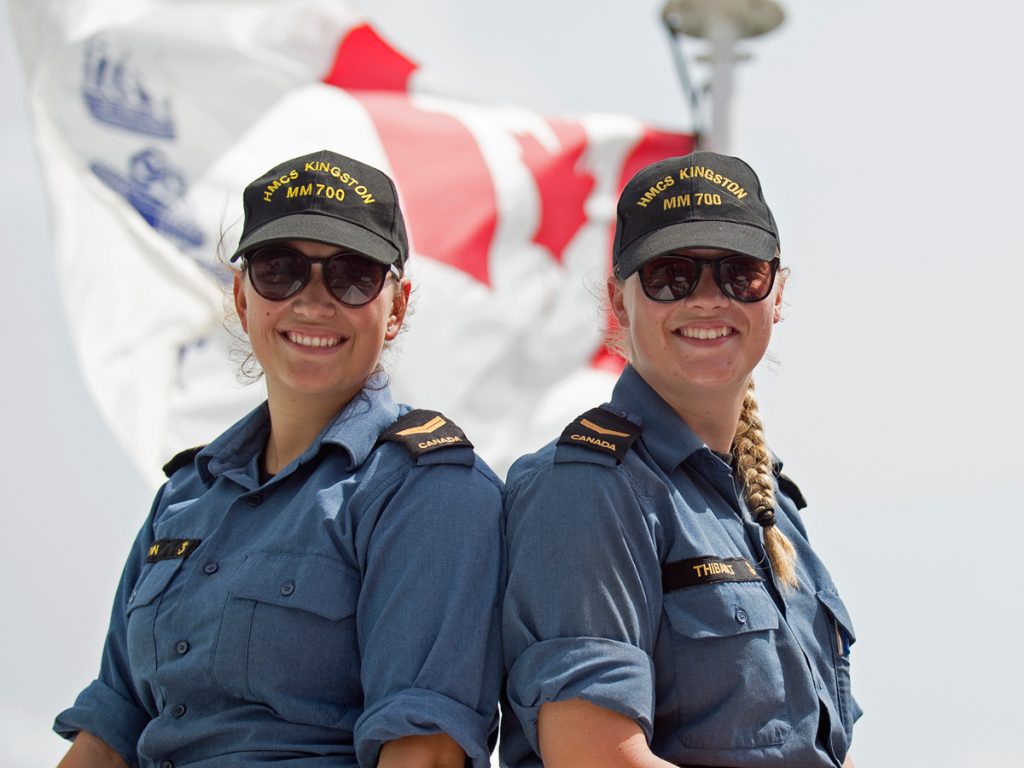
  [caption id="attachment_31708" align="aligncenter" width="595"] Leading Seaman Justine Boivin (left) and Leading Seaman Alexy Thibault pose for a photo onboard HMCS Kingston before deployment in 2018. Photo: Sergeant Shilo Adamson, Canadian Forces Recruiting Group Headquarters.[/caption] Sailor Third Class Robyn Oliver  — When I was growing up in Edmonton, Alta, my next-door neighbours were in the Canadian Armed Forces (CAF). As a child, watching them come home in their uniforms every day was equal parts intimidating and awe-inspiring. One of them was a woman. One time, as my sister and I picked strawberries from her yard, she approached unnoticed and picked us up by our ankles. The moment, filled with giggling and sheer surprise, is a very wholesome memory. It was also a nod to her incredible physical strength. For lack of a better word, she was a total ‘badass’. She was strong, kind, hard-working, and well-known throughout my neighbourhood. She was an Infantry Officer in the Army, a position typically held by men, especially at that time. But she kept up. She did just as many push-ups, lifted just as many sandbags, and outdid some of her coworkers in the number of pull-ups she could do. She was strong. I joined the Royal Canadian Navy (RCN) two years ago, and am continually inspired by the awesome, hard-working women I work with. Women are now able to enroll in any position or trade in the CAF and RCN, but it wasn’t always that way. Women originally served in nursing positions as civilians during the Northwest Rebellion in 1885. In 1942, female paramilitary groups were created. New divisions such as the Women’s Royal Canadian Army Corps (WRENs), Women’s Canadian Army Corps and Royal Canadian Air Force Women’s Division allowed women to serve and fulfill positions in the CAF. They were limited to...

Jackspeak: The Boatswain’s call

Piping is a traditional method of passing orders in a naval setting. A verbal pipe is often replaced with the sound of a boatswain’s call, which can convey specific orders. Naval lore states the use of a boatswain’s call in English ships can be traced back to AD 1248. The call can be worn as a symbol of rank, mainly because it can be used for passing orders. Until 1562 it was worn as a badge of office of the Lord High Admiral of England. In today’s navy, the boatswain’s call and chain are worn by the Chief Boatswain’s Mate, Quartermaster, and Boatswain’s Mate. A boatswain’s call is played by holding it between your index finger and thumb, the latter laying along the bottom of the pipe, referred to as the gun. The orb-shaped buoy rests against the palm, and the fingers are used to throttle the air exit from the hole in the top of the buoy. The boatswain’s call is relatively easy to master, as there are only two main notes; low and high, and three tones; plain, warble and trill. The low note is produced by blowing steadily into the gun with the hole of the buoy unobstructed by the fingers. The high note is made by moving the fingers over the buoy and partially throttling the exit of air. A warble is produced by repeatedly moving the fingers from the high to the low position. The trill is produced by vibrating the tongue, similar to how you roll the letter ‘R’. Pipe the side is a 12-second pipe with very smooth transitions from low to high and back to low. It is used when a Commanding Officer arrives onboard, for Royalty, the accused when entering a Court Martial, or for the Officer of the Guard when the guard is formed. The still, a high note held for eight seconds, calls all hands to attention as a mark of respect or to order silence. If done correctly,...

Mystery explained: Canadian flags on war graves in England

[caption id="attachment_31699" align="aligncenter" width="595"] Holy Rood Church in Wool, England. Photo: englandexpected.wordpress.com[/caption] Peter Mallett, Staff Writer — A long-standing mystery of who has been placing Canadian flags on the graves of First World War soldiers in Southern England has been solved. For the past ten years, tiny maple leaf flags have been appearing at the headstones of two 1st Canadian Tank Battalion members at Holy Rood Church in Wool around Remembrance Day. Lance Corporal Vernon Ward and Private Ivan Tremayne Green were buried in the churchyard in Dorset, England, in October 1918. The Canadian flags first caught the attention of Lieutenant-Commander (ret’d) Rick Wall of Campbell River, B.C. “My brother-in-law and I were amazed that someone continues to care for and place small Canadian flags in front of the graves, even though these soldiers died over a hundred years ago and were buried five thousand kilometres from Canada,” Wall said. He sent pictures of the flags on the graves to The Trumpeter, a Royal Canadian Hussars Association newsletter. Current and former members of the armoured reconnaissance regiment of the Canadian Army Reserves publish it. They issued a story in their December 2022 edition and asked their readers who were behind the good deed. “We do not know who is following the tradition of placing flags on the graves in Wool churchyard but if we did, we would commend them for this act of remembrance,” wrote Master Corporal (ret’d) Louis Lamarre. Canada Connections The mystery has since unravelled. The flag placer is Rod Webb, a retired Royal Fleet Auxiliary Senior Radio Officer. He and his late wife Gill Webb started placing the flags on the Canadian soldiers’ graves in 2013. “My wife had discovered her Canadian family and we both thought this would be a good thing to do for Remembrance Day,” Webb wrote via email. Gill found out her father was a member of the Royal Canadian Mounted Police and served in the Canadian Army in 1939 as an Intelligence Officer...

Five questions with Base tailors

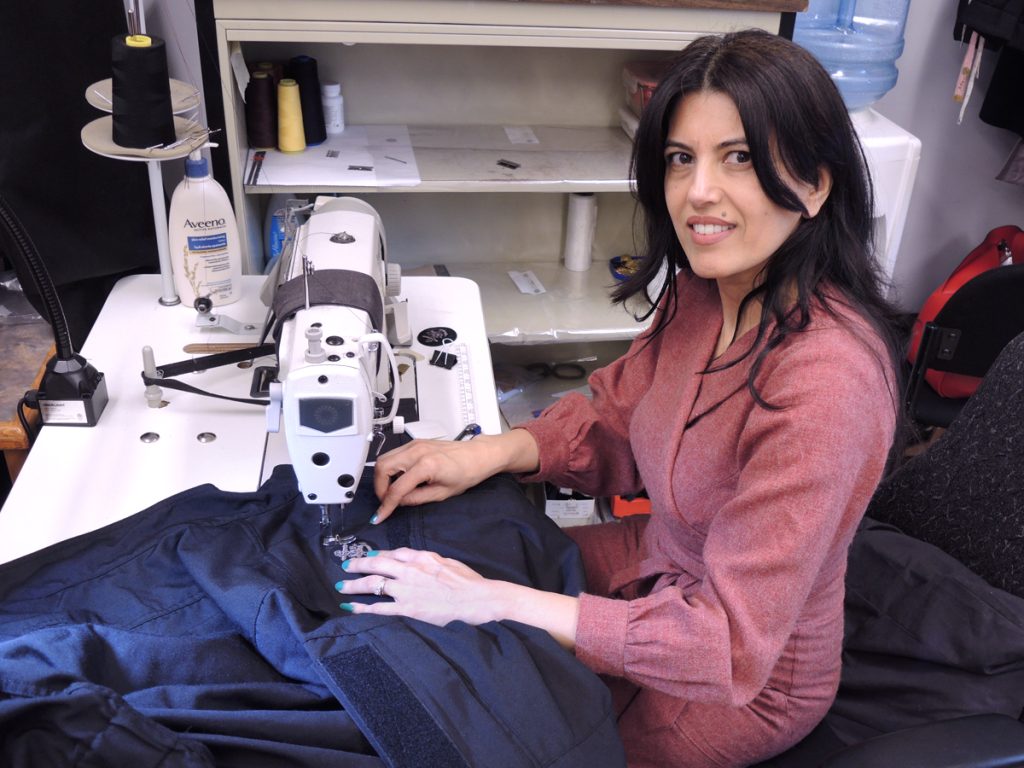
[caption id="attachment_31693" align="aligncenter" width="595"] Mina Purewal.[/caption] Peter Mallett, Staff Writer — After a hard day’s work, Mina and Sukhi Purewal say they are incredibly proud of their work. The two sisters and their staff operate two tailor shops, their flagship retail store A&B Tailor Shop is located in the heart of downtown Victoria. Their retail outlet at the Base, Mia’s Tailor Shop, is inside the CANEX building in Naden. It specializes in naval mess kits and provides alterations for Commissionaires, CFB Esquimalt Fire and Rescue, local police, firefighters and corrections officers, and even garment alterations to non-military clothing. “Our shops bring customers the most experienced tailors in Victoria,” Mina says. “When other tailors turn away extraordinary jobs, we take on the challenge to make it possible. We have plenty of regular customers but also see new faces in our shops every day.” The Purewals and their staff also work as contractors at the Base Logistics (BLog) Building in Dockyard, where they adjust and fit uniforms to the requirements of military personnel. They began working as contractors for BLog in January 2018 and purchased Mia’s Tailor Shop from founder Mia Larsen before her death in 2019. Mina and Sukhi are the third generation of tailors from their family, with their grandmother starting in the trade back in 1935 in India. Their family moved to Vancouver in 1993. Mina and Sukhi have operated A&B Tailor Shop inside The Bay Centre (formally Eaton Centre) since 2001. Their work includes everything from tapering, custom-fitting and removing pleats to altering bridal and graduation dresses and replica clothing. 1. What are the qualities that make a good tailor? Excellent hand-eye coordination and decades of experience make a good tailor. In the military, everything needs to be measured to the millimetre and precisely to regulation, but we have...

Set your 2023 up for financial success

Craig York, Financial Counsellor, SISIP Financial, CFMWS — If you fear the arrival of your January credit card bill after purchasing Christmas gifts and Boxing Day sales, now is the time to make a resolution to improve your financial well-being in 2023 and avoid a ‘holiday hangover’ in the future. First, it’s important to separate wants from needs, and clearly define what it means to ‘save’ money. The sales in January can be tempting. Before you start shopping, consider if what you plan to buy is a ‘want’ or a ‘need’, and whether you can afford it. If you are putting ‘that great deal’ onto a credit card that you are unable to pay off immediately, the amount you are saving on the item quickly disappears with any interest that accumulates. Consider how your shopping affects your long-term financial goals. Your spending habits should reveal what you value most. If you want to buy a house in the future, ask yourself if you would rather put that money into the down payment fund. Second, start your savings plan now. Include two types of savings into your monthly expenses to create a more sustainable budget: Expenses you know will happen throughout the year. Start planning now by putting aside money every paycheck for gifts – Christmas will always be in December. It is much easier to put aside a little bit every paycheck than trying to afford everything all at once. Automate your savings to save time and money. With better preparation, financial emergencies become only financial inconveniences. Expenses that are likely to come up throughout the year, such as vehicle repairs, home maintenance, clothing, shoes, vet bills, etc. You may have to estimate how much you should save, but it will lead to being better prepared for the unexpected. Third, understand...

New initiative from Soldier On

Ryan Cane, Senior Manager Recreation Program and Community Services, PSP HQ — Soldier On is launching an initiative that provides new opportunities for ill and injured serving and Veteran soldiers, sailors and aviators. Soldier On members and their family and friends can participate in different events, ranging from bowling to skating and even horseback riding! “Military families are the strength behind the uniform,” Joe Kiraly, National Manager for Soldier On, says. “Soldier On Family and Friend Days presented by The Personal Insurance Company will bring together the Soldier On community. We hope it will offer everyone a chance to connect and experience the wider benefits of the program.” Since 2007, Soldier On has supported over 10,000 ill and injured members using sports, recreational, and creative activities to enable social support, build confidence in their abilities and realize their full potential. Soldier On provides members with a safe environment to challenge themselves and become inspired in ways they may not have thought possible, contributing to and providing a gateway to enhance one’s well-being. This re-introduction to an active lifestyle offers opportunities to develop new skills, build confidence and meet peers with similar challenges. “We hope these events will help Solider On families to build the connections that will be helpful for the long haul. We are so grateful to our sponsor The Personal Insurance Company,” Joe Kiraly added. Personal Insurance has been the official home and auto insurance provider for Canadian Forces Morale and Welfare Services since 1986. It continues to deliver a partnership beneficial to those who serve – CAF members, Veterans and their families. Personal Insurance offers customized home and auto insurance options specific to the needs of the Canadian Defence Community. “The Personal Insurance Company is proud to continue supporting the Defence community by giving ill and injured members a fun, interactive way to spend time with their family and friends,” says Tiffany Marinacci, Senior National Manager – Partnership Development, The Personal Insurance Company. For any Soldier On members interested...

Chief of Defence Staff congratulates dedicated DAAG co-chair

[caption id="attachment_31646" align="aligncenter" width="595"] Lisa deWit, former national and local Defence Aboriginal Advisory Group civilian co-chair.[/caption] Peter Mallett, Staff Writer — A Senior Project Manager at CFB Esquimalt has been hailed by the Chief of Defence Staff. Lisa deWit of Formation Review was recognized for her contributions as National Civilian Co-Chair to the Defence Aboriginal Advisory Group (DAAG) in an open letter dated Dec. 16 from General (Gen) Wayne Eyre, Chief of Defence Staff, and Bill Matthews, Deputy Defence Minister. “I recognize the importance of communicating how volunteers of this organization are being change-makers and was glad the other Defence Advisory Groups (DAGs) were also highlighted,” deWit said about the recognition. Gen Eyre said deWit was being recognized for her work toward building a more inclusive Defence team and “steadfast advocacy, providing voice, counsel and support to leadership and helping foster deeper relationships between the Indigenous community and the Department of National Defence Canadian Armed Forces”. deWit has worked as a Department of National Defence (DND) civilian employee since 2010, beginning her DAAG membership in 2011. She is a proud member of the Wet’suwet’en First Nation of British Columbia. Both deWit and military co-chair Master Warrant Officer (retired) Simon Linklater, a former DAAG Military Co-Chair, completed their terms on the national DAAG in December 2022. In reaction to the General’s congratulatory letter, the Lookout engaged deWit for her thoughts on being recognized and the scope of her work involving the DAAG and the military’s senior leadership. Q: What specific projects or tasks have you been involved in that led to this recognition? A: Both Linklater and I were conduits for the DAAGs across the country as we aimed to raise the voices of Indigenous Peoples in DND/Canadian Armed Forces (CAF). Typical engagements included meeting with heads of various departments, sitting in on Indigenous-related events hosted by political dignitaries, and advising all levels of leaders across the country. We met annually with other National DAG leaders and hosted an annual gathering of...

Medals for Children will soon be available on both coasts

[caption id="attachment_31567" align="aligncenter" width="595"] Photo: Peter Mallet, Lookout staff[/caption] Peter Mallett, Staff Writer — A  non-profit that awards medals to children of deployed Royal Canadian Navy (RCN) sailors will expand its reach to Eastern Canada by the end of this year. Medals for Children, an initiative launched in 2021 by Earl Phillips of Grande Prairie, Alta., will award medals to children of parents deployed aboard Maritime Forces Atlantic (MARLANT) vessels HMCS Fredericton and HMCS Montreal. “Many of these children don’t know a life any different than Mom or Dad being away for long periods of time and all the challenges that creates,” Phillips said. “We want to see this program flourish so we can honour them.” Phillips said the medals are a way to honour the children’s service and sacrifice during deployments. His daughter, Lieutenant (Navy) Anne Day of HMCS Montreal, is a military parent with three children. Phillips is employed by the Regional Cadet Support Unit (RCSU) Northwest. Phillips said the success of the medals program is based on its popularity with recipients. Proof of this played out when dozens of children with parents aboard HMCS Winnipeg and HMCS Vancouver were reunited with their parents and loved ones at the Dec. 5 homecoming in Esquimalt. Many children were delighted to receive the medals from their mothers and fathers, supplied by Phillips through the Esquimalt Military Family Resource Centre (MFRC). Some of the medals were presented by The Honourable Anita Anand, Minister of National Defence, and Vice-Admiral Angus Topshee, Commander Royal Canadian Navy. The front of the blue and bronze medal features a child’s hand reaching toward the hands of an adult sailor, and the reverse side has the ship’s name and deployment dates. It also includes a red and white ribbon. Phillips will add bars to the awards system, with red-coloured bars affixed to a child’s medal following each deployment instead of awarding a child a separate medal for each one. Phillips’ first batch of medals for HMCS Winnipeg’s 2021...

Christmas traditions of the Royal Canadian Navy

[caption id="attachment_31578" align="aligncenter" width="595"] RCN cooks mixing rum into a Christmas pudding.[/caption] Clare Sharpe, CFB Esquimalt Naval & Military Museum — From the Archives: Stories from the CFB Esquimalt Naval and Military Museum At the heart of many longstanding holiday traditions in the Royal Canadian Navy (RCN) is the desire to build camaraderie, ease loneliness, lift people’s spirits, and create a sense of togetherness. One well-loved practice in the RCN is making the youngest sailor ‘Captain for the day’ while temporarily demoting the highest-ranking officer. The custom, which can also involve senior personnel serving a festive meal to those of lower rank, has its roots in the Roman festival of Saturnalia. Saturnalia is also the origin of many traditions now closely associated with Christmas, including lighting candles, feasting and gift exchanges. Another custom sees the youngest member of the ship’s company ringing in the New Year by ringing the ship’s bell 16 times, eight for the old year and eight for the new—the only time in the year the bell could be sounded more than eight times at once. Another old festive custom in RCN ships and shore establishments is decorating with wreaths and greenery. Even during wartime, RCN sailors celebrated the holidays at sea by festooning bulkheads and messes with foraged Christmas trees and boughs hoisted up the funnel and placed around the ship. In recent years, ship crews have decorated their vessels with Christmas lights and brought delight to their local communities with these dazzling displays. Often such ship light-up occasions were a chance for some friendly competition between ships and an opportunity to fundraise for charitable organizations. Also customary is a large loaf of bread pinned to the table with a bayonet as a central decoration of sailors’ mess tables in Canadian warships observing the full naval Christmas tradition. Beside the loaf would be placed a neatly printed inscription ‘The staff of life, at the point of death’. A drink that is still popular in many Christmas messes...

HMCS Ottawa hosts Lion’s share of Christmas

Kateryna Bandura, Lookout Editor — Christmas cookies crumble onto HMCS Ottawa’s deck as seven daze-eyed children observe Sailor First Class (S1) Deryck Kent, a Marine Technician, in the Machinery Control Room (MCR). “This is what makes the ship run,” he says, pointing into a hole in the floor. Beneath – a propulsion system that can take the Halifax-class frigate up to 30 knots (56 km/h). A little boy bravely peeks into the void, his cookie in hand, and returns with a silent ‘wow’. While S1 Kent describes the ship’s pneumonic mechanism, Lieutenant (Navy) Luis Lemus, Ottawa’s Assistant Logistics Officer and event’s organizer, says the crew is excited to have the children onboard. “The aim was to make this a fun day,” he says. “Some of the kids might come from disadvantaged families, and today might be the only time they get a present.” Twenty-five children arrived here on Dec. 12 for an early Christmas celebration, courtesy of Esquimalt Lions Club. Thirty-five years ago, the Club helped HMCS Protecteur host a children’s Christmas onboard. Then HMCS Calgary took over the ropes. This year, the honour fell to HMCS Ottawa. Lin McPhee from the Esquimalt Lions Club says the Club cherishes opportunities such as this one. “It’s wonderful the Base steps up every year to help us continue this tradition,” McPhee said. “We can’t do it without them and it’s definitely a thrill for these children.” She reached out to elementary schools in the Victoria School District 61 for a list of presents, and then coordinated with the Base to get them delivered to the ship. The Ottawa was responsible for 50 per cent of gifts costs, acquired from the ship’s fund. Some presents already await under the Christmas tree in the Junior Ranks Mess; others will arrive with Santa. The ship opened up four spaces for the children to visit: the MCR, the After Section Base (ASB), the Bridge, and the Operations Room (Ops Room). Four groups of youngsters rotate throughout the...

HMCS Regina sailors play Santa to Victoria General Hospital children’s ward

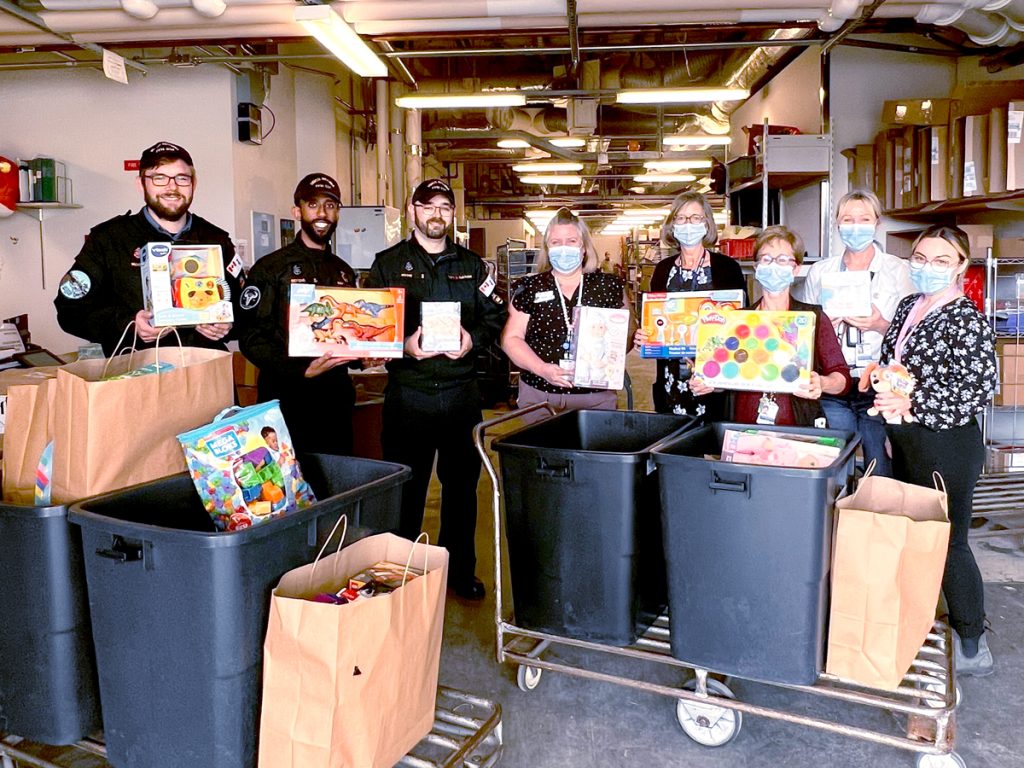
[caption id="attachment_31584" align="aligncenter" width="595"] Master Sailor Dylan McGinn, Sailor First Class Nahom Beyene and Chief Petty Officer Second Class Trevor Moore of HMCS Regina deliver toys and gifts to Victoria General Hospital staff on Nov. 24. The gifts for patients in the Children’s Life Services Department were paid for through funds raised in the Dave Barber Charity Golf Tournament. Photo: HMCS Regina.[/caption] Peter Mallett, Staff Writer — HMCS Regina’s crew made this Christmas extra special for young patients at Victoria General Hospital. Sailors of the Halifax-class frigate stopped by the Children’s Life Department at the hospital ahead of the Christmas break to donate $3,600 in presents and gift cards. Volunteers delivered over 100 gifts for children, including toys, crafts, and colouring books. “Traditions like this matter, and knowing we support the community and help others in need allows us to reflect on our situations and realize how fortunate we are,” said Sailor First Class (S1) Nahom Beyene, a Weapons Engineering Technician and Fire Control Technician on Regina. He was the organizer of this year’s charity drive. The gifts were paid for with money raised through the ship’s annual charity event, the Dave Barber Golf Tournament. The tournament is named in memory of Master Sailor Dave Barber, a Fire Control and Radar Technician who worked onboard Regina before passing away from leukemia in 1997. This year’s nine-hole golf tournament was held on Aug. 30 at the Metchosin Golf & Country Club. S1 Beyene also delivered a cash donation to help the hospital staff when supplies of crafts, pencil crayons, markers and colouring books run out. Making the delivery to the hospital was the sweetest part of the journey, he said, especially hearing from hospital staff how happy the gifts would make the children. “Knowing what these children are experiencing and being able...

New dock bottom – crush caps await HMCS Ottawa at dry dock

[caption id="attachment_31577" align="aligncenter" width="595"] Jake Douglas (Joiner in shop 122) assists during the setting of crush caps at FMF Cape Breton dry dock. Photo supplied.[/caption] Ashley Evans, Strategic Communications Officer, FMF CB/CS — On a rainy November afternoon, while filming interviews at the bottom of the Fleet Maintenance Facility (FMF) Cape Breton’s (CB) dry dock, we noticed a group of Shipwrights working away at the opposite end. They were working to prepare the dry dock for the docking of HMCS Ottawa scheduled for Jan 4. The team was replacing ‘crush caps’ on top of keel blocks, steel blocks with wood caps that run down the centre of the dry dock bottom. These ‘crush caps’ take the settling and crushing force from the ship while docking, sparing the wood beneath. Replacing the ‘crush caps’ is more challenging than it may initially appear. The team used a Theodolite, a surveying instrument that measures vertical and horizontal angles, to ensure the blocks follow the same slope as the dock bottom. This slope directs water to the pumps located at the north end of the dry dock. The crush caps are used twice – once per side – and are then discarded. For every consecutive dry dock docking, the Shipwright shop replaces the blocks and re-secures the packing and caps to the keel block bases. The team recently adopted a new banding process, where the packing and caps are secured to the keel block bases using three-quarter-inch banding and duplex nails. The keel blocks are positioned based on a docking plan that ensures they are spaced to avoid underwater hull openings or equipment. After the keel blocks are set, the dock is ready for docking. “Docking ships is satisfying work for the whole shop; we all have a great sense of accomplishment at the end...

2022: The year in review

[caption id="attachment_31570" align="aligncenter" width="595"] HMCS Vancouver and HMCS Winnipeg return home after 173 days at sea. Photo Corporal Tristan Walach.[/caption] Peter Mallett, Staff writer — A look at the Lookout Newspaper’s top news events of 2022: January CAF Members continue their support to federal, provincial and territorial governments as part of Operation Vector. Bobsleigh Canada Skeleton and the Royal Canadian Navy (RCN) unveil a navy-themed paint pattern for their sleds used at the Beijing 2022 Winter Olympic Games.  Naval Reserve Unit recognizes its 100th anniversary by unveiling a new morale patch designed by S1 Joseph Demayuga. [caption id="attachment_31571" align="aligncenter" width="595"] Illustration of a bobsleigh designed after HMCS Regina’s dazzle paintjob.[/caption] February CAF announces the implementation of modernized, inclusive French language ranks. Canadian Pacific Fleet announces HMCS Vancouver Boatswain S2 Jesse Roberts as its Sailor of the Year for 2021. HMCS Saskatoon and HMCS Yellowknife deploy in the international drug interdiction mission Operation Caribbe. March HMCS Brandon participates in United States-led cold-weather warfare Exercise Arctic Edge 2022 in Alaska. Wounded Warriors relay team concludes 800 km relay-style run on Vancouver Island to raise funds and awareness of support programs for military and first responders. CFB Esquimalt Naval and Military Museum introduces Tatiana Robinson as its new curator following the retirement of Debbie Towell. April The first of four Sea-to-Shore connector barges designed to serve the needs of the RCN’s future Joint Support Ships is delivered to Esquimalt. HMCS Vancouver, HMCS Calgary, HMCS Brandon and HMCS Edmonton participate in Vancouver’s Fleet Week. HMCS Saskatoon marks RCN’s first-ever visit to Ecuador after arriving in Manta on April 18. May In separate Change of Command Ceremonies, VAdm Angus Topshee becomes Commander RCN, succeeding VAdm Craig Baines; RAdm Christopher Robinson succeeds VAdm Topshee as Commander MARPAC. Arctic Offshore Patrol Vessel (AOPV) HMCS Max Bernays launched following a naming ceremony at Irving Ship Building in Halifax. Sailors from RCN and MARPAC commemorate the 77th anniversary of The Battle of the Atlantic with marching contingents and a ceremony...

The Last Christmas Party of HMCS Athabaskan

From the Archives: Stories from the CFB Esquimalt Naval and Military Museum — Christmas 1943 was just another routine day at sea for the Tribal-class destroyer HMCS Athabaskan during the Battle of the Atlantic. The festive holiday found the ship’s company and her Commanding Officer, Lieutenant-Commander (LCdr) John Stubbs, bucking heavy seas while accompanying Convoy RA-55A somewhere northwest of Bear Island, Norway. The crew were tired, fed up, had not received any mail, and their nerves were stretched taut as they waited for a possible attack. On Dec. 23, 1943, Athabaskan left Kola Inlet with her sister escorts. They were tasked with shepherding a convoy of 22 merchant ships and sailed westbound to Loch Ewe, Scotland. As this group of vessels moved slowly north through the Arctic night into the Barents Sea, the sailors on board were unaware that the convoy was acting as a piece in a giant chess game. This strategic battle resulted in the sinking of the German warship Scharnhorst. Scharnhorst was one of the most dangerous German ships in the conflict, one of the Allies’ most wanted warships, and the last of her kind. In late December 1943, she was sunk in the Battle of North Cape after attempting to intercept two Arctic convoys. HMCS Athabaskan did not participate directly in Scharnhorst’s destruction; the ship may have been side-lined due to ongoing condenser problems. LCdr Stubbs was disappointed; he had confidence in his ship and crew and knew that Athabaskan could have contributed significantly to the battle. Yet, with the major enemy threat destroyed, men could celebrate a belated Christmas. In an account of this impromptu party by Len Burrows, author of “Unlucky Lady – The Life and Death of HMCS Athabaskan”, he notes: “….makeshift Christmas trees were put up in different places and simple gifts were...

Explore More

Categories

Top News

E-Editions Archive

News Stories Archive

Proud Supporters

Joshua Buck, Lookout Newspaper