
[wpml_language_selector_widget]
[searchwp_form id="1"]
fitness

Funding commitment to women and gender-diverse physical wellness and fitness

[caption id="attachment_30575" align="aligncenter" width="595"] Photo credit: Getty Images[/caption] Department of National Defence — When it comes to physical wellness and fitness, women in the CAF can have unique needs throughout their career journey, which require specific attention. This is especially important given that from 2014-2017, women had a higher percentage of medical releases than men (43 per cent versus 39 per cent) and at earlier points in their careers (14 years versus 17 years). In an effort to increase the Canadian Armed Forces (CAF) capability in being more responsive to women and gender-diverse military personnel, Canadian Forces Morale and Welfare Services (CFMWS) Personnel Support Programs (PSP) recently received $3.7 million in recurring funding to develop a Women’s Physical Wellness and Fitness Program. “The military leadership engagement on this file and subsequent financial support secured is a testament to the Canadian Armed Forces’ commitment to women’s physical wellness and fitness,” said Bruce Ploughman, Senior Vice-President PSP. “We [CFMWS’ PSP] are now resourced to work together with our DND/CAF partners to better support women and gender diverse military personnel throughout their career with a view to increasing representation of women in the CAF.” The new program, now in development, will provide relevant, targeted, and evidence-based physical wellness and fitness support to address gender-specific requirements throughout phases of a woman’s career. The new program will focus on achieving four key program outcomes: Prepare women physically for occupational and operational training (e.g. Basic Military Qualifications) Reduce susceptibility to musculoskeletal injury (MSKI) Accommodate women during career interruptions (e.g. pregnancy) Maintain physical function through aging (e.g. osteoporosis) and gender-specific development stages (e.g. menopause) From the outset, the PSP team’s priority will be to focus on pre-natal/post-partum, a program area long highlighted as a gap by both personnel and leadership. The intent is also to augment and...

Rainbow stairs a new ‘beacon’ of hope in Naden

[caption id="attachment_30566" align="aligncenter" width="595"] Bring your authentic self to work. Ashley Evans, Sailor First Class Charleyne Oulton, and Major Rachel Middleton begin a painting project organized by the Defence Team Pride Advisory Organization. The set of stairs located next to the Base Orderly Room was painted in 11 different colours of the progressive rainbow flag on Aug. 23 in recognition of Public Service Pride Week. Photo: Peter Mallett/Lookout.[/caption] Peter Mallett, Staff Writer — A permanent pride flag now adorns a well-travelled staircase at CFB Esquimalt. The staircase’s risers between the Base Orderly Room and Nelles Block now have a new colour scheme, representing the progressive colours of the rainbow flag and LGBTQ2+ pride. “It’s permanent and gives our communities a lot of visibility,” said Master Sailor (MS) Erin Rautenstrauch, Military Co-chair of Maritime Forces Pacific (MARPAC) Defence Team Pride Advisory Organization (DTPAO). On Aug. 23, DTPAO members with the support of the base community grabbed their brushes and paint cans to paint the colours of the progressive rainbow flag on the stairs. The painting coincided with Public Service Pride Week, Aug. 22 to 26, and this year’s theme, Bring Your Authentic Self To Work. MS Rautenstrauch said discussions about painting the stairs began in 2021 but ramped up in the past couple of months. “It is a historic event for members of the LBGTQ2+ community at the base, and it lets people know we are here and an important part of the military community,” she said. Commander (Cdr) Dan Saunders, Commanding Officer of Base Administration (BADM) made the symbolic first brush stroke on the lower portion of the stairs. During his opening remarks, Cdr Saunders said the flag would be a good reminder that inclusion is a priority of the Canadian Armed Forces. “This permanent installation will act as a prominent display of our support to LGBTQ2+ communities, and will be a symbol of our commitment to making sure all community members are welcome here at CFB Esquimalt,” Cdr Saunders said....

Ken Silvester

5 Questions with the Vice Chair of the Model Railroad Club

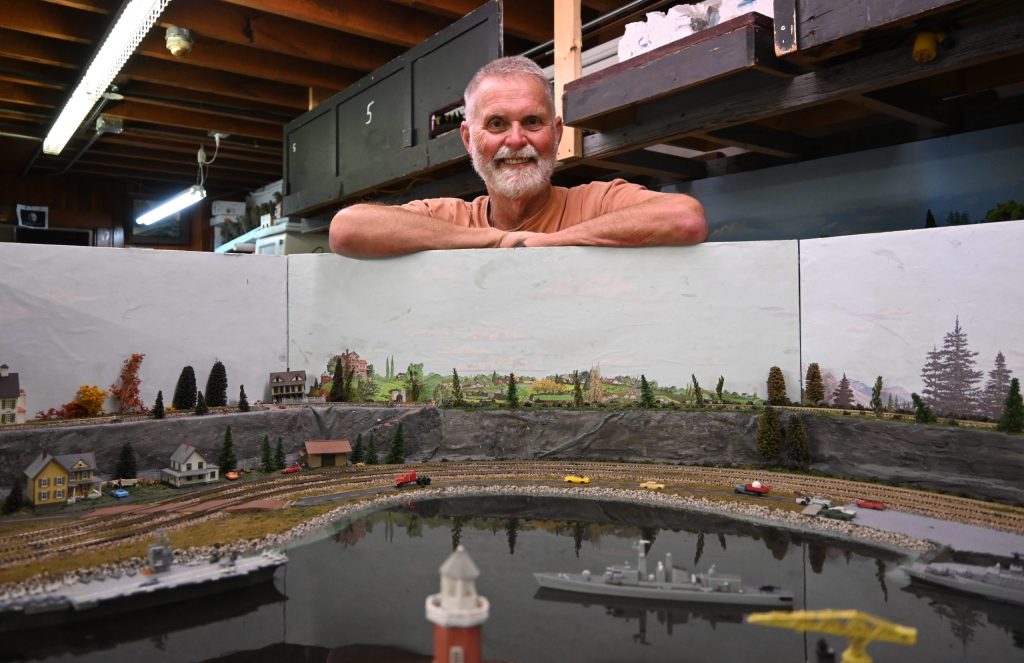
[caption id="attachment_30550" align="aligncenter" width="594"] Ken Silvester, Vice-Chair of the Model Railroad Club at CFB Esquimalt, poses with a model railroad. A listing of CFB Esquimalt clubs is available at https://bit.ly/3AAV6lO[/caption] Ken Silvester is the Vice-Chair of the Model Railroad Club at CFB Esquimalt. The club is open to current and retired Canadian Armed Forces members and Department of National Defence employees. What’s an average club meeting like? We meet on Wednesday afternoons and Saturday mornings. Generally, we spend some time chatting, enjoying coffee and having good conversations, and then we get to work either repairing old models or creating new ones. Since we go to many shows, the models can get a bit dinged up in transport, so there’s always something that needs to be worked on. Most of our models are built in a modular format for ease of transportation, but we also have a permanent layout that allows members to run and test their engines on the track. Is there anything exciting coming up for the club? We have a lot of events coming up that we’ve been getting ready for, which means repairing many models to ensure they look their best and run smoothly at all of the shows. We plan to attend Formation Fun Day on September 10 and then the Victoria Train Show and the Luxton Fall Fair at the end of the month. What’s something about the club you wish more people realized? The hobby is about more than just trains. It might be for you if you are interested in modelling in general or in electronics. The hobby is also always changing and evolving as new technology becomes available. Recently we’ve been trying to set up some Arduino microcontrollers to trigger lights and animations on the modules. What drew you to the Model...

In Depth: Spotlight on Clearance Divers

Chris Betts Chris Betts was born Sept. 23, 1999, in Riverview, N.B. Betts grew up in East Hants, N.S., where he attended Hants East Rural High school. He joined the Canadian Armed Forces in 2017 as a Combat Engineer right after high school and was posted to Gagetown, N.B., in 2018. Chris completed the Combat Diver prelim in May 2019, followed by the Combat Diver course in August 2019. During his time there, he was primarily employed as a RECCE (reconnaissance) Element for the field troops. He participated in Exercise Roguish Buoy in February 2020 in Albert Head, B.C. During this exercise, his dive team was paired with a dive team from the U.K, where he made great friends and learned how different countries operate in diving exercises. Betts participated in Operation Nanook-Nunalivut in March 2020 in Rankin Inlet, Nunavut. During this Op, Betts worked hand-in-hand with a dive team from Finland. This Op was his first time diving under the ice in the Arctic. He completed Clearance Diving Assessment Centre (CDAC) in February 2021 and was confirmed to attend a course in October. Betts participated in Operation Bell Island in July 2021 in N.L., where he witnessed the Explosive Ordnance Disposal side of the Clearance Divers job. The operation’s mission was to remove ordnance from various ships that German submarines sunk during the Second World War. His future aspirations as a Clearance Diver include completing the Improvised Explosive Device Disposal (IEDD) Operator course and participating in as many exercises and operations as possible. Alexander Castagna Alexander Castagna was born on Feb. 23, 1995, in Richmond Hill, Ont. He grew up in River Drive Park, Ont., and enrolled in the military as a Naval Warfare Officer in 2013. Castagna began his military career by studying at the Royal Military College in Kingston, Ont., graduating in 2017 with a degree in Chemical Engineering. He was then posted to Victoria for training, where he completed his ship’s dive course and trade training. Castagna’s...

Ravens stretch wings on day sail

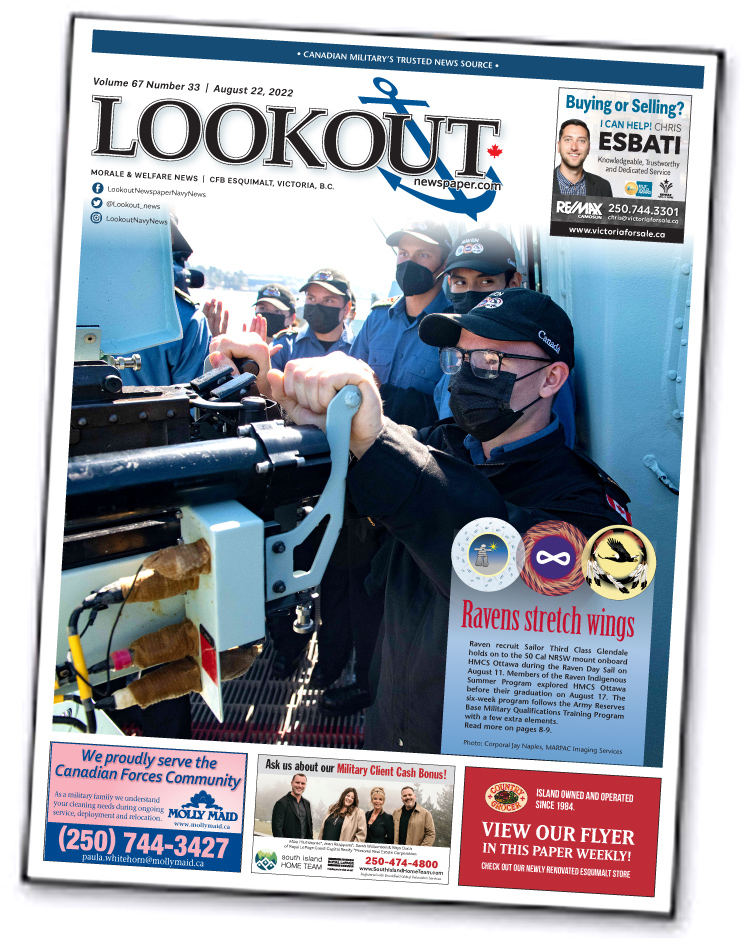
Peter Mallett, Staff Writer — After six weeks of military training, members of the Raven Program got a glimpse into Navy life with a Day Sail aboard a Royal Canadian Navy (RCN) frigate. Twenty-three participants of the Raven Indigenous Summer Program embarked HMCS Ottawa on Aug. 11. The Ravens participated in an extensive guided tour of the vessel’s departments along with multiple static displays as they sailed through the waters of the Strait of Juan de Fuca. “Sometimes it’s hard for a recruit to envision life in the military outside of their basic training, so the Day Sail offers this outer glimpse,” said Petty Officer First Class (PO1) Michelle Howell, Raven Program Coordinator. The Program was founded in 2003 and followed the basic principles of the Army Reserve Basic Military Qualification (BMQ). This year’s edition was hosted at Albert Head Training Centre from July 7 to Aug. 18 and included recruits from all nine provinces and territories. “The Raven Day Sail was an excellent opportunity for recruits to experience a day at sea and interact with military members outside of course staff,” said PO1 Howell. The Ravens witnessed firefighting and hose handling demonstrations and interacted with the ship’s Helo (helicopter) Team and its embarked CH-148 Cyclone. Members also interacted with the ship’s Dive Team and their diving equipment. The crew then demonstrated Naval Boarding Party drills and person overboard rescue procedures. The Ravens also experienced some of the vessel’s manoeuvres, such as heavy turns and quick stops. Participants also visited some of the ship’s departments during their guided tour, such as Ottawa’s Operations Room, the ship’s Bridge, and the Machinery Control Room, where Ravens learned about the mechanical operations of the ship’s engines and generators. Aiden Dillon, a member of the Raven program, described his first overall experience aboard an RCN ship as ‘great’ and said he was most impressed by the ship’s dive team and members of 443 Helicopter Squadron. He was also taken aback by the agility and skill...

‘Knot’ Just Ropes: keeping the rope work tradition alive… ‘It could save your life’

[caption id="attachment_30531" align="aligncenter" width="595"] Sailor First Class (S1) Keiran Sidle holds a rosette knot. The rosette is a piece of decorative rope work. Photos submitted byS1 Sidle.[/caption] Lilian Fridfinnson, Maple Leaf — Over time, the traditional Boatswain naval trade has evolved to require less knack and artistry, but Sailor First Class (S1) Keiran Sidle is dedicated to preserving the craft of rope work. “We’d handle the splicing, the whipping, and now that stuff comes pre-made. It’s fading out the rope work part of our trade,” S1 Sidle said. “Decorative rope work isn’t taught anymore.” ‘Splicing’ is the formation of a joint between two ropes, and ‘whipping’ is done to prevent rope fray. Although the role has advanced, and boatswains are responsible for the operation and maintenance of a ship’s rigging, cargo handling, and small crafts, S1 Sidle says the tradition of rope work is worth preserving in today’s Navy for more than just the custom. “It could save your life,” said S1 Sidle, a Surface Rescue Swimmer. “When I rescue somebody, I have the horse collar around me. A lot of people don’t think of knots as being that important.” The ‘horse collar’ is a rescue sling used by a Rescue Swimmer to bring someone back to the ship. A rope connects the ship and the horse collar, which is placed under the arms of the individual being rescued from bringing them back in. For S1 Sidle, such rope work is practical and essential knowledge for those working at sea. The usefulness of rope work was paramount for S1 Sidle, and he started teaching it to young sailors to offer a positive introduction to the Navy and provide them with what he believes are crucial skills. “I like teaching juniors how to do the trade. That’s like ‘moulding’ new minds, good habits, good mannerisms and a positive attitude toward the Navy,” he said. But the introduction to rope work does not end with young aspiring sailors. S1 Sidle creates art to...

Captain (Capt) Jeremy MacDonald

Armoured Officer brings love of scuba diving to Yellowknife

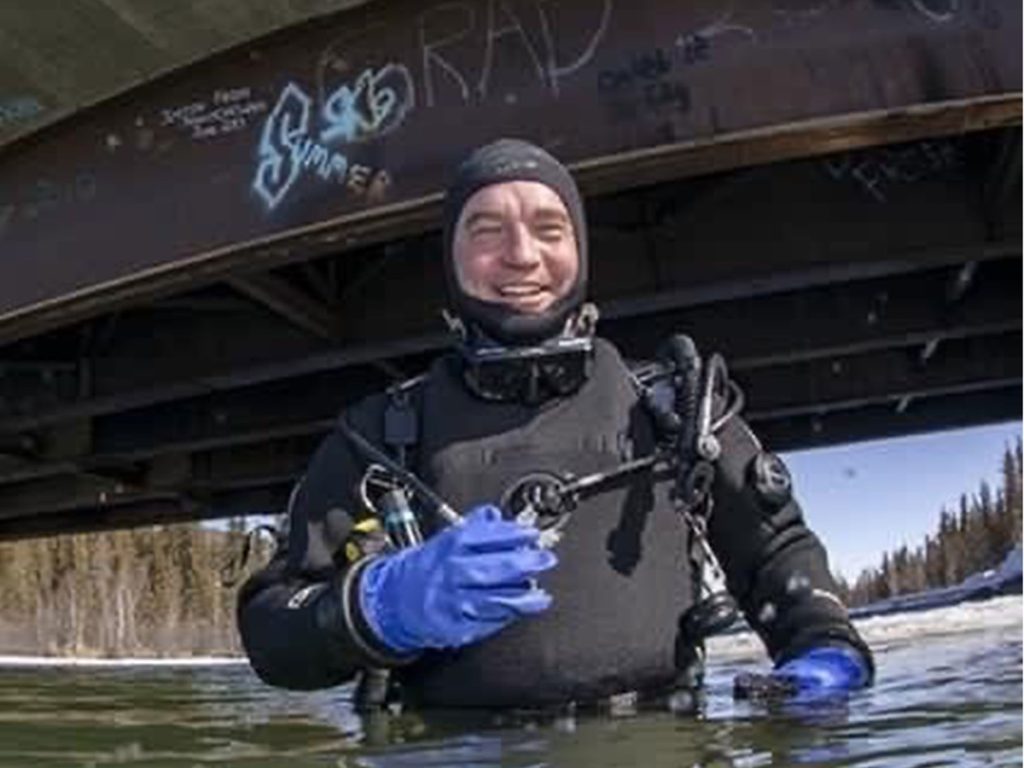
Alice Twa, JTFN Public Affairs Support — A quartz vein with gold in it, an oil seep, a 40-foot trawler, and a microphone are just some of many incredible finds  Captain (Capt) Jeremy MacDonald  made during his scuba diving adventures. Famous in HMCS Yellowknife for finding lost items in lakes and rivers surrounding the community and returning them to their rightful owners, Capt MacDonald has made scuba diving more than just a hobby. “It’s always interesting to talk to people and find out what happened, how’d it happen, is there a story? Being that ‘middle man’ to solve those issues is quite fun,” he said. Capt MacDonald is the Executive Assistant to the Commander at Joint Task Force (North). Initially hoping to join the Canadian Armed Forces in 1994 as a Navy Reserve Clearance Diver for the HMCS Brunswicker, he left the recruiting office enlisted in the Canadian Army as an Armoured Officer. “My great-grandfather was in the First World War, my grandfathers were in the Second World War; I’ve had all kinds of uncles and cousins and relatives who’ve been in the Army, Navy, and Air Force throughout the years; my son is in the military now. So, it’s a family tradition of service,” said Capt MacDonald. Joining the Army didn’t stop Capt MacDonald from learning how to scuba dive. While waiting for French training in St. Jean, Que., he and a few friends got their Professional Association of Diving Instructors Open Water Diver Certification. Capt MacDonald earned his Advanced Open Water Diver Certification in 1999. For a while, diving remained a side hobby for Capt MacDonald, and it wasn’t until 2014 that he started to become more passionate about the sport. “I would go scuba diving with friends in the Saint John River and we would find stuff. It’d...

Mark Nelson

Tiffies, Shipwrights and Bosuns: even trades have nicknames

Mark Nelson, Contributor — Everyone in the Navy has a ‘trade’, which is considered to be their job or specialty. A traditional way a specialist might be identified is through the title artificer, which indicates a skilled sailor. Historically the most common artificer is an Engine Room Artificer, a specialist within a ship’s engineering branch. In modern times, only the senior engineer in a warship, the Chief Engine Room Artificer, retains this specialty indicator. Artificer may be shortened to tiffy, as in Sick Bay Tiffy, which refers to a sick bay’s medical attendant. A Sick Bay Tiffy may be known by other names, almost always referring to the least fulfilling jobs they perform. For example, a medical attendant is never referred to as a ‘blood pressure checker,’ but check a certain body part, and you have a forever nickname. Sailors are sometimes referred to using the traditional title of Shipwright. Generally, ‘shipwright’ is used for a person who designs, builds, and repairs boats and ships, and in this case, used for the sailors who facilitate important repairs of the ship, especially when away from home port. Toothwright is a popular nickname for a dentist who can also be referred to as a molar mangler or a fang farrier, somehow leaping from fixing a sailor’s teeth to trimming horse hooves. Even more popular is the nickname fang bosun, which refers to the professional sea trade of a dentist. A bosun or bos’n is a shortened version of the boatswain, which generally refers to a sailor responsible for the ship’s ropes, rigging, and boats. Boatswain is derived from the old English word ‘batswegen,’ meaning the boat’s ‘swain,’ or husband. In today’s Navy, ‘boatswain’ refers to the professional seaman trade. The name is popular and gets reused in many ways. For example, a sin...

HMCS Winnipeg

On the Hunt: HMCS Winnipeg conducts Anti-Submarine Warfare training

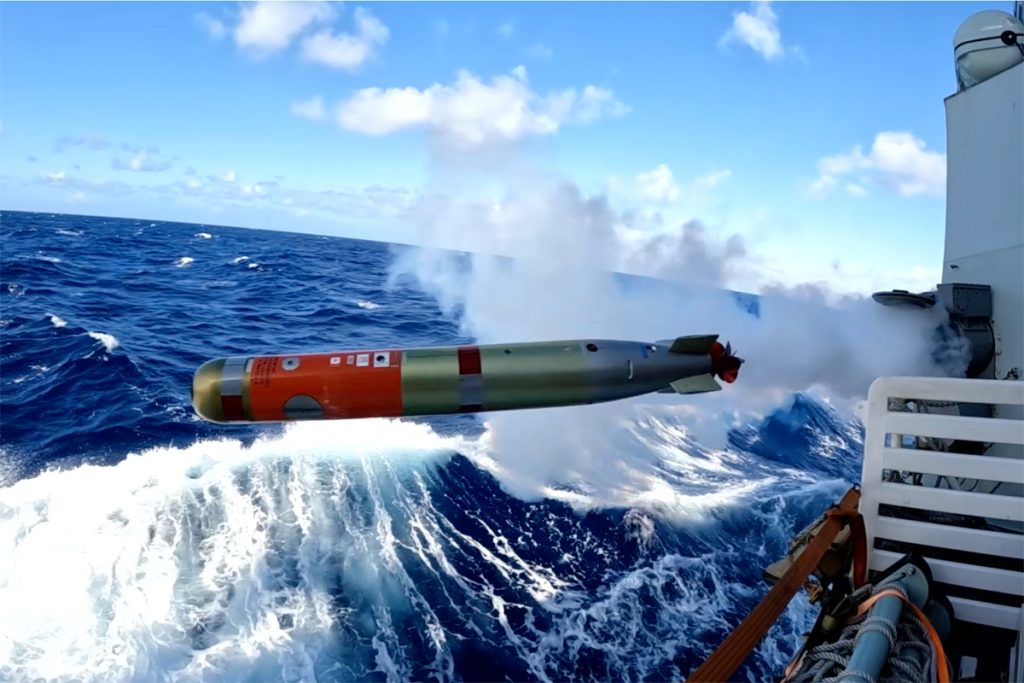
Capt Christine MacNeil, HMCS Winnipeg PAO — The operations team in HMCS Winnipeg had the opportunity to detect, track, and fire torpedoes at an ‘enemy’ submarine as part of the anti-submarine warfare (ASW) training during Exercise Rim of the Pacific (RIMPAC) 2022 off Hawaii’s coast. “Our operators undergo years of specialized training to gain proficiency in submarine detection,” said Royal Canadian Navy (RCN) Lieutenant (Navy) Andrew Chong, Underwater Warfare Officer with Winnipeg. “They have studied and practised through training exercises and simulations, but that can only take you so far. The ability to train with real submarines live at sea cannot be replicated, so these are important opportunities to put our skills to the test.” Tracking a submarine takes focus and patience. During the recent Combined Anti-Submarine Warfare Exercise (CASEX) with a United States Navy submarine playing the part of the ‘enemy’ sub, the Sonar Operators’ (Ops) focus and patience were put to the test. When intelligence indicated an ‘enemy’ submarine in the area, the ship employed underwater sensors to locate the sub, including the towed array sonar, hull-mounted sonar, and launching Guardian, the CH-148 Cyclone helicopter (helo). Once those measures were taken, the Ops operated their consoles and monitored incoming audio and visual information. Their training and skillsets were tested as they tried to find the indicators of a submarine in all the oceanic noises. In this particular exercise, the first hit was made by the most junior member of the Sonar Team, Sailor Third Class (S3) Mohammad Hamaad Kazmi. “This was the first opportunity to implement my training in real time,” S3 Kazmi said. “I felt pretty good when I found it.” With the contact confirmed, the ship maintained contact at the greatest possible distance, and the coordinates of the submarine were relayed to the helicopter via the Shipborne...

Extreme athlete completes ‘Death Race’

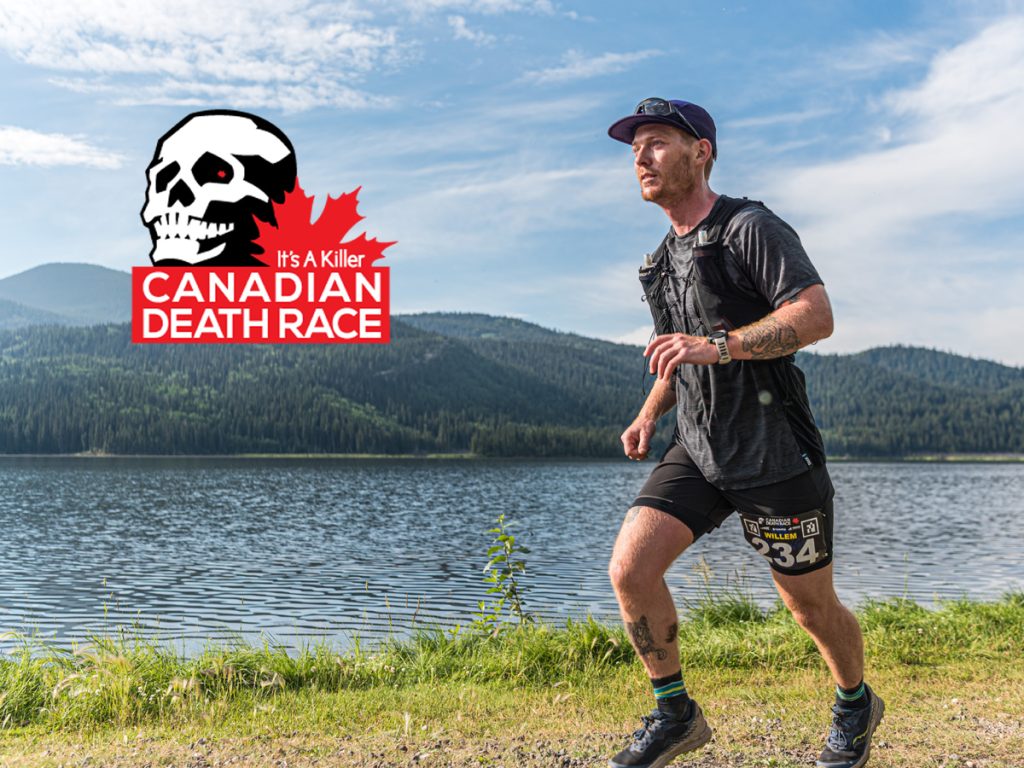
[caption id="attachment_30518" align="aligncenter" width="595"] Sailor First Class Willem Davis of Naval Fleet School (Pacific) finished 72nd out of 244 and 102nd overall in a field of 331 male and female runners of the Canadian Death Race, held at Grande Cache, Alberta, every summer. Photo credit: Infinite Eye Photography.[/caption] Peter Mallett, Staff Writer — A fire instructor at Naval Fleet School (Pacific)’s Damage Control School participated in a gruelling 118-kilometre race. Sailor First Class (S1) Willem Davies recently competed in The Canadian Death Race, one of the world’s toughest ultramarathons. “It really takes a special type of person to compete in this race,” S1 Davies, 31, said. “Compelling yourself to keep putting one foot in front of the other for nearly 24 hours while facing obstacles like high temperatures, dehydration, and discomfort takes an enormous amount of effort and willpower.” With a skull for its logo, the race warns the foolhardy and faint-of-heart with its to-the-point slogan, ‘It’s a killer’. Held each summer near Grande Cache, Alta., the endurance contest pushes extreme athletes and their well-conditioned bodies to their limits. The race consists of a gruelling course passing over three mountain summits, diverse weather conditions, and 17,000 feet of elevation change. “I ran through terrain so steep that some runners were forced to sit down or crawl to manoeuvre it,” he said. Many who attempt to complete the feat within the 24-hour time limit, fail. Approximately 100 participants could not finish this year’s race, S1 Davies said. S1 Davies has worked in the Legacy Trade of Hull Tech for 12 years of his Royal Canadian Navy service. He is currently transitioning to the Fleet Diving Unit (Pacific) as a Clearance Diver, which he expects to begin on Oct. 3. He says he always wanted to compete in an Ultra Race and trained...

Master Sailor (MS) Jessica Silva

Sonar Operator Reaches 1000 Hours of Aircraft Control Time

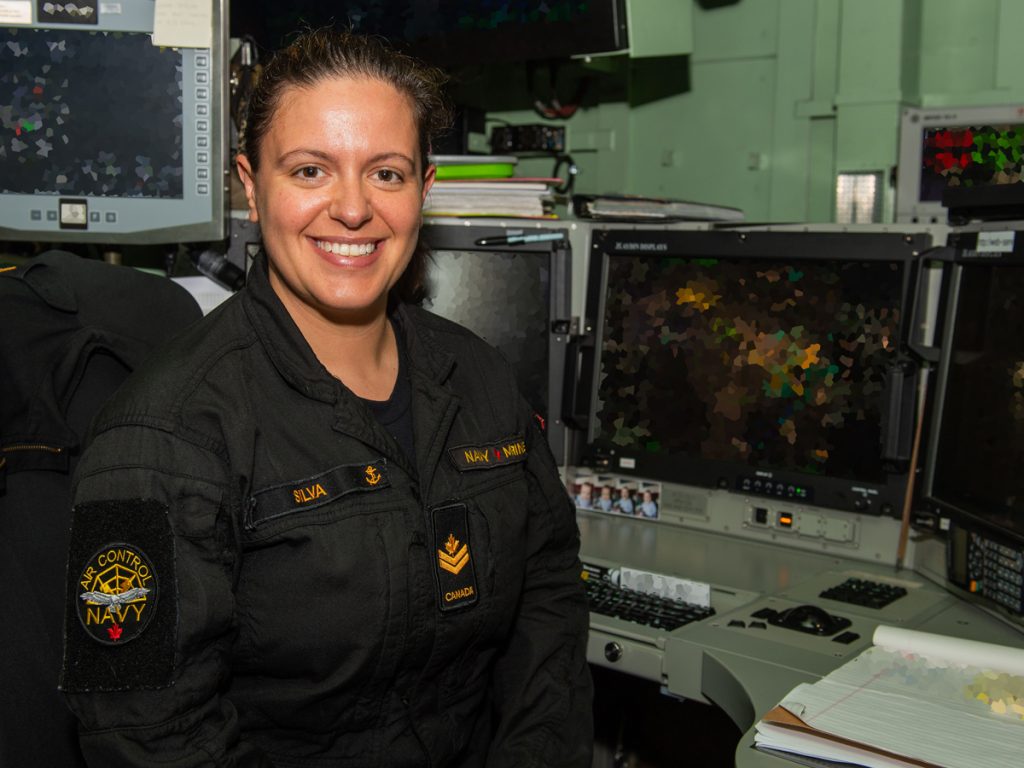
[caption id="attachment_30489" align="aligncenter" width="595"] Master Sailor (MS) Jessica Silva.[/caption] Capt Russ Vandeputte, HMCS Vancouver — Master Sailor (MS) Jessica Silva has reached a milestone that few in her field have attained – she has logged over 1,000 hours in her role as Shipborne Air Controller (SAC) while participating in Rim of the Pacific (RIMPAC) 2022 on board HMCS Vancouver. “It was pretty exciting, it’s really rewarding to hit such a huge milestone,” MS Silva said. “Through my hours controlling aircraft, I have gained a lot of knowledge that I could teach to others. I hope it helps me achieve my main goal of becoming a Sea Training SAC.”  MS Silva is the first Sonar Operator (Sonar Op) and only the second SAC on the West Coast to achieve 1,000 hours of control time. Serving as a SAC for the past six years, she took the opportunity to be trained in the field as soon as she was eligible. “It looked like the most interesting job in the operations room,” she said, recalling how the choice to take the course was rooted in her desire to be part of air operations on board the Halifax-class frigates. During exercises, many positions in the Operations Room work with computer-simulated inputs, but the SAC often controls the embarked helicopter.  “Everything you do is real – real helicopter, real people, real mission – nothing is pretend,” she said. “There’s rarely a dull moment in the job.” The SAC is the main link between the ship and its embarked helicopter at sea. Air Controllers give pre-flight briefs to the crew with all the information they may need to accomplish their mission. While the aircraft is in the air, a SAC is responsible for the tactical control of the helicopter, as well as the fixed-wing marine aircraft. The role...

Tulip Festival

Canadian Tulip Festival in Ottawa celebrates citizen sailors in 2023

The Naval Reserve — The Naval Reserve will celebrate its Centennial in 2023. As one of the showcase initiatives, the Canadian Tulip Festival in Ottawa will commemorate 100 years of service by highlighting the sacrifice of Citizen Sailors from the Royal Canadian Navy Volunteer Reserve (RCNVR) in the Second World War as a primary theme of the Festival in 2023. The Canadian Tulip Festival was established to celebrate the historic Royal gift of tulips from the Dutch to Canadians immediately following the Second World War as a symbol of international friendship. The Festival preserves the memorable role of the Canadian troops in the liberation of the Netherlands and Europe. It commemorates the birth of Dutch Princess Margriet in Ottawa during Second World War – the only royal person ever born in Canada. The 2023 Festival will showcase the Naval Reserve to Canadians through various program activities, such as the dedication of six distinct varieties of tulips to recognize the proud histories of some of the Naval Reserve Divisions across Canada. These tulip bulbs will be on sale to the general public across Canada, and will be the focal point of the Festival’s tulip beds in 2023. The Festival has offered members of the Canadian Armed Forces and their friends and family wishing to buy any of the six tulip varieties dedicated to the Naval Reserve Divisions Discovery, Chippawa, Donnaconna, Star, Scotian or Carleton a discount, with all proceeds going to the Canadian Tulip Legacy. Other planned activities include an expansion on this year’s ‘Ghosts of the Glebe’ walking tour, which tells the stories of those who left the safety of their homes in the Glebe neighbourhood, right next to the site of HMCS Carleton and the Canadian Tulip Festival, to fight for freedom overseas, never to return. The Canadian Tulip Festival, which averages...

Ships’ visit delights cadets in Comox

[caption id="attachment_30479" align="aligncenter" width="595"] HMCS Quadra Cadets assemble on HMCS Edmonton’s deck for a tour.[/caption] Peter Mallett, Staff Writer — A rare visit by two Maritime Forces Pacific (MARPAC) Maritime Coastal Defence Vessels (MCDV) to eastern Vancouver Island became a focal point of three occasions. The Kingston-class ships HMCS Brandon and HMCS Edmonton held an Open House for the locals and offered tours to cadets from nearby Cadet Training Centre (CTC) HMCS Quadra. The outreach event also became a homecoming for Lieutenant Commander (LCdr) Tyler Smith, Edmonton’s Commanding Officer. With a combined complement of 80 sailors, the ships visited the Department of National Defence Jetty on Port Augusta Street in Comox, B.C., on July 22. “People were quite interested in getting a tour of the ship and talking to the sailors about what their jobs entailed,” said Lieutenant (Navy) Cam Prescott, HMCS Brandon’s Executive Officer. “As well, many were keen on finding out what the ships generally do on missions or what life at sea is like.” Lt(N) Prescott said his ship’s Open House successfully showcased the Royal Canadian Navy (RCN) to the residents. Meanwhile, HMCS Edmonton offered extensive guided tours to approximately 220 cadets from HMCS Quadra. The tours encompassed the entire ship, from the bridge to the ship’s engine rooms and living quarters, said Lt(N) Kareem Negm, Edmonton’s Executive Officer. “We like to think of the cadets as part of our collective family at the RCN, so by connecting with them in this manner, we invest in their futures by showing them that the training they are doing now is meaningful and of great value to all of us onboard,” LtNegm said. This was the first summer since 2019 the cadets have been engaged in full in-person training, said Lt Rachel Louis, Quadra’s Unit Public Affairs Representative. Not only did LCdr Smith show off the Edmonton to the cadets, he also visited CTC Quadra. Lt Louis led him throughout the facility, including the Perri Department, where LCdr Smith once...

Joy Hamilton

5 Questions with Base Barber Joy Hamilton

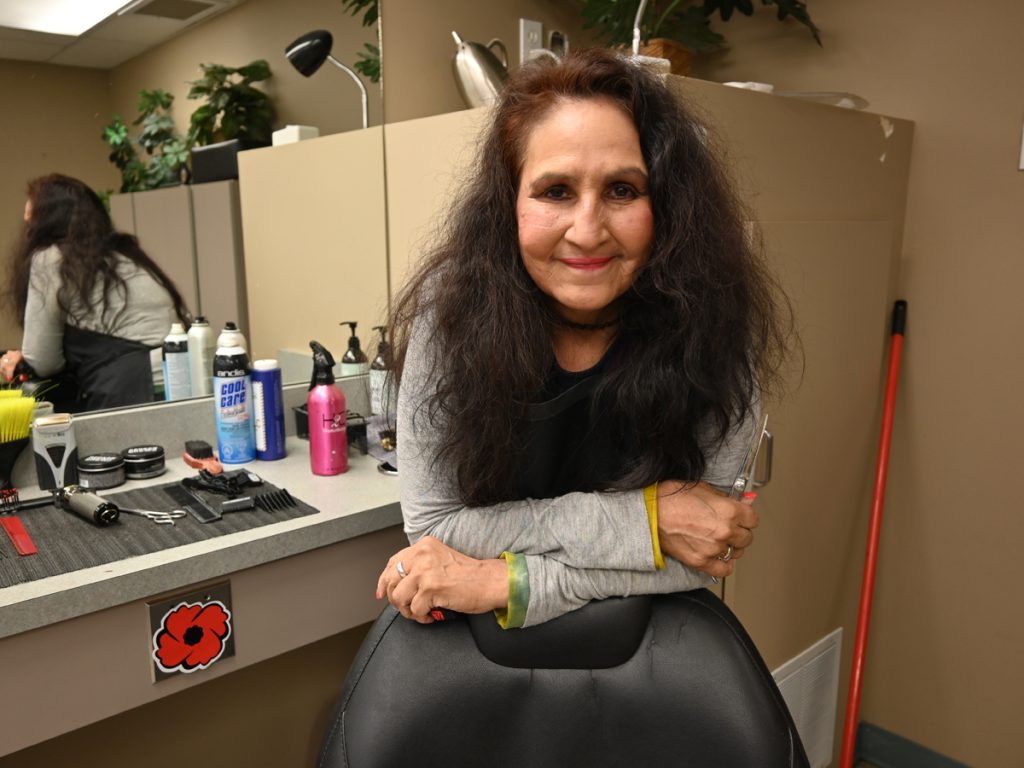
[caption id="attachment_30475" align="aligncenter" width="595"] Joy Hamilton[/caption] Hadley Parsons, CFB Esquimalt Public Affairs — Joy Hamilton currently works at the CFB Esquimalt CANEX Barber Shop and has been cutting hair for 44 years. What’s an average day on the job? We get a lot of drop-ins, but we take appointments as well. Since the pandemic, our numbers have been different, but, usually, I do about ten haircuts, and on a hectic day, I’ve done as many as 25. We’re at our busiest when there’s a deployment or other special event. What’s the most interesting thing that’s happened recently while on the job? Well, with the upcoming CANFORGEN on hair regulations, we’ll see a much more comprehensive range of hairstyles and colouring requests. It’s not in place yet, but once it is, it will broaden who we are as stylists and allow us to be more creative. I expect most people will keep their current hairstyles, but I’m open to the changes and ready to deal with any haircut or colour that comes my way. It’s exciting to be on the ‘cutting edge’ of military hair styling. What’s something about your job that you wish more people realized? When they see a military haircut, many people think it’s fairly simple, and while they are straightforward, that doesn’t mean they’re easy to do well. It takes skill to get the taper on the back and sides just right so that it looks good and meets the standards every time. What’s something interesting about yourself? I hosted a radio show called Wolf Beat for a while back in the early 2000s. It was a First Nations cultural show that featured First Nations music, storytelling, and theatre. I also interviewed many people on the show, like Elders and political figures. Chatting to guests as a radio...

Up and coming Clearance Divers graduation

[caption id="attachment_30472" align="aligncenter" width="595"] Course students posing on IEDD Improvised Explosive Device Disposal (IEDD) Assist with tEODor, the remote-controlled telerob Explosive Ordinance Disposal and observation robot.[/caption] Lt(N) Alexander Castagna, Fleet Diving Unit (Pacific) — Ten candidates are set to graduate from the Clearance Diver Course at Fleet Dive Unit Pacific (FDU[P]) on Sept. 9, following a year of intensive training, diving, and camaraderie. The candidates, consisting of nine non-commissioned members (NCMs) and one Clearance Diving Officer (CLDO), began their training at FDU(P) in Colwood last October, led by highly-trained diving and explosive ordinance disposal specialists. “One year ago, I barely knew my nine course mates,” said Sailor Second Class (S2) Sam Phillips. “Now, one year later, what we have gone through together has given us a bond that will last a lifetime. This course and this trade have given me a second family and I am proud to be part of something so great.” The course consisted of five phases. Throughout the first training phase, candidates learned how to operate the Recompression Chamber (RCC), a hyperbaric or decompression chamber, to treat patients suffering from diving-related illnesses. During the mission phase, candidates used the Sharkmarine, an underwater navigation system, to search, locate, and mark underwater training mines in Esquimalt Harbour. The device is fitted with GPS and a multi-beam sonar suite. It was used in several training scenarios and can also be used to record and playback mission-critical footage. “We employed a modernized approach to training where students did a lot of self-teaching and were also guided by their staff throughout the year,” said Petty Officer Second Class (PO2) Ryan Burrell, their instructor. Following a holiday break, the course serial travelled to CFB Gagetown in New Brunswick, where candidates learned the basics of Explosive Ordnance Disposal (EOD) and Improvised Explosive Device Disposal (IEDD). Students also learned to maneuver the remote-controlled telerob Explosive Ordinance Disposal and observation robot (tEODor) in tight spaces. By the end of the phase, candidates could identify conventional munitions,...

Canadian Navy’s 10 o’clock soup tradition

[caption id="attachment_30465" align="aligncenter" width="595"] Sailor First Class Marianne Mojica displays her Chicken Tinola soup.[/caption] “Please, sir, I want some more… soup” S1 Marianne Mojica,  HMCS Regina — Savouring hot soup at 10 a.m. on a ship is something that every sailor is familiar with in the Royal Canadian Navy. While researching the 10 o’clock soup tradition, I found some archival photos, such as the one from HMCS Restigouche, the lead ship of the Restigouche-class destroyers, commissioned in 1958. In it, a cook is standing in a hatch and serving soup straight out of the pot to some hungry sailors. That is not the only ‘archival’ instance of soup-sampling: in the mid-1970s, Osbourne Head Gunnery Range in Dartmouth, N.S., started to serve soup at ‘stand easy’ (break). “That makes sense; any of us that have been there know the wind never stops, and even in summer can be chilly; soup at stand easy – perfect,” tweeted Christopher Richardson, a veteran CAF Cook. By the early 1980s, many East Coast ships followed suit and soup at stand easy started to gain traction. By the mid-1980s, it was almost universal in the East Coast fleet. By the mid-1990s, the tradition spilled into the West Coast as well. The soup is served on workdays during the stand easy. The meal is thought to improve the morale and welfare of the ship’s company in a few ways, including bringing people together, keeping sailors hydrated and full, and giving the immune system a nice boost, especially during the colder months. Soup is also a cost-effective way to use any leftover ingredients on the ship. Sometimes, if sailors are lucky, the cooks give them a chance to share recipes for the whole crew to enjoy. In that spirit, I’m happy to share my recipe for one of my favourite soups: Chicken Tinola. Chicken Tinola is authentic Filipino comfort food. It is a ginger, onion, and garlic-based soup with chicken as the main ingredient along with bok choy, chayote,...

Urban Search and Rescue Team completes monthly training

[caption id="attachment_30452" align="alignnone" width="595"] A member of Urban Search and Rescue (USAR) team is hoisted down via vertical lift into a confined space. Photos: Sub-Lieutenant Wilson Ho, USAR Team Member.[/caption] SLt Wilson Ho, Urban Search and Rescue Team, MARPAC Public Affairs — The CFB Esquimalt’s Urban Search and Rescue (USAR) Team completed its monthly training the last week of July at the USAR Training Compound near Naval Officer Training Centre (NOTC) Venture. “The USAR Team has been working on a variety of different urban rescue techniques, and this month’s training allowed the Team to combine a lot of the skills learned to safely extract a patient from rubble,” said Lieutenant (Navy) Drew Torchia, USAR Team Operations Chief. This month, the team conducted a complex rescue scenario to search for a missing person trapped in rubble following a building collapse. This scenario included: a vertical lift insertion; cutting through concrete, rebar, and wood with power tools; and a confined space maze. Once the missing person was found, the team had to package the patient for transportation and then manoeuvre the patient through the rubble to extract them via the vertical lift. In addition to the complex scenario, members were allowed to train on the DELSAR, a seismic/acoustic listening device used to detect and locate trapped live victims, and the SearchCam 3000, an articulating, extendable, waterproof search and rescue camera that locates victims trapped in collapsed buildings. “Skill fade is inevitable, and complex scenarios like this allow everyone to refresh their skills,” he said. “There is no single right answer in USAR, and everyone has different, unique expertise they can bring to the table to save lives.” The CFB Esquimalt USAR Team is actively recruiting more Canadian Armed Forces (CAF) members to join its ranks to become a Medium USAR (MUSAR) team by International Search and Rescue Advisory Group standards. The USAR Team trains 20 days a year, on the last Wednesday of every month except December, and two week-long exercises each year. No...

Navy Bike Ride

Sailors roll out in Seattle – Navy Bike Ride

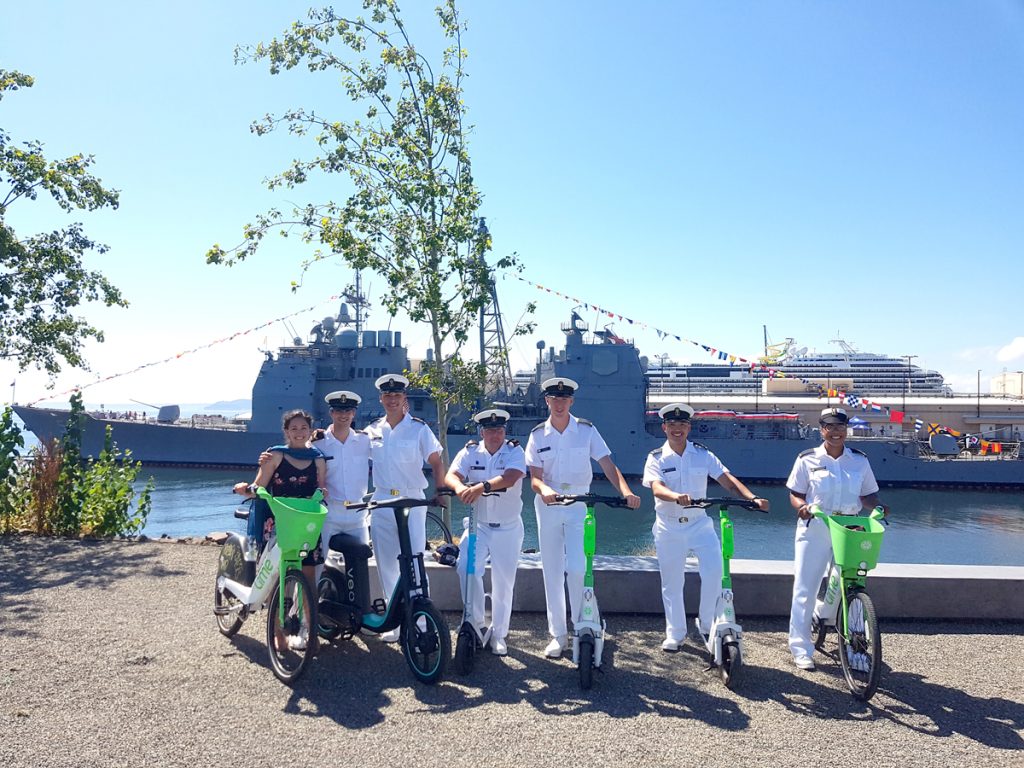
Peter Mallett, Staff Writer — A recent Seattle visit provided a superb stop for the Navy Bike Ride of the HMCS Yellowknife crew. “I’m thrilled with the level of participation from Yellowknife, and I’m blessed with a dedicated and generous crew,” said Lieutenant-Commander (LCdr) James Brun, Yellowknife’s Commanding Officer (CO). “Our sailors have thoroughly been enjoying riding through the streets of Seattle during their down time.” He said their enthusiasm was unwavering, and their steel wheels kept spinning. The Kingston-class ship and its crew participated in Seattle’s Seafair event from Aug. 1 to 7. Approximately 20 members of the ship logged their kilometres in the virtual fundraiser by riding through the streets of the Emerald City with rented bicycles and e-bikes. For those not wanting to tour the city by bicycle, the ship offered a stationary bike in its bridge wing.  LCdr Brun brought his bike to Seattle. He said he and the crew made it their mission to support annual fundraising and esprit de corps event. Sailor First Class (S1) Brendan McLoughlin, Yellowknife’s Marine Systems Engineer, also brought his bike. While noting staying physically active is extremely beneficial for his mental health, he said he fully supports the Navy Bike Ride mission. “Participating in this Bike Ride shows my support for the Navy,” he said. “I also like how the Navy continues to support its community along with the concept of team spirit and keeping fit.” S1 McLoughlin is an avid cyclist who also does rock climbing and Wing Chun, a Chinese martial art, in his spare time. LCdr Brun said one of sailors has received the support from event’s charities, which set up and helped fund medical evaluations and ongoing support for their child. The ship’s substantial participation numbers and enthusiasm can be traced back to an email from...

Mark Nelson

Bloggins & Oscars – everyone’s wingers

Mark Nelson, Contributor — Bloggins is a generically used sailor name, sometimes featured in training materials, and may appear in everyday shipboard life, i.e., ‘Who ate the last piece of duff?’ The answer may well be ‘Bloggins’. Of course, this does not refer to an individual sailor named Bloggins, but ‘Bloggins’ represents every sailor, and ‘Bloggins’ is everyone’s winger. A winger is a good friend, a nickname stolen from the air element in how the zoomies refer to a fellow flyer as a wingman. Wings is a shorter way to say someone is a buddy, as in, ‘Bloggins is my wings’. The Air Force may have invented the term, but the Navy uses it better. A perfect activity for wingers is to go on a run ashore. After spending many days at sea, when a ship arrives in a port, its sailors will invariably choose to depart the ship and enjoy the local amenities, such as museums, libraries, historical sites, and other culturally significant establishments. Only rarely is running actually involved. Sometimes the run would be a rig run, meaning the participants would wear their dress uniform ashore, all in an attempt to impress the local populace with their tiddley look and demeanour. Back in the day, when sailors wore square-rig, they wore a uniform referred to as a tiddley suit, which was tailored to be less baggy to make them look more appealing. Today’s sailors rely on natural charm. A uniform would also be called pusser, which carries more than one meaning. Pusser can indicate a service issue, i.e., ‘Bloggins wore his pusser boots to go clamming.’ Sometimes it can describe someone wholly dedicated to the Navy or something extremely Navy-like, i.e., ‘Bloggins is as pusser as a box lunch.’ Indeed, there is nothing more military-like than a box lunch....

right of way

Base rules of the road

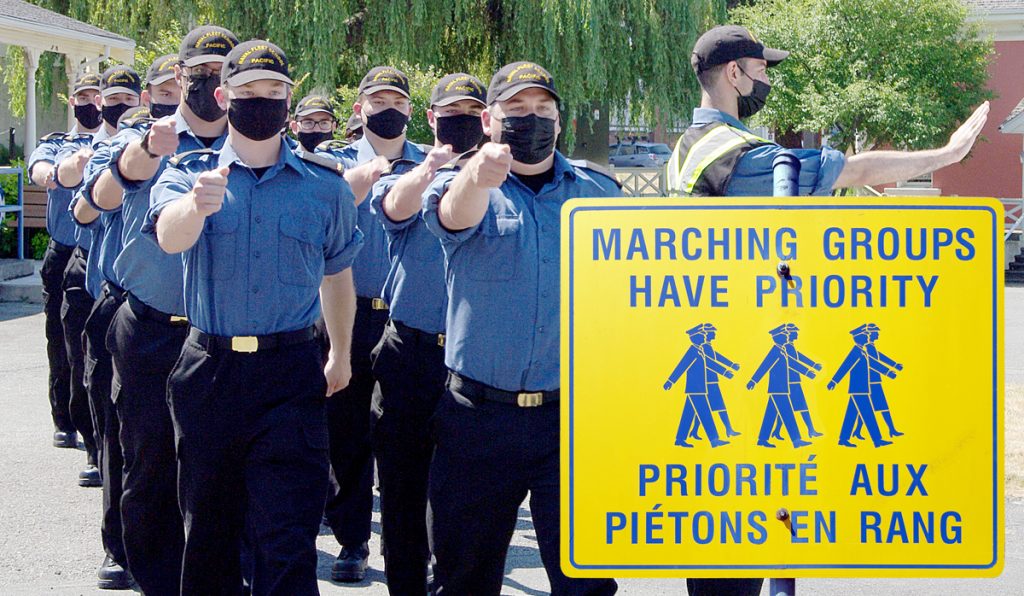
Peter Mallett, Staff Writer — CFB Esquimalt is a busy place and it’s important to remain mindful of the rules of the road unique to the Base, especially around marching contingents, says Chief Petty Officer Second Class (CPO2) Jason Tucker, Deputy Base Chief Petty Officer. “It’s vitally important people are aware service members, most of them newer members, are out on the road marching, and it’s important people take the time to observe the rules and show some patience,” said CPO2 Tucker. Marching groups from Naval Fleet School Pacific (NFS(P)) often march near the main entrance of Naden along Ontario Drive, at Work Point as part of HMCS Venture’s Leadership Training programs, and at Albert Head, where Basic Military Qualification (BMQ), Primary Leadership Qualification (PLQ), and training for the Raven Program is conducted. The road rules surrounding marching contingents at CFB Esquimalt, spelled out in Base Standing Orders 5250-2 on Marching Groups Policy, state contingents have the right-of-way over all vehicles at CFB Esquimalt. An exception applies to police, fire, ambulance, or other emergency vehicles in performance of their emergency duties. The standing order warns motorists interrupting the Canadian Armed Forces (CAF) while on the march, and/or hindering CAF on the march, is an offence under the National Defence Act Section 256. CPO2 Tucker notes these rules also apply to cyclists. “It is okay to pass marching groups on the left, if it done slowly and safely,” he said. “This means there is no oncoming traffic coming towards them, and they do not speed past the marchers in their effort to pass them.” CPO2 John Penner, a Divisional Chief Petty Officer at NFS(P) says most motorists at the base drive safely around marching contingents. “Some people, especially first thing in the morning, are impatient,” CPO2 Penner said. “This can lead to...

Ron Boyce

5 Questions with the head lifeguard

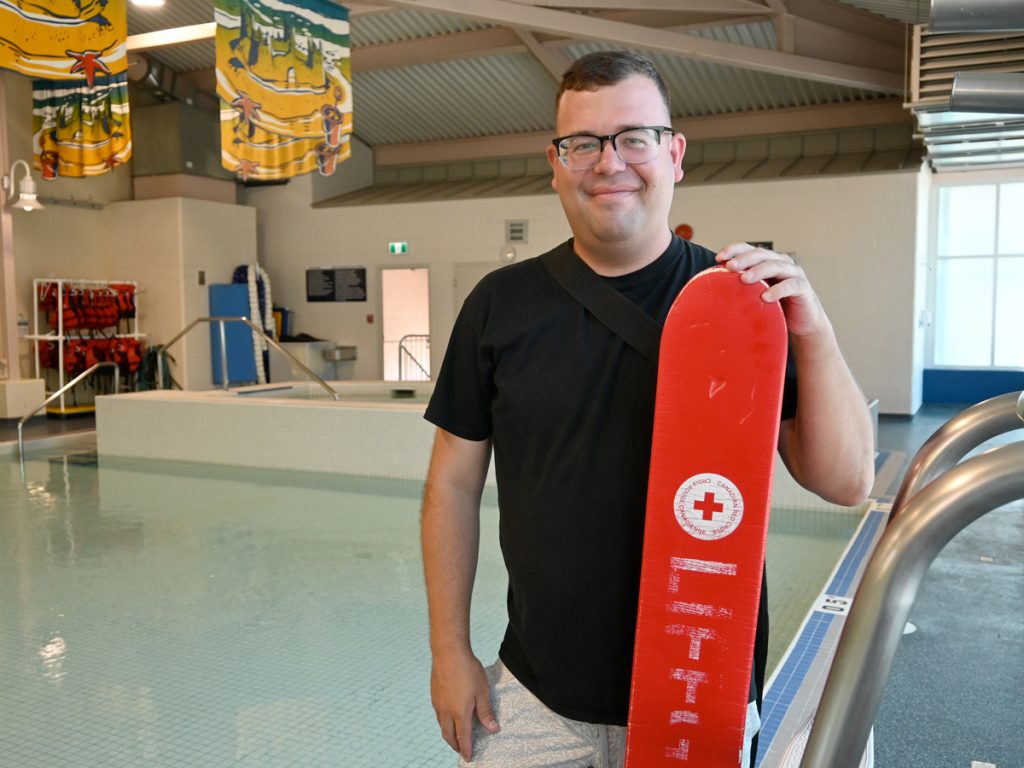
[caption id="attachment_30412" align="aligncenter" width="595"] Ron Boyce, Aquatics Supervisor at the Naden Athletic Centre.[/caption] CFB Esquimalt Public Affairs — Ron Boyce is the Aquatics Supervisor at the Naden Athletic Centre (NAC). Although much of his job involves managing the pool, he also spends much of his time working as a lifeguard.  What’s an average day on the job? The lifeguard team starts at 0600 each morning and sets up for the military lap swim. When I get to the pool, I check in with the facility coordinator to get up to date on the day’s operations, and then I’m usually out on the pool deck by 1100. Each day the pool works to support military operations with training sessions and by providing general recreation opportunities. What’s the most interesting thing that’s happened recently while on the job? When I started here a year and a half ago, the pool had the same signs as it did when I came here to swim as a child 20 years ago – it was kind of neat. Funny, since coming on, one of the things I’ve done is upgrade all the signs. What’s something about your job that you wish more people realized? It was in the news recently, but Canada is currently experiencing a major shortage of qualified lifeguards. Right now, the NAC will be offering both Bronze Medallion and Bronze Cross courses in August to get some people trained. It’s a great opportunity both for the NAC and the wider community. We’ve got to do what we can to train new lifeguards and to keep them – water safety is important! What’s something interesting about yourself? I placed top three in provincial lifeguarding competitions once. I suppose most people don’t even know there are lifeguarding competitions, but teams of lifeguards from all...

Mark Nelson

Nicknames are commonplace in the Royal Canadian Navy

[caption id="attachment_30348" align="aligncenter" width="595"] The author of Jackspeak of the Royal Canadian Navy and Whiskey 601, Mark Nelson developed a love of the Navy's language and lifestyle over his 26-year career in the service. After retiring as a Chief Petty Officer Second Class, he now works as a library systems specialist at Red River College Polytechnic in Winnipeg, Man.[/caption] Mark Nelson — In a tight-knit group like a ship’s company, nicknames are bound to arise between members. They are a quick way to refer to someone, convey familiarity, and can even show a degree of respect. When a sailor first joins the Navy, they soon discover how people with certain surnames often carry a common nickname; a tradition-bound moniker stuck to them the minute they join the service. Have you ever wondered why there is more than one ‘Dusty’ Miller in the Navy and, for that matter, several ‘Nobby’ Clarks? It’s because there is a standard nickname for those two surnames. Heck, only Nobby Clark’s mother, the paymaster, and maybe the Coxswain’s writer know Nobby’s real first name. Sometimes the nickname is derived from something that resembles a word association test, giving us ‘Spider’ Webb, ‘Rusty’ Steel, ‘Frosty’ Snow, ‘Shady’ Lane, and the aforementioned ‘Dusty’ Miller. Another method of assigning nicknames is based on celebrities or famous people, which is how we get ‘Clark’ Gable, ‘Doris’ Day, ‘Henry’ Ford, ‘Jesse’ James, and ‘Artie’ Shaw. Interesting, these are all personalities from decades past. Is there a ‘Katy’ Perry in an HMC ship today? Probably. Also, nicknames may be derived from fictional characters from popular culture, such as ‘Buck’ Rogers, and ‘Buster’ Brown, a comic strip character popular at the turn of the previous century but adopted as the mascot of the Brown Shoe Company. There are some commonly used nicknames where...

Explore More

Categories

Top News

E-Editions Archive

News Stories Archive

Proud Supporters

Joshua Buck, Lookout Newspaper