[wpml_language_selector_widget]
[searchwp_form id="1"]
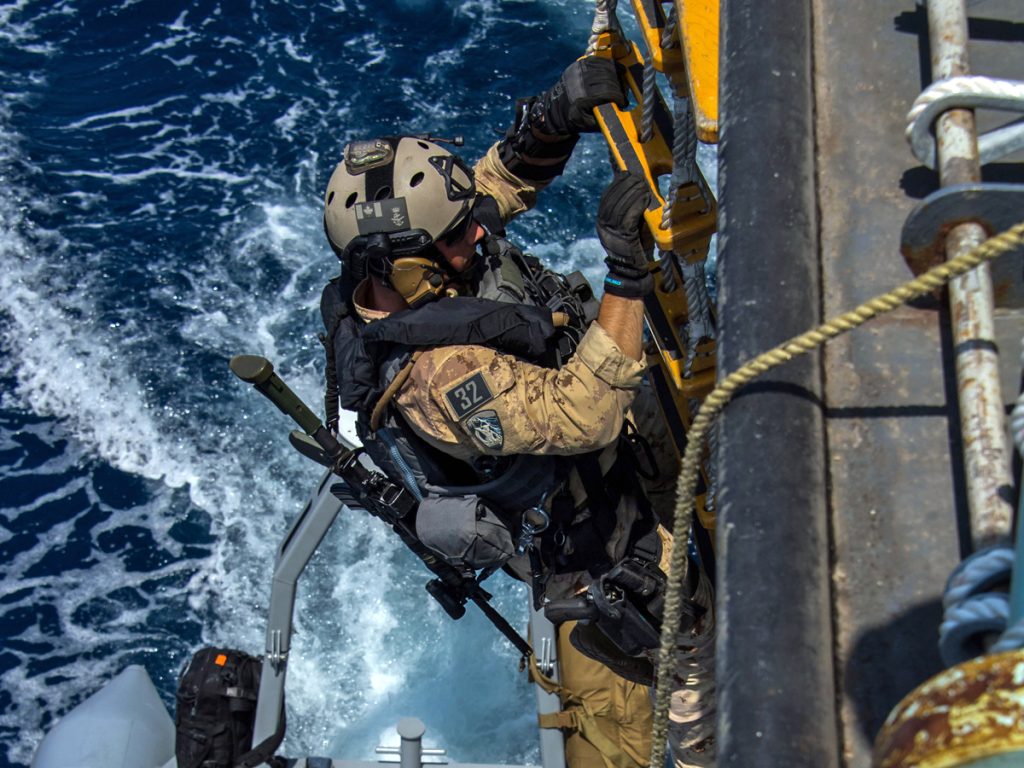
HMCS Regina’s Naval Tactical Operations Group prepares to board a Dhow during Operation Artemis in the Pacific Ocean on April 18. Photo by Corporal Stuart Evans

A shift in boardings at sea training

[caption id="attachment_22445" align="alignnone" width="592"] HMCS Regina’s Naval Tactical Operations Group prepares to board a Dhow during Operation Artemis in the Pacific Ocean on April 18. Photo by Corporal Stuart Evans, Borden Imaging Services[/caption]LCdr Mike Erwin, NFS(P) ~A change took place in the delivery of Naval Boarding Party (NBP) training in October when Naval Fleet School (Pacific) turned over responsibility to the Naval Tactical Operations Group.The turnover was part of an overarching direction that would see all matters concerned with naval boarding fall increasingly under Naval Tactical Operations Group’s purview. As the cutlass was passed from one organization to the other, it marked the end of a decades-long era in which the Fleet School, first as Canadian Forces Fleet School (Esquimalt) and then as Naval Fleet School (Pacific), trained individuals and ship’s teams in the conduct of boardings at sea in support of maritime interdiction operations.About Naval BoardingsThe requirement to board ships is as old as navies themselves. Whether it was to inspect a vessel in support of a naval blockade or to overpower an enemy ship and take it as a prize, warships have always needed to insert teams of personnel into other ships. Literature and film are rife with images of ships bearing down upon one another, as boarding parties swarm over the side and through the rigging to the stirring cry of “Out cutlasses and board!”The Royal Canadian Navy is no exception. One of Canada’s most famous boardings took place in the Caribbean during the Second World War. German U-Boat U-94 had been damaged by United States Navy aircraft, as well as depth charges and gunfire from the Canadian corvette HMCS Oakville. As the commanding office of Oakville brought his ship alongside the stricken enemy, only SLt Hal Lawrence and PO Art Powell were able to leap onto the...

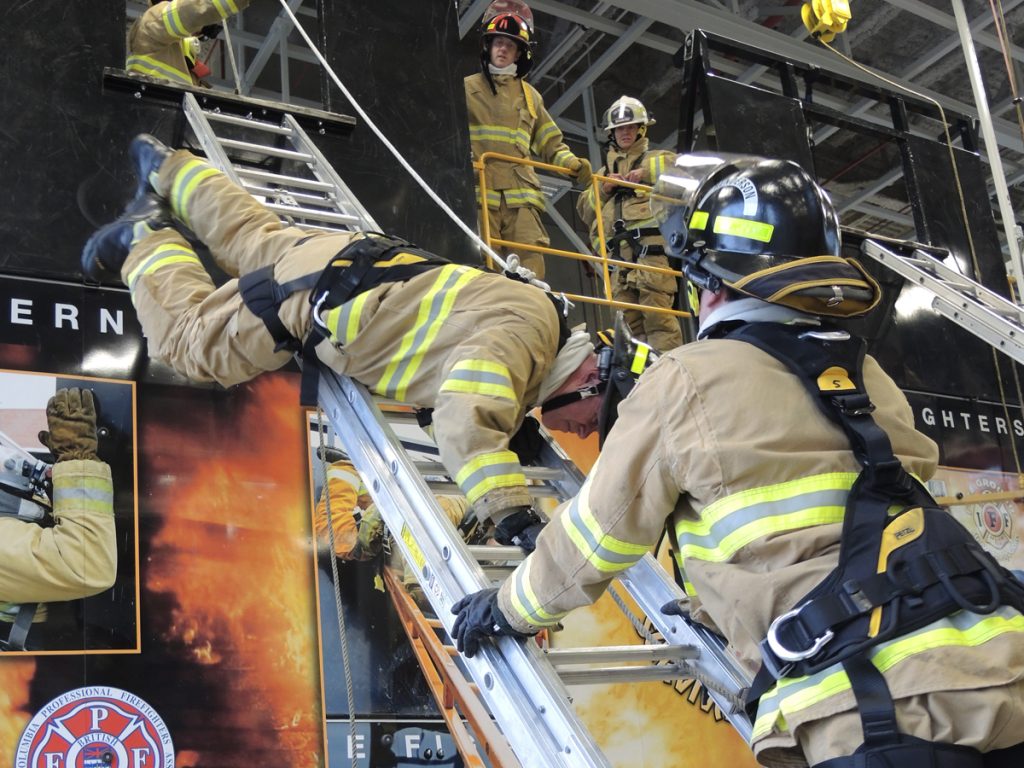
Firefighters from CFB Esquimalt Fire and Rescue practice their ladder bails during an International Association of Firefighters (IAFF) Fire Ground Survival Program. The program is designed to help firefighters across North America escape dangerous life-threatening situations during emergency calls. Photo by Peter Mallett

Firefighters ground survival training hot item

[caption id="attachment_22434" align="alignnone" width="593"] Firefighters from CFB Esquimalt Fire and Rescue practice their ladder bails during an International Association of Firefighters (IAFF) Fire Ground Survival Program. The program is designed to help firefighters across North America escape dangerous life-threatening situations during emergency calls. Photo by Peter Mallett, Lookout[/caption]Peter Mallett, Staff Writer ~Normally when entering a burning building the focus is on saving the lives but now firefighters at CFB Esquimalt are also learning how to save themselves.   During the month of January all 60 firefighters at the base, civilian employees of the Port Operations and Emergency Services Branch (POESB), have been enrolled in the International Association of Fire Fighters (IAFF) Fire Ground Survival Program. The intensive training course is designed to help firefighters across North America gain all the necessary skills for survival in such an emergency, offering training to help them prevent a mayday situation and also effectively manage a mayday call from one of their coworkers. “This is extremely beneficial safety training for the department and a first for us,” said CFB Esquimalt Fire and Rescue Chief Geordie Douglas. “We hope our firefighters never get into a situation like this but if they do, they now have the tools in their toolbox to get themselves out of a burning building or other structure safely.”The BC Chapter of the union representing full-time firefighters in the United States and Canada and is providing the training kit which is all packed up neatly in a 30-foot storage trailer that is parked in their station house on Esquimalt Rd. Until the end of the month the firefighters will be practising the necessary techniques of how to safely exit a burning building when fire, smoke or poisonous fumes make it too dangerous for them to remain.Captain Jim Grant of CFB Esquimalt Fire and Rescue...

Photo by Ashley Evans

The building and benefit of the printed circuit board

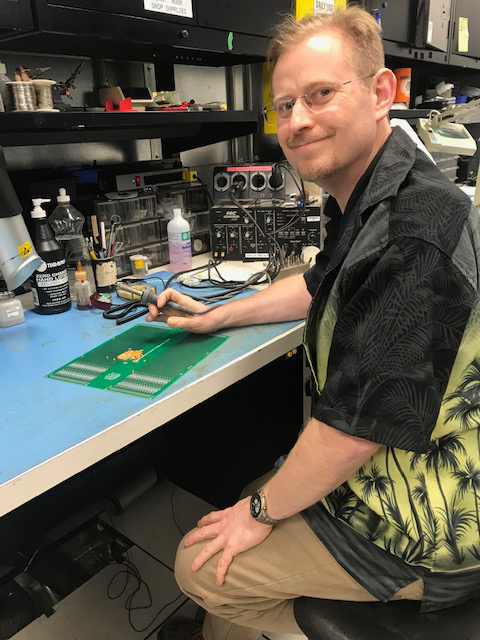
[caption id="attachment_22431" align="alignnone" width="480"] Photo by Ashley Evans[/caption]Ashley Evans, FMF ~An Electronics Technician employed at Fleet Maintenance Facility (FMF) Cape Breton in the Electronics Shop is making exciting connections through his work on printed circuit boards (PCBs). Dax Ryn, a BCIT graduate in both Electronic Engineering Technology and Biomedical Engineering Technology, worked in private industry for 14-years prior to coming to FMF Cape Breton in 2018. One of his first major projects has been to create a printed circuit board for use on an HF Transmitter, while identifying a capability within FMF to not only serve the Fleet but other shops within FMF. “I enjoy seeing problems and solving them. It feels rewarding to fix something that is broken,” said Ryn. He has not only been creating custom circuit boards for the RCN, but has been teaching apprentices how to do the same. “They [PCBs] are very useful if you want to diagnose problems in a system,” he said. “These boards can be made as smaller pieces to add as a replacement part or as an add-on – with an improved design or update of programing that may no longer be obtainable in the outside market. Extender cards can also be made to extend out as part of the system which can be used to test and measure a current system.”In the fall of 2019, Ryn created a PCB which was installed on an HF Transmitter aboard HMCS Chicoutimi. The challenge of accessing the previous board and the need to be able to test it while in operation is what motivated the creation of this custom circuit board. The PCB allowed the RCN the flexibility to probe either between the transmitter boards or on the PCB extender. Printed circuit boards are a valuable resource when testing a system that is difficult...

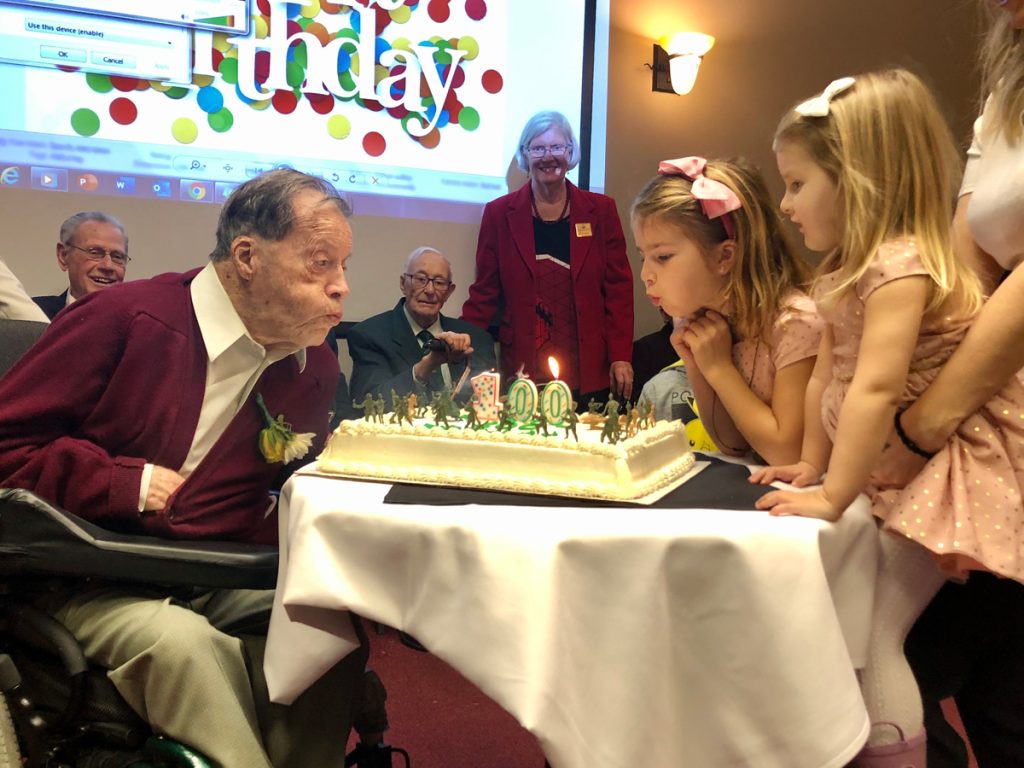
Major (Ret’d) Murray Edwards blows out the candles on his birthday cake. Edwards

Veteran celebrates the gift of life

[caption id="attachment_22428" align="alignnone" width="593"] Major (Ret’d) Murray Edwards blows out the candles on his birthday cake. Edwards, a veteran of the Second World War and Korea recently celebrated his 100th birthday with a large group of family and friends by his side. Photo credit: Brian Owens[/caption]Peter Mallett, Staff Writer ~A veteran of Victoria’s Princess Patricia’s Light Infantry (PPCLI) celebrated his 100th birthday in style. A large cheer echoed through the conference room of a Saanich hotel on Jan. 18 as centenarian Major (ret’d) Murray Edwards raised a toast and then blew out all the candles on his birthday cake. Edwards, a resident of Veterans Memorial Lodge, served as a combat instructor in the Second World War for Canada and then on the battlefield in Korea with Princess Patricia’s (PPCLI) at the famous Battle of Kapyong. “The first hundred years were the best,” joked Edwards before making a wish and blowing out the candles on a large birthday cake.The crowd of approximately 40 well-wishers included friends, family, members of the PPCLI Association, Queen’s Own Rifles of Canada Association, while Member of Parliament for Saanich Gulf Islands Elizabeth May also joined in the celebration. During the party a congratulatory message from Queen Elizabeth was read aloud while Senator Yonah Martin of British Columbia sent Edwards a video birthday greeting. Edwards served Canada unconditionally from the start of the Second World War until his eventual retirement from the Canadian Armed Forces in 1969. He was also part of Canada’s Peace Keeping mission in Cyprus and the Third Arab–Israeli War. He once remarked during a previous interview that he is old enough to have attended a Civil War Veterans’ parade in New Jersey, as a young boy. That happened in the late 1920s, in the years after his family had immigrated to New Jersey from...

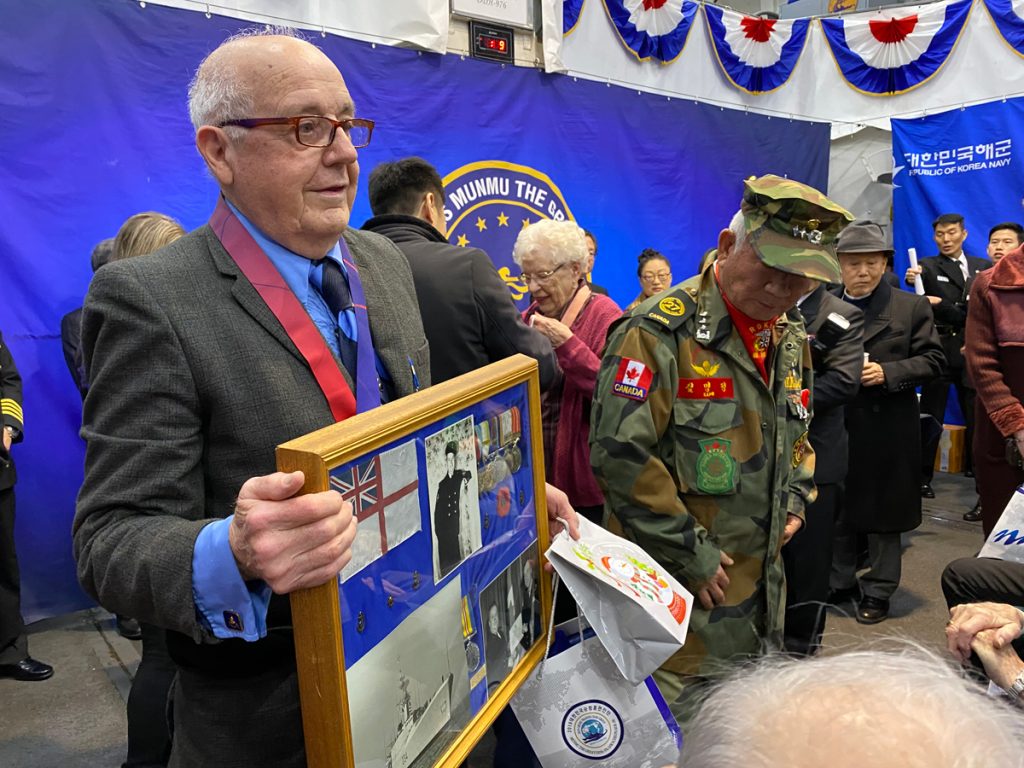
LS (Ret’d) Roderick Finley displays a photographic collection featuring his late friend and former shipmate CPO2 Fred Watson. Finley was aboard South Korean vessel ROKS Munmu the Great during a Port visit to Esquimalt in December. He accepted a South Korean Ambassador for Peace medal on behalf of Watson during a ceremony that also honoured nine other Korean War veterans.

South Korea honours Canadian veterans during port visit

[caption id="attachment_22425" align="alignnone" width="593"] LS (Ret’d) Roderick Finley displays a photographic collection featuring his late friend and former shipmate CPO2 Fred Watson. Finley was aboard South Korean vessel ROKS Munmu the Great during a Port visit to Esquimalt in December. He accepted a South Korean Ambassador for Peace medal on behalf of Watson during a ceremony that also honoured nine other Korean War veterans.[/caption]Peter Mallett, Staff Writer ~A close friend and former shipmate of a Korean War veteran was recently overcome by tears while posthumously accepting an Ambassador For Peace medal on his behalf.They were tears of joy but also remorse says Leading Seaman (ret’d) Roderick Finley. That’s mostly because his good friend Chief Petty Officer Second Class (ret’d) Fred Watson wasn’t around to enjoy the outpouring of gratitude by representatives of the Republic of  Korea navy and government.“I’m not sure if it’s such a great sight to see a grown man cry but there were certainly some tears on that day,” said Leading Seaman (ret’d) Roderick Finley. On Dec. 19 the 81-year-old Victoria resident was aboard Republic of Korea (ROKS) Munmu the Great for a medal presentation ceremony and reception on the destroyer’s flight deck. Watson was one of ten medal recipients honoured on Munmu the Great that day. The awards were presented to veterans of the Korean War by South Korea’s Navy Cruise Training Task Group Commander RDML Minsoo Yang and Defence Attaché Colonel Keunsik Moon during the ship’s four-day port visit to Esquimalt. “The Republic of Korea will always remember the Korean War Veterans, and their courageous actions during the Korean War,” said Colonel Moon. “We are forever thankful and we will continue our efforts to remember and commemorate their sacrifices.”Four of the ten medal recipients honoured are no longer living. “He would have loved the moment and...

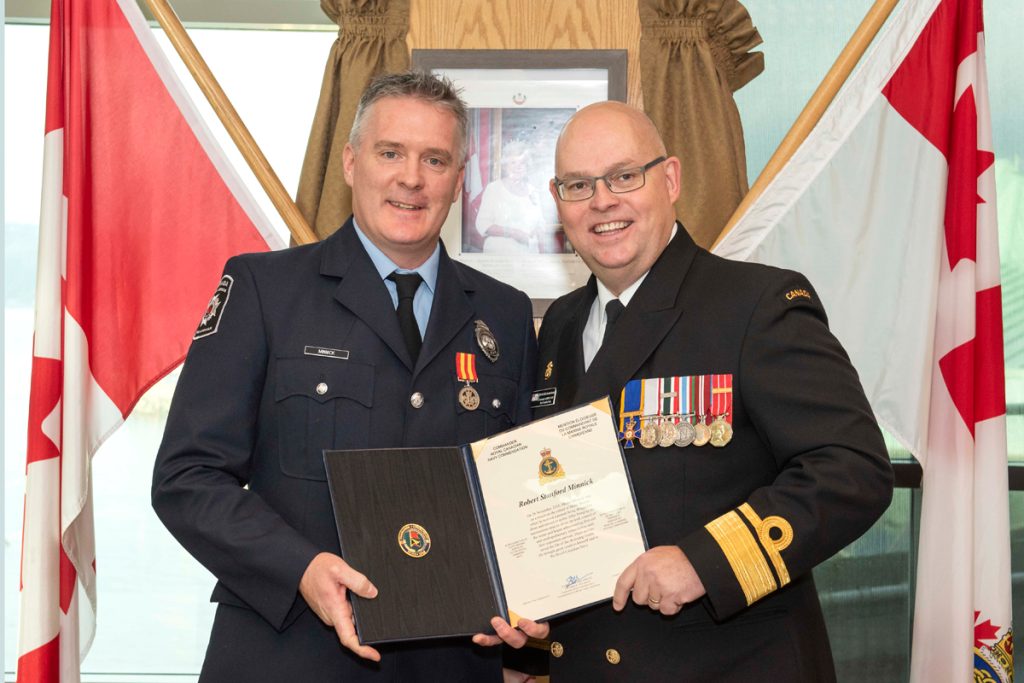
Robert Minnick receives a Commander Royal Canadian Navy Commendation presented by Commander Maritime Forces Pacific Rear-Admiral Bob Auchterlonie. The citation reads: On 28 November 2018

Vacationing firefighter saves snorkeler’s life

[caption id="attachment_22421" align="alignnone" width="593"] Robert Minnick receives a Commander Royal Canadian Navy Commendation presented by Commander Maritime Forces Pacific Rear-Admiral Bob Auchterlonie. The citation reads: On 28 November 2018, Mister Minnick was on the beach on the island of Maui, Hawaii when he noticed a person being dragged to shore and moved to assist. After bringing the unconscious man to shore, he took control of the scene and began administering first aid and cardiopulmonary resuscitation until first responders arrived. These actions saved the life of the drowning victim. He brought great credit to himself and to the Royal Canadian Navy. Photo by LS Valerie LeClair, MARPAC Imaging Services[/caption]Peter Mallett, Staff Writer ~A firefighter from the base has received official recognition for saving the life of a surfer while on a recent vacation in Hawaii. On Jan. 24 Rob Minnick of CFB Fire and Rescue was presented with a Certificate of Appreciation by Commander Maritime Forces Pacific, Rear-Admiral Rob Auchterlonie, in a ceremony at the Chief and Petty Officers Mess.The 48-year-old father of two was enjoying a quiet afternoon on scenic Ka’anapali Beach in Maui on the afternoon of Nov. 28 with his wife and two friends from Victoria. He decided to go for a walk along the beach with his wife Tara when they both noticed a commotion on a stretch of nearby beach. A crowd of people was gathered around an unconscious adult male snorkeler in his early 20s, who was in medical distress. Minnick and his wife rushed to the scene to help. Two snorkelers had found the victim face-down in the water several metres offshore before pulling him to the beach. After checking his vital signs Minnick began administering life-saving CPR (Cardiopulmonary Resuscitation). “Matthew had no pulse, he wasn’t breathing and his heart was stopped which essentially means...

Building civilian-military relationships

[caption id="attachment_22396" align="alignnone" width="592"] Major Philip Dawe (left) and Dr. Ross Brown (right)[/caption]Carrie Stefanson ~Canada doesn’t have military hospitals, so it’s important for military doctors to see injuries typical of the battlefield. The Canadian Forces Trauma training program began about 20 years ago, and is instrumental in keeping Canada’s military medical personnel trained in advanced trauma care so they can deploy when needed. Major Philip Dawe heads up Canadian Forces Trauma Training Centre West in Vancouver. He’s a trauma and acute care surgeon at Vancouver General Hospital and comes from a family with a long history of military service. His father and three brothers served in the Canadian Forces and his youngest brother Matthew, died in a roadside bombing in 2007. “If I could save one military person’s life overseas, then my career will be worthwhile,” says Maj Dawe. “Preventable deaths occur in deployed operations and if I could prevent one of those it would be a good day.” Maj Dawe is the third military surgeon to head up Canadian Forces Trauma Training Centre West. The centre’s mandate is to facilitate trauma training for Canadian Forces physicians, physician assistants and nursing officers. Many of Canada’s military medical personnel have trained at centres in Vancouver and Montreal prior to their deployments. “As care for the wounded continues to gain more importance in both public opinion and policy, the mutual benefits of a robust civilian-military relationship have become increasingly evident,” says Maj Dawe. “On one hand, lessons learned from our overseas experiences are being delivered to our colleagues at home to enhance patient outcomes. On the other, our colleagues at home have helped us to get ready for those deployments by affording us cross-training and refresher opportunities to ensure we’re providing best-possible care to our troops in our limited-resource deployed environments.”Dr. Ross Brown, trauma/general surgeon and Senior Medical Director with Vancouver Coastal Health/Coastal Community of Care now working at Lions Gate Hospital in North Vancouver, was the first embedded military trauma surgeon in...

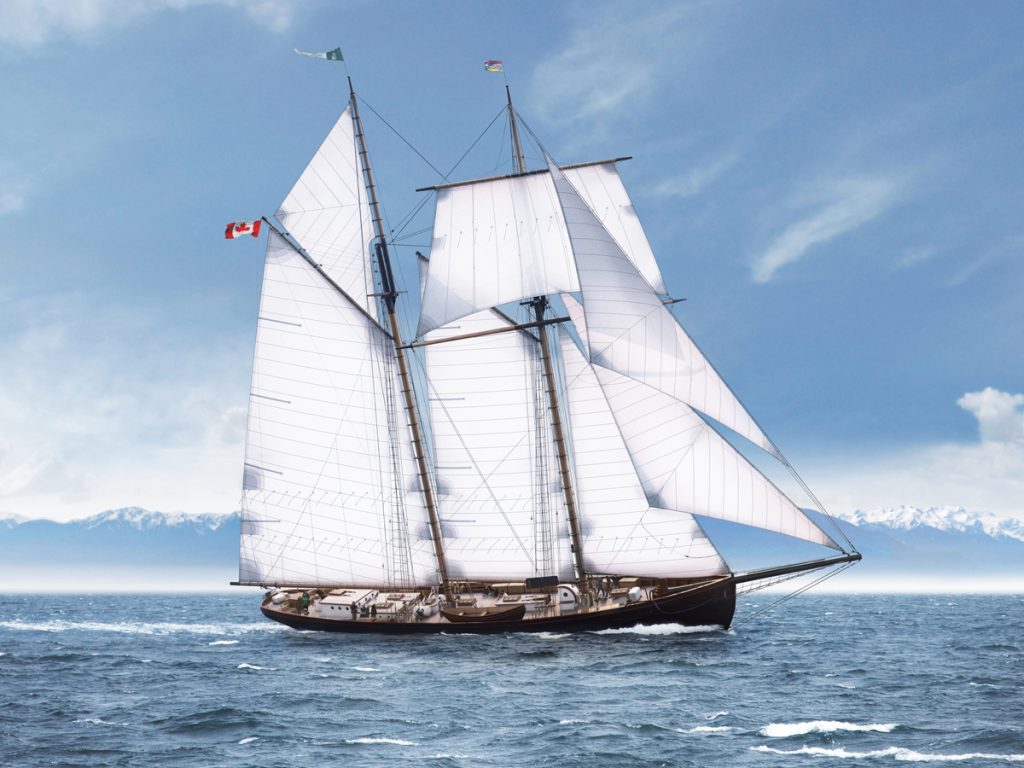
An architect’s rendering of the proposed schooner Eleanor created by Will Krzymowski. The Sail and Life Training Society (SALTS) have announced plans for construction of a third tall ship for its fleet of vessels that teach youth from across Canada sailing skills.

New SALTS schooner to be named Leonora

[caption id="attachment_22393" align="alignnone" width="593"] A computer rendering by Will Krzymowski of the proposed schooner Leonora. Ship design led by Stephen Duff. The Sail and Life Training Society (SALTS) have announced plans for construction of a third tall ship for its fleet of vessels that teach youth from across Canada sailing skills.[/caption]Peter Mallett, Staff Writer ~In an effort to bolster the reach of its youth sail training vessels, the Sail and Life Training Society (SALTS) plans to add a new schooner to its fleet. The Victoria-based charity recently named its planned third vessel ‘Leonora’ and intends the new ship to join its existing tall ships, Pacific Grace and Pacific Swift. Each year SALTS sail training programs reach approximately 1700 young people between the ages of 13 and 25, including Royal Canadian Sea Cadets from across Canada, providing them with the opportunity to develop their sailing skills aboard a tall ship. SALTS Executive Director Loren Hagerty says that he is hopeful construction on Leonora can begin this year. The addition of Leonora will allow the society to provide another 850 spaces for its programs each year. Hagerty says a builder of the ship has yet to be determined but anticipates bid requests will be sent to shipyards later this year.“We are seeing real momentum in the fundraising for this project, which is a very large undertaking for a smaller charity like SALTS. We are optimistic that in years to come we can get more young people out to sea in our transformational programs,” said Hagerty.The ultimate goal of SALTS, says Hagerty, is to provide an ideal platform for youth mentorship at sea along with providing them with a confidence boost and sense of wellbeing while developing “relational and teamwork skills.”The most recent cost estimate for the project is $5.5 million, but the budget will...

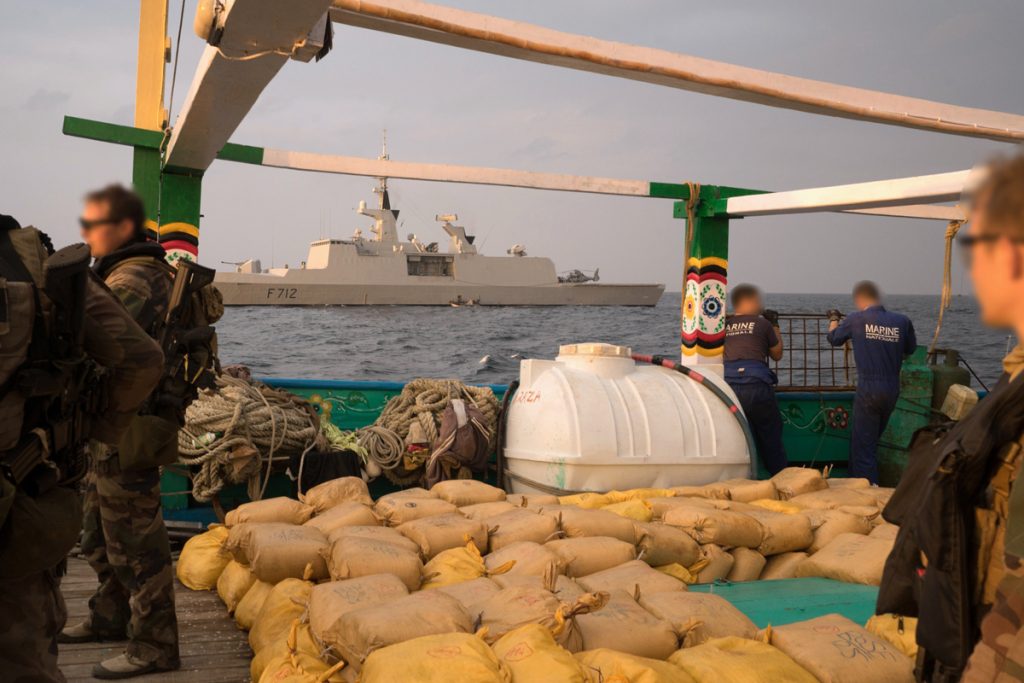
FS Courbet’s boarding party with some of the 3.5 metric tonnes of hashish seized from a dhow in the Gulf of Oman on 13 December

Great start for Australian lead Combined Task Force 150

[caption id="attachment_22390" align="alignnone" width="593"] FS Courbet’s boarding party with some of the 3.5 metric tonnes of hashish seized from a dhow in the Gulf of Oman on 13 December, 2019. The estimated regional wholesale value of this bust is $1.8 million U.S. dollars.[/caption]Lt(N) Tony Wright, CTF 150 Public Affairs Officer ~In a little over a week, Combined Task Force 150 (CTF 150), led by Australia with a staff of Australians, Canadians, and New Zealanders, have conducted a pair of successful boardings netting almost 3.6 metric tonnes of narcotics whose proceeds would have otherwise made their way into the hands of terrorist organizations. CTF 150’s mission is to disrupt terrorist organisations and their related illegal activities by restricting their freedom of manoeuvre in the maritime domain. The activities of CTF 150 are a critical part of global counter-terrorism efforts, as terrorist organizations are denied a risk-free method of conducting operations or moving personnel, weapons or income-generating narcotics and charcoal.The Australian-led team’s success began with some bad luck for the smugglers on Friday the 13th of December. French Ship (FS) Courbet, a frigate of the Marine Nationale operating in the Gulf of Oman in direct support of CTF 150, seized 3.5 metric tonnes of hashish from a vessel they had been tracking. This haul had an estimated regional wholesale value of $1.8 million U.S. dollars.Less than a week later on December 19, Her Majesty’s Ship (HMS) Defender, a United Kingdom Royal Navy destroyer working in direct support of CTF 150 made another bust.A suspicious vessel was first detected using Defender’s shipborne helicopter. Defender then closed in on the dhow and a team of Royal Marine Commandos secured the vessel and its crew. It was then searched by a Royal Navy boarding team who found 131 kilograms of crystal methamphetamine with an estimated regional...

Commodore Ed Ahlgren

Australia assumes command of Combined Task Force 150

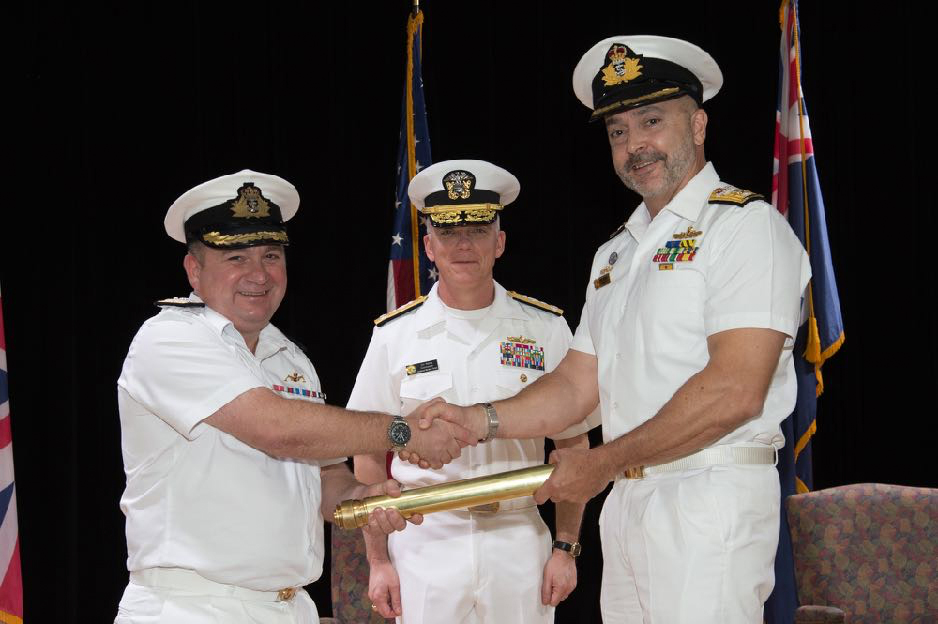
[caption id="attachment_22387" align="alignnone" width="592"] Commodore Ed Ahlgren, Royal Navy (Left) relinquishes command of Combined Task Force 150 to Commodore Ray Leggatt, Royal Australian Navy (right) during a ceremony at Combined Maritime Forces Headquarters in Manama, Bahrain. The change of command was presided over by Commander Combined Maritime Forces Vice Admiral James Malloy (centre).[/caption]Lt(N) Tony Wright, CTF 150 Public Affairs Officer ~In December, Commodore (CDRE) Ray Leggatt assumed command of Combined Task Force 150 (CTF 150) in a ceremony held at Combined Maritime Forces (CMF) Headquarters in Manama, Bahrain. CDRE Leggatt’s team, comprised of members of the Royal Australian (RAN), Royal Canadian (RCN), and Royal New Zealand (RNZN) navies, came together as strangers in late September. After six weeks of preparation and Mission Readiness Evaluations in Sydney and two weeks of handover with the outgoing UK/French contingent in Bahrain, the team is now tightly knit and ready to assume the duties of CTF 150. “I am truly honoured to be taking this command; the 8th time that Australia has led CTF 150,” said CDRE Leggatt on assuming command.  “We are fortunate to have an Australian, Canadian and New Zealand staff composition, which I believe will bring valuable diversity in thinking and experience, providing us with agility and unity of effort in prosecuting our mission to disrupt terrorist organizations by restricting their freedom of maneuver in the maritime domain.”CTF 150, headquartered in the Kingdom of Bahrain, is one of three combined task forces within the CMF.The 33 member nations of CMF work together to strengthen maritime security in the Middle East Region, conducting maritime security operations, capacity building activities, and regional engagement.“It’s taken a lot of work to get to this point and we’ve put in a lot of miles,” said CTF 150 Deputy Commander CAPT Sean Stewart, RNZN. “We are excited to...

Captain (N) (Ret’d) Kevin Greenwood

Tunisian naval officer completes Fleet School training

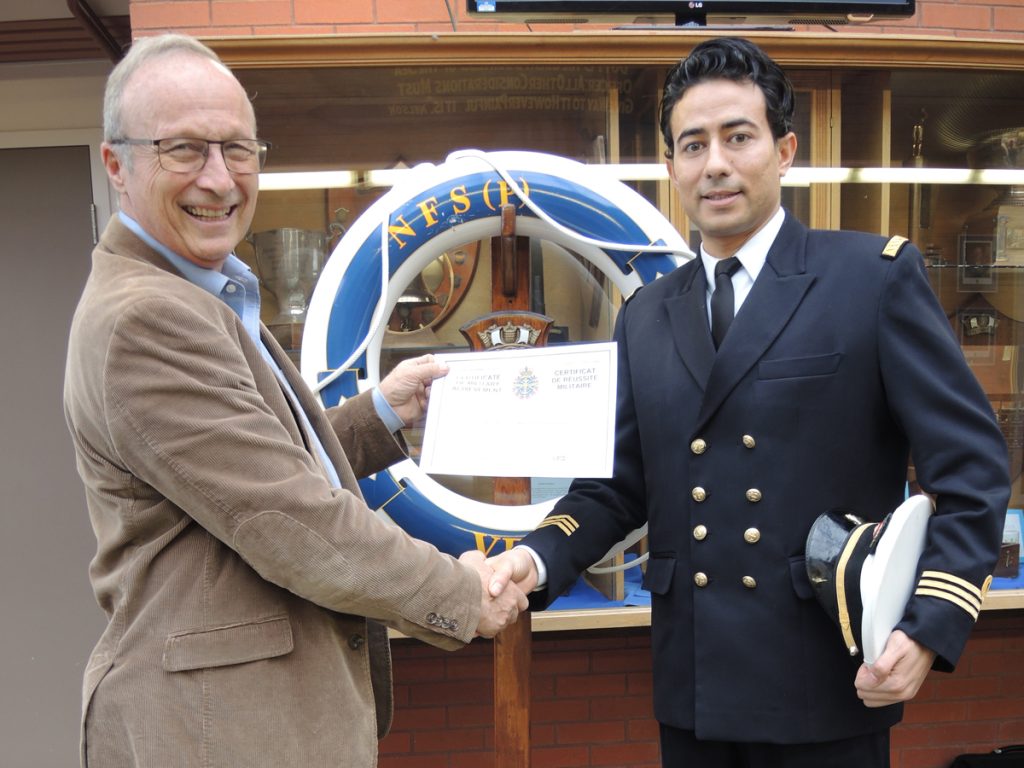
[caption id="attachment_22384" align="alignnone" width="593"] Captain (N) (Ret’d) Kevin Greenwood, Naval Instructor at Naval Training Development Centre (Pacific) presents Tunisian naval officer Lt(N) Khayri Bouzaiene with his Command Development Course certificate at the Collier Building at Work Point. Photo by Peter Mallett, Lookout Newspaper[/caption]Peter Mallett, Staff Writer ~A naval officer from Tunisia recently became the first international participant to enrol and graduate from Naval Fleet School Pacific’s Command Development Course (CDC). Just ahead of the holiday break course instructor Captain (ret’d) Kevin Greenwood of the Naval Training Development Centre (NTDC) (Pacific) presented Tunisian naval officer Lieutenant (Navy) Khayri Bouzaiene with his course certificate at the Collier building. It brought to a conclusion the 32-year-old’s first-ever visit to Canada and also his first-ever experience commanding a vessel of the Royal Canadian Navy (RCN). Lt(N) Bouzaiene who mostly speaks Arabic and some French gave a highly positive review of his experience prior to his departure on Dec. 14 while also stating his unfamiliarity with English wasn’t a deterrent to his learning. “I really liked my experience here in Victoria and the Royal Canadian Navy was an impressive organization to learn from,” said Lt(N) Bouzaiene. “The people were wonderful and very helpful and when I didn’t understand something and the communication gap got in the way they were there to help.”The aim of the ten-week program says Greenwood is to develop senior RCN lieutenants the Command-level knowledge, leadership, appreciation, critical analysis and decision-making skills necessary to successfully command HMC Ships. Components of the course include leadership skills such as command and control and decision making, collision avoidance, bridge resource management, seamanship and ship handling, maritime law, use of force, damage control, logistics, administration, engineering and maintenance. The program culminates in a two-week at-sea phase aboard Orca-class training vessels. Lt(N) Bouzaiene, has enjoyed a 14-year career in...

Dan Bourgoin of Personnel Support Services (PSP) is the man in charge of the new regional office for Soldier On which opened at Nelles Block recently. The fitness trainer and instructor says he is looking to hear from potential participants in the program about what sports and activities they enjoy. Photo by Peter Mallett

Soldier On office opens at Naden

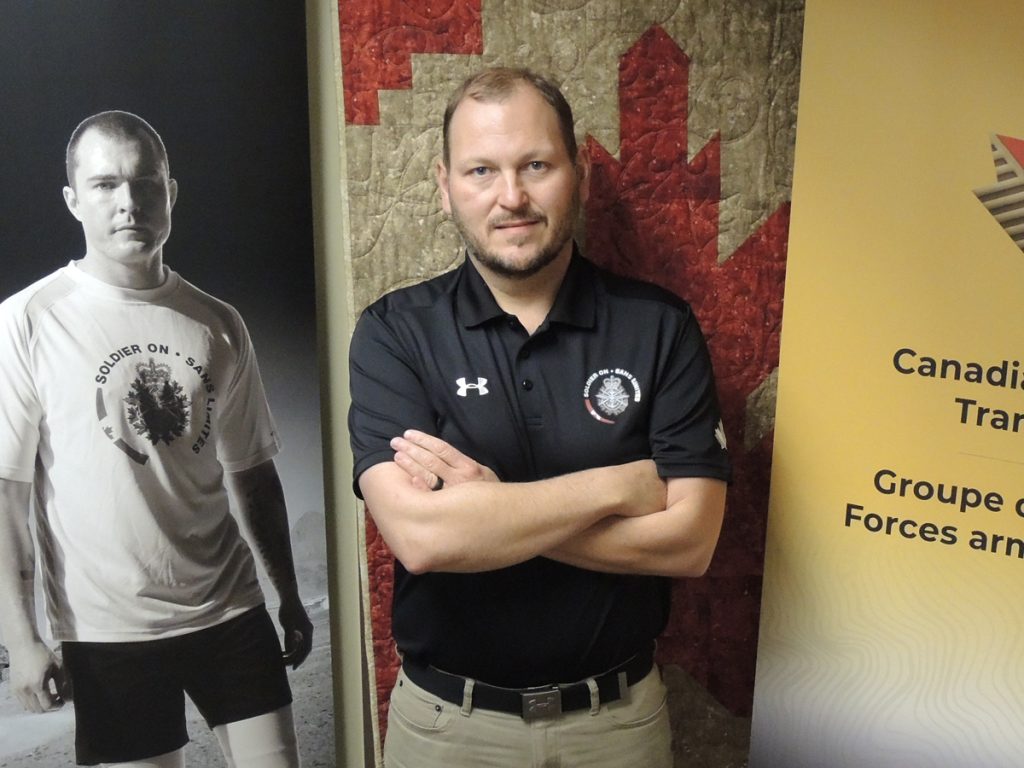
[caption id="attachment_22379" align="alignnone" width="592"] Dan Bourgoin of Personnel Support Services (PSP) is the man in charge of the new regional office for Soldier On which opened at Nelles Block recently. The fitness trainer and instructor says he is looking to hear from potential participants in the program about what sports and activities they enjoy. Photo by Peter Mallett, Lookout Newspaper[/caption]Peter Mallett, Staff Writer ~If you are an injured veteran or military member looking to improve your level of physical fitness and activity, the director of the new Soldier On regional office wants to hear from you. The mandate of the Canadian Forces Morale and Welfare Services (CFMWS) program is to provide resources and opportunities for veterans and current-serving members across Canada with a mind to helping them “adapt and overcome” both physical and mental health injuries through participation in sports and physical fitness activities. Dan Bourgoin, a Personnel Support Services (PSP) employee with over 22 years of experience as a fitness trainer and instructor is the man in charge of the Soldier On Regional Office which recently opened its doors here at the base. Located on the ground floor of Nelles Block the office is open from 7:30 a.m. to 3:30 p.m. and is one of ten new regional to open across the country. Bourgoin says his first order of business is setting up a dialogue with the military community whether its in-person, over the phone or through Soldier On’s social media platforms. His intention is to gauge people’s interest levels and also find out about the types of activities, sporting goods equipment and support they are looking for Soldier On to deliver.“My doors are open and I would like to hear from people,” said Bourgoin. “We don’t create events for the sake of creating events, we create opportunities for people who...

On January 16

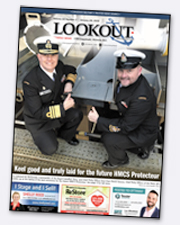
Keel Laying for first Joint Support Ship

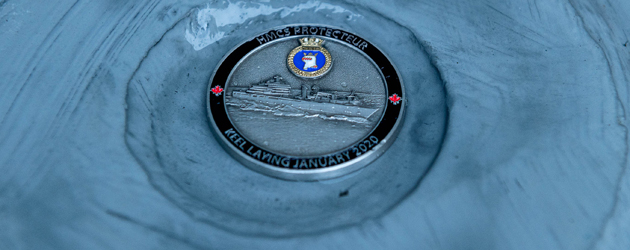
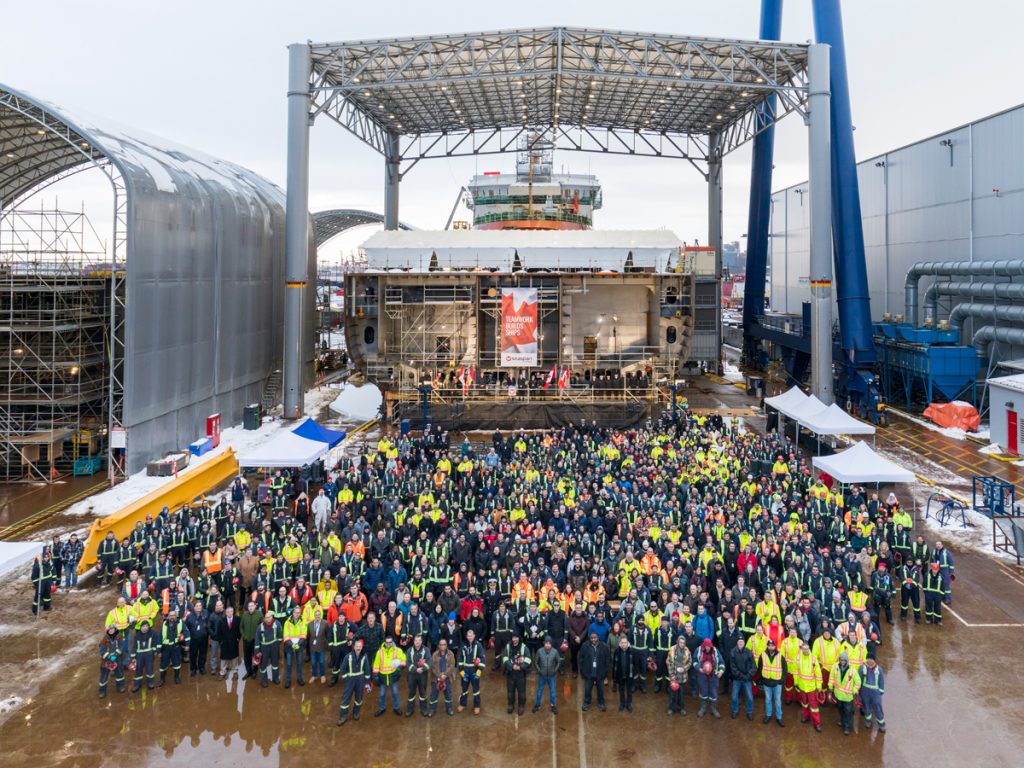
[caption id="attachment_22376" align="alignnone" width="593"] On January 16, 2020, representatives from the Government of Canada and the Royal Canadian Navy, many of Seaspan Shipyards more than 2,800 employees and other guests gathered for a ceremonial keel laying event. Photo credit: Seaspan Shipyards[/caption]A/SLt Michelle Scott ~January 16, 2020 was a momentous day for the Royal Canadian Navy when a keel-laying ceremony was held for the future HMCS Protecteur, the first of two Joint Support Ships (JSS) being built at Vancouver shipyards.A keel laying event represents a significant milestone in the construction of a ship as it marks the birth of the vessel. As part of the ceremonial event, a newly minted coin is laid near the keel where it remains for the life of the vessel and is thought to bring the ship and crew good luck.The ceremony was presided over by Vice-Admiral Art McDonald, Commander of the Royal Canadian Navy, the Honourable Jonathan Wilkinson, Minister of Environment and Climate Change Canada, on behalf of Defence Minister Harjit S. Sajjan, and CEO of Seaspan’s Vancouver Shipyards Mark Lamarre.The lucky coin, which was laid by long-time Seaspan employee Jeff Smith, was jointly designed by the RCN and Seaspan and features the badge of the future HMCS Protecteur above a rendering of the new ship. Mr. Smith placed the coin near the centre section of the ship as the design of the JSS does not have a traditional keel.“Today’s ceremony marks another critical milestone in the renewal of the RCN Fleet via Canada’s National Shipbuilding Strategy,” explained VAdm McDonald during the ceremony. “Once delivered, these warships will be strategic assets that will once again afford Canada the sovereign capacity to deliver – even in harm’s way an enduring at-sea replenishment…as well as significant Humanitarian and Assistance and Disaster Relief capacity.”The future HMCS Protecteur is one...

MS Firat Ataman

The Operations Room demystified

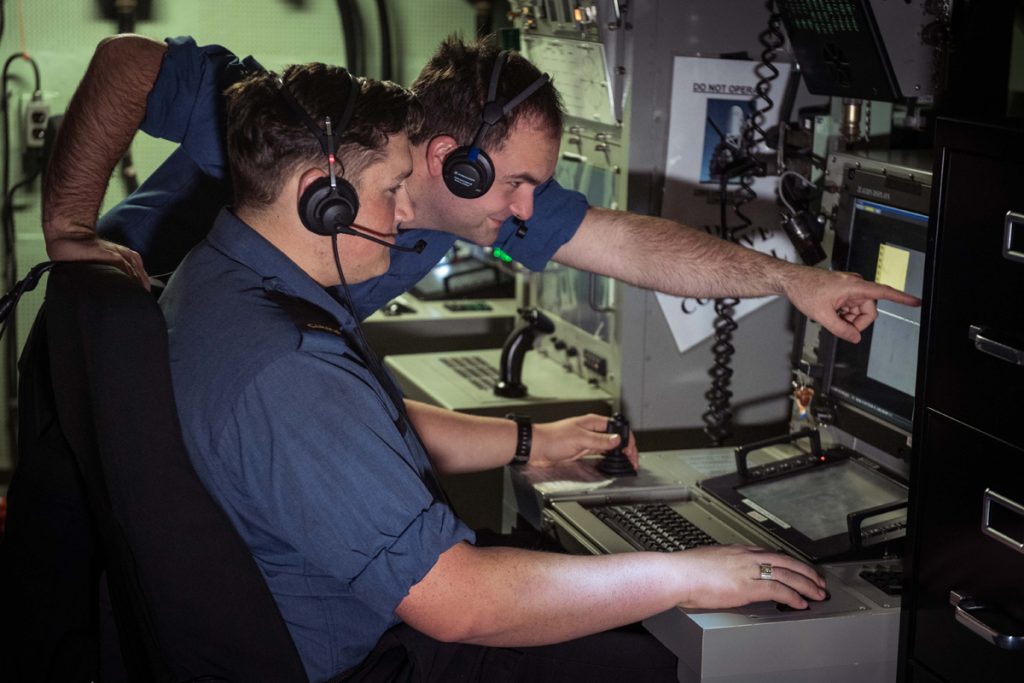
[caption id="attachment_22347" align="alignnone" width="593"] MS Firat Ataman, Forward Fire Control Supervisor, mentors OS Walker Grant as he becomes familiar with the Forward Fire Control Radar Console onboard HMCS Ottawa during Operation Projection. Photo by LS Victoria Ioganov[/caption]Captain Jenn Jackson, HMCS Ottawa PAO ~Located two decks below the bridge of HMCS Ottawa, in a room with restricted access to maintain security of the information contained within, is the Operations Room – the central hub of the ship. Due to the need to maintain operational security, the Operations Room (Ops Room) is cloaked in mystery for the uninitiated, as access is on an as needed basis. Contained within are dedicated sailors who maintain a 24/7 watch at sea ensuring the ship is ready to fight.“When you think of a ship, the bridge is the eyes, the Machinery Control Room is the heart and the Operations Room is the brain,” explains Lieutenant Commander Will Chong, HMCS Ottawa Operations Officer. “All data from our sensors and communications flows to the Operations Room where it is analysed so decisions can be made determining the best course of action to support the current tactical situation.”Divided into two sides based on function, the starboard side focuses on underwater warfare while the port side is configured to support above-water warfare. In the centre of the room is the Operations Room Officer (ORO) who has overall responsibility for running the Ops Room, working in parallel with the Officer of the Watch to maintain the operational tempo.“The ORO is in the middle of the action, taking reports from three directors, the Ops Room Supervisor, the Officer of the Watch, and other outstations, while assessing the information, liaising with command, and then driving a plan,” says Lieutenant(N) Eric Dignard, Ottawa’s Tactics Officer and an ORO. “You have a team around you that...

Whitehorse sailors bond with their namesake city

Lt(N) Stephen Oxley, HMCS Whitehorse ~A few weeks before Christmas, HMCS Whitehorse sent a contingent from the ship’s company, including the command team, to the City of Whitehorse for a namesake city visit. Their objective was to let the people of Whitehorse know what activities “their” ship had participated in and what the ship’s company had accomplished over the year since their last visit. They also wanted to educate the community on what the Royal Canadian Navy does for both Canada and the international community, and to let people know what employment opportunities exist within the navy. Lastly, they wanted to establish ties with the newly-formed “Friends of HMCS Whitehorse” committee set-up by the ship’s sponsor Ione Christensen (otherwise known as “Mom”).  The “Friends of HMCS Whitehorse” committee has been tasked with taking over many of “Mom’s” activities on behalf of the ship as this former city mayor, Commissioner of Yukon, and Canadian senator begins to free up her incredibly active schedule and enjoy a slower pace of life.  The visit included:a meeting with the city’s Deputy-Mayor and select councillors;a meet-and-greet with the “Friends of HMCS Whitehorse” Committee;  attending the commemoration service for the 30th anniversary of the École Polytechnique tragedy; meeting with the Speaker of the House of the Yukon Legislative Assembly and  touring the assembly hall; meeting with the Commanding Officer of the local RCMP Detachment; a meeting with the local Joint Task Force North (JTFN) detachment OIC; liaising with the President and Board of the local Legion; and,the presentation of a cheque to the Victoria Faulkner Women’s Centre. The Faulkner Women’s Centre is a safe and respectful space where all self-identified women can connect with one another, access support and services, and work together to create positive change for women and the community. They are committed to promoting women’s...

Sailor moves onward after vigorous cancer battle

[caption id="attachment_22341" align="alignnone" width="593"] Lt(N) Stephen Tomlinson with his wife Stephanie, daughter Sophia, and son Seth during a family outing in Victoria. Photo credit: Tiffany Champagne[/caption]Peter Mallett, Staff Writer ~A training officer at Naval Fleet School (Pacific) who defied the odds and beat cancer is sharing his inspirational story with a new self-published book. Onward is Lieutenant (Navy) Stephen Tomlinson’s blow-by-blow account of his full-scale, life-or-death war against cancer, now available through online publisher inkshares.com. Lt(N) Tomlinson traces his “agonizing” battle against testicular cancer, recalling how the disease aggressively spread throughout his body to his lymph nodes, lungs and brain after his initial diagnosis in July 2017. His fight included 350 hours of chemotherapy, 11 radiation treatments, a seizure, and five surgeries that produced multiple low points where he says he almost gave up all hope of survival.The Naval Warfare Officer sailed aboard HMCS Protecteur and HMCS Calgary before his cancer diagnosis and faced multiple battles with the disease. Just prior to his final and ultimately successful surgery in November 2018 to remove a plum-sized tumour from his brain, an exhausted and withered Lt(N) Tomlinson admits he was a shadow of his former self. His physician had given him low odds of survival and suggested he start making funeral arrangements with his wife. “I had almost come to the point of accepting that life was going south on me and I was given a one-in-ten shot by my doctor that I would live to Christmas,” says Tomlinson. “I did the final surgery and as soon as they pulled that tumour out of my brain it was like I became a new person.”Fast-forward to July 8, 2019, two years after his initial cancer diagnosis, and his saga would reach a joyous conclusion. That’s when he returned to work after his doctor called him into her office and told him he was 100 per cent cancer free. “Thankfully my story has a happy ending and today I’m at Venture and working my way back...

Diamond in the muck – historical artifact found

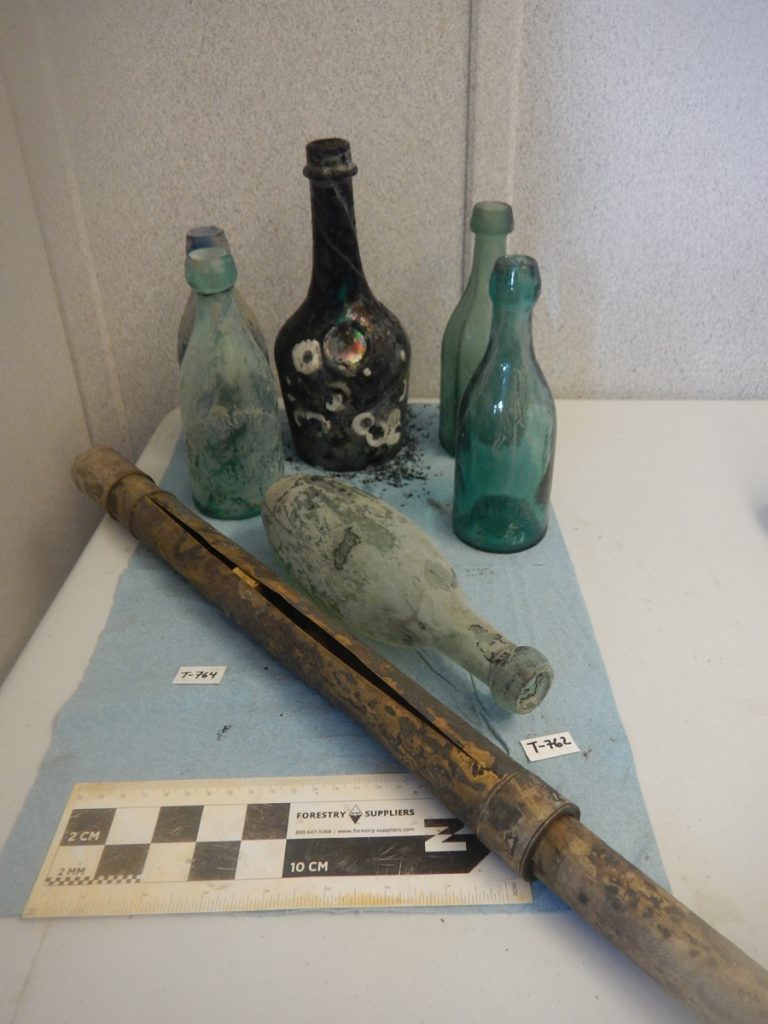
Peter Mallett, Staff Writer ~A 19th Century spyglass once owned by an officer of the Royal Navy is the latest notable historical artifact found during ongoing remedial dredging operations in Esquimalt Harbour. The small telescope had been preserved in the cold water and sediment for over 137 years before the bucket of a large crane barge plucked the item from the seabed of Constance Cove on Dec. 10. Archaeological monitors aboard a neighboring floating processing plant discovered the telescope as they sorted through the large barge load of sediment. An inscription on the spyglass revealed it was owned by Sub-Lieutenant Midshipman Bertram Chambers. Spyglasses were an essential maritime tool of naval officers and captains of the 17th, 18th, and 19th century and were used to see land and other ships, and to prepare for attacks by pirates or enemy vessels. It’s not the first historical artifact found during remediation work, but is one of the most exciting says Esquimalt Harbour Remediation Officer Michael Bodman from Formation Safety Environment.“It is not often that we find a personal item belonging to someone who has a certain level of fame and an influential role in the Royal Navy (RN),” he said. “Now the head scratches at the question of how it ended up on the floor of Esquimalt Harbour and more importantly what other vessels and sights did he see through the spyglass as he traversed the globe?” During his time in Esquimalt, Chambers served aboard HMS Satellite, a Corvette that operated from the Royal Navy’s Pacific Station - the forerunner of CFB Esquimalt - from 1883 to 1886. Chambers also served the RN at their base in Halifax and Australia and would eventually retire in 1926 with the rank of Admiral. A team of conservationists at the Royal B.C. Museum are currently attempting to confirm...

Changes announced to Service Medals

DNDAs part of Strong, Secure, Engaged, (SSE 7), the Government of Canada is modernizing the Canadian Armed Forces Honours and Awards system to ensure military members’ service to Canada is recognized in a timelier and appropriate manner. This initiative encompasses the modernization of the overseas service recognition framework. The objective is to make service medals more accessible and flexible to ensure that Canadian Armed Forces (CAF) members receive appropriate recognition for their participation in, and direct support to, operations.As part of this initiative, changes to the eligibility list for the Special Service Medal with NATO bar, and a reduction of the time criteria to 45 days for both the NATO and Expedition bars to that same medal, were announced on Feb. 18, 2018, in CANFORGEN 001/20.The government has now recently approved a number of additional measures to meet the stated intent. The time criteria for the General Campaign Star (GCS), General Service Medal (GSM) and Operational Service Medal (OSM) have been reduced to ensure recognition remains attainable to participants in light of new deployment patterns where CAF members more often deploy for short periods of time. Each ribbon for those medals has a new time criteria beginning with an appropriate recent (post-Afghanistan) operational date as per the table to the right. There are transition measures that ensure anyone who serves at least one eligible day after the stated date is allowed to cumulate any previously accrued time towards the new criteria for the medal. The criteria for the rotation bars will not be affected by these changes meaning that the first bar will continue to be awarded after a total of 210 eligible days while subsequent bars are awarded for every period of 180 eligible days thereafter.The Special Service Medal, which had up to now been reserved for CAF members, has been amended to expand eligibility to Canadian civilians and members of allied forces working for the CAF from April 29, 2014. The intention is to align this medal with...

Explore More

Categories

Top News

E-Editions Archive

News Stories Archive

Proud Supporters

Joshua Buck, Lookout Newspaper