
Christmas wishes from the Base Commander
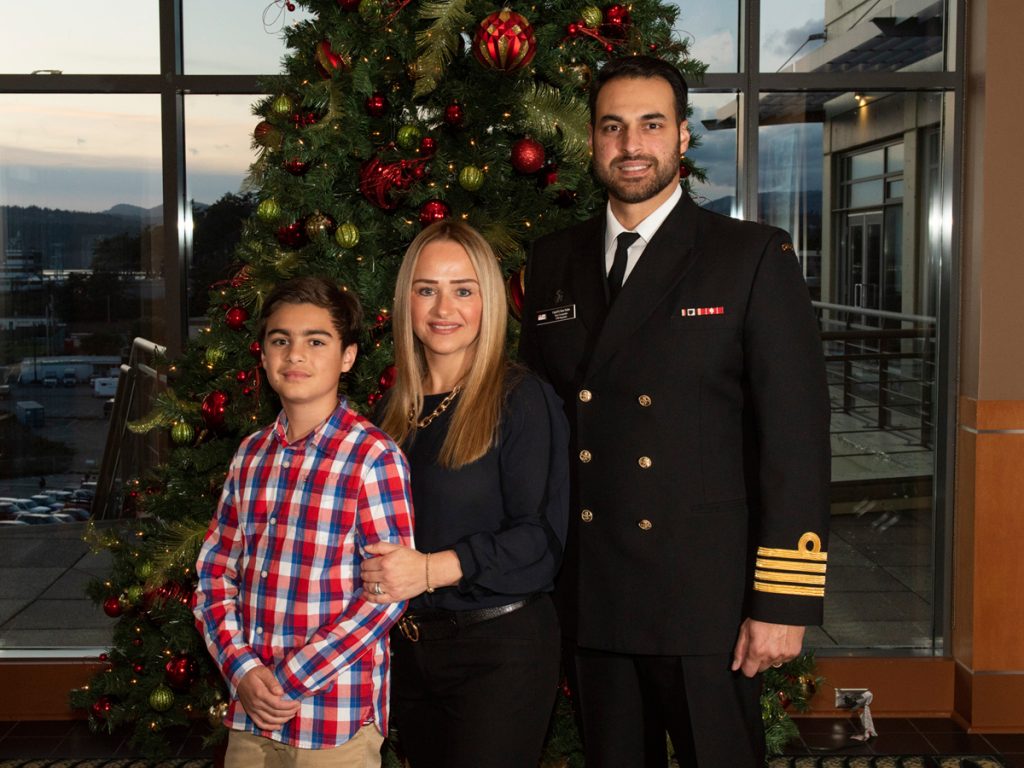
[caption id="attachment_22312" align="alignnone" width="593"] Captain (Navy) Sam Sader, Base Commander, and his wife Irena Sader, and son, Armand Sader, pose for a family photo at the Wardroom. Photo by Master Corporal André Maillet, MARPAC Imaging[/caption]This is a very special time of the year when all members of the Defence Team are encouraged to take some well-deserved rest while connecting with loved ones and friends. I hope you are able to enjoy the festive season to recharge from what has been a busy and highly successful year.Since taking command of CFB Esquimalt last June, I have been consistently impressed by the leadership capacity and mission focus of personnel at all levels of our organization. I want to thank each of you for contributing to our overall mission success. As I look back on 2019, I see so many accomplishments worthy of note. Foremost is the stellar support to deployed operations, highlighted by the sustainment provided to enable the recent deployment of HMCS Ottawa. Closer to home, the Esquimalt Harbour Remediation Project and ongoing construction of B-jetty have continued to progress as planned. These important projects will ensure we have the infrastructure to support a modernized fleet as we move into the future. I am also very proud of our community efforts and generosity toward the National Defence Workplace Charitable Campaign. There were many enjoyable events organized at the unit level, as well as formation wide initiatives. From tug-o-wars to chilli cook-offs, everyone has had the chance to get in on the fun while giving to charities. I encourage you all to continue your generosity throughout the year as every little bit you contribute makes a big difference for those in need. In terms of giving, I would also like to highlight the countless volunteer hours Defence team members, both civilians and...
Happy holidays from the Auchterlonies
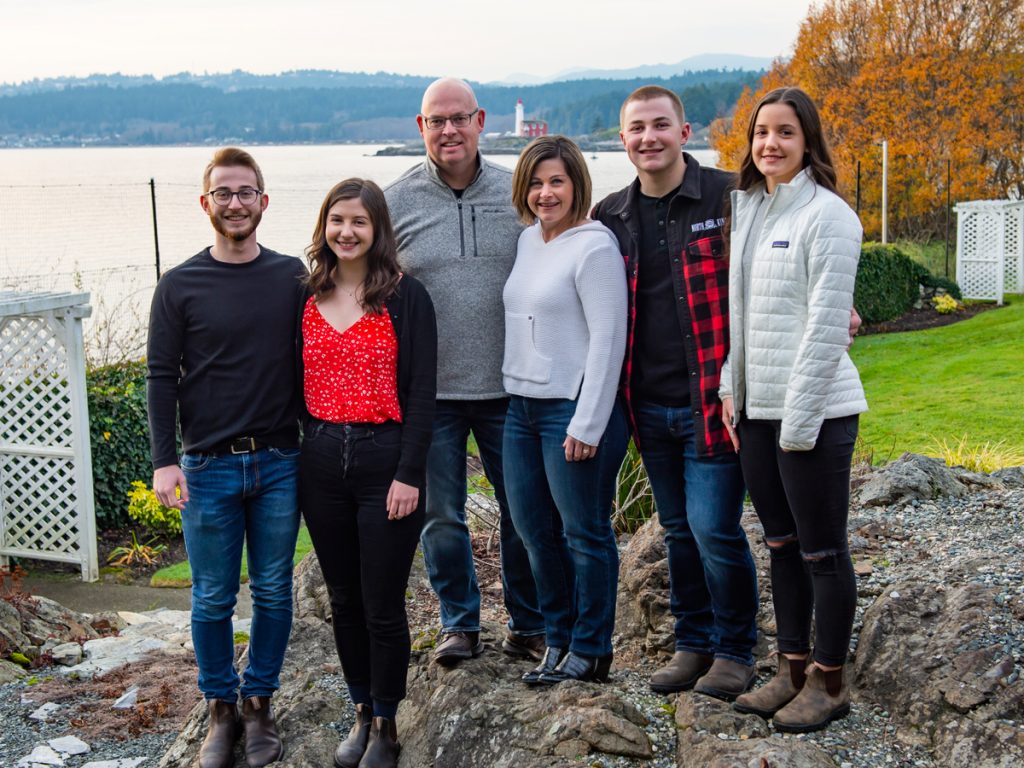
[caption id="attachment_22308" align="alignnone" width="593"] Rear-Admiral Bob Auchterlonie, Commander Maritime Forces Pacific, and his family pose for a photo at the Admiral’s Residence. From left to right: Michael Auchterlonie, Ciarra Grant, RAdm Bob Auchterlonie, Tammy Auchterlonie, Fraser Auchterlonie, and Gabrielle Polard. Photo by Leading Seaman Mike Goluboff, MARPAC Imaging[/caption]It has been a joy seeing first hand all of our successes doing the nation’s business at-sea and ashore in 2019.HMCS Regina completed a successful deployment early in the year, while HMCS Whitehorse and HMCS Yellowknife wrapped-up another rotation of Operation Caribbe. Soon the crew of HMCS Ottawa will return home from Operation Projection in time to celebrate the holidays.Every year I am proud of the Defence Team’s professionalism in all that they do to ensure our international and domestic operations run so smoothly. I encourage you all to take the time over the holidays to celebrate and rejoice with friends and family. You’ve earned it!Of course, many of our colleagues will continue working through this magical season, including the search and rescue crews responding to emergencies in B.C., or the gunners on Operation Palaci making sure the TransCanada is safe from avalanches for those travelling through Rogers Pass. I am grateful for their willing service, putting duty first to keep us all safe as we enjoy the serenity of the season.But for those in need, this time of year is not one filled with joy, companionship and comfort; however, what warms my heart is the outpouring of charity, of generosity, both in time and money, from my colleagues and shipmates at Maritime Forces Pacific and CFB Esquimalt, that the dark winter days become just a bit brighter.From my family to yours, wishing you all a very Merry Christmas and a safe and prosperous New Year.Rear-Admiral Bob Auchterlonie and Family
Sonar Operators: Specializing in listening to the sea
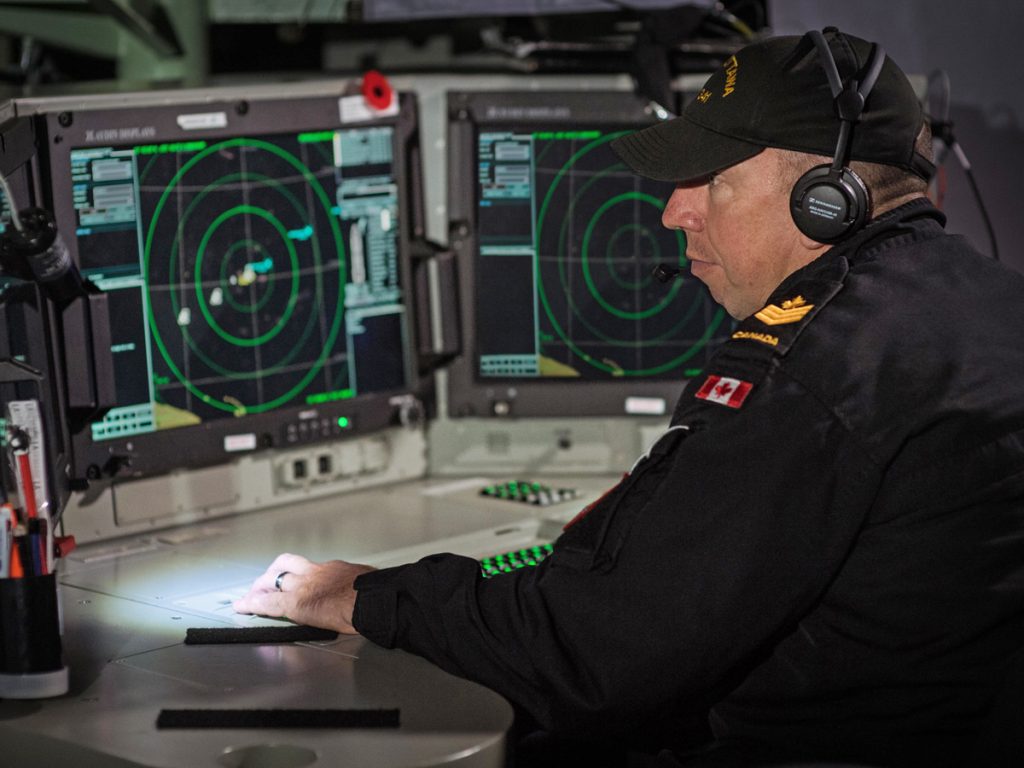
[caption id="attachment_22304" align="alignnone" width="593"] PO2 Sebastien St-Pierre monitors the Senior Sonar Operator Console aboard HMCS Ottawa.Photo by LS Victoria Ioganov, MARPAC Imaging Services[/caption]Capt Jenn Jackson, HMCS Ottawa PAO ~It is one thing to listen, but for Sonar Operators listening is an art form. That is because they have to interpret what they hear to determine what is occupying the waters surrounding their vessel; particularly if that “what” may be an enemy submarine. With 2020 marking the 75th anniversary of the Battle of the Atlantic, Sonar Operators today continue to be the core of naval anti-submarine warfare.Developed in the early 20th century, and initially used for anti-submarine warfare at the latter part of the First World War, sonar became a cornerstone for convoys by allowing them to detect enemy submarines during the Battle of the Atlantic. Ally convoys were under constant threat and often attacked by U-Boat “Wolf Packs”, and early detection of enemy submarines often meant the difference between crucial supplies and personnel reaching Britain or being lost to the sea.“Being a sonar operator means I have to always be looking beyond,” says Petty Officer First Class Joseph Rempel, Senior Sonar Operator in HMCS Ottawa. “You have to set yourself up for success. Know where you think the submarine is and if you locate it, be able to anticipate its movements to track it.”A small specialized trade, sonar operators (SonarOps) are employed in both the Halifax-Class frigates and Victoria-Class submarines, with the majority working in the surface fleet. All SonarOps receive the same core occupation training, but approximately one or two choose to complete submariner training following their basic qualification course. In the end, the work is similar, but the environment is extremely different.“The initial trade course for a SonarOp is approximately four months and focuses on acoustic analysis, oceanography, and...
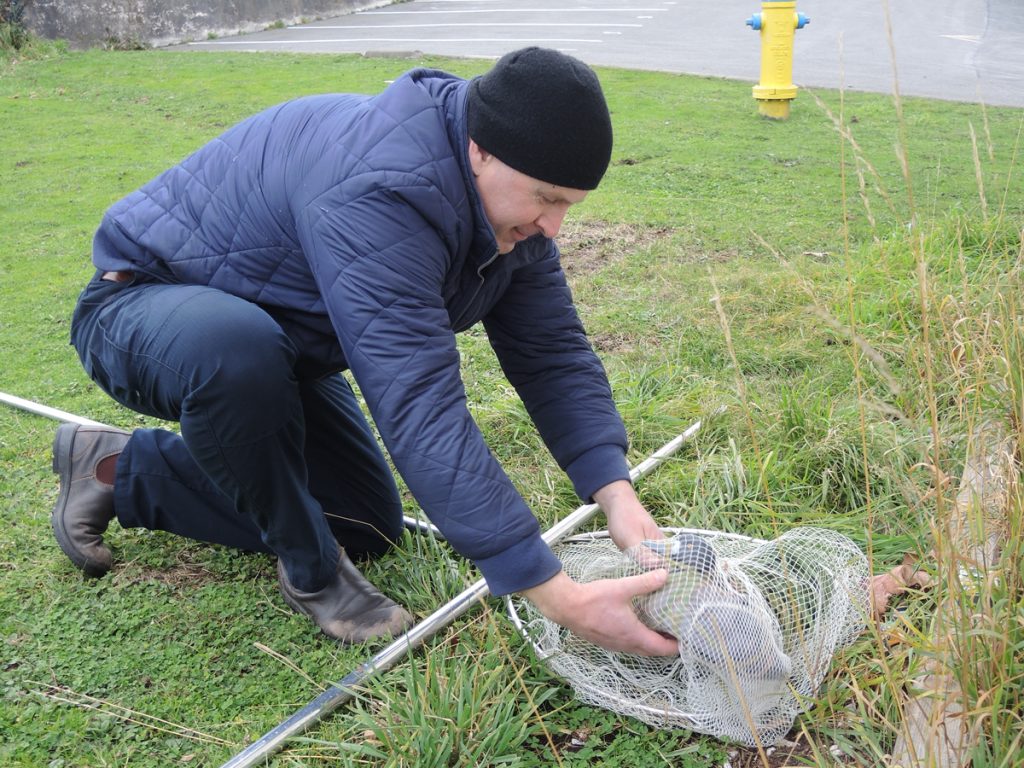
Slick training – caring for oil soaked birds
[caption id="attachment_22299" align="alignnone" width="593"] A participant in the Oiled Wildlife Preparedness Response Training Course practices proper handling skills after capturing a decoy duck with his net during the hands-on portion of the course. Photo by Peter Mallett, Lookout[/caption]Peter Mallett, Staff Writer ~Armed with large nets, a group of government employees fanned out across a field at Work Point in search of oil-covered waterfowl.However, they weren’t searching for real-life, oil-soaked birds, but instead three plastic decoy ducks; the activity was part of an Oiled Wildlife Preparedness and Response Training Course led by instructors from environmental firm Focus Wildlife Canada.The two-day course was attended by both civilian employees from the base, including members of Port Operations and Emergency Services Branch (POESB), a representative from Canadian Fleet Pacific, and workers from Fisheries and Oceans Canada, Environment and Climate Change Canada, and Western Canada Marine Response Corporation. “This training course explored the framework of oiled wildlife response plans and also gave us an opportunity to discuss how our agencies would work together in the event of a spill,” said Lorraine Crinkley, POESB Branch Environment Officer. After the well-hidden decoys were uncovered hiding in tall clumps of grass, attendees then broke into groups of two to cast their nets on a much bigger challenge - capturing Robo Duck, a fast-moving decoy strapped to a remote control toy truck and operated by the instructor. “It might seem sort of silly that we are out here searching for duck decoys with nets but we are actually practicing a fundamental and important skill,” said Megan Willie, Pacific Wildlife Emergency Response Co-ordinator for the Canadian Wildlife Service. “We have a lot of biologists on our team that have these sorts of field skills for the research they do, but they have never had to apply these skills in a spill situation,...
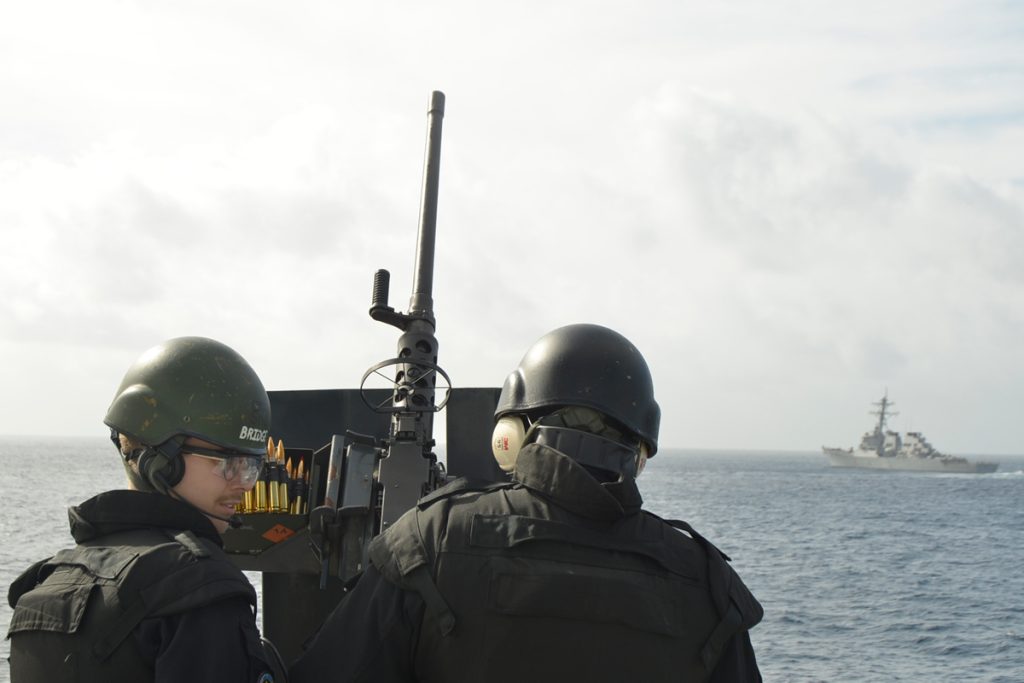
HMCS Calgary working up to full deployment
MCpl Robert Allard, HMCS Calgary ~HMCS Calgary is hard at work preparing for its upcoming deployment in spring 2020. In a process similar to the way professional sports teams hold training camps to prepare for the regular season, Calgary is conducting what the Royal Canadian Navy calls Intermediate Multi-ship Readiness Training or IMSRT. Everything the ship’s company does during the month-long period is aimed at taking a group of sailors with varying levels of experience, and training them in a supervised and systematic way to ensure they are ready for almost anything.HMCS Calgary is currently in southern California following a directed program of training designed to develop the skills of everyone on board, from the newest ordinary seamen going to sea for the first time, all the way up to the captain himself.All of this hard work is being guided by a specialized unit called Sea Training Pacific, who act like experienced coaches evaluating, mentoring, and challenging the ship’s team.When Canada sends a warship overseas to conduct operations in support of international commitments, there are plenty of dangers that can present emergencies, such as fires or other damage to the ship. Every person on board is trained over and over again until responding to emergencies becomes second nature.The navy has learned countless lessons over the last 110 years and that real world experience goes into the training.On a typical day, sailors wake up and start their daily routine. Often there is a full schedule of maintenance, planning, cleaning, studying and preparing. At random times, the staff from Sea Training initiate a simulated scenario such as a missile or torpedo attack resulting in fires, floods, and casualties. All throughout the ship, HMCS Calgary’s sailors respond as if it were the real thing. This can go on for a couple of hours depending...
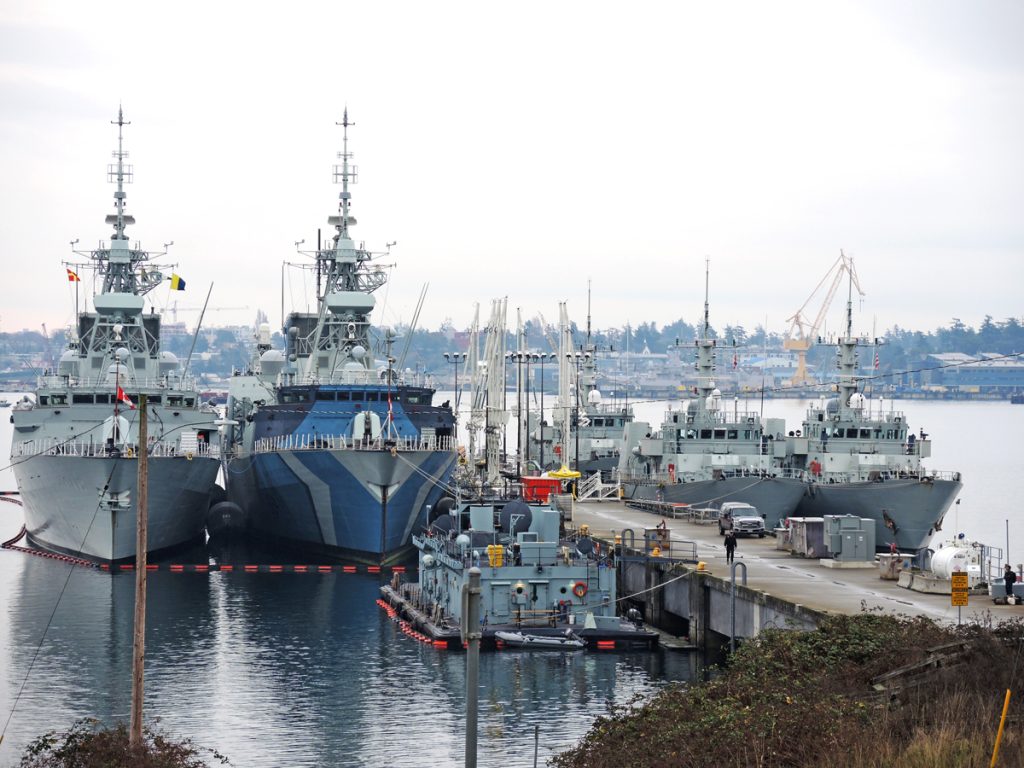
Busy time on F Jetty
[caption id="attachment_22293" align="alignnone" width="593"] A view of Colwood’s crowded ‘F’ Jetty on Dec. 6. The western end of Esquimalt Harbour was home to five commissioned ships of the Royal Canadian Navy with Halifax-class frigates HMCS Winnipeg and HMCS Regina to the left, and to the right of the Jetty Maritime Coastal Defence Vessels HMC Ships Brandon, Edmonton, and Yellowknife. A fuel barge from the Auxilliary Fleet is in the foreground. Photo by Peter Mallett, Lookout[/caption]Peter Mallett, Staff Writer ~It was a rare full house of Her Majesty’s Canadian Ships at Colwood’s F Jetty for a few days last week, with five commissioned vessels of the Royal Canadian Navy berthed there.The tenants were Halifax-Class frigates HMCS Winnipeg and HMCS Regina joined by Maritime Coastal Defence Vessels HMC Ships Edmonton, Brandon, and Yellowknife from Dec. 6 to Dec. 8. It’s the first time in decades this many commissioned vessels have been alongside at the western end of Esquimalt Harbour, says Ian Wiggs Harbour Control Officer for Port Operations and Emergency Services Branch. Wiggs is one of the people who directs ship traffic through his two-way radio and has a bird’s eye view of the entire harbour from the control room in dockyard’s Queen’s Harbour Master building. “I am a former naval reservist and began my time here at CFB Esquimalt back in 1981,” says Wiggs. “I and a few others around the department have been racking our brains and we honestly can’t recall another moment when there were that many ships at F Jetty. Although, the five Bay Class Minesweepers did berth at D Jetty on a regular basis.”On Dec. 5, Regina defueled some fuel to F Jetty and Winnipeg fuelled the rest of Regina’s fuel the next day. The Colwood-side of the base is also home to the fuel farm and refuelling...
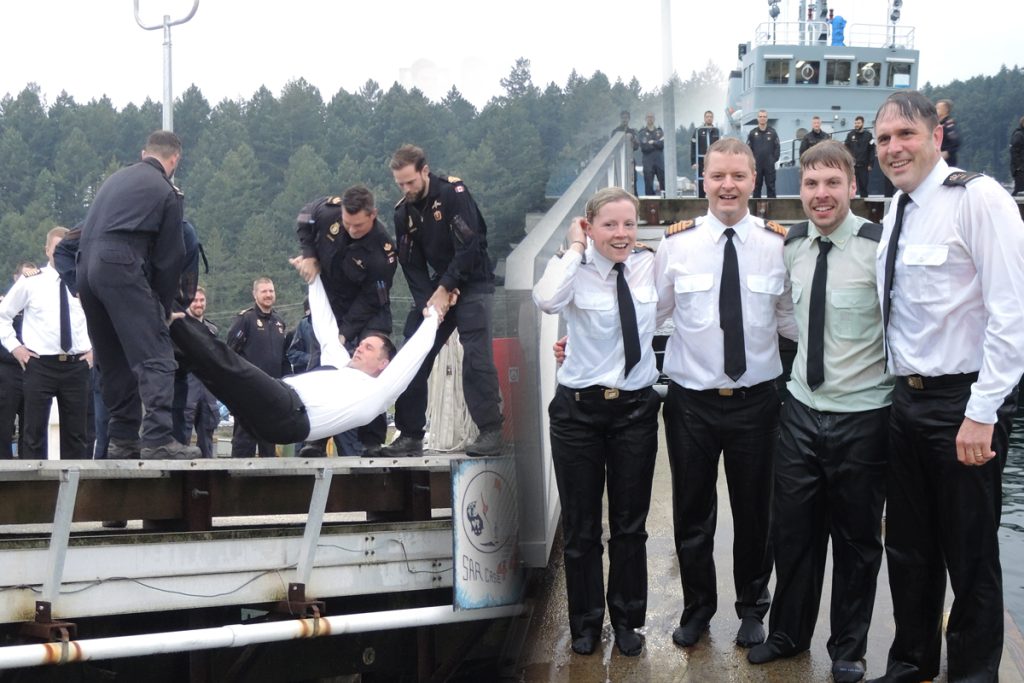
Commodore takes the plunge for charity
[caption id="attachment_22289" align="alignnone" width="594"] Members of Fleet Diving Unit (Pacific) throw Commodore Angus Topshee into Esquimalt Harbour from ‘G’ Jetty in Colwood on Dec. 11. The event was part of a fundraiser for the National Defence Workplace Charitable Campaign. Photos by Peter Mallett, Lookout[/caption]Peter Mallett, Staff Writer ~Members of Fleet Diving Unit (Pacific) won’t be reprimanded for their dubious deed of tossing Commodore Angus Topshee into the chilly waters of Esquimalt Harbour.Just after dawn on the morning of Dec. 11, four clearance divers grabbed the Commanding Officer of Canadian Fleet Pacific by his arms and legs and hurled him off a bridge at Colwood’s G Jetty into the drink. The large crowd of sailors that gathered on the jetty could be heard laughing and cheering as he hit the water.The act of the perpetrators was not an overboard holiday prank or an act of mutiny, but instead part of a fundraiser for the National Defence Workplace Charitable Campaign (NDWCC). After making a giant cannon-ball splash in the harbour, Cmdre Topshee then surfaced, spit water from his mouth and raised his hand triumphantly. As he treaded water, he announced his stunt had raised $2,200 in donations from across the fleet for the Department of National Defence annual charitable campaign. Cmdre Topshee then challenged his east coast equivalent, Canadian Fleet Atlantic Commanding Officer, Cmdre Richard Feltham to equal or surpass the funds raised by taking a plunge off a jetty in Halifax. “Commodor Feltham, I challenge you to see if your fleet can raise enough money to throw you in the harbour as well.” Cmdre Topshee wasn’t the only one to take the morning plunge. Moments later he had some company in the water with Captain (Navy) Scott Robinson, Lieutenant (Navy) Sonja Maul-Wilson and Private Robert Veerman also being hurled off the jetty....

Volume 64, Issue 50, December 16, 2019
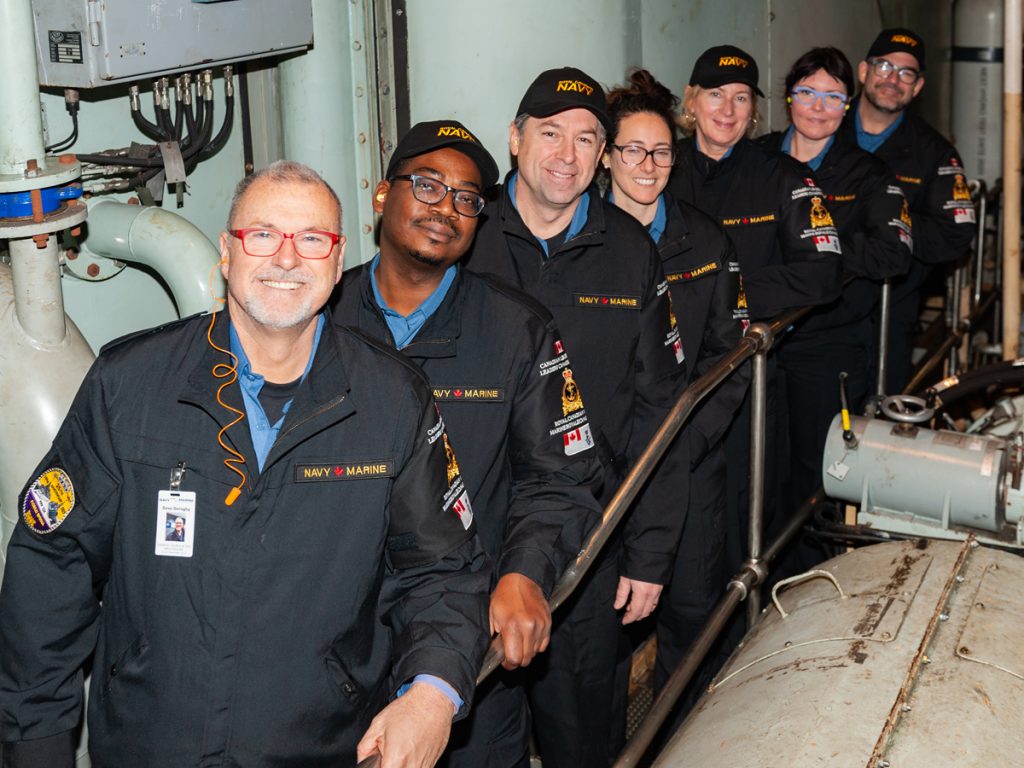
Corporate leaders experience navy life in HMCS Regina
[caption id="attachment_22273" align="alignnone" width="592"] Leaders at sea – left to right: Dave Doroghy, Chris Scipio, Del Elgersman, Andrée St-Germain, Robin Kerbel, Lucy Sager and Kent Klaufield in the ship’s engine room for a tour.[/caption]Janice Lee, MARPAC Public Affairs ~One by one, seven Canadian community leaders slid out of their “rack” just before the sun crept up over the Pacific Ocean. The civilians were on board HMCS Regina to experience life at sea and earn their sea legs as the warship traversed the waters for three days from Nov. 26 to 28. A unique Royal Canadian Navy program called Canadian Leaders at Sea brought the upper echelon business leaders on board. As the days at sea progressed, they got an up-close look at a sailor’s experience, which they could bring back and share in their corporate environment. Their first taste of the salty life happened as the ship headed from the safety of Esquimalt Harbour to the open ocean. As Regina slipped into a high-speed manoeuvre demonstration, the civilian sailors were thrust against the frigate’s walls and railings, trying to find their balance with every steep-angle turn. When the ship slowed and righted itself, a small speck in the sky grew as a Cyclone helicopter approached from the air, hovering a few yards away to hoist ship divers. The whirl of rotors heightened the already icy gust on to the spectators. One by one the divers jumped from the Cyclone into the icy water where the ship’s zodiac retrieved them. Completing the outside demonstrations was a person overboard exercise. “Oscar,” a well-stuffed dummy, was tossed to the sea. Within seconds, a team of sailors rushed to their stations to make the rescue. Moments later Oscar was plucked from the water and brought back on board.Below deck the civilians had to be mindful of...

What grinds my gears – drive-throughs
SLt M.X. Déry, Contributor ~A story ran in a local paper a few weeks back about a Saanich resident riding her bicycle through a Tim Hortons drive-through and being refused service. My first thought when I read the headline was to dismiss it as just a weird B.C. thing, but the more I thought about it, the more I agreed they should have served her.First off, because a bicycle is a vehicle. Under the Motor Vehicle Act (MVA), which is where all the rules on cycling are, a bicycle is a vehicle. It is unique in sometimes having its own lane, but as far as the road goes, it is the same as a scooter, car, or truck.This surprises many when I complain openly to them about poor cyclists who ignore traffic signs and/or seem to think they are entitled to the right of way at intersections. Crosswalks are for pedestrians not timid cyclists who insist on staying atop their vehicles.While I concede the rider could have parked her bicycle and walked into the coffee shop, there are two issues: first, that’s the purpose of the drive-through, to avoid getting out of your vehicle, and second, let’s all just admit there is not enough quality bicycle parking in Greater Victoria. For all the talk of Greater Victoria improving life for cyclists, the main upgrades have all been in the core, with very little around the rest of the city. There are no bike lanes for my entire ride to and from work. Most bicycle racks have a miniscule amount of available spots and space, making a bicycle jut out into pedestrian traffic.The response from the business on this incident is they only accept vehicles insured under the MVA, which is a laughable distinction since drive-throughs don’t verify your car is insured...
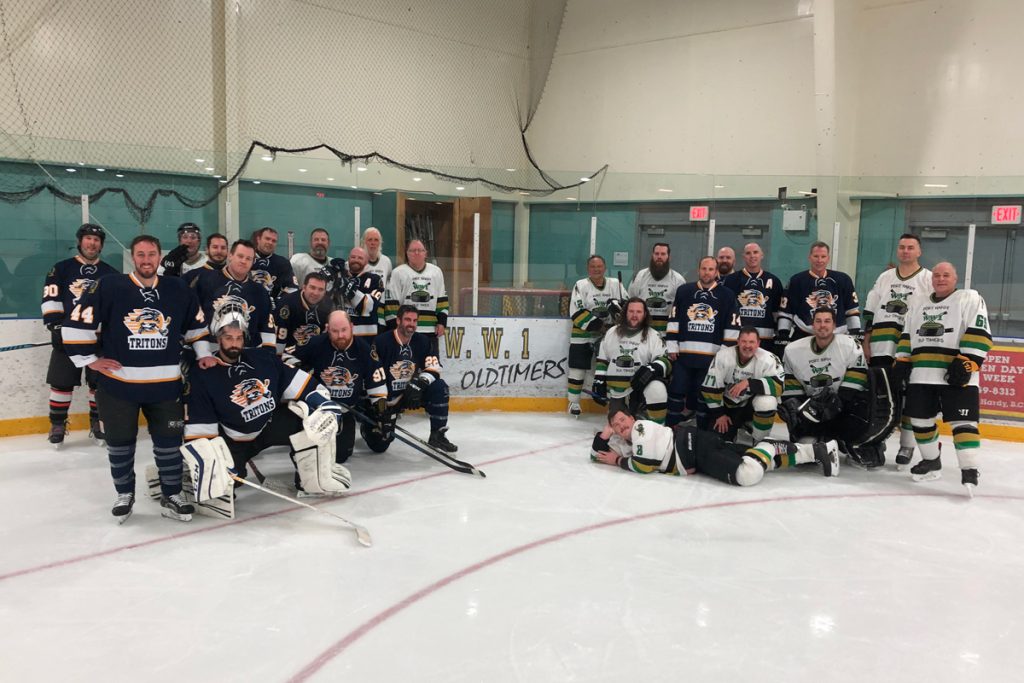
Hockey unites communities
[caption id="attachment_22267" align="alignnone" width="593"] Players for the CFB Esquimalt Tritons and Port Hardy’s ‘World War One’ team gather for a group photo following the completion of their two-game series.[/caption]CPO2 Michael Tibbetts, Contributor ~The Senior Tritons travelled to Port Hardy over the Dec. 1 weekend for a special hockey game that furthered the bond between the northern island community and the Canadian Armed Forces (CAF). The Senior Tritons took to the ice against Port Hardy’s World War One. The name was chosen to honour veterans, those who continue to serve, and those who paid the ultimate sacrifice. The Senior Tritons were represented by members from the base, the fleet, and 443 Maritime Helicopter Squadron. The first game Friday night went to the Senior Tritons 6-3, led by a hat trick from PO2 Pat McKernan. After the game, the Tritons team was invited to the Port Hardy room for festive beverages, pizza, and hot dogs. In the second game, the Port Hardy team showed a renewed vigour with members from the Coast Guard and the RCMP in the lineup, and walked away with a well-earned 4-1 win, closed out with an empty net goal. The player of the game for the Tritons was PO2 Marc Bibeau, goaltender from the first game who scored his first ever Senior Tritons goal.The Tritons will reciprocate the hospitality in March with the Port Hardy team invited up for a rematch.
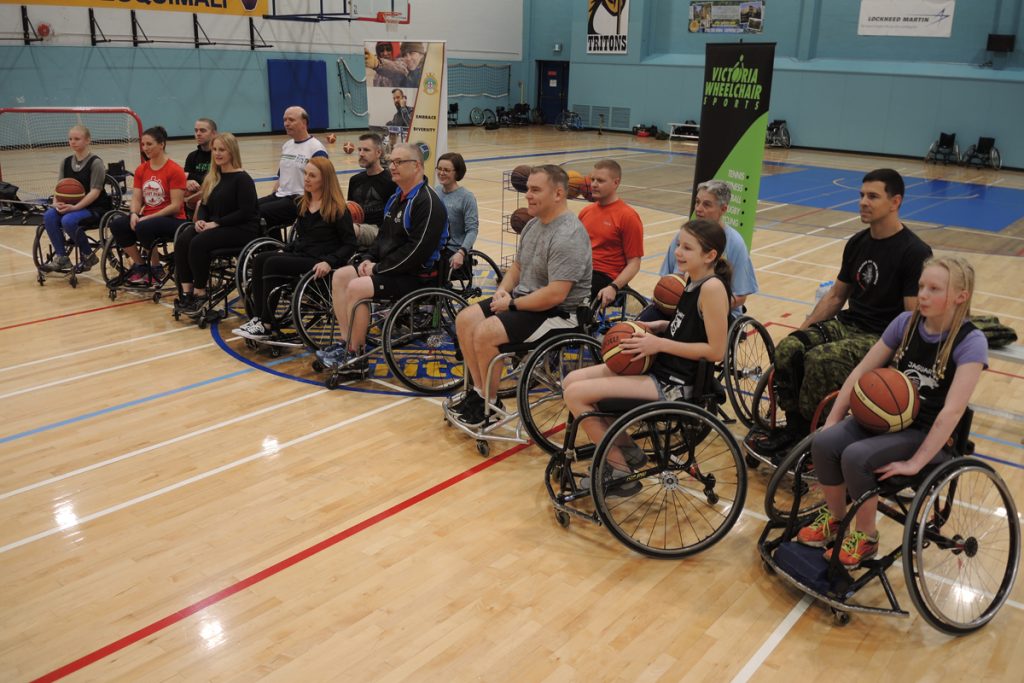
Wheelchair hoops game boosts understanding
[caption id="attachment_22263" align="alignnone" width="593"] Participants gather for a group photograph prior to the wheelchair basketball game at the Naden Athletic Centre on Dec. 3. The wheelchair sports event was part of CFB Esquimalt’s recognition of International Day of Disabled Persons 2019. Left: Base Commander Captain (Navy) Sam Sader shares a laugh with Simon Cass, BC Wheelchair Basketball provincial coach, prior to the start of the wheelchair basketball game. Photos by Peter Mallett, Lookout[/caption]Peter Mallett, Staff Writer ~Base employees shot, dribbled, and passed the basketball up and down the court in an unfamiliar position - sitting in a wheelchair. Approximately 20 military personnel and civilian employees got a new perspective on the intense, athletic competition when they took part in a wheelchair basketball game on Dec. 3 at the Naden Athletic Centre. The event was organized by the Defence Advisory Group Persons with Disability to recognize International Day of Persons With Disabilities.Nicole Schaaf, National Manager Office of Disability Management and Champion for Defence Advisory Group Persons with Disability, helped facilitate the event with non-profit B.C. Wheelchair Basketball. During the pre-event address, she noted that approximately 3.8 million Canadians are living with disabilities, and two per cent of military members and six per cent of DND civilian employees have some form of disability. She also took part in the game and said she was impressed with the enthusiasm and effort exhibited by all participants.“This has been an amazing experience and very humbling for all of us,” said Schaaf. “Many of the athletes who participated are experienced at basketball but were not able to make a shot. I think this was a fantastic eye-opener for the challenges that people with disabilities face.”The wheelchair “greenhorns” were schooled in the skills and techniques needed to operate a wheelchair by Simon Cass, B.C. Wheelchair Basketball Provincial coach,...
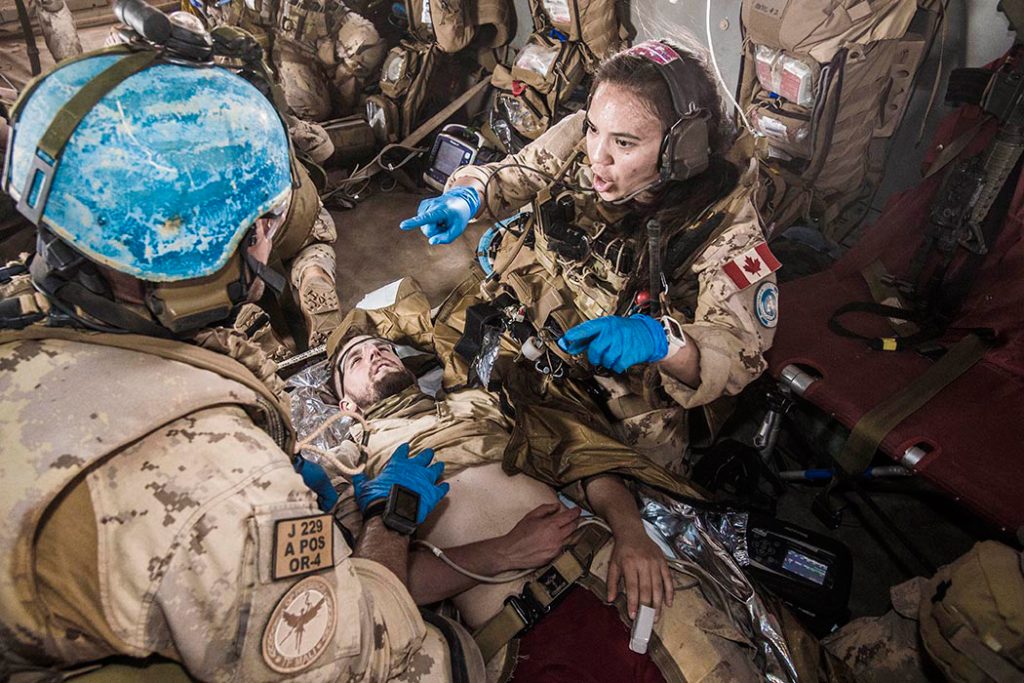
Canadian researcher investigates gender and peacekeeping
[caption id="attachment_22260" align="alignnone" width="593"] A female member of Task Force-Mali’s Canadian Medical Emergency Response Team provides direction during a forward aeromedical evacuation exercise aboard a CH-147F Chinook helicopter in March. Photo by Corporal François Charest, 430 Tactical Helicopter Squadron (430 Tac Hel Sqn)[/caption]Steven Fouchard, Army Public Affairs ~As the United Nations and militaries across the world work toward greater female representation in peacekeeping operations, a Canadian researcher is delving into this little-studied area to shed more light on the potential implications.Andrea Lane, a PhD candidate at Dalhousie University, is on a year-long contract at the Canadian Forces College where she has been invited to teach as part of its National Security and Joint Command and Staff programmes.As Director of Dalhousie’s Centre for the Study of Security and Development, she notes she has long-standing research interests in Canadian defence policy and in particular women in the military.As she began research relating to Canada’s part in the UN mission in Mali – where Canadian operations ceased on Aug. 31, 2019 – the federal government rolled out a pilot project in 2017 known as the Elsie Initiative for Women in Peace Operations, which seeks to increase women’s meaningful participation in peace operations.While she is generally supportive of efforts to make male-dominated militaries more open to women, Lane said current thinking on women’s roles in peacekeeping may not be entirely beneficial.“There are a whole bunch of assumptions that are largely untested about women as better communicators, as people who are more likely to tone down conflict versus add to conflict – women being seen as warmer and more approachable by civilians,” she explained. “So it sets a different burden on women peacekeepers that is really about singling them out as different than the norm for peacekeeping, which is male.”“On the surface, getting more women into peacekeeping is...
Shift in Naval Boarding training
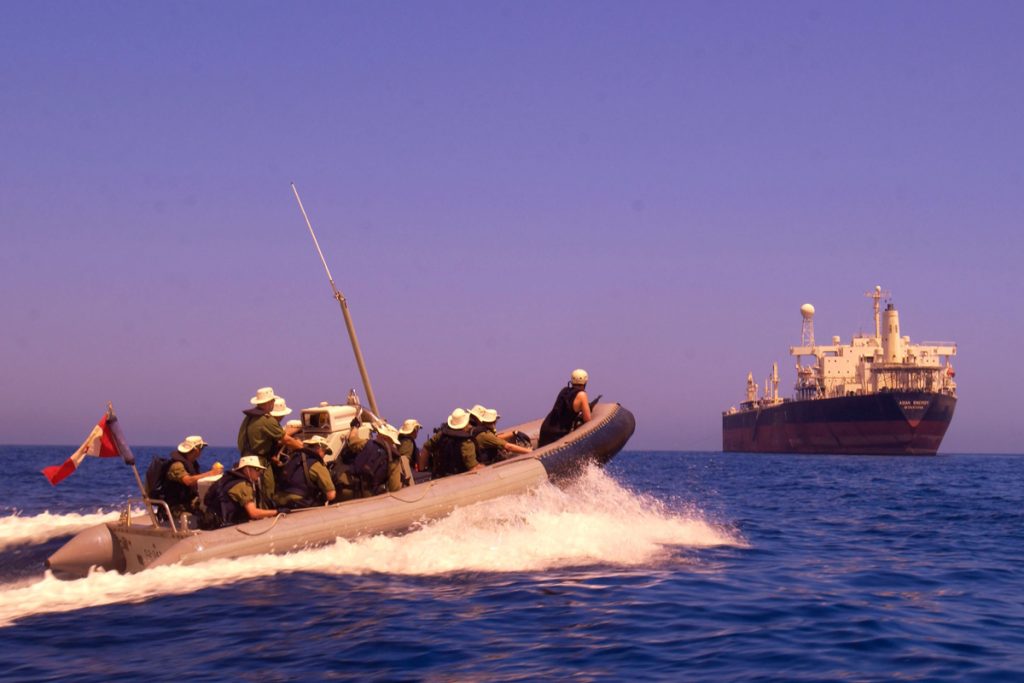
[caption id="attachment_22257" align="alignnone" width="593"] Members of HMCS Regina’s naval boarding party make their way in a Rigid Hull Inflatable Boat (RHIB), to a suspect vessel in the Gulf of Oman. Photo by MCpl Frank Hudec, Canadian Forces Combat Camera[/caption]LCdr Mike Erwin, NFS(P) ~A change took place in the delivery of Naval Boarding Party (NBP) training in October when Naval Fleet School (Pacific) turned over responsibility to the Naval Tactical Operations Group.The turnover was part of an overarching direction that would see all matters concerned with naval boarding fall increasingly under Naval Tactical Operations Group’s purview. As the cutlass was passed from one organization to the other, it marked the end of a decades-long era in which the Fleet School, first as Canadian Forces Fleet School (Esquimalt) and then as Naval Fleet School (Pacific), trained individuals and ship’s teams in the conduct of boardings at sea in support of maritime interdiction operations.About Naval BoardingsThe requirement to board ships is as old as navies themselves. Whether it was to inspect a vessel in support of a naval blockade or to overpower an enemy ship and take it as a prize, warships have always needed to insert teams of personnel into other ships. Literature and film are rife with images of ships bearing down upon one another, as boarding parties swarm over the side and through the rigging to the stirring cry of “Out cutlasses and board!”The Royal Canadian Navy is no exception. One of Canada’s most famous boardings took place in the Caribbean during the Second World War. German U-Boat U-94 had been damaged by United States Navy aircraft, as well as depth charges and gunfire from Canadian corvette HMCS Oakville. As the commanding office of Oakville brought his ship alongside the stricken enemy, only SLt Hal Lawrence and PO Art Powell were...
Clearance divers hone shallow water skills
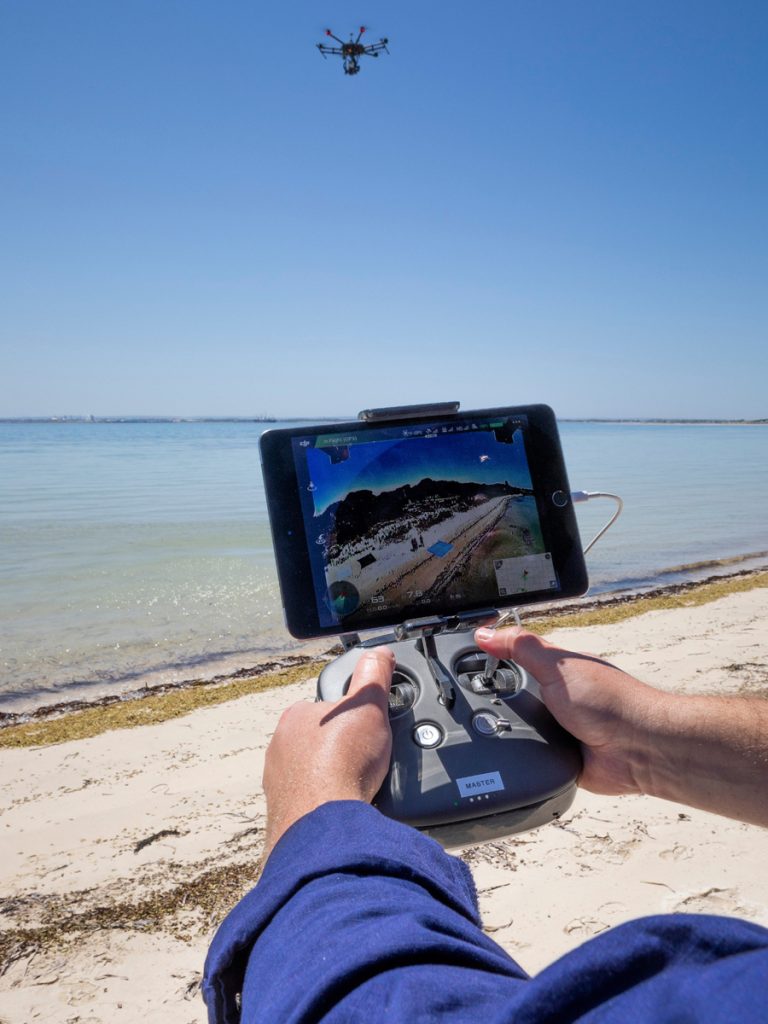
[caption id="attachment_22254" align="alignnone" width="593"] Dr. Brad Evans, Defence Science and Technology Group Leader, Littoral Sensing and Processing Group, flies a drone to conduct mine detection. Photo by LSIS Kylie Jagiello, Navy Imagery Unit - West[/caption]Peter Mallett, Staff Writer ~Members of Fleet Diving Unit (Pacific) battled poor visibility and close encounters with local sharks during their participation in a multi-national training exercise in Australia. Exercise Dugong saw teams of Clearance Divers from Australia, New Zealand, United Kingdom, Canada, and the United States gather at Fleet Base West, near Perth, from Nov. 7 to 22. The Royal Canadian Navy (RCN) sent a contingent of 14 personnel to the exercise: nine divers from FDU(P), one diver from Fleet Diving Unit (Atlantic), two personnel from Sea Bed Intervention Systems, a White Cell staff, and a Liaison Officer.“It is always great to have the opportunity to work and train with some of the best [Clearance Diving] teams in the world in a setting where we can freely exchange tactics, training and procedures with our partner nations,” said Lieutenant (Navy) Viachaslau Khabian, head of FDU(P) Mine Countermeasures Department.The exercise focused on Very Shallow Water (VSW) Mine Countermeasures at depths of 10 metres or less. VSW Mine Countermeasures are performed in preparation for amphibious landings and are normally done under the cloak of darkness for clandestine purposes. During the exercise, each nation and their divers were given specific lanes near the shoreline to find and dispose of underwater mines. They dove in groups of two and were inserted from inflatable boats at a considerable distance from shore in order to avoid detection.Clearing mines during nighttime operations proved to be challenging, as divers were forced to contend with rough sea conditions, high turbidity, and low light that caused extremely poor visibility, says Lt(N) Khabian. Challenges aside, the exercise provided...

Volume 64, Issue 49, December 9, 2019
Mooseheads honour HMCS Kootenay survivors
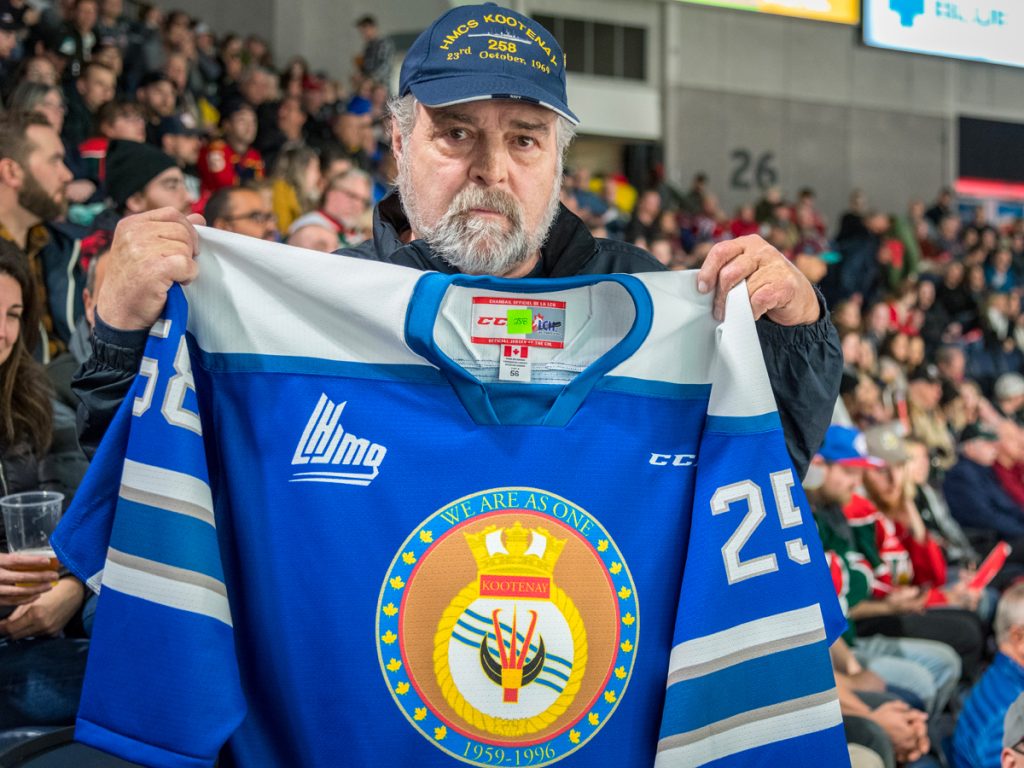
[caption id="attachment_22234" align="alignnone" width="591"] LS (Retired) Allan “Dinger” Bell shows off this year’s special Mooseheads jersey design honouring HMCS Kootenay. Photo by Cpl David Veldman, FIS Halifax.[/caption]Ryan Melanson, Trident Newspaper ~The Halifax Mooseheads weren’t able to get a win over the Drummondville Voltigeurs, but they still put on a great show in front of a military-heavy audience on Nov. 8 for the team’s 16th annual DND Appreciation Night.This year’s game took place in front of over 7,000 fans at the Scotiabank Centre, with the Mooseheads wearing special jerseys to recognize the 50th anniversary of the HMCS Kootenay explosion and those who died. Along with the Maritime Forces Atlantic (MARLANT) flag party, the team welcomed Kootenay survivor LS (Retired) Allan “Dinger” Bell and Rear Admiral Craig Baines, Commander MARLANT, on the ice prior to the game for the ceremonial puck drop.RAdm Baines thanked the team and the fans for their continued support over the years, as well as for putting the Kootenay explosion front and centre as the Royal Canadian Navy community continues to recognize that tragedy at sea 50 years ago.“I’m honoured to be standing here in front of you alongside Dinger Bell,” RAdm Baines said to the crowd. He added the annual Mooseheads game serves as a reminder of the close ties between the Canadian Armed Forces in Halifax and the wider community.“It’s one of the reasons that Halifax is the place in Canada to wear a uniform,” he said.The Kootenay crew were also recognized during the regular Canadian Forces Family of the Game segment, with the focus being put on the entirety of the ship’s company and their family members.“We honour them for their bravery in the face of a tragedy that claimed the lives of nine Kootenay member, and forever changed the lives of the survivors and their...
Honouring the Gulf War
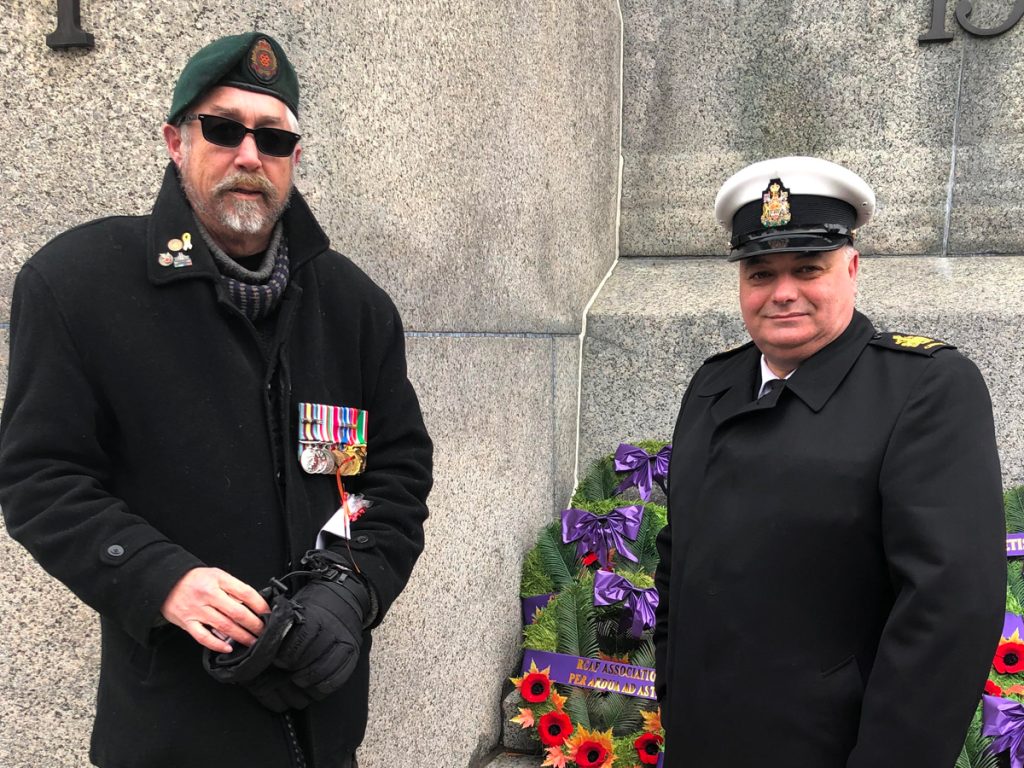
[caption id="attachment_22231" align="alignnone" width="591"] Michael McGlennon, Vice President of Persian Gulf Veterans of Canada (left), and CPO1 Gerald Doutre attend the Remembrance Day ceremony at the National War Memorial in Ottawa to lay a wreath on behalf of the Persian Gulf Veterans of Canada. Photo credit PGVC.[/caption]Peter Mallett, Staff Writer ~It was only a short moment in time when Chief Petty Officer First Class Gerald Doutre carried a wreath up the steps to the National War Memorial and gently laid it at the base of the massive stone sculpture.Etched on the ribbon adorning the Remembrance Day wreath were the words Persian Gulf Veterans of Canada. To those watching, it was just another wreath joining the dozens carefully placed there during the Nov. 11 service. But to hundreds of military members like CPO1 Doutre, it was a marker of time served in a long-ago war. “It was certainly a proud moment for all Persian Gulf veterans and me, and without a doubt it was also therapeutic,” said CPO1 Doutre. “We had a lot of good folks over there who sacrificed so much; attending this ceremony gave us a chance to remember this and create awareness for the rest of Canada about what we did in the gulf war.”Today, CPO1 Doutre, 50, works as Division Chief for the Director General of Maritime Equipment and Program Management in Gatineau, Que. He is also a member of the Persian Gulf Veterans of Canada.Almost three decades ago, as a young Leading Seaman, he deployed to the Persian Gulf as a Naval Electronic Sensor Operator on board HMCS Athabaskan. The Iroquois-class destroyer was the command and control vessel for the three-ship Canadian Task Group, with their efforts largely focussed on resupplying Allied ships fighting in the war. He vividly remembers the black, acrid smoke clouding the sky...
Exercise Northern Lights 2019 – cross training with the Australians
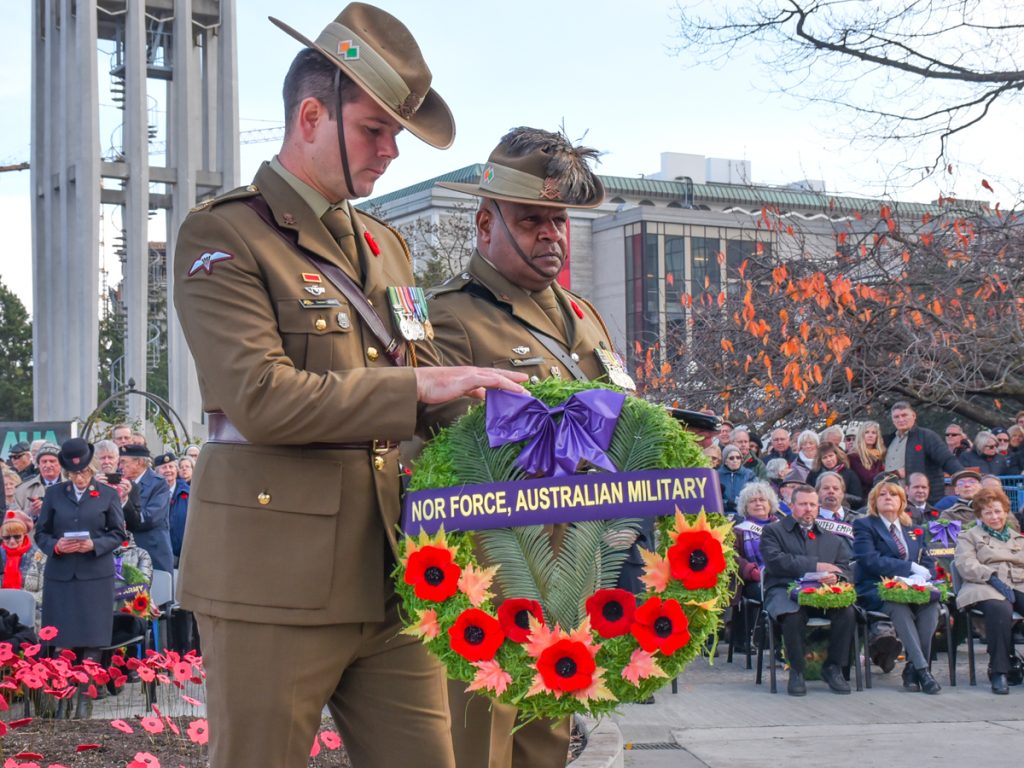
[caption id="attachment_22227" align="alignnone" width="591"] Major James Oliver, Australia’s North-West Mobile Force Arnhem Squadron Commanding Officer, pictured left, and his Regimental Sergeant Major, Warrant Officer Class One Kenneth Nelliman, lay a unit wreath at the B.C. legislature cenotaph during the Remembrance Day service. Photo by Lieutenant Natasha Tersigni[/caption]Lt Natasha Tersigni, 4th Canadian Ranger Patrol Group Public Affairs Officer ~Ten members of the Australian Army Reserve’s North-West Mobile Force traded their sunhats for toques and travelled to British Columbia for Exercise Northern Lights 2019 hosted by the 4th Canadian Ranger Patrol Group (4CRPG).The Australian Army Reserve unit and 4 CRPG have shared hosting yearly unit exchanges since 2011 to give a better understanding of each other’s training and practices.The military units are both wilderness living experts with extensive knowledge of the land where they operate, and both contribute to their country’s national security and public safety in remote, isolated areas.“This ongoing exchange has proven immensely successful with many best practices learned on both sides, as well as valuable cultural exchanges, including an understanding of Aboriginal culture,” said Lieutenant Colonel Russ Meades, Commanding Officer of 4 CRPG. “This exchange not only strengthens our respective units, but bolsters the ties between Canada and Australia, two quite similar allied Pacific Rim countries.”Training activities took place from Nov. 10 to 22, delivered by Canadian Rangers in Victoria, Terrace, and Smithers, British Columbia. Training included operating the Canadian Ranger C19 service rifle; learning about predators that might be encountered in northern British Columbia; avalanche safety; equipment used while patrolling the backcountry; helicopter operations in winter conditions; overnight operations in the backcountry; and snowmobiling on the Hudson Bay Mountain.“It is just incredible the number of similarities we have with the Canadian Rangers,” said Major James Oliver, Officer in Charge of NORFORCE’s Arnhem Squadron. “The distance in remote areas our...

Avalanche clearing begins – Operation Palaci
[caption id="attachment_22222" align="alignnone" width="591"] Master Bombardier Ryan Houston from 1st Regiment, Royal Canadian Horse Artillery, awaits the loading order from the Troop Commander during the confirmation shout at the start of Operation Palaci at Rogers Pass, B.C. on Nov. 22. Photo by MCpl PJ Létourneau, Canadian Forces Combat Camera[/caption] The Canadian Armed Forces (CAF) annual support to Parks Canada Agency’s Avalanche Control Program, Operation Palaci, is underway and expected to continue into April 2020.The CAF have provided artillery support to the Parks Canada avalanche control program in Glacier National Park, in the Rogers Pass region since 1961. Rogers Pass carries the major national road and rail transportation through the rugged Columbia Mountains in British Columbia.Each year, artillery gun troops are deployed to Rogers Pass with 105-mm C3 howitzers, adapted to fit the roadside gun platforms. This year, the operation will be carried out in two rotations. Both rotations will be carried out by 17 members from 1st Regiment, Royal Canadian Horse Artillery, based out of Canadian Forces Base (CFB) Shilo, Manitoba, and augmented by various reserve artillery units.

A sacred garden
[caption id="attachment_22219" align="alignnone" width="591"] Petty Officer Second Class Marielle Audet performs a smudging ceremony using a variety of herbs and grasses grown at her home garden in Colwood. She grows the herbs to help supply smudging kits for vessels of the Royal Canadian Navy. Photo by Peter Mallett, Lookout.[/caption]Peter Mallett, Staff Writer ~In the back of Petty Officer Second Class Marielle Audet’s Belmont Park home is a well-tended garden. It might seem like an ordinary plot, brimming in the summer with leafy greens of all varieties, but growing from the earth are the makings of smudging kits. PO2 Audet is of mixed background, Indigenous and French, and when not playing clarinet with the Naden Band, she serves on the Defence Aboriginal Advisory Group. When she learned that warships of the Pacific Fleet were to be equipped with smudging kits, she combined her knowledge of the ceremony with her green thumb to supply the sacred herbs. The smudging ceremony involves the burning of herbs and grasses including, but not limited to, sweet grass, tobacco, sage, rosemary and wild fennel. “This is just my humble contribution to bringing forward this new policy and I’m quite happy to do it,” said PO2 Audet. After harvesting them in the fall, she then dries them in brown paper bags at her home.The 53-year-old says smudging is an important part of Aboriginal culture in North America. Smudging has echoes in many traditions around the world including Catholicism, Buddhism and Wicca.“To me smudging is for cleansing of all the negativity in our lives, thoughts and perceptions. It helps us open up to our thoughts and be more objective as we go through difficult times.”She uses a large abalone shell or wooden bowl to hold the sage bundles in place before the burning. Once a bundle is lit, she uses...
Wounded veteran finds comfort with Sacrifice Medal
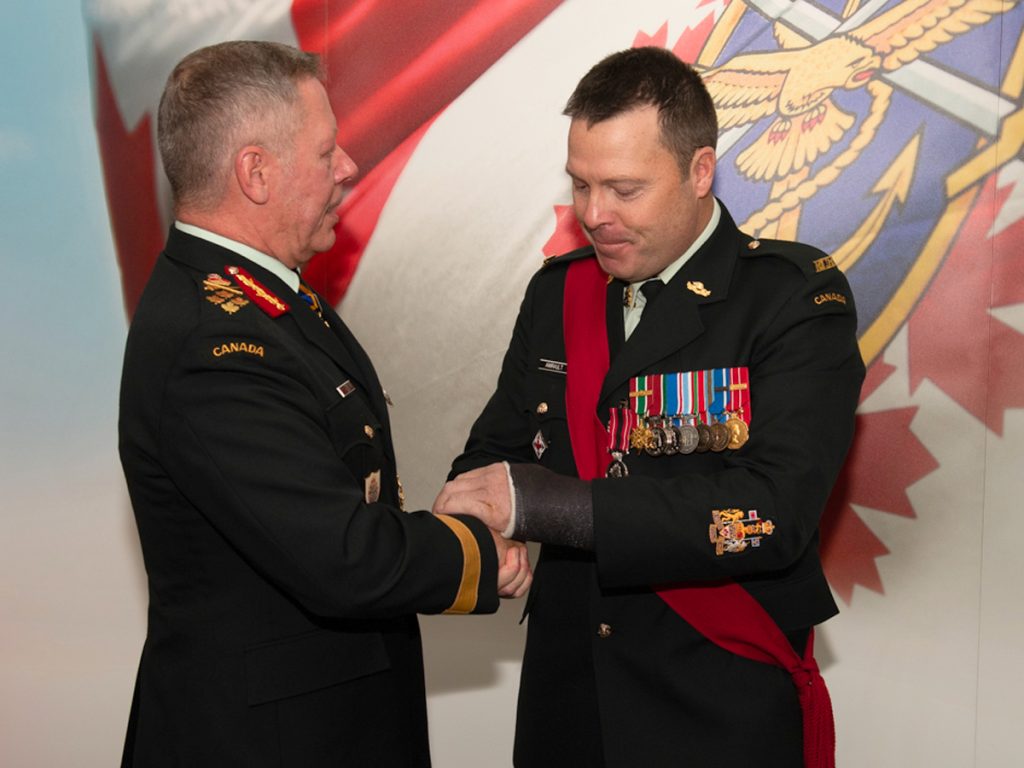
[caption id="attachment_22212" align="alignnone" width="591"] Chief of Defence Staff, Gen Jonathan Vance presents CWO (Retired) Brad Amirault with a Sacrifice Medal at Juno Tower in Halifax on Nov. 23. Photo credit: Sgt Chelsea Hutson[/caption]Peter Mallett, Staff Writer ~A retired career soldier with family ties to CFB Esquimalt says the recent awarding of a Sacrifice Medal has been the perfect tonic to accelerate his recovery from deployment injuries, mental and physical.Chief Warrant Officer (Retired) Brad Amirault received the medal from General Jonathan Vance, Chief of the Defence Staff, in a formal ceremony at Juno Tower at CFB Halifax on Nov. 23.The Sacrifice Medal was established in 2008 as a replacement to the Wound Stripe medal and is part of a continued effort by the Government of Canada to provide formal recognition to those who die as a result of military service or are wounded in action.CWO Amirault says having the medal presented by his friend and former Commanding Officer Gen Vance was an emotional and heartfelt moment.The two men shared a hearty handshake in the hallway prior to the ceremony and even some tears during the proceedings as they recounted some shared, difficult times where they drew strength from each other as warriors do.“Having the senior Canadian Forces commander present the medal in front of my immediate family members was an honour that I will proudly wear for the rest of my days.”Adding to the emotions, says CWO Amirault, was the outpouring of support from dozens of family members and friends at a reception held the next day.“It was huge to have all these people supporting me and to see a video presentation of my career played during the ceremony. I truly believe the moment helped me effectively communicate to my family what I could not verbalize. I was reminded of my roots...
Chilliwack trialed for demolition training
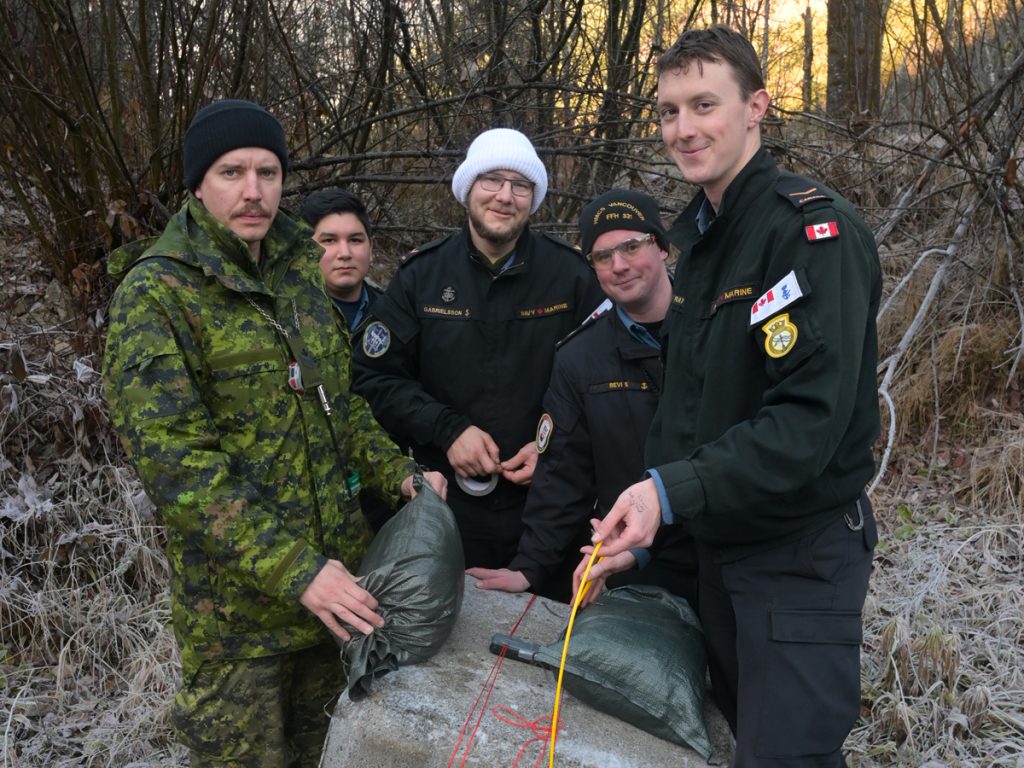
[caption id="attachment_22132" align="alignnone" width="591"] Petty Officer Second Class Jason Boisvenue, Able Seaman Coree Ranville, AB Adam Gabrielsson, Leading Seaman Joshua Reves, and LS Gregory Ratych pose with their project for the demolition phase of their training. Photo by MCpl Carbe Orellana, MARPAC Imaging Services.[/caption] LCdr Michael Erwin, NFS (P) ~From October into December, Naval Fleet School (Pacific’s) Seamanship Division is conducting three RQ demolitions phases, two RQ Ordinary Seaman serials, and one RQ Leading Seaman serial at Slesse Demolitions Range near Chilliwack on the mainland as a proof of concept designed to gather data and experience about the use of this range.The usual location for this training is Bentinck Island, located between Pedder Bay and Race Rocks. However, in the fall of 2018 the Bentinck Island Range was temporarily closed, causing NFS(P) to consider other options for the delivery of its demolitions mandate. The possibility that presented itself was the use of Slesse Demolitions Range.Though the Bentinck range re-opened with no impact to training, the notion of trialing Slesse Range as a venue for demolitions training took hold, so that the various logistical and personnel requirements of the alternate site could be fully understood should the use of Bentinck become unfeasible for any reason in the future. Getting to SlesseThe research and preparations required to shift the training from Bentinck Island to the unfamiliar and relatively distant Slesse Range were extensive, but under the efforts and leadership of CPO2 John Kranz, PO1 Kevin Hall, and A/SLt Alexandra Duplessis the plan took shape. A host of considerations were thought out and dealt with, ranging from how to move equipment, people, and explosives to the mainland range, to the accommodation and feeding of staff and students.They took advantage of the military camp established in Chilliwack in 1942. Following unification in 1968 it became Canadian...
Abandoned bikes will be confiscated
[caption id="" align="alignnone" width="591"] A view of the over-crowded bike storage area at Nelles Block. Due to a new base policy to address the parking space shortage, bikes that are left in bike racks for a period of longer than 60 days are subject to tagging and removal. Photo by Peter Mallett, Lookout.[/caption] Peter Mallett, Staff Writer ~If you left a bicycle parked in the bike racks at Naden for over three months, the security team at Nelles Block may have the answer to your question, where’s my bike?Since the implementation of a new policy by Sgt David Brand, Base Accommodations Barrack Warden Sergeant, accommodation staff have been tagging and removing abandoned bikes left at the Nelles Block and Bernays Block residences for longer than 60 days.The new policy came at the request of the Base Commander’s office in an attempt to address the build up of abandoned bicycles in valuable bike rack spaces for commuting cyclists.Once removed, the bike is photographed, the serial number recorded to ensure it isn’t stolen, and then locked up in storage. If the bikes aren’t claimed within a 90-day period after their seizure, they are donated to charity.Sgt Brand says the lengthy holding period is to accommodate sailors who may be deployed at sea and forgot to remove their bike from the rack before they left.So far, 16 bikes have been removed from the Nelles Block bike rack, held for six months, and then turned over to charity. Eleven bikes were recently removed from the Bernays Block bike rack and put into storage.“Many people still aren’t aware of the policy change concerning abandoned bikes despite signage at bicycle racks and in storage rooms alerting people to the problem, so we are trying to get the word out,” said Sgt Brand. “If you think you may have one of these bikes, I encourage you to stop by my office in Nelles Block and have a look at our inventory.”An instructional booklet about the new policy has also been...
HMCS Ottawa on deployment
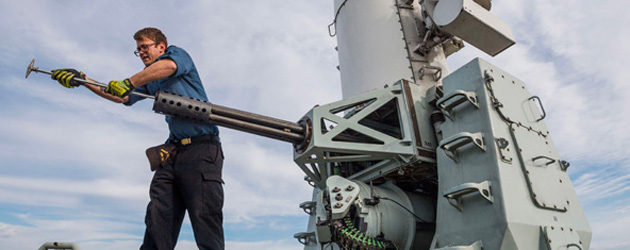
HMCS Ottawa on deployment
Photo by Leading Seaman Victoria Ioganov
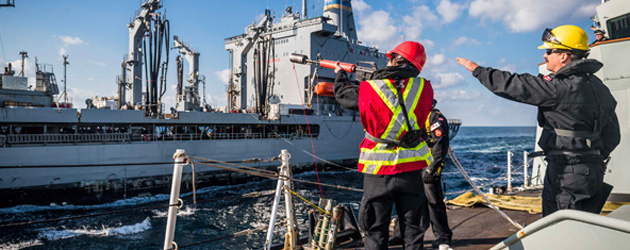
HMCS Ottawa on deployment
Photo by Leading Seaman Victoria Ioganov
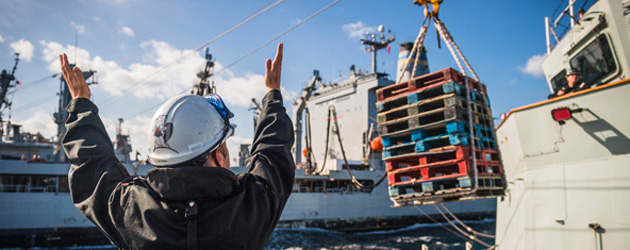
HMCS Ottawa on deployment
Photo by Leading Seaman Victoria Ioganov
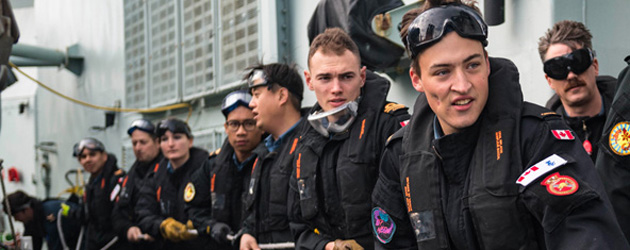
HMCS Ottawa on deployment
Photo by Leading Seaman Victoria Ioganov

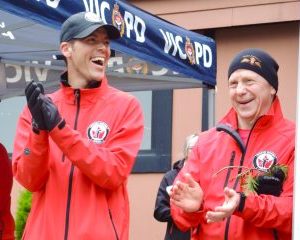
Proud Supporters